Menu
  • AFRICA
    • African Fashion
    • African Designers
    • Textiles & Craft
    • Heritage Clothing
    • Made in Africa
    • Regional Style
  • DIASPORA
    • Diaspora Voices
    • Diaspora Connects
    • UK Scene
    • US Scene
    • Caribbean Diaspora
    • Afro-Latino Identity
    • Migration & Identity
  • CULTURE
    • Style & Identity
    • Ceremony & Ritual
    • Art & Music
    • Cultural Inspirations
    • Black Culture
    • Heritage Stories
  • FASHION
    • Trends
    • Street Style
    • Runway
    • Sustainable Fashion
    • Tailoring
    • Luxury Fashion
  • INDUSTRY
    • Editorial Intelligence
    • Market Trends
    • Brand Strategy
    • Retail & Commerce
    • Partnerships
    • Reports
    • Insights
    • Omiren Style Index
  • BEAUTY
    • Skincare
    • Makeup
    • Hair & Hairstyle
    • Fragrance
    • Beauty Traditions
    • Natural Beauty
  • MEN
    • Men’s Style
    • Grooming Traditions
    • Traditional & Heritage
    • The Modern African Man
    • Menswear Designers
  • WOMEN
    • Women’s Style
    • Evening Glam
    • Workwear & Professional
    • Streetwear for Women
    • Accessories & Bags
    • Bridal
  • NEWS
    • Cover Stories
    • Fashion Weeks
    • Opinion & Commentary
    • Style Icons
    • Rising Stars
  • DIRECTORY
    • Designers
    • Brands
    • Boutiques
    • Stylists
    • Models
    • Photographers
    • Creative Teams
    • Events
    • Production
    • Materials & Suppliers
Subscribe
OMIREN STYLES OMIREN STYLES

Fashion · Culture · Identity

OMIREN STYLES OMIREN STYLES OMIREN STYLES OMIREN STYLES
  • AFRICA
    • African Fashion
    • African Designers
    • Textiles & Craft
    • Heritage Clothing
    • Made in Africa
    • Regional Style
  • DIASPORA
    • Diaspora Voices
    • Diaspora Connects
    • UK Scene
    • US Scene
    • Caribbean Diaspora
    • Afro-Latino Identity
    • Migration & Identity
  • CULTURE
    • Style & Identity
    • Ceremony & Ritual
    • Art & Music
    • Cultural Inspirations
    • Black Culture
    • Heritage Stories
  • FASHION
    • Trends
    • Street Style
    • Runway
    • Sustainable Fashion
    • Tailoring
    • Luxury Fashion
  • INDUSTRY
    • Editorial Intelligence
    • Market Trends
    • Brand Strategy
    • Retail & Commerce
    • Partnerships
    • Reports
    • Insights
    • Omiren Style Index
  • BEAUTY
    • Skincare
    • Makeup
    • Hair & Hairstyle
    • Fragrance
    • Beauty Traditions
    • Natural Beauty
  • MEN
    • Men’s Style
    • Grooming Traditions
    • Traditional & Heritage
    • The Modern African Man
    • Menswear Designers
  • WOMEN
    • Women’s Style
    • Evening Glam
    • Workwear & Professional
    • Streetwear for Women
    • Accessories & Bags
    • Bridal
  • NEWS
    • Cover Stories
    • Fashion Weeks
    • Opinion & Commentary
    • Style Icons
    • Rising Stars
  • DIRECTORY
    • Designers
    • Brands
    • Boutiques
    • Stylists
    • Models
    • Photographers
    • Creative Teams
    • Events
    • Production
    • Materials & Suppliers
  • Migration & Identity

Monuments and Memory: How Diaspora Architecture Is Reshaping Global Landmarks

  • Ayomidoyin Olufemi
  • March 9, 2026
Monuments and Memory: How Diaspora Architecture Is Reshaping Global Landmarks
Award Winning Architect, David Adjaye.

In cities around the world, architecture increasingly carries responsibilities that extend far beyond aesthetics or engineering. Buildings today are expected to tell stories. They are asked to reflect identity, acknowledge history, and embody cultural memory within the spaces people inhabit every day.

For many architects working across the African diaspora, this responsibility has become central to their creative practice. Their work often bridges continents, translating cultural heritage into modern forms that stand within global capitals while quietly referencing histories rooted elsewhere.

Among the most influential voices in this movement is David Adjaye, whose projects have helped redefine how architecture can express historical memory. Through museums, cultural centres, and civic landmarks, Adjaye has demonstrated how design can weave together geography, heritage, and contemporary life.

His buildings do not simply occupy space. They speak.

Explore how diaspora architects such as David Adjaye are transforming global landmarks by weaving cultural heritage, memory, and design into contemporary architecture.

Architecture as Cultural Narrative
Architecture as Cultural Narrative
Photo: Achitizer/Pinterest.

Architecture has long served as a record of civilisation. Temples, mosques, cathedrals, and palaces reveal how societies understand themselves and how they wish to be remembered.

For diaspora architects, this storytelling role takes on additional layers of meaning. Migration histories, cultural inheritance, and colonial legacies often shape the questions that guide their work. Rather than separating modern design from cultural identity, many architects see the two as inseparable.

This perspective has given rise to a generation of designers whose buildings consciously integrate cultural references into contemporary architecture. Materials, patterns, and spatial organisation become tools for expressing heritage.

In this sense, architecture becomes more than a discipline of form. It becomes a language.

The Vision of David Adjaye

The Vision of David Adjaye
Photo: Oprah Daily/Pinterest.

Born in Tanzania to Ghanaian parents and raised partly in the United Kingdom, David Adjaye grew up moving between cultures. That international upbringing deeply influenced his architectural philosophy.

Adjaye’s work is known for combining minimalist modernism with references drawn from cultural history. Rather than copying traditional structures, he studies the principles embedded within them, such as rhythm, proportion, light, and materiality.

These elements are then translated into contemporary architectural language.

Over the past two decades, his studio has designed projects across multiple continents, ranging from libraries and universities to museums and public institutions. Yet one project in particular has become an architectural landmark, illustrating his approach.

A Museum That Speaks Through Design

In the heart of Washington, D.C., stands one of the most powerful cultural buildings constructed in the United States in recent decades: the National Museum of African American History and Culture.

Completed in 2016, the museum sits along the National Mall among some of the country’s most significant monuments. Designing a building within this symbolic landscape required careful consideration of both architectural presence and historical sensitivity.

Adjaye’s solution was striking.

The museum rises in tiers, composed of three inverted trapezoids stacked one atop the other. The structure is wrapped in a bronze-coloured lattice façade that immediately distinguishes it from surrounding marble monuments.

Yet the design carries deeper meaning.

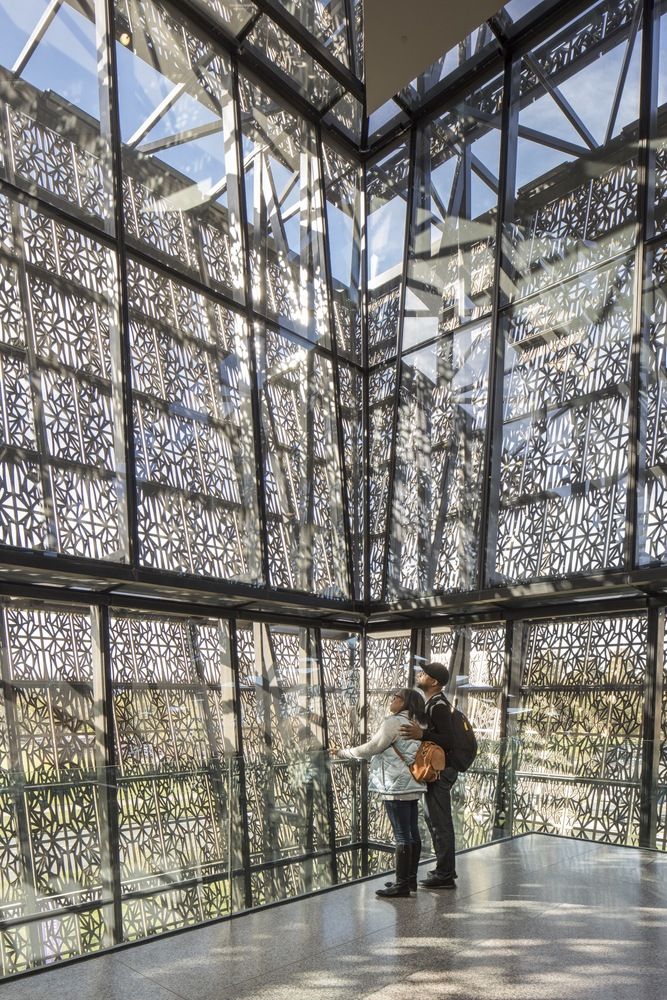
The lattice pattern references intricate ironwork created by African American craftsmen in the American South during the nineteenth century. That tradition itself traces its influences back to West African metalworking.

By embedding these patterns within the building’s exterior skin, Adjaye created a visual link between continents and centuries.

Sunlight filters through the patterned panels, casting shifting shadows across the building’s surfaces throughout the day. The effect transforms the museum into a dynamic structure that changes with time and light.

Architecture, here, becomes a living metaphor for historical memory.

Patterns, Geometry, and Cultural Language

Category: Architecture & Design
Monuments and Memory: How Diaspora Architecture Is Reshaping Global Landmarks
Meta Description: Explore how diaspora architects such as David Adjaye are transforming global landmarks by weaving cultural heritage, memory, and design into contemporary architecture.
Primary SEO Keywords: “diaspora architecture,” “David Adjaye architecture,” “African influence in global architecture.” 
Pc: Collections

In cities around the world, architecture increasingly carries responsibilities that extend far beyond aesthetics or engineering. Buildings today are expected to tell stories. They are asked to reflect identity, acknowledge history, and embody cultural memory within the spaces people inhabit every day.
For many architects working across the African diaspora, this responsibility has become central to their creative practice. Their work often bridges continents, translating cultural heritage into modern forms that stand within global capitals while quietly referencing histories rooted elsewhere.
Among the most influential voices in this movement is David Adjaye, whose projects have helped redefine how architecture can express historical memory. Through museums, cultural centres, and civic landmarks, Adjaye has demonstrated how design can weave together geography, heritage, and contemporary life.
His buildings do not simply occupy space. They speak.
Architecture as Cultural Narrative
Pc:Pinterest 
Architecture has long served as a record of civilisation. Temples, mosques, cathedrals, and palaces reveal how societies understand themselves and how they wish to be remembered.
For diaspora architects, this storytelling role takes on additional layers of meaning. Migration histories, cultural inheritance, and colonial legacies often shape the questions that guide their work. Rather than separating modern design from cultural identity, many architects see the two as inseparable.
This perspective has given rise to a generation of designers whose buildings consciously integrate cultural references into contemporary architecture. Materials, patterns, and spatial organisation become tools for expressing heritage.
In this sense, architecture becomes more than a discipline of form. It becomes a language.
The Vision of David Adjaye
Pc: Collections
Born in Tanzania to Ghanaian parents and raised partly in the United Kingdom, David Adjaye grew up moving between cultures. That international upbringing deeply influenced his architectural philosophy.
Adjaye’s work is known for combining minimalist modernism with references drawn from cultural history. Rather than copying traditional structures, he studies the principles embedded within them, such as rhythm, proportion, light, and materiality.
These elements are then translated into contemporary architectural language.
Over the past two decades, his studio has designed projects across multiple continents, ranging from libraries and universities to museums and public institutions. Yet one project in particular has become an architectural landmark, illustrating his approach.
A Museum That Speaks Through Design
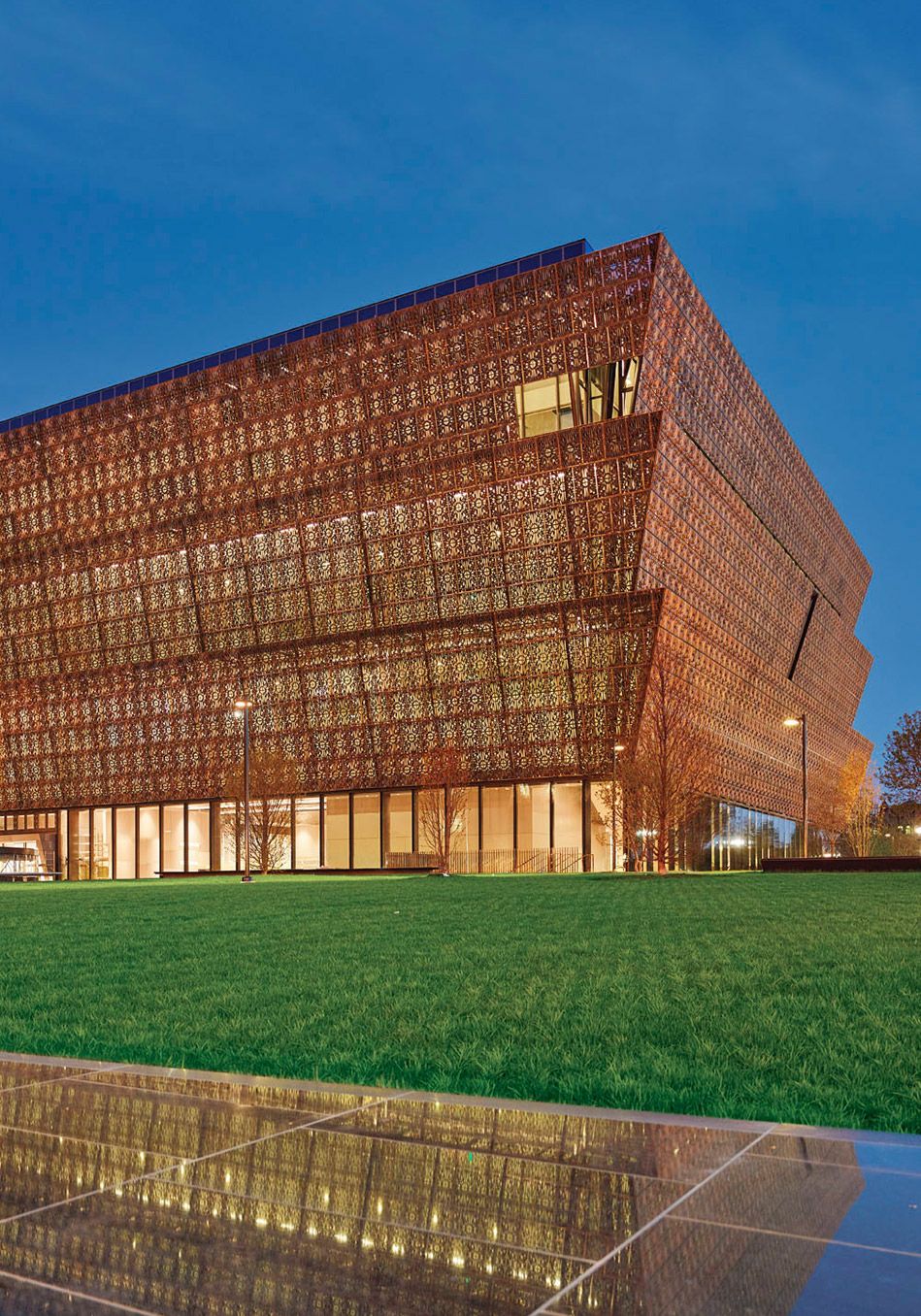
In the heart of Washington, D.C., stands one of the most powerful cultural buildings constructed in the United States in recent decades: the National Museum of African American History and Culture.
Completed in 2016, the museum sits along the National Mall among some of the country’s most significant monuments. Designing a building within this symbolic landscape required careful consideration of both architectural presence and historical sensitivity.
Adjaye’s solution was striking.
The museum rises in tiers, composed of three inverted trapezoids stacked one atop the other. The structure is wrapped in a bronze-coloured lattice façade that immediately distinguishes it from surrounding marble monuments.
Yet the design carries deeper meaning.
The lattice pattern references intricate ironwork created by African American craftsmen in the American South during the nineteenth century. That tradition itself traces its influences back to West African metalworking.
By embedding these patterns within the building’s exterior skin, Adjaye created a visual link between continents and centuries.
Sunlight filters through the patterned panels, casting shifting shadows across the building’s surfaces throughout the day. The effect transforms the museum into a dynamic structure that changes with time and light.
Architecture, here, becomes a living metaphor for historical memory.
Patterns, Geometry, and Cultural Language
Pc: Pinterest
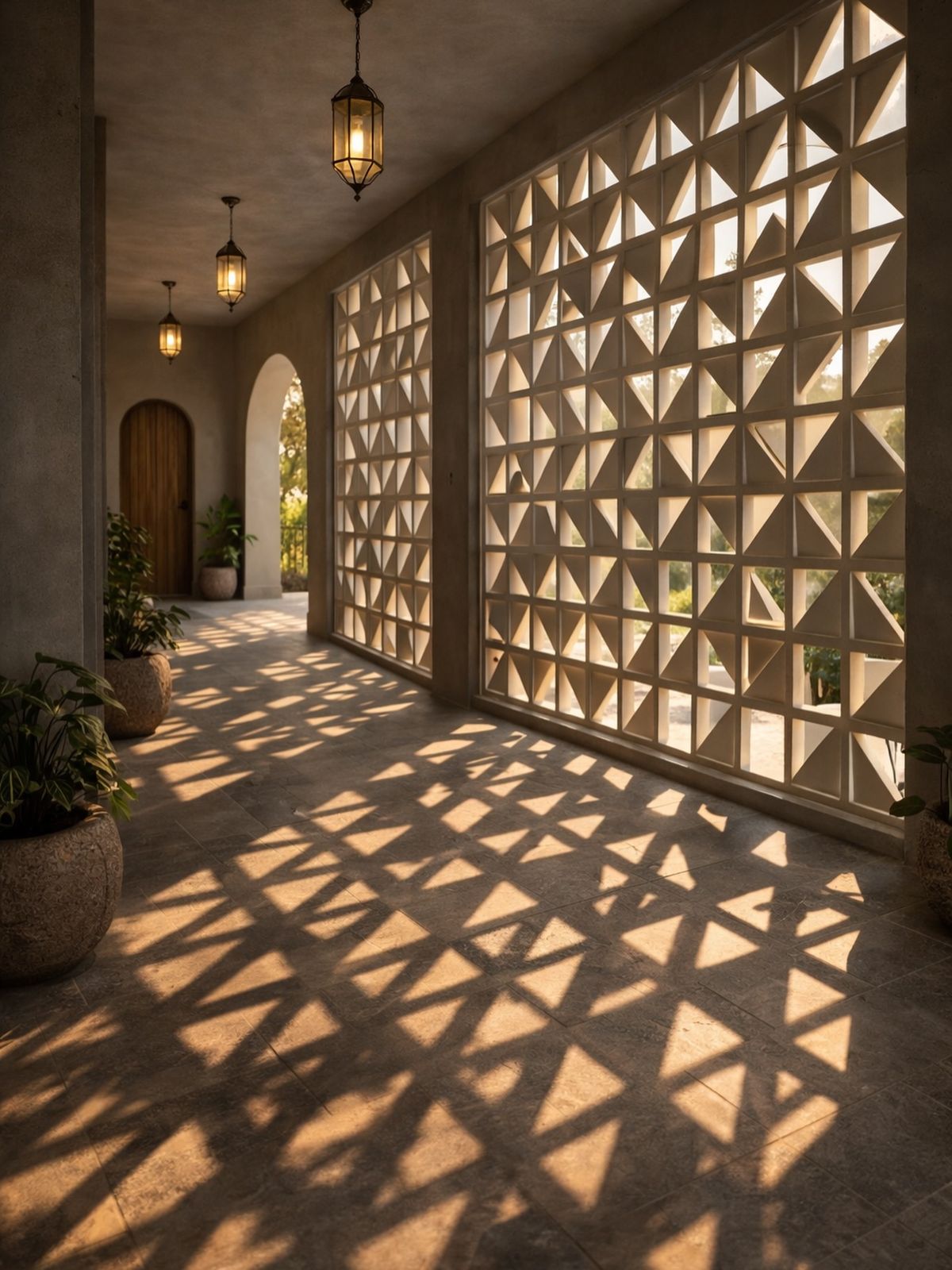
The Smithsonian museum is only one example of how African design languages can influence contemporary architecture.
Across many cultures on the African continent, geometric patterns play a central role in visual expression. These patterns appear in textiles, sculpture, ceramics, and architecture. They often carry symbolic meaning while also demonstrating remarkable technical skill.
For architects working within the diaspora, such visual traditions offer a rich source of inspiration.
Patterns can be translated into façade systems that regulate sunlight. Geometric motifs can guide structural composition. Traditional craftsmanship can inform material choices.
Rather than treating heritage as decoration, architects integrate these elements into the very structure of their buildings.
The result is architecture that feels both modern and historically grounded.
Global Cities, Diaspora Perspectives
The influence of diaspora architects is increasingly visible across global cities. Cultural institutions, museums, and civic spaces are becoming platforms for architectural design to engage with identity and history.
In London, David Adjaye has designed residential and cultural projects that explore texture and shadow through carefully selected materials.
In Lagos, emerging architects are experimenting with forms that respond to the climate while drawing on indigenous spatial traditions.
In Accra, designers are rethinking public buildings through lenses that prioritise local materials and cultural symbolism.
These developments reveal a broader shift within architecture. Instead of imposing universal design languages, many architects now seek inspiration from local histories and regional identities.
Diaspora architects often occupy a unique position within this movement. Having experienced multiple cultural contexts, they can interpret heritage in ways that resonate internationally while remaining rooted in cultural specificity.
Architecture and Historical Responsibility
Pc: Pinterest
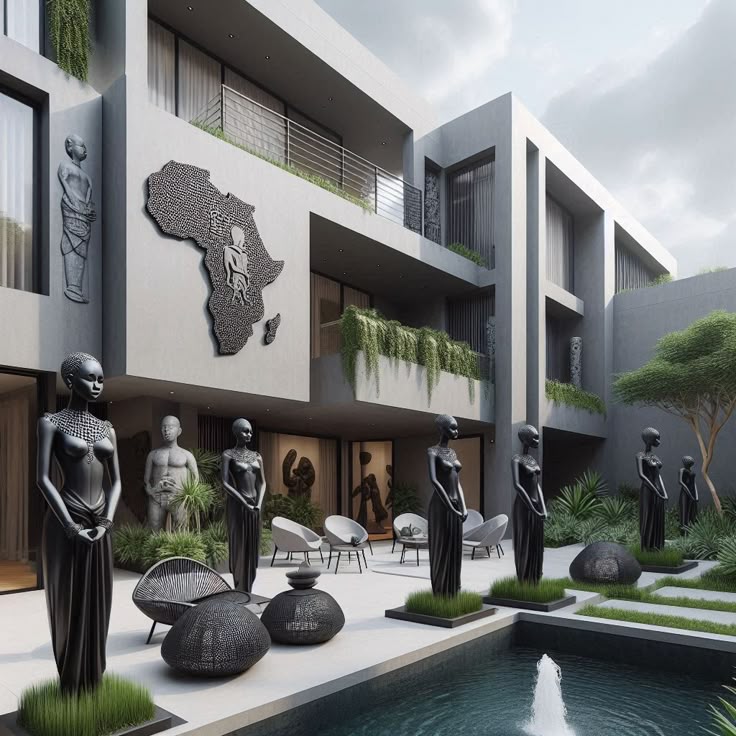
For projects connected to cultural memory, architecture carries particular weight.
Museums, memorials, and cultural centres often address histories that include displacement, resilience, and transformation. Designing these spaces requires sensitivity to both emotional and historical dimensions.
Adjaye has spoken about architecture’s ability to hold memory. Buildings, he argues, can serve as vessels through which societies confront their past while imagining their future.
This philosophy is evident in the way many of his projects engage with light, texture, and form. Spaces are designed to encourage reflection as much as movement.
Visitors entering such buildings are not merely observing architecture. They are experiencing it.
The Future of Diaspora Architecture
Pc: Pinterest 
As cities continue to grow and diversify, architecture will increasingly reflect the multiplicity of cultures that shape urban life.
Diaspora architects are helping lead this transformation by demonstrating how heritage can enrich contemporary design. Their buildings show that modern architecture need not abandon cultural identity in pursuit of innovation.
Instead, identity can become a source of creative strength.
The influence of architects like David Adjaye suggests that future landmarks may carry deeper layers of meaning than ever before. They will not simply represent economic development or aesthetic ambition.
They will embody stories.
Stories of movement across continents. Stories of artistic traditions carried through generations. Stories of communities whose histories continue to shape the spaces we inhabit.
When architecture acknowledges these narratives, buildings become more than structures.
They become monuments to memory.
Read also:
Cultural Identity in Interior Spaces: Designing Homes That Reflect Heritage
Luxury Living Spaces Inspired by African Craft and Architecture  
African Interior Designers Shaping Global Aesthetics
FAQs
Who is David Adjaye?
David Adjaye is a Ghanaian-British architect known for designing culturally significant buildings that blend modern design with African heritage.
What is the National Museum of African American History and Culture?
The National Museum of African American History and Culture in Washington, D.C., is a Smithsonian museum dedicated to African American history, designed by David Adjaye.
How does African heritage influence architecture?
Architects incorporate African patterns, materials, and symbolism into modern building design.
Why is diaspora architecture important?
It reflects cultural identity and global histories within contemporary architecture.
Where can diaspora architecture be seen?
Cities like London, New York City, Accra, and Lagos feature diaspora-influenced architecture.


The Smithsonian museum is only one example of how African design languages can influence contemporary architecture.

Across many cultures on the African continent, geometric patterns play a central role in visual expression. These patterns appear in textiles, sculpture, ceramics, and architecture. They often carry symbolic meaning while also demonstrating remarkable technical skill.

For architects working within the diaspora, such visual traditions offer a rich source of inspiration.

Patterns can be translated into façade systems that regulate sunlight. Geometric motifs can guide structural composition. Traditional craftsmanship can inform material choices.

Rather than treating heritage as decoration, architects integrate these elements into the very structure of their buildings.

The result is architecture that feels both modern and historically grounded.

Global Cities, Diaspora Perspectives

The influence of diaspora architects is increasingly visible across global cities. Cultural institutions, museums, and civic spaces are becoming platforms for architectural design to engage with identity and history.

In London, David Adjaye has designed residential and cultural projects that explore texture and shadow through carefully selected materials.

In Lagos, emerging architects are experimenting with forms that respond to the climate while drawing on indigenous spatial traditions.

In Accra, designers are rethinking public buildings through lenses that prioritise local materials and cultural symbolism.

These developments reveal a broader shift within architecture. Instead of imposing universal design languages, many architects now seek inspiration from local histories and regional identities.

Diaspora architects often occupy a unique position within this movement. Having experienced multiple cultural contexts, they can interpret heritage in ways that resonate internationally while remaining rooted in cultural specificity.

READ ALSO:

  • Cultural Identity in Interior Spaces: Designing Homes That Reflect Heritage
  • Luxury Living Spaces Inspired by African Craft and Architecture  
  • African Interior Designers Shaping Global Aesthetics

Architecture and Historical Responsibility

Architecture and Historical Responsibility

For projects connected to cultural memory, architecture carries particular weight.

Museums, memorials, and cultural centres often address histories that include displacement, resilience, and transformation. Designing these spaces requires sensitivity to both emotional and historical dimensions.

Adjaye has spoken about architecture’s ability to hold memory. Buildings, he argues, can serve as vessels through which societies confront their past while imagining their future.

This philosophy is evident in the way many of his projects engage with light, texture, and form. Spaces are designed to encourage reflection as much as movement.

Visitors entering such buildings are not merely observing architecture. They are experiencing it.

The Future of Diaspora Architecture

As cities continue to grow and diversify, architecture will increasingly reflect the multiplicity of cultures that shape urban life.

Diaspora architects are helping lead this transformation by demonstrating how heritage can enrich contemporary design. Their buildings show that modern architecture need not abandon cultural identity in pursuit of innovation.

Instead, identity can become a source of creative strength.

The influence of architects like David Adjaye suggests that future landmarks may carry deeper layers of meaning than ever before. They will not simply represent economic development or aesthetic ambition.

They will embody stories.

Stories of movement across continents. Stories of artistic traditions carried through generations. Stories of communities whose histories continue to shape the spaces we inhabit.

When architecture acknowledges these narratives, buildings become more than structures.

They become monuments to memory.

FAQs

  • Who is David Adjaye?

David Adjaye is a Ghanaian-British architect known for designing culturally significant buildings that blend modern design with African heritage.

  • What is the National Museum of African American History and Culture?

The National Museum of African American History and Culture in Washington, D.C., is a Smithsonian museum dedicated to African American history, designed by David Adjaye.

  • How does African heritage influence architecture?

Architects incorporate African patterns, materials, and symbolism into modern building design.

  • Why is diaspora architecture important?

It reflects cultural identity and global histories within contemporary architecture.

  • Where can diaspora architecture be seen?

Cities like London, New York City, Accra, and Lagos feature diaspora-influenced architecture.
Post Views: 351

The OmirenStyles newsletter covers traditional fashion, diaspora style, and the cultural stories behind African dress. It’s sent directly to readers who care about this space as much as we do. You can subscribe here https://mailchi.mp/2fc1ddd747d6/omirenstyles-newsletter


Related Topics
  • architecture and cultural identity
  • cultural memory in design
  • diaspora architecture
Avatar photo
Ayomidoyin Olufemi

ayomidoyinolufemi@gmail.com

You May Also Like
African Drums: History, Talking Drums, Colonial Bans, and Survival Across the Diaspora
View Post
  • Migration & Identity

African Drums: History, Talking Drums, Colonial Bans, and Survival Across the Diaspora

  • Adams Moses
  • May 28, 2026
Does Wearing Your Culture Make You Exotic? The Diaspora Fashion Paradox
View Post
  • Migration & Identity

Does Wearing Your Culture Make You Exotic? The Diaspora Fashion Paradox

  • Rex Clarke
  • April 24, 2026
The Meaning Behind the Headwrap: History, Resistance, and Diaspora Pride
View Post
  • Migration & Identity

The Meaning Behind the Headwrap: History, Resistance, and Diaspora Pride

  • Adams Moses
  • April 24, 2026
Renato Carneiro and Katuka Africanidades: When Fashion Becomes an Act of Civilisational Memory
View Post
  • Migration & Identity

Renato Carneiro and Katuka Africanidades: When Fashion Becomes an Act of Civilisational Memory

  • Rex Clarke
  • April 2, 2026
How Black Humour Shapes Culture: Laughter as Survival & Social Power
View Post
  • Migration & Identity

How Black Humour Shapes Culture: Laughter as Survival & Social Power

  • Matthew Olorunfemi
  • January 21, 2026
Global Blackness: New Visual Codes in Diaspora Art
View Post
  • Migration & Identity

Global Blackness: New Visual Codes in Diaspora Art

  • Matthew Olorunfemi
  • January 21, 2026
How Diaspora Cuisine Became a Tool of Cultural Diplomacy
View Post
  • Migration & Identity

How Diaspora Cuisine Became a Tool of Cultural Diplomacy

  • Matthew Olorunfemi
  • January 7, 2026
How Diaspora Stories Are Redefining Global Cinema
View Post
  • Migration & Identity

How Diaspora Stories Are Redefining Global Cinema

  • Matthew Olorunfemi
  • December 10, 2025

Leave a Reply Cancel reply

Your email address will not be published. Required fields are marked *

The Omiren Argument

African fashion and culture are not emerging. They are foundational. We document, interpret, and argue for the full cultural weight of African and diaspora dress. With precision. Without apology.

Omiren Styles Fashion · Culture · Identity

All 54 African Nations
Caribbean · Afro-Latin America
The Global Diaspora

Platform

  • About Omiren Styles
  • Our Vision
  • Our Mission
  • Editorial Pillars
  • Editorial Policy
  • The Omiren Collective
  • Campus Style Initiative
  • Sustainable Style
  • Social Impact & Advocacy
  • Investor Relations

Contribute

  • Write for Omiren Styles
  • Submit Creative Work
  • Join the Omiren Collective
  • Campus Initiative
Contact
contact@omirenstyles.com
Our Reach

Africa — All 54 Nations
Caribbean
Afro-Latin America
Global Diaspora

African fashion intelligence, in your inbox.

Editorial features, designer profiles, cultural commentary. No noise.

© 2026 Omiren Styles — Rex Clarke Global Ventures Limited. All rights reserved.
  • Privacy Policy
  • Editorial Policy
  • Terms of Use
  • Accessibility
Africa · Caribbean · Diaspora
The Omiren Argument

African fashion and culture are not emerging. They are foundational. We document, interpret, and argue for the full cultural weight of African and diaspora dress. With precision. Without apology.

Omiren Styles Fashion · Culture · Identity
  • About Omiren Styles
  • Our Vision
  • Our Mission
  • Editorial Pillars
  • Editorial Policy
  • The Omiren Collective
  • Campus Style Initiative
  • Sustainable Style
  • Social Impact & Advocacy
  • Investor Relations
  • Write for Omiren Styles
  • Submit Creative Work
  • Join the Omiren Collective
  • Campus Initiative
Contact contact@omirenstyles.com

All 54 African Nations · Caribbean
Afro-Latin America · Global Diaspora

African fashion intelligence, in your inbox.

Editorial features, designer profiles, cultural commentary. No noise.

© 2026 Omiren Styles
Rex Clarke Global Ventures Limited.
All rights reserved.

  • Privacy Policy
  • Editorial Policy
  • Terms of Use
  • Accessibility
Africa · Caribbean · Diaspora

Input your search keywords and press Enter.