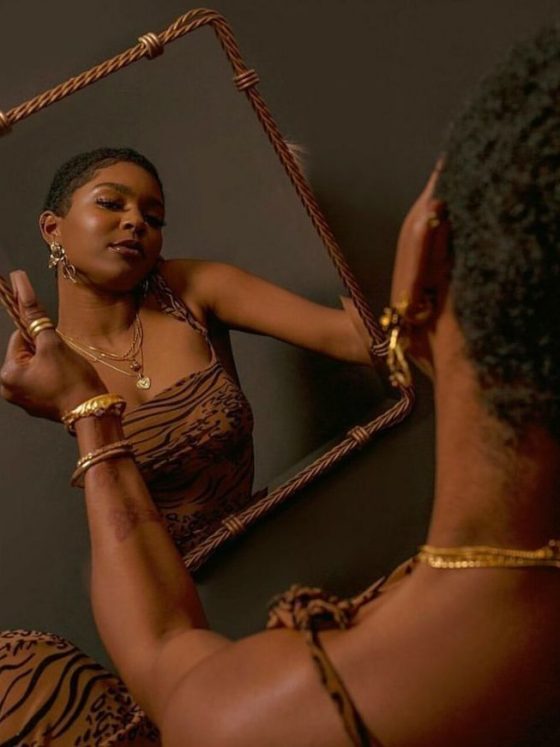
The woman who speaks in multiple registers—boardroom and owambe, Lagos traffic, London meetings, ambition, and ancestry— needs one space that asks nothing of her. No code to switch or performance to maintain, and no translation required.
That space serves as a gentle landing point. And building it deliberately is not self-indulgence. It is a strategy.
This spot is not a minimalist decor mood board generated by an algorithm. It is a room that functions as a physical manifestation of your sovereignty, assembled with intention, furnished with meaning, and designed to hold the full weight of who you are becoming.
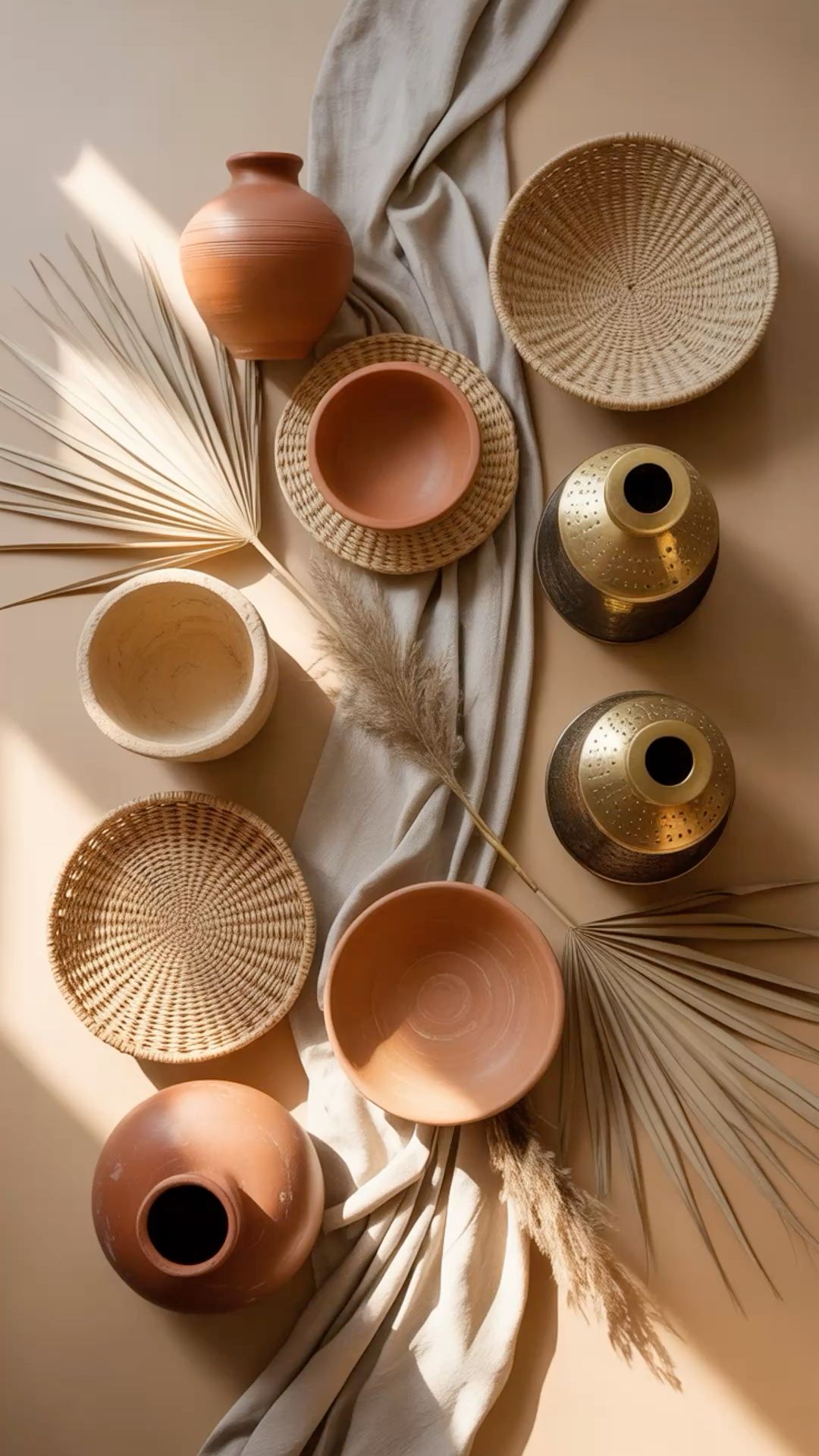
A soft landing means more, not owning less. The weight of a hand-woven throw from AAKS, the botanical grounding of a Liha Beauty oil diffused into the air, and the deliberate absence of a screen, each is a considered investment in the life you are building, not decorating.
You are the architect of your stillness. The house that holds you between acts of becoming deserves the same precision you bring to everything else.
A soft landing is not about having fewer possessions. It is about returning to a place that does not require you to be anything other than yourself, and understanding that this, too, is work.
The Ritual of the Return
It requires a deliberate, gradual transition from the world’s interpretations to your own; it doesn’t occur instantly when you turn the lock. Unbinding is the rite of coming home for the Omiren woman.
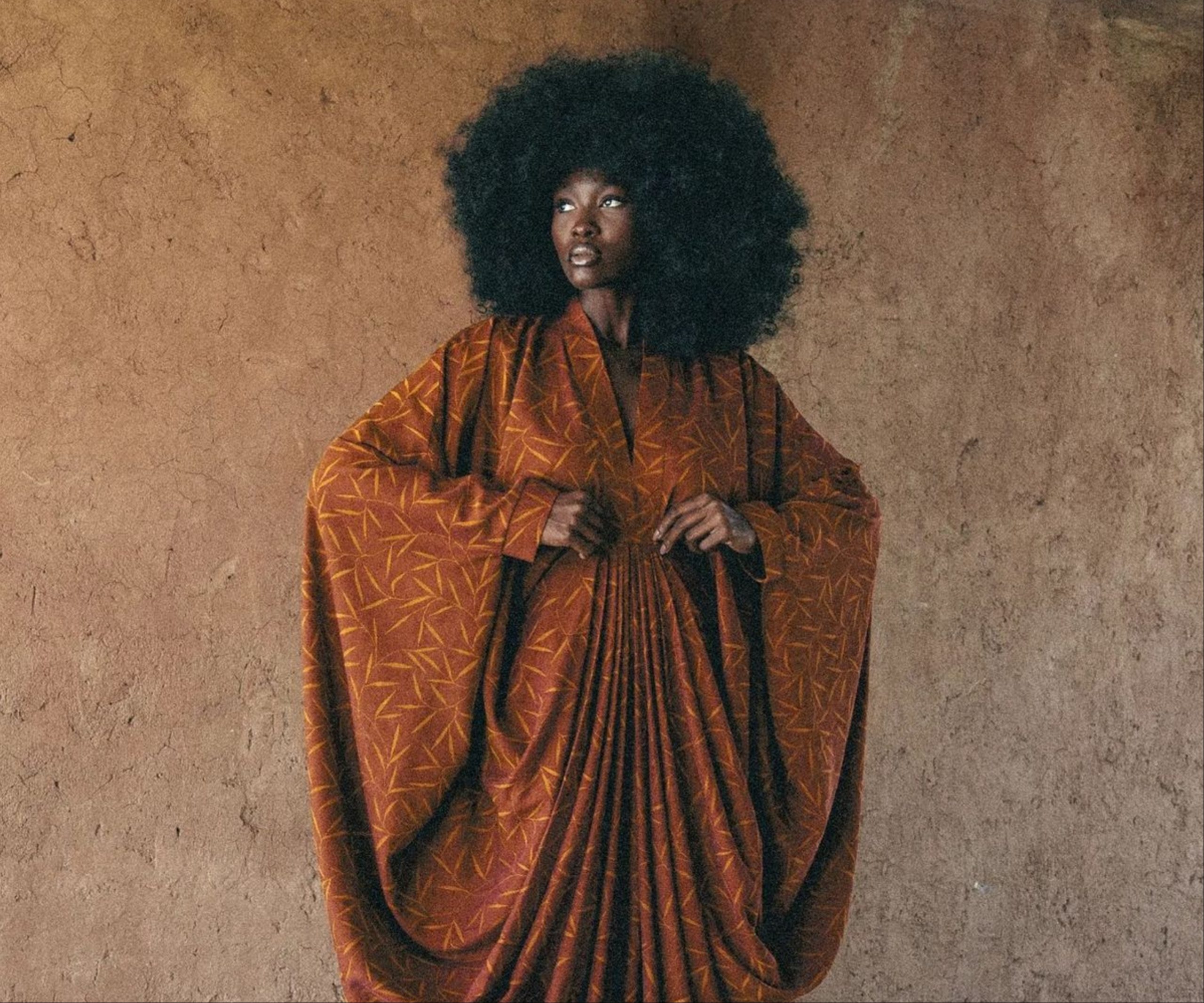
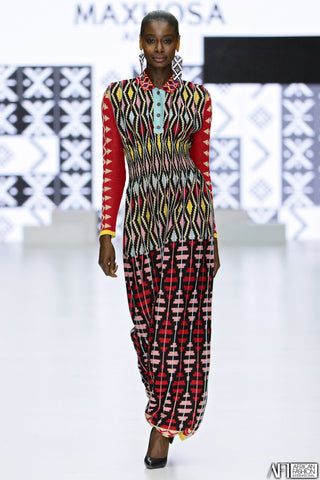
That’s when she throws off the Thebe Magugu blazer’s structural armour. This outfit got her through the high-stakes grammar of the boardroom, and swaps it out for the soft, sustainable embrace of Maxhosa Africa knits or the flowing, inclusive weight of an Orange Culture hand-dyed silk robe.
This is a soulful recalibration, not a changing clothes situation. It is the tangible act of admitting the cost of holding public authority and determining that her energy is no longer a resource for others to use for the next few hours.
The Omiren woman speaks in several registers; this rite is necessary. Translating her goals into a universal language, she has spent the day negotiating the social contracts of her cultural and professional responsibilities.
The area where translation is no longer necessary is known as the soft landing. Her approach here is a dialogue with herself rather than a performance. She affirms her sovereignty by selecting upscale, eco-friendly loungewear that emphasises touch over visual appeal. She is dressing for the “becoming” that takes place in the silence, not for a mood board or an algorithm. The result is the healthy boundary-setting that distinguishes a life of sustained influence from one of frenetic productivity.
Every touchpoint should verify her identification as she navigates her haven.
Here, the refreshing feel of a handcrafted porcelain cup or the soothing aroma of heritage-inspired incense that connects her to her ancestry reimburses the cost of her everyday existence.
Here, the “cool water” of her repose and the “Lagos heat” of her ambition collide. She ensures she leads her week rather than merely survives it by treating the ritual of return as a strategic necessity rather than a luxury. Her stronghold is the soft landing, a sustainable and welcoming place of self-discovery where she finds the will to continue being a perspective, rather than a group to be stereotyped.
Curating the Internal Atmosphere
The Soft Landing is a sensory activity that goes beyond aesthetics. Her home is the quiet, emotional syntax of her private life, if her clothing is the grammar of her aspirations in public. Curating her inner environment is an act of sensory sovereignty for the Omiren woman. It is the moment when she rejects the mass-market “wellness” odours and textures that are generic and algorithm-determined.
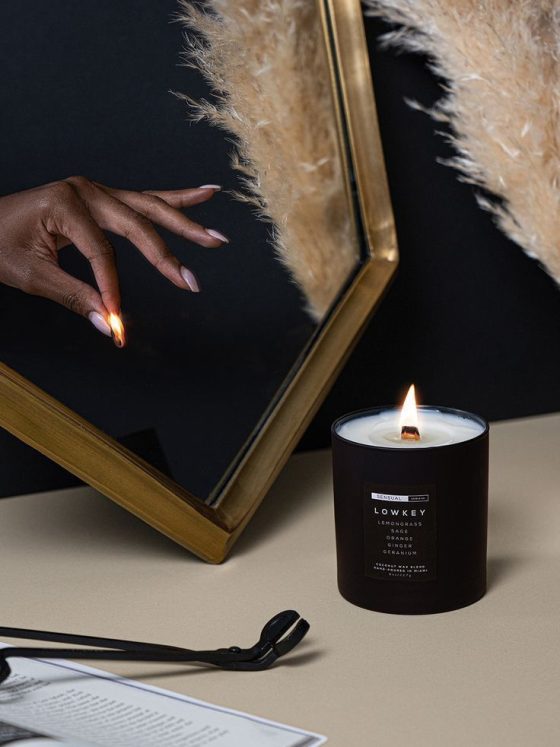
She instead gravitates toward the upscale and the traditional, the botanical clarity of traditional skincare routines, or the sustainable weight of a hand-poured candle from an African luxury brand like Aromis. These are comprehensive indicators of an intentional life, not just products.
This environment is intended to assist her “becoming” by appealing to all of her senses in a way that feels both wholesome and in control. She pays for the high cost of managing the cacophony of the outside world through sensory sovereignty. Though they are undoubtedly trendy, she favours the tactile intelligence of artisanal pottery or the rhythmic, soul-cleansing qualities of an Adire-patterned throw because they provide a tangible link to a legacy that prioritises rest as a right. Her curation’s intentional, inclusive chill muffles the London rain and the Lagos heat in this room.
She makes sure her sanctuary is a place where she is repaired, rather than a place where she hides, by creating an environment that seems both intellectually serious and soulfully anchored. Her reluctance to settle for anything less than perfection in her private life is where her political views and sense of self converge. She is a woman who understands exactly who she is, especially when no one is looking. Every smell, sound, and texture is a calculated decision that supports her stance.
ALSO READ:
- Reclaiming Your Peace with an Analogue Weekend Reset
- Why Slow Mornings are the New High-End Wellness Standard
Designing for the Whole Being
The architecture of stillness is the last structural alignment, the ritual of return is the first, and sensory sovereignty is the atmosphere. The Omiren woman believes that her home must be a place for self-realisation rather than just a place to live.
We reject the generic “minimalist” formulas that strip a home of its soul. Rather, we support an environment that reflects her intellectual weight. This portion of her life is devoted to her quest for wholeness, a tangible manifesto that embodies both her political convictions and her sense of self.
Designing for the “whole being” entails establishing spaces that honour her various registers. She wants a place for her Lagos heat inventiveness, which features the striking, structural geometry of African-made furniture, and a place for her “London rain” reflections, which may be a luxurious, eco-friendly velvet recliner.
She is a woman of many worlds, and this inclusive design approach acknowledges that. A woman who makes sure that her relaxation is not just a time for recuperation but also a calculated step in creating her legacy by enveloping herself in objects that tell a tale, such as a handwoven tapestry or an heirloom from Thebe Magugu. This serves as a wholesome and heartfelt reminder that her aspirations and her relaxation are integral aspects of her being.
Conclusion
In the end, the soft landing serves as the final evidence that the Omiren woman does not exist for the benefit of others. At home, the “grammar” of the world is muffled, allowing only her own voice to be heard.
We no longer view the home as merely a matter of aesthetic preference; rather, it is a strategic requirement for the woman who aspires to lead with fullness. She makes sure that her rest is as luxurious and intellectually serious as her goals by designing a setting that acknowledges the “cost” of her everyday self-definition.
Although she has always known who she is, she now has the room to embrace her identity in her refuge. Here, she finds a sustainable, inclusive balance between the “London rain” of her meditations and the “Lagos heat” of her drive. When she finally returns to the outside world, she does so as the author of the week rather than as its survivor. To maintain her authority and make her life a masterpiece of self-realisation, she has used her refuge to realign her soul.
Peace is the ultimate luxury, and your sanctuary is your strategy. To explore how to curate a life of sustainable rest and high-end wholeness, visit the Omiren Styles Wellness Editorial.
Frequently Asked Questions (FAQs):
- Why does Omiren emphasise the “cost” of getting dressed?
For a woman navigating multiple cultural and professional registers, dressing is an intellectual labour. She expends energy to translate her confidence from the boardroom to the owambe accurately. Acknowledging this cost is a soulful, healthy way to validate that her style isn’t just “fashion”; it’s a strategic negotiation of space and respect.
- How does a “soft landing” support my professional ambitions?
You cannot speak with “Monday momentum” if you haven’t had a “sovereign Sunday.” Your sanctuary is the recovery site for your agency. By curating a high-end, sustainable environment, you ensure your rest is as high-performance as your work. It is an authoritative and inclusive approach to preventing burnout and maintaining your competitive edge.
- Is the “architecture of stillness” about being a minimalist?
Not in the Western sense of “owning nothing”. For the Omiren woman, it’s about “meaning more.” It’s an inclusive design philosophy in which every object, whether a sustainable AAKS basket or a heritage textile, serves a purpose in her self-realisation. It’s a trendy yet deeply soulful approach to living in which her political beliefs and personal identity are physically present.
- How do I maintain my “sovereignty” when my schedule is chaotic?
Sovereignty is a position, not a schedule. It’s the healthy, authoritative choice to reclaim small rituals, like the “ritual of the return” or lighting a heritage-scented candle. These acts of sensory sovereignty are sustainable anchors that remind you that you are the author of your day, not a search query for someone else’s agenda.