
Fashion conversations often begin with the designer: the inspiration behind a collection, the brand presenting it and the person wearing the finished outfit. In the Nigerian fashion industry, the story often stops there, even though every garment passes through other skilled hands. Between a reference image and a wearable garment lies another form of authorship. Someone must decide how the cloth will be cut, where volume will sit, how pieces will join and what needs changing when the garment meets a body. Those decisions belong within the fashion story, not outside it.
Tailoring brings these questions into the relationship between customer and maker. A customer supplies fabric, a photograph and preferences; the tailor interprets them through measurements and construction. The result is not determined by the picture alone. It emerges through decisions that can preserve, modify or substantially reshape the original idea. Recognising that contribution means understanding tailoring as skilled judgement, not merely operating a sewing machine.
The scale of that work is easy to underestimate. UNESCO’s 2023 report on the fashion sector in Africa estimated the market value of clothing and footwear in sub-Saharan Africa at US$31 billion in 2020, a figure that includes many imported goods. The same report observes that bespoke tailoring remains prominent in many African countries despite competition from cheap imports. A $31 billion African fashion market does not reach bodies by itself. Many of them are cut, fitted, and finished by people whose names rarely appear near the label.
How Nigerian tailors shape fashion through construction, fitting and technical judgement, and why their work deserves credit and fair working terms.
The People Behind the Clothes
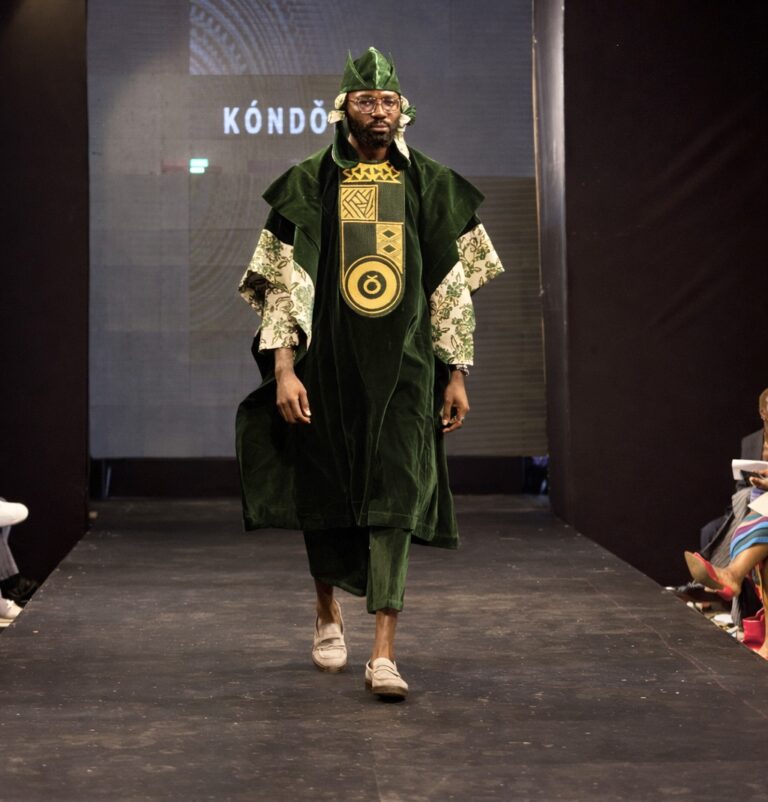
Designers, pattern makers, cutters, machinists, tailors and finishers can contribute different expertise to one garment. Their responsibilities depend on how a business organises production. In a small workshop, one person may develop a style, draft its pattern, cut the fabric, sew the pieces and conduct fittings. Elsewhere, specialists handle separate stages, and a job title does not always reveal the full extent of someone’s contribution.
This overlap matters when assigning credit. Calling one person the designer and another the tailor can suggest that creativity belongs entirely to the first, while the second only executes instructions. Yet construction can require choices that a sketch leaves unresolved. The more accurate question is what each person contributed, and recognition should follow the work performed rather than assumptions about which title carries greater creative authority.
Omiren Styles has examined tailoring, adaptation and the visibility of makers in its analysis of why the last mile of African fashion is often a local tailor. The same questions apply inside Nigerian workshops, where people whose skills are rarely itemised, priced separately, or named in public bridge the distance between concept and clothing.
More Than Sewing: Technical Knowledge at Work
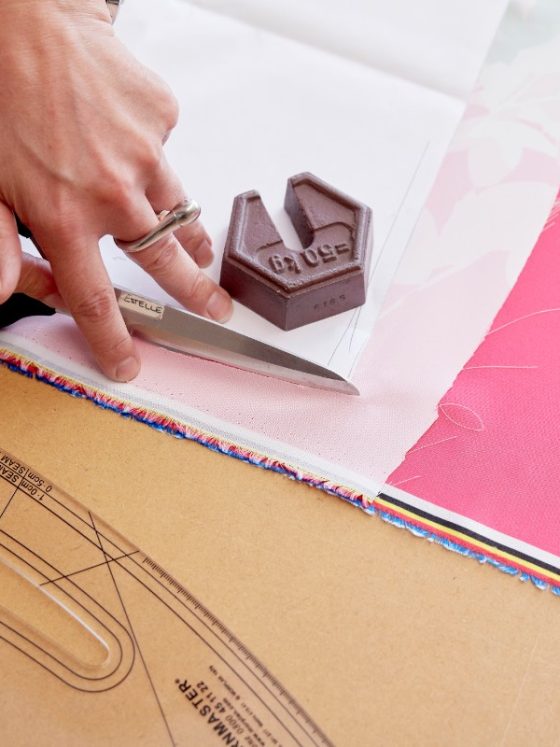
Measurements provide a starting point, but they do not construct a garment by themselves. A pattern translates dimensions and design decisions into shapes that can be cut and assembled. Seam allowances, grain direction, darts and notches help guide that assembly. The placement and accuracy of these elements affect how the pieces relate to one another and how the garment fits, which makes technical preparation part of achieving the intended appearance, not an administrative step before sewing.
Research into informal dressmaking illustrates the range of skills involved. A 2024 study by C. L. Nwadi and A. B. Ezanwu in the Journal of the Association of Vocational and Technical Educators of Nigeria examined pattern-drafting skill needs among 80 purposively selected dressmakers in Nsukka Local Government Area, Enugu State. The sample was drawn from a population of 1,002 dressmakers across six towns, including Nsukka, Opi, Lejja and Obukpa.
Its findings resist a simple verdict. The dressmakers were competent at taking body measurements and at laying and cutting fabric, while basic block drafting, style adaptation and pattern marking emerged as gaps. The authors recommended free training and workshops, regularly updated body size charts and financial help, such as soft loans, for costly equipment. The study’s local scope is important: it cannot describe the competence of Nigerian tailors collectively. It does, however, place specialised drafting knowledge within a discussion too often reduced to whether someone can sew neatly.
Technical development should not be confused with dismissing existing experience. A practitioner may have substantial knowledge of customers, fabric handling and fit while needing further training in a particular drafting method. Useful education identifies those specific needs. Treating everyone as either “skilled” or “unskilled” obscures the mix of abilities a production role can demand.
A Reference Image Is Not a Pattern

Consider a customer arriving with a photograph of a fitted dress. The picture communicates a desired result, but it may not reveal the lining, internal support, fastening or construction at the back. It also records the garment on another body, potentially in a different fabric. Recreating its appearance requires interpretation; the image is an instruction about ambition, not a complete production document.
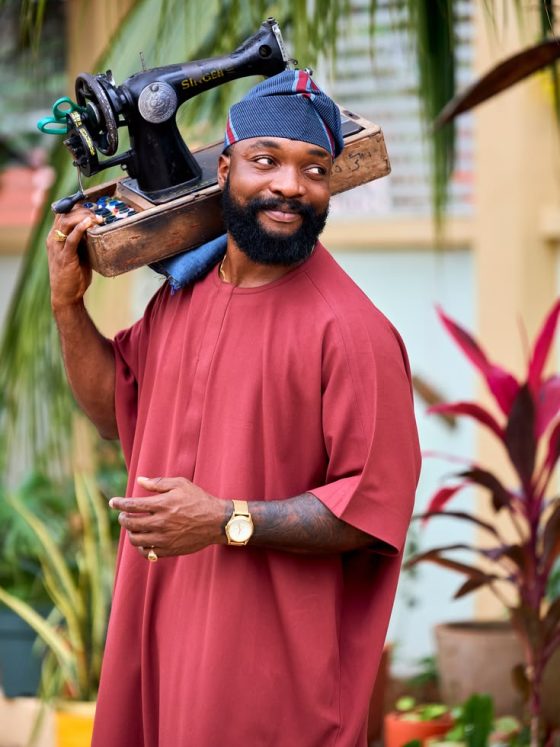
Omiren Styles’ founding essay recalls watching a tailor in Balogun reconstruct a silhouette from a single photograph, working from memory and instinct. That scene is ordinary in Nigerian tailoring, and it is a creative act. The tailor sees what the photograph leaves out and supplies it.
The tailor’s contribution becomes visible through questions. Will the supplied cloth support the intended shape? Does the customer want the same neckline or only the overall silhouette? How much movement is needed? Which details matter most? These are not distractions from the design. They establish what the customer is commissioning and whether the available material can serve it.
Fittings continue that negotiation. A customer may request more room, greater coverage or a different length after seeing the garment on the body. The maker must assess how the adjustment affects adjoining parts. Customisation is therefore not simply a list of optional details. It is a process of reconciling appearance, comfort and use within one piece of clothing.
Training Needs Better Support
Research can help identify where technical support is needed, but its quality and scope require scrutiny. Ogunsile and Ajila’s 2025 paper examined pattern-drafting adoption among 150 garment producers in Ibadan North Local Government Area, Oyo State. It considered knowledge, attitudes, access to training, and material availability. However, the published text contains an unfinished reliability-coefficient placeholder and inconsistencies between some tables and explanations. Its headline percentages should not be treated as national benchmarks for tailoring competence.
The practical issue is nevertheless worth pursuing through stronger evidence: what training would help a particular maker do a particular job better? Pattern development, fitting, construction and production planning require different instruction. Courses should be judged by the abilities participants gain and can apply, not merely by attendance or the number of certificates issued.
Some Nigerian tailoring businesses have built training into their own growth. As Omiren Styles noted in its profile of how Seyi Vodi built a luxury tailoring brand, the Vodi Group runs a training institute that turns the knowledge behind a bespoke reputation into a system others can learn. Programmes of this kind deserve the same test as any other: what can graduates do afterwards that they could not do before?
Training also requires workable conditions. Asking a maker to adopt another method without time to practise or suitable resources risks turning professional development into an added burden. Brands commissioning garments have responsibilities here too: clear specifications, realistic deadlines and timely feedback make it easier for technical knowledge to produce consistent results.
Recognition Must Reach Working Conditions
Public appreciation does not settle how work is commissioned, paid for or managed. Obsidian Advisory Africa’s 2026 report on the Nigerian fashion workforce raises concerns about earnings and employment arrangements across the sector. Its published summary estimates that about three in four workers earn below ₦100,000 a month and that about 60% have no employment contract. It also places tailors, pattern makers and garment technicians among the lowest-paid roles, despite strong demand for their technical skills.
Those findings need careful reading. The research ran from October 2025 to February 2026, drew mainly on respondents in Lagos with some in Abuja, Aba and Kano, and used purposive rather than random sampling. Its headline figures are presented as approximations, and the publisher also offers recruitment services. The summary should not be read as a census of Nigerian tailors or applied indiscriminately to employees, apprentices, and independent business owners. Different working relationships require different questions.
For an employee, those questions include pay, hours, responsibilities and written terms. For an independent tailor, they include the agreed scope, deposit, delivery schedule and responsibility for changes. For an apprentice, they include what will be taught and under which conditions. Collapsing these arrangements into one account of “the fashion worker” can hide the protections each person needs.
Credit is still important. A brand can acknowledge the pattern maker, tailor or production team behind a garment where appropriate and agreed. But a caption cannot compensate for unpaid work or repeated last-minute changes. Visibility should accompany clearer commercial arrangements, not substitute for them. The principle is straightforward: skilled work deserves terms that recognise the time and responsibility involved.
Giving Makers a Place in the Record
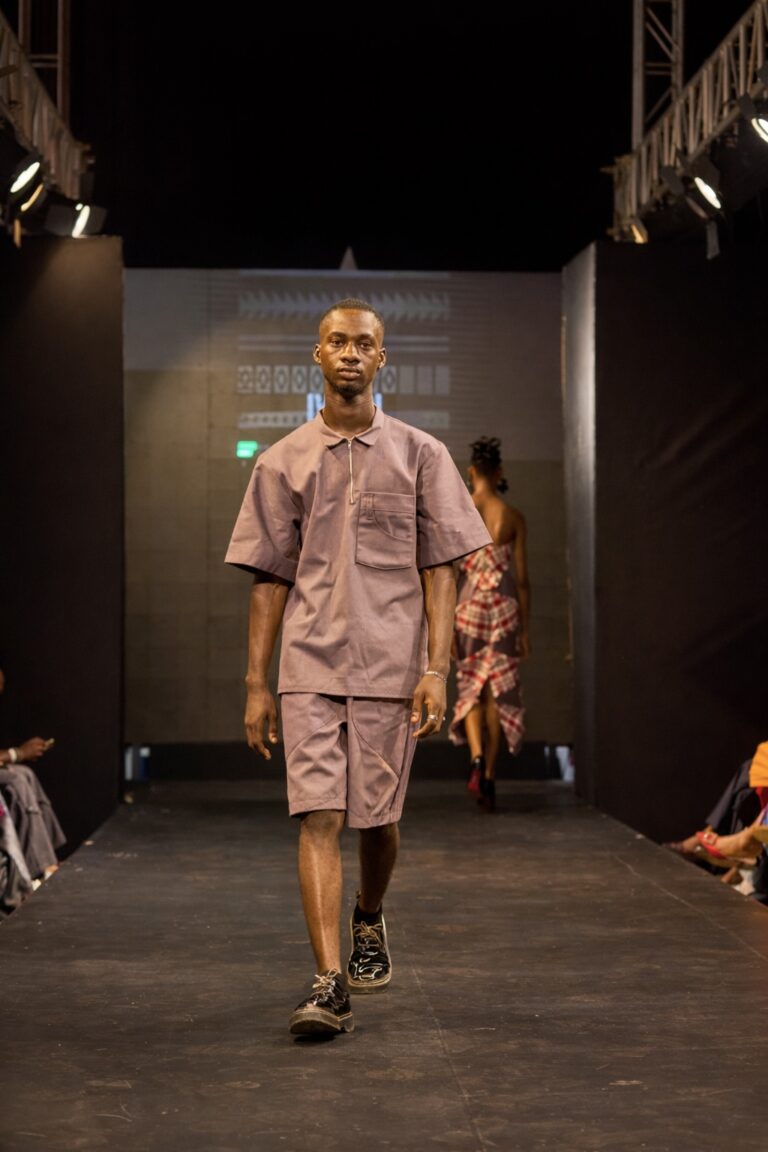
Documenting production can begin with ordinary business practice: recording who developed the pattern, who constructed the sample and which changes were approved during fitting. These records help distinguish an original brief from later revisions. They also make it easier to discuss contributions accurately when the garment is photographed, presented or sold.
Production documents can carry that record further. Omiren Styles has argued, in its analysis of the technical pack as a cultural accountability document, that a construction note naming the maker creates a record that standard supply chain documentation omits. A Lagos or Aba workshop does not need an elaborate system to begin. A dated fitting note and an agreed credit line are enough to start.
This is not an argument against designers. It argues for a fuller description of design. A compelling concept and accomplished construction are not rivals. They answer different questions within the same garment. The Nigerian tailoring industry deserves attention as a field of technical and creative practice, with its own expertise, learning needs and business relationships.
The Omiren Argument
The tailor’s importance is not limited to making an idea wearable. Construction helps determine the idea’s final form. Fit, proportion and finishing are among the qualities through which people encounter a design; the people responsible for those qualities belong in its account.
Recognising Nigerian tailors therefore requires more than praise for craftsmanship. It requires accurate credits, credible research, relevant training and clearer working arrangements. Fashion should document the decisions between concept and clothing as carefully as it documents the inspiration. The maker is not outside the design story. The maker helps write it.
ALSO READ
- West African Menswear: The Tailoring Tradition That Preceded Savile Row.
- The Young Nigerian Tailors Redefining Luxury Menswear Without a Fashion Week Invitation.
- Dressed With Power: How Nigerian Men Redefined Traditional Fashion at the AMVCA 12 Cultural Night.
- How Naira Devaluation Is Reshaping Nigeria’s Fabric Markets.
Frequently Asked Questions
What role do tailors play in the Nigerian fashion industry?
Tailors construct, fit and finish garments, turning a customer’s fabric, reference image and preferences into clothing that works on a specific body. Depending on how a business is organised, they may also develop styles, draft patterns, cut fabric and advise customers on design choices. Their decisions about proportion, fit, and finishing shape what a design becomes, which is why their contribution deserves recognition.
What is the difference between a designer and a tailor?
A designer generally develops a garment’s creative direction, while a tailor specialises in making and fitting clothing. In practice, the line is rarely clean. In many Nigerian workshops, one person performs both roles, and construction often requires choices that a sketch leaves unresolved. Credit should therefore follow the work each person actually performed, not the job title they hold.
Why does technical training matter for tailors?
Garment production involves distinct abilities, including measurement, pattern development, cutting, fitting and construction. A 2024 study of 80 dressmakers in Nsukka found strong measuring and cutting skills alongside gaps in block drafting and style adaptation. Training is most useful when it addresses a maker’s specific needs, is judged by what participants can apply afterwards, and includes time and tools to practise.
How can fashion brands recognise the makers behind their garments?
Brands can record who drafted the pattern, who constructed the sample and which changes were approved at fitting, then agree appropriate credits with the people involved. Recognition should also reach working conditions: clear specifications, realistic deadlines, written terms covering payment and revisions, and timely feedback. A caption naming the tailor matters, but it cannot replace fair pay for skilled work.