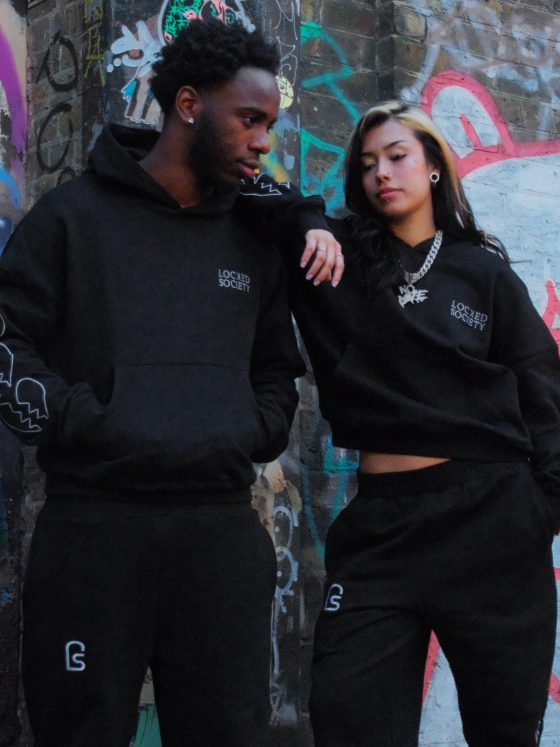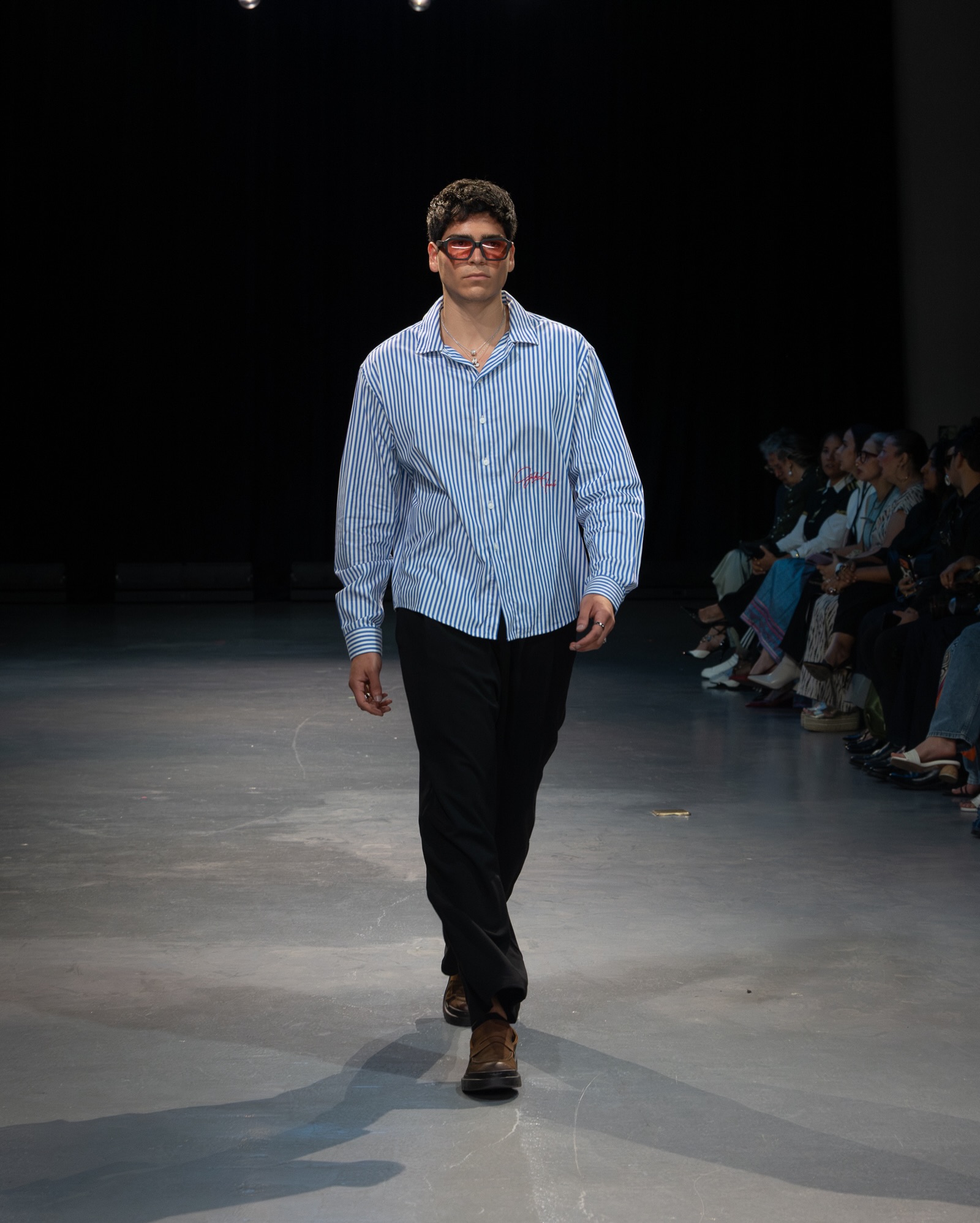
Golden Angels’ everyday proposition begins with coordination. Its official runway gallery identifies Look 01 as “Black hoodie” and Look 02 as “Grey-blue zip jacket.” The accompanying photographs pair each top with trousers in a corresponding dark colour, giving familiar casual pieces the coherence of an outfit. The label describes the presentation through “graphic signatures, relaxed tailoring and everyday uniforms.” “Uniform” is the useful word. These looks do not depend on a single spectacular object. Their proposition lies in the relationship between pieces: how an upper garment and trousers establish a continuous figure, and how a recognisable clothing category becomes part of an intentional combination.
Does that make them successful everyday clothing? It establishes an understandable approach to dressing, not demonstrated comfort or performance. The more revealing test comes when the runway’s complete figure becomes a product a customer must select by colour, size and specification. Golden Angels’ Mocha heavyweight hoodie supplies some concrete information for that decision, but its fit language leaves an important question unresolved.
Golden Angels’ Panama runway proposes coordinated everyday dressing, while its Mocha hoodie listing shows what to check before you buy.
The Black Hoodie Works as Part of a Whole
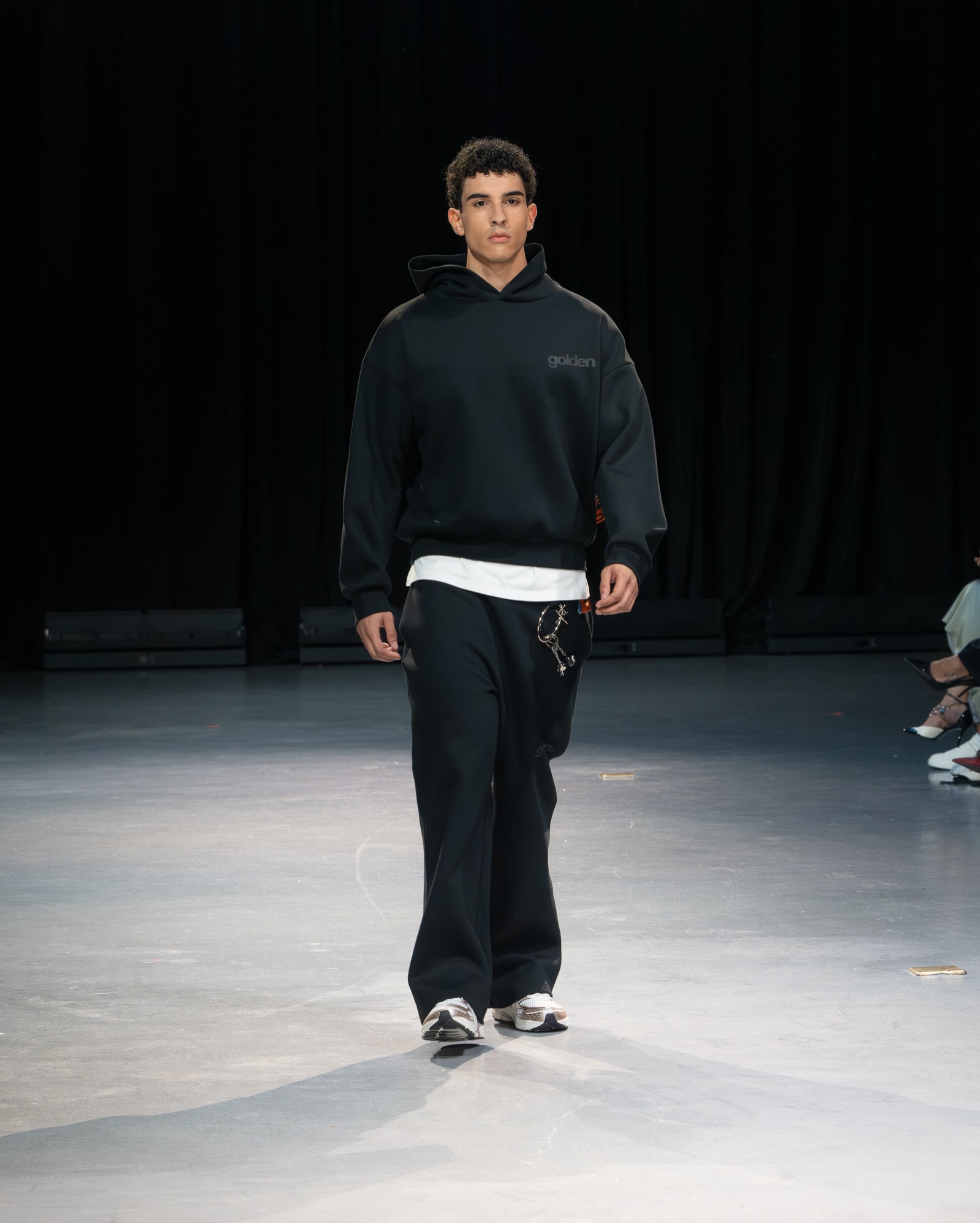
The black hoodie outfit relies on continuity rather than a strong colour division between the upper and lower body. The matching trousers matter to the proposition: they make the hoodie part of a coordinated figure rather than an independent purchase that a customer must assemble into an outfit. The official gallery identifies this as Look 01. That is a modest but legitimate runway contribution. Familiarity is not itself a weakness. The relevant question is whether the presentation gives familiar clothes a sufficiently particular relationship. Here, the dark coordination provides a clear organising decision without requiring an elaborate explanation.
It would nevertheless be a mistake to attribute the entire effect to the hoodie. A customer buying an upper garment alone is not necessarily buying the outfit’s continuity. The trousers, colour relationship, and complete presentation contribute to the result. Any retail comparison therefore needs to distinguish the appeal of the ensemble from the qualities of its individual components.
The Zip Jacket Offers a Different Route
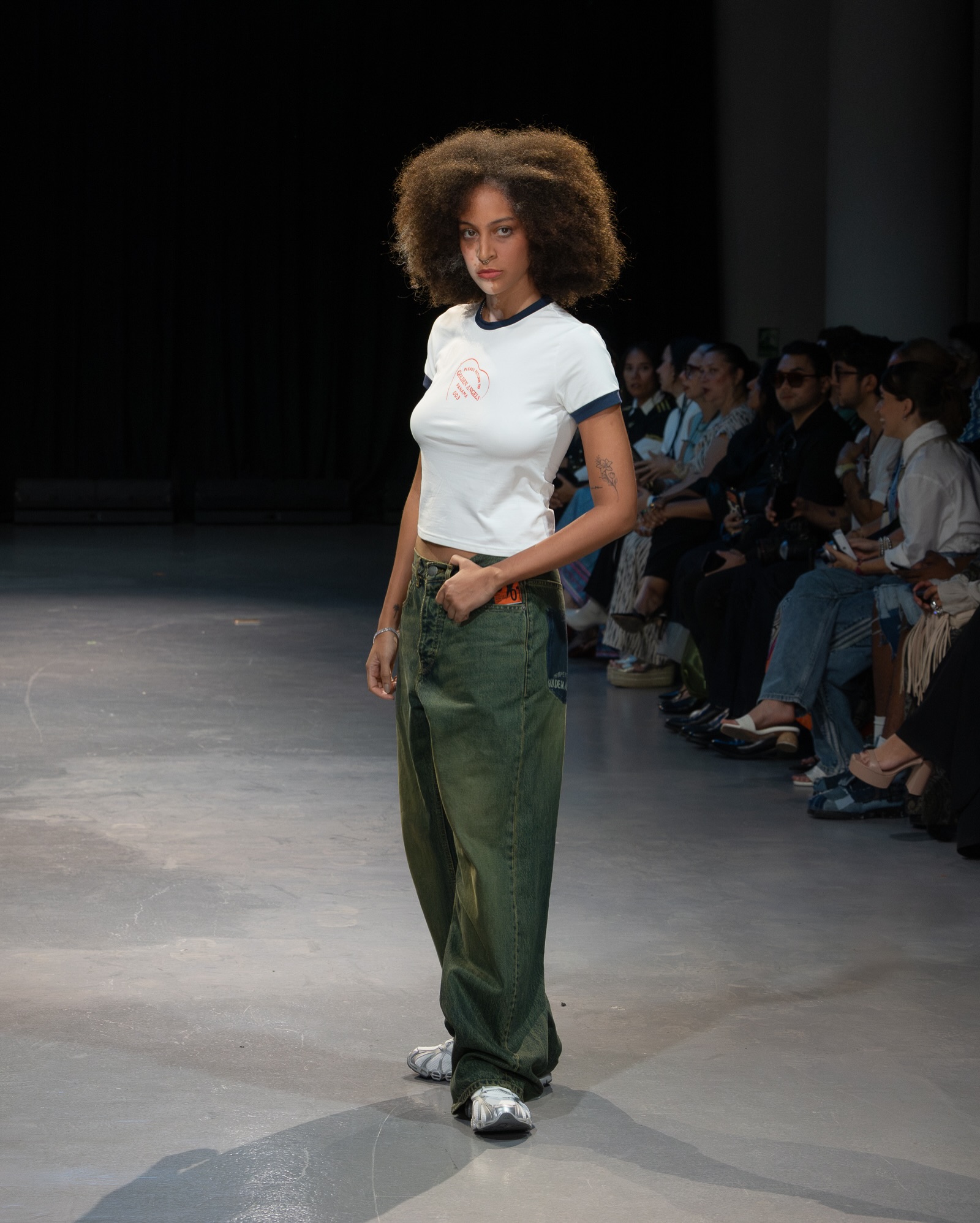
Look 02 swaps the leading garment from a black hoodie for what the brand calls a grey-blue zip jacket. The runway photograph again presents a coordinated relationship with the trousers. The lookbook also includes a section labelled “Grey-blue jacket detail,” giving the jacket a second point of attention beyond the full outfit. The comparison is useful because it shows the collection’s everyday vocabulary isn’t limited to one pullover shape. The zip jacket introduces another way of organising an upper layer while retaining the coordinated approach. The difference is in the garment category and its relationship to the outfit, not merely a change of colour.
The available documentation does not justify ranking one as more comfortable or practical. Nor does a detail photograph establish superior construction. What it does establish is the brand’s invitation to look more closely at the jacket. A full assessment would need to follow that invitation through the actual detail, rather than treating its presence in the gallery as evidence of quality.
One Retail Hoodie Makes the Comparison More Concrete
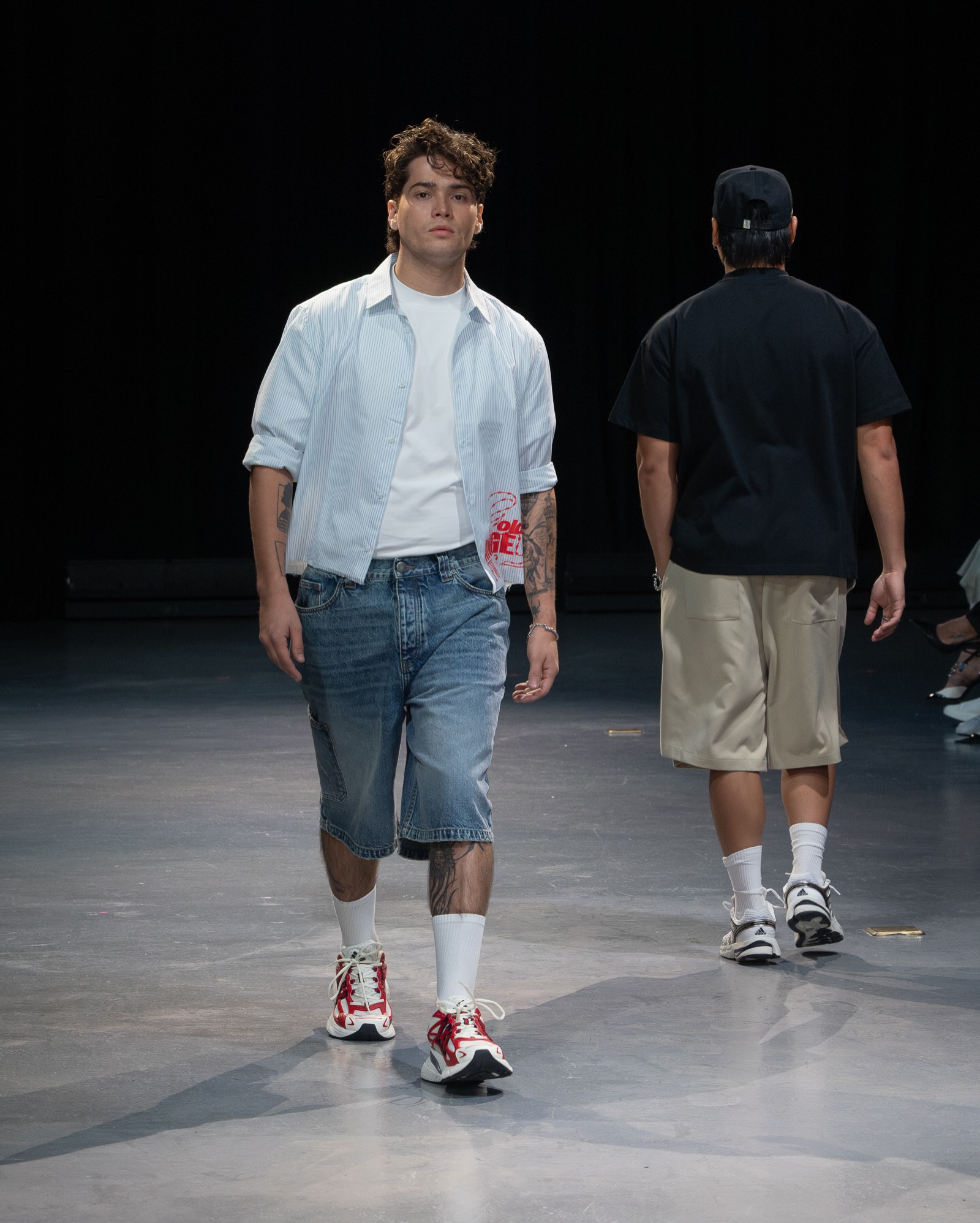
The GA® 2025 Heavyweight Hoodie Mocha is a separately named retail product, listed at $75 when I retrieved it. Its description specifies 400 GSM, a “French Terry Finish” and a “Boxy-Cut FIT.” Those details provide a more definite starting point than the runway gallery’s short garment labels. They also limit the comparison. This is a Mocha product carrying “2025” in its name, while the official runway page identifies a black hoodie in its 2026 presentation. The records examined here do not establish that they share a pattern, fabric or construction. The retail listing shows how Golden Angels describes one customer-facing hoodie, not a specification sheet for Look 01.
That narrower relationship is still worth examining. The runway promises an everyday wardrobe, and the shop must translate that promise into decisions a customer can make. A listed price, fabric-weight figure and intended fit begin that translation. They do not complete it.
The Fit Instructions Need Clarification
The Mocha page uses three related phrases: “Regular Sizing – Boxy FIT,” “Boxy-Cut FIT” and “Size up for regular fit.” The retrieved product text does not explain how those instructions relate to one another. A reader could reasonably understand “regular sizing” as advice to choose a usual size while expecting a boxier shape. The instruction to size up introduces a second decision without defining the result. Does “regular fit” refer to more length, a different balance of width and length, or simply more room? The page text does not settle that question.
The useful next step is a product-specific clarification, not an assumption that the wording is necessarily wrong. Finished dimensions for the intended size, together with an explanation of the sizing advice, would make the listing easier to use. Customers should understand what changes when moving between sizes, rather than infer it from promotional language.
Technical Detail Should Serve the Purchase
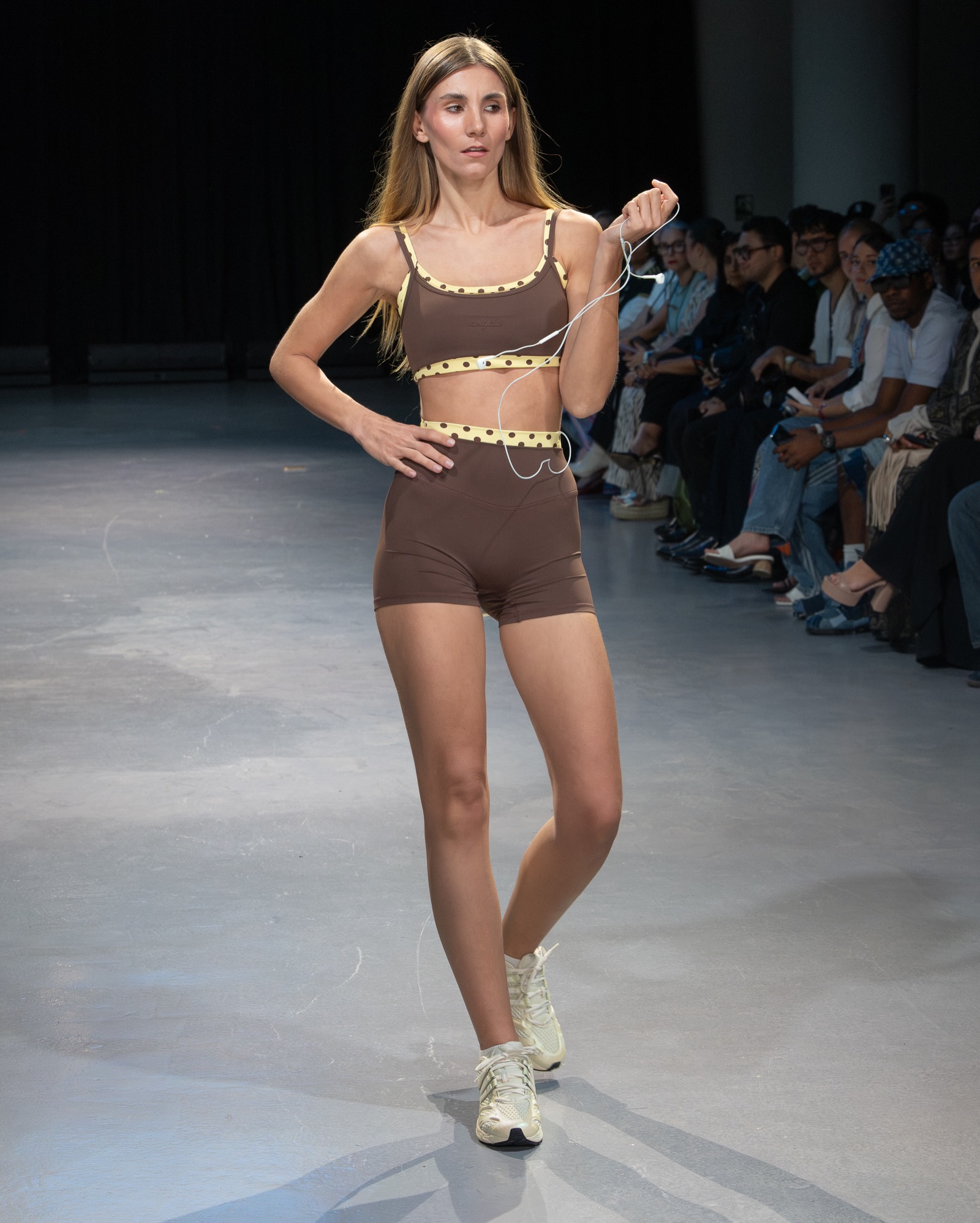
The listing’s fabric-weight figure is more specific than the adjective “heavyweight.” Its French terry description also gives the customer a named material characteristic to ask about. These details are useful, as long as they stay tied to this particular hoodie. They should not be stretched into findings the source cannot support. Neither the weight figure nor the finish description establishes how the hoodie feels over a full day, how it behaves after washing or how long it lasts. The phrase “You won’t regret wearing it,” which also appears on the page, is promotional reassurance rather than evidence of those outcomes.
This is where the distinction between a garment description and a wear assessment matters most. The listing can describe what is being offered. Testing or attributable wearing experience would be needed to judge how that offer performs. More precise specifications improve the buying decision without replacing experience.
The Strongest Proposition Is the Outfit
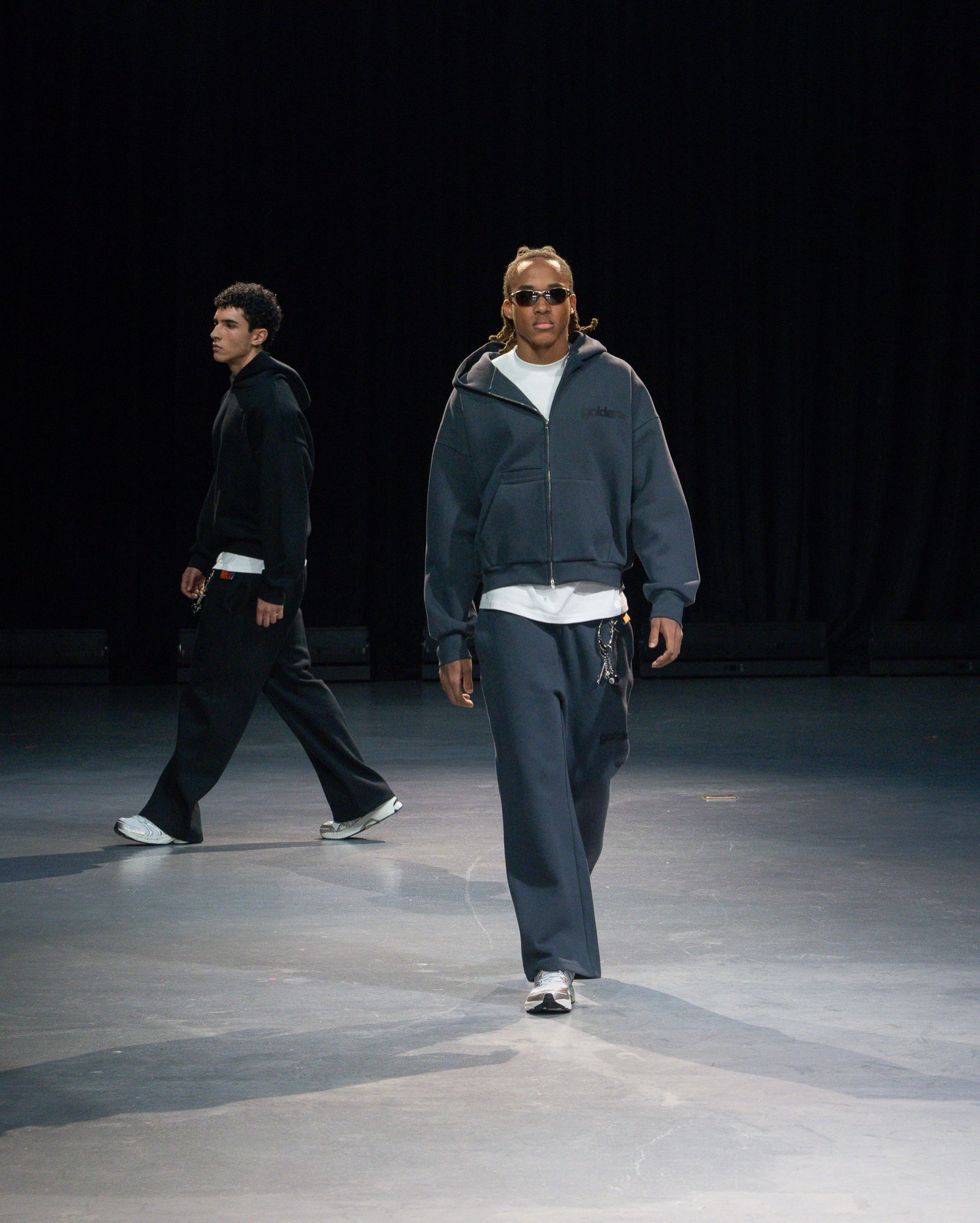
Golden Angels explicitly connects its brand with everyday clothing. Its official account describes graphic identity and relaxed silhouettes across T-shirts, shirts, hoodies and other categories, then directs readers from its 2026 runway presentation towards the shop. The relationship between presentation and daily use is therefore part of the brand’s proposition, not an expectation this article imposes. The selected runway combinations make that proposition intelligible. They show how ordinary categories can be organised through coordination rather than relying entirely on a conspicuous graphic or statement accessory. Their contribution is at the level of the dressed figure.
The product listing has a different responsibility. It must make an individual garment understandable without the rest of the outfit doing the persuasive work. The Mocha hoodie page begins that process with a price, weight and intended shape. Its unresolved fit instructions show where the translation from presentation to purchase needs greater precision.
The Verdict
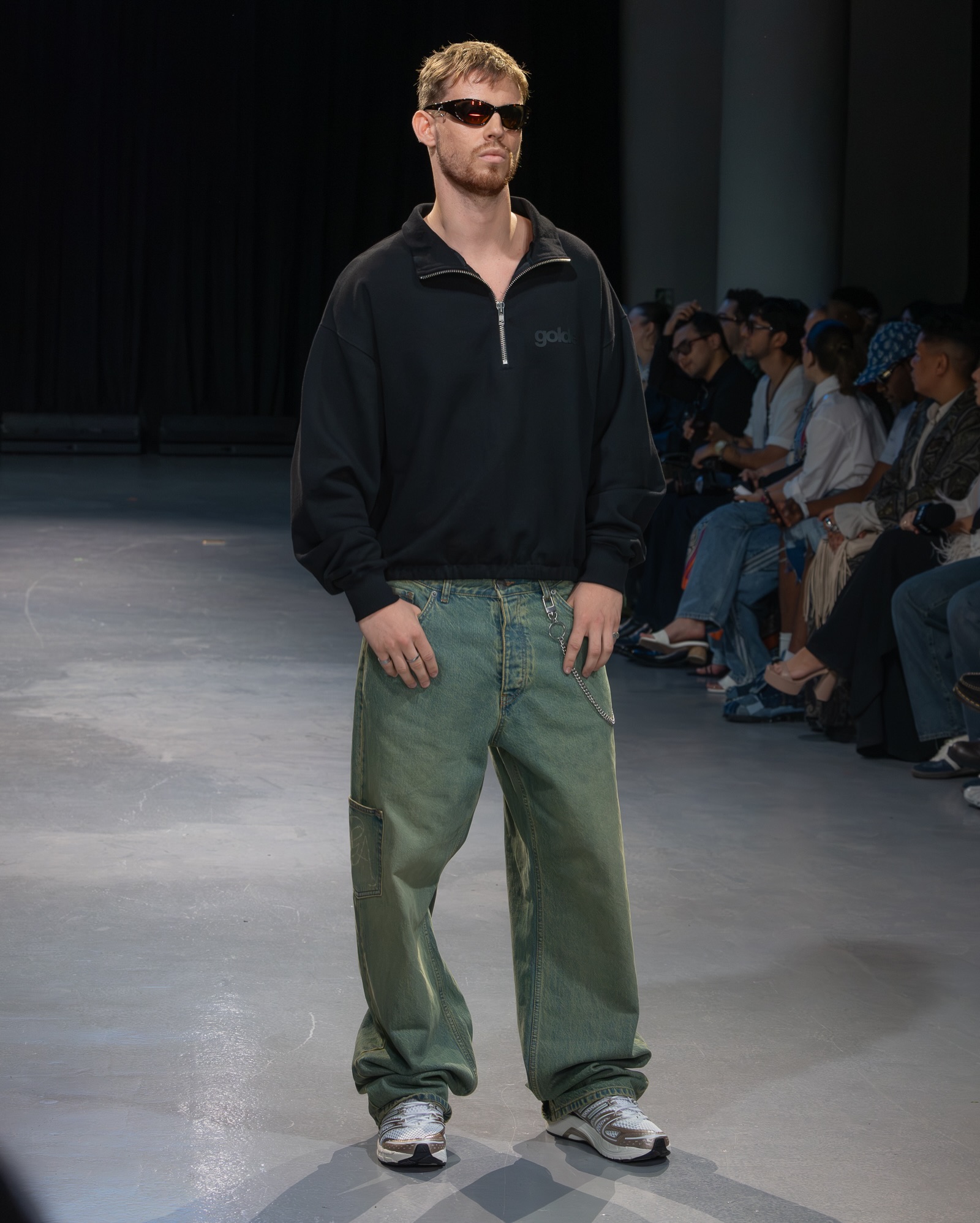
Golden Angels’ selected runway looks make a credible proposal for everyday dressing. Their strength is the relationship between familiar pieces, particularly the continuity created by coordinated upper and lower garments. That is a styling achievement, not proof of practical performance. The retail evidence supports a narrower judgement. One verified hoodie listing gives useful specifications, but it is not an established match to the black runway garment, and its sizing advice requires clarification. On that basis, the collection cannot responsibly be turned into a look-by-look shopping recommendation. The answer is therefore divided: the runway makes everyday dressing look considered; the available evidence does not yet establish how the selected garments work in everyday wear. Golden Angels’ clearest success here is the outfit proposition. A confident product recommendation requires more.
The Omiren Argument
The principle is translation. A runway presents a complete figure; a product page asks a customer to choose a single item.
Golden Angels makes the first task understandable through coordinated casual clothing. The second requires equally deliberate information: a secure connection to the pictured garment, clear specifications and usable fit advice.
Everyday credibility begins with an outfit someone can imagine wearing. It becomes a sound purchase only when the individual garment can be understood without borrowing certainty from the show.
Also Read:
- The Jacket Test: What Can You Check Before Ordering Tailoring Online?
- Cartagena Streetwear: Champeta Culture, Afrocentric Identity, and Urban Dress
- A Line Sheet a Buyer Can Act On: The Information That Belongs Beside the Image
- A Fabric Provenance Claim, Field by Field: What a Buyer Should Ask to See
Frequently Asked Questions
Which presentation does this article examine?
The official Golden Angels lookbook identifies it as Panamá Fashion Week 2026. Its gallery labels the selected outfits “Look 01 Black hoodie” and “Look 02 Grey-blue zip jacket”. The article examines these two looks and one retail hoodie listing, not the full collection.
Is the Mocha hoodie the same garment as the black runway hoodie?
That connection has not been established. They have different colour descriptions, and the retail product carries “2025” in its name while the runway page identifies a 2026 presentation. The sources do not confirm shared specifications, so the listing describes one customer-facing hoodie, not Look 01.
What should a buyer clarify about the retail hoodie?
Ask how “regular sizing”, “boxy fit” and “size up for regular fit” relate to one another. Request finished dimensions for the intended size and an explanation of the result the sizing advice is meant to achieve. The ambiguity arises from the wording on this particular listing.
Has the hoodie been wear-tested for this article?
No. This assessment is not based on any garment inspection, documented try-on, or wash test. The article is a documentary reading of the official lookbook and the retail listing, so it cannot say how the hoodie feels over a full day, how it behaves after washing, or how long it lasts.