Small prints of Adebayo Oke-Lawal’s brother and sister bring an unusually specific kind of reference into Orange Culture’s spring/summer 2025 collection. These are not anonymous images chosen simply for atmosphere. They refer to people within the designer’s life, making family part of the clothing’s documented content.
Vogue identified those prints alongside a coordinated two-piece using Nigerian print references. Here, memory enters through both the personal image and a broader language of familiarity.
That gives the collection a clear starting point, but not an automatic critical success. A photograph can mean a lot to its owner without producing a compelling garment. The more interesting question is what happens when private significance becomes something another person might wear.
Oke-Lawal’s collection moves between direct reference and less literal interventions: comic-like illustrations, concentrated colour, hand-beaded trousers and sleeveless blazers with chest cut-outs. The distinction between those devices is where the analysis should begin.
Orange Culture’s spring/summer 2025 collection uses family-image prints, illustrated clothing and altered tailoring to explore memory and belonging.
A Collection Between Two Cities
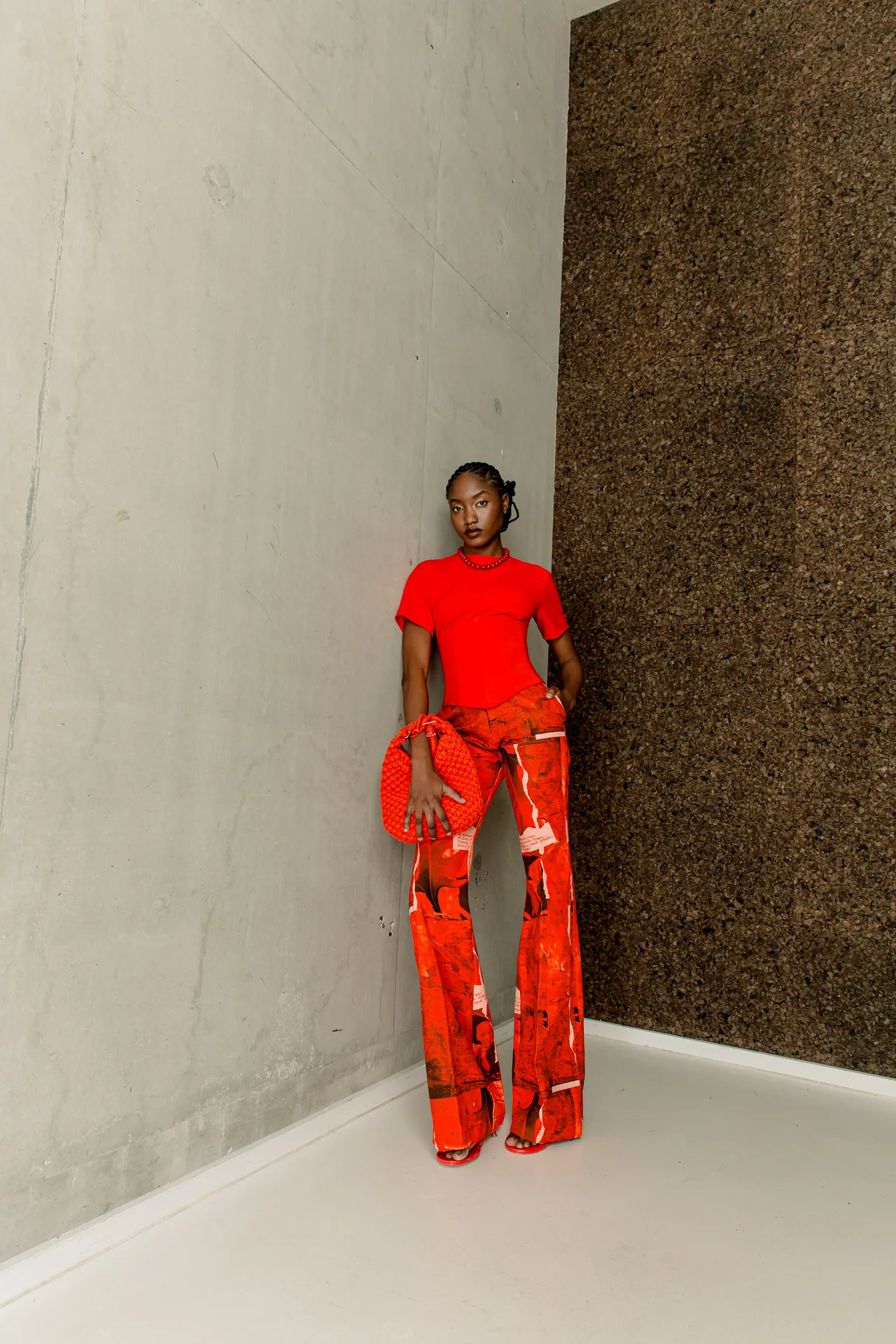
In Vogue’s review, published on 28 October 2024, Oke-Lawal linked the collection to leaving Lagos for London and then dividing his time between the two. Rather than concentrating exclusively on loneliness or dislocation, he wanted to address what makes that movement bearable.
He described creating a nostalgic feeling: a memory someone could hold onto and find reassuring in an unfamiliar environment. This identifies a precise emotional ambition: comfort carried across distance, rather than a general celebration of identity.
The distinction between collection season and presentation date also matters. This is Orange Culture’s spring/summer 2025 collection, documented in Lagos in October 2024. Identifying it by that verified season avoids importing an uncertain thematic title or confusing it with another body of work.
More importantly, the seasonal frame allows the clothes to be discussed as a particular proposition, rather than absorbed into a career-long account of what Orange Culture represents. The subject is not everything Oke-Lawal has said about belonging; it is what these garments contribute to that conversation.
Family Images Make the Reference Explicit
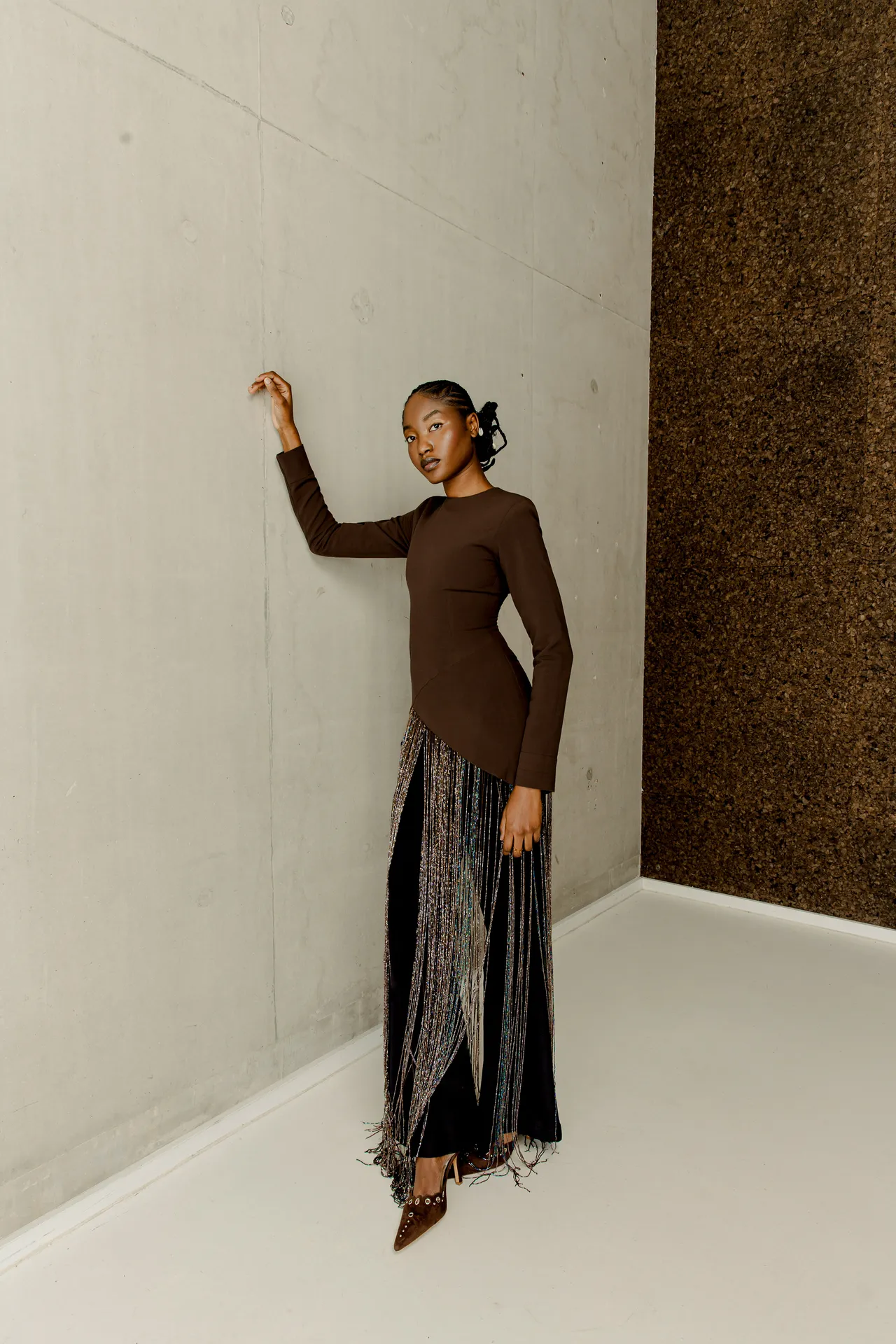
The sibling prints are the collection’s clearest connection between inspiration and clothing. They identify the source of the feeling rather than asking an abstract pattern to communicate an entire biography. Their reported small scale also distinguishes them from a collection organised around oversized photographic imagery.
However, scale alone cannot determine their visual effect: placement, contrast and repetition would decide whether they function as a dominant feature or a more private detail. The published description establishes the family reference, not every aspect of its design resolution.
Their strength is specificity. “Home” can become an expansive fashion theme, accommodating almost any colour or material once the accompanying statement has explained it. An image of a sibling is less interchangeable.
Its limitation is that the emotional connection initially belongs to the designer, not necessarily to the wearer. The garment therefore has two tasks: preserving the reference and offering a convincing appearance beyond it. The photographs support the collection’s personal premise, but their presence should not be mistaken for proof that the clothes succeed independently of that premise.
Familiar Prints, Reassembled as an Outfit
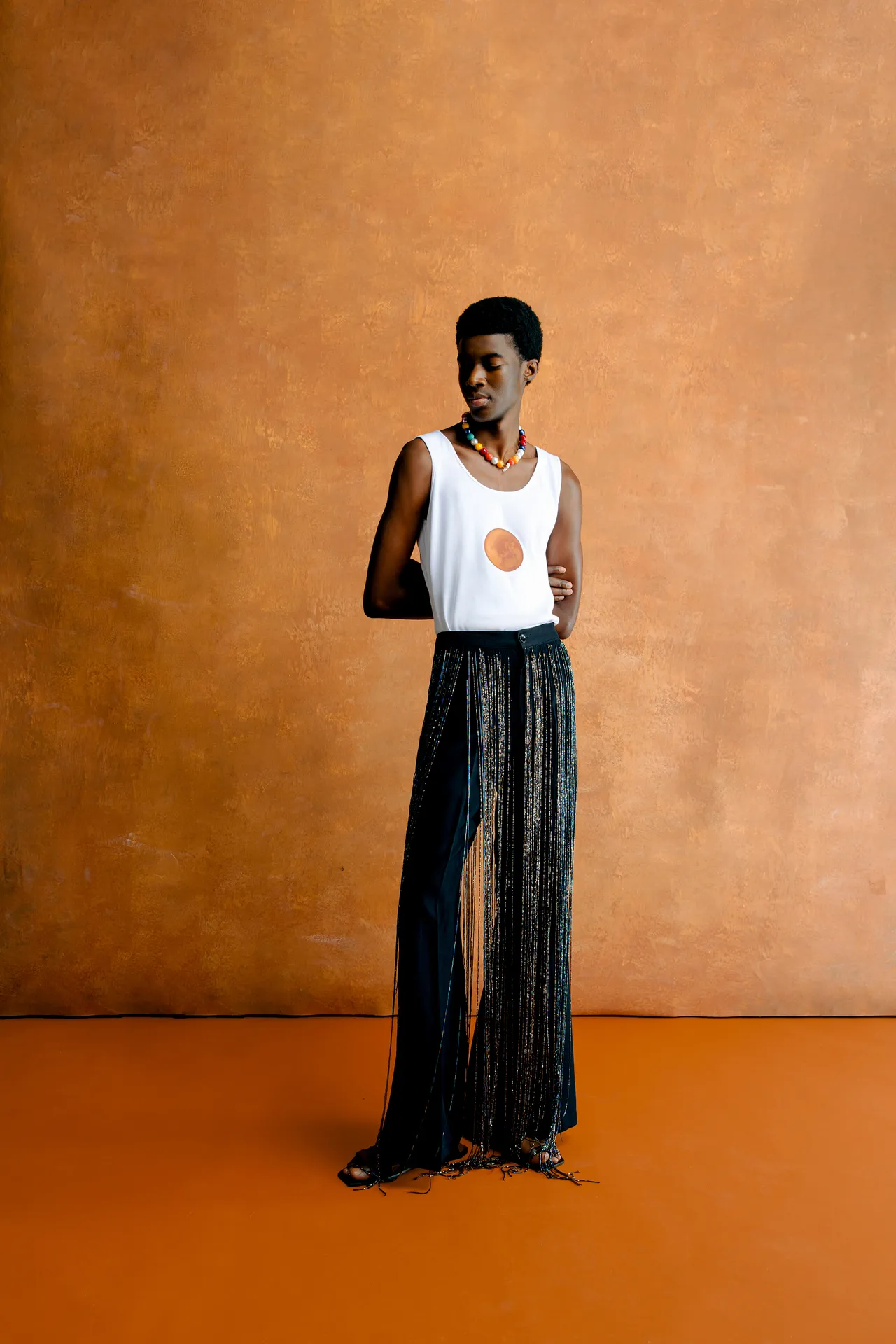
Vogue also documented a matching two-piece incorporating what it described as traditional Nigerian prints. The report does not identify a named textile tradition or establish a specific production technique, so neither should be inferred.
What is documented is the use of those references within a coordinated, playful outfit. That gives this example a different relationship with memory from the sibling photographs: it works through a familiar visual vocabulary rather than a named individual.
Coordination is important because it makes the relationship between garments part of the proposition. A print repeated across separate pieces can create continuity, but that continuity is not the same thing as a resolved silhouette. Length, proportion, and pattern distribution still determine how an outfit reads.
The two-piece is consequently useful evidence of recombination, not an occasion for unqualified claims about heritage preservation. Oke-Lawal was bringing familiar references into a contemporary arrangement; the collection should be assessed through that arrangement, rather than praised simply for including recognisable material.
Illustrated Dialogue Changes the Tone
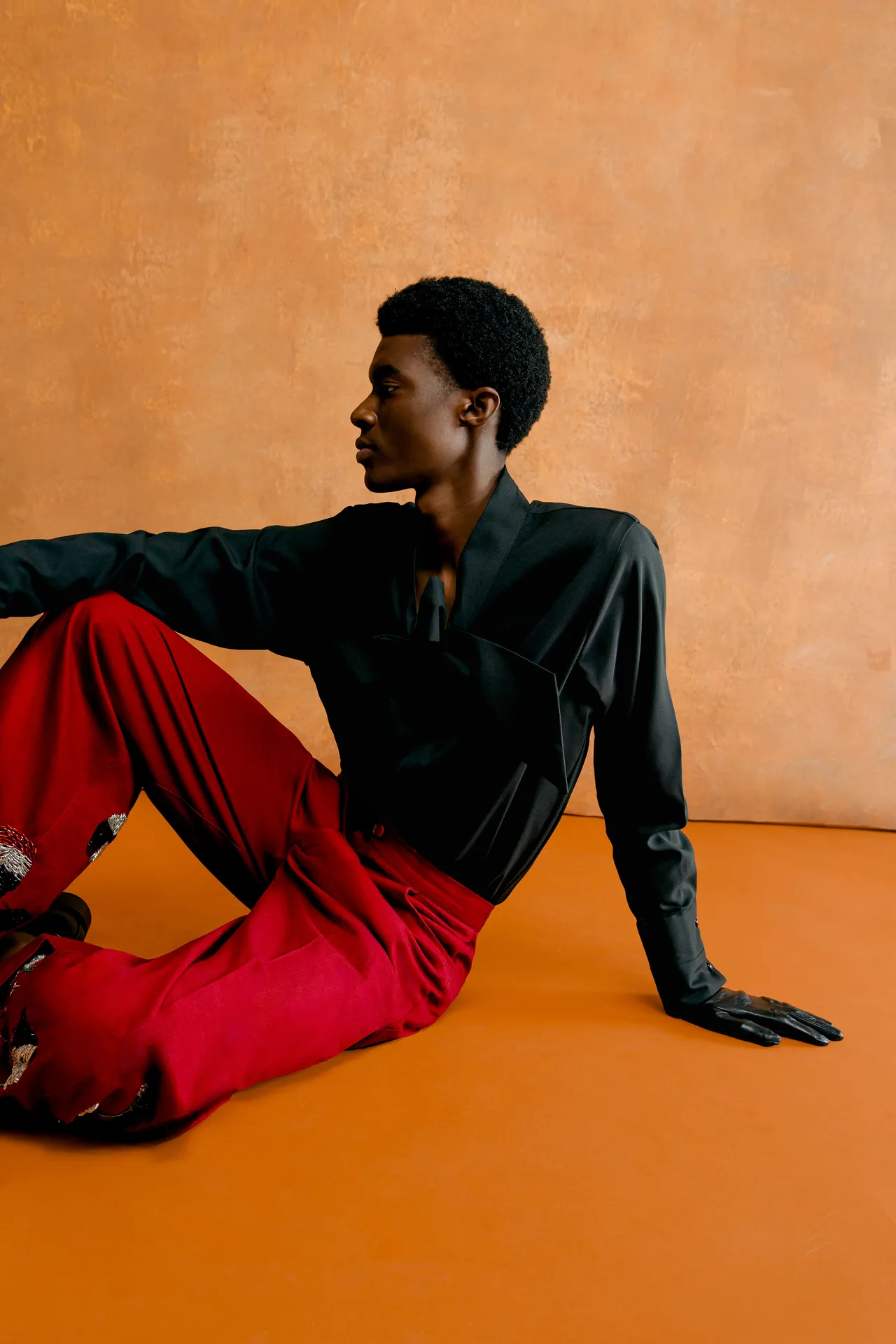
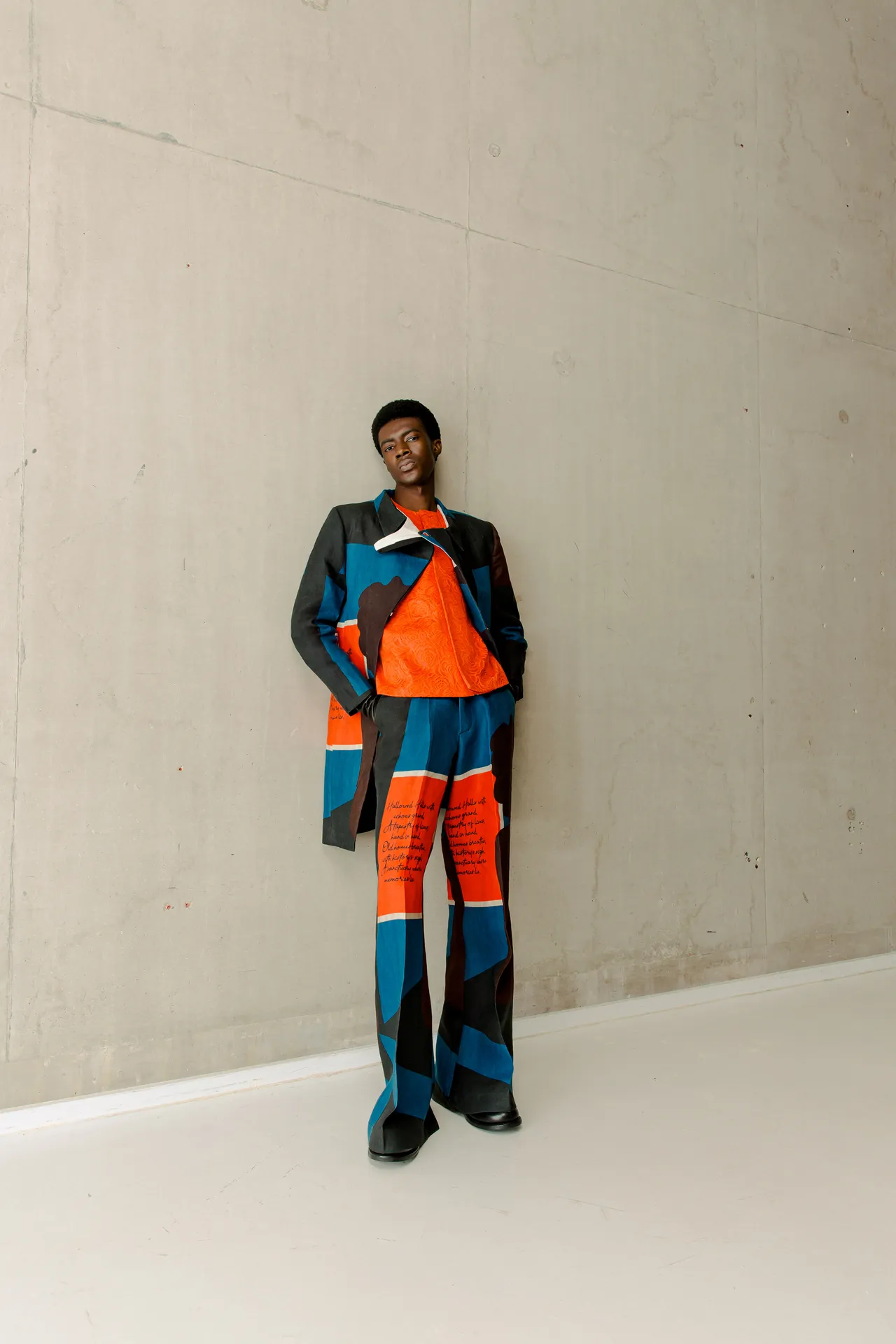
Upasana Das’s Metal Magazine coverage identified comic-page-like illustrations with dialogue printed on some garments. Oke-Lawal connected these prints with playfulness. Unlike a family photograph, which points towards an existing relationship, illustrated dialogue introduces an exchange for the viewer to encounter.
It adds a reading experience to the surface of the clothing without requiring that every image be understood as a literal record of the designer’s childhood. The published account does not establish such a direct autobiographical correspondence.
This changes the emotional register. A collection concerned with distance and belonging need not remain solemn to be coherent. Humour, conversation and ordinary interaction can belong to recollection as much as loss does.
Yet narrative detail creates its own design demand: the garment must remain more than a support for an interesting illustration. The strongest question is not simply what the characters say, but how the printed material operates within the outfit. Here, the documented presence of dialogue gives the collection another route into storytelling; it does not, on its own, settle the quality of the result.
Restraint Is a More Demanding Proposition
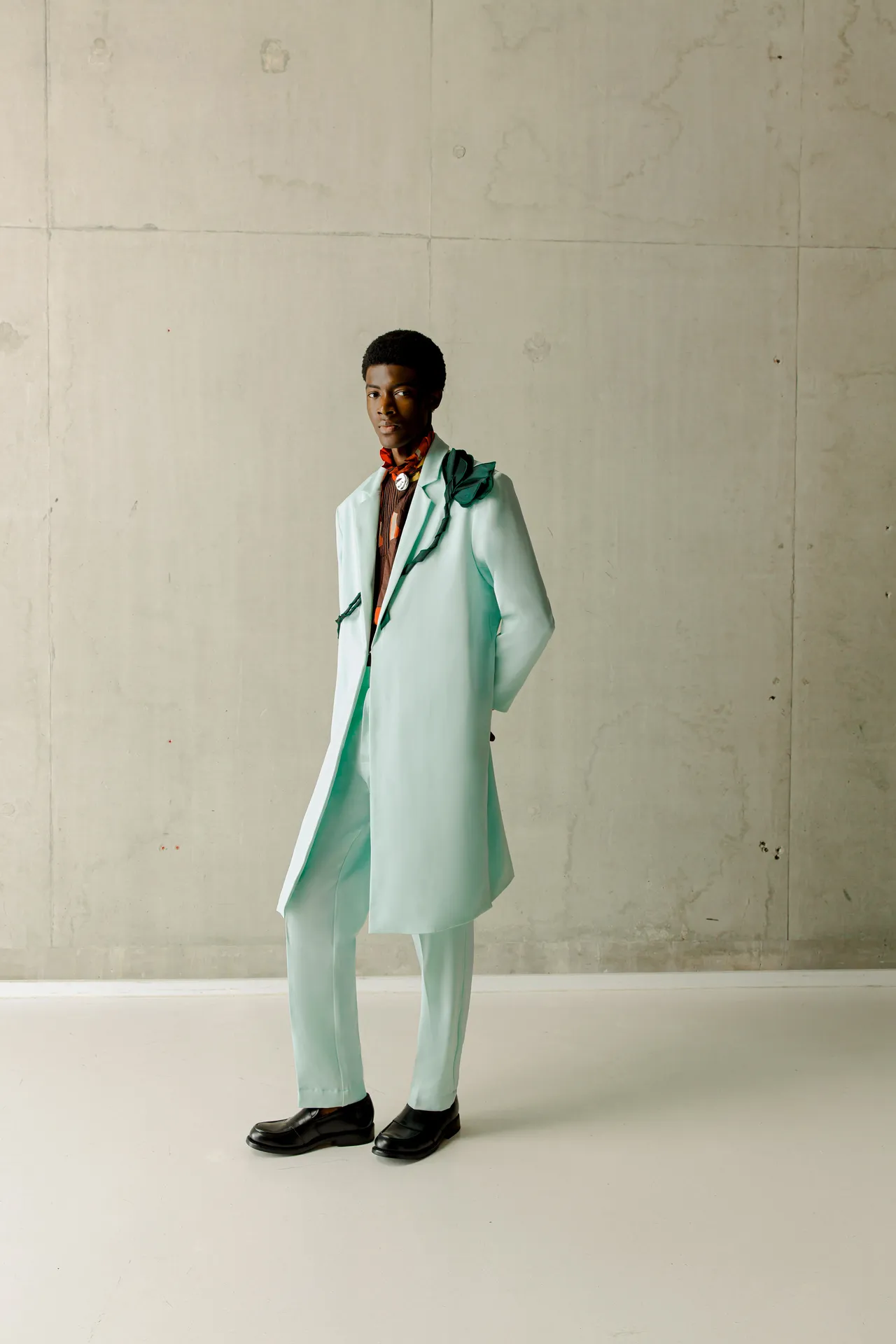
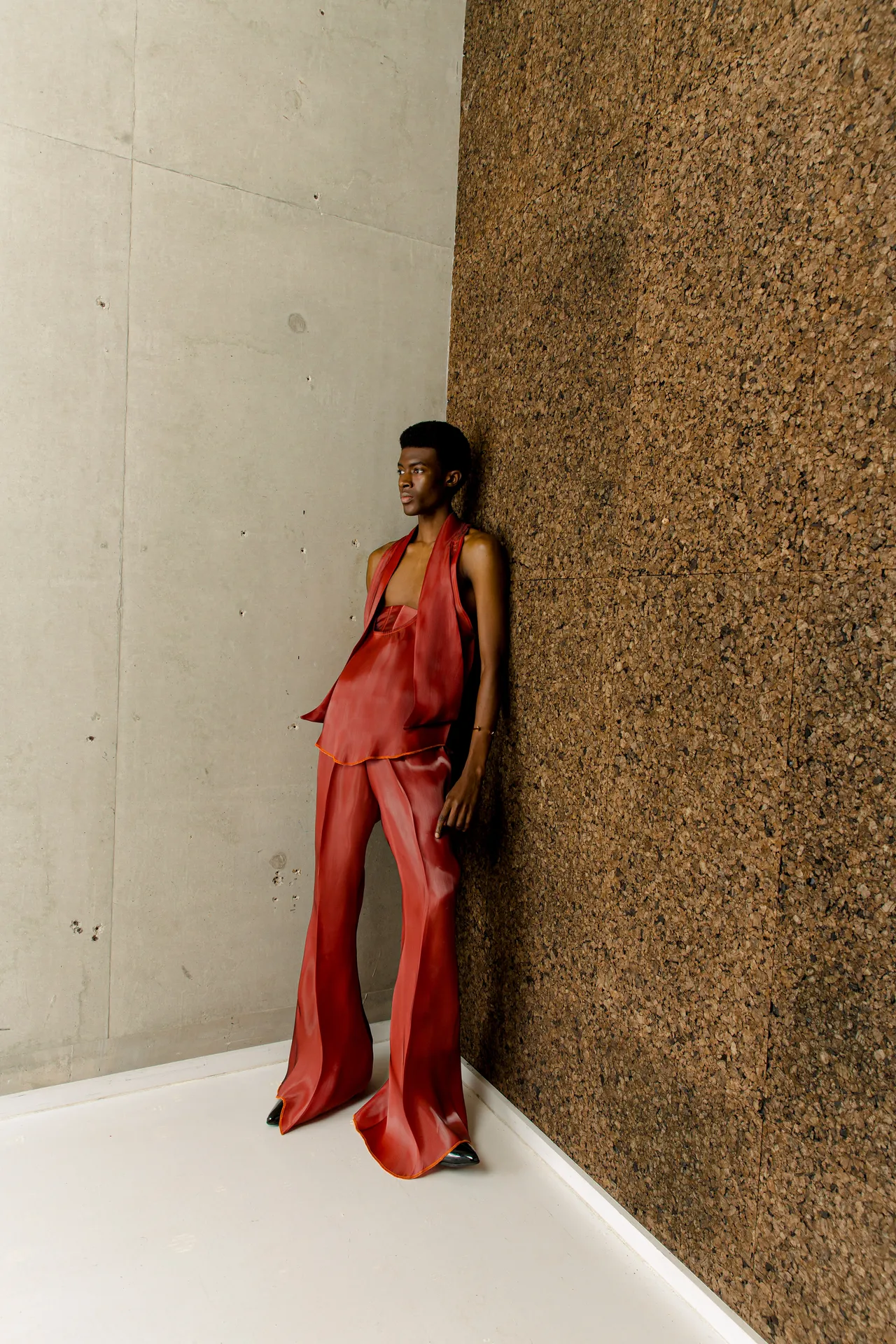
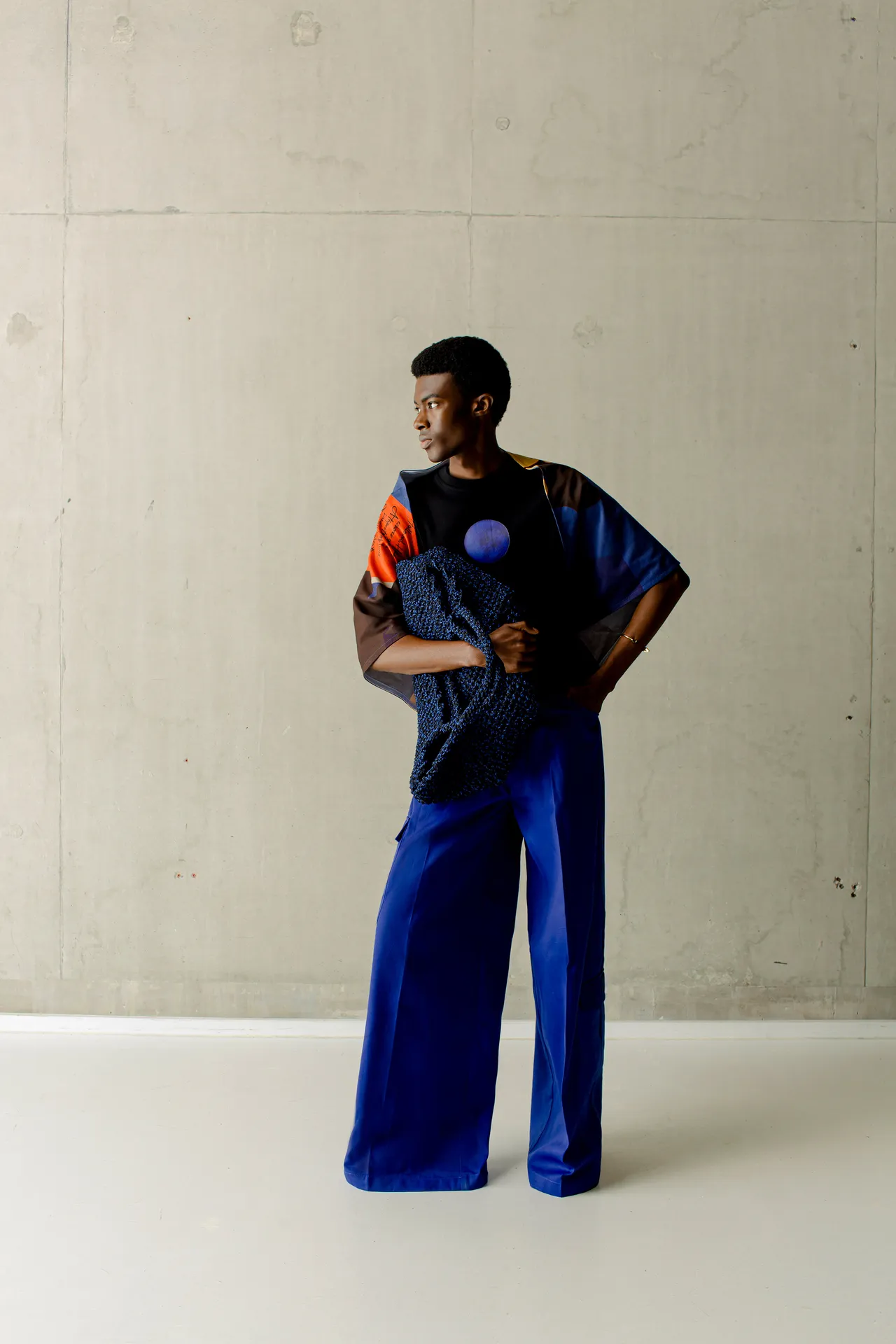
Oke-Lawal’s comments about restraint offer the collection’s most useful bridge between emotion and form. He told Metal Magazine that he wanted to explore “restraint and subtlety”, reflecting a calmer emotional state. Das described minimal pops of colour against monochromatic silhouettes, alongside clean lines and crisp tailoring.
This is more specific than saying that the clothes express vulnerability. It identifies a potential design mechanism: reducing competition within an outfit so that selected elements receive greater attention.
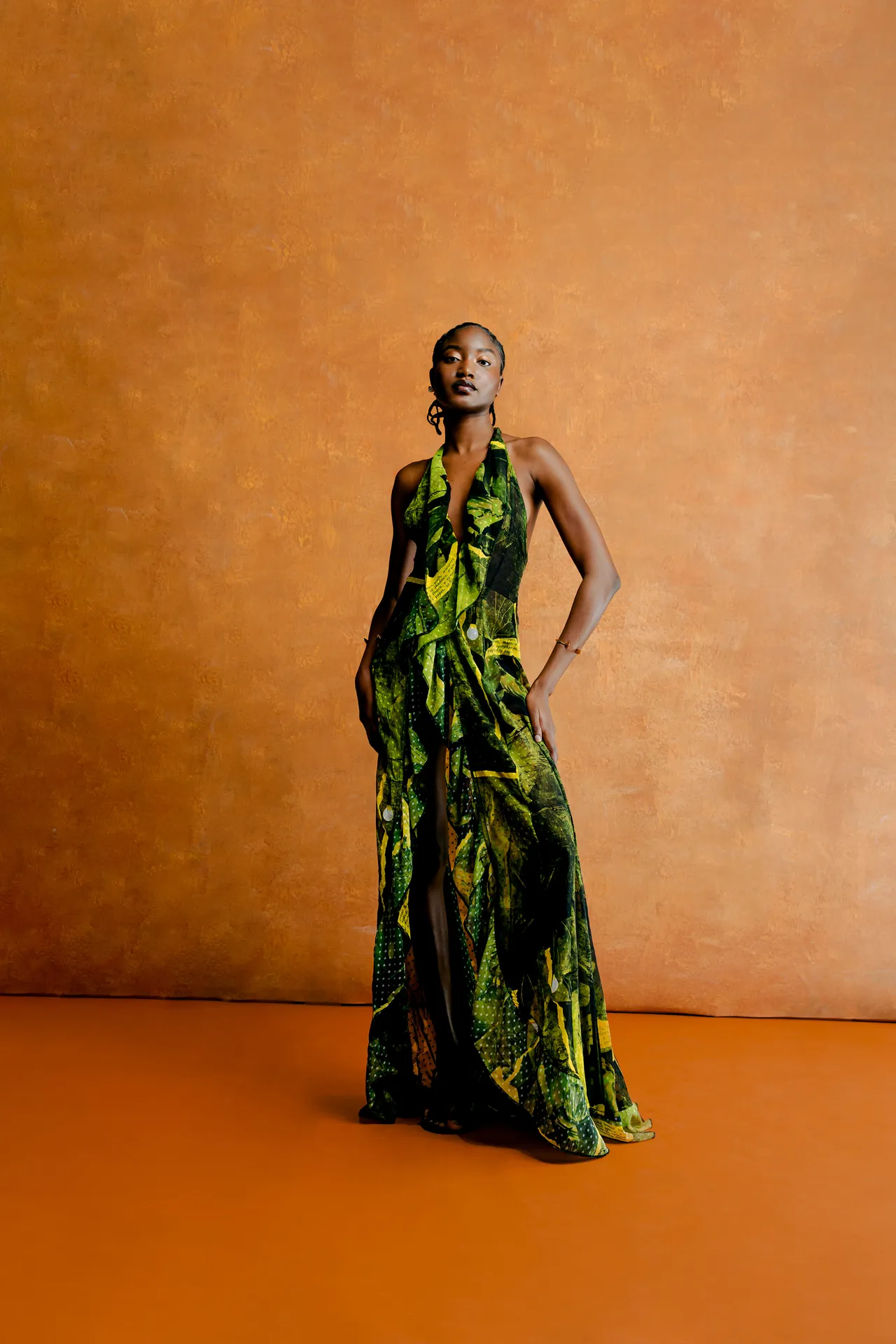
Vogue, meanwhile, recorded both softer, more delicate pieces and colourful, edgier clothing. These descriptions establish variation, not necessarily contradiction. They also do not prove that every transition was resolved.
The relevant critical test would be whether concentrated detail gives the quieter pieces enough distinction, and whether the more emphatic ones remain connected to them. The collection’s stated restraint is therefore best understood as an ambition to examine, not a label to apply uniformly. Its significance lies in making fewer elements responsible for more of the expression.
Altered Tailoring Does Not Need a Symbolic Alibi
Sleeveless blazers with chest cut-outs, documented by Metal Magazine, introduce a different kind of intervention. Here, the interest is not a depicted subject but an alteration to a recognisable garment category.
The blazer remains a point of reference, while the absence of sleeves and the chest opening shift its distribution of coverage. That is enough to establish a design question without immediately turning the garment into a metaphor for migration or an illustration of emotional exposure.
Resist the earlier temptation to read these openings as evidence of a familiar life rearranged unless the designer or closer visual analysis supports it. Such an analogy can sound persuasive precisely because it is broad enough to fit almost any modified garment. A more exact assessment asks what the removal does to the blazer’s balance and its relationship with the body.
This keeps the article distinct from another general argument about Orange Culture and masculinity. The garment deserves attention as an altered form before it is asked to represent an entire social position.
Beading Introduces Another Surface Language
The hand-beaded trousers Das reported extend the collection beyond photographic and illustrated prints. Beading builds a surface through repeated elements rather than through a single depicted scene.
Its presence on trousers also makes the lower part of the outfit a potential point of attention, rather than treating it only as support for a more expressive upper garment. The reported process should remain unattributed: the article does not establish who completed the work, how long it took or how the beads were attached.
Nor does the word “hand-beaded” settle the aesthetic judgement. Labour and visual effectiveness are related questions, not interchangeable answers. The placement and density of embellishment would need to work with the trouser’s proportions rather than merely announce effort.
Within this collection, the trousers matter because they offer another means of expression, one that does not depend on recognising a relative or reading dialogue. They broaden the design vocabulary. Whether they also strengthen its coherence requires more than admiration for the technique.
The Clothes Must Outlast the Setting
Vogue described a presentation in a Lagos members’ club owned by Daniel Obasi, where guests interacted with the pieces as older music played. That environment supported the nostalgic premise.
It also makes separating atmosphere from garment important: a soundtrack can prompt recollection before a viewer has considered what anyone is wearing. The collection’s meaning was presented through clothing, space and music together, but those elements should not be treated as equivalent evidence of design achievement.
The strongest documented connection between premise and garment remains the family imagery. It makes the source of the emotion explicit. The other devices operate more independently: illustrated dialogue introduces play, restraint concerns emphasis, and altered tailoring changes a familiar form.
They need not all signify home in the same way. The collection becomes more interesting when those differences remain visible, rather than when every feature is explained as another successful expression of nostalgia. Its critical value lies in the distance between personal reference and clothing that can enter someone else’s life.
The Omiren Argument
The principle is translation. An emotional premise becomes a design argument when it changes what is selected, printed, removed or emphasised.
Orange Culture’s family imagery makes that translation explicit. The quieter decisions carry a different burden: they must establish interest through their relationship with the garment, not merely through the explanation accompanying it.
The collection should therefore not be praised simply for having a moving story. Its more substantial proposition is that personal familiarity can become clothing without remaining private memorabilia.
The family prints establish the starting point. The tailoring, illustration and surface work must earn the distance travelled beyond it.
Also Read:
- Lagos Fashion Designers Who Stay Are Not Compromising. They Are Winning.
- The Omiren Index 2026: 10 African Ready-to-Wear Labels Building International Fashion Infrastructure
- Runway Visibility Is Not Distribution: Which African Designers Have Verifiable Global Retail Access?
- Lagos Is the New Fashion Capital Nobody in the West Will Officially Admit
Frequently Asked Questions
Which collection does this article examine?
It examines Orange Culture’s spring/summer 2025 collection, documented in Lagos in October 2024. Oke-Lawal told Vogue that moving between Lagos and London shaped his interest in memories that reassure him in unfamiliar surroundings. Vogue’s dated collection page provides the principal seasonal identification and published testimony.
Which garments carry the memory references most directly?
The reported prints of the designer’s brother and sister are the clearest personal references. A matching printed two-piece offers another form of familiarity. Comic-like illustrations, beaded trousers and cut-out blazers broaden the collection’s vocabulary, but their connection with memory should not be assumed to be equally literal.
How does this differ from a general Orange Culture profile?
It examines one seasonal proposition rather than treating the collection as proof of every claim made about the brand. Omiren’s Orange Culture profile provides the broader identity-led framing. This article instead asks which documented garment decisions support the collection’s stated ideas and where interpretation remains necessary.
How was the collection presented?
Vogue described a presentation in a Lagos members’ club owned by Daniel Obasi, where guests interacted with the pieces as older music played. That setting supported the nostalgic premise, but the article treats atmosphere and garment separately, because a soundtrack can prompt recollection before a viewer has considered what anyone is wearing.