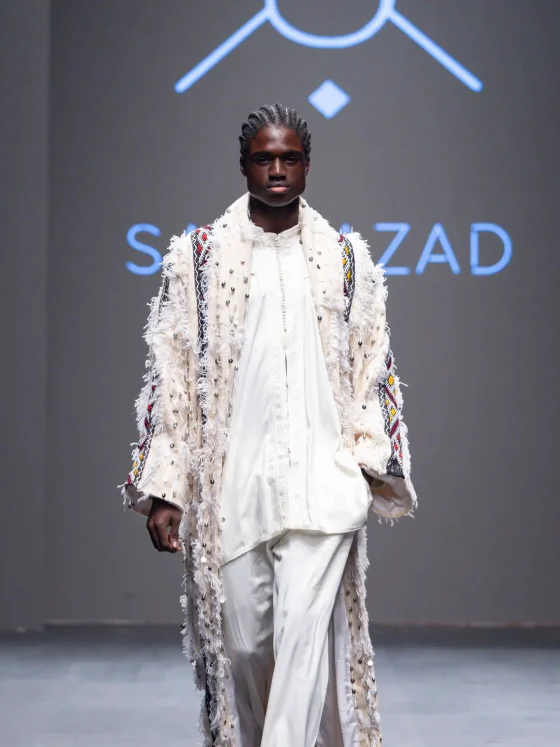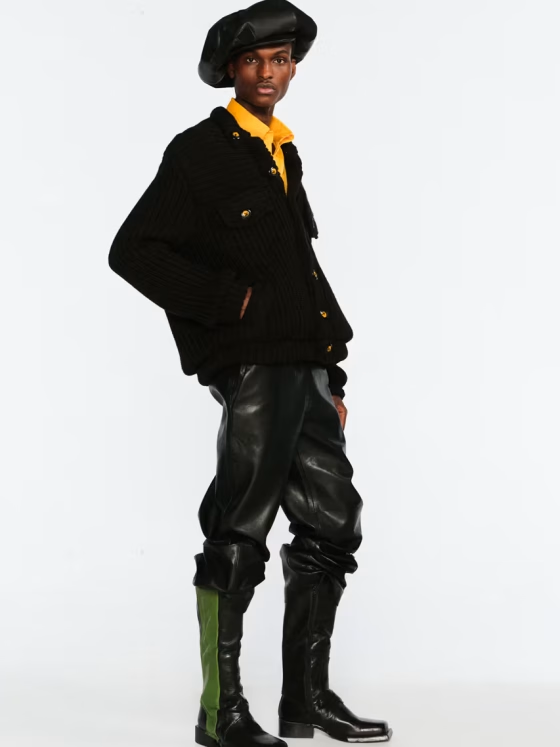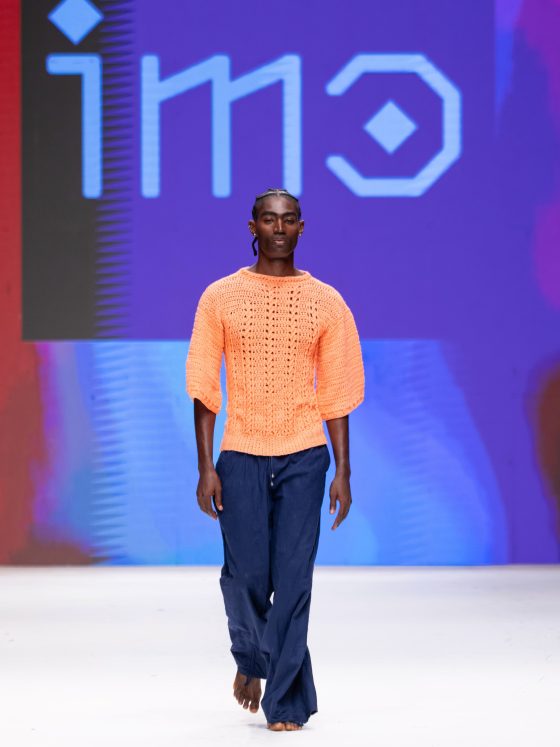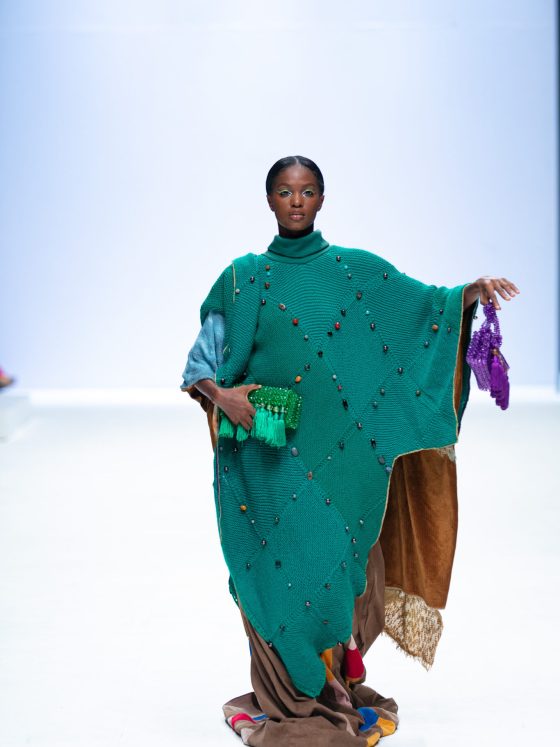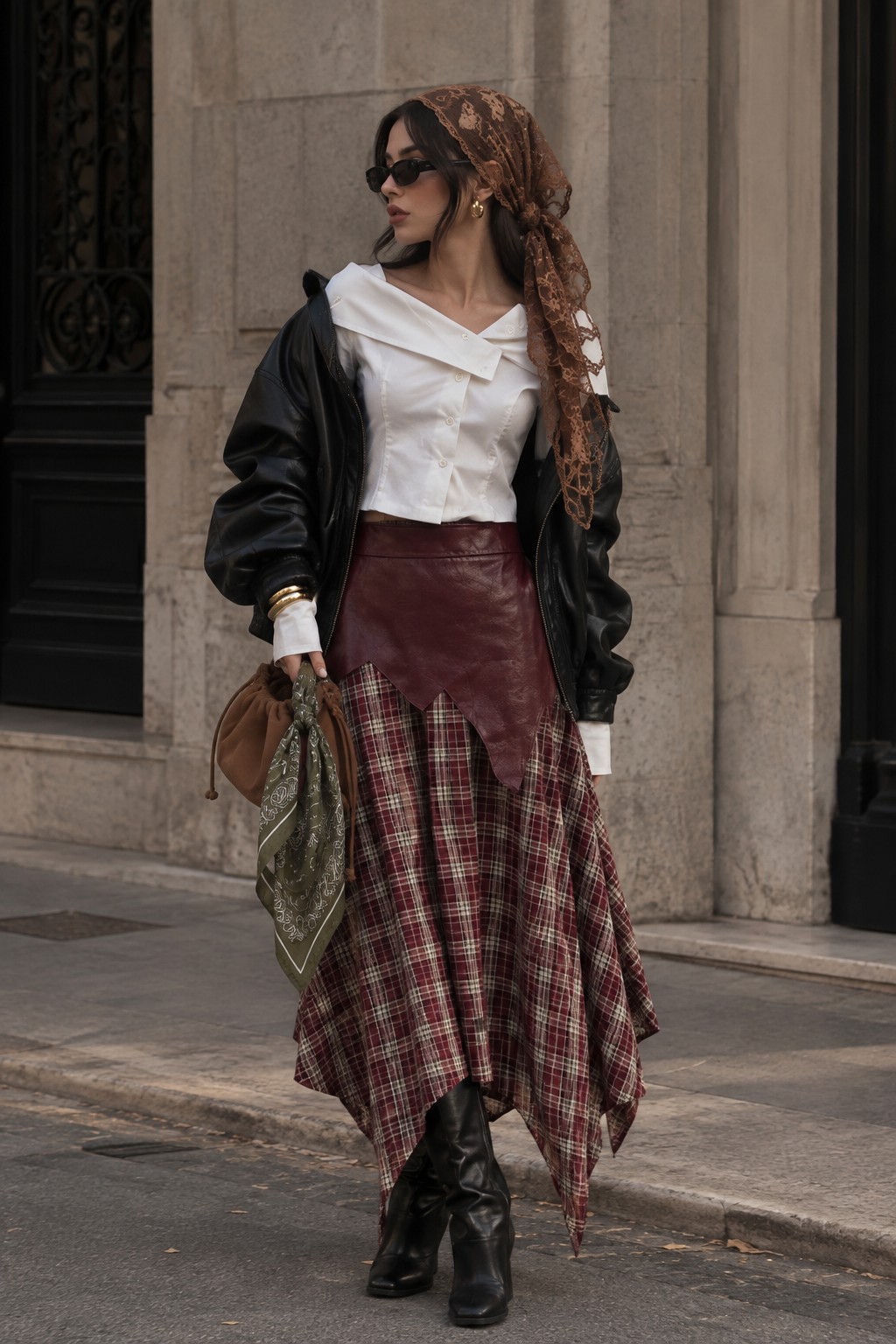
Styling authorship does not require every piece to agree. For Chayma Mhadhbi, it begins with deciding which differences belong together, and what those differences allow a look to express.
In her published essay, Beyond Matching: Soft High Fashion and the Power of Contrast, Mhadhbi describes an approach that replaces conventional coordination with intentional tension. Colour, texture, proportion and accessories become ways of bringing otherwise unlikely pieces into a shared composition.
“I choose pieces that were never meant to meet, and I let them speak to each other,” she writes.
Her 2026 portfolio gives that approach a name: Soft High Fashion. Working between what she describes as feminine softness and urban edge, the emerging Tunis-based creative proposes a styling language in which a romantic element need not soften everything around it, and a forceful accessory need not determine the entire outfit.
The useful distinction is between contrast as an accumulation of differences and contrast as a decision. Mhadhbi’s stated method depends on the second.
Tunis-based stylist Chayma Mhadhbi defines Soft High Fashion through intentional contrast, bringing colour, texture and proportion into conversation.
Colour Needs a Lead, Not a Uniform
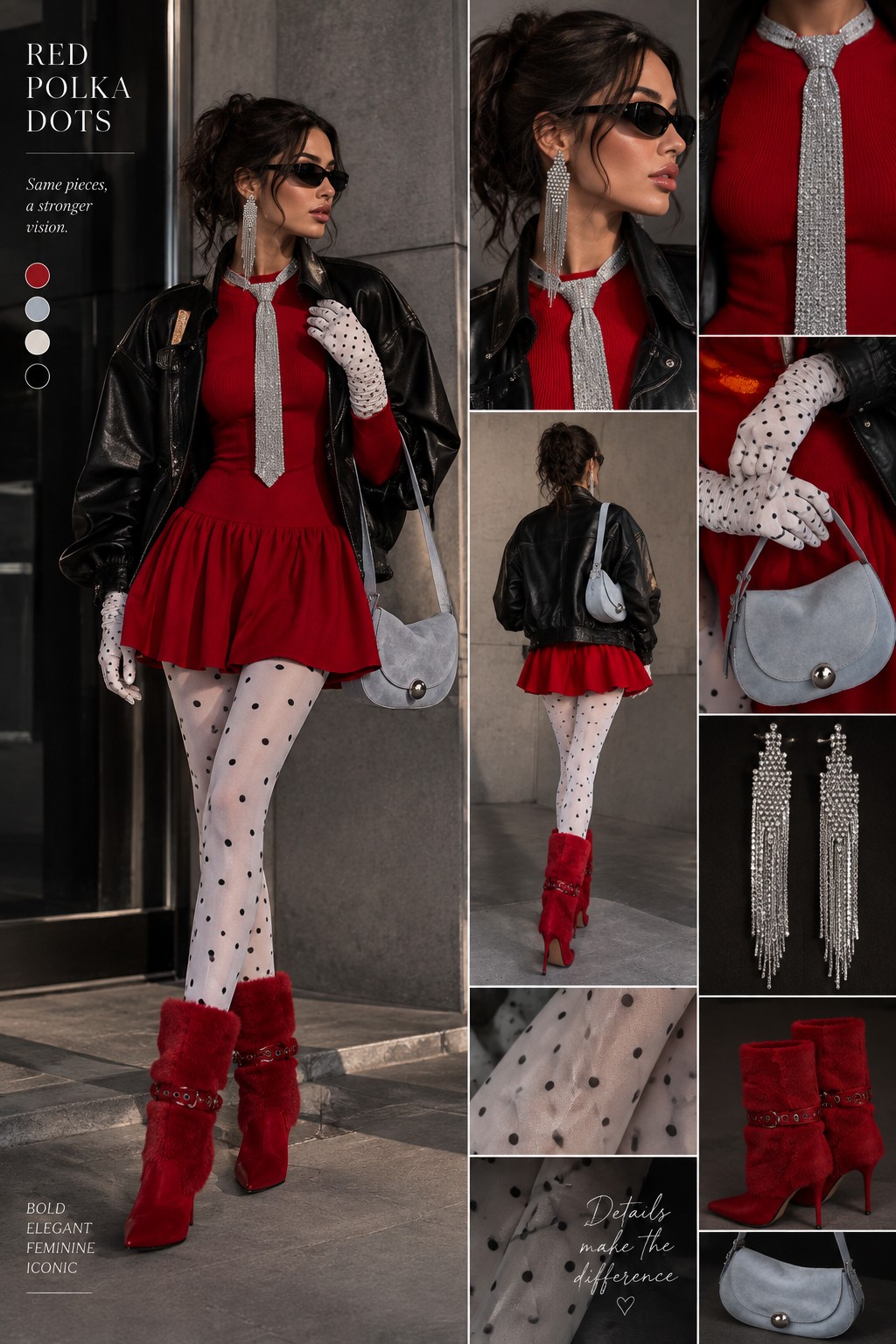
Mhadhbi describes colour as a conversation rather than a set of matching rules. Her essay offers combinations including soft pink with raw denim, red with black leather and white polka dots, and mustard with burgundy and lime green.
The point is not simply the number of colours involved. It is their relationship.
“I let one colour lead while the others answer or challenge it,” she writes.
That sentence gives her method a compositional structure. A lead colour provides emphasis; the others can support it or introduce friction. Agreement is not necessary, but hierarchy remains important.
Her portfolio’s look titles reinforce that interest. Soft Collision, described as “denim × lavender × volume,” places colour alongside material and silhouette. Purple Statement combines a trench, a bubble hem and a colour clash. These descriptions communicate the intended relationships, although the text alone cannot establish how successfully the photographed looks resolve them.
What they do establish is where Mhadhbi locates the work of styling: not in finding identical qualities across garments, but in organising their differences.
Texture Changes the Conversation
Colour is only one part of that organisation.
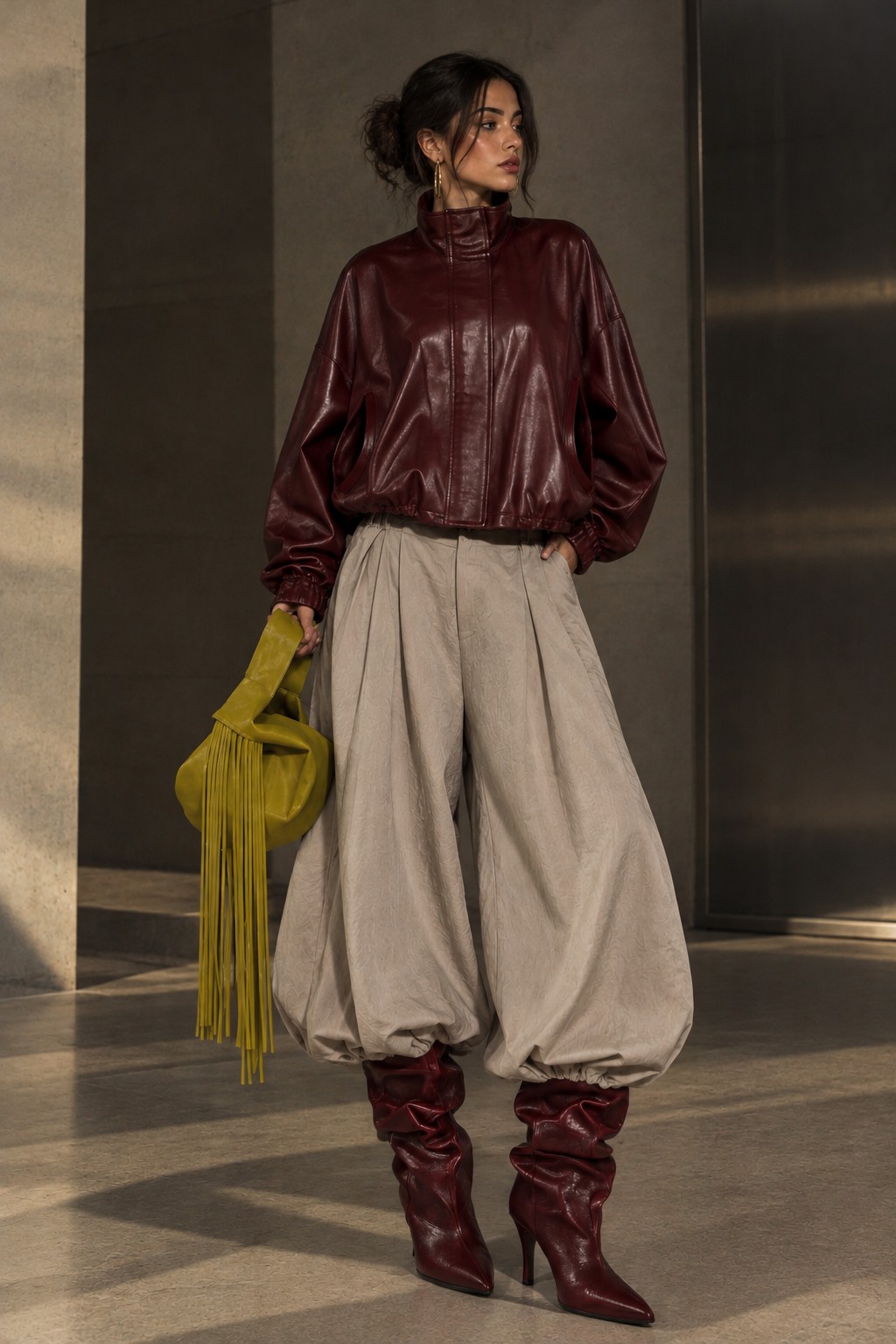
In her essay, Mhadhbi names combinations such as leather with chiffon, raw denim with crystal, and lace with a leather jacket. She describes texture as a way to create depth and visual layers, rather than an embellishment added after the look has been assembled.
These pairings introduce contrasts of surface, density and association. A delicate fabric and a substantial jacket can occupy the same outfit without being asked to perform the same role.
That is particularly relevant to her description of moving between softness and edge. Neither quality has to become the look’s final identity. Each can remain legible through its relationship with the other.
Her portfolio returns to this idea in Soft Edge, described through pink sheer fabric, denim volume and fur boots. The wording places transparency, structure and a pronounced accessory within one composition. Without the portfolio images, it would be premature to judge its balance, but the intended tension is clear.
Mhadhbi also writes that texture can make simple pieces feel expensive. That is best understood as an aesthetic ambition (a desired impression of depth and richness), not a claim about the garments’ monetary value.
Volume Requires a Counterweight
A styling practice based on contrast needs more than unexpected combinations. It needs a way to prevent every element from competing equally.
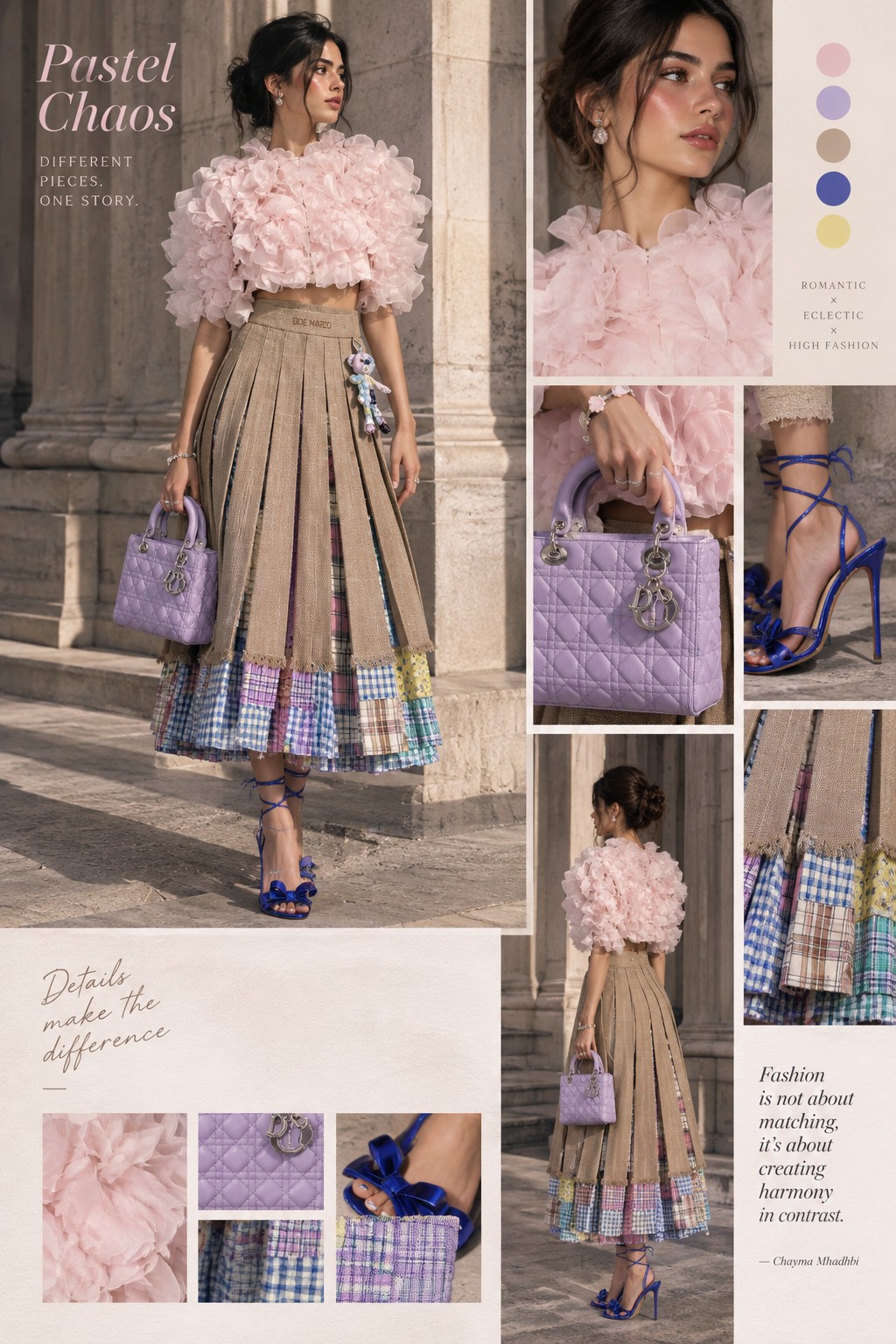
Mhadhbi’s explanation of proportion supplies that restraint. She describes an interest in wide skirts, oversized jackets, statement boots and large hair bows, but says that volume in one area should meet fluidity or precision elsewhere. Her aim is intentional rather than necessarily symmetrical balance.
This is where “soft” becomes more useful than a synonym for delicate.
Within her stated approach, softness can function as a counterweight: movement against structure, a lighter surface against a heavier one, or a quieter area beside an emphatic silhouette. It need not mean avoiding drama.
The portfolio title Pastel Chaos might suggest unrestricted experimentation. Its accompanying phrase, “Different pieces. “One story”, sets a different expectation. The pieces may diverge, but the styling still needs to give them a common direction.
That requirement is essential to Soft High Fashion’s coherence. If every difference demands equal attention, the conversation risks becoming a contest.
Accessories as a Second Lead
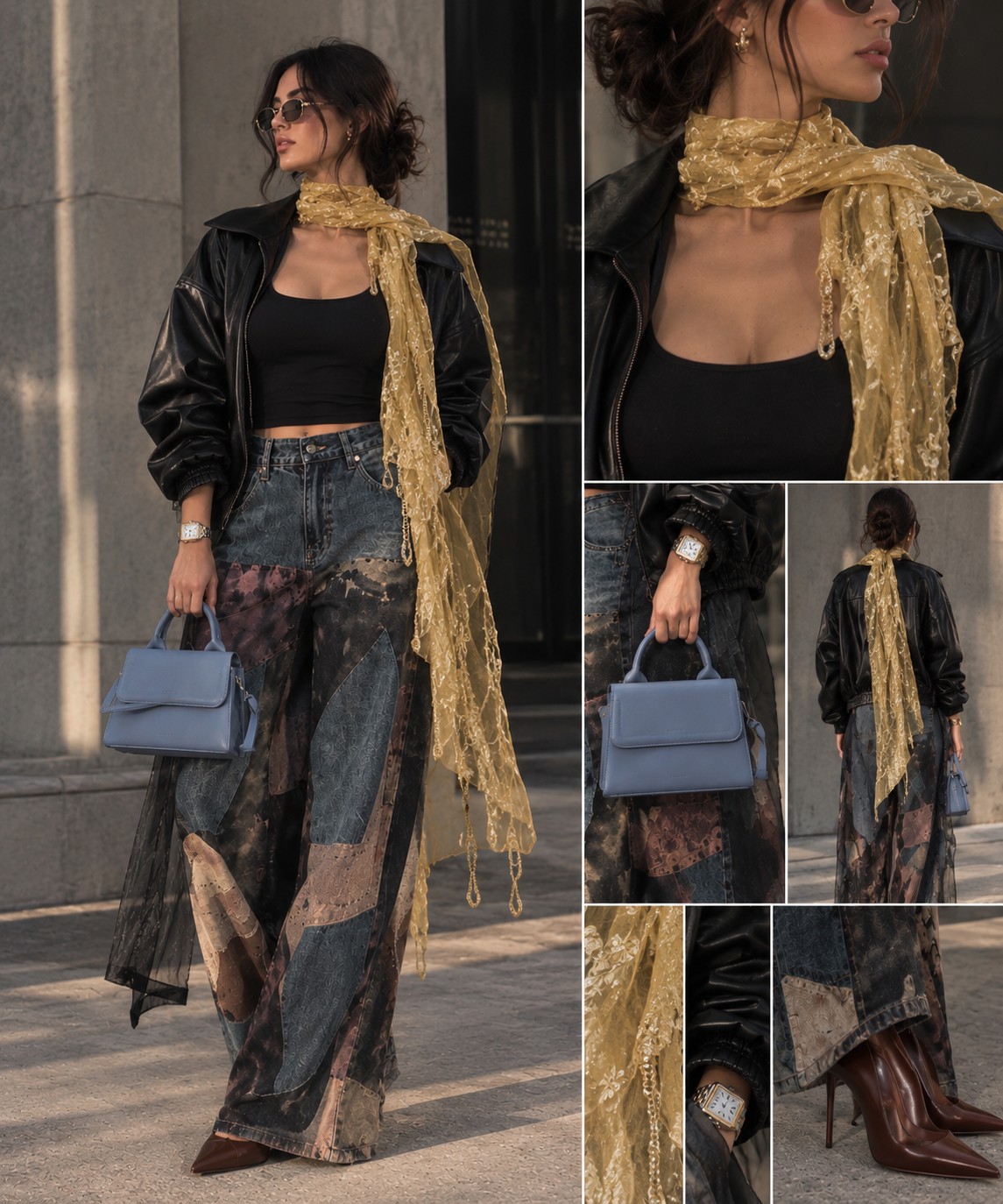
Mhadhbi calls accessories “the second lead,” naming crystal ties, sheer gold scarves, colourful bags, fur boots and long jewellery among her examples.
The phrase places accessories inside the construction of a look rather than at its finishing stage.
A second lead can introduce another character without displacing the first. Applied to styling, that suggests an accessory should do more than repeat an existing colour or confirm the outfit’s mood. It can interrupt expectations, complicate a reference or introduce another scale.
Mhadhbi explicitly describes using accessories that do not necessarily match the rest of a look. For her, that refusal can make an outfit feel more personal.
The critical question is not whether the accessory is noticeable. It is whether its presence changes the composition purposefully.
That is a more demanding test than boldness alone.
A Styling Language, Not an Industry Category
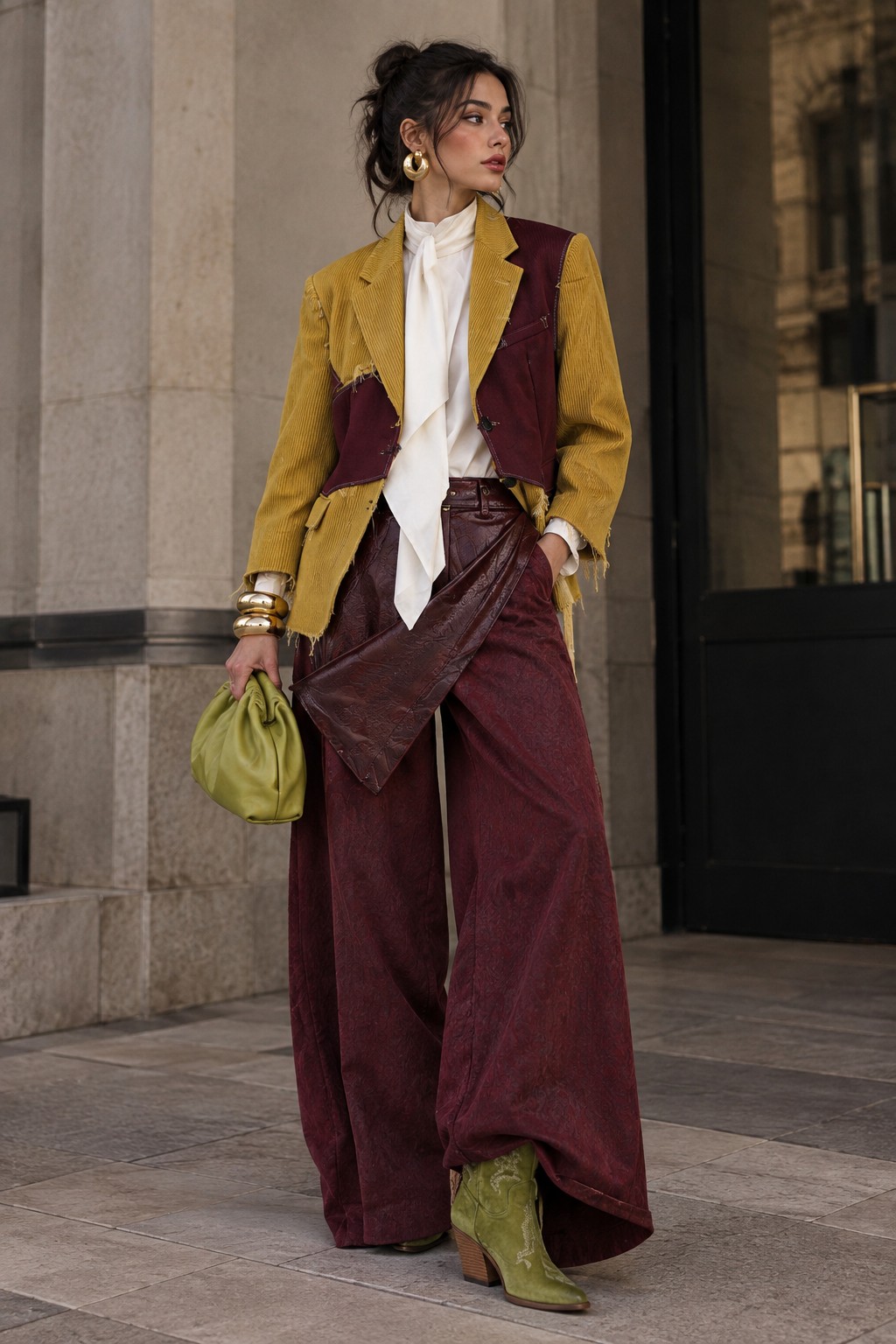
Soft High Fashion is Mhadhbi’s name for her approach. It should not be presented as an established movement, a new classification of luxury or evidence of a wider industry shift.
Its value lies in how clearly it articulates her intentions.
The portfolio connects colour dialogue, layered surfaces, controlled proportions and expressive accessories. Her published essay explains the same principles in the first person, describing style as something developed through experimentation rather than adopted as a ready-made trend formula.
Those statements provide a framework for reading her work. They do not replace examining the work itself.
A fuller assessment would require the complete portfolio images, accurate garment information and clarity about the creative roles behind each image. That would allow criticism to move from what Mhadhbi intends towards how individual looks deliver it.
For now, the distinction matters: this is a coherent account of an emerging styling philosophy, not proof that every look achieves the philosophy’s ambitions.
The Omiren Argument
A stylist’s authorship is expressed through relationships: what is placed together, what receives emphasis and what is allowed to remain unresolved.
Mhadhbi’s most useful proposition is not that matching should be rejected. It is that matching should not be mistaken for styling.
Her own essay recognises it as a tool. The larger objective is presence: an outfit that communicates something through the relationship between its parts.
Omiren’s position is that this proposition deserves examination through specific decisions rather than repetition as a slogan. Which colour leads? Where is volume concentrated? What does the accessory change? Does a contrast reveal something about the person, or simply draw attention to itself?
Those questions give Soft High Fashion a meaningful critical test.
The strongest version of Mhadhbi’s approach would not be the one with the most unexpected pieces. It would be the one in which each difference has a reason to remain.
Also Read:
- Azzedine Alaïa: The North African Visionary Who Redefined Couture
- Imperfection as Intention: Why “Undone” Dressing Defines 2026 High Fashion
- The Essential Accessory Capsule: A Curated Guide To Pieces That Endure
- Tunisia’s Textile Export Industry: From European Manufacturing Power to Nearshoring Contender
Frequently Asked Questions
Who is Chayma Mhadhbi?
Chayma Mhadhbi is an emerging fashion styling creative whose published work focuses on colour, texture, contrast and visual storytelling. Her supplied 2026 portfolio identifies her as based in Tunis and available for international work. This article treats her portfolio and essay as statements of her practice, not an independent assessment.
What does Chayma Mhadhbi mean by ‘soft high fashion’?
She uses the term to describe a personal approach built around intentional contrast, colour dialogue, layered textures, controlled proportions and accessories with a prominent role. It is her stated styling philosophy, not an established industry category, movement or new classification of luxury.
Does her approach reject matching completely?
No. Mhadhbi describes matching as a useful tool rather than the final goal. Her priority is what the pieces communicate together, including when their colours, surfaces or references differ. The larger objective she names is presence: an outfit that communicates something through the relationship between its parts.
What services does her portfolio list?
Her supplied portfolio lists editorial styling, personal styling, brand collaborations and creative direction. These are stated areas of availability, not a verified list of completed commissions, and a fuller assessment would need the complete portfolio images and clarity about the creative roles behind each image.