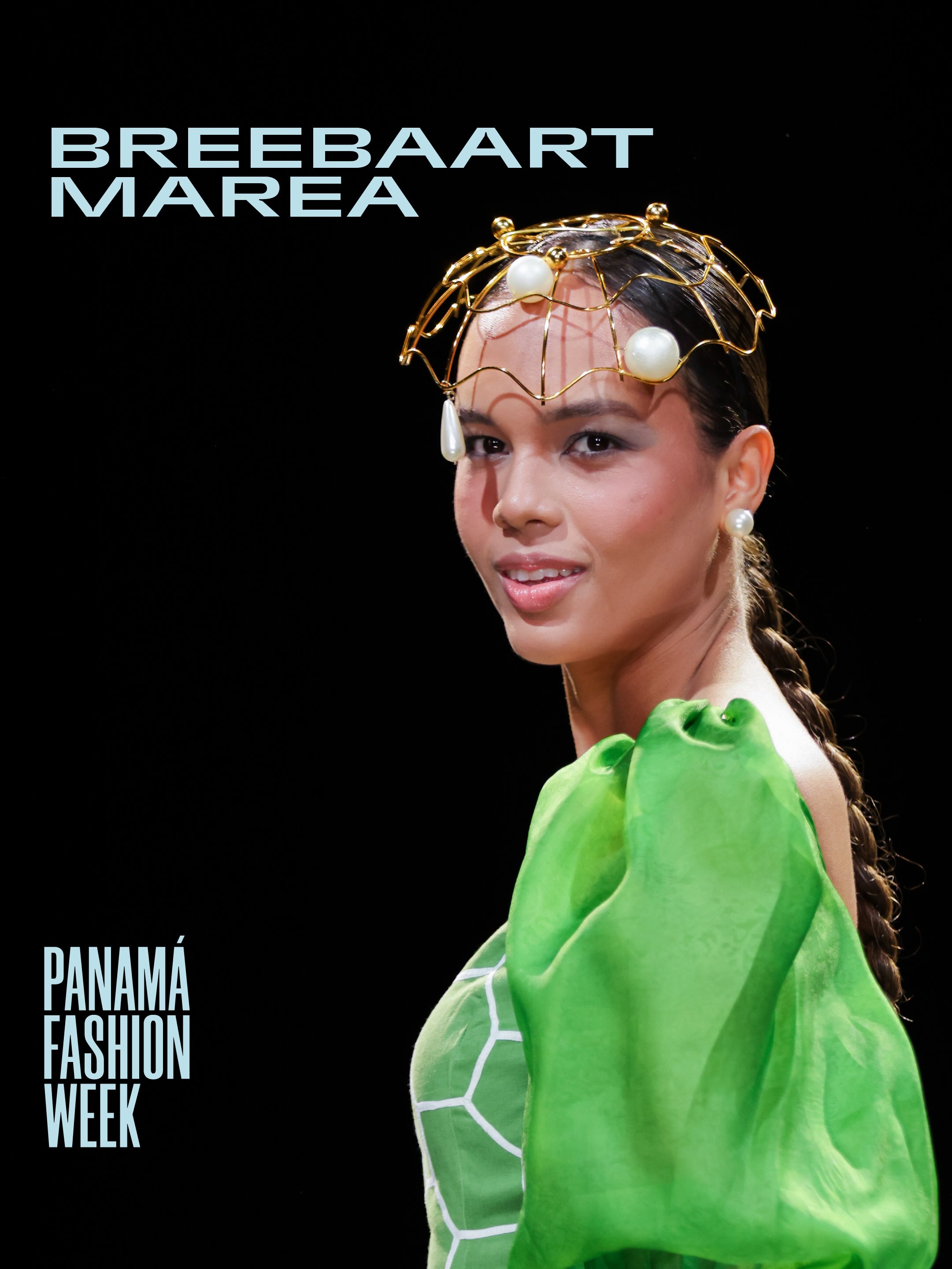
Breebaart presented Marea, a resort collection inspired by the ocean and Panama’s marine ecosystems, during the second day of Panamá Fashion Week 2026. Under creative director Sophie Breebaart, the collection brought that reference together with natural fibres, particularly linen, according to Evelyn Vizcaíno’s report for TOO Magazine.
The collection also carried a message about ocean conservation. That environmental subject belongs to its creative framing; it should not be confused with independently demonstrated product sustainability.
The distinction allows Marea to be introduced on its documented terms: a resort proposition whose reported inspiration and material direction connect it to the sea.
Explore Breebaart’s Marea, a resort collection presented at Panamá Fashion Week 2026, featuring ocean references and reportedly emphasising linen.
An ocean reference within resort dressing
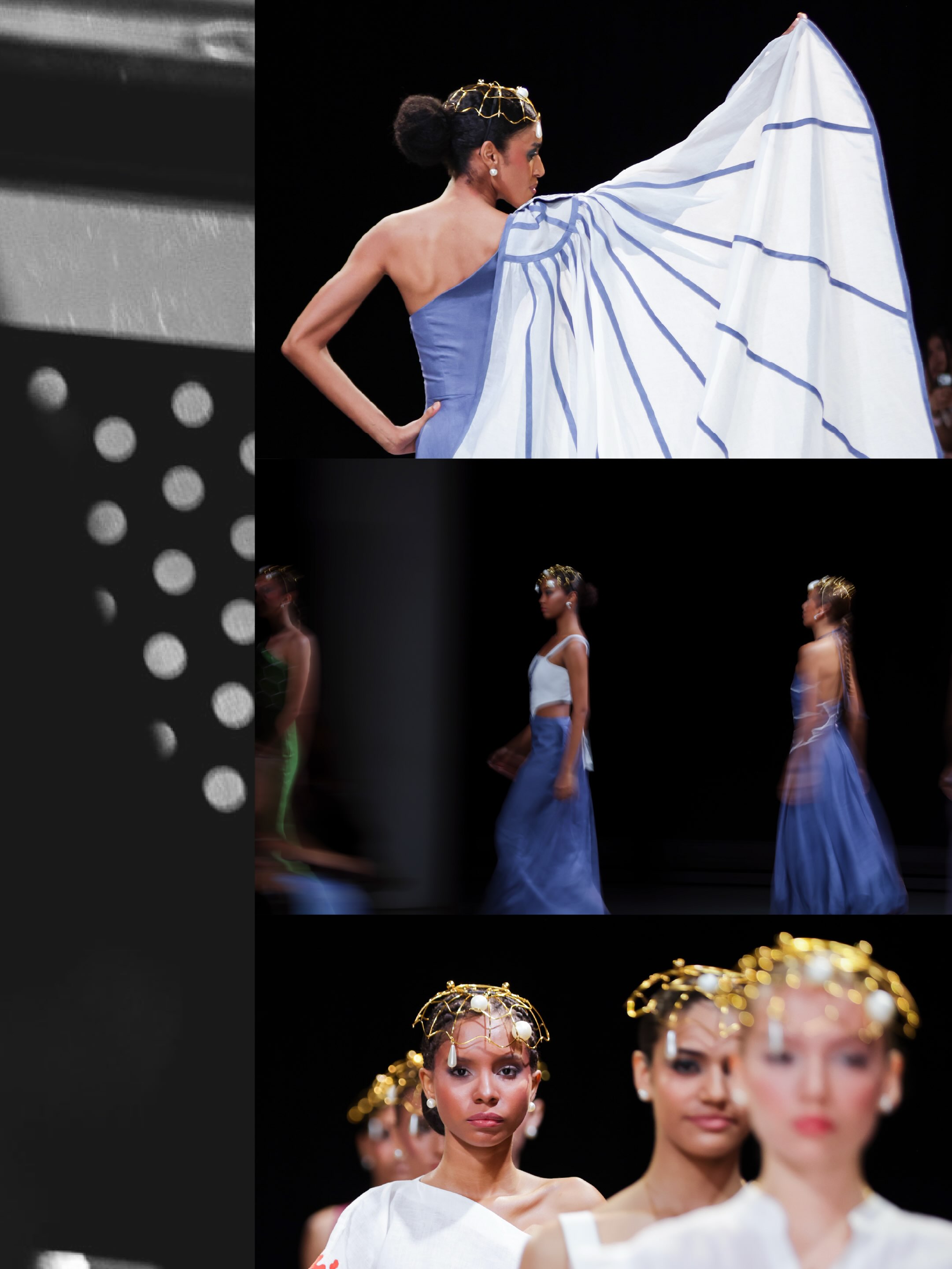
In Vizcaíno’s account of Panamá Fashion Week’s second day, Breebaart appeared in a programme block that also included Spanish designer Pilar Sáinz. Presented by Hotel Bristol Panamá, the block centred on nature, the ocean, and marine conservation, and took place at Ciudad de las Artes.
Within that programme, Marea was identified as Breebaart’s own collection. The shared presentation context should not be mistaken for a jointly designed collection between Breebaart and Sáinz.
“Inspiration tells you where a designer is looking. Only the garment tells you what she saw.” Omiren Styles Editorial Intelligence
The ocean was therefore more than a general backdrop to the evening: it was explicitly named as Marea’s creative starting point. The available report establishes the reference itself, rather than a detailed account of how it shaped individual garments.
That is an important boundary for collection criticism. Inspiration can explain what a designer is looking towards, but assessing its translation into clothing requires attention to identifiable decisions in cut, fabric, surface and proportion.
Linen as a reported material direction
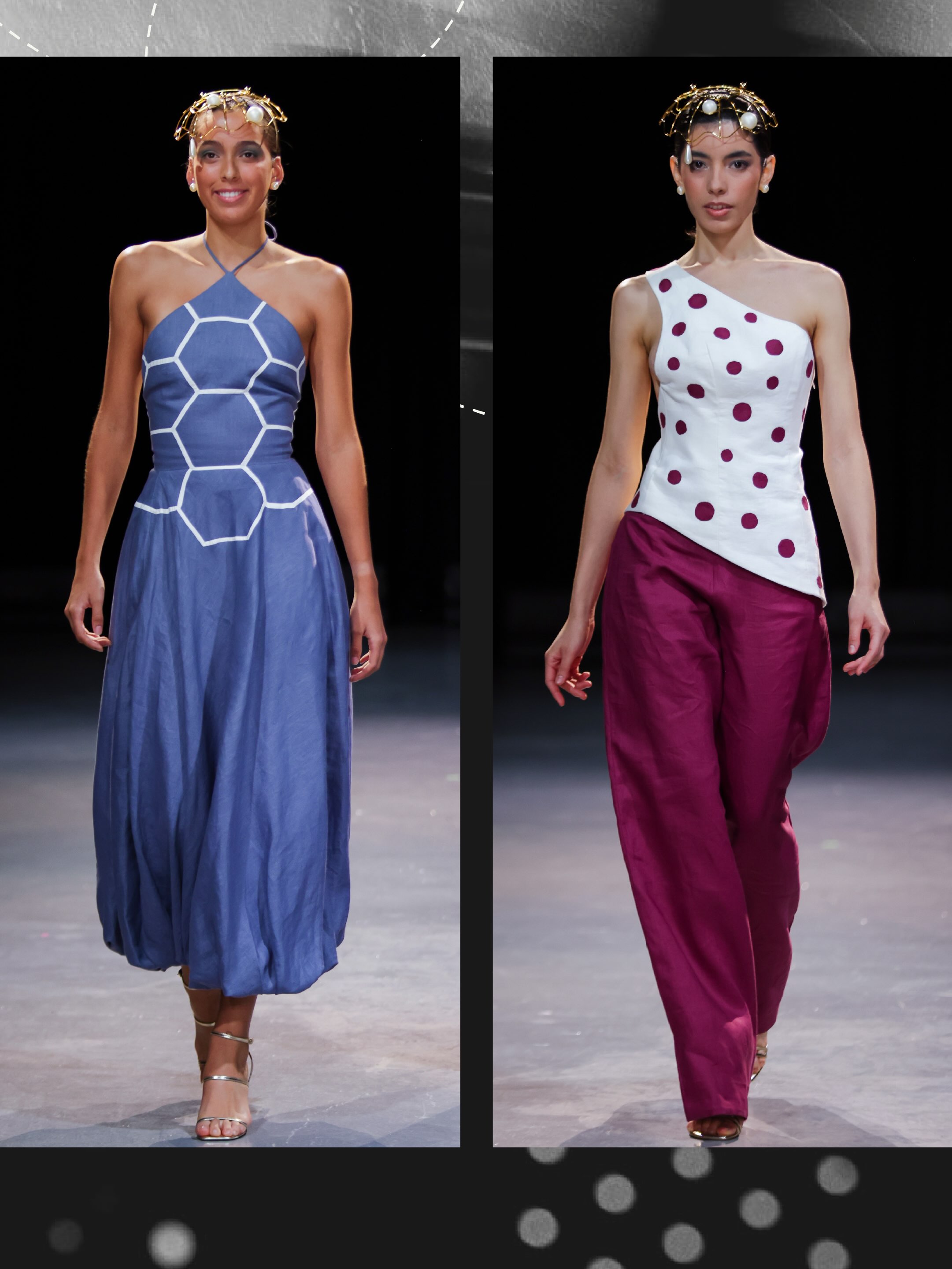
TOO Magazine singles out natural fibres, especially linen, in its description of Marea. It also characterises the collection as refined and functional, assessments made by the publication rather than findings from an independent Omiren examination of the garments.
Ellas, writing about the same show, likewise says the pieces are made in linen, which supports the material direction from a second source.
The material reference is useful because it gives the introduction something more concrete than an inspiration statement. Linen belongs to the collection’s reported vocabulary.
However, neither report provides a composition list for each garment, so it would be inaccurate to describe the entire collection as linen or entirely natural-fibre. That is the same caution we apply in how to verify a fashion brand’s fabric claims, where a fibre named in coverage is a lead, not a specification.
Nor does the TOO Magazine report identify individual garments or explain their cut and construction. It supports an introduction to the collection’s direction, not a look-by-look verdict on how fabric and silhouette interact.
This distinction keeps the language precise. The sea can be a subject, a visual reference or a source of formal ideas, and those possibilities should not be treated as interchangeable without evidence from the clothes.
Sophie Breebaart’s creative direction
Vizcaíno identifies Sophie Breebaart as creative director of the house founded by her mother, Helene Breebaart. The account places Marea within the label’s continuing relationship with Panama’s natural environment.
Who Are U Magazine adds that the house has more than 45 years of history and describes Helene Breebaart as the French artist who founded it, which gives the label’s sea-facing work a long lineage to sit within.
For this collection, the reported focus is specifically marine: the ocean, its ecosystems and their preservation. That focus distinguishes the introduction from a broader account of the house’s history or a general celebration of Panamanian nature.
It also gives the collection a clear subject without predetermining its achievement. A designer’s stated reference matters, but the presence of that reference does not automatically establish the quality of its execution.
Marea is not Alas y Palmas
The collection chronology needs to remain clear. Marea should not be confused with Alas y Palmas, the house’s Resort 2026 collection presented at Panamá Fashion Week 2025.
Coverage by Who Are U Magazine identifies the coconut palm and tropical parrot as that earlier collection’s inspirations and says it combined the Guna mola technique with contemporary pieces in soft green and faded pink.
The available Marea report calls it a resort collection presented at the 2026 event but does not assign it a numbered season. It should therefore not automatically be labelled Resort 2027.
Keeping the collections separate also protects the accuracy of material and craft attribution. Information documented for Alas y Palmas cannot be carried into Marea simply because both belong to the same house.
What a second report adds, and where it differs
Ellas describes the 2026 collection under the plural title Mareas, so the name appears in two forms across coverage. This article follows TOO Magazine’s Marea, and the difference is worth confirming with the house.
According to Ellas, the collection draws on the movement between ocean and land, with shells, waves, seahorses and turtles as motifs. It also reports that garments are handmade with mola appliqué and that the brand has worked with Guna artisans for more than four decades.
Those craft details come from Ellas alone, and the TOO Magazine report does not mention them. Mola is a Guna textile tradition, and our guide to Colombian traditional dress, including mola, covers it, so it deserves credit in its own right, not as a decorative afterthought.
Ellas also reports a separate Breebaart x Istmo capsule made from recycled plastic bottles, with original watercolours by Hélène Breebaart. That capsule is a distinct project, and nothing in the sources links its materials to the main runway collection.
Conservation as a message
TOO Magazine describes Marea as bringing a message about ocean conservation and the protection of marine biodiversity to the runway. Its account does not supply lifecycle data, sourcing documentation or other product-level evidence establishing environmental benefits.
The collection can therefore be described as ocean-inspired and associated with a conservation message. We cannot independently characterise it as sustainable on that basis alone.
This is not a dismissal of the theme. It separates what a collection communicates from what its production demonstrates, and natural-fibre content, creative inspiration and environmental performance are different claims, each requiring its own evidence.
For readers weighing such claims across categories, our guide to sustainable luxury footwear applies the same question to another product category.
A conservation message is still worth noting. Placing marine protection on a runway in a country defined by two oceans gives the theme local weight, even before any evidence about production exists.
Reading resort fashion through a report
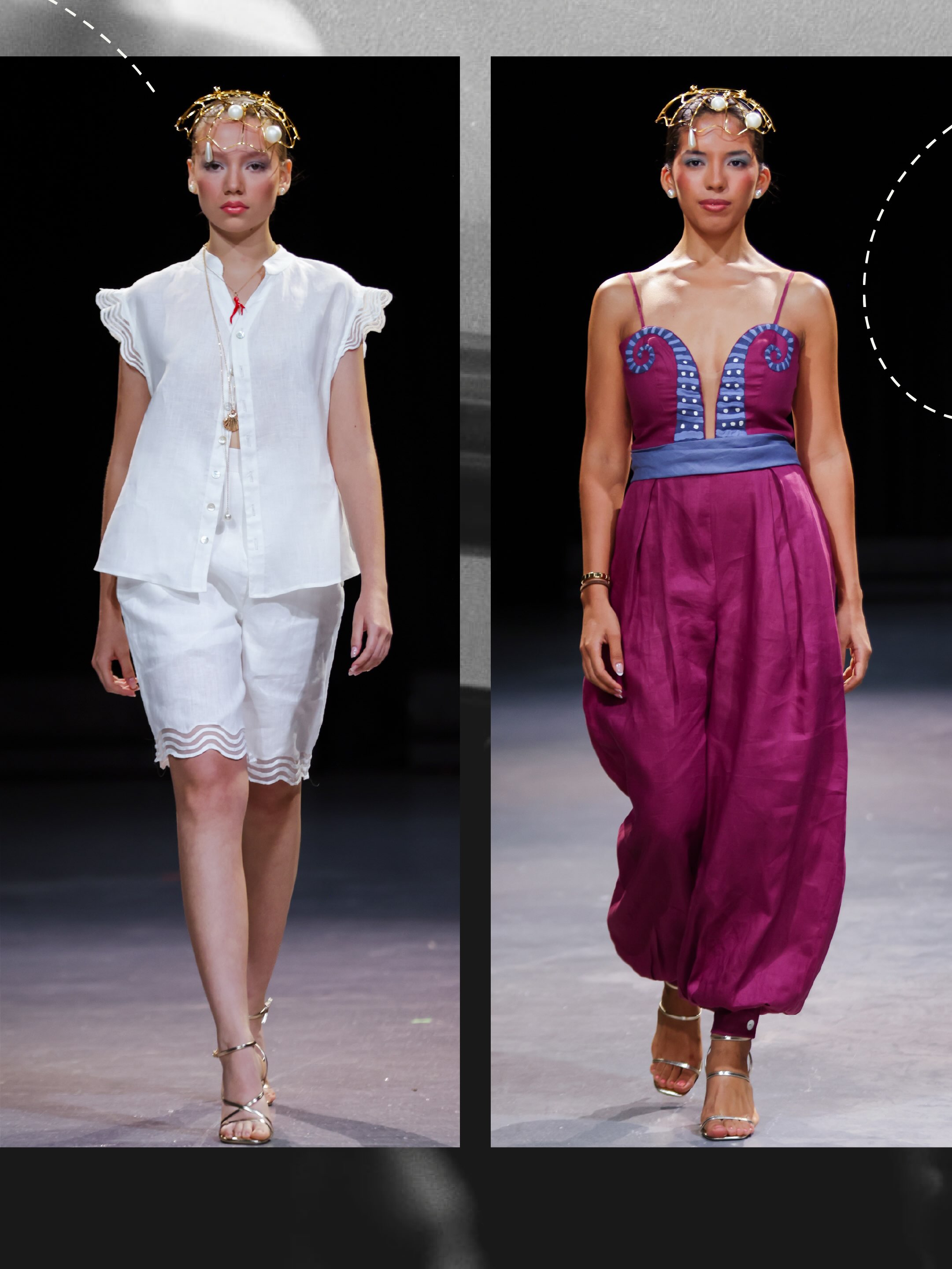
Resort collections invite theme-led coverage because the sea, the beach and the tropics are easy to describe. That ease is why you should be careful, since a theme can be summarised in one line while a garment needs a body of evidence.
What the reports give readers is a defined starting point: an ocean reference, a linen emphasis, a conservation message and a named creative director. What they leave open is what critics usually want most: how the pieces are cut, how the fabric behaves, and where the motifs sit.
Photographs of individual looks, fabric information from the house and the designer’s own account would settle those questions. Until they are available, the fair treatment provides a clear introduction, stating what has been reported and what has not.
The Omiren Argument
Marea places the ocean at the centre of its reported creative framing. Linen and other natural fibres appear in the published material description, while conservation supplies the accompanying message.
Those elements establish the collection’s direction; they do not, on their own, demonstrate how the sea changes its cut or construction.
The useful distinction is between inspiration and execution. Breebaart’s marine reference gives readers a way into the collection, and a judgement about its silhouettes must come from the garments, not from the theme attached to them.
Also Read:
- Colombian Traditional Clothing: Regional Dress, Fabrics and Fashion
- Panama’s Congo Men’s Costume Tradition: Inside-Out Clothing and the Fashion of Resistance
- The Artisanal Frame: Sustainable Eyewear for the Omiren Woman
- Eco-Luxury: Designers Bringing Style to Sustainable Fashion
Frequently Asked Questions
What is Breebaart’s Marea?
Marea is a resort collection presented during Panamá Fashion Week 2026. TOO Magazine describes its inspiration as the ocean and Panama’s marine ecosystems.
Who directs Breebaart?
The cited report identifies Sophie Breebaart as creative director of the house founded by her mother, Helene Breebaart.
Is Marea the same collection as Alas y Palmas?
No. Alas y Palmas was reported as Resort 2026, presented at Panamá Fashion Week 2025. Marea appears in coverage of the 2026 event, without a numbered resort season specified.
Is Marea a sustainable collection?
The sources describe a conservation message and an emphasis on linen, but provide no lifecycle data or sourcing documents. Marea can be called ocean-inspired and conservation-minded, though not independently sustainable on that evidence.