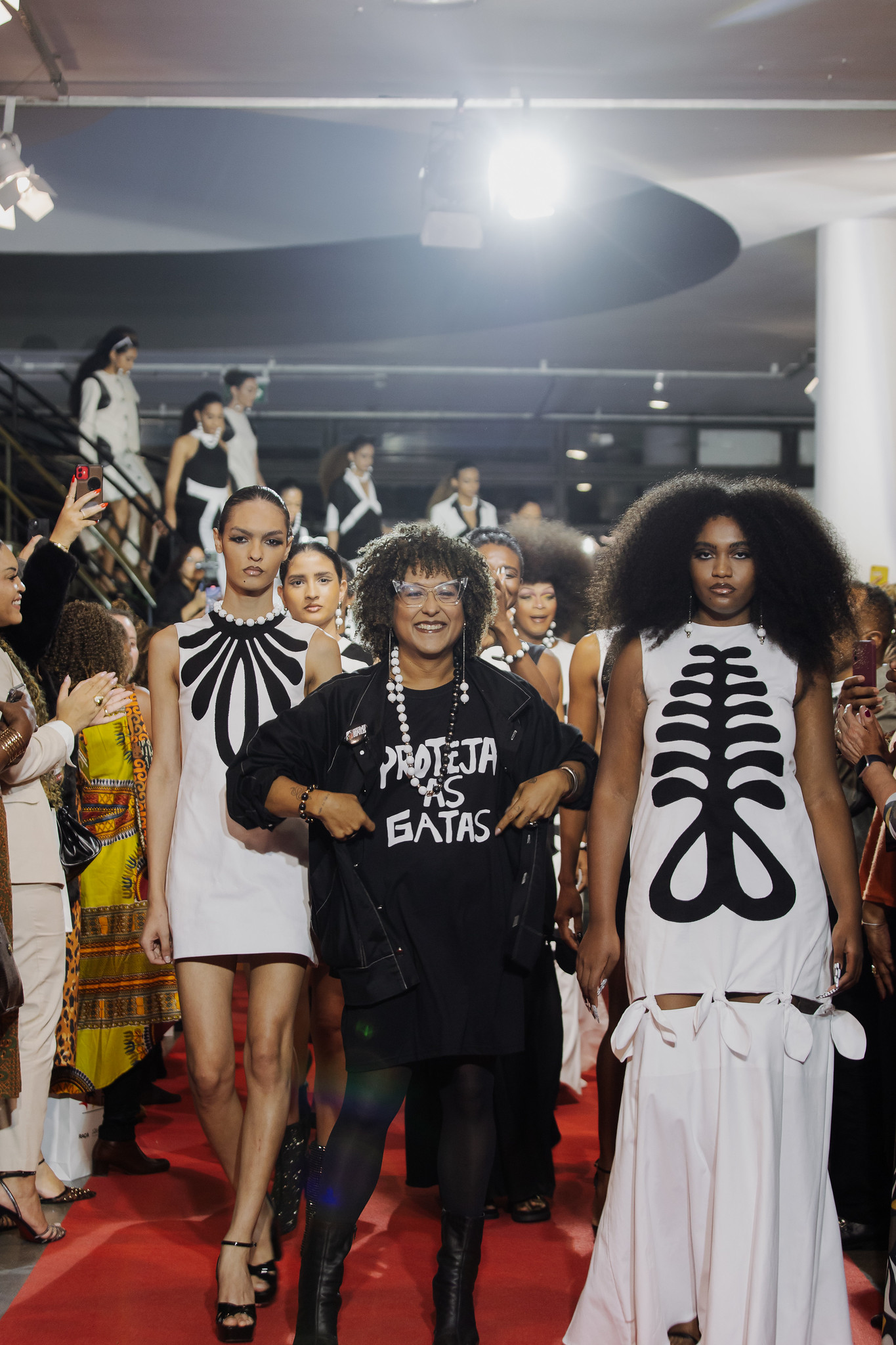
Black and white replaced an abundance of colour, while embroidered Adinkra symbols appeared across dresses, tops and jumpsuits. Presented during the brand’s tenth-anniversary year, Isa Silva’s July 2025 collection proposed a change of direction through a deliberate engagement with the past.
Explore how Isa Silva’s July 2025 Adinkras presentation connected Ghanaian symbols, retro silhouettes, and black-and-white dressing to a brand reset.
A change of direction made visible.
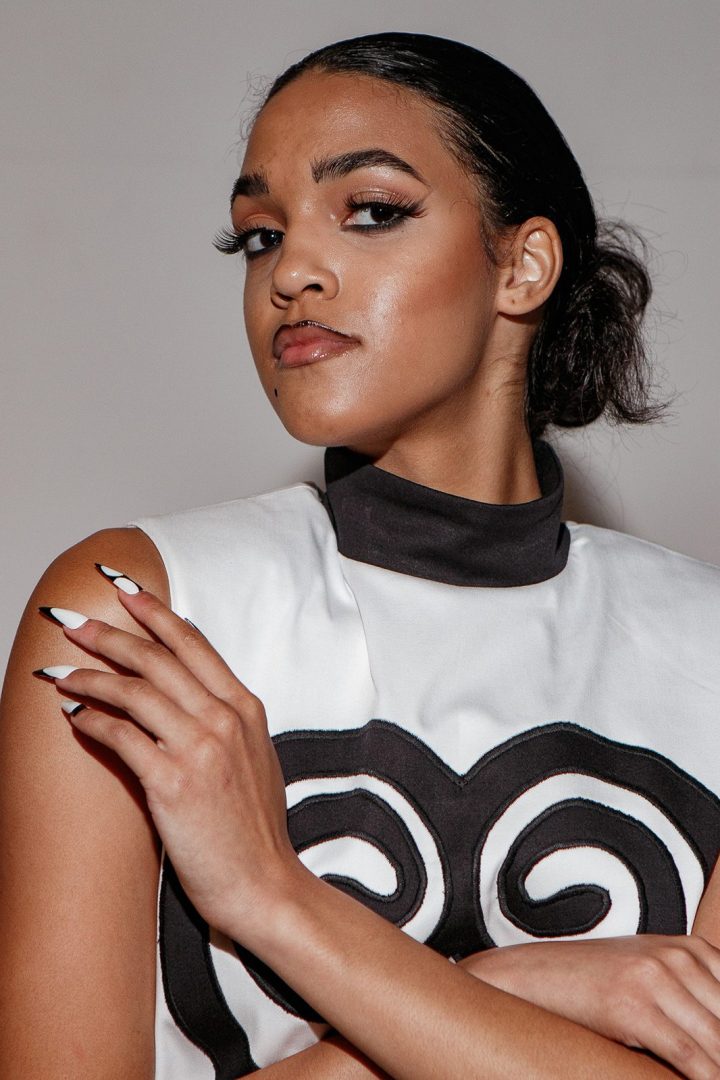
Black-and-white dressing gave Isa Silva’s July 2025 presentation an immediate point of difference. In its contemporary account, ELLE Brasil described a departure from the vibrant colours, exaggerated volumes, and profusion of prints and textures that defined the designer’s earlier work.
The collection, presented on 28 July at São Paulo’s Museu Afro Brasil Emanoel Araújo, was predominantly cotton, with embroidered Adinkra symbols appearing on midi dresses, tops, polo shirts and jumpsuits. The reported contrast was not between expression and its absence, but between an expansive visual vocabulary and a more concentrated one.
“A smaller palette can say more if the designer knows exactly what it is for.” Omiren Styles Editorial Intelligence
That change arrived during the brand’s tenth-anniversary year and alongside a rebranding. The business adopted the name Isa Silva and distinguished between its streetwear-influenced offering and more elaborate, made-to-measure clothing.
Silva explicitly connected the development to her own life, telling ELLE Brasil, “Eu transicionei e agora a marca está transicionando,” which translates as “I transitioned, and now the brand is transitioning.” The quotation establishes the connection she wished to make; it does not mean every formal decision in the collection should be read as an illustration of personal experience.
The clothes and the brand changes, nevertheless, belonged to the same moment. Adinkras offered a framework through which Silva could describe a new direction without presenting renewal as a break with everything that came before.
Its central question was how a relationship with the past might help shape what followed. That is a more interesting question than whether a designer can simply change the palette, and it is the one worth following through with the rest of the collection.
Symbols with a history beyond the collection
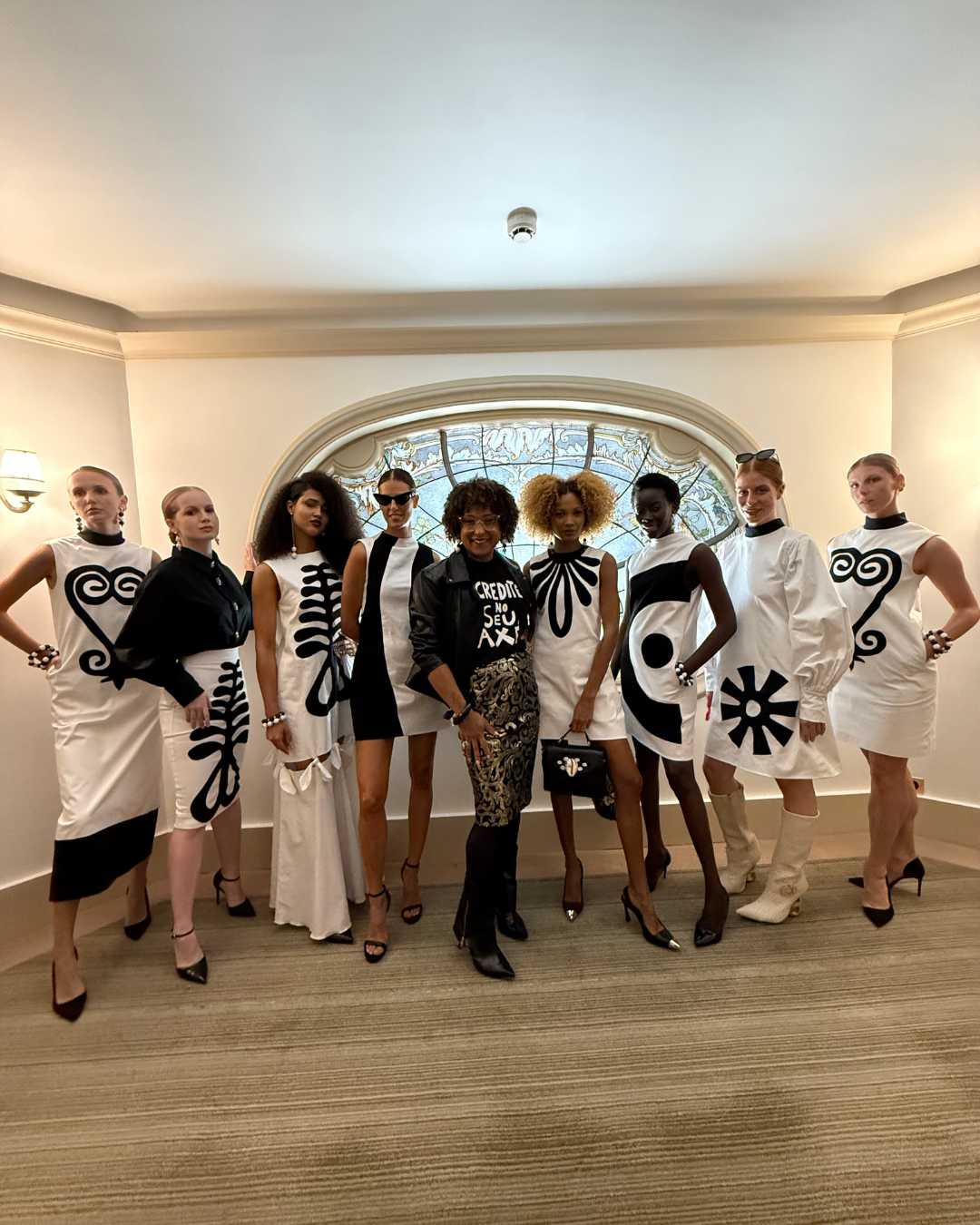
São Paulo Fashion Week identified the collection’s reference as the traditional graphic symbols of the Ashanti, or Asante, people of Ghana. This specificity matters. Describing the clothes only as “African-inspired” would obscure the specific visual tradition Silva drew on and turn a named source into a general atmosphere.
The collection’s title established a more precise relationship, one that required interpretation rather than a loose appeal to heritage. A named source invites readers to ask what the symbols actually are, and that is exactly the kind of curiosity a collection like this should provoke.
The Fashion Institute of Technology’s Fashion History Timeline describes Adinkra cloth as an Asante textile tradition in which symbols are stamped onto fabric. Drawing on museum and scholarly sources, it explains that the repertoire communicates meanings associated with proverbs, stories, songs and sayings.
The signs are therefore not simply a stock of decorative shapes. Their graphic forms participate in a wider field of knowledge and communication, a point we explore in our piece on protecting the cloth makers behind the fabric.
Silva’s reported use of embroidery represented a different application. The collection was not a reproduction of traditional stamped cloth, and the distinction should remain clear.
It brought a symbolic vocabulary into contemporary garment categories through another technique. That creates a legitimate space for design interpretation, but it also establishes a critical responsibility: identifying the reference is only the beginning, and the next question is what the designer does with it.
Sankofa and the meaning of return
Sankofa supplied the clearest link between the collection’s reference and Silva’s account of change. ELLE Brasil quoted the designer explaining the image of a bird moving forward while looking backwards, connecting it to the idea that returning to the past helps us think about the future.
Her explanation made looking back an active process rather than an exercise in nostalgia. The past was something to consult, not simply something to repeat.
The same review identified references to 1960s and 1970s dressing: A-line shapes, mini lengths and flared trousers. It also reported an image of the Supremes wearing Pierre Cardin on the moodboard.
These details provide a formal counterpart to Silva’s explanation, although the relationship should be treated as an interpretation rather than a fully verified design programme. Read together, the stated interest in Sankofa and the reported retro vocabulary suggest a collection concerned with return as a means of renewal.
Several histories were therefore present, but they were not interchangeable. The Ghanaian symbolic source, twentieth-century fashion references and Silva’s own trajectory contributed different kinds of meaning.
Keeping them distinct makes the collection more interesting than a single story about cultural roots. The proposition was not that all these references shared one origin, but that the designer could bring them into relation while reconsidering the brand’s direction.
What the silhouettes contribute
The reported garment vocabulary gives the collection’s argument more substance than symbolism alone. A-line shapes, mini lengths, and flares are choices about how clothing organises the body, establishing proportion and movement before an embroidered motif is interpreted.
Dresses, polo shirts, tops and jumpsuits also distribute the reference across different modes of dressing, rather than reserving it for one conspicuous statement piece. That spread suggests the symbols were meant to be worn in several settings, not displayed in one.
That distinction is important to the article’s central question. If the symbols were the only meaningful intervention, the collection might be understood primarily as a series of surfaces carrying a theme.
The reported silhouettes indicate another layer of decision-making. They place the graphic vocabulary within a recognisable fashion language and give the backward glance a relationship to form.
However, the contemporary descriptions do not establish how successfully that relationship worked in every look. The placement, scale and density of embroidery would affect whether a symbol participated in a garment’s composition or remained an applied accent.
Those are questions for close visual examination, not conclusions to be supplied by the strength of the concept. The available reporting supports a defined collection proposition; it does not justify treating every garment as equally resolved.
Black and white as a recurring choice
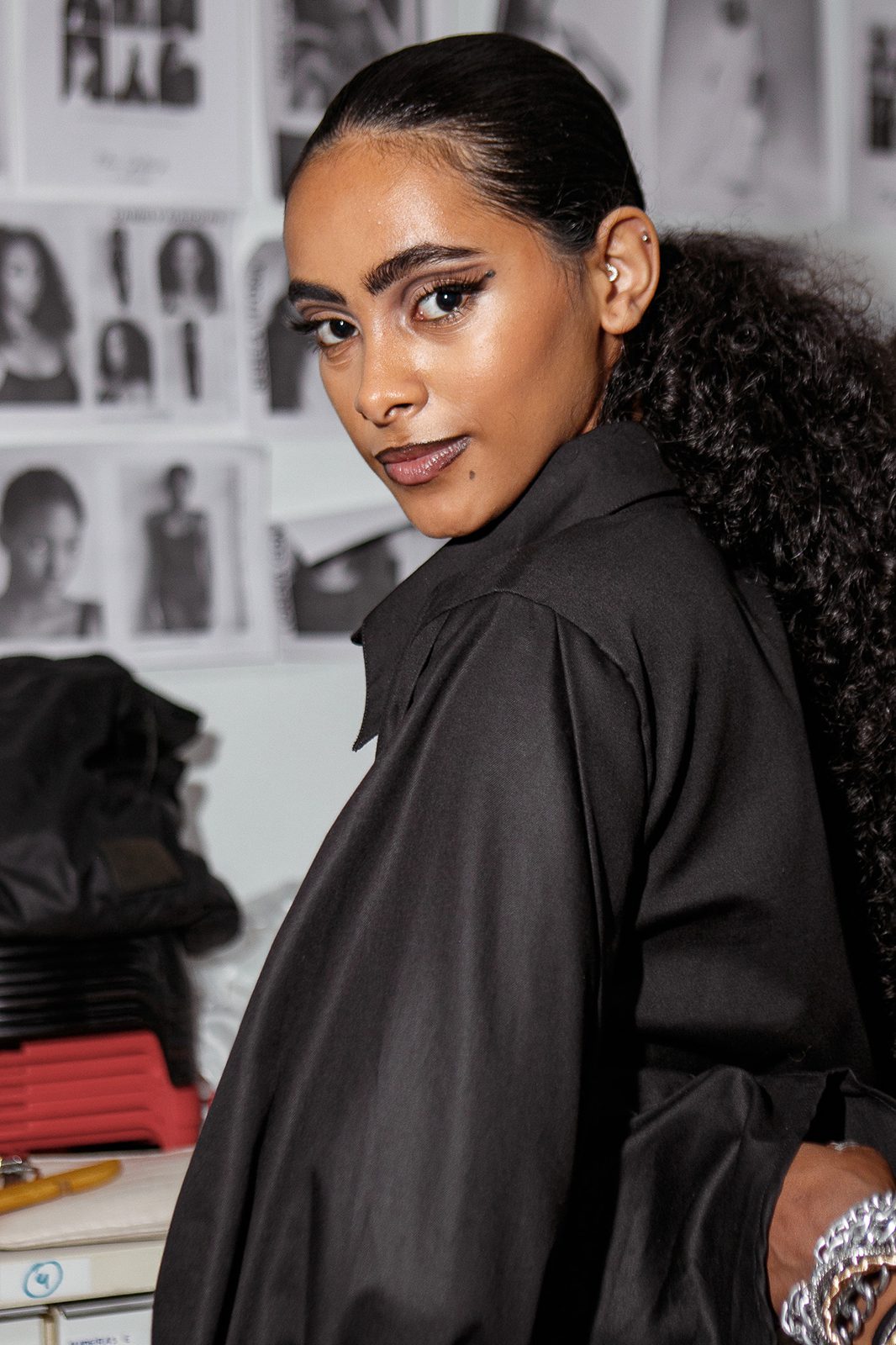
Silva’s explanation of black and white complicates an easy reading of the palette as a rejection of colour. She told ELLE Brasil that she chooses those colours at moments of passage.
The publication also connected the presentation to her summer 2019 collection, inspired by Xica Manicongo, which had used an entirely black-and-white palette. The 2025 decision therefore had a precedent within her own practice.
This makes the return more particular. Silva was not looking only towards a historical fashion archive or a symbolic tradition beyond Brazil; she was also returning to one of her own methods for marking change.
The restricted palette could be read as recurring punctuation in the brand’s development, rather than proof that the designer had permanently abandoned the exuberance associated with earlier work.
The commercial proposition reinforced that distinction. ELLE Brasil reported that customers could request collection pieces in colour.
Black and white organised the presentation, but it was not necessarily an absolute condition of the eventual made-to-measure garment. The runway statement and the customer offering were related but not identical: one focused on the collection’s message, while the other allowed some individual negotiation.
A setting that clarified the conversation
The Museu Afro Brasil presentation formed part of programming honouring the Day of Black Latin American and Caribbean Women, in partnership with Raça magazine, according to São Paulo Fashion Week. That context placed the collection within an explicitly Black cultural conversation.
It helped frame the encounter between a Ghanaian symbolic vocabulary and a Brazilian designer’s work without erasing the differences between them. The venue and the occasion told viewers how to approach what they were seeing.
The setting is relevant because it clarifies how the presentation was situated. It does not prove the clothes succeeded.
A museum venue, an important commemorative programme and a carefully articulated reference can establish significance, but none substitutes for judging design. The collection’s cultural context and its formal achievement must remain connected questions rather than interchangeable conclusions, and the same discipline applies to any brand that credits its sources, as we argue in what a heritage fashion product page should clarify.
A persuasive framework, not a finished verdict
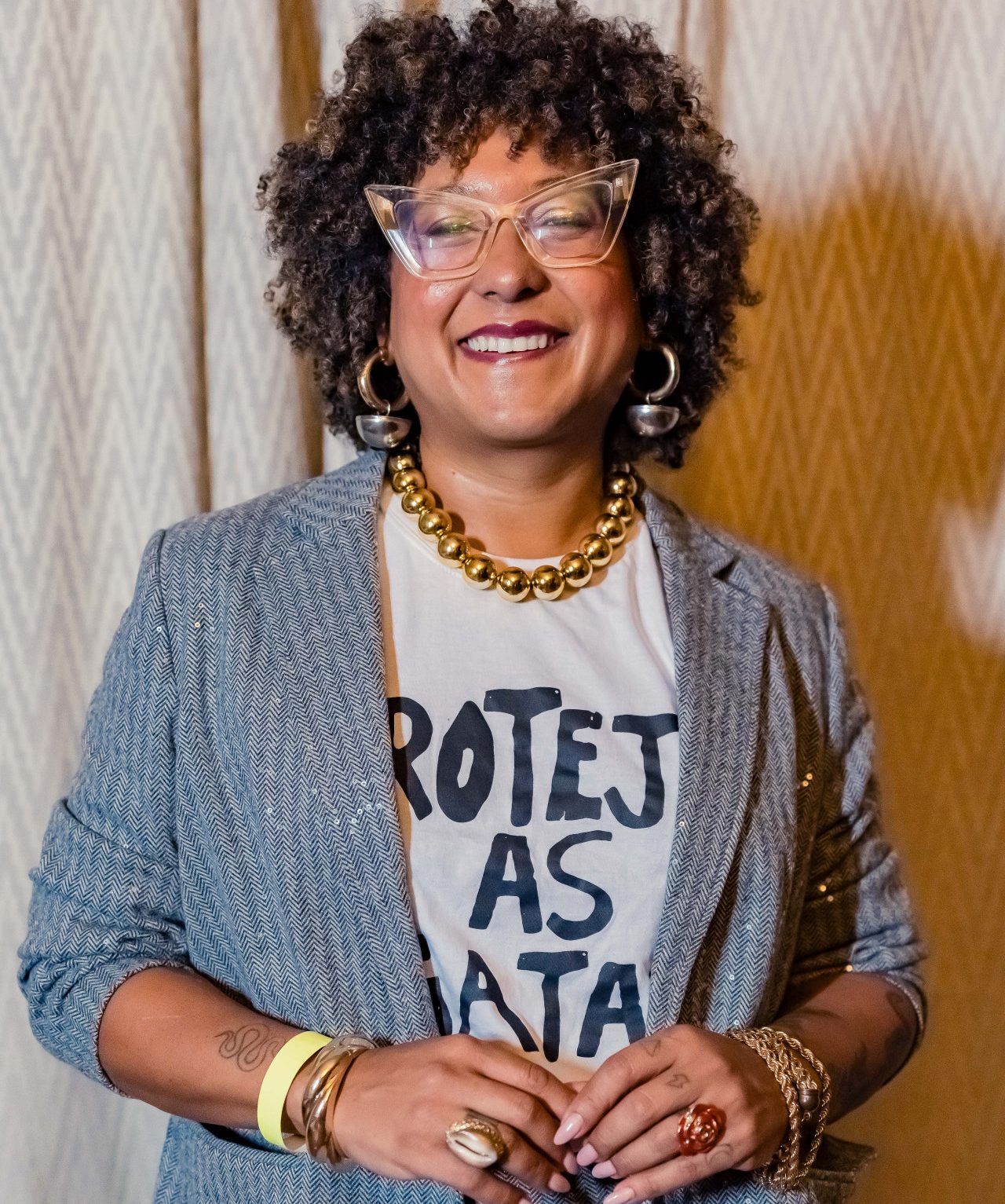
Adinkras is most compelling in the contemporary record as a structured proposal for change. The symbolic reference, retro proportions, recurring palette, and rebranding can be read together without pretending they all serve the same function.
Sankofa supplies an articulated principle; the silhouette gives the backward glance a formal vocabulary; black and white connects the presentation to Silva’s own history; and the rebranding establishes the moment those decisions were brought forward.
The distinction between that framework and its execution is where criticism must remain exact. A convincing explanation can guide a collection, but it cannot guarantee that every garment sustains the idea.
Equally, a culturally meaningful symbol should not be judged only through its explanatory text. Its treatment as part of clothing, including its placement, relation to shape and contribution to the whole, still matters.
The reporting shows a designer framing renewal through several connected decisions rather than relying on a title alone. What fuller visual analysis still needs to test is how consistently the clothes turn that framework into a distinctive design language.
Omiren Argument
Isa Silva’s Adinkras make a useful distinction between reference and integration. The collection’s stated source was specific, and the reported silhouettes and palette gave the presentation more structure than a general claim of cultural inspiration.
Its argument about looking backwards was expressed through several choices, not only through embroidered symbols. That is the strongest finding supported by the contemporary accounts.
A separate judgement must assess whether the symbols contribute to the composition of individual garments or principally decorate them. Taking the collection seriously means preserving both responsibilities: understanding the knowledge it invokes and examining what the clothing makes of it.
Also Read:
- The New Ghanaian Fashion Designers Redefining African Luxury From Accra
- Afro-modernism in Fashion: The African Designers Defining a New Design Language
- From Style to Culture: How Fashion Brands Become Ecosystems
- Lemlem: Weaving African Heritage into Global Fashion
Frequently Asked Questions
When and where was Isa Silva’s Adinkras collection presented?
ELLE Brasil dates the presentation to 28 July 2025 at the Museu Afro Brasil Emanoel Araújo in São Paulo. São Paulo Fashion Week published its account on 30 July.
What are Adinkra symbols?
They belong to a visual tradition associated with Ghana’s Asante people. Their meanings are connected to concepts, proverbs, stories and sayings, and they are associated with a tradition of stamping designs onto cloth.
How were the symbols used in Silva’s collection?
ELLE Brasil reported embroidered symbols on dresses, tops, polo shirts and jumpsuits. Its account described a predominantly cotton, black-and-white presentation with references to 1960s and 1970s silhouettes.
Why was the collection associated with a new phase for the brand?
The presentation coincided with tenth-anniversary celebrations and a rebranding to Isa Silva. Contemporary reporting also described a distinction between the brand’s streetwear-influenced offering and more elaborate, made-to-measure work.