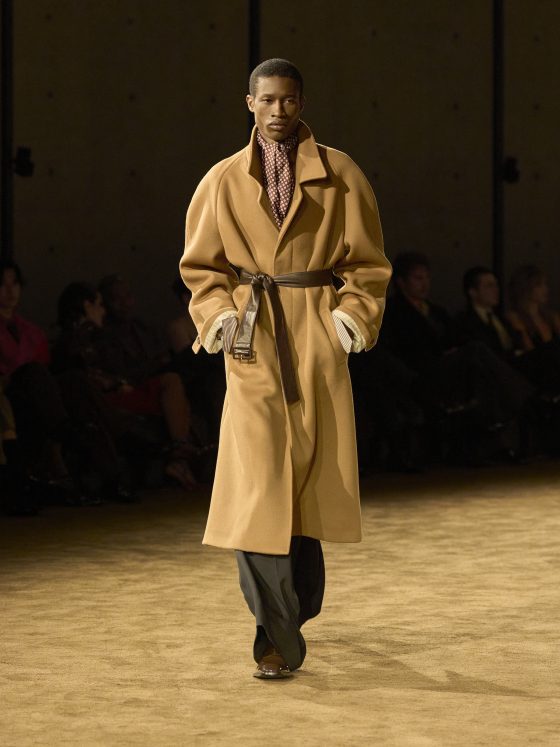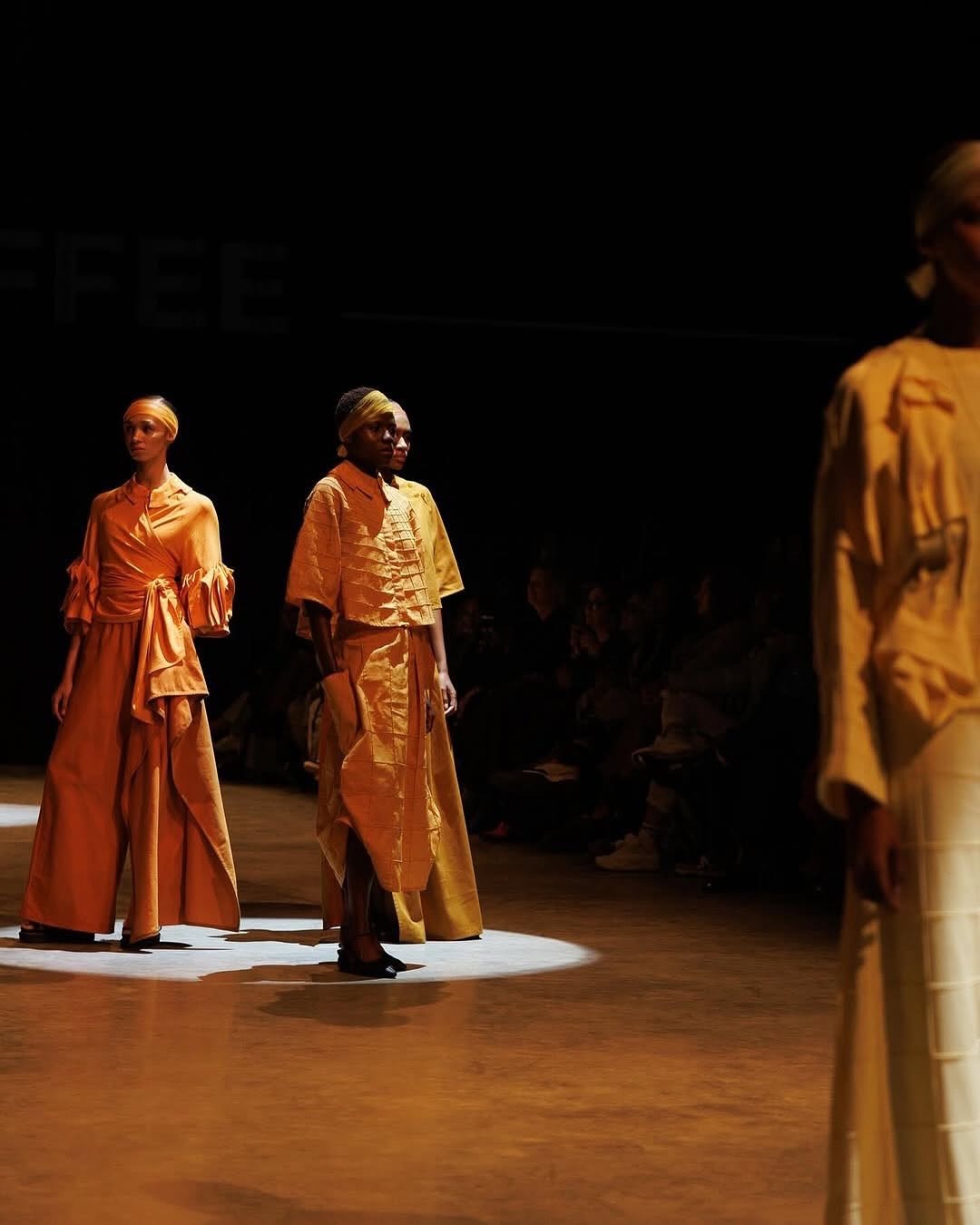
Three articles into a close reading of a single Kenneth Ize look, it is worth pausing to ask what we have actually been looking at. The answer is photographs. Specifically, front-facing photographs from a runway gallery, taken by a photographer whose credit has not been independently verified, at a moment in the model’s walk that the photographer chose. Those photographs have undergone detailed analysis. They note what they omit in passing, and it is time to give that absence the same attention.
The front-facing runway photograph dominates fashion image-making and fashion image consumption. It shows the front of the look: the garment’s face, the model’s face, and the styling choices that appear at the front, the collar, the pocket flaps, the hem, the neckwear, and the pattern across the torso. It is the view from which the look makes its primary argument to the audience. And it is radically incomplete as a document of what the garment is.
This is not a complaint about runway photography. It is an observation about what the format is designed to do and what it therefore cannot do. A runway photograph is designed to capture the look as it is presented to the room. The room sees the front. The camera records the front. The internet circulates the front. And the analysis that follows from all of that front-facing material is necessarily front-facing too.
Most runway photographs show the front of a look. This article examines what front-facing runway photography structurally cannot record and what that means for close readings of garments that rely on those images as their primary evidence.
What the Back of a Garment Contains
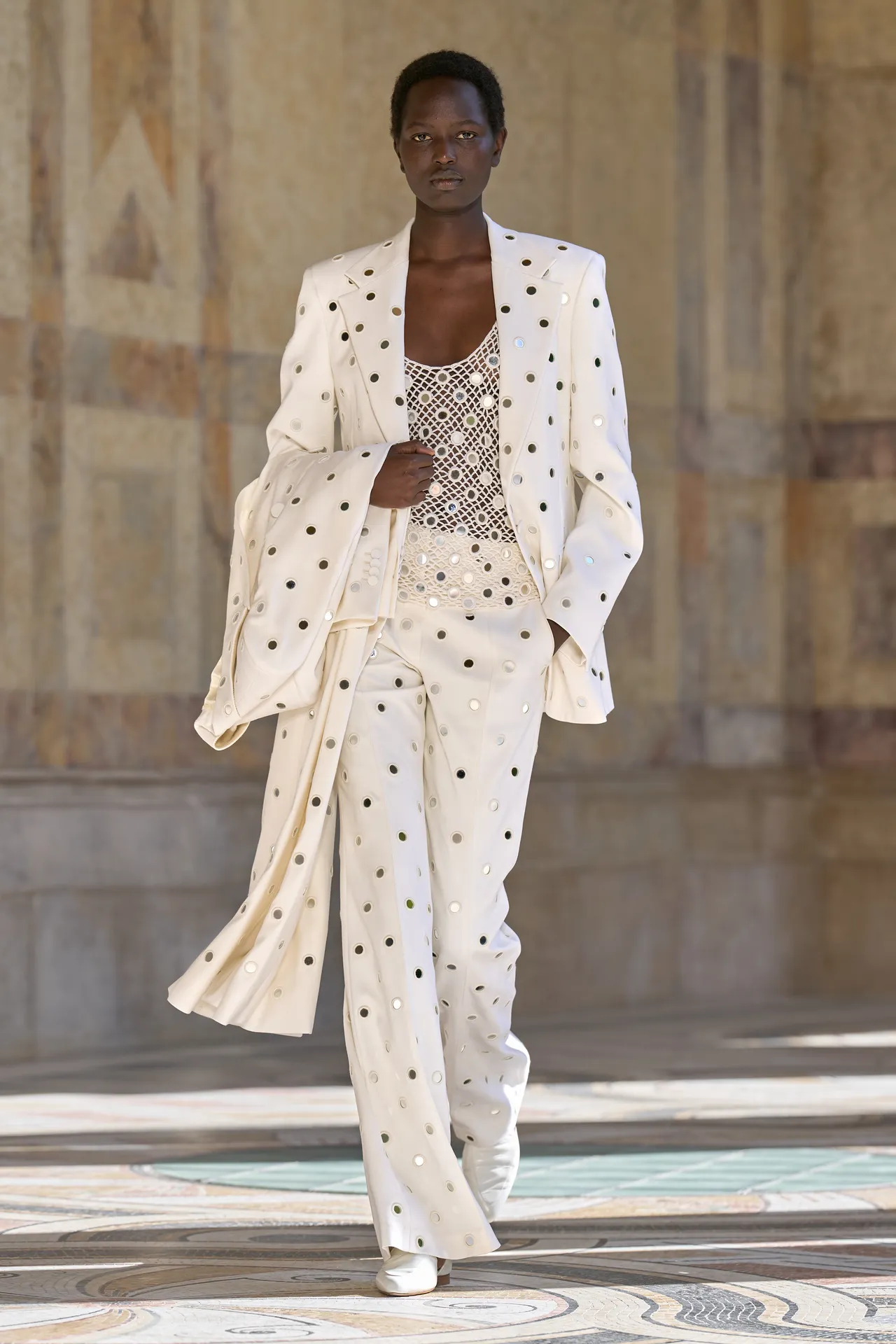
The back of a garment is not simply the absence of the front. It is a design decision in its own right, often more complex than the front because it has to solve problems the front creates. A structured back seam that holds the shoulder line. A lining choice that affects how the jacket moves. A vent or pleat that determines how the back behaves when the wearer sits. A back collar detail that connects to the front neckline. A zip, hook, and button arrangement that provides the practical mechanism for the closed front. The construction that makes the front possible.
In garments with strong woven surface patterns, like the Kenneth Ize jacket at the centre of this series, the back also raises the question of how the pattern continues. If the front carries vertical stripes, does the back continue those stripes? How does the pattern meet at the side seams? Is there a back seam, and if so, where does it fall in relation to the repeat? These are not incidental questions. Deciding how a strong pattern handles the front-to-back transition is one of the most technically demanding parts of garment construction, and the front-facing photograph tells you nothing about how it was solved.
Vogue’s collection review of Kenneth Ize’s AW26 JOY collection mentions reversed pockets and exposed construction as garment details. These details are mentioned in written coverage, but the front-facing photographs available through the AnOther gallery do not confirm or deny them for the specific look this series has been examining. A reversed pocket is typically a back or interior detail. Exposed construction can appear at the back seam, the lining edge, or any join the designer chooses to make visible. Front-facing photographs cannot confirm whether those details are present in this specific look or in a different look from the same collection.
What the Series Has and Has Not Established
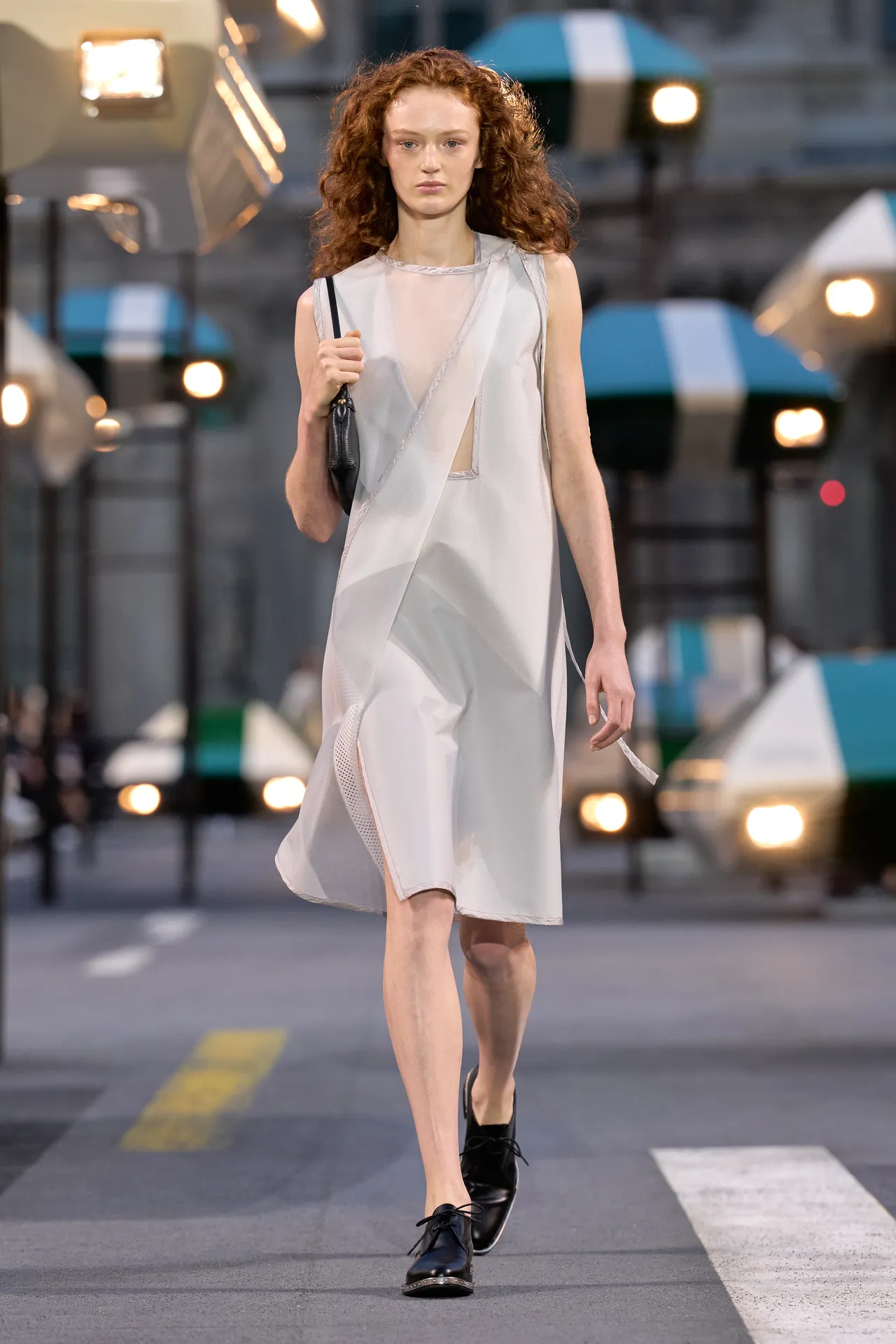
The three earlier articles in this series have established the following from the supplied front-facing photographs:
The jacket’s front features vertical stripes in pink, reddish, green, yellow, and pale tones, separated by darker bands. The brown sleeves establish a clear outer edge rather than carrying the stripes across the entire upper body. The trousers are plain brown and continue the quieter register of the sleeves. The white collar and cuffs emphasise the neckline and sleeve endings. The purple neckwear adds a concentrated accent at the throat. The jacket extends past the hip, with open front panels that allow the brown trousers to appear within the jacket’s lower section. The pocket flaps introduce horizontal interruptions to the vertical stripes. The jacket’s length, open front and panel structure organise the complete silhouette as a vertical composition from collar to ankle.
What those three articles have not established, because the front-facing photographs cannot establish it:
How the striped pattern continues – or does not continue – at the back of the jacket. How the side seams handle the transition between the patterned front and whatever surface the back carries. Whether the back of the jacket has a single central seam, side back seams, or no visible back seam. Whether the collar’s white extends to a back collar piece or terminates at the side seams. How the jacket closes: whether there is a back vent, how the lining is handled, and how the garment behaves when the model moves away from the camera. Whether the construction methods described in written collection coverage – the reversed pockets, the exposed construction – are present in this specific look.
A garment seen only from the front is a garment partially known. The analysis that follows from front-facing photographs is necessarily partial too. Naming that partiality is not a failure of analysis. It is part of honest analysis.
Why This Matters for Runway Analysis
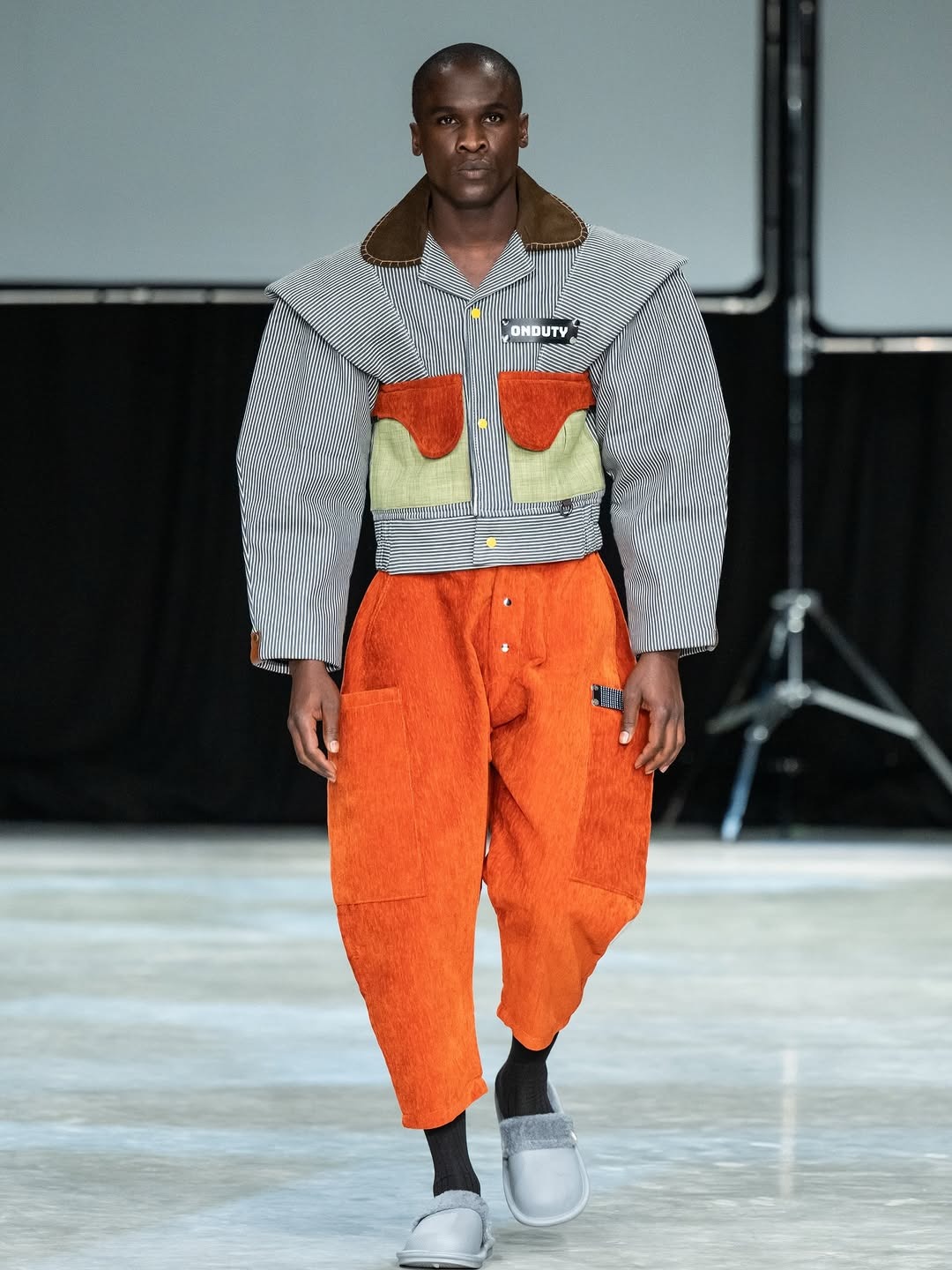
Runway analysis in fashion writing often claims more than the evidence supports. A written collection review can describe details the reviewer saw from multiple angles at the show: the back of a jacket, the lining, the construction method, and how the garment moved. Those details are not available in the front-facing gallery photographs that most subsequent analyses draw on. When photograph-based analysis reproduces details from a written review, it can create the impression that the photograph shows what the review described. It does not always.
The same problem applies in archival dress research. A museum catalogue record for a garment describes what the cataloguer could observe. A photograph of a displayed garment shows what the camera angle captured. Neither is a complete account of the object. In both cases, the honest researcher names what the record shows and what it omits, rather than assuming the partial view is complete.
For runway photography specifically, the front-facing frame creates a systematic blind spot that has particular consequences for garments with strong back construction, visible lining details, or pattern structures that read differently from different angles. Standard runway photography documents only half of a garment whose back is as considered as its front. A static, front-facing photograph barely documents a garment whose construction arguments are most visible at the back, at the side seams, or in movement.
What a More Complete Record Would Look Like
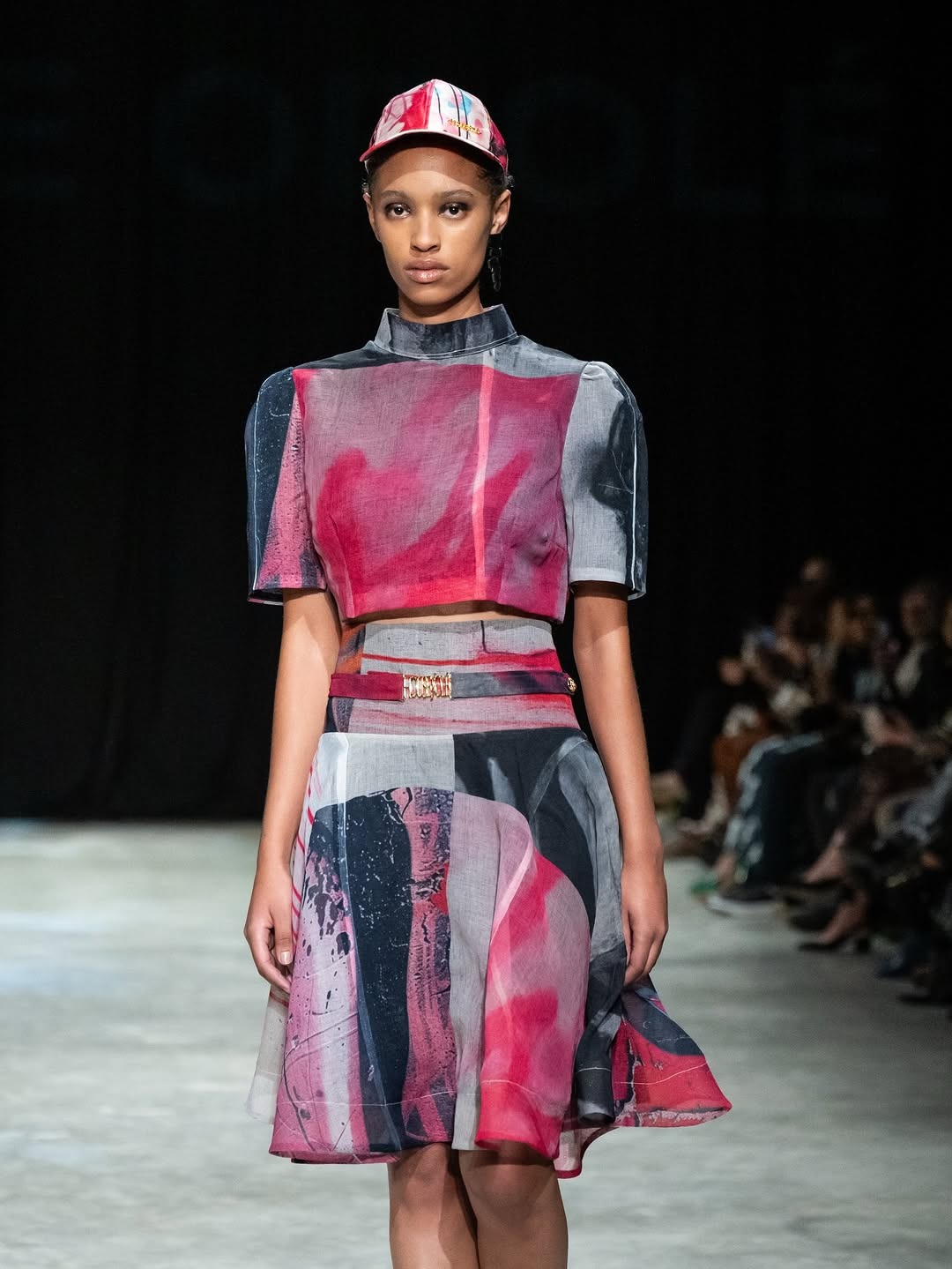
A complete visual record of a runway look would include a front view, a side view from both sides, a back view, a detail view at the shoulder construction, a detail view at the hem, images in motion as well as static, and a note about the photographer’s position relative to the runway and the model’s position in the walk when the frame was captured. For garments with strong pattern structures, the record would also benefit from close images of how the pattern handles the seam joins – specifically whether the repeat was matched at the side seams and back seam.
This level of documentation isn’t standard in runway photography, and it isn’t realistic for the commercial context in which runway photography operates. Runway photographers are covering dozens of looks in a short window, often from a fixed position. The gallery format selects a small number of images to represent a collection. The front view is standard because it is the view from which the look is designed to be read, and it carries the most information about the designer’s primary visual argument.
What would help, and what would be a meaningful improvement without changing the economics of runway photography, is clearer documentation of what each image shows: the angle, the photographer, the moment in the walk, the look number. The AnOther gallery that has been the source for this series does not provide that information consistently, and the note in each article that the page reference in the URL should not be treated as an official look number is a symptom of that absence.
Reading the Vogue Description Against the Photographs
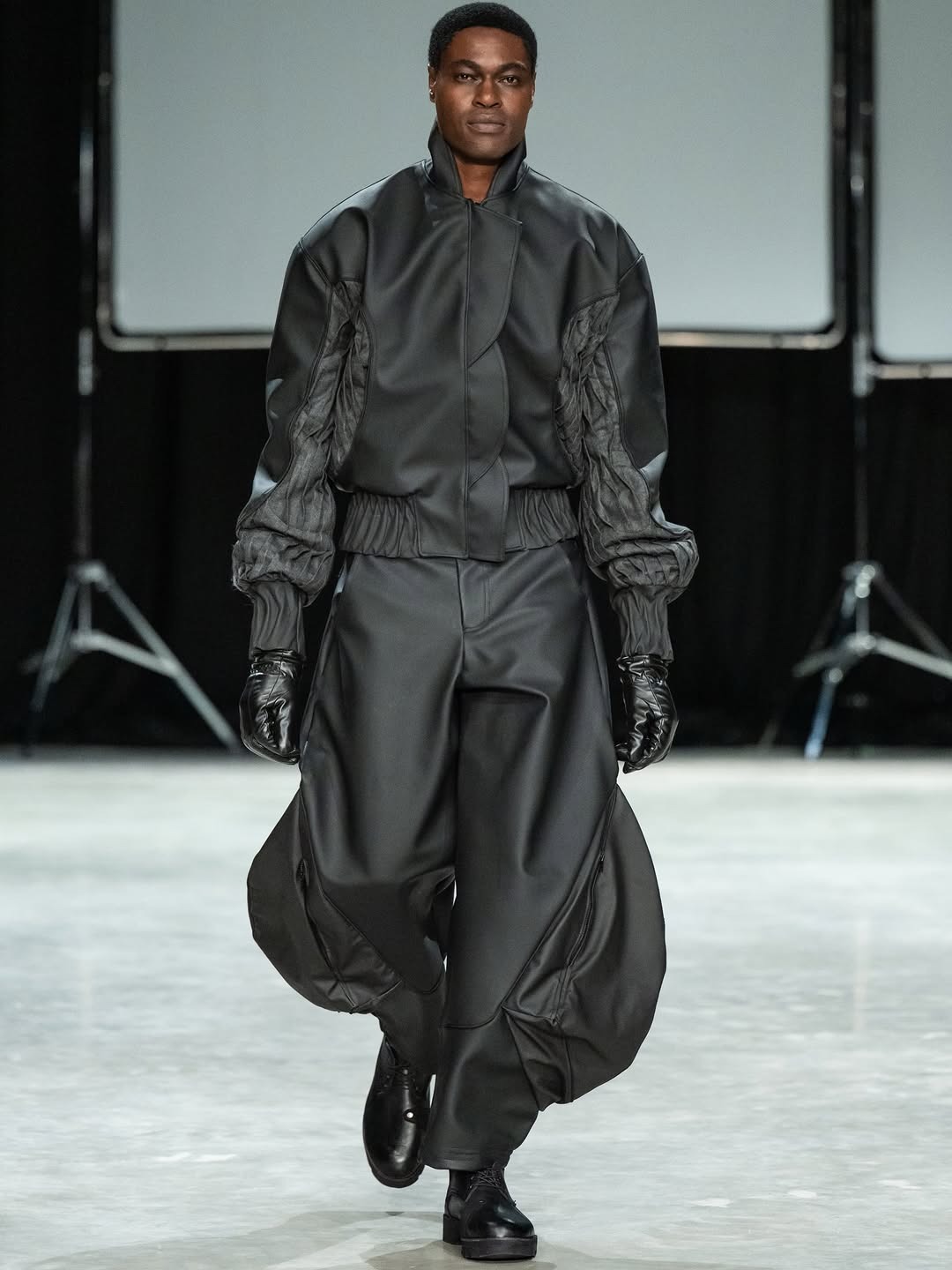
The Vogue collection review of Kenneth Ize’s AW26 JOY collection, which is cited in the first article of this series as providing collection-level context, mentions reversed pockets and exposed construction. These are specific garment details that carry information about the construction philosophy. Reading that description against the front-facing photographs available through the AnOther gallery produces a specific difficulty: the reversed pockets and exposed construction aren’t visible in the front-facing images, or not clearly enough to confirm.
There are two possible explanations. First, the details may appear in looks not visible from the front, such as at the back, inside, or along the lining edge. Second, the details may appear in other looks from the collection rather than in the specific look this series has been examining. Written collection reviews typically describe a collection as a whole rather than individual looks in isolation, and details mentioned in a review may apply to some but not all garments shown.
Both explanations fit the evidence. Neither can be confirmed without access to either a complete set of front-and-back photographs of the specific look or the garment itself. The series has noted throughout that claims about the back view, construction method, or lining are difficult to verify. This is why. The Vogue description is collection-level evidence; the photographs are look-level evidence; and they are not the same thing, even when they concern the same collection.
The Omiren Argument
Fashion writing that respects the limits of its evidence produces a different kind of knowledge than fashion writing that treats the photograph as a transparent window onto the garment. The front-facing runway photograph is not a transparent window. It is a specific kind of image made in a specific context by a specific person from a specific angle. What it shows is real and worth reading carefully. What it does not show is equally real and equally worth naming.
The Kenneth Ize AW26 series has tried to practise exactly that discipline across four articles. The first three read what the front-facing photographs show. This fourth article names what they do not. Together, they offer a more honest account of what close runway analysis can establish than an approach that claims the photograph shows the whole garment when it shows only the front.
The question of what a record can and cannot tell us runs through every cluster of the Omiren Styles editorial work this season. In textile provenance, in archival dress research, in beauty claims, in runway analysis, the discipline is the same: match the claim to the evidence, name the gap, and resist the pressure to fill the gap with inference presented as observation. For this series, the back of the Kenneth Ize jacket is an open question. It will remain open until photographs show it, or until the garment itself can be examined. That is not an admission of failure. It is the correct position to hold.
ALSO READ
- Kenneth Ize’s Autumn/Winter 2026: How One Jacket Organises Pattern
- When the Shirt Becomes the Frame: Collar, Cuffs and Contrast in Runway Styling
- Where the Jacket Ends: Length, Layering and the Balance of a Runway Look
- What a Museum Record Can – and Cannot – Tell Us About Dress
Frequently Asked Questions
What does front-facing runway photography not show?
A front-facing runway photograph does not show the back of the garment, the side seams, the back construction, the lining, the way the garment moves, or how pattern structures handle the transition from front to back. For garments with strong woven surface patterns, it also cannot show how the repeat is handled at the side and back seams. For garments with construction details described as appearing at the back, interior or lining – such as reversed pockets or exposed construction – front-facing photographs cannot confirm or deny their presence.
Why does this matter for reading runway looks?
Runway analysis that relies exclusively on front-facing photographs produces a partial account of the garment. When written collection reviews describe details not visible in front-facing images, analysis based on those photographs may reproduce those details in a way that implies the photographs show what the review described. Being clear about what the photographs show and what they don’t prevents confusion and produces more honest garment analysis.
What would a more complete visual record of a runway look include?
A more complete record would include front, side and back views; detail images of construction points (shoulder, hem, seam joins); images in motion and images in a static position; the photographer’s attribution and position relative to the runway; and the model’s position in the walk when each image was captured. For patterned garments, close images of how the pattern handles seam joins would also be informative. This level of documentation is not standard in commercial runway photography.
What has the Kenneth Ize AW26 series established across four articles?
The four articles in this series have established, from front-facing photographs: how plain brown sleeves bound the jacket’s vertical stripes; how the pocket flaps interrupt the stripes at the lower section; how the white collar and cuffs frame the jacket and connect the neckline to the sleeve endings; how the purple neckwear adds character to the neckline without displacing the jacket as the main subject; how the jacket’s extended length and open front panels organise the complete silhouette; and why the trouser’s plain surface earns its place through preparation across the jacket, what the series has not established, because the front-facing photographs cannot establish it: how the back of the jacket is constructed, how the pattern continues behind the front, and whether the construction details mentioned in written collection coverage apply to this specific look.
Does the Vogue collection review confirm the reversed pockets and exposed construction for this specific look?
No. The Vogue collection review describes the Kenneth Ize AW26 JOY collection and mentions reversed pockets and exposed construction as collection-level details. Written collection reviews typically describe a collection as a whole rather than individual looks, and details mentioned in the review may apply to some looks and not others. The front-facing photographs do not confirm or deny those specific details for the look this series has been examining. The series has noted throughout that construction details not visible in the supplied photographs cannot be claimed from those photographs alone.
Where do the photographs for this series come from?
The photographs come from AnOther’s Kenneth Ize Autumn/Winter 2026 gallery. Photographer attribution and reproduction permission remain to be confirmed before publication. The page reference in the URL should not be treated as an official runway look number, and the gallery does not consistently provide angle, photographer or walk-moment documentation for individual images.