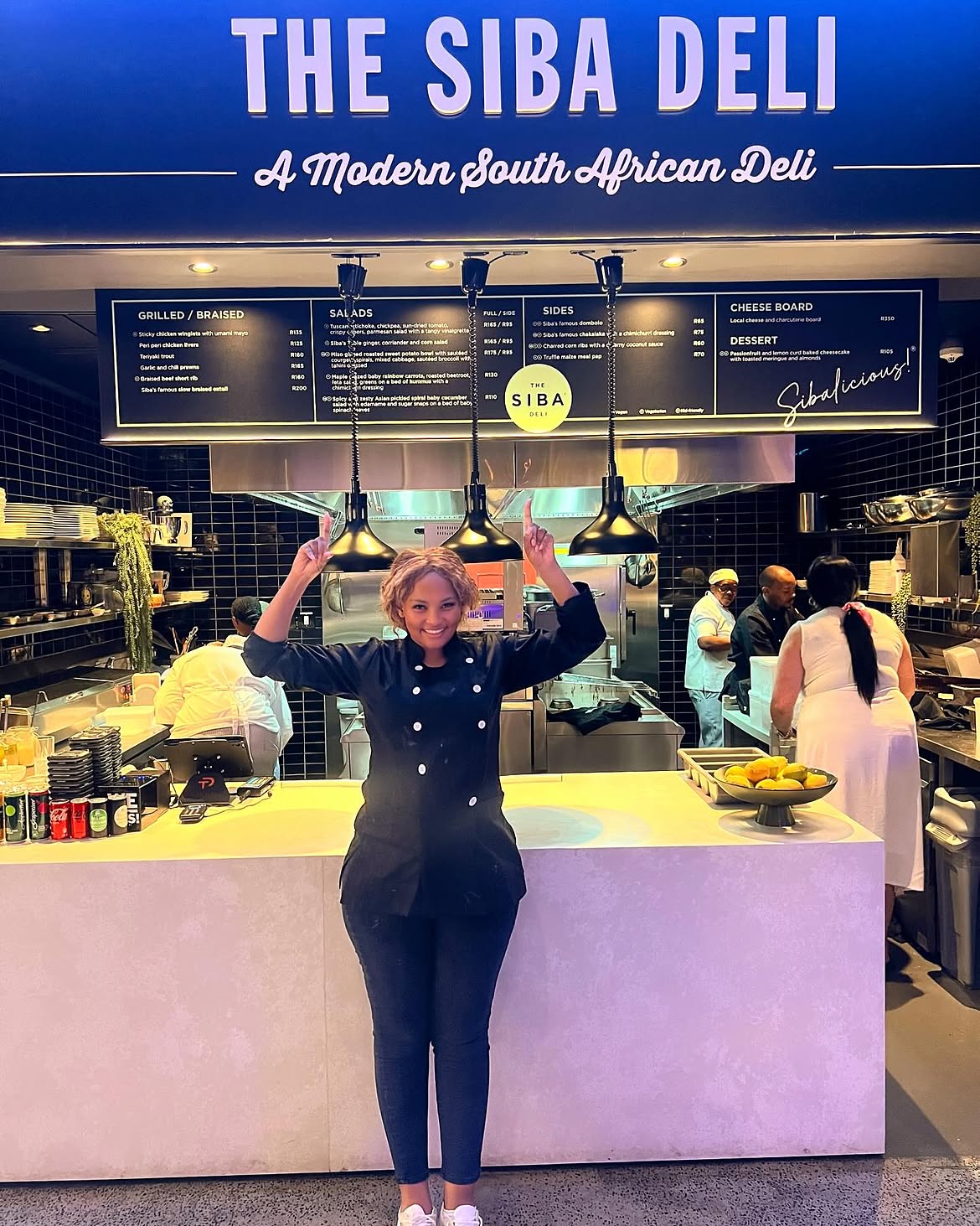
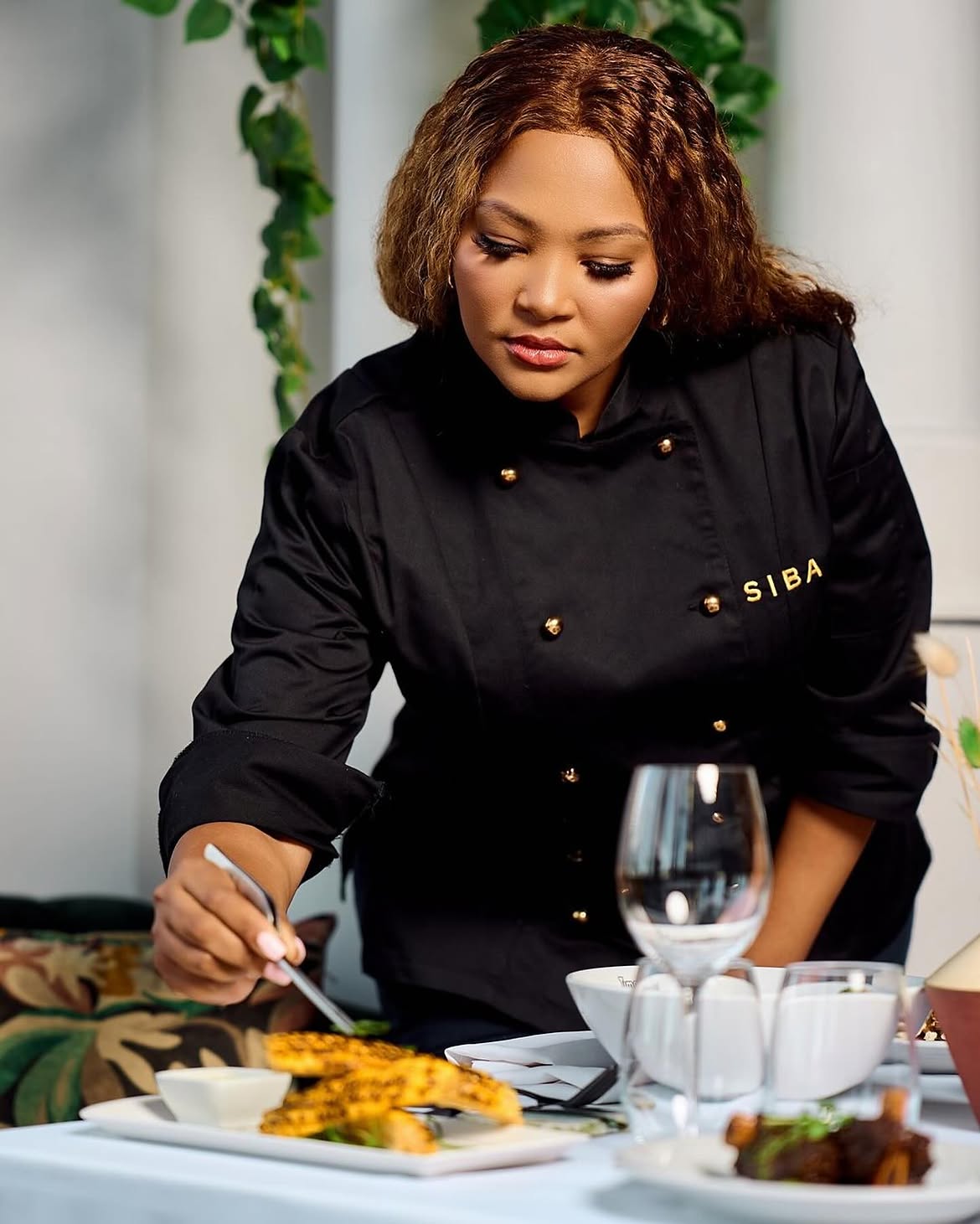
One skill often overlooked in food media is making a recipe feel like an invitation rather than a set of instructions. Anyone can write a list of ingredients and steps. The harder work is making the reader believe they can do it, that the result will be worth the effort, and that the occasion the recipe is for is worth creating. Siba Mtongana has done that harder work since her first television appearance on Mzansi Magic, and the scale at which her food communication has been received suggests it is an uncommon skill.
Sibahle Mtongana, professionally known as Siba Mtongana, grew up in East London in South Africa’s Eastern Cape. She holds a degree in food and consumer sciences, majoring in food science and nutrition. That academic foundation matters because it separates her practice from the purely intuitive approach that characterises some food television. Her recipe development is underpinned by an understanding of how food behaves, why techniques produce the results they do, and how to integrate nutritional considerations into the kind of cooking people actually want to eat. She calls her approach ‘simple, yet sophisticated food with a cosmopolitan flair’, and the degree helps make the sophistication reliable rather than aspirational.
Siba Mtongana’s Food Network show reached 60 million US homes. Her cookbook was the best-selling title Woolworths SA had ever stocked. This spotlight examines the practical intelligence behind her approach to recipes, food communication and making cooking feel accessible.
The Career That Built the Practice
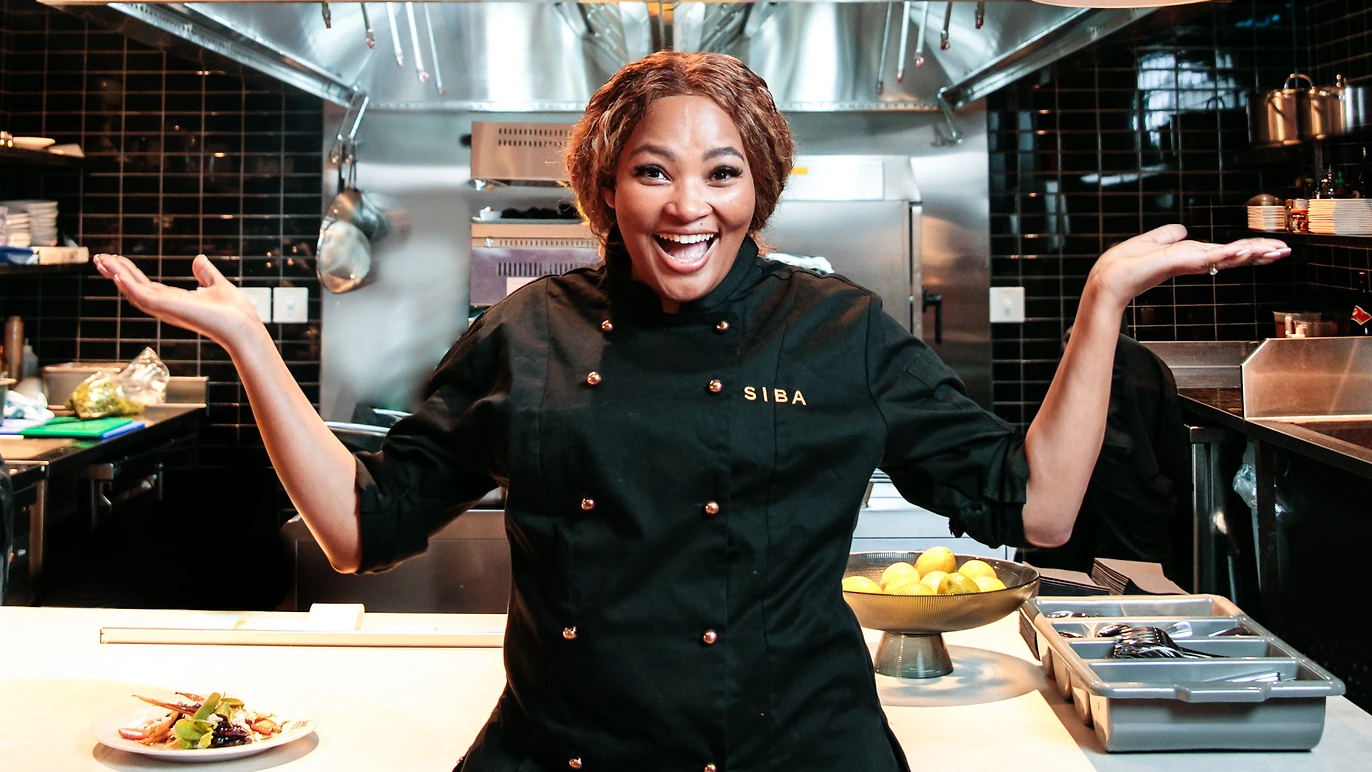
Mtongana’s first television work was *Cooking with Siba*, which aired on MNET’s Mzansi Magic while she worked as a food editor at *Drum* magazine. The programme won a SAFTA (South African Film and Television Award) for Best Lifestyle and Variety Show in its first season, confirming the format was working before it reached a wider audience.
*Siba’s Table* launched on DStv’s Food Network channel in September 2013 and reached more than 130 countries. When it debuted in the USA in April 2014, on the Cooking Channel, Mtongana became the first South African to have their own television show in America on that network, which at the time reached more than 60 million homes. That international reach is worth pausing on. A cooking show travels differently from most entertainment formats because cooking is both culturally specific and universally practised. A recipe for malva pudding is specific to South African food culture; the technique of balancing sweetness and acid is legible to anyone who cooks. Mtongana’s television work navigated that duality: rooted in South African flavour and tradition, technically coherent for an international audience.
She has won three Galliova Awards for food journalism, recipe writing and food styling. A panel of food industry professionals in South Africa awards them, and they cover the full range of her practice rather than a single aspect. In most professional settings, a journalist, a recipe developer, and a food stylist are three different people. Mtongana has been recognised as all three.
What the Cookbook Tells Us
*My Table*, her debut cookbook, was self-published through her company, The Siba Co, before being updated and re-released by Penguin Random House as *Welcome to My Table*. The book features 120 recipes drawn from Seasons One and Two of *Siba’s Table*, with additional material. Its commercial performance was exceptional: it became the best-selling cookbook Woolworths South Africa had ever stocked, outselling the previous record-holder by over 33 per cent. It also won two awards at the Gourmand World Cookbook Awards, which are given in China and cover cookbooks from across the global publishing market.
One technical innovation in *My Table* is worth noting: it was the first South African cookbook to include QR codes linking to video of Siba making the recipes. That integration of print and video in a single cookbook was not simply a marketing device. It addresses a genuine problem in recipe writing: written instructions can be ambiguous in ways that visual demonstration resolves immediately. What does ‘a gentle simmer’ look like? How thin should the onions be sliced? A QR code that takes the reader directly to footage of the technique being performed is a practical acknowledgement that the recipe, as text, is only part of the communication.
‘My recipes reflect my South African roots, international food trends and some of the exotic flavours and ideas that I’ve picked up on my travels around the world.’ – Siba Mtongana, My Table.
That description places her recipe development at the intersection of three sources: local heritage, global trends and personal travel. The ‘Local is Lekker’ section of *My Table* is her most direct engagement with South African food traditions, covering dishes that she describes as Sibalicious versions of recognised favourites. The rest of the cookbook uses those roots as a foundation, not a limitation.
The Practical Intelligence in Recipe Development
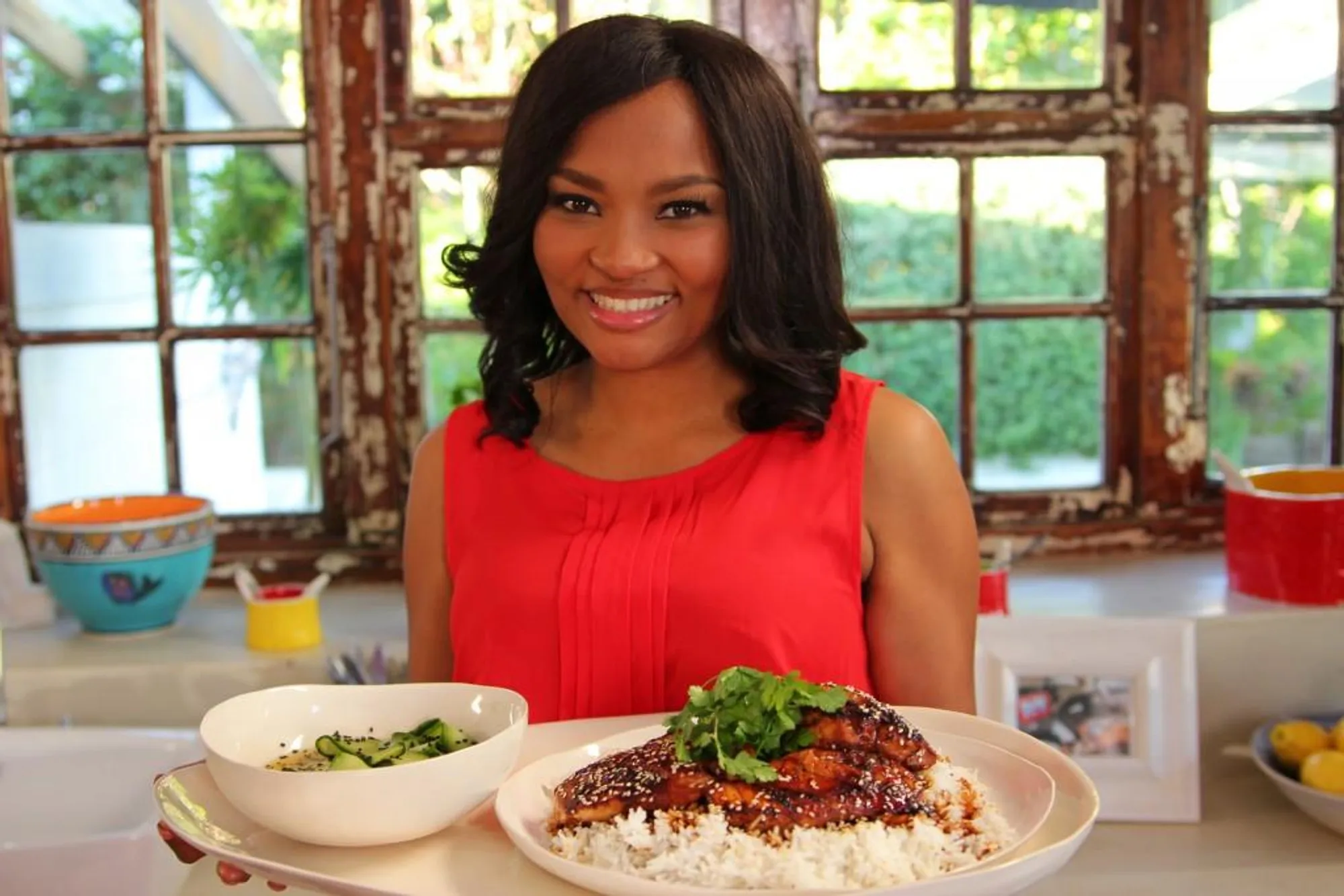
Recipe development is a specific kind of intellectual work that sits between food science, culinary technique and communication. You have to know why a technique works before you can decide when to simplify it. You have to understand the flavour logic of a dish before you can decide what can be substituted and what cannot. And you have to know your audience well enough to calibrate the level of assumed knowledge in your instructions.
Mtongana’s description of herself as the ‘Queen of Convenience’ is the most direct statement of where she positions her audience on that scale of assumed knowledge. Here, convenience does not mean shortcuts that compromise the result. It means a methodology for reaching a satisfying result without requiring the reader to spend an hour they do not have on preparation. The goal is a dish that looks and tastes as though significant effort went into it, made in a time frame compatible with an ordinary weeknight or a weekend lunch. That is a harder problem than it sounds, because many quick dishes are also obvious in the result. The skill is identifying techniques that create the illusion of labour without requiring it.
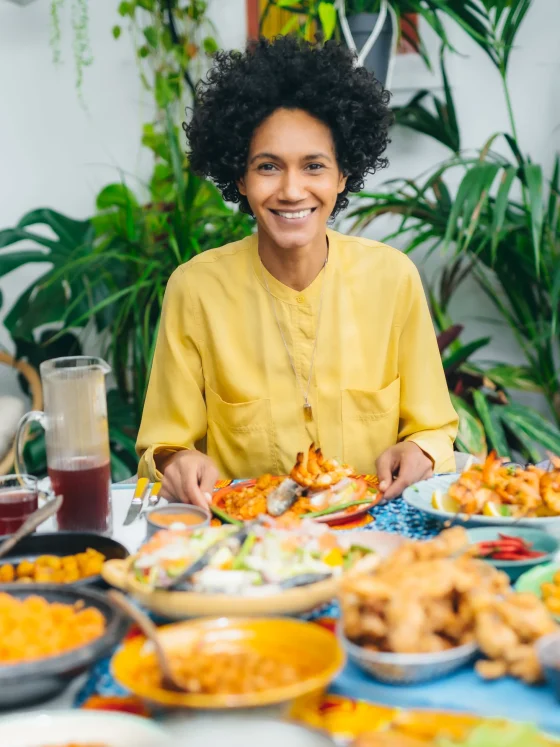
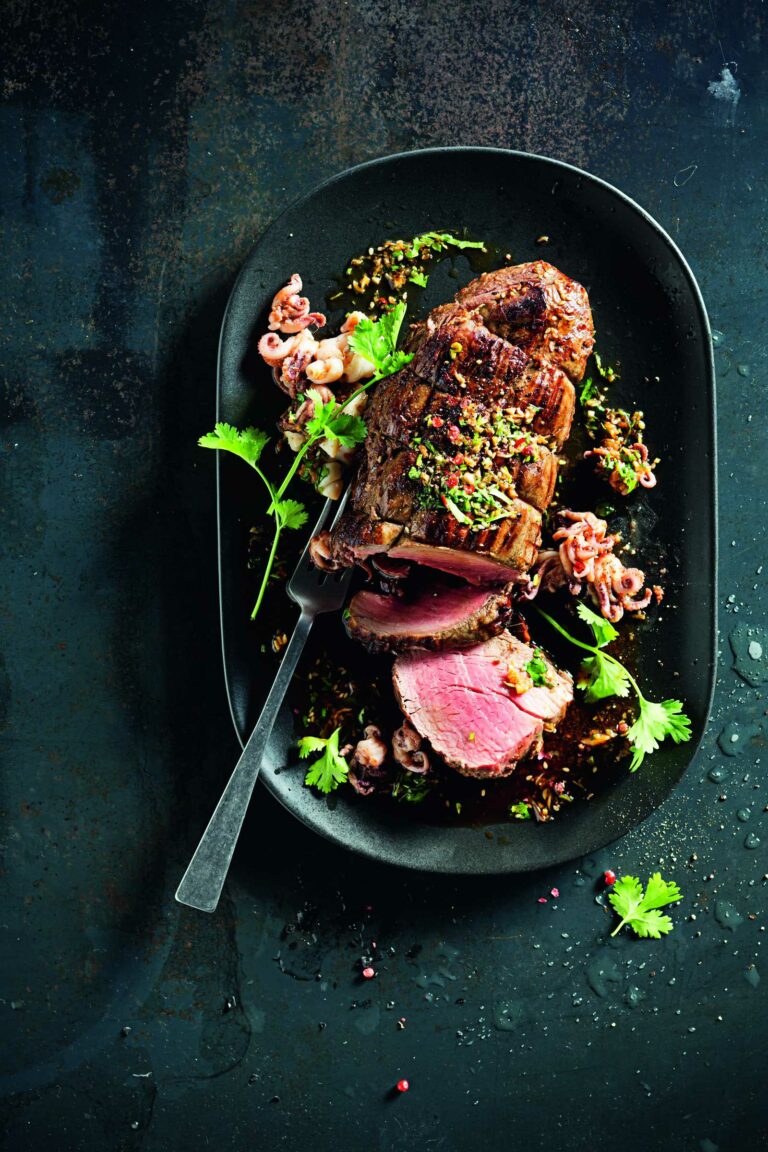
The Seven-Colour Rice from her recipe catalogue is an example of this thinking. The dish combines cooked basmati rice with smoked bacon, three colours of pepper, garlic, onion, mild curry powder and fresh thyme. Each element is simple to prepare on its own. Together, they create a dish with layered colour, multiple flavours, and a visual presence that suggests a more involved process. The technique is straightforward; the result reads as considered.
The Second Book and the Family Audience
*Siba – Let’s Cook*, published by Penguin Random House, extends Mtongana’s practice into a different audience: parents and children cooking together. The book covers morning meals, on-the-go options, lunchboxes, smoothies, snacks and family meals designed to be prepared with children’s involvement. The shift from *My Table*’s focus on the adult home cook to a format that explicitly includes children is a significant move in terms of how recipe communication is structured. Instructions that work for a child require a different level of granularity and a different assumption about what knowledge the reader brings to the kitchen.
The family food format is also a different cultural project from the solo cooking show. *Siba’s Table* built its audience through Mtongana’s own personality and her relationship to food. *Let’s Cook* asks readers to think about food as something that happens between people, particularly between adults and children, and to see the kitchen as a space for transmission as much as production. That is a longer-term view of food culture than most cookbooks take, and it connects to concerns about how culinary knowledge is passed on across many food traditions.
Why Food Communication Matters
The question of how knowledge travels between generations and across communities is not exclusive to textile traditions or visual culture. Food knowledge travels through the same mechanisms: demonstration, apprenticeship, shared practice and, more recently, television and cookbooks. What Mtongana has built over more than a decade of television work and publication is a body of food communication that moves across those mechanisms simultaneously. The television show demonstrates technique in real time. The cookbook translates those demonstrations into a portable format with a longer shelf life. The family cookbook extends the transmission to the next generation.
That combination of formats is not unusual in food media. Still, the scale at which Mtongana’s work has been received, across more than 130 countries via the television show and through a cookbook that became a best-seller in South Africa’s largest food retail environment, suggests that her specific approach to food communication is connecting with audiences in ways that are worth examining rather than simply admiring.
Part of that approach is refusing to separate the accessible from the aspirational. A dish that looks impressive but is achievable in under an hour is not a compromise between ambition and practicality. It is a specific creative achievement: producing a result that exceeds what its inputs would suggest. That is the practical work behind an inviting recipe, and it is a skill Mtongana has spent her career developing, communicating, and teaching across multiple formats and audiences.
What the Practice Adds Up To
Looking at the full shape of what Mtongana has built – the degree in Food and Consumer Sciences, the Galliova Awards across journalism, recipe writing and styling, the television show in 130-plus countries, the best-selling cookbook, the family food book, and a brand identity strong enough to generate its own vocabulary (Sibalicious, Queen of Convenience) – what emerges is a practice that has a consistent argument running through it. The argument is that good food does not require a professional kitchen, a large budget or a lengthy preparation window. It requires knowledge, specifically the right knowledge applied at the right point in the process, and confidence that comes from understanding why a technique works rather than simply following instructions.
That argument connects to a broader position about who owns food expertise and how it is transmitted. In fashion, the question of credit, authorship and the visibility of practitioners has been one of the central arguments of Omiren Styles’ editorial work. In food, the equivalent argument is about who gets to be recognised as a food authority, whose recipes are treated as having technique behind them rather than tradition, and whose food communication reaches international audiences at scale. Mtongana’s career is evidence that the answer to the last question can include a South African chef from East London who studied food and consumer sciences and started on a South African cable channel. The reach she has built is not incidental. It is the result of a specific practice, consistently applied over a long period, that has produced food communication clear enough and inviting enough to travel across cultures without losing its character.
ALSO READ
- The Global South Made Fashion. It Just Never Got Credit.
- The Material File: ‘Threads of Heritage’ Connects Nigerian Textile Practice to Atlanta
- The Material File: Africa Textile Talks 2026 Put Future Fibres on the Table
Frequently Asked Questions
Who is Siba Mtongana?
Siba Mtongana (born Sibahle Mtongana, East London, Eastern Cape, South Africa) is a South African chef, recipe developer, food writer, food stylist and television presenter. She holds a degree in Food and Consumer Sciences and has won three Galliova Awards for food journalism, recipe writing and food styling. She is known for *Siba’s Table* on the Food Network and Cooking Channel and for her cookbook *My Table* (re-released by Penguin Random House as *Welcome to My Table*).
What is Sibalicious?
‘Sibalicious’ is Siba Mtongana’s term for her approach to food and recipes: delectable, exciting dishes and cooking experiences. It appears as both a descriptor for her recipes and a word for the overall creative universe of her food brand, including her television show *Siba’s Table: Sibalicious* and her cookbooks. The Local is Lekker, a section of *My Table*, described as her Sibalicious take on traditional South African dishes.
What is Siba Mtongana’s cookbook?
Siba Mtongana’s first cookbook was *My Table*, self-published through her company The Siba Co and later updated and re-released by Penguin Random House as *Welcome to My Table*. It contains 120 recipes drawn from Seasons One and Two of *Siba’s Table*, including a Local is Lekker section of traditional South African dishes. It was the best-selling cookbook Woolworths South Africa had ever stocked and won two awards at the Gourmand World Cookbook Awards. A second book, *Siba – Let’s Cook*, focused on family cooking for parents and children together.
How many countries did Siba’s Table reach?
*Siba’s Table* was broadcast in more than 130 countries via the Food Network channel. When it debuted in the USA in April 2014 on the Cooking Channel, the show reached more than 60 million homes, making Siba Mtongana the first South African to have their own cooking show on the Cooking Channel in America.
What does Siba Mtongana mean by ‘Queen of Convenience’?
The Queen of Convenience describes her recipe philosophy: the ability to produce dishes that look and taste as though they took significant effort, in a time frame that is realistic for ordinary home cooking. Her approach isn’t about cutting corners; it’s about identifying the techniques and combinations that deliver the most rewarding result for the effort and time invested. Her recipes are designed to make a home cook look accomplished without requiring professional training or lengthy preparation.
What are Siba Mtongana’s professional credentials?
Mtongana holds a degree in Food and Consumer Sciences, with a major in Food Science and Nutrition. She has won three Galliova Awards, South Africa’s prestigious food journalism awards, across three categories: recipe writing, food journalism and food styling. She specialises in recipe development, food writing, and food styling and built her career as a food editor of *Drum* magazine before moving into television with *Cooking with Siba* on Mzansi Magic and, later, *Siba’s Table* on the Food Network.