Adire does not travel on its own. The cloth can be exported, bought, written about, and displayed in a museum case. What the cloth cannot carry to another city is the knowledge system that produced it: the specifics of resist application, the management of the indigo vat, and the decisions made by hand on the cloth’s surface before dyeing begins. That knowledge moves with the people who hold it. That is why an exhibition that brings Nigerian textile artists to Atlanta to lead live Adire workshops is doing something a shipment of fabric cannot.
In May 2026, Fulton County, Georgia, and the Nike Art & Culture Foundation of Nigeria launched ‘Threads of Heritage: A Cultural Confluence Connecting Africa to Atlanta’. The initiative brought 14 Nigerian artists to Atlanta for a multi-week programme that included an exhibition at the Peachtree Gallery in the Fulton County Government Centre complex, live Adire textile workshops, cultural panels, public engagement events and a broader framework of community visibility and exchange. The programme ran through the end of June 2026.
The programme lead was Chief Dr. Nike Monica Okundaye, described by Fulton County as an internationally celebrated artist, cultural preservationist and founder of Nike Art Gallery – widely recognised as one of Africa’s most influential cultural ambassadors. Fulton County Chairman Robb Pitts hosted the opening reception on Friday, 15 May 2026, in the Government Centre Atrium at 141 Pryor Street, downtown Atlanta.
In May 2026, Fulton County, Georgia, and the Nike Art & Culture Foundation of Nigeria brought 14 Nigerian artists to Atlanta for Threads of Heritage: an Adire textile workshop, exhibition, and cultural exchange programme. Here is what the initiative involved.
How the Partnership Came Together
According to Fulton County’s Arts & Culture Director David Manuel, the initiative began when Chairman Pitts shared his knowledge of Chief Nike’s practice in a conversation approximately seven to eight months before the May 2026 launch. ‘This event marks about seven or eight months after Chairman Pitts invited me to a conversation and was sharing with me about Mama Nike, who was so famous in Nigeria,’ Manuel said after the opening. The county’s aim, he noted, was a mutual relationship: bringing Nigerian artists to Fulton County and creating a platform for Atlanta-based artists to reach Nigeria in return.
The partnership involved three organisations: the Nike Art & Culture Foundation of Nigeria, Nike Art USA, and UniSpectrum Inc. of the United States. Fulton County’s Department of Arts & Culture provided the institutional framework and the exhibition venue. The Peachtree Gallery, within the Fulton County Government Centre complex in downtown Atlanta, hosted the works through the end of June. A government building as an exhibition venue is a different kind of institutional endorsement from a commercial gallery or a museum: it places the work in the county’s civic infrastructure rather than its cultural tourism circuit.
What Chief Nike’s Practice Actually Is
Chief Dr Nike Monica Okundaye has made and taught Adire and batik textile work for decades. Her practice is based in Oshogbo and Abuja, Nigeria, and operates through Nike Art Gallery locations. What makes her practice especially relevant to an exhibition centred on Nigerian textile knowledge is not that she is a prominent figure in the Nigerian art market, though she is. It is that her approach treats teaching as inseparable from making. Textile knowledge that is not transmitted does not survive. Her apprenticeship-based teaching practice in Nigeria has, over many years, trained artists in the technical and cultural aspects of the work.
In Atlanta, that practice took the form of master Adire textile workshops led by Chief Nike herself. These were not demonstration sessions. They were workshop settings in which participants engaged directly with the resist-dyeing technique, under the guidance of someone who learned it within the tradition that produced it. The distinction matters because
Adire’s knowledge system is not contained in a written specification. It is held in the practitioner’s understanding of the material, the dye and the resist – the decisions that have to be made in real time as the cloth and the process interact. A workshop in which a practitioner with that understanding teaches the work in person is a form of knowledge transmission that documentation cannot replicate.
The Artists and What Each Brought
The programme was built around three layers of contributors. Chief Nike served as programme lead. A smaller group of artists served as workshop facilitators, with specific responsibilities for different aspects of the programme. The larger group of exhibiting artists contributed works to the Peachtree Gallery exhibition.
Shayee Awoyomi, a textile and visual artist based in the United States, co-led workshops alongside Chief Nike and coordinated engagement with HBCUs – Historically Black Colleges and Universities – as part of the programme’s outreach component. This is a specific and deliberate targeting: HBCUs have a documented historical relationship to African art and culture, and bringing Nigerian textile practice into direct contact with their student communities is a different kind of exchange than a general public exhibition.
Lasaki Olubunmi, a US-based painter, sculptor and educator, served as senior workshop lead and academic contributor. Adeleke Akeem, a Nigerian painter, led narrative painting masterclasses and live demonstrations. The exhibiting artists – Ola Balogun, Ajibade Awoyemi, Bimbo Samson Adenugba, Ade Odunfa, Owolabi Ayodele, Nduka F. Onyia, Doba Afolabi, Folami Olanrewaju Razaq and Mukaila Ayoade, all US-based Nigerians – contributed works to the gallery component of the programme.
The distinction between the exhibiting artists and the workshop facilitators helped make the programme a cultural exchange rather than an export of Nigerian art for American audiences. The workshop strand required active participation from both sides. The exhibiting strand brought finished work. Together, they put Nigerian textile practice and visual art in contact with Atlanta audiences in a range of formats: looking at work, handling materials, and learning technique.
Through the Department of Arts & Culture, we can bring a piece of the world right to our backyards here in Fulton County. Through these works and the artist’s eyes, we are bridging the cultural creative gap between Africa and Fulton County, which benefits us all. – David Manuel, Director, Fulton County Arts & Culture
Atlanta’s Nigerian Cultural Day
The Threads of Heritage programme arrived in a city that had already been building a formal relationship with Nigerian culture. Mayor Andre Dickens, the 61st and current Mayor of Atlanta, Georgia, had previously proclaimed 25 May as Nigerian Cultural Day in the City of Atlanta, recognising the growing cultural relationship between Nigeria and the city. The Threads of Heritage initiative was positioned by its organisers as activating that relationship at a larger institutional scale – moving from a mayoral proclamation to a sustained multi-week programme with multiple artist contributors and a structured teaching and public engagement component.
Fulton County’s jurisdiction covers the City of Atlanta itself, so the county-level endorsement of the programme reached the same population the city’s earlier Nigerian Cultural Day proclamation had addressed. The institutional support was cumulative: a mayor’s proclamation, then a county chairman’s backed programme with a government gallery, a formal arts and culture partnership and a multi-week public calendar.
What the Exchange Was Designed to Produce
Fulton County’s framing of the programme used the phrase ‘bridging the cultural creative gap between Africa and Fulton County’. That phrase does useful work if you pay attention to what gap it names. The gap is not geographical. It is infrastructural: the gap between the existence of Nigerian textile practice and the availability of that practice to communities in Atlanta who might otherwise encounter it only through its products – through Adire cloth purchased in a shop, or described in an article, or displayed in a glass case.
This connects directly to a broader argument about how heritage textiles scale and whether that scaling preserves or erodes what the textile tradition actually carries. The Threads of Heritage model is not about scaling Adire production for the American market. It is about bringing the knowledge system into contact with an audience who can learn something from it directly. The workshops are the mechanism for that contact. The exhibition provides the context.
At the same time, the programme described its aims as reciprocal: ‘bringing artists from Nigeria here as well as bringing our local artists and allowing them to have a platform in Nigeria’. The reciprocal framing matters because it positions the exchange as something other than Nigerian cultural export. The Atlanta-based artists who engaged with the programme were not only receiving Nigerian cultural content. They may have entered a relationship through which their own work could reach Nigerian platforms. Whether that potential was realised depends on what happened after the Peachtree Gallery closed in June 2026. The sources available to Omiren Styles at the time of publication do not document that follow-through.
Why This Matters for How Nigerian Textile Practice Travels
As Omiren Styles has established in its provenance and credit series, the movement of African textile practice into international markets has historically produced visibility for the cloth and invisibility for the maker. The cloth is seen. The knowledge system that produced it is rarely transmitted. Marketing language asserts credit for the tradition but rarely documents it at the level of the individual practitioner who carries that specific knowledge.
The Threads of Heritage model offers a different structure: not the export of cloth without knowledge, but the temporary movement of practitioners who carry knowledge directly into a teaching and exchange context. Chief Nike leading Adire workshops in Atlanta is not the same as a brand sourcing Adire fabric in Nigeria and selling it in Atlanta. The practitioners’ presence means the knowledge is present, not just represented.
This does not resolve the provenance and credit questions that attend any engagement between Nigerian textile practice and international markets. It does suggest a model in which the practice’s visibility and the practitioner’s visibility can coincide, rather than the cloth travelling while the maker stays behind. Whether the Threads of Heritage model is replicable at scale, in other cities, with other Nigerian textile traditions, with the reciprocal Nigeria platform element properly activated, is the question the initiative opens rather than settles.
African fashion has creative quality, cultural authority, and international attention. The Threads of Heritage exhibition is one instance of that attention being structured around knowledge transmission rather than content consumption. The Adire workshops are the operative element: not the display of a tradition but the practice of it, in a room, with people learning it under guidance. That is how knowledge travels without being stripped of its context. Whether more of these instances get built depends on how seriously the institutions involved take the reciprocal half of the exchange.
PROGRAMME AT A GLANCE
Full title: Threads of Heritage: A Cultural Confluence Connecting Africa to Atlanta
Presented by: Fulton County Department of Arts & Culture; Nike Art & Culture Foundation (Nigeria); Nike Art USA; UniSpectrum Inc. (USA)
Opening: Friday, 15 May 2026, 4–6 pm, Government Centre Atrium, 141 Pryor Street SW, Atlanta, GA
Exhibition: Peachtree Gallery, through the end of June 2026
Programme Lead: Chief Dr. Nike Monica Okundaye
Artists: 14 Nigerian artists; workshop leads: Shayee Awoyomi (USA), Lasaki Olubunmi (USA), Adeleke Akeem (Nigeria)
ALSO READ
- How Adire Cloth Holds Memory, Labour and Place
- Can Textile Provenance Protect the People Who Make the Cloth?
- Can Heritage Textiles Scale Without Losing Their Meaning?
- The Global South Made Fashion. It Just Never Got Credit
Frequently Asked Questions
What is Threads of Heritage: A Cultural Confluence Connecting Africa to Atlanta?
Threads of Heritage is a multi-week cultural exchange programme presented in May–June 2026 by Fulton County’s Department of Arts & Culture in partnership with the Nike Art & Culture Foundation of Nigeria, Nike Art USA and UniSpectrum Inc. It brought 14 Nigerian artists to Atlanta for an exhibition at the Peachtree Gallery in the Fulton County Government Centre, plus a programme of live Adire textile workshops, cultural panels, and public engagement events. Chief Dr. Nike Monica Okundaye led the programme.
Who led the Threads of Heritage programme?
Chief Dr Nike Monica Okundaye served as Programme Lead. She is an artist, cultural preservationist, and founder of Nike Art Gallery, and Fulton County described her as one of Africa’s most influential cultural ambassadors. Her specific roles in the programme included leading the official opening ceremony, leading master Adire (textile) workshops, and guiding cultural panels and community engagement. She was supported by Shayee Awoyomi (co-workshop lead, HBCU engagement), Lasaki Olubunmi (senior workshop lead) and Adeleke Akeem (narrative painting masterclasses).
What is Adire and why was it central to this programme?
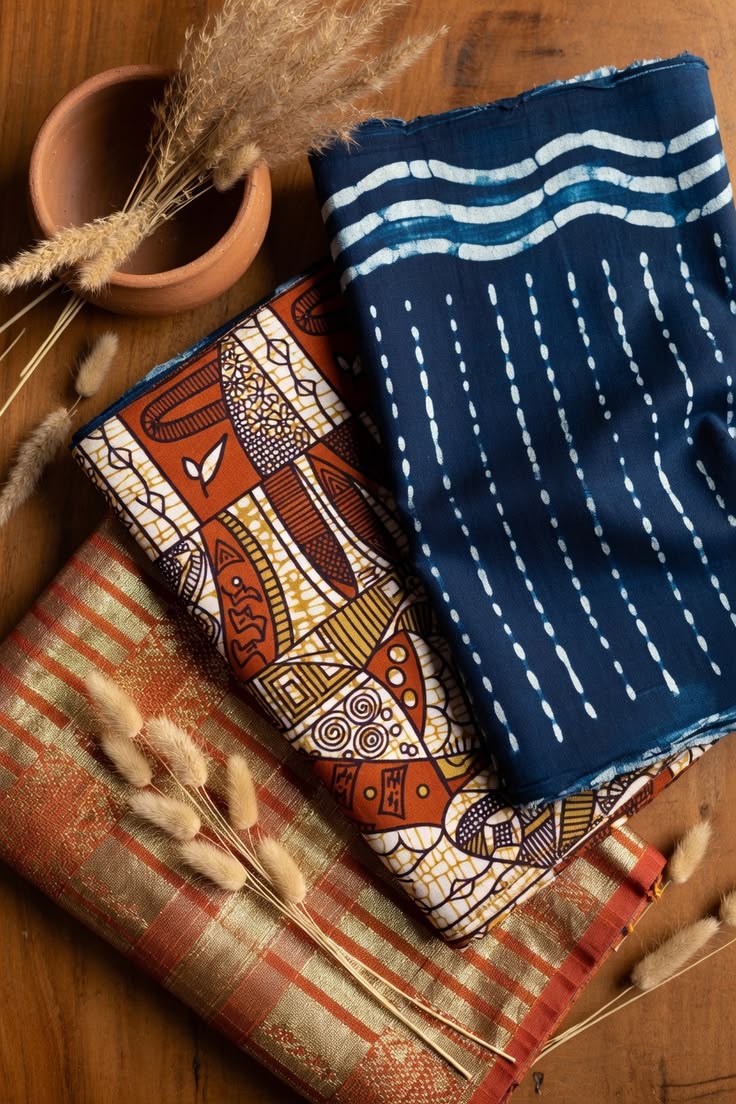
Adire is a Yoruba resist-dyed textile tradition from south-western Nigeria, particularly associated with Abeokuta. It uses indigo dye and three primary resist techniques (tied/wrapped cloth, stitch resist and cassava starch paste resist) to create patterns on cotton. Adire was central to the Threads of Heritage programme because the knowledge system that produces it is held by practitioners rather than documented in specifications, meaning workshops with skilled practitioners like Chief Nike are a form of direct knowledge transmission that exhibition of finished cloth cannot replicate.
Where did the exhibition take place?
The exhibition was displayed in the Peachtree Gallery, located within the Fulton County Government Centre complex at 141 Pryor Street SW, Atlanta, Georgia. The opening reception was held in the Government Centre Atrium on Friday, 15 May 2026. The exhibition ran through the end of June 2026. Fulton County Chairman Robb Pitts hosted the opening reception.
What was the reciprocal element of the exchange?
Fulton County Arts & Culture Director David Manuel described the programme’s aim as mutual: bringing Nigerian artists to Fulton County and giving Atlanta-based artists a platform in Nigeria. Shayee Awoyomi, a US-based textile artist who co-led workshops, also coordinated engagement with HBCUs (Historically Black Colleges and Universities). Sources available at the time of publication do not document the extent to which the Nigeria-facing element of the exchange was subsequently activated.
What was Mayor Dickens’s Nigerian Cultural Day?
Andre Dickens, the 61st and current Mayor of Atlanta, Georgia, proclaimed 25 May as Nigerian Cultural Day in the City of Atlanta, recognising the growing cultural relationship between Nigeria and Atlanta. Organisers described the Threads of Heritage initiative as building on that relationship at a larger institutional scale, moving from a mayoral proclamation to a sustained, multi-week programme supported by Fulton County’s Department of Arts & Culture.