The dress diary is not new. It has existed in some form across fashion history, from the detailed inventories of eighteenth-century wardrobes whose owners recorded what they wore to court and why, through the personal style columns that fashion magazines ran in the mid-twentieth century, to the contemporary daily outfit photograph that social media has made a genre of its own. All versions of the dress diary share the act of recording: converting an unconscious or semi-conscious daily decision into a documented choice whose pattern, over time, reveals something about the person making it.
The recording is not what makes the dress diary interesting. The slowdown is. Writing down what you wore, why, and what happened when you wore it forces retrospective attention to a decision the body makes at speed. Most of us dress under time pressure, with partial awareness of what we are communicating, using a vocabulary of garments whose meanings we have absorbed rather than analysed. The dress diary asks you to analyse what you have been doing all along.
This is the first instalment of the Omiren Dress Diary. Its subject is a single decision: on a specific morning, choosing to wear an agbada to a professional meeting rather than a suit. The decision took three seconds. Writing it down took longer. What the writing revealed is what this essay is about.
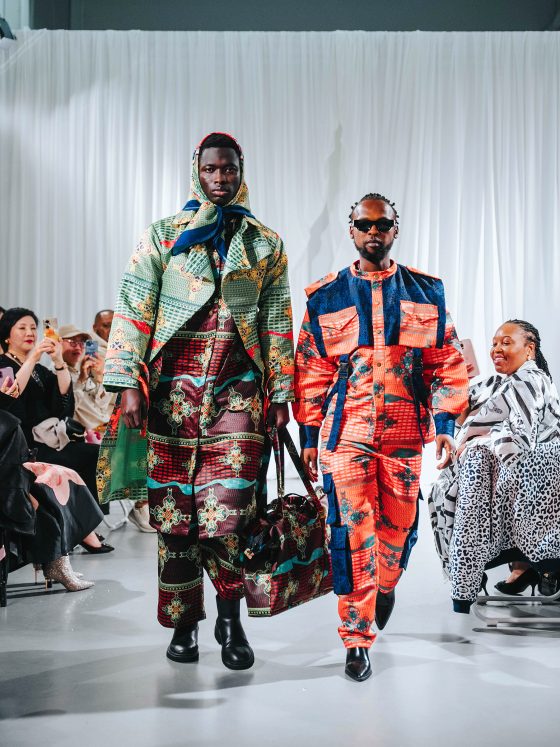
The agbada is a wide-sleeved ceremonial outer robe worn across West African cultures, most formally in Yoruba and Hausa traditions, with regional variants in the babban riga of the north and equivalent forms worn across the Sahel from Senegal to Nigeria. As an Itsekiri man from Delta State, I did not grow up wearing the agbada as an everyday dress. The Itsekiri tradition has its own ceremonial dress vocabulary, one that Omiren Styles has begun to document in its coverage of Niger Delta dress traditions. The agbada I wear to meetings entered my wardrobe through its wide cultural reach across southern Nigeria and the diaspora, where it has become a garment worn by men across ethnic communities for significant occasions.
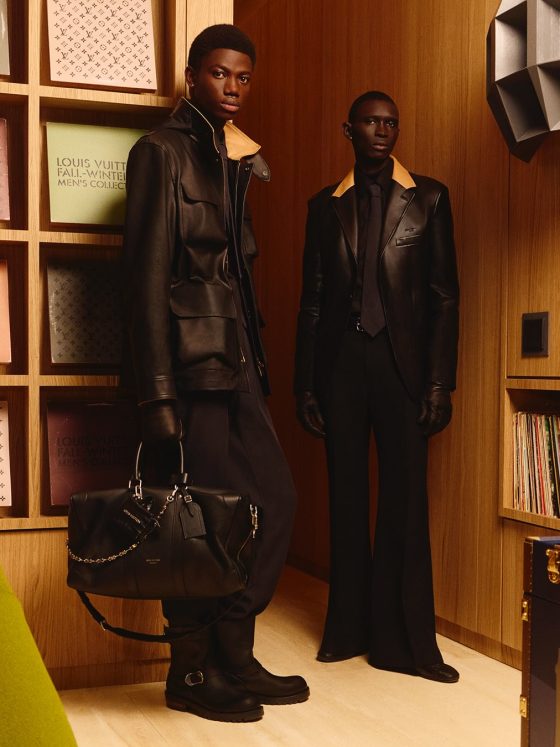
The suit, by contrast, is not a neutral option. It is also a cultural garment with a specific history, a specific geography of origin and a specific set of social meanings. The British lounge suit developed in the second half of the nineteenth century and became, through colonialism and globalisation, the default garment of professional authority across most of the world’s formal contexts. When I put on a suit, I am wearing the dress code of a system that did not design it with me in mind. When I put on the agbada, I am wearing the dress code of a tradition that has existed in West Africa for centuries and that my presence in a professional context does not require me to set aside.
One wardrobe decision, slowed down, carries forty years of information. This is the first Omiren Dress Diary – an editorial essay on what putting on a specific garment reveals about identity, occasion, community and the self-knowledge that tracking a choice makes visible.
What the dress diary reveals, when you slow the decision down to that granularity, is that dressing is always a negotiation between what you want to say and what the context will allow you to say. The negotiation changes with the context. At a government office in Abuja, the agbada carries authority that a suit does not. At a corporate meeting with European clients, the suit is the expected language, and the agbada is a translation exercise. Those clients will read it as a cultural statement rather than as professional dress, because their frame of reference codes it as a costume rather than an attire. Neither reading is wrong. Both readings are the context making its assumptions visible.
This is what the three-second decision carries: the full history of what each garment means to the people in the room, including their assumptions about what it means that I am the one wearing it. When I chose the agbada that morning, I wasn’t just choosing a garment. I was choosing how to enter the room. I was choosing whose terms I would present myself on. I was choosing, in the language of dress, to be legible first on my own terms rather than on the context’s default terms. That choice has a cost and a benefit, and both are real, and three seconds is apparently how long it takes me to calculate them.
Omiren Styles’ analysis of African ceremonial dress as a communication system, developed in its coverage of the grammar of volume in West African dress, establishes that the agbada communicates status through the space it occupies as much as through its fabric or embroidery. The garment’s volume is the vocabulary. When the agbada fills a room, it is not an accident; it is the design. What the dress diary adds to that analysis is the personal dimension: a first-person account of what it feels like to be the person whose presence is announced by the volume, and what it costs to make that announcement in a room that is not always ready for it.
The dress diary is also a record of failure. Not every choice lands the way the chooser intended. I have worn traditional dress to contexts where the context read it as a political statement I did not intend to make, and where the energy required to manage that reading took something away from the meeting itself. I have worn suits to contexts where my community expected the traditional dress and where the suit read as a distance I did not feel. The record of both kinds of failure is part of what makes the diary honest: dressing is not a solved problem. It is a daily experiment in communication whose results you learn from only if you pay attention.
Omiren Styles has argued throughout its coverage of African fashion that the most coherent African fashion is not a rejection of Western influence but an assertion of African design vocabulary on its own terms. The dress diary is where that argument becomes personal: it is the site where the abstract argument about fashion and identity becomes the specific decision about what to wear on Tuesday morning. What to wear on Tuesday morning is not a trivial question if you are someone for whom the choice between garment traditions is a choice about whose vocabulary you will speak in, and what that choice announces to the people in the room.
The dress diary’s deepest disclosure is the one that takes the most time to see: the pattern. A single decision reveals the terms of one negotiation. A month of decisions, recorded and reread, reveals the pattern of negotiations: the contexts in which you default to the traditional dress and those in which you reach for the suit, the occasions where you mix them and the occasions where the mixing feels right rather than compromised, and the events where you are dressed for yourself and those where you are dressed for the audience. The pattern is a kind of self-portrait.
In the context of what Omiren Styles covers, it is also a kind of evidence. Whenever this series documents a fashion industry that makes choices about who to represent and in whose visual language, the dress diary is the first-person version of that same argument: an account of someone making choices about representation from the inside, in the smallest available unit of fashion decision-making, which is the individual human being getting dressed in the morning and deciding what they are going to say before they leave the house.
This series will return monthly. Each instalment will take one garment decision, trace it back to the forty years of information it is carrying, and produce a record. Over time, the record will become a dress diary in the fullest sense: a document of how one person who writes about fashion from West Africa thinks about the choices dressing requires and what those choices reveal about identity, occasion, and the relationship between the personal and the political that every wardrobe holds.
The meeting, for the record, went well. I wore the agbada. I was the most formally dressed person in the room. Nobody said anything about it directly. Several people looked at it. One person asked about the fabric. The fabric, which was aso-oke with a hand-embroidered neckline that my mother chose for me several years ago, took about thirty seconds to explain. In those thirty seconds, the room did the work the dress diary does on the page: slowing down a choice, paying attention to what it carries, and finding out what it reveals.
ALSO READ
- The Grammar of Volume: How African Ceremonial Dress Communicates Status
- How African Fashion Brands Can Expand Without Flattening Their Design Language
- The Niger Delta Dress Tradition: What Ijaw, Urhobo, and Itsekiri People Have Always Known
- Aso-Oke and Contemporary Luxury: What the Cloth Carries
- The Global South Made Fashion. It Just Never Got Credit.
EXPLORE MORE
Read the full Editorial and Dress Diary series at Omiren Styles for ongoing personal essays on dressing, identity and the choices that fashion requires. Discover travel and heritage intelligence across the Niger Delta, Nigeria and the wider African diaspora at Rex Clarke Adventures.