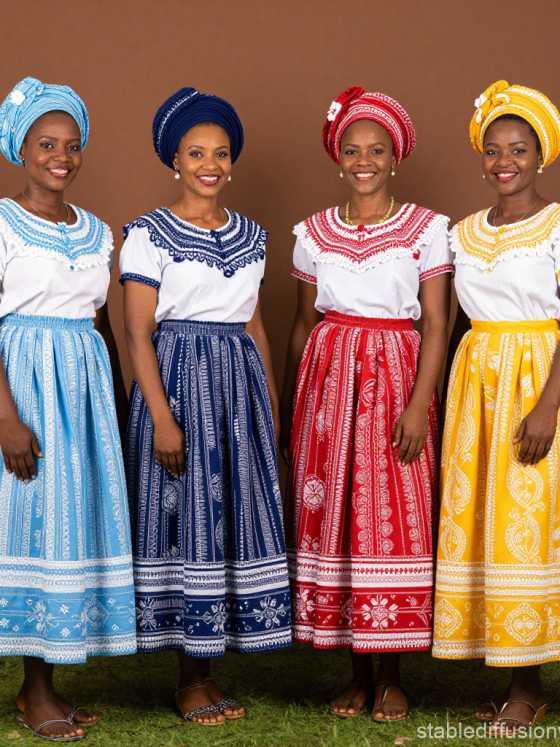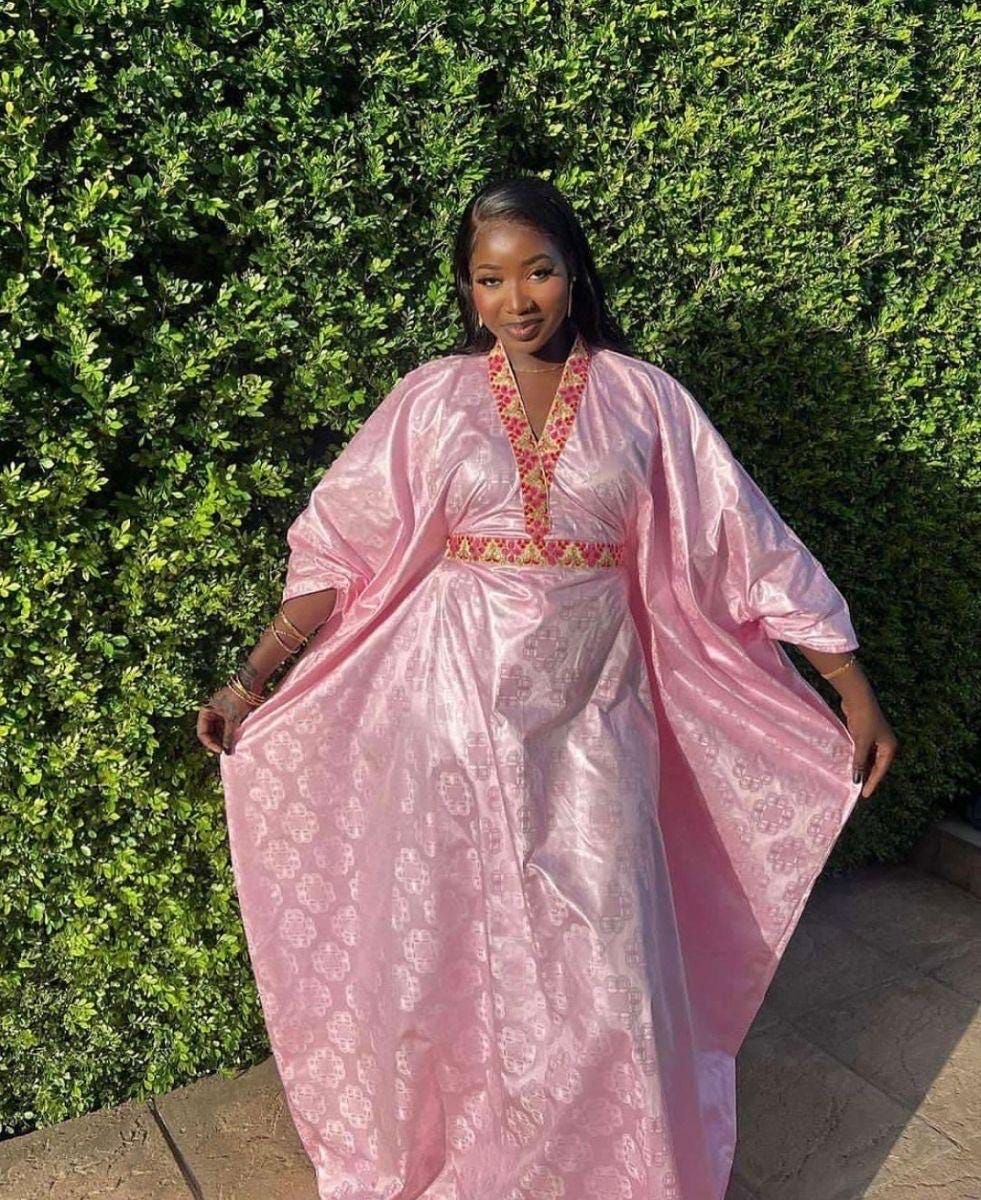
The word comes first. Boubou derives from the Wolof word ‘mbubb’, the principal African language of Senegal, where the garment has its most elaborate and precisely codified form. But the garment itself predates the word’s current distribution: its origins lie with the clothing of the Tukulor, Mande and Songhai peoples, who wore versions of the wide-sleeved robe from at least the eighth century, when the Ghana and Takrur empires defined the region’s political architecture. Senegal took those origins and developed a dress system of extraordinary specificity, in which the fabric, the embroidery, the cut, the starch, and the occasion all contribute to a communication that those trained in the tradition read before a word is spoken.
As Omiren Styles has established in its analysis of how African ceremonial dress communicates status, volume in West African dress is a vocabulary whose grammar varies by community, occasion, and maker. The Senegalese boubou is the most developed single-garment case for that argument: a garment whose grammar distinguishes between the day and the ceremony, the simple and the rich, and the everyday wearer and the elder whose embroidered boubou announces his standing before he opens his mouth to speak.
When a Senegalese man starches his grand boubou, he is composing a statement. This article documents the boubou’s construction, its basin-rich fabric hierarchy, and the dress grammar its wearers and makers have built around it across centuries and into the contemporary moment.
The Construction of the Grand Boubou
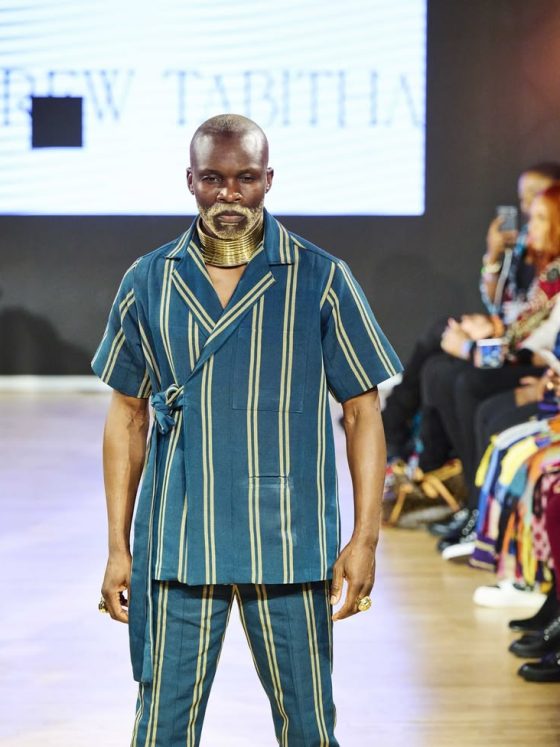
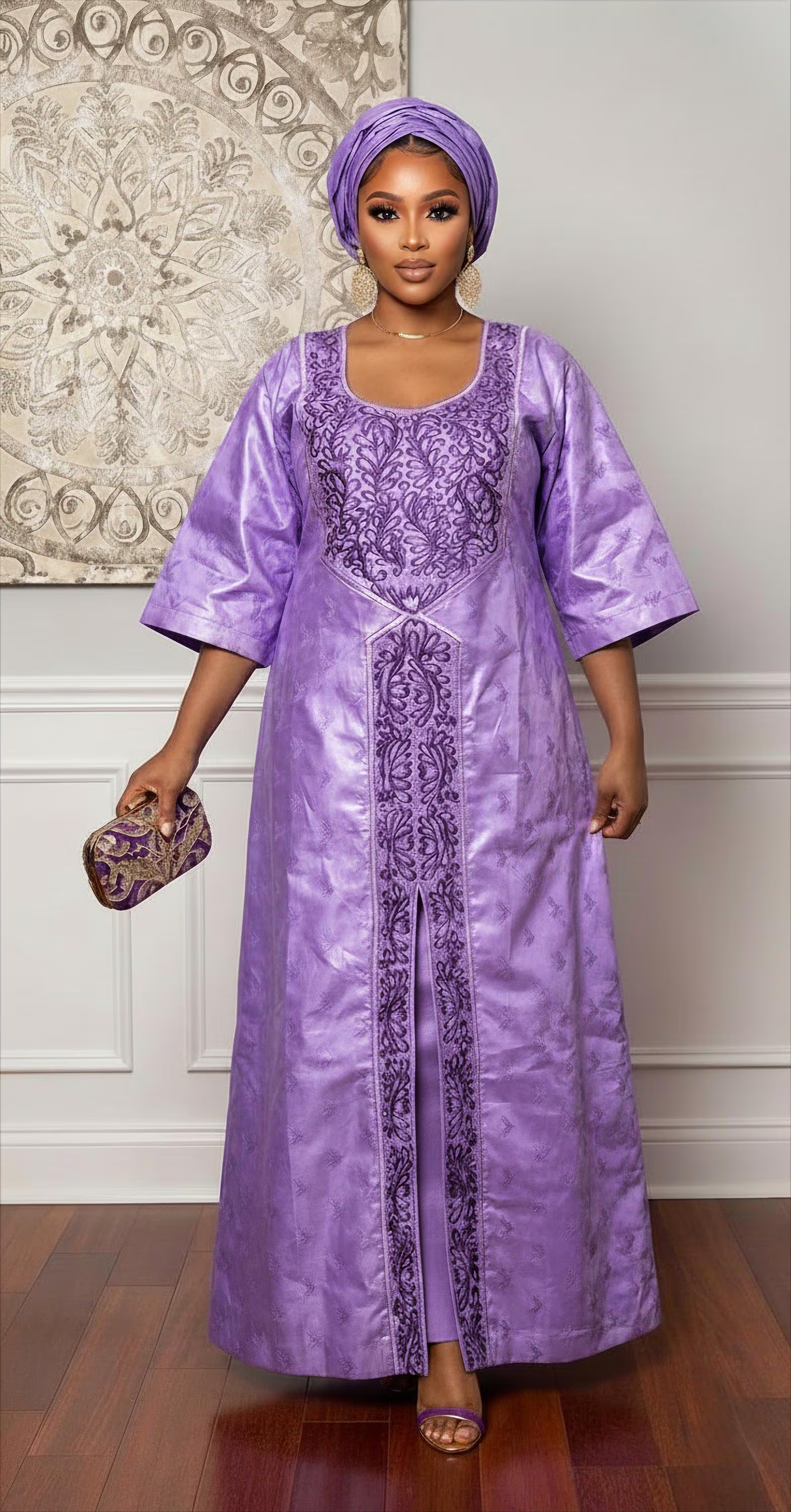
The grand boubou is made from a single piece of fabric, typically 300 centimetres long and 150 centimetres wide. The construction process is straightforward to describe and exacting to execute: the fabric is folded in half, a neck opening is cut, and the sides are sewn halfway up to create the wide, flowing sleeves. For men, the neck opening forms a long V-shape, tapering to a large five-sided pocket whose placement at the chest is the primary site of embroidery. For women, the neck is larger and rounded, with the embroidery distributed differently across the garment.
When the grand boubou is starched, pressed and draped over the body, it creates for its wearer the appearance of stately, elegant carriage – a physical expansiveness whose social dimension the Senegalese dress tradition treats with as much intentionality as any Western suit. The volume is not incidental. It is the mechanism through which the garment communicates. A man whose boubou drapes to the ankle in perfectly pressed folds is, in the grammar of Senegalese dress, making a claim about his standing and the seriousness of the occasion he is attending.
The three-piece complete set extends the communication further. A full traditional Senegalese suit comprises a tunic, trousers and the grand boubou worn over the suit. The layering requires between nine and twelve metres of fabric for the complete ensemble. This is significant. The quantity of fabric in a dress is itself a signal: a garment that uses twelve metres of high-quality cotton damask is announcing an investment whose value the viewer can estimate. The simple boubou and the rich boubou speak different sentences to the same viewer.
Bazin Riche: The Fabric Hierarchy
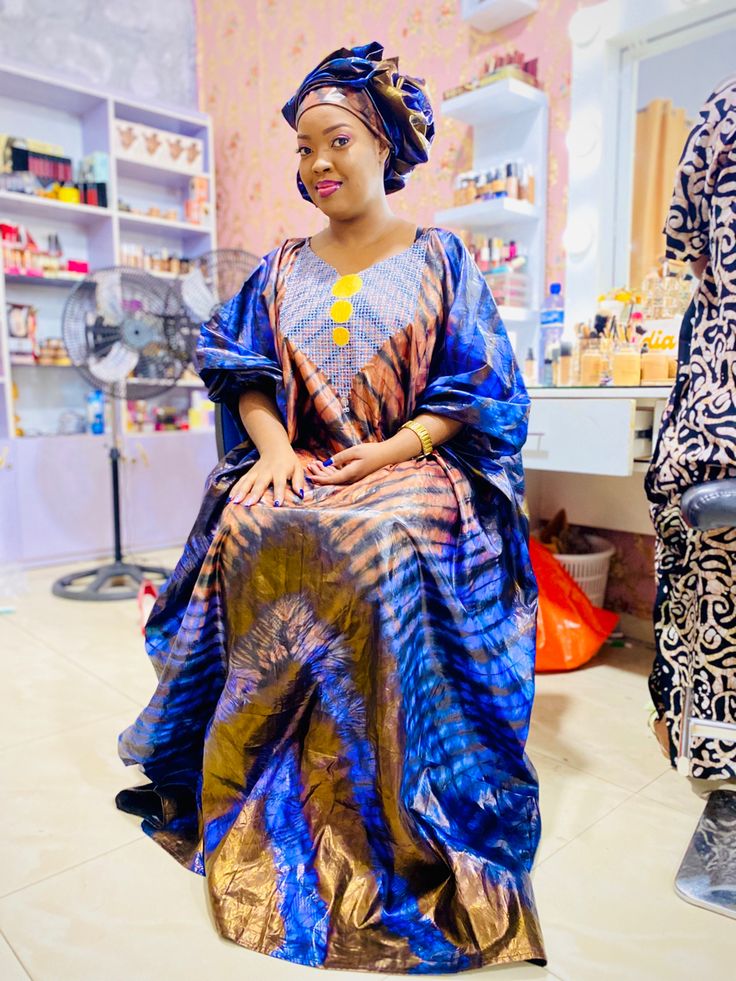
The fabric for the most elegant Senegalese boubous is bazin riche, a cotton damask with Italian origins. The first-grade bazin is 100% cotton, and once dyed, it achieves an exceptional brightness and sheen that distinguishes it from lower-grade alternatives. The fabric is typically bought in white cloth and then dyed by hand, historically by women dyers working out of their homes, in the rich hues that Senegalese ceremonial dress is known for. White and light blue dominate in Mauritania, Western Sahara, Mali and Niger; Senegal and Gambia favour bright colours and multicolour embroidery that mark the garment’s regional character even within the shared West African tradition.
There is an important historical fact embedded in the bazin tradition that the garment’s cultural authority can obscure: the material comes from Europe and Asia, not from local West African production. European damask commands the highest price; cheaper options come from Asia or Nigeria. This has been the case for centuries, meaning the Senegalese boubou’s iconic status as a cultural expression is built partly on a supply chain that reaches far outside the country. The weaving knowledge that makes a Senegalese boubou recognisable belongs to Senegal; the raw material whose quality determines the garment’s hierarchy has rarely done so.
The basin paradox is not unique to Senegal. Heritage textiles across West Africa have long incorporated imported materials into locally held knowledge systems. Knowledge of what to do with the cloth, and how to read what has been done with it, belongs to the tradition even when the cloth itself does not originate there.
Below the basin-rich, the hierarchy descends through varying quality levels of cotton damask and then to wax print and imitation wax print for everyday and less formal occasions. A woman attending a wedding in a well-chosen bazin boubou makes a different statement than the same woman in a wax print boubou at a neighbourhood gathering. Fabric choice is part of the message, and reading it correctly is part of the social knowledge that Senegalese dress culture transmits across generations.
The Malam and the Embroidery Grammar
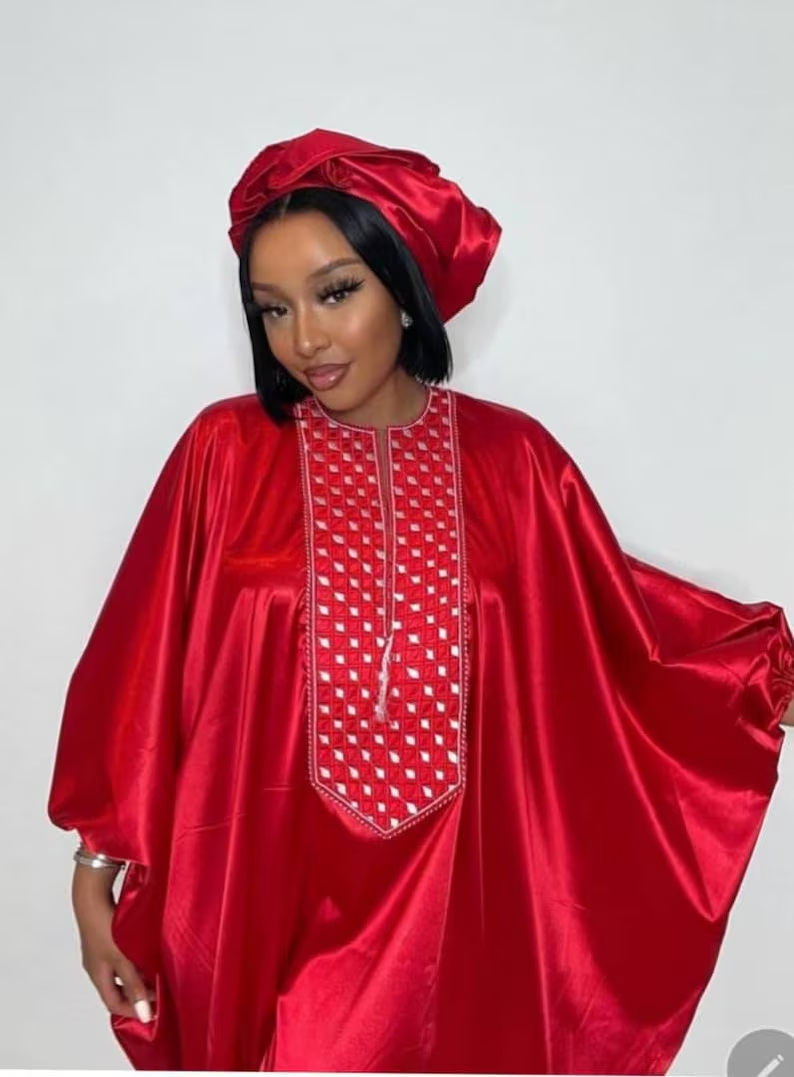
The embroidery that distinguishes the richest boubous carries its own specialist tradition. Historically, embroidery on ceremonial boubous was executed by a malam, a male religious specialist with knowledge of Arabic writing and the Islamic visual vocabulary that informed the design system. The tambari, or king’s drum, is a motif associated with political leadership. A spiral motif signifies chieftaincy and the spiritual path to God. Wearers and viewers understood these designs as protective as well as decorative: wearing them was not only a display of wealth but also an assertion of alignment with spiritual authority.
The embroidery is concentrated at the neck opening, the chest pocket and the front and back panels. For the most ceremonial versions, embroidery also covers the hem and the sleeve edges. The density and precision of the embroidery work are primary indicators of the garment’s value: a boubou embroidered in a single matching colour thread requires different skill from one that uses contrasting coloured silk. Both speak of investment; the contrasting coloured silk speaks of a specific taste for distinction.
The sewing machine changed the embroidery economy without entirely displacing the hand tradition. Machine embroidery made boubous more accessible and faster to produce; hand embroidery retained the favour of those who could afford it and wanted to make that preference visible. The choice between machine and hand embroidery is itself communicative: a boubou that takes weeks to hand-embroider announces its owner’s investment in a way that a machine-made equivalent, however beautiful, does not fully replicate.
Who Wears What and When
The boubou’s social grammar is not confined to formal occasions. In Senegal, the grand boubou occupies the symbolic position jeans do in American dress culture: it is the most basic statement of cultural belonging, worn across contexts from the mosque to the baby-naming ceremony, from Friday prayer to the political gathering. A Muslim man’s embroidered damask boubou at the mosque is simultaneously an act of worship and an act of self-presentation, and the two are not in tension. Dressing well for prayer is part of the practice.
For women, the boubou’s contradictory uses are deliberately cultivated. A stiffly starched bazin boubou, draped alluringly off one shoulder and perfumed with incense, worn with high heels, gold jewellery and a starched matching head scarf tied in a rakish knot, can be the outfit of the Dirriankhe: the Senegalese ideal of seductive beauty, the woman who conveys independence, wealth and a studied elegance that commands attention. The same garment style, presented more soberly, is the dress of the respectable Muslim matron. This range is not a contradiction. It is precisely the boubou’s social utility: a single dress vocabulary that carries different meanings depending on how the wearer presents it.
The everyday boubou and the ceremonial boubou are formally distinguished. The simple boubou, made from lower-quality cotton or wax print, is worn by those for whom the richest fabrics are not a daily option or for occasions that do not warrant them. The rich boubou, in bazin and fine embroidery, is worn at grand occasions: weddings, naming ceremonies, Muslim feast days, and important political events. This distinction is not primarily about economic status in a fixed sense – a person may own both versions – but about the reading of occasion and the respect due to it.
The Boubou and the Sahel Dress Family
The Senegalese grand boubou belongs to a family of related garments that share the basic architecture of a wide-sleeved, ankle-length outer robe across the West African Sahel. The same garment is called the ‘agbada’ among the Yoruba and the ‘baba riga’ among the Hausa. The grand boubou in francophone West Africa, and its equivalents in Ghana, Niger, Mali and Cameroon, share the folded-fabric construction and the embroidery-at-the-chest-pocket grammar while developing their own regional variations in cut, fabric preference and embroidery vocabulary.
As Omiren Styles has established in its analysis of indigo, status, and mobility in Tuareg dress, dress in the Sahel has historically communicated movement, belonging, and political alignment, as well as occasion and status. The boubou tradition is part of a larger West African ceremonial dress system whose components each carry specific grammars that are not identical to one another but share the understanding that cloth, cut, and embroidery are a form of public speech whose meaning a properly educated viewer can read.
The Boubou in the Contemporary Fashion Conversation
Senegalese fashion in the international context has most recently been documented in relation to the Laamb wrestling tradition, where a different grammar of dress operates in public performance without reference to the bazin hierarchy. The grand boubou, by contrast, connects Senegalese fashion to its most formally codified ceremonial heritage.
Selly Raby Kane, whose work appeared in the V&A Africa Fashion exhibition in 2022, is among the contemporary Senegalese designers who work at the intersection of the heritage boubou vocabulary and contemporary fashion practice. Her practice does not treat the boubou’s grammar as a reference to be quoted but as a living vocabulary to extend. This is the position that the most serious contemporary engagement with West African dress traditions has consistently taken: the garment as a continuing practice rather than a historical costume.
The bazin riche’s supply chain paradox – a garment whose cultural authority is Senegalese and whose fabric origin is not – is a version of the argument that runs through West African heritage textiles generally. The question is not whether the material is locally produced but whether the knowledge that gives it meaning is locally held. In the case of the Senegalese grand boubou, the knowledge is held completely: in the tailors who know how to cut the neck opening correctly, in the malam whose embroidery reads the tambari accurately, in the wearer who knows which version of the garment this occasion requires, and in the viewer who can read all three.
The Omiren Argument
The Senegalese grand boubou is a complete communication system built around a single garment form. The fabric hierarchy – from bazin riche to wax print – encodes the occasion’s weight. The embroidery vocabulary, from the tambari to the spiral, links political and spiritual authority to the cloth’s surface. The three-piece construction, with twelve metres of fabric, announces the fullness of the ceremonial intention. The starch makes the drape precise and the volume legible. None of these is merely decorative; each is part of a grammar that the tradition’s practitioners can read as fluently as any written language.
As Omiren Styles has argued throughout its coverage of West African heritage dress, the Global South made fashion and never got credit. The Senegalese grand boubou’s centuries-long development of a formal dress grammar – one that distinguishes between the simple and the rich, the everyday and the ceremonial, the mosque and the wedding, the respectable and the seductive – is one of the most sophisticated dress communication systems in the world. The fact that its fabric comes from Europe and Asia has not diminished this—no one who knows how to read it questions that its knowledge belongs to Senegal.
ALSO READ
- The Grammar of Volume: How African Ceremonial Dress Communicates Status
- Laamb Dress as Sporting Image-Making: What Senegalese Wrestling Reveals About Fashion Without Runways
- Indigo, Status and Mobility in Tuareg Dress: Reading Ceremony Without Reducing It to Costume
- Prestige Cloth After the Ceremony: How Aso-Oke Moves Through Contemporary Luxury
- The Global South Made Fashion. It Just Never Got Credit.
Frequently Asked Questions
What does ‘boubou’ mean, and where does the word come from?
The word ‘boubou’ derives from the Wolof word ‘mbubb’, Wolof being the principal African language of Senegal. The Wolof ‘mbubb’ refers to the loose-fitting, ankle-length caftan that is the foundation garment of Senegalese formal dress. The word has travelled with the garment across Francophone West Africa, where grand boubou is used generically to describe the wide-sleeved outer robe worn by men and women from Senegal to northern Nigeria. The garment is also known as the agbada in Yoruba, the babban riga in Hausa, the mbubb in Wolof and by regional variants across the Sahel.
What is bazin riche, and why does it matter in the Senegalese boubou tradition?
Bazin riche is a cotton damask fabric whose name comes from Italian. In Senegalese dress culture, it sits at the top of the boubou fabric hierarchy: a garment made from first-grade bazin, which is 100% cotton and achieves exceptional brightness once dyed, announces an investment and an occasion-weight that lower-grade alternatives cannot. The fabric is typically bought in white cloth and hand-dyed. Ornate embroidery in matching or contrasting silk thread is added at the neck, pocket and panels. The most expensive basin, historically sourced from Europe, commands the highest social reading; less expensive damask from Asia or Nigeria occupies lower positions in the hierarchy but still participates in the same dress grammar.
Who is the malam, and what is his role in boubou embroidery?
The malam is a male religious specialist with knowledge of Arabic writing and the Islamic visual vocabulary that historically informed the embroidery design system on Senegalese ceremonial boubous. The designs a malam executes include the tambari (the king’s drum, signifying political leadership) and a spiral motif signifying chieftaincy and the spiritual path to God. These designs were understood to offer protective powers and to communicate social standing. The malam’s role has been partially displaced by the sewing machine, which enabled faster and more accessible embroidery production. Still, hand-embroidered boubous from specialist practitioners retain their status in Senegalese dress culture.
Is the boubou only for formal occasions in Senegal?
No. In Senegal, the grand boubou holds a symbolic position comparable to what jeans do in American dress culture: it is worn across contexts from mosque attendance and Friday prayers to weddings, baby-naming ceremonies, and political events. The distinction is between the simple boubou, in lower-quality cotton or wax print for everyday wear, and the rich boubou, in bazin riche with fine embroidery for grand occasions. The same garment form carries different statements depending on the fabric, the quality of the embroidery and how the wearer presents it. A woman can wear a bazin boubou as an expression of seductive independence and elegance; the same style can also convey the modesty of a respectable matron. The grammar is in the presentation as well as the cloth.
Why does the Senegalese grand boubou use imported fabric?
The material for high-grade Senegalese boubous, bazin riche, originates from Europe and Asia rather than from local West African production. This has been the case for centuries, and the tradition has always acknowledged it. The cultural authority of the Senegalese grand boubou does not reside in the origin of the raw material but in the knowledge of how to dye it, cut it, embroider it and wear it in the ways that the tradition defines as meaningful. That knowledge is entirely Senegalese. The fabric’s supply chain is not.
EXPLORE MORE
Read the full Heritage Clothing and West African Dress coverage at Omiren Styles for ongoing documentation of West African ceremonial dress traditions, their fabric hierarchies and the knowledge systems their makers and wearers maintain. Discover travel and heritage intelligence across Senegal, West Africa and the wider African diaspora at Rex Clarke Adventures.