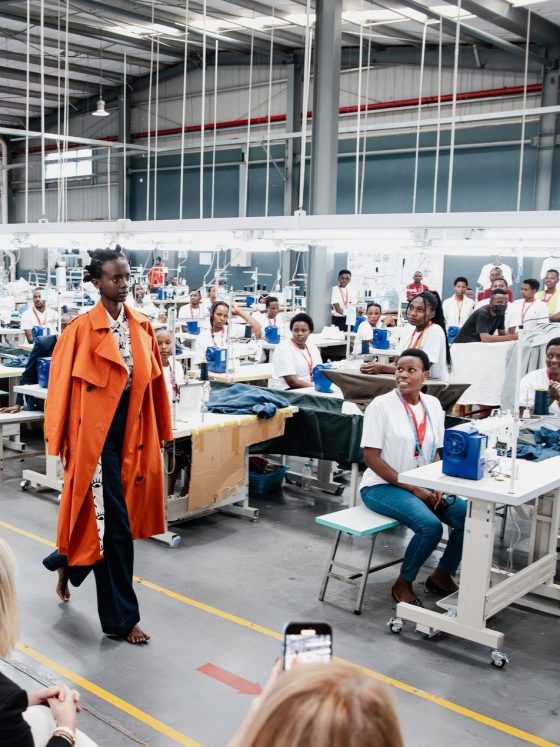
Three of the most commercially deployed terms in African and Global South fashion are also three of the most structurally hollow: ‘sustainable,’ ‘local’ and ‘community-made.’
Each of these terms does significant commercial work. ‘Sustainable’ commands a price premium in international retail markets and positions a brand within a growing consumer segment whose purchasing decisions are influenced by environmental and social values. ‘Local’ signals cultural authenticity, supply-chain proximity, and resistance to the globalised production logic that has made fashion one of the world’s most polluting industries. ‘Community-made’ invokes artisan relationships, cultural continuity and the kind of specific human story that brand marketing is currently desperate for.
What each of these terms does not reliably do is describe a specific, verifiable condition. ‘Sustainable’ in relation to what, measured how, verified by whom? ‘Local’ within what radius, through what supply chain relationships, and does ‘local’ describe the fabric, the construction, the design or the brand? ‘Community-made ‘: which community, in what role, at what rate, with what commercial return, and who decided that the community wanted to be in the story?
The argument that follows is not that these terms should be abandoned. It is that they should be earned. The evidence required to earn each of them is specific, and this article names it.
The regulatory direction in the EU, the UK, and increasingly in North America is toward requiring that commercial claims be specific, evidenced, and independently verifiable. ‘Sustainable,’ ‘eco-friendly,and ‘conscious’ are already prohibited as generic terms without specification under EU law from September 2026. The question is not whether the evidence requirement is coming. It is whether brands are building the evidence before it arrives.
‘Sustainable,’ ‘local’ and ‘community-made’ share the same structural problem in fashion: commercially powerful, regulatorily light and operationally vague. Each requires specific evidence before it is used. This guide names what that evidence should be.
Part One: ‘Sustainable’

‘Sustainable’ has become fashion’s most overworked modifier. It appears in collection names, brand names, platform names, Instagram bios, and hangtags in such volume that it has so thoroughly separated the word from any specific meaning that the European Commission found 59% of sustainability claims by fashion brands to be vague, misleading, or unverifiable.
The regulatory response to this is now concrete.
As Carbonfact documented in its May 2026 analysis of the EU Empowering Consumers Directive, terms such as ‘eco-friendly,’ ‘green,’ ‘sustainable,’ ‘ecological,’ ‘biodegradable,’ and ‘biobased’ are prohibited in EU marketing when used without further explanation from September 2026. A sustainability label requires independent third-party certification. Self-created logos without monitoring are prohibited. Product claims based solely on carbon offsetting are banned. Durability claims must include evidence of repair service. A claim becomes specific and compliant when its specification travels with it.
The Dutch Authority for Consumers and Markets has already flagged H&M and Decathlon for using terms like ‘Conscious’ and ‘Ecodesign’ without clear definitions or supporting evidence, requiring both brands to revise their labelling. The Italian Competition Authority fined Shein EUR 1 million in 2025 for misleading environmental claims about green fibres, circularity, recyclability, and emissions reduction, finding the claims vague, generic, emphatic, misleading, or omissive.
What ‘Sustainable’ Needs Before It Can Be Used
Specification of the dimension: a sustainable claim must name what it is sustainable in relation to. A material claim (‘made from organic cotton certified to GOTS standard’) is a specific, verifiable claim. An overall product claim (‘this garment is sustainable’) is not. The claim needs to be specific about which dimension it covers: the fibre origin, the dyeing process, the construction labour conditions, the transport carbon footprint, the garment’s durability, or its end-of-life behaviour. Covering one dimension while leaving others unaddressed does not make a product sustainable; it makes one aspect of the product less harmful than the alternative.
Third-party certification for the claimed dimension: if the sustainability claim is about the material, the certification must be from a recognised third-party scheme (GOTS, OEKO-TEX, GRS, SA8000, and equivalents) that has been independently audited and is current. Self-issued sustainability labels, brand-created sustainability scores and unaudited supplier declarations are not sufficient evidence for an EU-compliant claim from September 2026.
As documented in Made in Italy Social’s May 2026 analysis of greenwashing enforcement, evidence for sustainability claims may include certifications, transaction certificates, supplier declarations, traceability datasets, chemical tests, laboratory reports, lifecycle data, audit records, and ESG KPIs. The standard is not the same forr all claims. It is the type of evidence that is appropriate to the specific claim being made, sufficient to substantiate it and accessible for independent verification.
Disclosure of what the claim does not cover: a garment that uses organic cotton but is assembled under conditions the brand has not audited carries a sustainable materials claim that does not extend to its production conditions. A brand that presents the materials claim as a product-level sustainability claim is misrepresenting the scope. The honest formulation names the claim’s boundaries: ‘made from GOTS-certified organic cotton; production conditions are not independently certified at this time.’
As Omiren Styles has established in its analysis of what makes a fashion manufacturer verified, certification in fashion supply chains requires independent audits, documented standards, and a review cycle that keeps the evidence current. A certification held at Tier 1 that has not been renewed and does not extend to Tier 2 is not current evidence of sustainable supply chain practice. It is historical evidence of one tier’s past compliance.
Part Two: ‘Local’
‘Local’ is a claim that sounds geographically specific but is routinely deployed with geographic ambiguity.
‘Made locally’ on a garment in a Lagos boutique could mean: designed in Lagos and produced within Lagos by a Lagos-based atelier. It could also mean: designed in Lagos and produced in a factory in an adjacent state using imported fabric from Asia. It could mean that the final assembly occurred in the same city as the retail location, but all material inputs arrived from elsewhere. It could mean that the designer considers the brand’s identity local to Lagos, and that the label is making an identity claim rather than a production claim.
None of these is obviously dishonest, but none is what the customer who values local production for its supply chain proximity, its community economic benefit and its reduced transport footprint is buying when they read the label. The ‘local’ claim provides geographic reassurance whose specific meaning the customer cannot verify.
What ‘Local’ Needs Before It Can Be Used
A defined radius: ‘local’ should come with a geographic definition. ‘Produced within [distance] of our retail location’ or ‘produced within [city] or [region]’ is a verifiable claim. ‘Made locally’ with no radius is a geographic assertion whose scope the brand is defining without disclosure.
A supply chain that actually matches: a brand that claims local production should be able to name every tier of the supply chain and confirm which tiers are within the stated radius. If the fabric is imported from Asia and the construction is local, an honest claim is ‘locally constructed from imported fabric,’ not ‘locally made.’ If the design is local and the production is not, the honest claim is ‘designed locally, produced in [country].’ The ‘local’ claim should match the actual supply chain, not the most commercially flattering version of the brand’s identity.
Economic benefit that stays local: the strongest version of a ‘local’ claim specifies not only the geographic location of production but also the economic structure that keeps value within the community. A brand that produces locally and pays at rates that allow local artisans and suppliers to sustain their practices, invest in their equipment, and remain in the local economy is making a ‘local’ claim with an economic benefit dimension. A brand that produces locally but buys at rates that force local suppliers to compress their margins to levels that make sustainable local production commercially unviable over time is making a geographic claim that runs counter to the economic value proposition of locality.
As Omiren Styles has documented in its analysis of the last mile of African fashion and the local tailor, the most economically significant form of local fashion production in African markets operates in the informal economy, where the economic value stays most completely within the local community precisely because the transaction is direct, unmediated by intermediary chains and priced in local market conditions. A brand that claims local production while routing its purchasing through intermediaries who take a commercial margin before the producer is paid has diluted the local economic benefit that the claim implies.
A traceable production record: a local production claim should be supported by a record identifying the specific producers, production location, and production date. The supply chain documentation that material traceability requirements are beginning to mandate in the EU context applies equally to geographic claims: if the brand cannot show where the garment was made at each production stage, the local claim is a label rather than a record.
Part Three: ‘Community-Made’
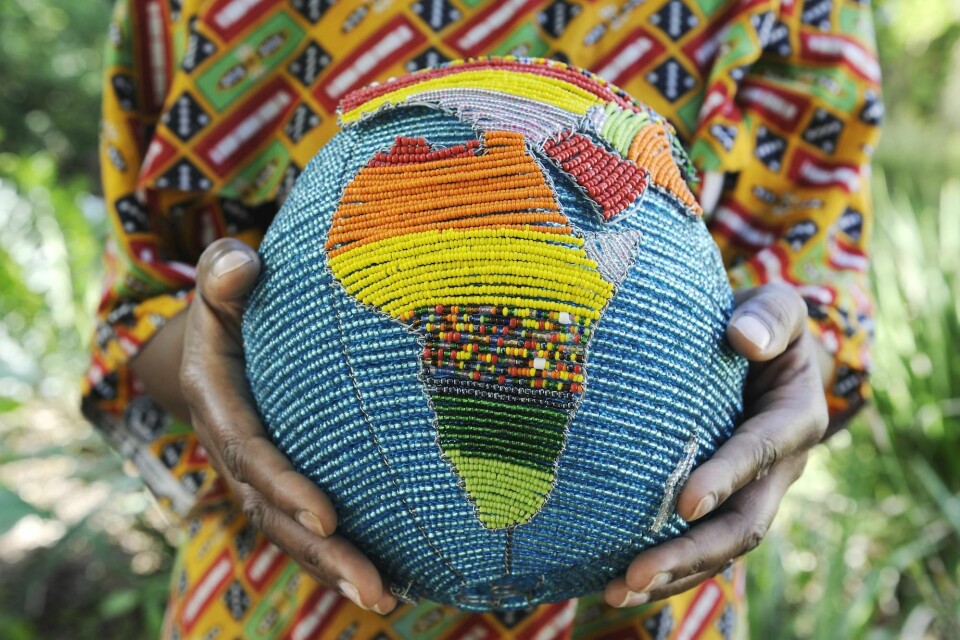
‘Community-made’ is the most emotionally powerful and the most commercially sensitive of the three terms, because it invokes a specific human relationship that carries the strongest implicit promise: that this garment was produced within a community that holds cultural knowledge, that the production has benefited that community and that the brand has a genuine relationship with the people who made it.
It is also the term most frequently used in ways that are technically not false but commercially misleading. A garment produced by workers who happen to live in the same geographic community as each other, in a factory whose employment conditions the brand has not verified, is not ‘community-made’ in the sense that the marketing implies. A brand whose collection note describes a ‘community of weavers in rural Ghana’ as the source of its fabric, but whose fabric was actually purchased through a trading intermediary at a city wholesale market, has used the community’s geographic identity in its marketing without a production relationship with any specific community member.
What ‘Community-Made’ Needs Before It Can Be Used
A named community and a named relationship: ‘community-made’ should come with a name. Which community? What is the brand’s specific relationship with it? The claim ‘produced by the [specific community or cooperative name], with whom we have a direct sourcing relationship’ is a verifiable claim. ‘Community-made in West Africa’ is a geographic assertion with zero community specificity.
Evidence of consent and participation: the community whose name or story is used in the brand’s marketing should have agreed to that use. A community story taken from public sources, social media, a journalist’s report, or the brand’s own observation of the community without the community’s knowledge or consent is not a community relationship. It is a community narrative whose subject did not participate in its creation. The minimum evidence of consent is that the brand has spoken directly to people within the community, that those people know the brand’s name, know how their story is being used, and have not objected. The stronger evidence is a documented relationship whose terms include the community’s agreement to the brand’s specific use of their story.
As Omiren Styles has established, in its analysis of what African communities can document, decide and protect before their designs become fashion content, the community whose story and design tradition is being used commercially has a legitimate interest in the terms of that use: prior consent, specific commercial arrangement, and a mechanism for the community to receive benefit from the commercial relationship. A ‘community-made’ claim that cannot be traced to a prior consent conversation is a claim made on the community’s behalf rather than with the community’s participation.
Commercial return to the community: the ‘community-made’ claim implies a production relationship that yields commercial benefits for the community. The evidence of that benefit is the production payment to community members at a rate that fairly reflects their skill and time, plus any additional community benefit the brand has agreed to provide. A brand that pays community producers below the rate that would allow them to sustain their practice and then describes the product as ‘community-made’ has taken the community’s story for the marketing premium and left the community with the portion of the commercial return that the brand’s commercial leverage determined rather than the community’s fair value.
As Omiren Styles has established in its analysis of the price of craft and how fashion brands cost handmade work, the labour-rate conversation that brands avoid is the specific conversation through which an ethical claim becomes, or does not become, an ethical practice. A ‘community-made’ claim whose production payment record would not survive the question ‘was this enough to sustain the community’s practice?’ is a claim whose evidence fails at the question that matters most.
A supply chain that connects to the community, not just through the community: the most complete ‘community-made’ claim is one that demonstrates not only that production occurred with community members, but also that the supply chain for that production connects upstream to community-controlled or community-beneficial material sources. A community that produces garments using fabric sourced from outside the community through an intermediary chain that captures value before it reaches the community is partly community-made. A community that sources materials, produces, and retains the majority of the relationship’s commercial value is fully community-made in the economic sense the claim implies.
The Accountability Checklist

Before a brand uses any of the three terms, the following evidence should exist:
For “Sustainable”:
- A specified dimension: what exactly is sustainable, relative to which alternative, and how is it measured?
- Third-party certification current, independently audited, and covering the dimension claimed.
- A disclosure of what the claim does not cover, making the scope of the sustainability claim visible to the customer.
- No carbon offset-only climate claims. From September 2026, these are specifically prohibited under EU law.
For “Local”:
- A defined radius or geographic scope for what ‘local’ means.
- A supply chain that matches the claim at every tier: design, fabric, construction, finishing, distribution.
- Evidence that the local production relationship generates economic benefit that stays within the locality.
- A traceable production record naming the specific local producers involved.
For “Community-Made”:
- A named community and a named, direct sourcing relationship.
- Evidence of the community’s consent to the brand’s use of their story and identity.
- A documented commercial return to the community at a rate that reflects fair value for the skill and time invested.
- A supply chain that connects to the community, not merely passes through it.
The Omiren Argument
These three terms are not going away in African fashion marketing, and they should not. When a Nigerian brand produces genuinely sustainably, using verified materials through certified processes, the sustainable claim is a specific, evidenced, and commercially defensible differentiator that gives the brand a competitive advantage grounded in reality rather than rhetoric. When a Ghanaian brand produces genuinely locally, with a named production community in a documented economic relationship, the local claim is the most compelling available story about why this garment is worth its price. When a Togolese brand is genuinely produced in community, with named makers who have consented to the brand’s story and have been fairly paid for their production, the community-made claim is the most powerful available counter to the extraction dynamic that this series has been documenting throughout.
The argument is not against the claims. It is against the gap between the claims and the evidence, and it is against the assumption that the gap does not matter commercially. It does matter: the regulatory enforcement direction in the EU and the UK is toward requiring substantiation, and the brands that have built the evidence before enforcement arrives will be in a stronger position than those that were using the words while enforcement was elsewhere.
As Omiren Styles has argued in its analysis of why the ethical label is not a business model, ethical fashion is a supply chain condition, not a marketing category, and the distance between the two is where most self-described ethical fashion brands actually live. ‘Sustainable,’ ‘local’, and ‘community-made’ are three specific addresses within that distance. The brand that has closed the gap between the word and the evidence is the one doing the thing. The brand that has not closed the gap is carrying an exposure whose cost grows with every season the enforcement framework tightens and with every customer who learns to ask what the word actually means.
As Omiren Styles has argued throughout this series, the Global South made fashion and never got credit. The sustainable, local, and community-made claims are, when they are earned rather than asserted, the commercial expressions of what the Global South has always been doing: producing with cultural knowledge, within specific communities, using materials and methods whose sustainability predates the word by generations. The evidence requirement is not an external imposition on a practice that has always been authentic. It is the mechanism that distinguishes the authentic from the imitation in a market that has learned to use the same words for both.
ALSO READ
- The ‘Ethical’ Label Is Not a Business Model
- When a Brand Says “Handmade,” What Should a Customer Be Allowed to Ask?
- What Makes a Fashion Manufacturer ‘Verified’? A Practical Framework for Emerging Brands
- Material Traceability in Fashion: What Brands Need to Know Before They Claim Provenance
- The Global South Made Fashion. It Just Never Got Credit.
Frequently Asked Questions
Why are “sustainable,” “local” and “community-made” considered weak claims in fashion?
All three terms are commercially powerful and regulatorily under-defined. ‘Sustainable’ describes an environmental position that is rarely specified: what dimension of the garment is sustainable, measured against what alternative, verified by whom? ‘Local’ describes a geographic relationship whose radius is rarely defined and whose supply chain may not match the claim at every tier. ‘Community-made’ describes a social relationship that may not include the community commercially, and may use the community’s name and story in the marketing without the community’s knowledge or a documented production relationship. Each claim makes an implied promise for which the market has not consistently required brands to provide evidence.
Is “sustainable” now a prohibited term in EU fashion marketing?
As Carbonfact’s analysis of the EU Empowering Consumers Directive documents, from September 2026, generic terms including ‘eco-friendly,’ ‘green,’ ‘sustainable,’ ‘ecological,’ ‘biodegradable’ and ‘biobased’ are prohibited in EU marketing when used without further specification and evidence. A sustainability label requires independent third-party certification. Self-created sustainability logos without monitoring are prohibited. Carbon offset-based climate claims are specifically banned. The Dutch Authority for Consumers and Markets has already required H&M and Decathlon to revise their marketing that used terms like ‘Conscious’ and ‘Ecodesign’ without supporting evidence. Italy’s Competition Authority fined Shein EUR 1 million in 2025 for vague and misleading environmental claims.
What counts as evidence for a sustainable fashion claim?
As documented in analysis of greenwashing enforcement in fashion, evidence for sustainability claims may include certification from recognised third-party schemes (GOTS, OEKO-TEX, GRS, SA8000 and equivalents), transaction certificates from certified suppliers, supplier declarations, traceability datasets, chemical test reports, laboratory reports, lifecycle assessment data, audit records and ESG KPIs. The appropriate evidence type depends on the specific claim being made: a material claim requires material certification, a labour conditions claim requires audit records, a carbon footprint claim requires lifecycle data. Evidence must be specific to the dimension claimed, current rather than historical, and accessible for independent verification.
What does a verifiable “local” production claim require?
A verifiable local claim requires four things: a defined radius or geographic scope (what ‘local’ means in practice); a supply chain that matches the claim at every tier, including design, fabric, construction, finishing and distribution; evidence that the local production relationship generates economic benefit that stays within the locality; and a traceable production record naming the specific local producers. If the fabric is imported but the construction is local, the honest claim is ‘locally constructed from imported fabric.’ If the design is local and the production is not, the honest claim names the production location separately. The local claim should match the actual supply chain at the tier the claim implies, not the most commercially flattering version of the brand’s geographic identity.
What makes a “community-made” claim legitimate?
A legitimate community-made claim requires: a named community and a named, direct sourcing relationship; evidence that the community consented to the brand’s use of their story and identity in marketing materials; a documented commercial return to the community at a rate that reflects fair value for the skill and time invested; and a supply chain that connects to the community rather than merely passing through it. A community story taken from public sources without the community’s knowledge, or a community description applied to a wholesale fabric purchase from a trading intermediary who sources from that community, does not constitute a community production relationship. The community-made claim should be traceable to specific community members who know the brand’s name and have agreed to the terms of the relationship.
EXPLORE MORE
Read the full Industry and Accountability and Industry Standards sections at Omiren Styles for ongoing editorial analysis of fashion claims, the evidence required to substantiate them and the regulatory and commercial consequences of the gap between the word and the practice. Discover travel and heritage intelligence across Africa, the Caribbean and Latin America at Rex Clarke Adventures.