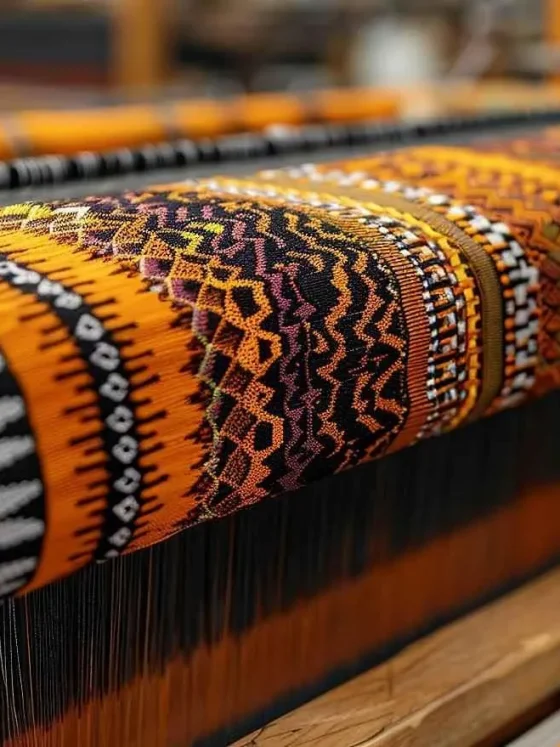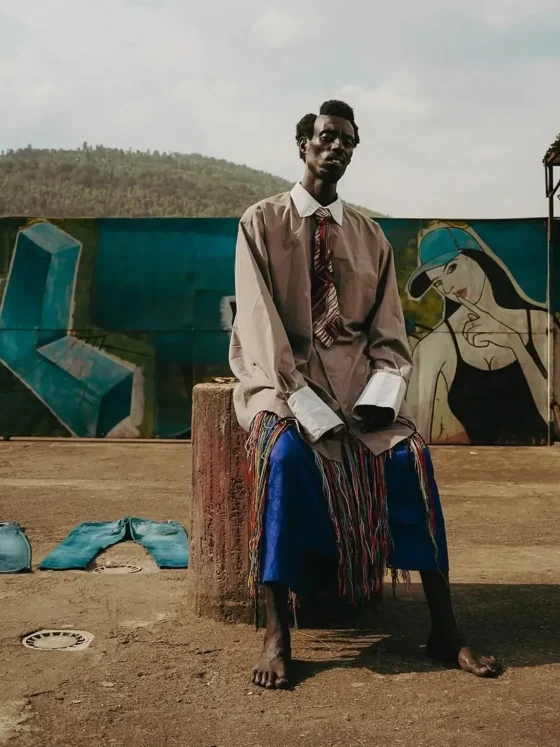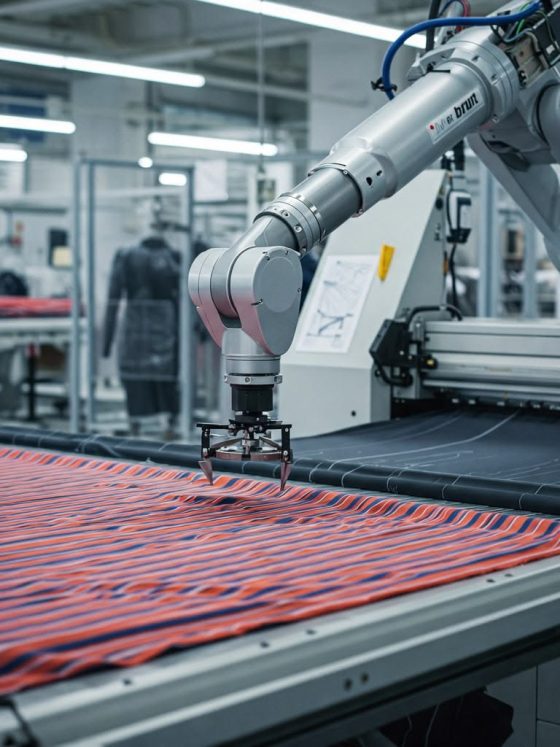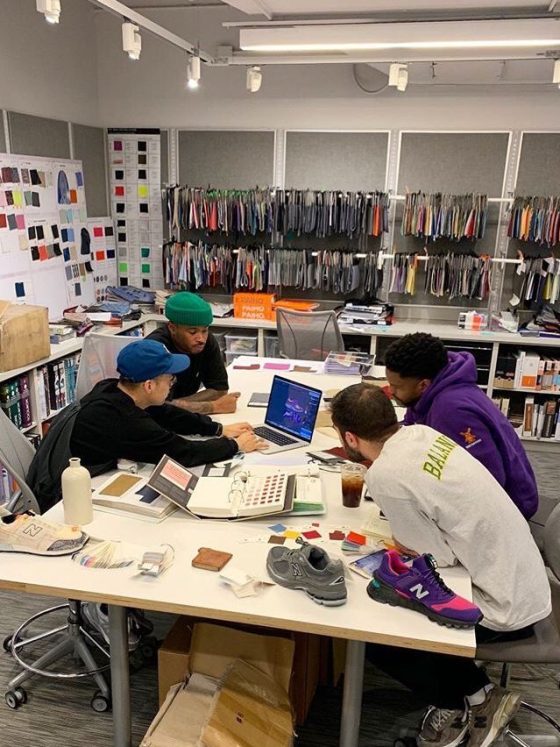
The brand sends a brief. The manufacturer produces a sample. Money is spent by both parties.
In the most common version of how fashion production relationships begin, none of the following has yet been established: the terms of the relationship if it continues; the intellectual property ownership of the designs in the brief; who bears the cost of samples that do not meet the specification; what the payment schedule is if a production run is placed; what the minimum order commitment is; what happens if the brand cancels after production has begun; what the quality rejection rights are; what the lead time obligations are on both sides; and who is liable if the finished goods do not match the approved sample.
The absence of answers to those questions is not unusual. It is the standard starting condition for a large proportion of fashion production relationships, especially between small brands and manufacturers who are meeting for the first time and proceeding on the basis of mutual goodwill, market reputation and the optimism that precedes all new commercial relationships.
When the relationship works out, the informal beginning becomes an anecdote. When it breaks down, the informal beginning is a legal and financial exposure for the party least able to absorb it. In fashion production across Global South manufacturing contexts, that party is almost always the manufacturer: the workshop in Lagos, the cooperative in Accra, the artisan producer in Lomé who has spent materials and labour on a sample that the brand decides not to pay for, or placed a production run whose payment the brand delays, reduces or cancels after the goods are made.
A fair fashion contract does not wait until the production run to establish terms. It establishes them before the first sample is made. That sequence matters because the moment a manufacturer puts thread to cloth on a sample, they have committed resources to a commercial relationship whose terms have not been agreed. In the event of a dispute, they are the party who has spent and the party without a document.
Most fashion production relationships begin informally and end expensively. A fair contract establishes terms, IP ownership, payment schedules and cancellation provisions before the first sample is made, not after the relationship has broken down.
Why the Sample Stage Is the Highest-Risk Moment
As New Asia Garment’s September 2026 guide to clothing manufacturing contracts establishes, a comprehensive clothing manufacturing contract transforms abstract expectations into legally enforceable operational standards. A frequent source of contract disputes is vague product descriptions: a strong contract must tie all manufacturing obligations to a binding Technical Pack and approved Pre-Production Sample as legally binding exhibits. The agreement must explicitly reference the Technical Pack as an official, legally binding exhibit that dictates the exact fabric composition, yarn count, fabric weight, trim specifications, seam construction, colour codes, and size gradation tables.
The sample stage is the moment at which a vague product description first encounters physical production. The brief that was abstract becomes a garment. The colour reference, which was a mood board, becomes a dyed fabric. The fit specification that was a drawing becomes a sewn silhouette. At every one of those transitions, there is a gap between what the brand intended and what the manufacturer produced, and the size of that gap is determined by the quality of the documentation that preceded the sample.
Without a contract in place before the sample, several issues remain unresolved. The manufacturer does not know how many revision rounds the brand expects to be covered by the sample fee, or whether a sample fee exists at all. The brand does not know what their quality rejection rights are if the first sample is unacceptable. Neither party has documented their understanding of what ‘approved’ means in the context of a pre-production sample. And neither party has agreed on what happens to the materials costs the manufacturer has already incurred if the relationship ends before a production order is placed.
As Omiren Styles has established in its analysis of why sampling is the first real test of a fashion partnership, a sampling brief without a confirmed timeline, an agreed-upon cost structure, and a clear specification is the most common preventable cause of breakdowns in production relationships. Three to five rounds of revision are standard when the brief is incomplete. Rework costs of $1,500 to $5,000 are routinely incurred on pieces that could have been made the first time correctly with adequate product documentation. The sampling stage test is not only a test of the manufacturer’s quality. It is the brand’s responsibility to communicate what it wants with sufficient specificity for the manufacturer to produce it.
The Seven Things a Fair Contract Establishes Before the Sample

1. Intellectual Property Ownership
A fashion brief contains design information: sketches, technical specifications, colour references, trim details, construction methods. When the brand provides design information to the manufacturer for the production of a sample, the contract must specify who owns the resulting design.
In most jurisdictions, the default position, absent a contract, is that the party who creates the design owns it, which, in the manufacturing context, may be the manufacturer who interpreted the brief and resolved its ambiguities during production. A contract that explicitly assigns intellectual property rights to the brand, including any design modifications made during the sampling process, closes this gap before the sample is produced.
The IP clause should cover: ownership of the design as submitted in the brief; ownership of any modifications or adaptations made by the manufacturer during the sampling process; confidentiality obligations on the manufacturer not to produce the same design for other clients; and the brand’s right to own the patterns and samples if the production relationship ends. For brands working with artisan producers whose traditional design knowledge is part of the production relationship, the IP clause must also address the boundary between the brand’s design specification and the producer’s traditional knowledge, which the brand does not own and cannot claim.
2. Sample Cost and Revision Terms
The cost of a sample and the number of revisions covered by that cost must be agreed before the sample is requested. The standard industry position is that the brand pays for sampling, including a set number of revision rounds, with additional rounds billed at a set rate. Without this agreement, the manufacturer has no basis for knowing when the revision process ends or who pays if it extends beyond what either party anticipated.
The contract should specify: the sample fee; the number of revision rounds included; the charge for additional revision rounds; whether the sample fee is credited against the production order if an order is placed; who bears the cost of materials if the sample is rejected after the first revision; and who owns the rejected samples.
As Omiren Styles has established in its analysis of the product data chain from technical pack to Digital Product Passport, the technical pack is the single document most responsible for reducing rework cost: every claim the product data makes should be traceable to a specification in the technical pack, and the technical pack should be complete before the sample is requested. A contract that incorporates the technical pack as a binding exhibit and makes sample approval conditional on both parties agreeing to the technical pack in advance reduces the number of revision rounds by anchoring what ‘correct’ means before production begins.
3. Payment Schedule and Terms
As New Asia Garment’s analysis of safe payment terms for first clothing orders documents, safe, industry-standard payment terms balance commercial risk between the buyer and the vendor: they ensure the factory secures sufficient cash flow to purchase raw materials while protecting the buyer’s capital until strict production and quality benchmarks are met. Demanding 100% upfront payment via wire transfer before production begins is a high-risk payment term that leaves buyers financially exposed. Equally, demanding net-90 payment after delivery leaves manufacturers financially exposed, particularly small and artisan producers who lack the working capital to sustain themselves over a 90-day payment window.
A fair payment schedule provides a deposit upon sample approval to cover the manufacturer’s raw material procurement costs, a second payment at the start of the production run, and the balance upon delivery, subject to inspection. The specific percentages vary by production context, but the principle is the same: each payment is tied to a verifiable milestone rather than the passage of time, which protects both parties from the risks of advance-payment fraud on the buyer side and delayed-payment exposure on the manufacturer side.
The payment schedule in the contract should also specify: the currency in which each payment is made; the payment method; responsibility for bank fees and currency conversion; and the timeline within which each payment is due after the triggering milestone is confirmed. For Global South manufacturers receiving payment from international buyers, currency and bank fees are real costs that the payment terms should address rather than leave to be absorbed by the party least able to negotiate them.
4. Cancellation and Kill Fee Provisions
The cancellation clause is the most consequential contract provision for a manufacturer and is the most commonly omitted in informal production relationships.
When a brand cancels an order after production has begun, the manufacturer has incurred costs: materials purchased, labour committed, production time allocated, other orders potentially declined to accommodate the cancelled order. Without a cancellation clause, the manufacturer’s ability to recover any of those costs depends on their ability to negotiate after the event, when the brand’s commercial interest is to minimise payment, and the manufacturer’s legal position is weakest.
A fair cancellation clause establishes the percentage of the full production cost the brand pays if it cancels before production begins, after materials have been purchased, after production has begun, and after production is complete. In some formulations, the kill fee increases as production progresses, reflecting the escalating costs already incurred. The principle is that the party initiating the cancellation bears the costs of resources the other party has already committed.
For artisan and small-batch manufacturers, the cancellation clause is even more important than for industrial producers because the opportunity cost of a cancelled order may include other client relationships declined during the same production window. A kill fee that covers only material costs, not the artisan’s time, does not fairly compensate the party whose time is the primary input to production.
5. Quality Standards and Rejection Rights
The quality standard that the production run must meet and the brand’s rights to reject goods that do not meet that standard must both be established in the contract before sampling begins, because the approved pre-production sample is the quality benchmark against which the production run is measured.
The contract should specify: that the approved pre-production sample is the binding quality standard for the production run; the allowable tolerance for point-of-measure dimensions; the inspection process and the party responsible for pre-shipment inspection; the brand’s right to reject goods that do not meet the approved sample standard; the manufacturer’s right to dispute a rejection on grounds of measurement tolerance or sample interpretation; and the remedies available in the event of a quality dispute, which may include rework, replacement, price reduction or refund.
For Global South producers of small-batch or handmade goods, the quality standard clause requires greater precision in defining what natural variation is acceptable. Handmade goods that are identical in construction specification may vary slightly in colour, texture or surface finish due to the nature of the production process. A contract that does not account for this variation will lead to quality disputes that it could have prevented with one additional clause.
6. Lead Times and Delivery Terms
Production lead times and delivery obligations must be agreed before the production order is placed, and ideally before the sample is requested, because the sampling timeline feeds into the production timeline and both affect the brand’s commercial calendar.
The contract should specify: the agreed lead time from production order to delivery-ready goods; the definition of ‘delivery-ready’ (ex-works, FOB, CIF, DDP, or another Incoterm); who bears the cost of each logistics stage; what the brand’s right is if the manufacturer misses the agreed delivery date; and what the manufacturer’s right is if the brand delays a confirmed production order past the agreed start date. The last point is significant: brands that delay confirmed orders routinely cause manufacturers to hold materials and reserved production capacity at their own cost, a form of commercial harm that a fair contract addresses symmetrically.
7. Confidentiality and Exclusivity
The confidentiality clause prevents the manufacturer from sharing the brand’s design specifications, technical packs and approved samples with competing brands or from producing the same design for other clients. The exclusivity clause, if applicable, establishes whether the manufacturer has been engaged exclusively for this brand’s production during the production period and the commercial terms of that exclusivity.
For brands working with artisan producers who hold specialised craft knowledge, the confidentiality clause must be drafted carefully: it should protect the brand’s specific design specifications without restricting the artisan’s use of their own traditional knowledge and techniques. A confidentiality clause that is drafted broadly enough to prevent the artisan from working in their own tradition is a clause that has extracted an IP right the brand did not pay for and is not entitled to.
What the Contract Does Not Resolve
A contract establishes enforceable terms. It does not resolve the underlying conditions of the commercial relationship that make those terms necessary.
A brand that routinely cancels orders after production begins, pays late under the agreed payment schedule, or demands quality revisions beyond the contracted revision rounds will, over time, be unable to access the best manufacturers, regardless of what the contract says. The contract provides recourse when a relationship breaks down. What creates the conditions in which recourse is never needed is the brand’s consistent behaviour across multiple commercial relationships, which is the reputation that makes manufacturers willing to invest in a sampling relationship without a purchase order guarantee.
As Omiren Styles has established in its analysis of what makes a fashion manufacturer verified, the relationship between a brand and a manufacturer is built over multiple orders rather than established in a single contract. The contract is the baseline. The relationship is what is built on top of it. A fair contract sets the baseline terms. The commercial behaviour that builds the relationship is the brand’s ongoing responsibility, not a contractual provision.
The Global South Dimension

The contract question is most urgent for production relationships between international brands and Global South manufacturers, because these are the relationships in which the power asymmetry is greatest and the informal beginning most likely to result in the manufacturer absorbing costs that a contract would have transferred to the brand.
An international brand cancelling a sample order from a Lagos workshop has commercial options: it can move to another manufacturer, absorb the sunk cost against a marketing budget, and maintain its reputation in an international market where the Lagos workshop is not a known entity. The Lagos workshop that has invested labour and materials in a sample for a brand that cancels has a narrower set of options: it can attempt to recover costs through negotiation, write off the loss, or escalate through legal channels whose cost may exceed the value of the disputed amount.
This is the commercial reality that a fair contract changes. When the terms are established before the sample, when the kill fee is agreed upon before cancellation, when the payment schedule is documented before the goods are made, the power asymmetry of the informal beginning is at least partially corrected by the contractual record of what both parties agreed to before the money was spent.
As Omiren Styles has argued, the ethical label is not a business model: ethical supply chain practice requires documented terms, verified wage rates, transparent payment schedules, and enforceable quality standards, all supported by written evidence. A brand that describes its supply chain as ethical but has no written contracts with the manufacturers in that supply chain has made a claim not supported by the documentary record. The contract is where the ethical claim becomes a commercial obligation. Before the contract, it is an intention. After the contract, it is a standard.
The Omiren Argument
The first example is the beginning of a commercial relationship whose terms both parties will need if the relationship works and will need even more if it does not.
The brand that waits until the production order to formalise the relationship has already spent money in a context without documented terms. The manufacturer that produces a sample without a contract has committed resources to a relationship with no documented obligation. When both parties operate in good faith within a functional relationship, the absence of a contract is an inconvenience. When the relationship encounters a quality dispute, a cancellation, a payment delay, or an IP claim, the absence of a contract exposes the party with the least commercial or financial risk leverage.
In fashion supply chains that run through Africa, the Caribbean and the Global South, that party is consistently the producer. The brand that genuinely operates an ethical supply chain demonstrates that ethical claim in its contract documentation, its payment practices, and its sample-stage behaviour, not only in its marketing. The fair contract is not a legal formality. It is the commercial document through which the brand’s ethical claim either becomes a verifiable standard or remains an intention that the contract would have tested.
As Omiren Styles has argued throughout this series, the Global South made fashion and never got credit. The contract before the sample is the commercial document through which the terms of credit are established: who is paid what, when, for what, under what conditions. Without it, the credit flows in one direction, and the risk falls on the party with the least capacity to bear it. A fair fashion contract changes those terms. It changes them before the first thread is cut.
ALSO READ
- Production Field Note: Why Sampling Is the First Real Test of a Fashion Partnership
- The Technology Behind the Garment: From Technical Pack to Product Data
- The ‘Ethical’ Label Is Not a Business Model
- What Makes a Fashion Manufacturer ‘Verified’? A Practical Framework for Emerging Brands
- The Global South Made Fashion. It Just Never Got Credit.
Frequently Asked Questions
Why does the contract need to be in place before the sample, not just before the production run?
The sample stage is the moment at which both parties commit resources to the relationship: the brand commits design information and sample fees; the manufacturer commits materials, labour and production time. Without a contract before the sample, neither party has documented terms governing what happens if the sample is rejected, who bears revision costs, who owns the IP in the brief, and what happens if the brand decides not to proceed after seeing the sample. When the relationship works, this informality is an inconvenience. When it breaks down, it is a legal and financial exposure that falls most heavily on the manufacturer, who has already spent and has the least commercial leverage to recover costs without a document.
What is a kill fee in a fashion production contract?
A kill fee is the payment the brand makes to the manufacturer when it cancels an order after the manufacturer has committed resources. A fair kill fee structure escalates as production progresses: a lower percentage if the brand cancels before production begins, a higher percentage after materials are purchased, a higher percentage again after production begins, and full payment, or close to it, if production is complete. The kill fee compensates the manufacturer for the materials purchased, the labour committed, the production time allocated and, in artisan production relationships, the other orders that may have been declined to accommodate the cancelled order. Without a kill fee clause, the manufacturer’s ability to recover any of these costs depends on post-event negotiation, when the brand’s commercial interest is to minimise payment.
Who owns the IP in a fashion sample?
Without a contract, the answer depends on the jurisdiction and the specific circumstances of the design relationship: in some contexts, the party who creates the physical realisation of a design has rights in that creation. A contract that explicitly assigns all IP to the brand, including any modifications made during the sampling process, closes this gap before the sample is produced. For brands working with artisan producers whose traditional design knowledge contributes to production, the IP clause must be drafted to protect the brand’s specific design specifications without restricting the artisan’s use of their own traditional knowledge and techniques, which the brand is not entitled to own.
What payment terms are fair in a fashion production contract?
As documented in the analysis of safe payment terms for first clothing orders, these terms balance risk between the buyer and the manufacturer: they ensure the factory has sufficient cash flow to purchase raw materials while protecting the buyer’s capital until quality benchmarks are met. A fair schedule typically includes a deposit upon sample approval, a second payment at the start of production, and the balance upon delivery, subject to inspection. 100% upfront payment before production is high-risk for the buyer. Net-90 payment terms after delivery pose a high risk to manufacturers, particularly small and artisan producers without the working capital to sustain a 90-day payment window. The contract should also specify currency, payment method, responsibility for bank fees and the timeline for each payment after its triggering milestone.
What should the quality standards clause cover in a fashion production contract?
The quality standards clause should establish: that the approved pre-production sample is the binding quality benchmark for the production run; the allowable tolerance for point-of-measure dimensions; the inspection process and who conducts it; the brand’s right to reject goods that do not meet the approved sample standard; the manufacturer’s right to dispute a rejection on grounds of measurement tolerance; and the remedies in the event of a quality dispute. For handmade and artisan production, the clause should also address what natural variation is acceptable, because handmade goods that are identical in construction specification may vary in colour, texture or surface finish in ways that the contract should anticipate rather than leave to post-production dispute.
EXPLORE MORE
Read the full Industry and Production and Manufacturing sections at Omiren Styles for ongoing analysis of fashion production contracts, manufacturer protections and the commercial infrastructure that makes fair supply chain relationships possible. Discover travel and heritage intelligence across Africa, the Caribbean and Latin America at Rex Clarke Adventures.