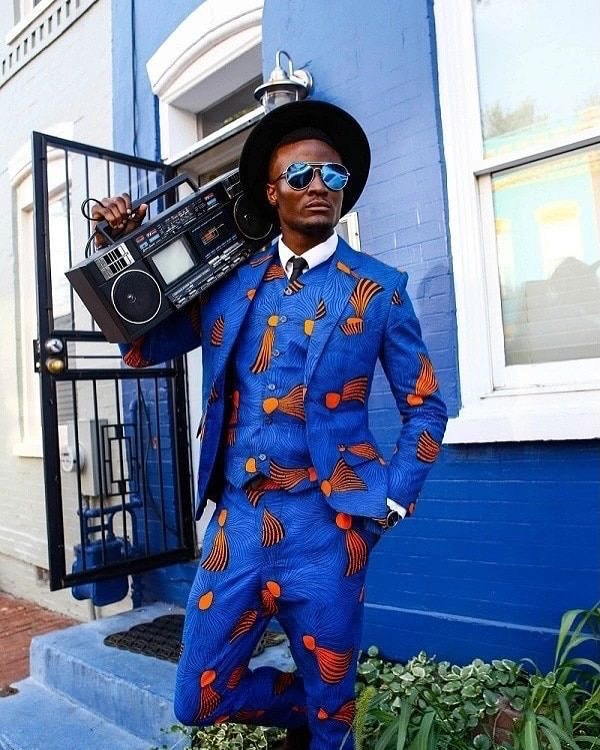
The white handkerchief is not folded. In Brazzaville’s sapeur tradition, the pocket square is stuffed into the breast pocket with deliberate casualness, not arranged into the precise geometries of a European city banker or the fan folds of a London dandy. That single detail, so minor it would be invisible to anyone unfamiliar with the tradition, carries an entire argument. The sapeur is not imitating European elegance. He is commenting on it. He took the form and made it his own, and the way he wears the handkerchief is where the philosophical difference between imitation and commentary lives.
The African fashion market is worth 31 billion dollars. La SAPE, the Société des Ambianceurs et des Personnes Élégantes, is one of the most politically charged fashion systems operating anywhere in the world. As Omiren Styles’ foundational documentation of the sapeur movement confirms, being a Sapeur means adhering to a set of principles that extend far beyond choosing an outfit. Elegance above all: every item must be of the highest quality available, tailored where possible, perfectly pressed, and coordinated to the last detail. This is not a description of sartorial preference. It is a description of a moral position expressed through dress.
The sapeur’s white handkerchief is stuffed, not folded. That detail carries a political philosophy. Here is what sapeur etiquette in Brazzaville is actually arguing.
Sapeur Etiquette: The Rules That Carry the Argument
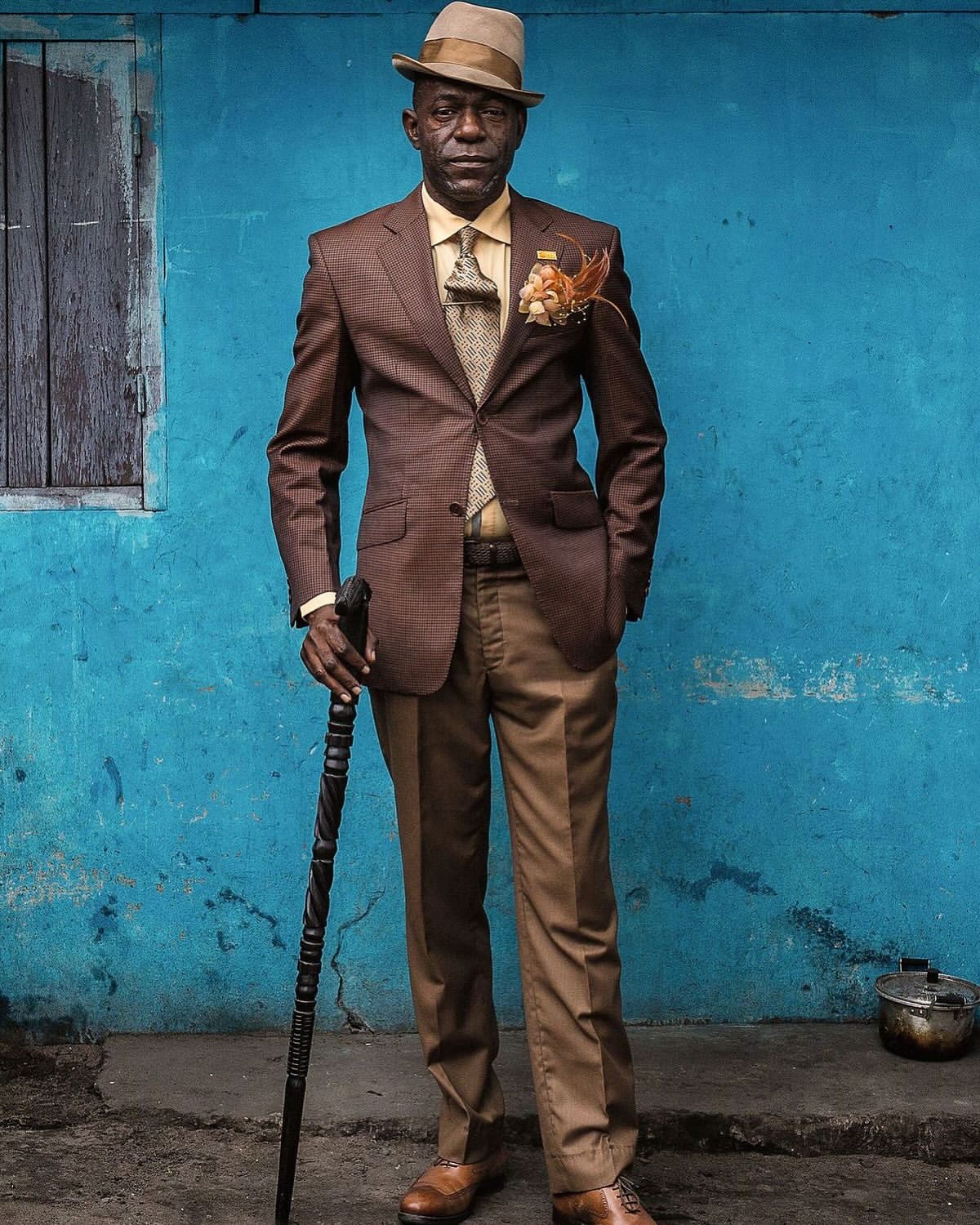
Sapologie is the term for the code governing sapeur dress and conduct. It is not a loose aesthetic preference. It is a system with documented rules whose precision is the point. As The Conversation’s academic documentation of SAPE’s deeper dimensions confirms, sapologie imposes strict rules: respecting the colour trilogy, which stipulates that no outfit should feature more than three different colours to ensure harmony and avoid discordant colour combinations; maintaining rigorous clothing hygiene; and committing to constant elegance. For sapeurs, appearance is a powerful means of making an impression and standing out in an environment often defined by hardship.
The colour trilogy is the most immediately visible rule but not the most politically significant one. The maximum of three colours per outfit is a discipline of restraint that distinguishes the sapeur from the merely flamboyant. It creates a framework for extravagance that cannot be confused with accident or excess. A sapeur in three precisely chosen colours is making a controlled argument. A crowd in clashing colours is making noise. The colour trilogy ensures the sapeur is always making an argument.
The Ten Commandments of Sapologie stipulate that as a sapeur, you will favour neither tribalism, nationalism nor racism. A dress code that contains a clause against tribalism is not a style guide. It is a political programme written in cloth.
The Brazzaville Style and What It Distinguishes
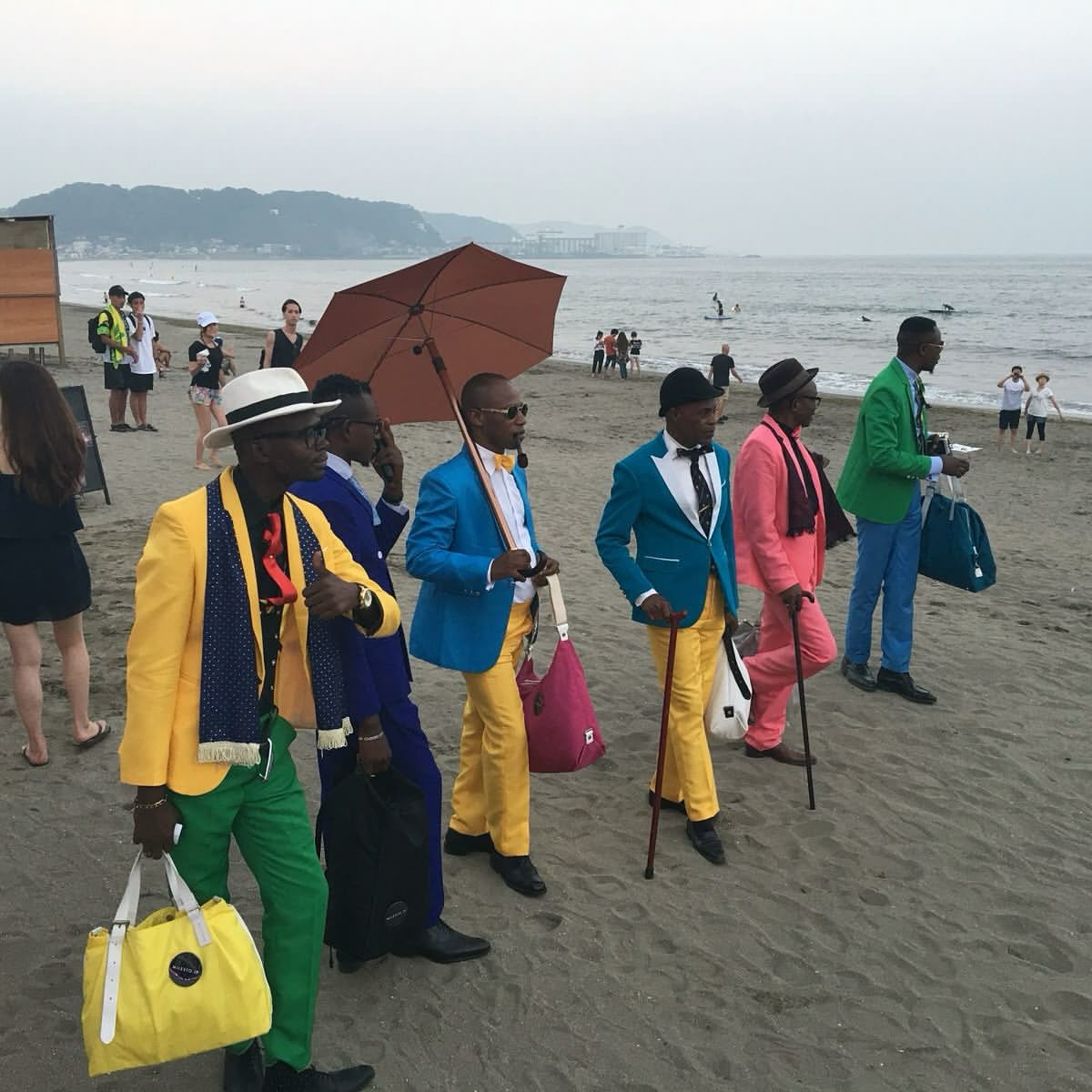
The sapeur tradition exists in both Congolese capitals, Brazzaville in the Republic of Congo and Kinshasa in the Democratic Republic of Congo, but the two cities have developed distinct sapeur aesthetics within the shared framework of sapologie. As Media Diversified’s documentation of the rules of sapologie confirms, Sapeurs from Congo-Brazzaville in particular tend to stick to wearing no more than three colours or tones at once, excluding white. For them, pocket handkerchiefs are not folded but are stuffed effortlessly into the blazer pocket. Brazzaville sapeurs prefer to match and accessorise with canes, cigars, umbrellas, scarves, socks, and suspenders. Kinshasa sapeurs, by contrast, tend to be more garish and daring: the more colour clashing there is, the better.
This distinction between Brazzaville’s disciplined restraint and Kinshasa’s maximalist boldness is not merely aesthetic. It reflects the different political and cultural histories of the two cities. Brazzaville, formerly the capital of French Equatorial Africa, developed its sapeur tradition in dialogue with French colonial authority and its specific norms of bourgeois respectability. The Brazzaville sapeur’s three-colour rule and the carefully stuffed pocket square are engagements with that specific tradition: an argument conducted within the conventions of French formal dress culture, turning those conventions against their own assumptions about who deserved to participate.
The white handkerchief, or pocket square, in any colour, stuffed rather than folded, carries this argument in miniature. The European tradition of the folded pocket square is a gesture of controlled formality: the cloth arranged precisely to display the wearer’s command of the conventions. The stuffed pocket square accepts the convention and then refuses the performance of precision. It says: I know the rules. I have chosen not to perform my knowledge of them in the way you expect. That is a different and more sophisticated statement than either strict adherence or wholesale rejection of the convention.
Canes, Pipes, and the Grammar of Accessories
The sapeur’s accessories are not decorations. They are vocabulary. The engraved wooden cane is one of the most recognisable accessories in the sapeur grammar of Brazzaville. It is not a walking aid. It is a prop in the specific theatrical sense that it gives the sapeur something to do with his body during the catwalks and street presentations that are the movement’s most visible public practice. The way a sapeur handles his cane, the angle at which he carries it, the moment at which he plants it or swings it, is part of the performance that the sapeur has rehearsed and perfected.
Cigars and pipes serve a similar function. Held at the corner of the mouth or gestured with the hand, they slow the body’s movement in the street performance, creating deliberate pauses that allow the audience to absorb the ensemble. The sapeur is not in a hurry. The cane, the pipe, and the cigar are all instruments of temporal control: they allow the sapeur to manage the pace at which he reveals his argument to the crowd. This is performance with an understanding of the audience and timing that is considerably more sophisticated than a runway show, where a choreographer manages the pace. The sapeur is his own choreographer.
The Ten Commandments: A Political Programme in Cloth
The most politically significant element of sapologie is the Ten Commandments, a set of principles that governs not only dress but conduct. As Worldcrunch’s documentation of SAPE’s political philosophy confirms, the Ten Commandments of Sapologie stipulate open-mindedness and irreproachable behaviour. As a sapeur, you will favour neither tribalism, nationalism nor racism. The sape movement also expresses a desire to trade guns for flamboyant clothing. In a city that lived through a civil war in the 1990s, when Denis Sassou Nguesso came to power in Brazzaville, sapeurs described their movement as symbolic battles replacing those led by the Ninja and Cobra militias during the conflict.
A dress code that contains a clause against tribalism is not a style guide. It is a political programme written in cloth. The Ten Commandments make explicit what the dress system implies: that the sapeur’s elegance is not self-regarding but communal, not tribal but transcendent, not nationalist but cosmopolitan. The sapeur who dresses impeccably and rejects tribalism is simultaneously making the argument that dignity, refinement, and self-respect are not the property of any ethnic group, political faction, or nationality. They are available to anyone willing to submit to the discipline of sapologie.
This is the argument that the movement has made since its founding. When the word sape entered the 2016 French Larousse dictionary, it marked the formal acknowledgement by a European cultural institution that the Congolese had added a word —and a concept —to the French language, not borrowed one. That is the sapeur’s relationship to European cultural authority in miniature: not deference, but contribution.
The Founding Argument: From Matsoua to Stervos Niarcos
The political logic of sapeur etiquette begins with its origin. André Matsoua, a Lari activist from Pool in southern Congo, returned from WWI service in France around 1922 wearing fine Parisian suits. His followers understood this not as mimicry but as a reclamation of agency against French colonial rule. Matsoua is documented as the first Grand Sapeur: the man who established that the colonial master’s clothing could be worn by the colonised not as submission but as declaration. He refused to take off his uniform in protest against the fate of demobilised foot soldiers. The suit was the argument before the movement had a name.
Stervos Niarcos Ngashie developed the movement into the organised subculture that contemporary sapeurs belong to. Every year on 10 February, since 1995, sapeurs across Kinshasa gather at his grave in the Gombe cemetery to commemorate the Day of the SAPE. A fashion movement that holds an annual graveside commemoration of its founder is not treating fashion as entertainment. It is treating it as a tradition with a lineage, a history, and an obligation to the people who built it. The white handkerchief at those graveside commemorations is stuffed, not folded. The details hold.
Equality and the Sapeuse
The sapeur tradition has extended to women in both cities, but especially in Brazzaville, where the sapeuse wears men’s clothing, carries a pipe, and participates in the street catwalks on precisely equal terms with the men. One documented sapeuse gave the philosophical argument plainly: equality started in sapologie. If a man is able to tie a tie and a woman can do the same, we should be equal. This is not a recent accommodation of gender politics. It is the Ten Commandments in practice: the sapeur tradition that refuses tribalism and nationalism also refuses the gender hierarchy that would restrict participation by category rather than by the quality of the elegance displayed.
The Omiren Argument
The white handkerchief stuffed into the breast pocket of a Brazzaville sapeur carries a century of political argument in the way it refuses to be folded. The African fashion market is worth 31 billion dollars. La SAPE, the Société des Ambianceurs et des Personnes Élégantes, is one of the most documented and most politically coherent fashion systems operating anywhere in the world, and it operates in two cities where the material conditions of daily life bear no relationship to the quality of the dress the sapeurs produce and wear. That disjunction is the argument. A man who steps out of a modest house in Poto-Poto in a precisely assembled three-colour ensemble with a cane and a stuffed white pocket square is not escaping the politics of his neighbourhood. He is making them visible.
The Ten Commandments of Sapologie, which prohibit tribalism, nationalism, and racism alongside their detailed dress requirements, establish that the sapeur tradition is not a subculture for the privileged but a philosophical position available to anyone willing to submit to its discipline. André Matsoua wore a Parisian suit to argue against French colonial authority. Stervos Niarcos built the movement into an institution serious enough to be commemorated at its founder’s grave every year. Papa Wemba made the argument through music across a continent. The civil war sapeurs of 1990s Brazzaville traded militia conflict for sartorial competition. The word sape entered the Larousse in 2016. Every one of those moments was the same argument in different form: that elegance is not what the coloniser gave the Congolese. It is what the Congolese made out of what the coloniser gave them. The handkerchief is stuffed, not folded. That is where the difference lives.
Also Read:
- From Ritual to Runway: How African Fashion and Ceremony Are Inseparable
- How Cultural Resistance Shaped the World’s Most Powerful Style Movements
- When Dressing Becomes Declaration: Clothing as Cultural Identity
- The African Origins of Carnival Costume: Feathers, Beads, and the Masquerade Tradition
Frequently Asked Questions
What is sapeur etiquette in Congo-Brazzaville?
Sapeur etiquette in Brazzaville is governed by sapologie, the code of the Société des Ambianceurs et des Personnes Élégantes. Key rules include the colour trilogy (no more than three colours per outfit, excluding white); the pocket handkerchief stuffed casually into the breast pocket rather than folded into precise arrangements; the use of accessories including engraved wooden canes, cigars, pipes, umbrellas, scarves, and coordinating socks; rigorous clothing hygiene; and constant commitment to elegance. The Ten Commandments of Sapologie also govern conduct, prohibiting tribalism, nationalism, and racism.
Why is the white handkerchief important to sapeurs?
In Brazzaville’s sapeur tradition, the pocket square is stuffed into the breast pocket rather than folded, a deliberate departure from the European formal dress convention of the precisely arranged pocket square. This distinction is philosophically significant: the sapeur accepts the European sartorial form and then refuses the performance of subservience to its conventions. The stuffed handkerchief says the sapeur knows the rules and has chosen to engage with them on his own terms. That is the founding argument of La SAPE in miniature: not imitation, but commentary.
What are the rules of sapologie?
Sapologie’s rules include: the colour trilogy (maximum three colours per ensemble, excluding white, to maintain harmony); constant impeccable grooming and clothing hygiene; coordinated accessories including cane, pipe, or cigar; the pocket handkerchief stuffed rather than folded in the Brazzaville tradition; and the Ten Commandments, which prohibit tribalism, nationalism, and racism and require open-mindedness and irreproachable conduct. The word sape entered the 2016 French Larousse dictionary, giving the tradition formal recognition within the French language.
What is the difference between Brazzaville and Kinshasa sapeur style?
Brazzaville sapeurs observe the strict colour trilogy: a maximum of three colours or tones per outfit, excluding white. Their pocket handkerchiefs are stuffed casually into the breast pocket rather than folded. They favour canes, pipes, cigars, umbrellas, scarves, and coordinating socks and suspenders. The overall aesthetic is disciplined and precise within its extravagance. Kinshasa sapeurs tend toward more colour clashing and more garish combinations: the more colour contrast the better. Both traditions share the foundational principles of sapologie, but express them through distinct aesthetic philosophies shaped by the two cities’ different cultural histories.
What do the Ten Commandments of Sapologie say?
The Ten Commandments of Sapologie govern conduct as well as dress, requiring open-mindedness, irreproachable behaviour, and the explicit rejection of tribalism, nationalism, and racism. This political dimension distinguishes La SAPE from a purely aesthetic subculture: a dress code that contains a prohibition against tribalism is making a political argument. In the context of post-civil-war Brazzaville, where the sapeur tradition was described as symbolic battles replacing militia conflict, these commandments represented a direct claim that the sapeur movement was a non-violent political position, not merely a sartorial preference.
Explore More
Read the full Culture > Heritage & Identity section for Omiren Styles’ documentation of African dress as political argument, the sapeur tradition, and the communities that have used clothing to make the most consequential arguments their circumstances required.