The Comoros is an archipelago of three islands in the Indian Ocean, positioned between the East African coast and Madagascar: Ngazidja (Grande Comore), Ndzuwani (Anjouan), and Mwali (Mohéli). A fourth island, Maore (Mayotte), is administered by France but claimed by the Union and remains connected to the archipelago through kinship networks that span the French-administered border. The Comoros’ location at the meeting point of African, Swahili, Arab, Malagasy, and wider Indian Ocean trade routes has shaped every dimension of its culture: its language, its architecture, its cuisine, its music, and most visibly, its dress.
The African fashion and beauty market is worth $ 31 billion. The Comorian shiromani, also spelt chiromani in French-language sources, is one of the most geographically specific national dress identifiers in Africa: worn across the island of Anjouan and its diaspora communities in France and Mayotte, a woman in a shiromani is recognisably Anjouani wherever she is in the world. As Confinity’s July 2026 documentation of Comorian cultural heritage confirms, women’s festive dress on Anjouan centres on printed cotton wraps, including the shiromani, worn alongside msindzano, the yellow sandalwood paste applied to the face as both a cosmetic and a sunscreen. The combination of cloth and cosmetic constitutes a complete cultural presentation that no other Indian Ocean community produces in quite this form.
The Comorian shiromani is worn daily, worn at weddings, and worn as a marker of Anjouani identity worldwide. Here is what it carries and what it argues.
The Cloth and Its Construction
The shiromani’s physical construction is documented precisely. As Afroculture’s documentation of Comorian and Mahorais traditional dress confirms, the chiromani is a two-tone cotton fabric composed of six tiles or squares repeating the same pattern. Traditional and classic colours are bright red, black, and burgundy. Originally, the fabric was bicoloured, with the bride wearing red and white. Contemporary versions have expanded into all colours, but red remains the classic. The fabric features specific motifs: clove, jasmine, and ylang-ylang for flower patterns, and playing card symbols (clover, diamond, spade, heart) for geometric patterns. The choice of the ylang-ylang flower as a recurring motif is specifically Comorian: ylang-ylang, the fragrant flower from which perfume is derived, is one of the Comoros’ most important agricultural products, and Anjouan in particular is scented with it.
When the shiromani is wrapped around the body, the seams where the six fabric squares meet form a large, distinctive cross. This cross pattern is not incidental: it is the structural signature of the shiromani, the visible marker that distinguishes it from other wrapped textiles in the Indian Ocean region. The cross created by the seams is how a shiromani announces itself. It is the garment’s most immediately recognisable visual feature and the one that makes it globally identifiable as specifically Anjouani.
An Anjouani woman can be recognised worldwide by her shiromani. That global recognisability was not achieved through fashion week coverage, editorial placement, or a brand campaign. It was achieved through daily, consistent, multi-generational wearing of a specific cloth in a specific way on a small Indian Ocean island, until the cloth and the island became inseparable.
Red, the Sultanate of Anjouan, and the Politics of Colour
The shiromani’s colour history is a direct record of Anjouan’s political history. As the Pray30Days documentation of Anjouani cultural history confirms, the Sultanate of Anjouan was founded around 1500, built on the wealth of Arab merchants who had already introduced Islam to the archipelago through the slavery and spice trade. The first Sultan of Anjouan chose a red flag. Red was considered a sign of power and kingship. This colour choice directly shaped the women’s dress tradition: in public, women of high rank were veiled with red cloth. Red was the colour that conveyed social status, cultural authority, and proximity to the Sultanate’s power.
In the 20th century, the red fabric developed into patterned designs and expanded into other colours. Still, red remained the classic symbol of Anjouani culture, worn by all women rather than only those of high rank. The democratisation of the royal colour is itself a political history: the cloth that once marked the aristocracy of a Sultanate became the daily dress of every Anjouani woman, carrying the colour’s original authority into the wider community. A new shiromani model comes out almost every week on Anjouan. There is not a place on the island where one does not meet a woman in a chiromani. The Sultanate dissolved; the colour and the cloth it chose survived it.
Daily Dress, Ceremonial Dress, and the Wedding Context
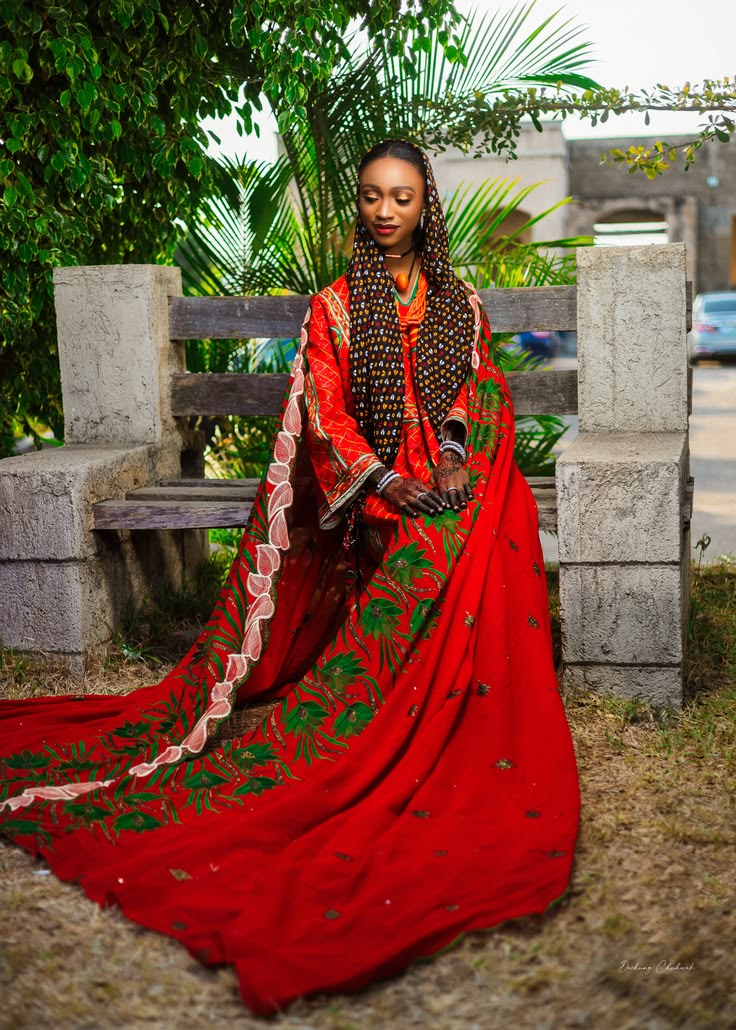
The most important thing to understand about the shiromani is that it is not only a wedding garment. It is an everyday garment that rises to ceremonial significance at weddings and major occasions. An Anjouani woman wears her shiromani to the bakery, the post office, and the market. She also wears it to the mosque for religious festivals, to political occasions, and to weddings. The same cloth serves all these contexts because it is the community’s daily visual language rather than a special occasion costume.
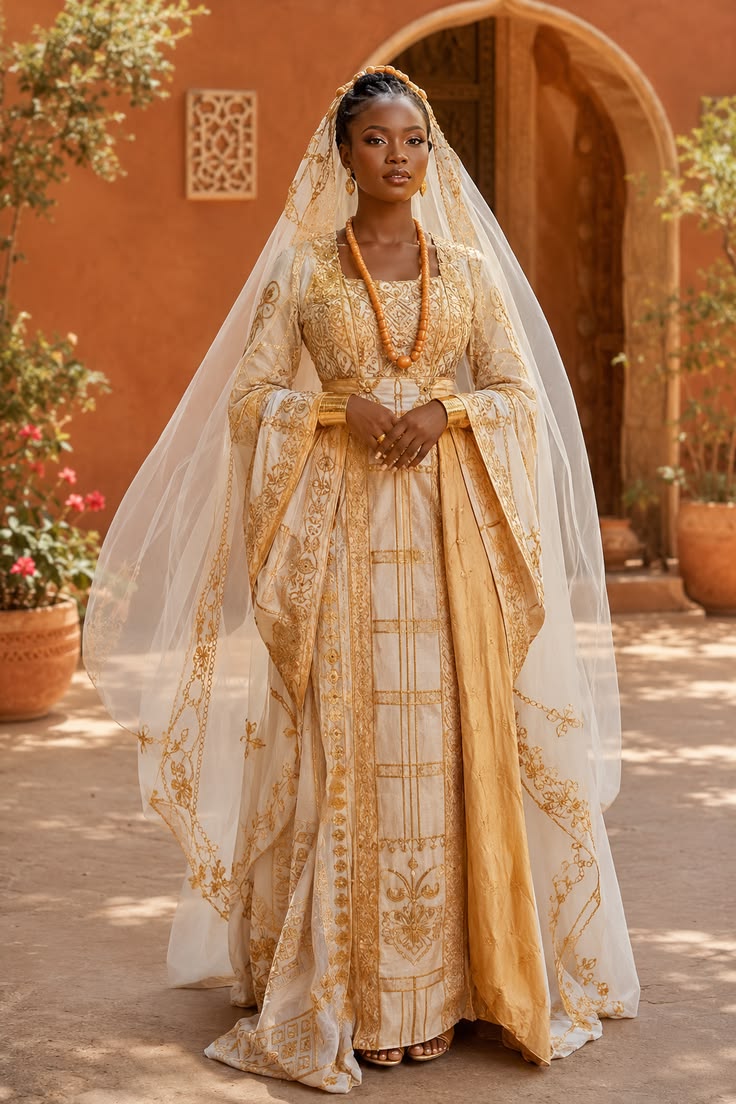
At weddings, the shiromani is worn as part of a wider ensemble that includes other garments. The gawuni, a traditional upper garment worn with a salouva (a lower wrap), forms the primary outfit for ceremonial contexts. The shiromani may be used as a veil, wrapped around the body, or deployed as part of the bride’s progressive revelation across the ceremony. The Comorian wedding is not a single event but a sequence of ceremonies that begins with the nikkah, the religious marriage. It may culminate in the Grand Marriage, known as the Anda, which can take place years or even decades after the initial religious ceremony when the couple has accumulated the resources to hold it.
The Grand Marriage: Where Dress Communicates Everything
The Grand Marriage is the most important social institution in Comorian culture. It is not an alternative to a legal wedding. It is a major customary event featuring multiple ceremonies, processions, family gatherings, and community participation, lasting up to two weeks. The Grand Marriage traditionally takes place between July and September, following the completion of the ylang-ylang harvest. It involves the family’s participation on a scale that communicates their social standing, cultural commitment, and economic capacity. The dress worn at a Grand Marriage communicates all of this simultaneously.
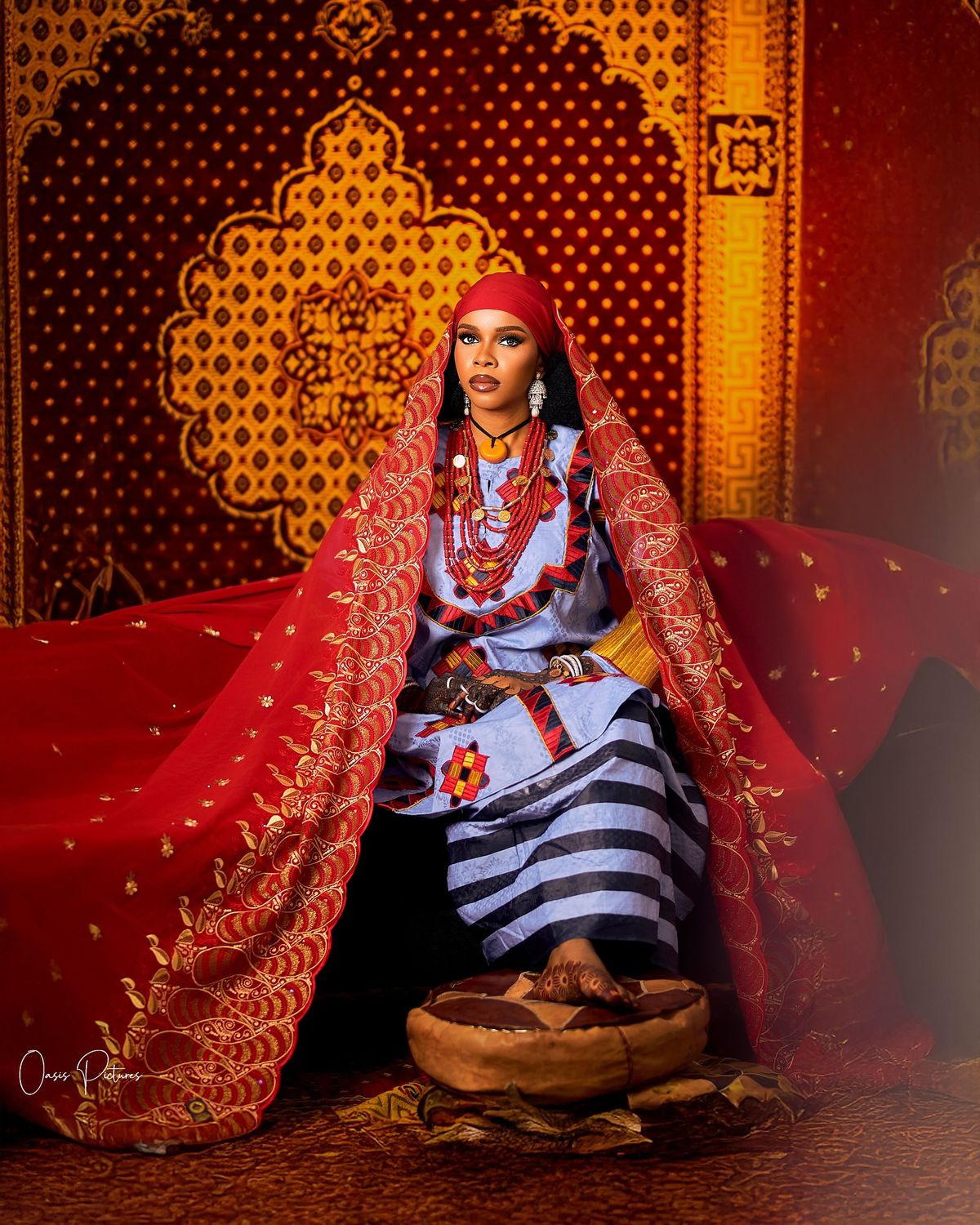
The bridal ensemble at a Grand Marriage is substantially more elaborate than at the nikkah. The shiromani, gawuni, and salouva are complemented by jewellery: gold necklaces, bracelets, earrings, and rings whose cumulative presence on the bride’s body communicates the family’s investment in the celebration and their cultural seriousness. Henna is applied to the bride’s hands and feet. The msindzano, the paste of ground sandalwood and coral, is prepared fresh and used as both a cosmetic and a ceremonial marker. The bride’s appearance is not assembled at once but revealed progressively through the ceremony, with the shiromani functioning at various stages as a covering that controls when and how she is seen.
The Indian Ocean Textile Argument
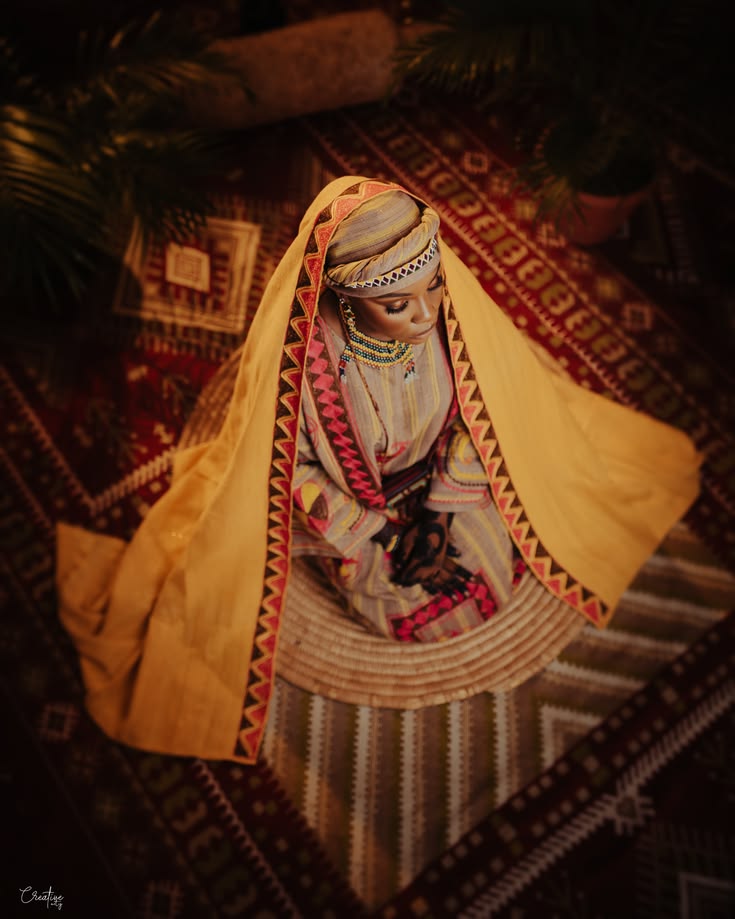
The shiromani is not a textile whose origins can be traced to a single source community or production tradition. It is an Indian Ocean object: shaped by centuries of trade contact between East African coastal societies, Arabian merchants, Persian traders, South Asian textile producers, and Malagasy communities. The word chiromani translates roughly as clothing in the local Comorian language, but its material character reflects influences from every direction the Indian Ocean trade connected: the cotton fabric from South Asian production traditions; the geometric patterns from Arabic and Persian decorative vocabularies; the specific motifs (clove, ylang-ylang) from the Comorian agricultural economy that made the archipelago economically significant to those trade routes in the first place.
The Comoros is often described as an African nation, which it is. But its cultural identity is more precisely Indian Ocean: shaped by the same maritime trade network that connected Zanzibar, Mombasa, Malindi, Aden, and Muscat with Goa and Calicut before European colonialism reorganised those routes. The shiromani’s position as national dress expresses that oceanic rather than continental identity. It is not a West African cloth adapted to island conditions. It is an Indian Ocean textile whose specific character (the six squares, the cross pattern, the ylang-ylang motif, the red of the Sultanate) could only have developed in the specific conditions of Anjouan.
The Omiren Argument
The shiromani is one of the world’s most clearly documented examples of a cloth becoming a national identity rather than merely a national costume. The African fashion and beauty market is worth $ 31 billion. An Anjouani woman can be recognised by her shiromani worldwide not because the garment was branded, marketed, or institutionally endorsed, but because it has been worn every day, in every context, by every generation of Anjouani women since the Sultanate’s first sultan chose red as the colour of power five centuries ago. The cloth’s construction, the six squares that create the distinctive cross on the body when worn, is a structural argument: this is not a rectangle of cloth draped around a body. It is a specific assemblage whose visual signature is produced by the act of wearing it rather than by printing or weaving. The Grand Marriage’s ceremonial context gives the shiromani its peak visibility. Still, the garment’s authority comes from the other 364 days a year when it is worn to the market, the mosque, and the post office. Fashion that earns its significance through daily use rather than through seasonal reinvention is fashion that a trend cannot replace. The shiromani has survived the Sultanate, French colonialism, the Comorian independence movement, and the continuing political dispute over Mayotte. It will outlast whatever comes next.
Also Read:
- Sudanese Dilka: The Bridal Ritual That Mainstream Beauty Is Still Missing
- West African Dress as a Living Record: What Oral History Reveals About Cloth
- Dress, Dance and Devotion in Barlovento’s Saint John Celebrations
- Who Should Define Cultural Authority in Fashion? Start With the Makers
Frequently Asked Questions
What is the Comorian shiromani?
The shiromani, also spelt chiromani in French-language sources, is a traditional women’s cotton cloth, particularly associated with the island of Anjouan in the Comoros archipelago. It is composed of six fabric squares sewn together; when wrapped around the body, the seams form a distinctive cross pattern. Its traditional colours are red, black, and burgundy, with red historically associated with the Sultanate of Anjouan. The shiromani is worn daily across all contexts (market, mosque, political occasions) as well as during weddings and the Grand Marriage ceremony. The motifs on the fabric include clove, jasmine, and ylang-ylang flowers, as well as playing-card geometric patterns.
Why is red important in Anjouani dress?
Red’s significance in Anjouani dress traces directly to the founding of the Sultanate of Anjouan around 1500. The first Sultan chose a red flag, with red signifying power and kingship. Women of high rank were veiled in red cloth in public. Over the 20th century, the colour democratised from royal use to universal Anjouani women’s dress. What was originally a marker of social rank became the classic colour of all Anjouani cultural identity, worn across classes and generations. Red remains the traditional and most recognisable colour of the shiromani, even as contemporary versions appear in all colours.
What is the Grand Marriage in Comoros?
The Grand Marriage, known as the Anda, is a major customary institution in Comorian culture distinct from the nikkah (religious marriage). It involves extended family and community participation across multiple ceremonies and can last up to two weeks. The Grand Marriage traditionally takes place between July and September, often years or even decades after the initial nikkah, once the couple and their families have accumulated the resources to hold it. Clothing plays a central communicative role: the bride’s elaborate ensemble, including the shiromani, gawuni, jewellery, henna, and msindzano facial paste, signals the family’s cultural seriousness and social standing.
What is msindzano?
Msindzano is a traditional Comorian paste made from ground sandalwood and coral, applied to the face as both a cosmetic and a sunscreen. It produces a golden-yellow appearance on the face and is applied by women for ceremonial occasions, including weddings and the Grand Marriage, as well as daily for facial care. The combination of the shiromani cloth and the msindzano facial paste constitutes the most immediately recognisable visual presentation of a traditionally dressed Comorian woman.
How is the shiromani connected to Anjouan’s Sultanate?
The shiromani’s colour history is directly traceable to the Sultanate of Anjouan, founded around 1500. The first Sultan chose red as the sultanate’s colour and as the colour of royal authority. Women of high rank were veiled in red cloth in public as a marker of their social position. As the sultanate’s influence shaped Anjouani society across subsequent centuries, the red cloth associated with royal women became the everyday cloth of all Anjouani women, democratising the royal colour into a communal cultural marker. The shiromani’s distinctive red, the most classic of its colour combinations, is therefore five centuries of Anjouani political history worn as daily dress.
Explore More
Read the full Culture > Heritage & Identity section for Omiren Styles’ documentation of Indian Ocean, East African, and diaspora textile traditions whose cultural authority comes from centuries of community practice rather than institutional recognition.
Discover travel and heritage intelligence across East Africa and the Indian Ocean islands at Rex Clarke Adventures.