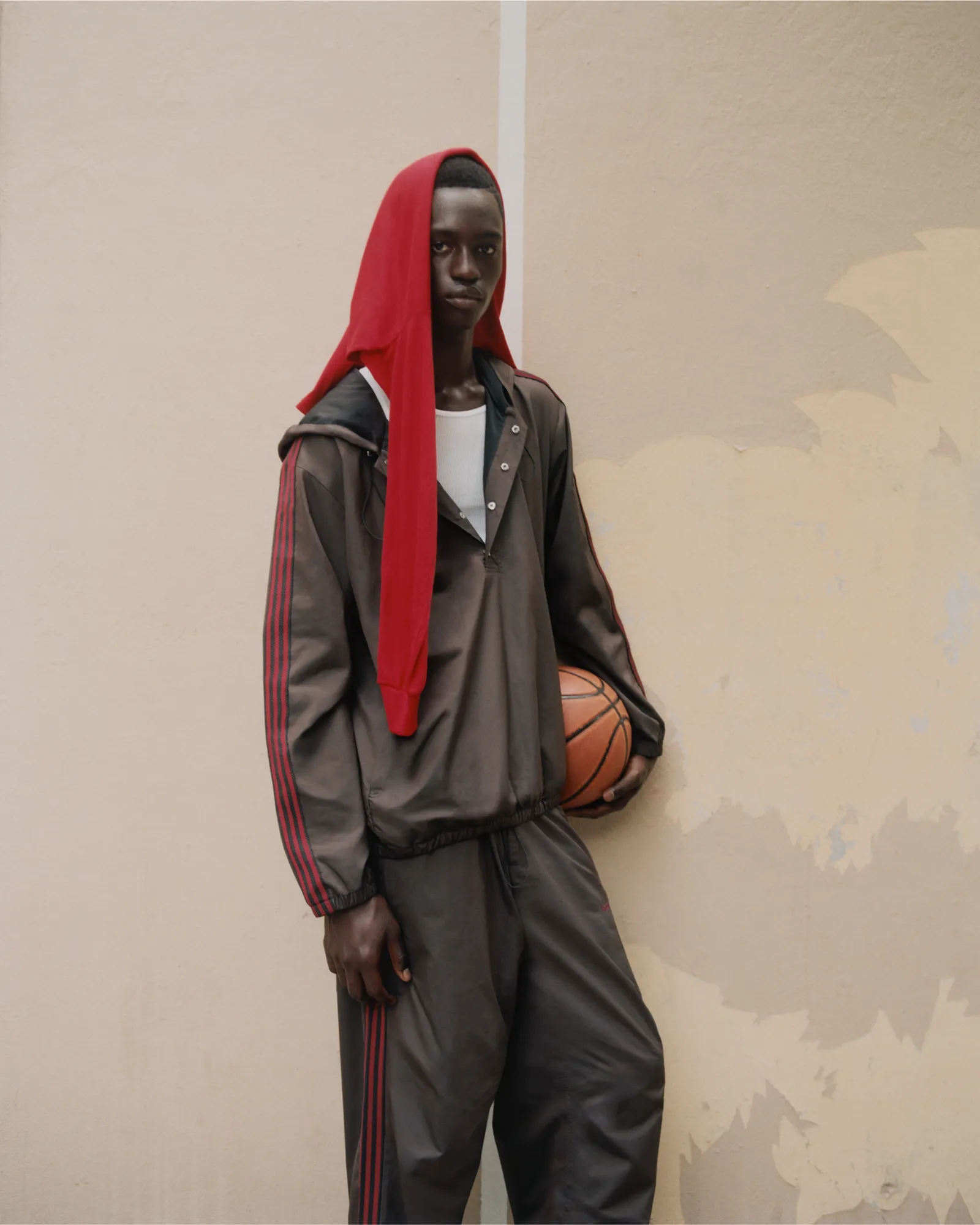
In January 2020, Grace Wales Bonner released her first collaboration with Adidas Originals as part of her Lover’s Rock collection. The capsule featured a crocheted three-stripe tracksuit, a reimagined Samba sneaker with crocheted stripes and oversized ribbing, and a campaign shot in Marseille by directing duo Jalan and Jibril Durimel. The collaboration was coherent, culturally specific, and quietly radical: a designer whose practice is built on archival research into Black culture had chosen as her primary commercial partner the sportswear brand whose Samba had been part of the visual grammar of Black British and Afrolatino football culture since the 1970s.
The African fashion market is worth 31 billion dollars. The Wales Bonner x Adidas collaboration, which has run continuously since January 2020, is the most commercially significant partnership to emerge from an independent research-led label in the current generation of British fashion. As SoccerBible’s April 2026 analysis of the collaboration confirms, Wales Bonner’s Adidas is still setting the standard more than five years after its debut, encompassing seasonal footwear and apparel collections, the Jamaican National Football Team kit, and a consistent design methodology that makes each iteration recognisable as part of the same ongoing conversation rather than a series of disconnected limited drops.
Wales Bonner x Adidas has run since January 2020. This is what the collaboration has produced, season by season, and what it demonstrates about design and commercial scale.
The Design Methodology: Archive as Intervention
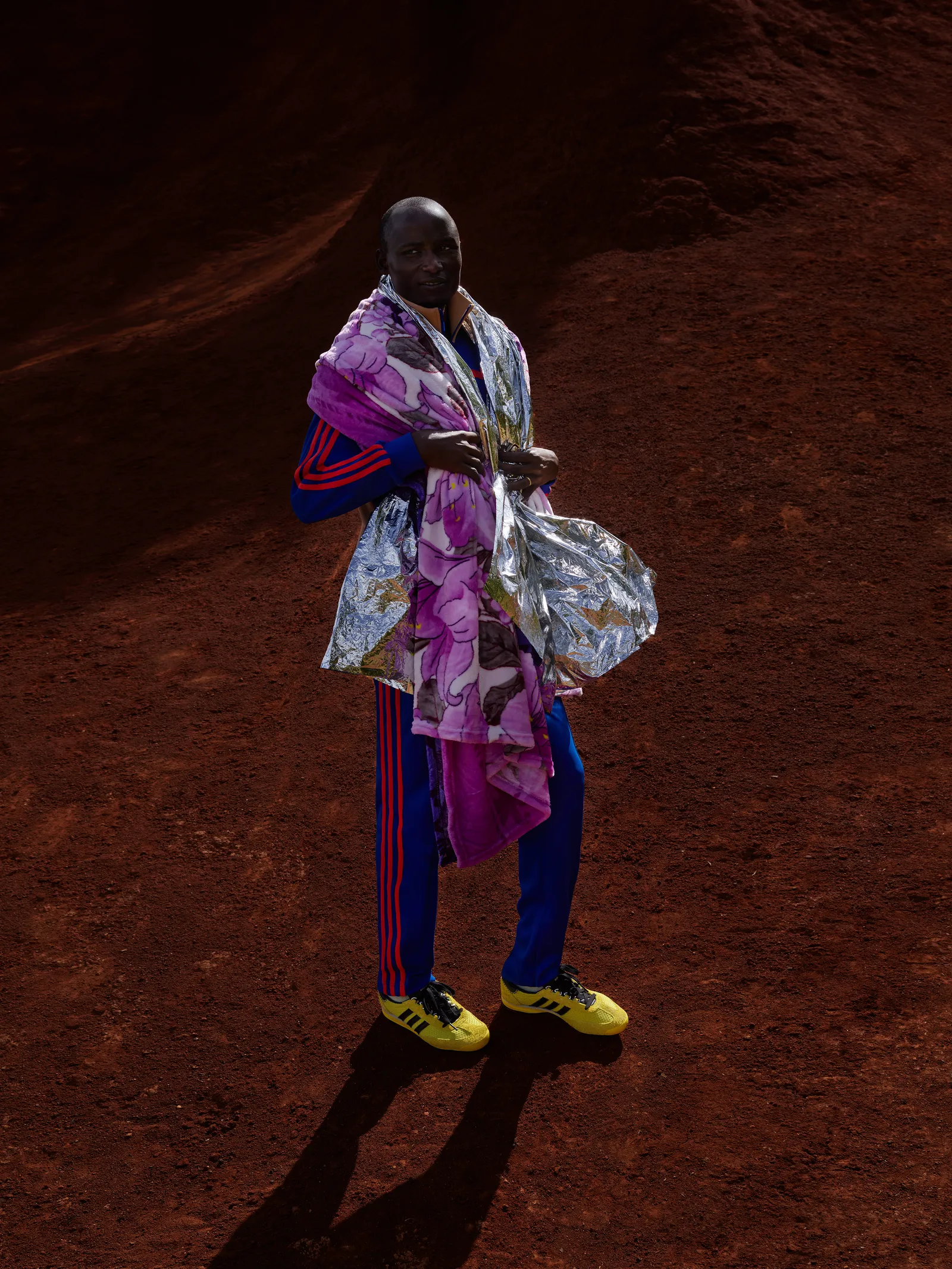
The Wales Bonner x Adidas collaboration follows a consistent design methodology across every season: take an archival Adidas silhouette and intervene at the material level. Not recolouring. Not logos. Material intervention. The Samba that appeared in the first Lover’s Rock drop was structurally recognisable as the Adidas Samba that had existed since 1949. What changed was the crochet detailing on the three stripes, the oversized ribbing, and the elevated material composition—the same archival shape; a different material conversation.
This approach reflects Wales Bonner’s broader research practice. The archival Adidas silhouette functions in the collaboration the way an archival cultural source functions in the fashion collections: it is the found object whose existing cultural authority and recognisability provide the foundation, and the design decision is the intervention that adds a specific layer of meaning to that foundation. The Samba already carries five decades of cultural memory in football, in Black British and Afrolatino community dress, in the street style of a specific set of urban environments. The crochet stripe does not erase that memory. It incorporates a West African textile technique.
Design coherence has been consistent across seasons because the archival silhouettes have remained the same: Samba, SL72, Japan, Campus. As GOAT’s documentation of the collaboration’s development confirms, subsequent collections after the Lover’s Rock debut expanded the partnership’s direction, yielding subtle reimaginings of iconic Adidas styles including the Japan silhouette, a mesh polo, and a 70s-inspired track jacket. Each new season’s footwear is an iteration in the conversation rather than a departure from it.
The Wales Bonner x Adidas Samba is the most commercially significant single product to emerge from an independent fashion label’s sportswear collaboration in recent memory. That commercial significance was not designed into the shoe. It emerged from design decisions that were consistent enough across multiple seasons to build a recognisable visual identity on an archival foundation.
Season by Season: The Key Drops
The Lover’s Rock debut (January 2020) established the collaboration’s visual language. The campaign was shot in Marseille by Jalan and Jibril Durimel, the same directing duo who would return for subsequent campaigns. Crocheted Samba, crocheted three-stripe tracksuit. As Culted’s analysis of why Wales Bonner and Adidas makes sense confirms, athletics and Wales Bonner go way back, with references to heritage sportswear being consistent throughout its collections, which explore the notions of European and African fashion, with pleated track pants and sporty footwear a mainstay of the brand’s ready-to-wear offering. The Adidas collaboration was not a commercial pivot. It was a natural extension of an already established design vocabulary.
The SS23 collection, titled Land of Wood and Water, shifted the geographic focus of research to Jamaica and the Caribbean, exploring Adidas’s documented presence in Jamaican culture. The WB Samba returned in two makeups: a neutral nubuck upper with leather stripes, and a silver leather upper with crochet stripes. The WB SL72 Knit was introduced, recontextualising the archival 1972 Munich Olympics runner with a knitted upper in two colourways that referenced Jamaican culture. Jalan and Jibril Durimel shot the campaign again. The Samba retailed at $220; the SL72 at $200. The apparel ranged from $65 socks to $365 knit track tops.
The SS23 campaign and collection’s focus on Jamaica connected to the larger research arc of Wales Bonner’s practice. As Adidas’s official SS23 release documentation confirms, the collection explores the Trefoil’s lasting presence within Jamaican culture: Adidas’s own archival relationship to Jamaica, not only Wales Bonner’s heritage. The collaboration at this point is pursuing a methodologically precise approach: using the archival overlap between two cultural bodies (Wales Bonner’s Jamaican-British heritage and Adidas’s documented presence in Jamaican football and music culture) as the research territory for a product collection.
The SS24 collection, titled Marathon, was presented at Paris Fashion Week Men’s and introduced the Adidas Neftanga, a new silhouette within the collaboration. The collection’s research territory was long-distance running, and it enlisted three of the sport’s defining figures: Genzebe Dibaba, Eliud Kipchoge, and Haile Gebreselassie. A UGG collaboration appeared within the wider presentation as a complementary alternative to the Samba. Lewis Hamilton, Tyler, the Creator, and Samuel Ross attended the Paris presentation. The theme of the long-distance runner as a silent messenger, the unwavering spirit striding and soaring, carried the research spirit of Wales Bonner’s wider practice into the collaboration’s most formally ambitious seasonal presentation.
The Jamaican National Football Team Kit
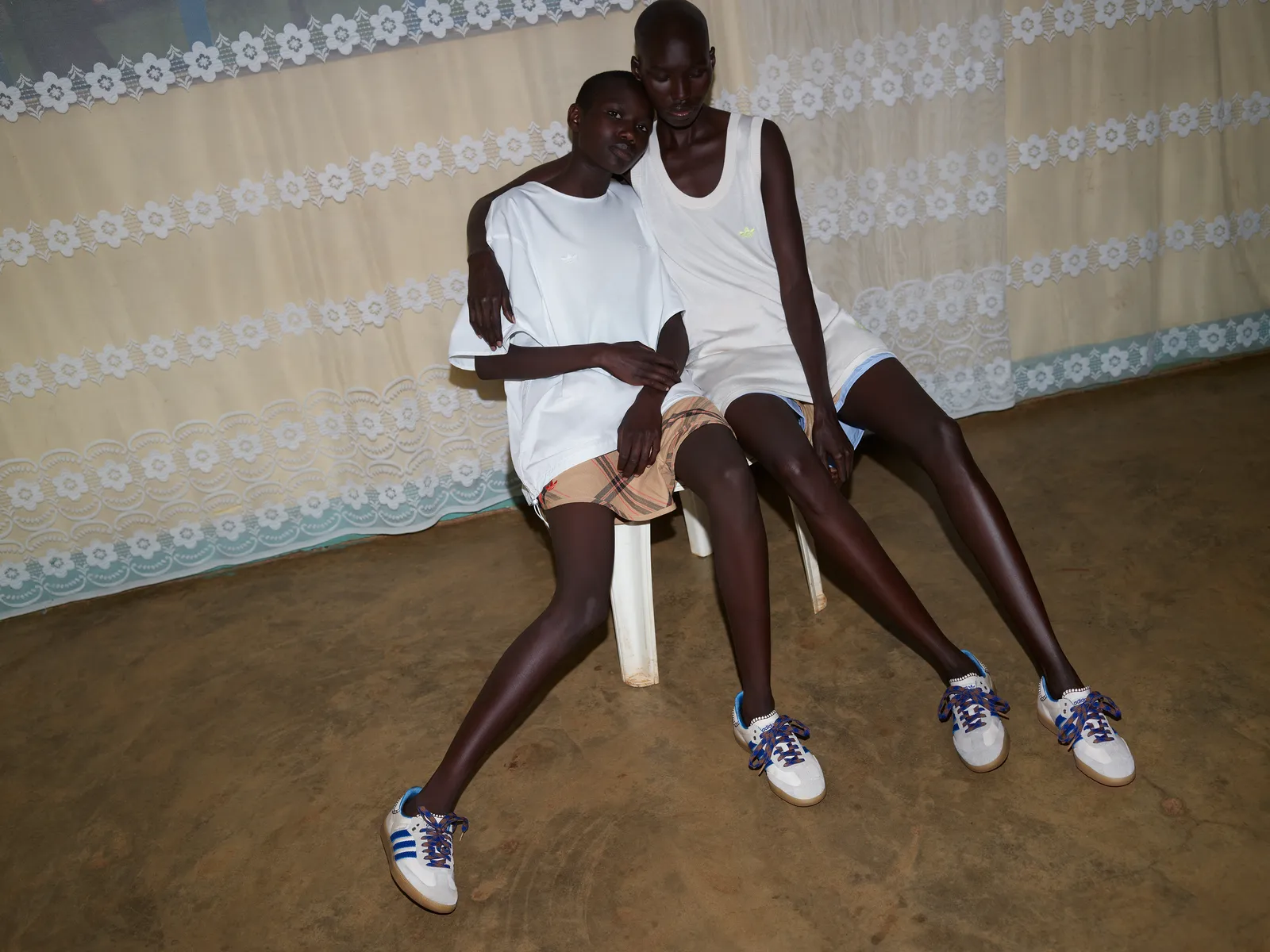
Beyond the seasonal capsule collections, Wales Bonner x Adidas produced the Jamaican National Football Team kit, extending the partnership into official team sportswear. The kit design represents the collaboration’s most public and most visible expansion: not a limited-edition fashion drop but an official team uniform worn in competitive play. The Jamaica kit sits within the same visual language as the SS23 Land of Wood and Water collection, connecting the capsule’s research territory to a specific moment of national sporting representation. The scale and visibility of an official national team kit is categorically different from a fashion drop: it appears on every broadcast, in every stadium, in every visual documentation of the team’s competitive presence.
The Commercial Reach
The Samba’s resurgence in the early 2020s is one of the most documented commercial phenomena in contemporary sneaker culture. The collaboration’s role in that resurgence is consistently cited in trade reporting. Adidas reported higher-than-average revenue in Q1 2024. The Samba was a significant contributor to that performance, and, alongside the Samba, which Wales Bonner helped revive, Adidas reported higher-than-average revenue of €5.5 billion in Q1 2024. The Samba was a significant contributor to that performance. The trade figure requires context: €5.5 billion is Adidas’s total Q1 2024 revenue, not the Samba’s specific contribution, and multiple factors beyond the Wales Bonner collaboration shaped the Samba’s performance within that figure. But the Wales Bonner collaboration is consistently cited in commercial and editorial coverage as a meaningful factor in the Samba’s cultural repositioning from a legacy football shoe to a fashion-culture object.
The mechanism of that repositioning is the design consistency documented above. Wales Bonner did not redesign the Samba in a way that made it unrecognisable. She redesigned it in a way that made it more recognisably itself. The crochet stripe referenced West African textile technique without claiming that the Samba originated in West Africa. The nubuck material composition elevated the shoe’s tactile quality without moving it out of the accessible price range that the Samba had historically occupied. The design decisions were additive rather than substitutive: they added cultural reference and material quality to an archival form that already carried its own cultural authority.
The result was a product that could be worn by someone who understood every layer of its reference (Adidas’s 1970s football legacy, Wales Bonner’s research into Black Atlantic culture, the crochet technique’s West African textile heritage) and also by someone who understood none of those layers but recognised it as well-designed and well-made. That dual accessibility is the commercial logic behind the collaboration’s sustained commercial performance. It is not common in fashion collaborations between luxury-adjacent independent labels and global sportswear brands.
What the Collaboration Demonstrated
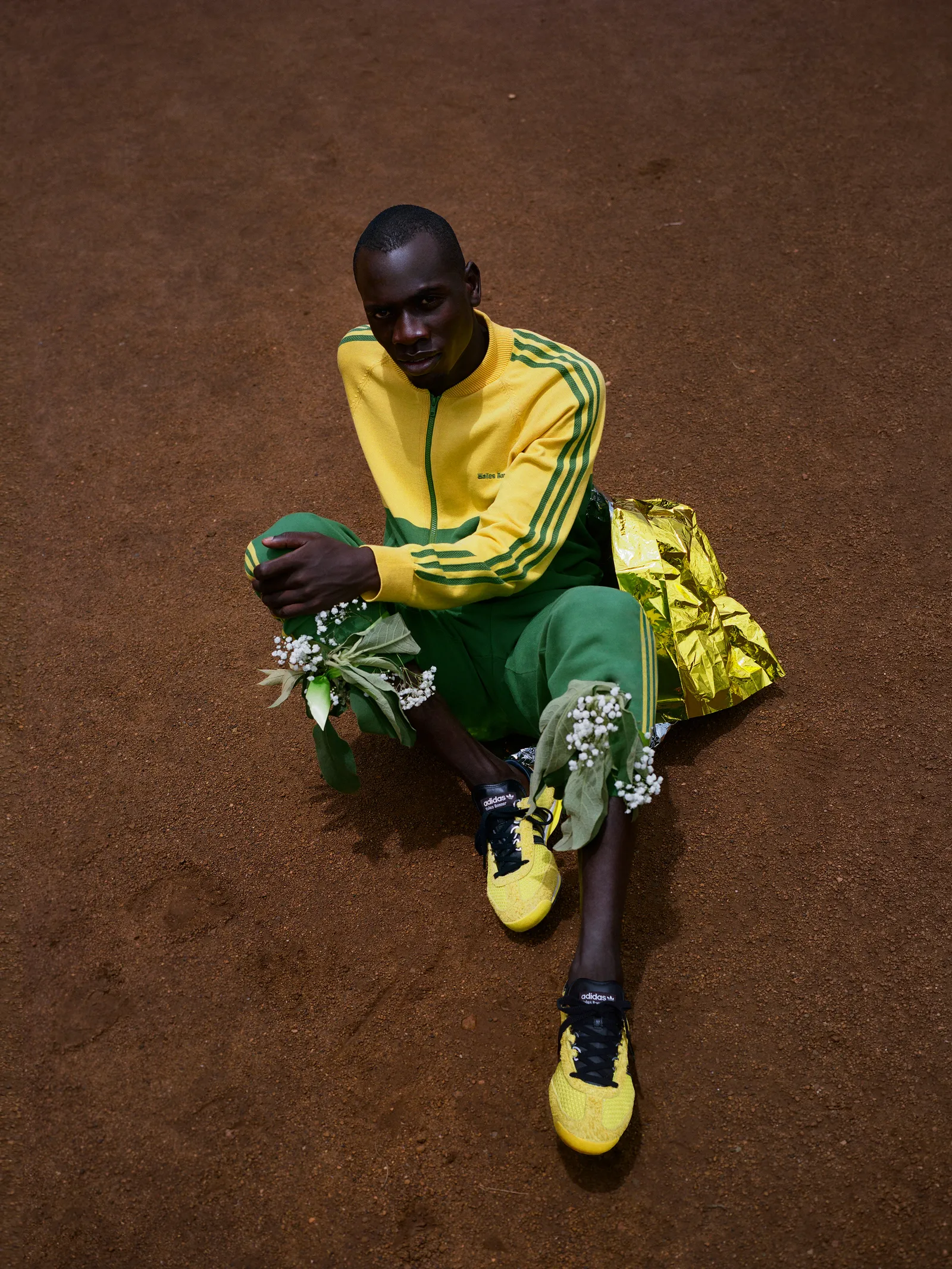
The Wales Bonner x Adidas collaboration demonstrates three insights useful for understanding how research-led independent labels can operate at commercial scale. As Omiren Styles’ documentation of the African deconstructed denim movement confirms, the global deconstructed denim moment that dominated SS26 runways was not the first time that archival fashion silhouettes were taken apart and rebuilt by independent labels with specific cultural agendas. Wales Bonner x Adidas established the template in sportswear: find the archival form that already carries cultural memory, and intervene at the material level with a specific cultural reference.
The first demonstration is that research-led design can sustain a commercial collaboration across multiple seasons without losing its design coherence. Every Wales Bonner x Adidas season is recognisably part of the same conversation, which means the collaboration has built a visual identity rather than producing a series of unrelated limited drops. That consistency is the commercial foundation for brand equity in a collaboration context.
The second demonstration is that an independent label’s cultural authority can move product at commercial scale without the independent label losing its identity. The Adidas collaboration does not diminish Wales Bonner’s Wales Bonner practice. The collaboration draws on the same research practice, material intelligence, and cultural seriousness that characterise the independent collections. The commercial scale operates on top of the design identity rather than in substitution for it.
The third demonstration is about what the collaboration proved for the Hermès appointment. The Wales Bonner x Adidas collaboration showed that Wales Bonner could work within a globally distributed commercial system with demanding production timelines, retail distribution requirements, and price-point constraints, while maintaining a recognisable visual and cultural vocabulary. It proved that the research methodology that produces independent collections could also produce commercially successful products in a constrained institutional context. That proof of concept is what the Hermès appointment confirmed it wanted.
The Omiren Argument
The Wales Bonner x Adidas collaboration is the most commercially consequential output of Wales Bonner’s practice to date, and it is also the output most often separated from her research practice in commercial coverage. The African fashion market is worth 31 billion dollars. The Samba with crochet stripes is read in sneaker culture as a great collaborative shoe. It is also an archival Adidas silhouette that carries five decades of cultural memory, onto which a specific West African textile technique has been applied by a designer whose practice is built on research into Black Atlantic cultural forms. Those two readings are not in conflict. But the full reading requires knowing that Wales Bonner describes herself primarily as a researcher, that the Lover’s Rock collection title is a reference to a specific moment in Black British musical and community culture, that Land of Wood and Water is a Jamaican name for Jamaica, and that the Marathon collection’s use of Kipchoge, Dibaba, and Gebreselassie as design research subjects is a continuation of the same enquiry into Black athletic excellence and cultural identity that runs through every Wales Bonner x Adidas season. The commercial performance of the collaboration is real. It is also, correctly understood, the commercial performance of a research practice. That is not common. It is the argument that the Wales Bonner x Adidas collaboration has made, season by season, since January 2020.
Also Read:
- Wales Bonner’s Research Practice: From Central Saint Martins to Hermès
- Grace Wales Bonner at Hermès: What Her Menswear Appointment Changes
- Diaspora Style Is Not Fashion’s Trend Reservoir
Frequently Asked Questions
When did Wales Bonner start collaborating with Adidas?
Wales Bonner debuted her first collaboration with Adidas Originals in January 2020 as part of her Lover’s Rock collection. The initial drop featured a crocheted three-stripe tracksuit and a reimagined Samba sneaker with oversized ribbing and crocheted stripes. A campaign shot in Marseille by directing duo Jalan and Jibril Durimel accompanied the collection. The collaboration has continued continuously from January 2020 through at least SS24.
What is the Wales Bonner Adidas Samba?
The Wales Bonner Adidas Samba is a series of iterations of the archival Adidas Samba silhouette, a football shoe originally designed in 1949, produced as part of the Wales Bonner x Adidas collaboration. Each iteration maintains the Samba’s recognisable silhouette while intervening at the material level: the first version featured crochet stripes; the SS23 version appeared in nubuck with leather stripes and in silver leather with crochet stripes. The Samba’s resurgence as a fashion-culture object in 2022-2024 has been consistently attributed in trade and editorial coverage to Wales Bonner’s contribution to its cultural repositioning, alongside broader trend factors.
How did Wales Bonner affect Adidas Samba sales?
Wales Bonner is consistently cited in trade and editorial reporting as a meaningful contributor to the Adidas Samba’s resurgence as a fashion-culture object from 2022 onward. Adidas reported €5.5 billion in Q1 2024 revenue, described as higher than average and attributed in part to the Samba’s strong commercial performance. The Samba’s contribution to that figure is not isolated in public reporting, and multiple factors contributed to its resurgence beyond the Wales Bonner collaboration. Wales Bonner’s contribution was design consistency across multiple seasons that gave the collaboration a recognisable visual identity and built cultural authority for the silhouette in fashion-focused contexts.
What is Land of Wood and Water Wales Bonner?
Land of Wood and Water is the title of the Wales Bonner x Adidas SS23 collection, released in June 2023. The title is a reference to Jamaica, which the collection uses as its primary research territory, exploring Adidas’s documented presence within Jamaican culture. The collection featured the WB Samba in nubuck and silver leather with crochet stripes, the WB SL72 Knit in Jamaican-inspired colourways, and a full apparel range. The campaign was shot in Jamaica by Jalan and Jibril Durimel.
What is the Marathon Wales Bonner Adidas collection?
Marathon is the title of the Wales Bonner x Adidas SS24 collection, presented at Paris Fashion Week Men’s in June 2023. The collection’s research territory was long-distance running as a form of silent, enduring cultural expression. It featured three Ethiopian and Kenyan distance runners: Genzebe Dibaba, Eliud Kipchoge, and Haile Gebrselassie, as design research subjects, with their names appearing on garments. The collection introduced the Adidas Neftanga as a new collaborative silhouette and included a collaboration with UGG. Lewis Hamilton, Tyler, the Creator, and Samuel Ross attended the Paris presentation.