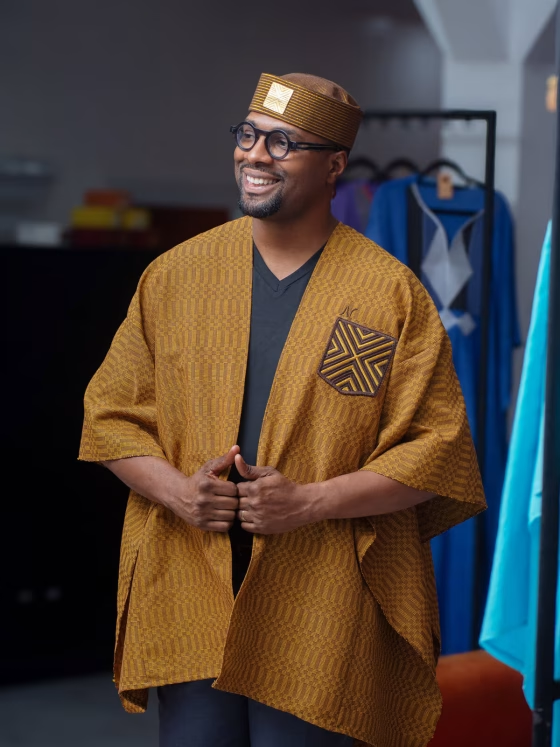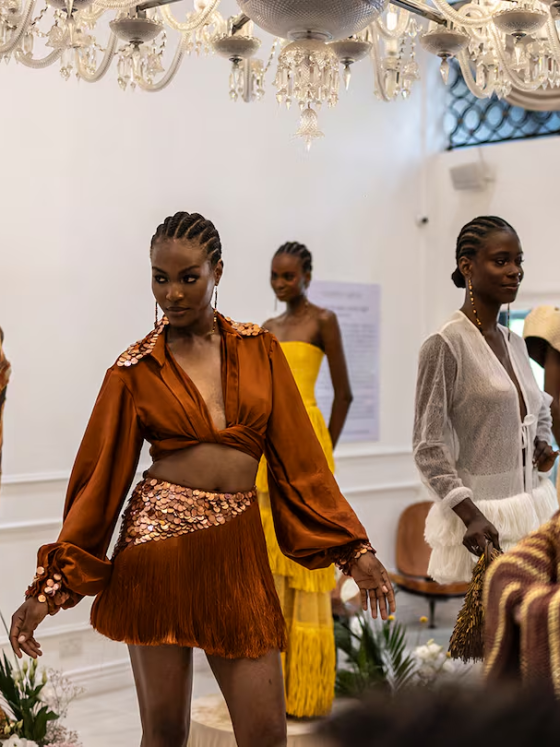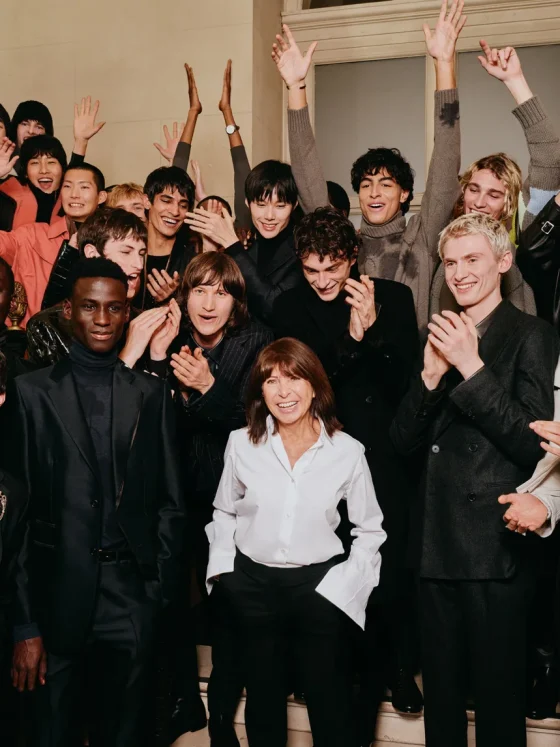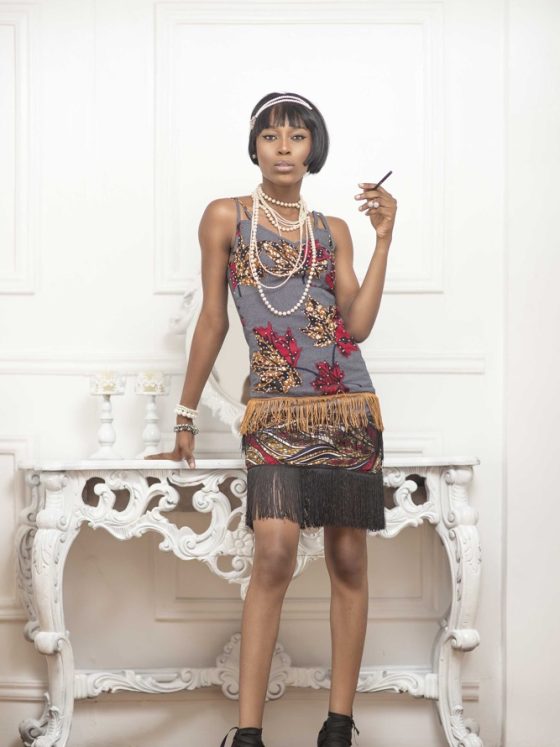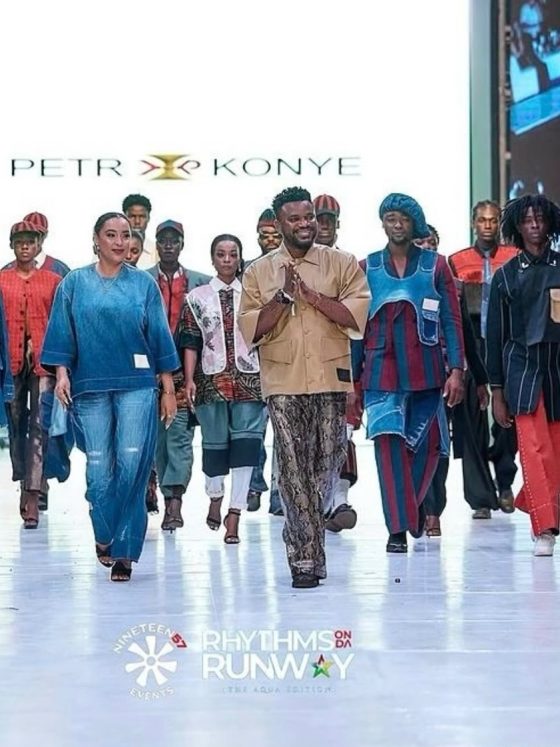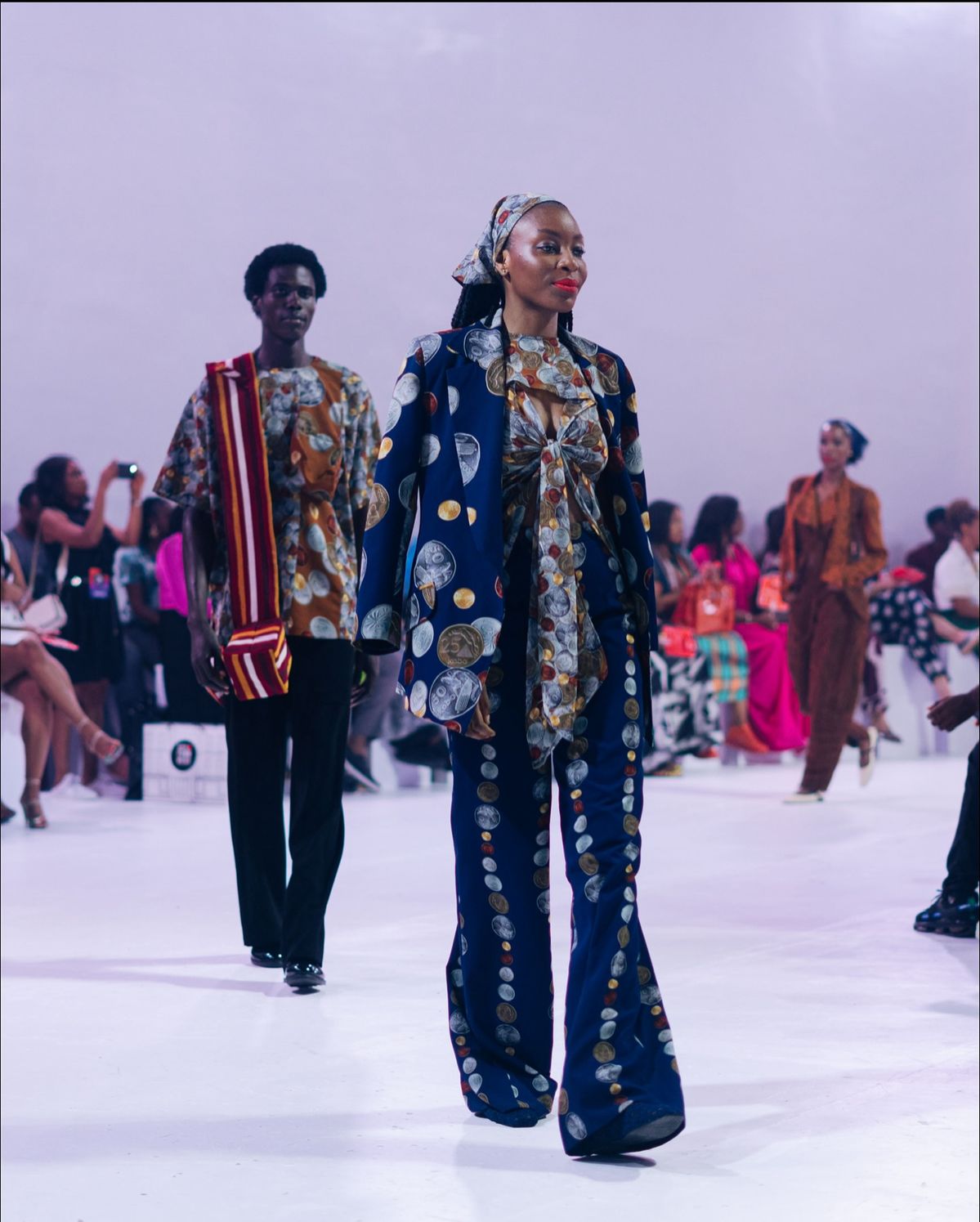
The African fashion market is worth 31 billion dollars. Ghana’s contribution to that figure has long been framed through its foundational names: Christie Brown, Duaba Serwa, Pistis. Those houses built the infrastructure: the proof that technically excellent and commercially serious fashion could originate from Accra while remaining rooted in Ghanaian material culture. The current generation is now operating. And it is doing something its predecessors could not have done in quite the same way: building globally legible fashion brands that are unmistakably Ghanaian in their cultural logic while being structurally competitive with anything coming out of Lagos, Nairobi, or Johannesburg.
Four brands define this cohort with particular clarity. Ajabeng, Larry Jay, Boyedoe, and Atto Tetteh are not working from the same aesthetic playbook. Their design languages are distinct, their influences diverge, and the stories they tell through fabric arrive from different cultural corners of Ghana. What unites them is a shared refusal: none of them is making fashion that requires a Western framework to make sense. They are building from the inside out, and the outside is beginning to notice. This is not the story of Ghanaian fashion emerging. It is the story of it asserting.
Four Ghanaian designers are building globally legible luxury without losing Accra specificity. This is what Ajabeng, Larry Jay, Boyedoe, and Atto Tetteh are making.
Why This Cohort of Ghanaian Fashion Designers Matters Now
The timing matters because the international fashion system is already paying attention. Atto Tetteh has been covered by Vogue, Harper’s Bazaar, and The Guardian. In 2020, Zerina Akers placed the brand on Beyoncé’s Black-Owned Business list, a moment that redirected substantial global attention onto what had been developing steadily in Accra for six years. Larry Jay has been featured in Vogue Italia. Boyedoe debuted at the Paris Fashion Week Tranoï Show, was featured on the cover of Tranoï magazine in September 2024, and was a finalist at the inaugural ARISE 30 Under 30 New Stars competition in Lagos in 2020 alongside some of the continent’s strongest emerging names.
Ajabeng placed in the top eight at the same ARISE 30 Under 30 competition, assessed by a jury that included Naomi Campbell, Kenneth Ize, and Mmuso Maxwell. Omiren Styles’ profile of Ajabeng’s architecture of Afro-minimalism documents how minimalism in this context becomes an act of authorship: a signal of confidence, a deliberate resistance to the maximalism often associated with West African fashion, and an argument that Ghanaian design can occupy the restrained register without losing its cultural specificity.
The question is not whether this work is excellent. That is established. The more interesting question is what kind of design thinking is producing it, and what it tells us about where Ghanaian fashion is going.
These are not four Ghanaian brands doing the same thing. They are four brands making the same argument from different starting points: that Ghanaian cultural intelligence is the design advantage, not the design decoration.
Ajabeng: Travis Obeng-Casper
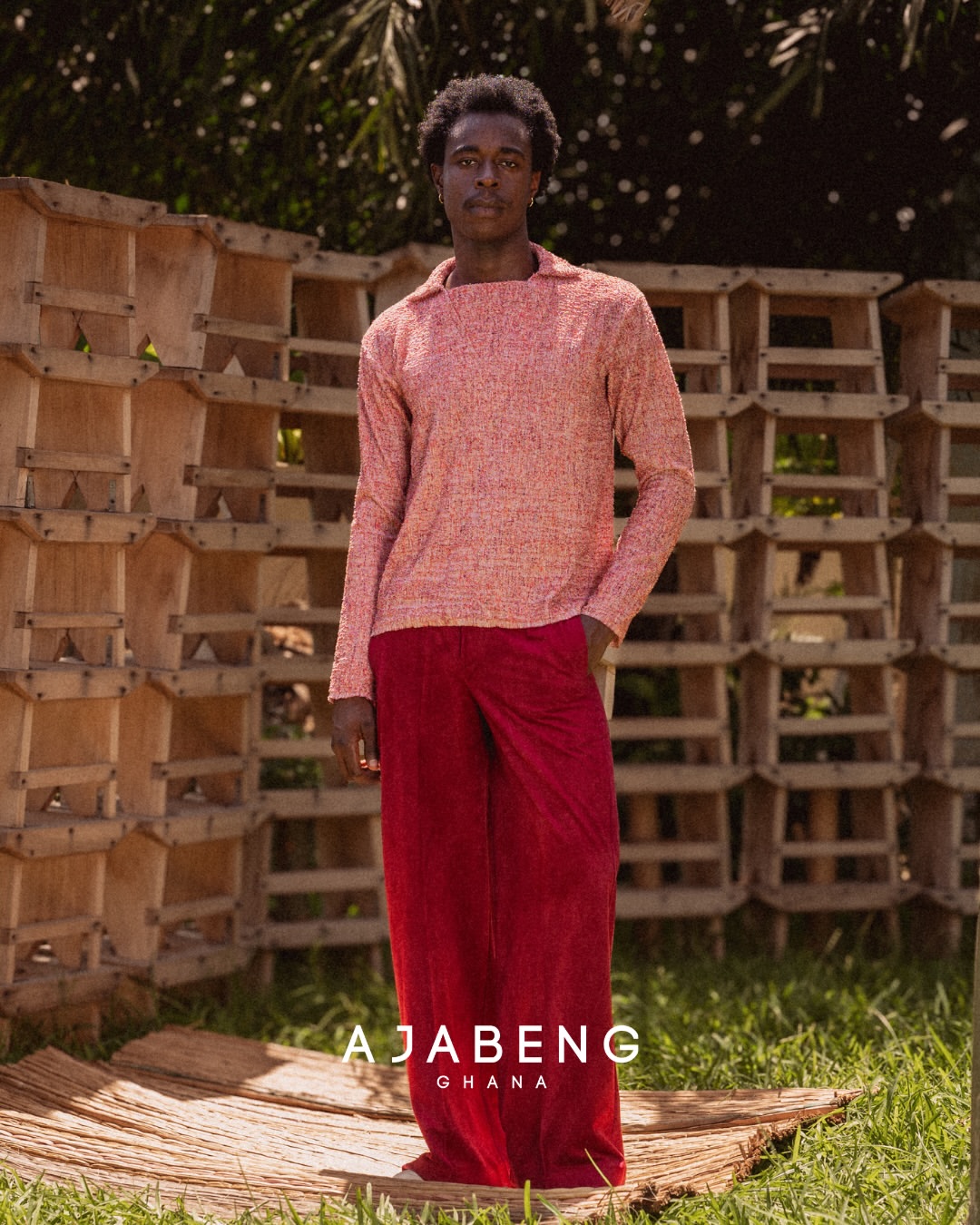
Travis Obeng-Casper coined his own aesthetic term before most critics had a framework for it: Afro-minimalist. The label is precise. Ajabeng’s collections- suit-style tailoring, oversized button-downs, wide-leg trousers, unisex in their assumptions- draw simultaneously from traditional African womenswear. This streetwear culture defines young Accra and the bold geometry of Art Deco architecture. These are not competing references. Obeng-Casper builds them into a coherent visual language in which the masculine and feminine coexist without announcement.
The sustainability commitment is structural rather than promotional. Obeng-Casper reimagined traditional handweaving techniques with wool and cotton to create a hybrid Ghanaian textile, integrating handwoven fabric into everyday wear rather than reserving it for ceremonial contexts. The goal is not to preserve tradition behind glass. It is to put it to work.
That philosophy landed internationally at the ARISE Fashion Week 30 Under 30 New Stars competition in 2020, where Ajabeng placed in the top eight alongside Kenneth Ize and Mmuso Maxwell. Since then, collaborations with stylist Daniel Obasi and photographer Stephen Tayo have deepened the brand’s creative ecosystem. Ghanaian indie artist Amaarae and Cape Verdean singer Mayra Andrade have both worn the clothes. The brand is small. Its cultural footprint is not.
Larry Jay: Larry Jafaru Mohammed
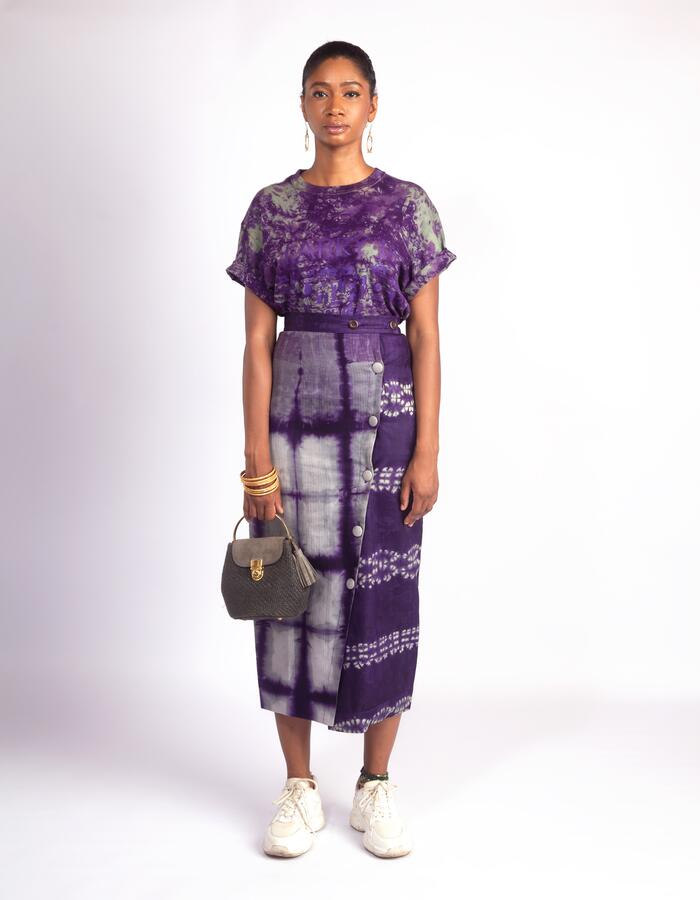
Larry Jafaru Mohammed is from Bimbila in Ghana’s Nanumba North District, and that geographic specificity matters. His Northern Ghanaian and Islamic heritage shapes a design sensibility that is markedly different from the Accra-centric, Akan-influenced default of much Ghanaian fashion. Larry Jay draws from the full width of Ghana’s cultural landscape: boubou-inspired cuts, jute detailing, hand-dyed textiles, silhouettes that reference West African dress traditions from Nigeria to Senegal to Mali, filtered through a 1970s vintage lens and a rigorous ethical production framework.
The brand began in 2012 as a fashion accessories line, a creative response to his mother’s trade in fashionable clothing. Apparel followed in 2016, and by 2017 the first Spring/Summer collection had launched. Fabrics are sourced in Ghana and hand-dyed by artisans. Fabric waste imported from Europe and America is transformed into vibrant artisanal tie-dye textiles, giving secondhand textile waste a second life. A community of hand weavers in Northern Ghana preserving vintage techniques passed down through generations is a central collaborator.
This is not sustainability as brand positioning. It is sustainability as the business’s actual operating logic. Larry Jay has been featured in Vogue Italia and showcased at Lagos Fashion Week, recognition that reflects how fully the brand’s design vision has translated beyond Accra.
Boyedoe: David Kusi Boye-Doe
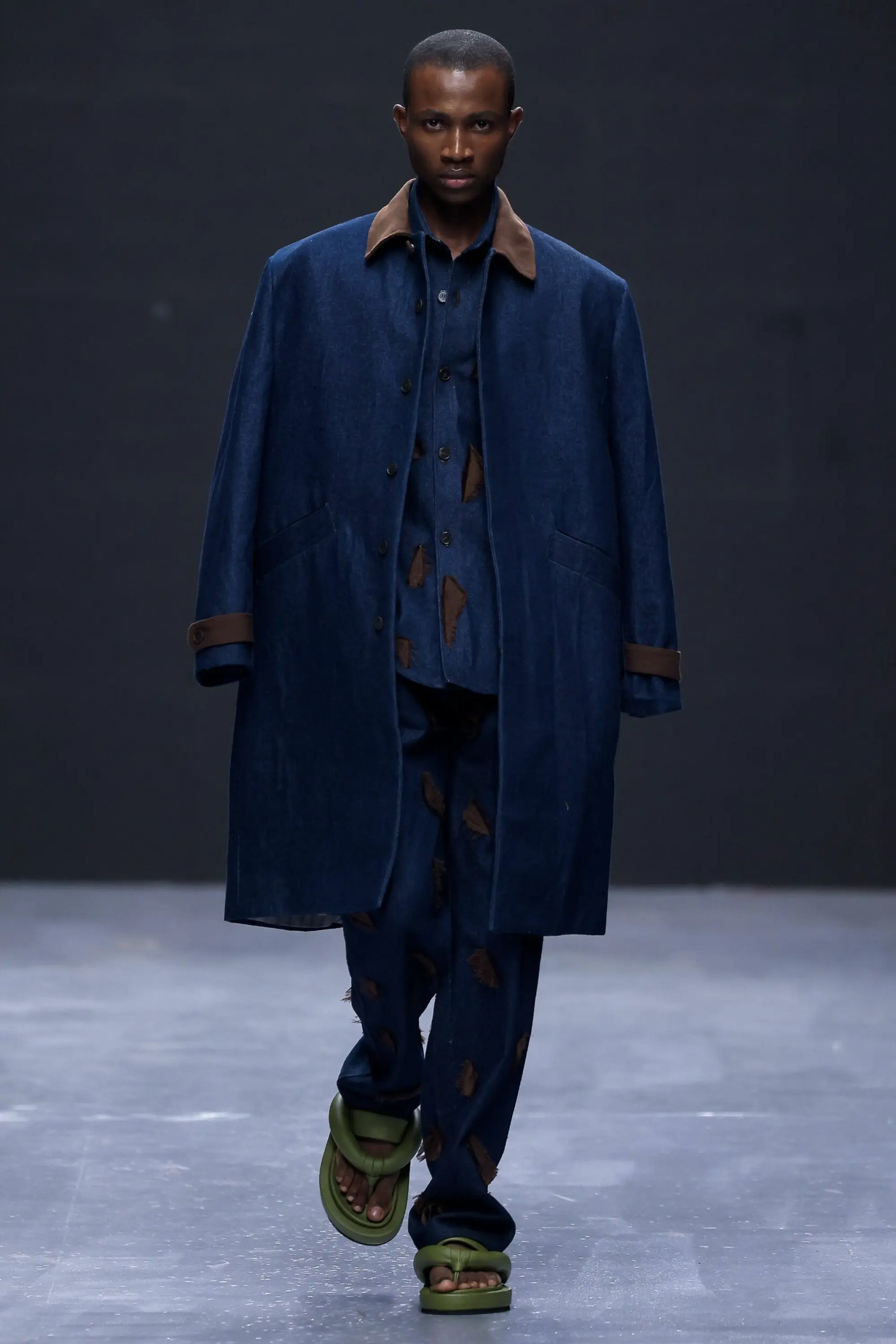
David Kusi Boye-Doe grew up in Kumasi, the Ashanti capital where Kente cloth originates. As a child accompanying his grandfather to the king’s palace during festivals, he was drawn to the colours, textures, and weight of occasion that surrounded ceremonial dress. That formative encounter with cloth as cultural argument is the foundation on which Boyedoe operates. Founded in 2020 and inspired by the mythical Ghanaian Sankofa bird, the symbol of returning to one’s roots to move forward, the brand is built on deconstruction and reconstruction as design principles. Boye-Doe takes heritage apart and rebuilds it into contemporary garments that carry the memory of their source material without being constrained by it.
What makes Boye-Doe significant is the precision of its ambition alongside the quality of its credentials. Boye-Doe graduated from the Joyce Ababio College of Creative Design in 2019 as Most Outstanding Student and Most Creative Student. He won the Merck Fashion Award Ghana in 2019 and was named first runner-up in the Vlisco Fashion Fund Ghana in 2019. Boyedoe was a finalist in the inaugural ARISE 30 Under 30 New Stars competition in Lagos in 2020. The brand has shown at the Paris Fashion Week Tranoï Show, was featured on the cover of Tranoï magazine in September 2024, and presented at CANEX Portugal Fashion and Lagos Fashion Week SS25. As Boyedoe’s Industrie Africa documentation confirms, the brand envisions an Africa of boldness, bravery, and beauty underscored by culture, folklore, colours, textures, and eclectic patterns. That vision is being built with consistent, patient discipline rather than the search for a single breakthrough moment.
Atto Tetteh: George Nii Tetteh Commey
George Nii Tetteh Commey founded Atto Tetteh in 2014 with a specific cultural argument embedded in the founding premise: the Ghanaian man has always been visually literate, always been ceremonial, always been stylish, even when Western fashion’s gaze landed elsewhere. Menswear was not just a category choice. It was a corrective statement about where the gaps in Ghanaian fashion actually were.
His mother worked as a seamstress and later moved into Batik garment production. That inheritance shows in Atto Tetteh’s relationship to fabric: the careful selection, the experimental approach to colour and pattern, the understanding that what a garment is made of is part of what it says. Each season brings solid colours, meticulous construction, and abstract prints that reference West African heritage without reducing the point to it. The clothes carry cultural knowledge the way good architecture carries structural knowledge: you feel it before you analyse it.
The brand’s reach is significant. Over the years, it has been featured in Vogue, Harper’s Bazaar, The Guardian, and more. In 2020, Zerina Akers and Beyoncé placed Atto Tetteh on their Black-Owned Business list, a moment that redirected substantial global attention onto what had been developing steadily in Accra for six years. The brand is stocked at The Folklore and Cape Town’s Merchants On Long, confirming that its commercial infrastructure has expanded to match its editorial reputation.
At a Glance: Four Brands, One Cohort
| Brand | Designer | Founded | Focus | Aesthetic | Key Credential |
|---|---|---|---|---|---|
| Ajabeng | Travis Obeng-Casper | 2018 | Unisex | Afro-minimalist, art-deco geometry | Arise FW Top 8, Naomi Campbell panel |
| Larry Jay | Larry Jafaru Mohammed | 2012 / 2017 | Unisex, ethical | 70s-inflected, hand-dyed, gender-fluid | Vogue Italia, Lagos Fashion Week |
| Boyedoe | David Kusi Boye-Doe | 2020 | Afro-luxurious | Sankofa deconstruction, Kente heritage | First Ghanaian LVMH Prize semi-finalist, 2025 |
| Atto Tetteh | George Nii Tetteh Commey | 2014 | Menswear | Luxury streetwear, precise construction | Vogue, Harper’s Bazaar, Beyoncé list |
What Accra Is Building
These four brands are not interchangeable. Ajabeng’s Afro-minimalism occupies a different register from Boyedoe’s Sankofa-led deconstruction. Larry Jay’s Northern Ghanaian ethics-first practice is not the same proposition as Atto Tetteh’s meticulous menswear storytelling. The diversity within this cohort is itself an argument: against the flattening of Ghanaian fashion into a single aesthetic, and against the assumption that African design requires a unified cultural shorthand to travel internationally. Omiren Styles’ documentation of Accra’s 2026 street style confirms that a generation of Ghanaian designers has rejected the export-only model, choosing to build value domestically first rather than seeking external validation first. That decision has produced brands with deeper roots and more durable commercial propositions.
What the four brands share is structural. Each has built around a clear design identity rooted in specific Ghanaian cultural knowledge, not as decoration but as the logic of how the garment is made and what it asks of the person wearing it. Each has pursued international recognition not by diluting that identity but by deepening it. And each has found that when the international fashion circuit encounters work this considered, it responds.
The Omiren Argument
The new cohort of Ghanaian fashion designers is not emerging. It is asserting. Ajabeng has made minimalism Ghanaian rather than imported. Larry Jay has built an ethics-first brand from Northern Ghana’s cultural heritage that has reached Vogue Italia and Lagos Fashion Week without relocating its roots or its community commitments. Boyedoe has taken the Sankofa principle of returning to move forward and turned it into a commercially rigorous design practice visible on the Paris Fashion Week Tranoï circuit. Atto Tetteh has spent a decade building a menswear brand in Accra that Vogue, Harper’s Bazaar, The Guardian, and Beyoncé have all separately decided is worth their audience’s attention. The African fashion market is worth 31 billion dollars. These four brands are not asking for a share of it on the terms the international system offers. They are rebuilding those terms from Accra. That is the more interesting argument, and Omiren Styles is here to make it clear.
ALSO READ:
- Top Ghanaian Fashion Designers Shaping Africa’s Global Fashion Narrative
- Ajabeng and the Architecture of Afro-Minimalism
- What Accra Street Style Is Actually Arguing in 2026
- Accra Fashion: How Women in Ghana Are Redefining Personal Style in 2026
Frequently Asked Questions
Who are the top new Ghanaian fashion designers in 2026?
The four most commercially and creatively significant new Ghanaian fashion designers are Travis Obeng-Casper of Ajabeng (Afro-minimalist unisex fashion from Accra), Larry Jafaru Mohammed of Larry Jay (Northern Ghanaian heritage, ethical production), David Kusi Boye-Doe of Boyedoe (Sankofa-inspired deconstruction and reconstruction using handwoven Ghanaian textiles, shown at Tranoï Paris), and George Nii Tetteh Commey of Atto Tetteh (luxury Ghanaian menswear stocked internationally at The Folklore and Merchants On Long). All four have earned significant international press attention while remaining rooted in Ghanaian cultural specificity.
What is Ajabeng fashion brand?
Ajabeng is an Accra-based unisex fashion brand founded by Travis Obeng-Casper. It is built around the aesthetic principle Obeng-Casper calls Afro-minimalism: suit-style tailoring, oversized button-downs, wide-leg trousers, and gender-fluid silhouettes that draw from traditional African womenswear, Accra streetwear culture, and art deco geometry. The brand reimagines traditional handweaving techniques with wool and cotton to create hybrid Ghanaian textiles and was a top-eight finalist at the ARISE 30 Under 30 New Stars competition in 2020.
What is the Boye-doe fashion brand?
Boyedoe is a Ghanaian Afro-luxurious fashion brand founded in 2020 by David Kusi Boye-Doe. Inspired by the mythical Sankofa bird, the brand is built on deconstruction and reconstruction as design principles: taking Ghanaian heritage, particularly Kente cloth and ceremonial dress traditions from Kumasi, apart and rebuilding it into contemporary garments. Boye-Doe graduated from the Joyce Ababio College of Creative Design as Most Outstanding Student in 2019, won the Merck Fashion Award Ghana, and has shown at the Paris Fashion Week Tranoï circuit, CANEX Portugal Fashion, and Lagos Fashion Week.
What is Atto Tetteh known for?
Atto Tetteh is a Ghanaian luxury menswear brand founded by George Nii Tetteh Commey in 2014 in Accra. Known for solid colours, meticulous construction, and abstract prints referencing West African heritage, the brand has been featured in Vogue, Harper’s Bazaar, and The Guardian, and was placed on Zerina Akers and Beyoncé’s Black-Owned Business list in 2020. The brand is stocked at international retail platforms including The Folklore and Merchants On Long in Cape Town.
What makes Larry Jay different from other Ghanaian fashion brands?
Larry Jay, founded by Larry Jafaru Mohammed from Bimbila in northern Ghana, represents a distinctly different design geography from the Accra-centric, Akan-influenced default of much Ghanaian fashion. The brand draws from Northern Ghanaian and Islamic heritage, with boubou-inspired cuts, jute detailing, and hand-dyed textiles produced by artisan communities in northern Ghana. The brand also transforms imported textile waste from Europe and America into artisanal tie-dye materials. That ethical production model is the brand’s operating logic rather than a marketing position, and it has earned coverage from Vogue Italia and a place at Lagos Fashion Week.
Explore More
Read the full Fashion > Industry section at omirenstyles.com for Omiren Styles’ documentation of African fashion brands, creative economies, and the design intelligence being built from Accra, Lagos, Nairobi, Kigali, and across the diaspora.