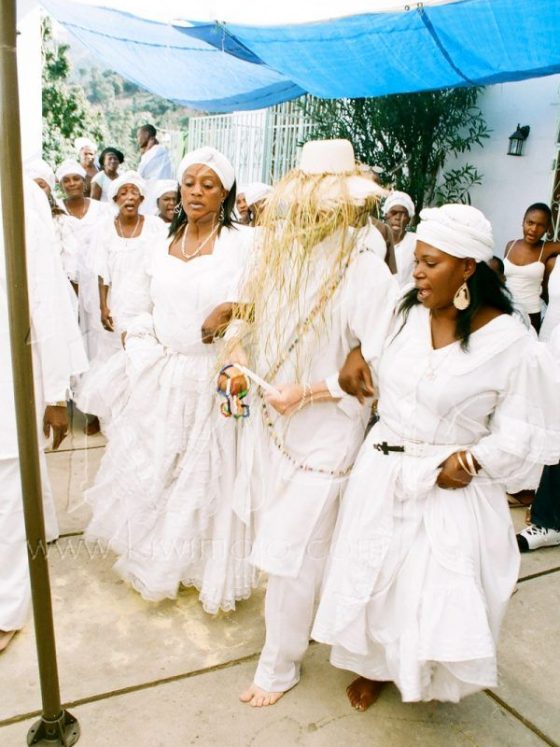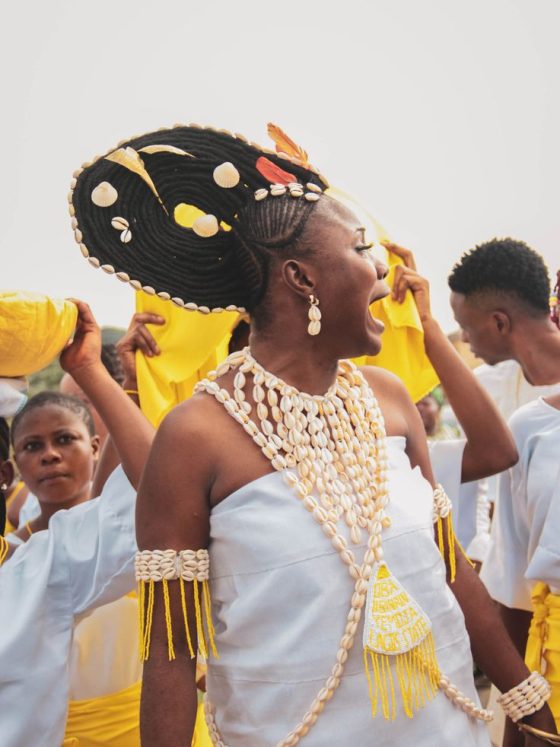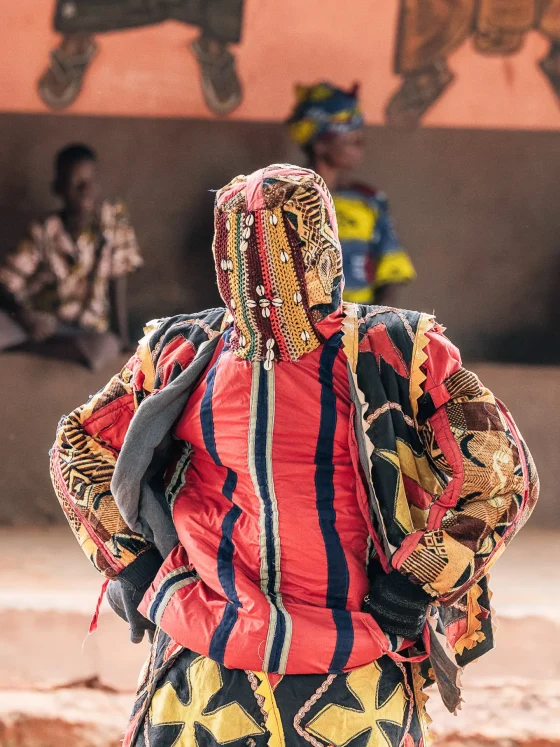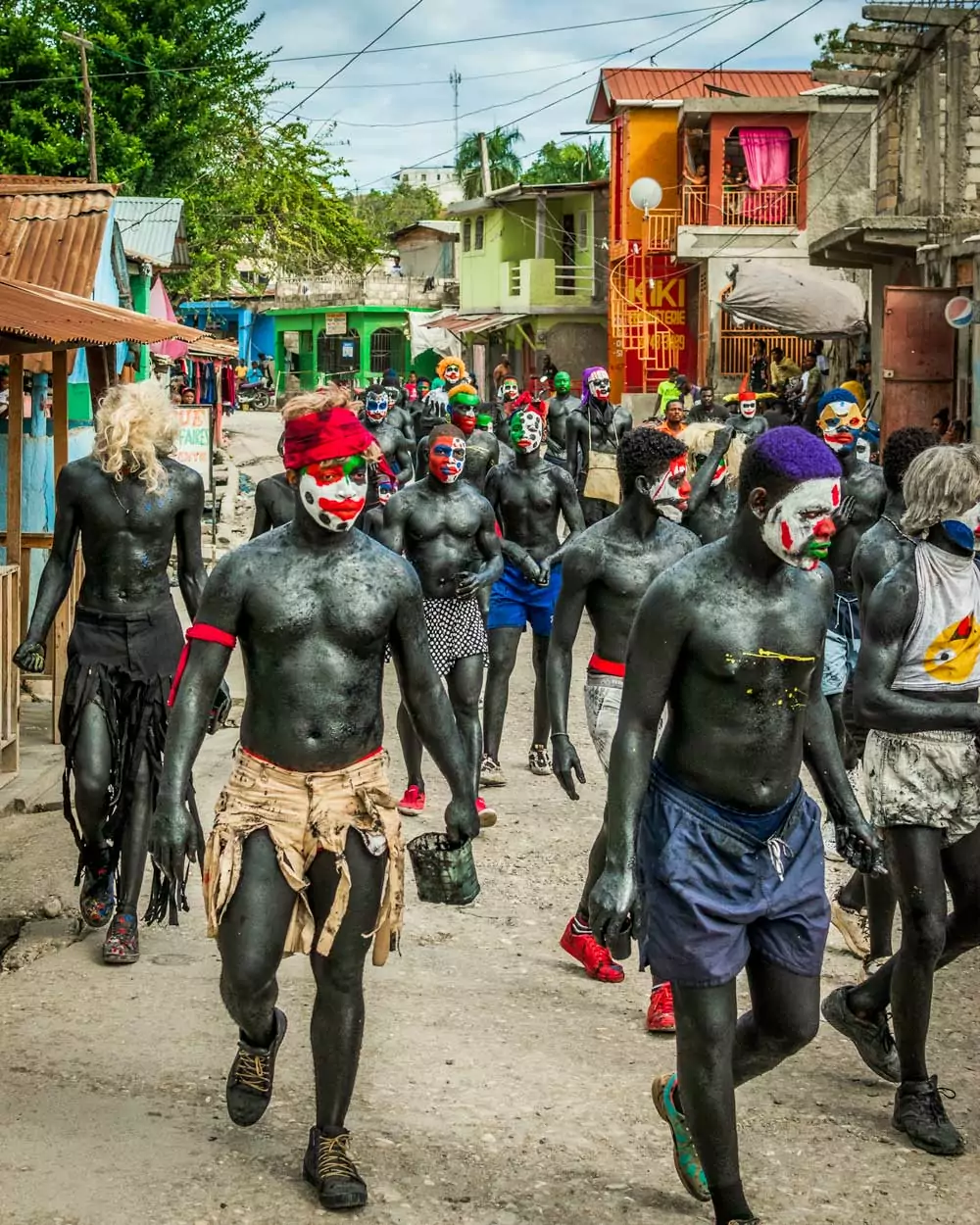
Haitian Vodou body painting is not costume, decoration, or performance. It is ritual language. In Haitian Vodou, the body becomes a sacred surface through which spirits, known as lwa, are honoured, invoked, and expressed in colour, pattern, movement, and presence. The markings applied to the body during ceremony are not ornamental additions to the ritual. They are part of the ritual’s structure, as deliberate and as specific as the vèvè symbols drawn in cornmeal on the temple floor, the drumming patterns that call particular spirits, or the colours of the flags carried at the ceremony’s opening.
Read outside its context, Vodou body painting becomes spectacle: exotic, mysterious, available for aesthetic consumption by an audience that does not carry the knowledge the markings require. Read inside its context, it is one expression of a sophisticated visual system that the Haitian Vodou tradition has developed over centuries, rooted in West African spiritual practice and transformed through the specific conditions of Haitian history. As Omiren Styles has documented in its analysis of Haitian Vodou ceremonial dress, the visual practices of Haitian Vodou are consistently misread by outsiders because the misreading is built into how the tradition has been represented externally. This piece makes the correct reading explicit.
Learn how Haitian Vodou body painting works as sacred ritual language, spiritual expression, and cultural identity rather than spectacle.
The Vodou Visual System: What Body Painting Belongs To
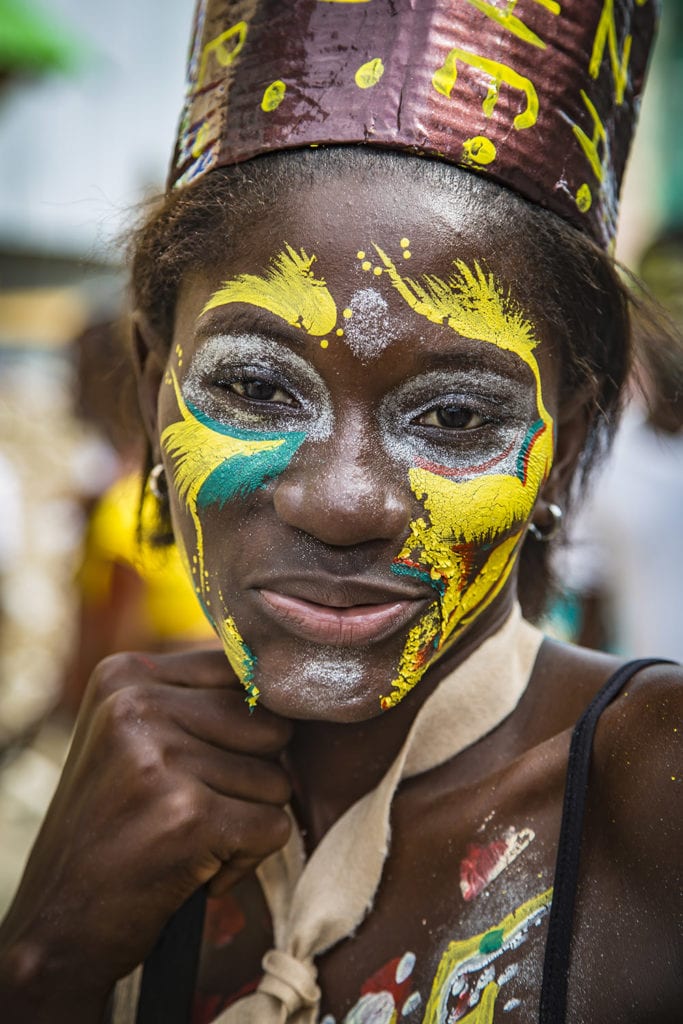
Haitian Vodou communicates through more than words. It uses colour, form, gesture, song, movement, and the body simultaneously to create a structured sacred environment. Body painting is one layer of that system. The vèvè is another. As the Daily IFÁ documentation of vèvè traditions confirms, vèvè (also spelt veve) are intricate ritual symbols drawn on the ground using cornmeal, ash, or flour, serving as spiritual beacons to attract the corresponding lwa’s presence. The tradition has deep West African roots: in the Dahomey Kingdom (present-day Benin), priests drew ritual emblems on the earth during ceremonies. Similar ground-drawing customs existed in Central Africa and among the indigenous Taíno of Haiti.
As Britannica’s documentation of vèvè confirms, vèvè are always drawn near the potomitan, the central pillar of the peristyle, or ceremonial space, which is the magical axis through which the lwa are believed to come into the world of the living. The vèvè is a material representation of the lwa and is considered a sacred point. This matters for understanding body painting because both practices operate on the same logic: the body, like the floor of the temple, becomes a surface through which contact with the spirit world is made possible. The painted body and the drawn vèvè are expressions of the same spiritual intelligence.
As Visit Haiti’s visual guide to vèvè confirms, Papa Legba, the first spirit to manifest during a Vodou ceremony, holds the role of guardian of the gates, allowing spirits to cross into the human world. His vèvè is drawn first at the ceremony’s opening. The whole visual system, including the body markings worn by participants, is oriented around facilitating and marking that crossing. Body painting is not background decoration. It is a participant in the ceremony’s central act.
What the Markings Mean: Colour as Spiritual Code
Colour is one of the most important features of Haitian Vodou body painting, and it is one of the most frequently misread. Each lwa is associated with specific colours, offerings, rhythmic patterns, and symbolic objects. As Grokipedia’s synthesis of Vodou tradition confirms, the vèvè for each lwa incorporates that spirit’s sacred iconography: a heart for Erzulie Freda, the lwa of love; a serpent for Damballa, the ancient serpent spirit associated with wisdom and creation; a cross with skull elements for Ghede, the spirit of death and transitions, understood not as punishment but as an acknowledgement that death is a natural passage. The same specificity applies to body paint.
Colour in Vodou ceremony is not atmospheric. It is communicative. A colour applied to the face or body during ceremony may signal which lwa is being honoured, which spiritual force is present or invoked, or what role the marked person holds within the ritual. This is a coded system that requires initiation and sustained participation to read correctly. An outsider who sees the colour without the code sees aesthetics. A participant who knows the code sees a statement.
The repetition of colour across the ceremony, in the body markings, the altar arrangements, the ceremonial flags, and the garments worn by practitioners, reinforces the visual language of the whole ritual event. As Duke University’s Sacred Art documentation of Vodou flags confirms, Vodou flags include imagery around Catholic chromolithographs, Biblical images, and vèvè, and are made as gifts to the lwa. The flags, the vèvè, the garments, and the body markings are all part of one visual conversation. They are not separate practices that happen to coexist during the ceremony. They are coordinated expressions of the same sacred system.
The Face as Sacred Surface
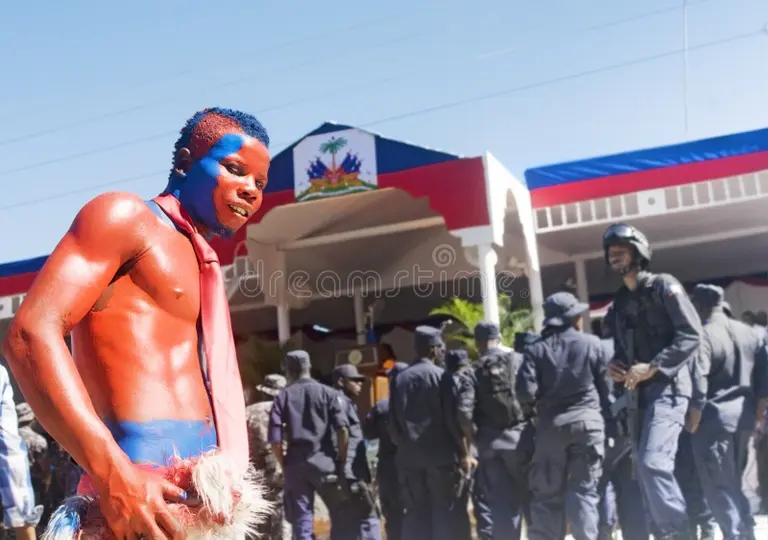
Face painting has a particular importance in Haitian Vodou because the face is the most socially legible part of the body. When the face is marked in ritual, the reading it offers is changed. It is no longer read primarily as individual identity. It is read as ceremonial presence, as spiritual alignment, as a signal of readiness for sacred contact. As Omiren Styles has documented in its analysis of Somali khidaab traditions in diaspora celebrations, the practices that carry the deepest social meaning in diasporic communities are those in which the body’s surface becomes a communication system rather than a personal aesthetic statement. Face painting in Vodou operates on exactly that logic.
The marked face may indicate devotion to a specific lwa, participation in a particular ritual role, or a state of spiritual readiness. It repositions the person wearing it within the ceremony’s social and spiritual structure. The face that was recognisable as an individual before the ceremony becomes visible as a ritual participant. That shift is not theatrical. It is functional. The marking does work within the ceremony’s structure, not for an external audience.
The Body as a Sacred Site
In Haitian Vodou, the body is understood as a place where spiritual communication can happen. The lwa can mount, or temporarily inhabit, the body of a devotee during ceremony, as Grokipedia’s documentation of Vodou practice confirms: possession rites are understood as a direct channel, with drumming, singing, and dance intensifying to encourage the lwa’s montage, allowing direct communication for guidance or resolution of community issues. Within this framework, body painting is preparation. The marked body is a body that has been made ready for spiritual contact: the markings signal that readiness to the community and, within the logic of the tradition, to the lwa themselves.
This is why body painting cannot be separated from the ceremony it is part of. As Omiren Styles has documented in its analysis of Gullah Geechee dress traditions, the visual practices that survive most durably in African diaspora communities are those embedded in social and ceremonial ritual rather than in individual personal expression. Vodou body painting endures because it is structurally integrated into the ceremony it serves. Remove it from the ceremony, and you have a mark. Keep it in the ceremony,y and you have a statement.
Why the Tradition Is Misread
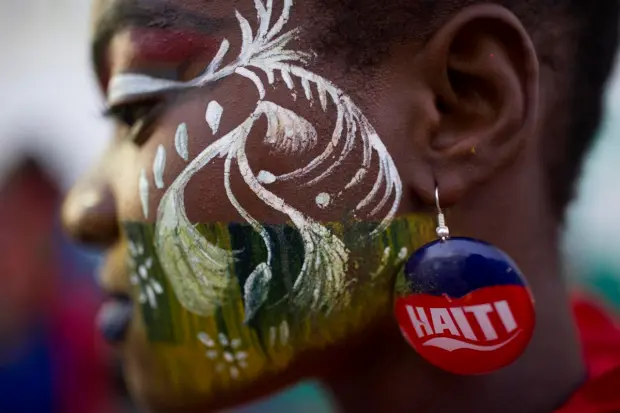
Haitian Vodou body painting is most often misread through exoticism or fear, particularly in representations produced outside Haiti. The misreading happens at the point of extraction. When the body marking is removed from its ceremonial context and displayed as an image without the code required to read it, it becomes available for misinterpretation. What was a spiritual statement within the ceremony becomes visual novelty outside it. As Omiren Styles has argued in their analysis of Haitian Vodou ceremonial dress, this misreading is not accidental. It is built into how the tradition has been represented externally, and it reproduces a colonial-era framing in which African diasporic spiritual practices are treated as exotic performance rather than living theology.
Digital culture accelerates this misreading. An image of a face painted for a Vodou ceremony can circulate online without any of the context required to understand it. The sacred becomes aesthetic. The religious becomes decorative. The specific becomes generic. The misreading does not require bad intent. It only requires absence of context. And context, in digital circulation, is the first thing that disappears.
The Omiren Argument
Haitian Vodou body painting traditions are sacred visual language. They connect the body to spirit, ceremony, and community through colour, symbol, and ritual structure. In Vodou, paint does not decorate the body. It helps the body speak to the sacred. That distinction is the entire argument this piece makes, and it is the argument the tradition has always been making, without requiring external validation. As Omiren Styles has argued, African and African diaspora traditions have always been producing sophisticated cultural work that the mainstream fashion and cultural press has not yet been equipped to receive. Haitian Vodou body painting is part of one of the most structurally complex visual systems in the African diaspora, rooted in West African practice, transformed by Haitian history, and maintained through living ceremonial tradition. The body in Haitian Vodou is not merely a surface. It is a site of communication, memory, and sacred meaning, and it has been that for as long as the tradition has existed.
The body carries the argument. The painting makes it visible. The ceremony is where both belong.
ALSO READ
- Haitian Vodou Ceremonial Dress: What Outsiders Misread as Costume
- Somali Khidaab Traditions in Diaspora Celebrations
- Gullah Geechee Dress Traditions of the U.S. Sea Islands: A Direct Line to West African Craft
- Owambo Dress Traditions in Namibia: The Communities the Fashion Press Rarely Names
Frequently Asked Questions
What is Haitian Vodou body painting?
Haitian Vodou body painting refers to ritual markings applied to the body during ceremonies or other spiritually significant moments. As Grokipedia’s documentation of Vodou practice confirms, the lwa, or spirits central to the religion’s cosmology, are invoked through a combination of visual symbols, drumming, song, dance, and embodied practice. Body markings are part of that system: they are linked to specific lwa through colour, symbol, and ceremonial intent, and they work alongside vèvè, ceremonial garments, and sacred objects to create the structured visual environment of the ceremony.
What is the role of face painting in Haitian Vodou?
Face painting marks the face as part of ritual identity and signals spiritual presence or readiness. The face is the most socially legible part of the body: when it is marked in ritual, its reading changes from individual identity to ceremonial presence. Face paint may indicate devotion to a specific lwa, participation in a particular ritual role, or alignment with the spiritual forces being honoured or invoked during the ceremony. The marking is functional within the ceremony’s structure, not decorative for an external audience.
What is a vèvè and how does it relate to body painting?
A vèvè (also spelt veve) is a sacred symbol drawn in Haitian Vodou ceremonies to represent and invoke specific lwa. As Britannica’s documentation confirms, vèvè are drawn near the potomitan, the central pillar of the ceremonial space, which is the axis through which the lwa are believed to enter the world of the living. As Visit Haiti’s visual guide to vèvè confirms, each lwa has a specific vèvè: Papa Legba, guardian of the gates, has his drawn first at the ceremony’s opening. Body painting and vèvè share the same logic: both make the body or the space a sacred surface through which spiritual contact is facilitated.
Are Vodou body markings decorative?
No. They carry symbolic, spiritual, and ceremonial meaning. Colour, pattern, and placement communicate which lwa are being honoured, what ritual role the marked person holds, and the spiritual state of the ceremony itself. These are not aesthetic choices made for visual effect. They are statements made within a structured sacred system that requires knowledge and context to read correctly. Removed from that context, the markings may appear decorative. In context, they are functional.
Why are Haitian Vodou body painting traditions often misunderstood?
Because the misreading is built into how the tradition has been represented externally, as Omiren Styles has documented, African diasporic spiritual practices have historically been framed by outsiders as exotic performance rather than living theology. When Vodou body painting is extracted from its ceremonial context and circulated as an image without explanation, the sacred becomes aesthetic, and the religious becomes decorative. Digital culture accelerates this process. A photograph or short video can circulate widely without the context needed to understand it, leaving the image open to misinterpretation.
What is the connection between Haitian Vodou and West African spiritual practice?
Haitian Vodou is rooted in the spiritual practices brought to Haiti by enslaved peoples from West and Central Africa, particularly from the Fon, Kongo, and Yoruba ethnic groups, blending with elements of Catholicism and indigenous Taíno influences during the colonial period. As the Daily IFÁ documentation of vèvè traditions confirms, the vèvè tradition has direct roots in the Dahomey Kingdom (present-day Benin), where priests drew ritual emblems on the earth during ceremonies. Similar ground-drawing customs existed in Central Africa. The Vodou visual system, including body painting, vèvè, ceremonial flags, and garments, is the product of that West African inheritance, transformed by the specific conditions of Haitian history and maintained through living ceremonial tradition.