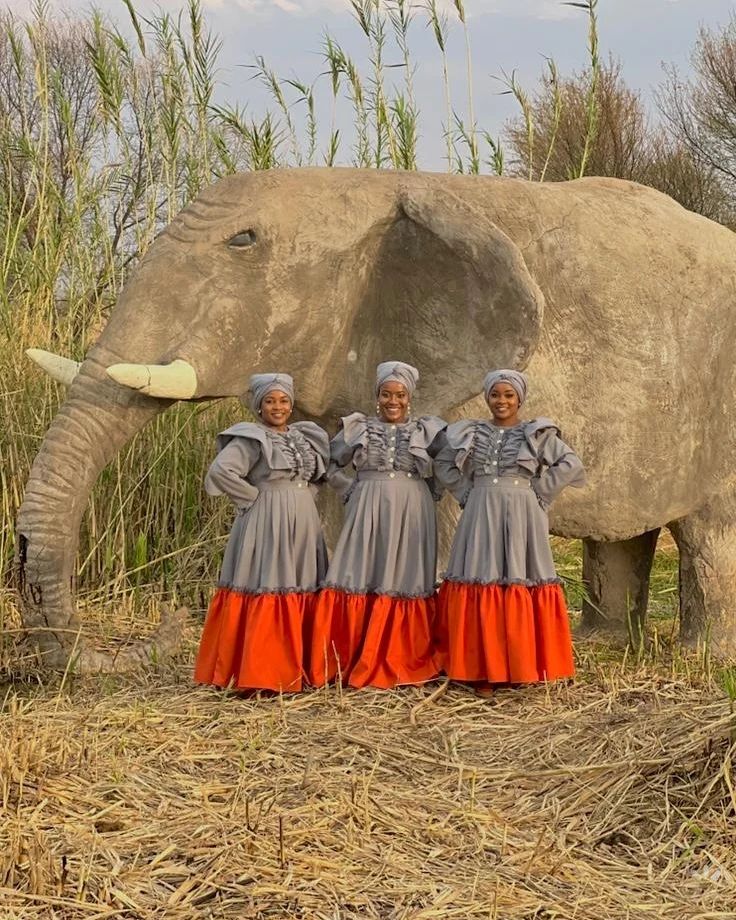
The fashion press does not document Damara dress traditions because it documents what the fashion industry has already decided to be interested in. That is the honest version of the gap this article addresses. The Damara, or ǂNūkhoen, are one of Namibia’s oldest communities, speakers of Khoekhoegowab, one of the Khoe-Kwadi languages that connect them to Indigenous communities across southwestern Africa. Their women’s dress tradition, characterised by layered skirts, structured bodices, decorative sleeves, and carefully coordinated head coverings, is as visually specific and culturally dense as any of the Namibian dress traditions that do appear in international coverage. The reason it is less documented is not that it is less significant. It is that the fashion industry’s process of noticing African dress traditions follows the logic of its own commercial interests rather than the logic of cultural importance.
As Omiren Styles has argued in its analysis of African fashion’s global position, the traditions that institutional recognition discovers were never absent. Damara dress has been worn, maintained, adapted, and passed between generations in the Kunene, Erongo, and Otjozondjupa regions of Namibia regardless of whether international fashion journalism was watching. This piece documents what is there.
Discover Namibia’s Damara dress traditions: from layered garments and head coverings to the colonial history, cultural identity, and community memory behind the ǂNūkhoen clothing tradition.
Who the Damara Are
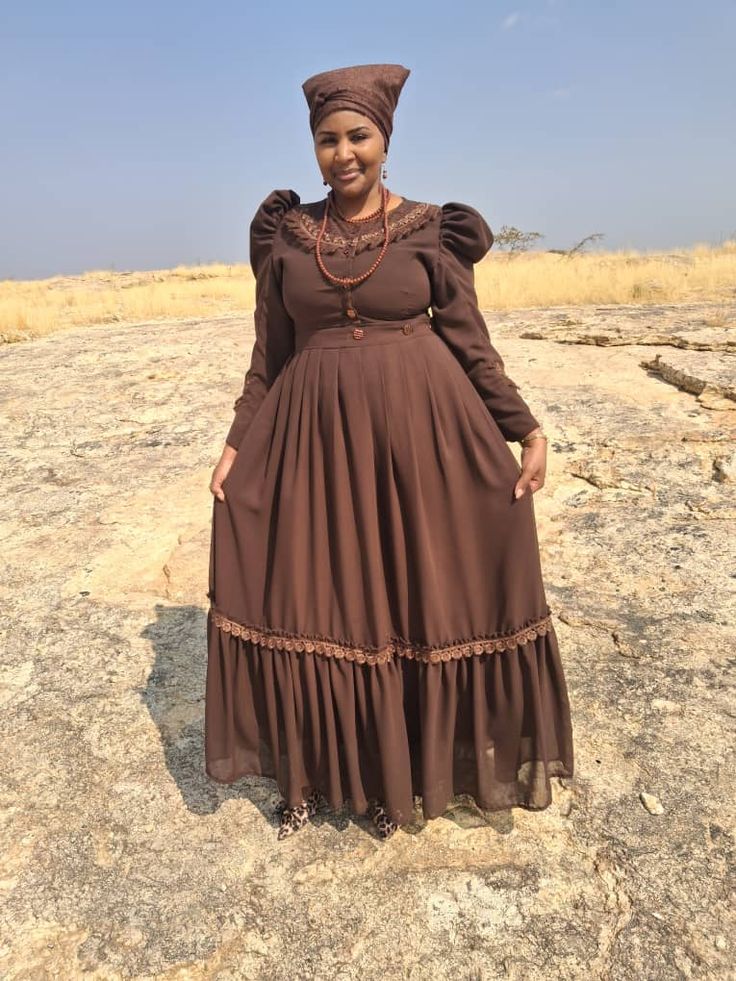
The Damara, formally known as the ǂNūkhoen, are primarily associated with Namibia’s northwestern and central regions: Kunene, Erongo, Otjozondjupa, and parts of central Namibia. Their language, Khoekhoegowab, belongs to the Khoe-Kwadi language family and connects them with the Nama and other Indigenous communities of southwestern Africa. Linguistically and culturally, this connection is significant: Khoekhoegowab is one of the click languages of the region, carrying a phonological and cultural history that predates European presence in southern Africa by centuries.
The Damara traditionally practised pastoralism, developing cultural systems closely connected to livestock, land, language, and community relationships. Like all Indigenous communities in the region, Damara identity has been shaped by migration, colonial encounters, and deliberate efforts to preserve cultural knowledge through periods of disruption. Dress is one of the most visible expressions of that preservation. As Omiren Styles has documented in its analysis of how colonial law targeted African dress, the historical relationship between colonial administrations and African dress was never neutral: clothing was consistently used as a site of cultural pressure, and its continuation against that pressure is evidence of deliberate cultural maintenance, not simply habit.
What Damara Dress Is: The Garment System
Long, layered dresses, structured silhouettes, decorative sleeves, aprons or outer layers, and distinctive head coverings characterise Damara women’s traditional clothing. Unlike some African dress traditions that rely primarily on locally woven textiles or beadwork, Damara dress reflects a specific historical process: the incorporation and transformation of European-style clothing introduced during the colonial and missionary periods of the nineteenth and early twentieth centuries into a distinctly Damara cultural form.
This process is not unique to the Damara. The Herero women’s dress tradition in Namibia underwent a comparable transformation: Victorian-era missionary clothing was adopted and adapted into a form that is now among the most visually recognised African dress traditions in international coverage. The difference in recognition between Herero and Damara dress is not explained by the degree of cultural transformation or the depth of cultural investment. It is explained by the specific pathways through which each tradition entered international visibility. As Omiren Styles has documented in its analysis of Toubou and Sara dress traditions in Chad, the fashion press tends to document the traditions it already has a frame for, and frames are built through prior coverage rather than through cultural significance.
What the transformation produced in Damara dress is worth naming specifically. Damara women took the long silhouette of the missionary era, its full-length coverage and layered construction, and made decisions about colour coordination, head covering style, and decorative detail that reflect specifically Damara aesthetic choices rather than a generic adoption of Victorian dress. The resulting garments are culturally specific in their visual identity while being historically honest about the material from which that identity was built. That honesty is itself part of what the clothing carries.
The Historical Process: What Damara Dress Records
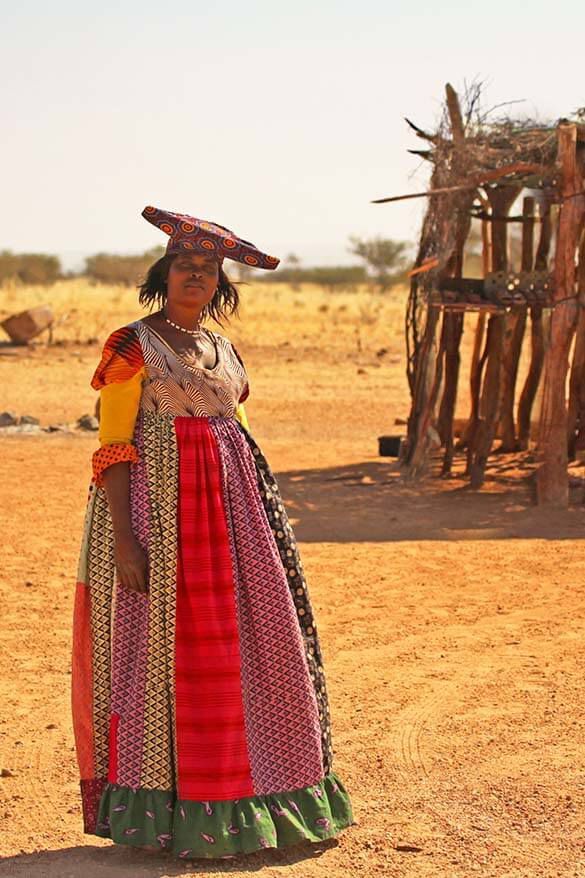
Before European contact, Damara clothing was shaped by the community’s pastoral environment. Garments were made from animal hides and locally sourced materials, focused on practical protection and adaptation to Namibia’s climate, and communicated social identity, age, and community belonging through their form and adornment. The transformation that occurred during the colonial period was neither simple adoption nor simple resistance. As Omiren Styles has documented in its analysis of how colonial dress law operated, Indigenous communities across Africa did not passively receive missionary clothing codes. They negotiated with them, adapted them, and in many cases produced something distinctly their own from materials and silhouettes that arrived with foreign intent.
The Damara dress tradition records that negotiation visibly in its form. The long skirt and the structured bodice are legible as historically European in origin. The colour systems, the head covering conventions, and the decorative choices that distinguish one occasion from another are legible as specifically Damara in their cultural logic. Both layers are present simultaneously, and both layers are part of what the garment means. To describe Damara dress as “Victorian-influenced” without the second part of that sentence is to leave out the more important half of the story.
Damara Dress in Context: Namibia’s Multiple Dress Traditions
Namibia is home to many communities with distinct clothing traditions, and Damara dress is most useful when understood in relation to its neighbours rather than in isolation. The table below names the most documented Namibian community dress traditions for reference.
| Community | Dress tradition |
| Damara (ǂNūkhoen) | Layered dresses, head coverings, historically transformed Victorian-era silhouettes with specifically Damara colour and decorative logic |
| Herero | Elaborate Victorian-style dresses and the distinctive otjikaiva horn-shaped headdress, the most internationally documented Namibian dress tradition |
| Himba | Leather garments, ochre-based body adornment, metal and shell jewellery; a tradition that preceded and continues alongside European-contact dress influences |
| Ovambo | Textile traditions, embroidery, and ceremonial clothing that reflect the agricultural and trading economy of northern Namibia |
The differences between these traditions are not aesthetic alone. Each reflects a different historical experience, a different relationship with the colonial period, and a different pathway into the present. The international coverage gap between Herero and Damara dress, in particular, is worth examining. Both traditions emerged from comparable historical processes, and both are worn today as active expressions of community identity. The Herero dress entered international fashion consciousness partly through its visual distinctiveness and partly through the specific historical narrative of the Herero genocide, which gave the dress a documentation trail that international journalism could follow. Damara dress has not been attached to an equivalent international narrative, which is a statement about the asymmetry of international attention, not about the tradition itself.
What Damara Dress Communicates
Damara dress functions as a social and ceremonial communication system. Traditional attire is worn during cultural celebrations, community gatherings, heritage events, important ceremonies, and public representations of Damara identity. The occasions for which specific garments are prepared and the conventions that govern their presentation signal age, social position, and the nature of the event without requiring verbal explanation.
For younger generations in the community, the dress is also where cultural knowledge transfers. Wearing traditional clothing is the most visible form of learning what the clothing means: which occasions require it, how it is constructed and cared for, what the head covering style communicates, and what the colour choices signal. That transmission is not abstract. It happens through the making and wearing of specific garments at specific occasions, which is why the continuation of community events at which traditional dress is expected is itself a form of cultural education.
The Omiren Argument
The fashion press rarely names Damara dress traditions because it documents what the fashion industry has already decided is worth documenting. That decision has been driven by commercial logic rather than cultural logic. The traditions that international fashion journalism covers most consistently are those that have already entered international markets, appeared in major museum collections, or been attached to narratives that Western audiences recognise as compelling. Damara dress has not been attached to any of those entry points, and that is the accurate explanation for its absence from international coverage rather than any claim about the tradition’s significance or quality. As Omiren Styles has argued in its analysis of African fashion cities’ structural growth, the question of which African communities receive documentation from international fashion media is not answered by the depth or quality of the tradition. It is answered by which traditions have been made commercially legible to a press that operates within the logic of the industry it covers.
Damara dress is specific, historically honest, and culturally dense. It records the historical experience of the ǂNūkhoen across centuries of change. It documents the specific aesthetic decisions a community made about how to maintain its visual identity through the materials and forms available to it. That is a more interesting story than most international fashion coverage gives its readers credit for wanting. As Omiren Styles has documented in its analysis of the Gondar Amhara dress tradition, the dress traditions of African communities whose names are rarely in the fashion press are not less sophisticated or less significant than those that appear in Vogue. They are differently visible. The difference is the press’s problem, not the tradition’s.
Damara dress has been there the whole time. The fashion press arrived late and called the tradition overlooked, which is the same move the beauty industry makes when it calls African botanical discoveries. The dress was not waiting to be noticed. It was being worn.
OMIREN CULTURAL RECORD
| Community | Damara (ǂNūkhoen) |
| Country | Namibia |
| Main regions | Kunene, Erongo, Otjozondjupa, central Namibia |
| Language | Khoekhoegowab (Khoe-Kwadi language family) |
| Defining features | Layered dresses, decorative sleeves, head coverings, coordinated colour systems |
| Historical process | Indigenous traditions transformed through colonial-era silhouettes into a specifically Damara cultural form |
| Cultural role | Identity, ceremony, intergenerational knowledge transfer, community representation |
ALSO READ
- Chitenge as a Bridal Statement Fabric in Zambia
- Malagasy Lamba Cloth: Why Its Handwoven Heritage Aligns With the Future of Luxury Resortwear
Frequently Asked Questions
What is traditional Damara dress and who are the Damara people?
The Damara, formally known as the ǂNūkhoen, are one of Namibia’s oldest communities, primarily located in the Kunene, Erongo, and Otjozondjupa regions. Their language, Khoekhoegowab, belongs to the Khoe-Kwadi language family, connecting them with other Indigenous communities of southwestern Africa. Long layered dresses, structured bodices, decorative sleeves, and distinctive head coverings characterise traditional Damara dress. The tradition reflects a specific historical process through which colonial-era silhouettes were transformed into a specifically Damara cultural form rather than simply adopted from outside. As Omiren Styles has documented, the relationship between colonial dress influences and African community identity is never one of passive adoption.
Why does Damara dress look Victorian in style?
Damara women’s dress incorporates long silhouettes and layered construction that reflect the clothing styles introduced by European missionaries during the nineteenth and early twentieth centuries. The Damara community transformed these materials and forms into a distinctly Damara cultural expression: the colour systems, head covering conventions, and decorative choices that distinguish one occasion from another reflect specifically Damara aesthetic logic rather than a generic Victorian inheritance. Both the historical origin and the cultural transformation are part of what the dress carries. Describing it as Victorian-influenced without the second part leaves out the more important half of the story.
How does Damara dress differ from Herero dress in Namibia?
Both Damara and Herero dress emerged from comparable historical processes involving the transformation of colonial-era clothing into distinctly community-specific forms. Herero dress is known internationally for elaborate Victorian-style dresses and the distinctive horn-shaped otjikaiva headdress, and has received significantly more international documentation than Damara dress. The coverage gap reflects asymmetries in international attention rather than differences in the depth or cultural significance of the two traditions. Damara dress is characterised by layered dresses and head coverings with specifically Damara colour and decorative logic.
What does Damara dress communicate within the community?
Damara dress functions as a social and ceremonial communication system. Specific garments are prepared for cultural celebrations, community gatherings, heritage events, and important ceremonies. The conventions governing head covering style, colour choices, and occasion-specific dress signal age, social position, and the nature of the event. For younger generations in the community, wearing traditional clothing is also the primary pathway through which cultural knowledge transfers: the meaning of specific garments is learned through their preparation and use at occasions where that meaning is in operation.
Why is Damara dress underrepresented in international fashion coverage?
Because international fashion journalism documents what the fashion industry has already decided is worth documenting, and that decision is driven by commercial logic rather than cultural logic. Traditions that have entered international markets, appeared in major museum collections, or been attached to narratives that Western audiences recognise as compelling receive coverage. Damara dress has not been attached to any of those entry points. That is the accurate explanation for its absence from international coverage. As Omiren Styles has argued, African fashion traditions have always been producing sophisticated cultural work without external validation. The documentation gap is the press’s problem, not the tradition’s.