A home-based African fashion label can launch for a few hundred dollars equivalent, while a globally benchmarked launch often costs $15,000 to $50,000 or more. The difference is not just budget size. It is the kind of business each budget is meant to build. The useful question is not which number is correct, but which number matches what a specific founder is actually trying to do. Getting that wrong in either direction is expensive: underfunding a wholesale-access ambition, or overcapitalising a business that is running profitably on WhatsApp and Instagram and does not need more infrastructure than it currently has.
Nigeria’s fashion e-commerce market reached $544 million in 2025, with ₦49 million flowing through the digital fashion category alone in early 2026, according to WithinNigeria’s July 2026 industry analysis. That market exists and is growing. Whether a specific founder’s launch budget is calibrated to serve it correctly is the question this report addresses.
A home-based African fashion label can launch for a few hundred dollars equivalent, while a globally benchmarked launch often costs $15,000 to $50,000+. Here’s what separates the two and when founders need to bridge the gap.
What It Costs in Lagos Right Now
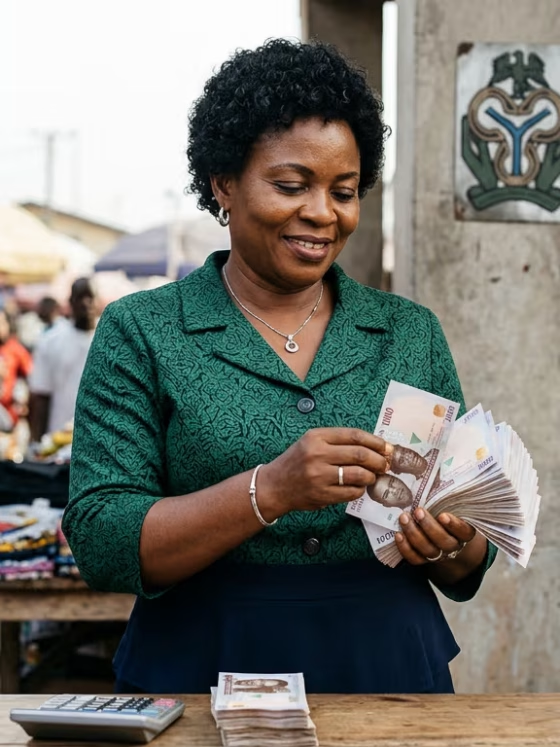
The clearest, most current local breakdown comes from WithinNigeria’s July 2026 guide to starting a ready-to-wear business. A founder producing at home with one tailor and selling small batches through WhatsApp can start for between ₦50,000 and ₦150,000. A more complete launch, a full ten-style collection with professional photography, branded packaging, and a proper Instagram presence before the first sale, needs closer to ₦500,000 to ₦800,000. A second independent Nigerian source, African Things, gives a broadly consistent range of ₦50,000 to ₦300,000 for a home-based launch, corroborating the lower band rather than contradicting it.
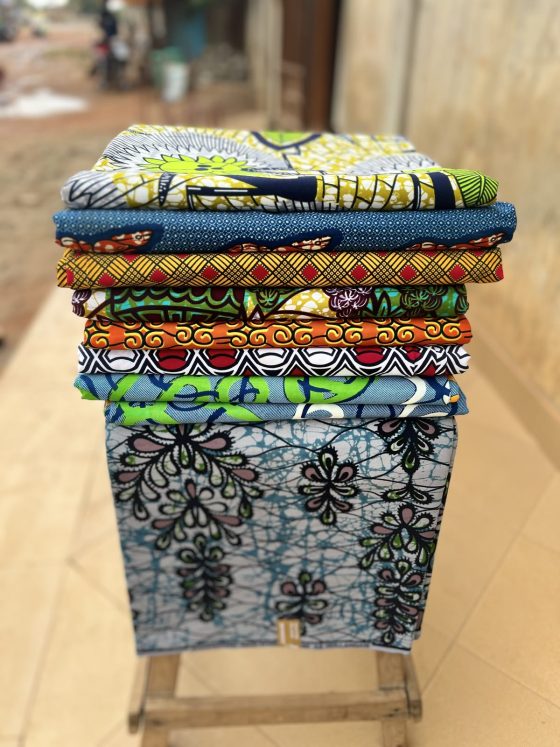
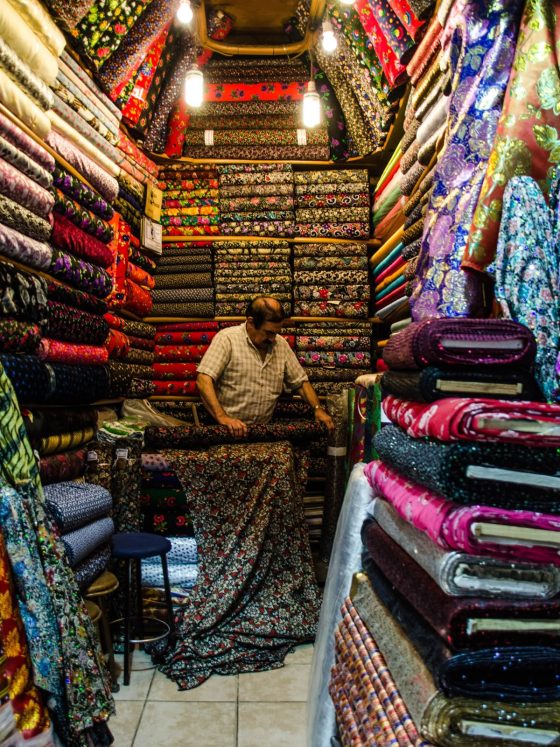
The WithinNigeria guide names fabric as the largest early line item with real market specificity: a six-yard Ankara print runs between ₦7,500 and ₦20,000 at Oshodi market depending on grade, with medium-grade fabric from around ₦3,600 for six yards at entry level. The guide also states something worth quoting precisely rather than paraphrasing: “What kills brands is starting with the budget of the first model but the expectations of the second.” Photography is named explicitly as a production cost rather than an optional spend: “Photography is not vanity spending. A badly photographed product can actively damage the brand’s perception even among people who would have been potential customers.”
Input costs have risen significantly. As the WithinNigeria analysis documents, dull face and taffeta lining prices increased over 50% compared to prior years, and thread packs that sold for ₦500 now sell for ₦800 to ₦1,000. A founder whose cost sheet was built on last year’s fabric prices is absorbing a loss on every piece. As Omiren Styles has documented in its analysis of why fashion brands misread the Nigerian market, Nigeria’s fashion market operates through informal channels whose specific economics require regular verification rather than a set-and-forget approach.
What It Costs in Nairobi Right Now
Kenyan guidance takes a more explicitly bootstrapped approach. Delight.ac.ke’s 2026 guide to starting a Kenyan fashion brand on a small budget names three fabric-sourcing markets specifically: Gikomba, Kamukunji, and Eastleigh. It recommends small-quantity purchases, working with local tailors rather than owning a workshop, and a pre-order production model where customer payment comes before production begins. Facebook and Instagram ad budgets of KSh 500 to 1,000 per week are named as a viable entry-level marketing spend.
One genuine point of disagreement between the Nigerian and Kenyan sources is worth flagging rather than smoothing over. The Kenyan guide treats a good smartphone with lighting as sufficient for product photography at the small-budget level. The Nigerian WithinNigeria guide states the opposite explicitly. Both are legitimate positions depending on market and ambition. Still, they diverge on a consequential line item: a founder should not assume they are getting a single unified African fashion startup playbook. The two markets have different guidance on what baseline quality looks like, and the founder’s decision on which standard applies should be intentional rather than accidental.
The Global Benchmark: What $15,000 to $50,000 Actually Buys
Set against these local figures, AJG Fashion Consulting’s international breakdown of a professionally launched collection gives category-by-category detail that functions as a comparison point, even though it is not Africa-specific:
- Product development (tech packs, pattern making, prototypes, fittings): $2,000 to $8,000
- Sampling: $500 to $3,000
- Materials and trims: $2,000 to $10,000
- Production: $5,000 to $20,000 or more depending on unit count and factory location
- Branding and packaging: $1,000 to $5,000
- Marketing (press, wholesale outreach): $2,000 to $10,000
- Operations (website, inventory, shipping): $1,000 to $3,000
A separate leaner estimate from AKCN’s 2026 guide to streetwear launches puts a realistic minimum professional launch at $3,000 to $10,000, with a worked example landing around $7,500 for a small first collection using small-batch production. That figure sits at the high end of WithinNigeria’s Lagos “proper launch” range once converted, which suggests the gap between local-market-standard and global-wholesale-standard costs narrows meaningfully at this specific tier rather than being a fixed chasm.
Why the Gap Exists: Two Different Outputs
The difference between a ₦500,000 to ₦800,000 Lagos launch and a $15,000 to $50,000 globally benchmarked one is not ambition. It is what specific capability each budget is designed to produce.
The local-market figures are optimised for getting a first collection in front of a WhatsApp or Instagram audience already primed to buy: minimal tech-pack formality, small or made-to-order production runs, local tailor relationships rather than formal factory contracts, photography scaled to Instagram rather than to a wholesale buyer’s lookbook. The global consultant figures are optimised for a different output entirely: tech packs and graded specs precise enough for a factory that has never met the designer to execute correctly, sampling rounds robust enough to survive a buyer’s quality inspection, and a marketing budget built for press and wholesale outreach rather than direct-to-follower sales. As Omiren Styles has documented in its analysis of the difference between e-commerce reach and physical wholesale placement, these are not the same commercial objective.
A founder launching for ₦500,000 in Lagos is building exactly the kind of brand equipped to sell through Instagram DMs and WhatsApp orders, and that is a legitimate, sufficient endpoint for many founders in a market that generated $544 million in fashion e-commerce in 2025. A founder aiming for the kind of international stockist relationship documented in this project’s coverage of the African designers buyers should be watching in 2026 is, whether they have priced it out explicitly or not, building toward the global benchmark, because that is what a wholesale buyer’s minimum quality and consistency expectations actually require underneath the surface.
When to Bridge: The Investor and Founder Reading
For founders, the practical question is: when does the local-market budget stop being the right tool? The answer, named precisely rather than as a general principle, is when the business is pursuing any of the following: international wholesale accounts, retail partnerships requiring quality-control documentation, physical stockist placement abroad, or the Nigeria Fashion Week–Bizness Group pipeline into Walmart’s retail ecosystem covered in Omiren Styles’ designers-to-watch reporting. All of these require tech-pack precision, production consistency, and quality-control infrastructure that the WhatsApp-order model budget is not designed to fund.
For investors and evaluators, the practical question is a due-diligence one: does the capital a founder is requesting match the business they say they are building? A founder requesting $5,000 to “go international” is requesting roughly a third of even the leanest global-standard launch budget identified here. That mismatch is worth probing directly rather than assuming the founder has found efficiencies the consultants missed. Equally, a founder running a ₦700,000 home-based Lagos operation profitably at that scale does not automatically need, or benefit from, being pushed toward a $30,000 global-standard budget if their actual customer base and sales channel remain Instagram and WhatsApp. That capital would be solving a problem the business does not currently have. As Omiren Styles has argued in its analysis of African fashion investment gaps, the distinction between funded and unfunded African fashion businesses is rarely about underlying business quality. It is frequently about whether the capital requested matches the commercial model being built.
What This Report Cannot Confirm
In keeping with the standard applied throughout Omiren Styles’ industry coverage, the limits of this research are stated directly rather than smoothed over.
None of the African-specific sourcing found here provided a formal, itemised line-item breakdown comparable to AJG’s category-by-category global figures. The Nigeria and Kenya numbers above are genuine and specific, but less granular than the international consultant data they are being compared against. A more rigorous version of this report would commission or locate an equivalent breakdown from an African fashion business consultant working specifically at the mid-tier: the range between home-based WhatsApp selling and full international wholesale readiness. That is precisely the range most founders and investors reading this report are operating in, and it is the range this research pass could not source with full confidence. The gap in the sourcing is named rather than papered over because naming it is more useful to the reader than pretending the comparison is more equal-footing than it is.
ALSO READ
- African Designers Buyers Should Be Watching in 2026
- The Difference Between E-Commerce Reach and Physical Wholesale Placement
- Why Every Major Fashion Brand Is Trying to Understand Nigeria and Getting It Wrong
- Why No Serious Investor Has a Pan-African Fashion Portfolio
Frequently Asked Questions
How much does it cost to start a fashion brand in Nigeria in 2026?
A home-based operation selling through WhatsApp can launch for ₦50,000 to ₦150,000. A more complete launch with a full ten-style collection, professional photography, and branded packaging runs closer to ₦500,000 to ₦800,000, according to WithinNigeria’s July 2026 industry guide. A second independent source, African Things, corroborates the lower band at ₦50,000 to ₦300,000. Fabric is the largest line item: six yards of Ankara at Oshodi market runs ₦3,600 at entry level up to ₦20,000 for higher grades. Input costs have risen significantly in 2025 to 2026, with lining fabric and thread prices up 30 to 50 per cent year-on-year.
How does this compare to international fashion launch costs?
Significantly higher. Global fashion consultants put a professionally launched collection at $15,000 to $50,000 or more, with costs across product development, sampling, materials, production, branding, marketing, and operations at a scale built for wholesale and international press outreach rather than direct social media sales. Leaner estimates put a minimum professional launch at $3,000 to $10,000 for a small first collection using small-batch production, a figure that sits at the high end of the Lagos “proper launch” range once converted. As documented by AJG Fashion Consulting, the difference is about what specific capability the budget is designed to produce, not just about the headline number.
What is the cheapest way to source fabric for a new African fashion brand?
In Nigeria, Oshodi market offers six yards of Ankara fabric from around ₦3,600 at entry-level grade. In Kenya, Delight.ac.ke’s 2026 guide names Gikomba, Kamukunji, and Eastleigh markets specifically as budget-friendly sourcing points for small-quantity fabric purchases, recommending small-batch buying with local tailors rather than setting up an owned workshop.
When does a founder need to move from a local-market budget to a global-standard one?
When targeting international wholesale accounts, retail partnerships requiring quality-control documentation, physical stockist placement abroad, or the Nigeria Fashion Week–Bizness Group pipeline into Walmart’s retail ecosystem. These require tech-pack precision, production consistency, and quality-control infrastructure that the WhatsApp-order model budget is not designed to fund. As Omiren Styles has documented, e-commerce reach and physical wholesale placement are different commercial objectives requiring different budget structures. The decision to bridge should be deliberate and tied to a specific target outcome rather than to general ambition.
What does this report not cover, and why?
None of the African-specific sourcing in this research pass provided a formal, itemised line-item breakdown comparable to the international consultant data. The Nigeria and Kenya numbers are genuine and specific, but less granular than the global benchmarks they are compared against. A more rigorous version of this report would locate or commission an equivalent breakdown from an African fashion business consultant working specifically at the mid-tier between home-based WhatsApp selling and full international wholesale readiness. That gap is named here rather than papered over because naming it is more useful to the reader than overstating the comparison.