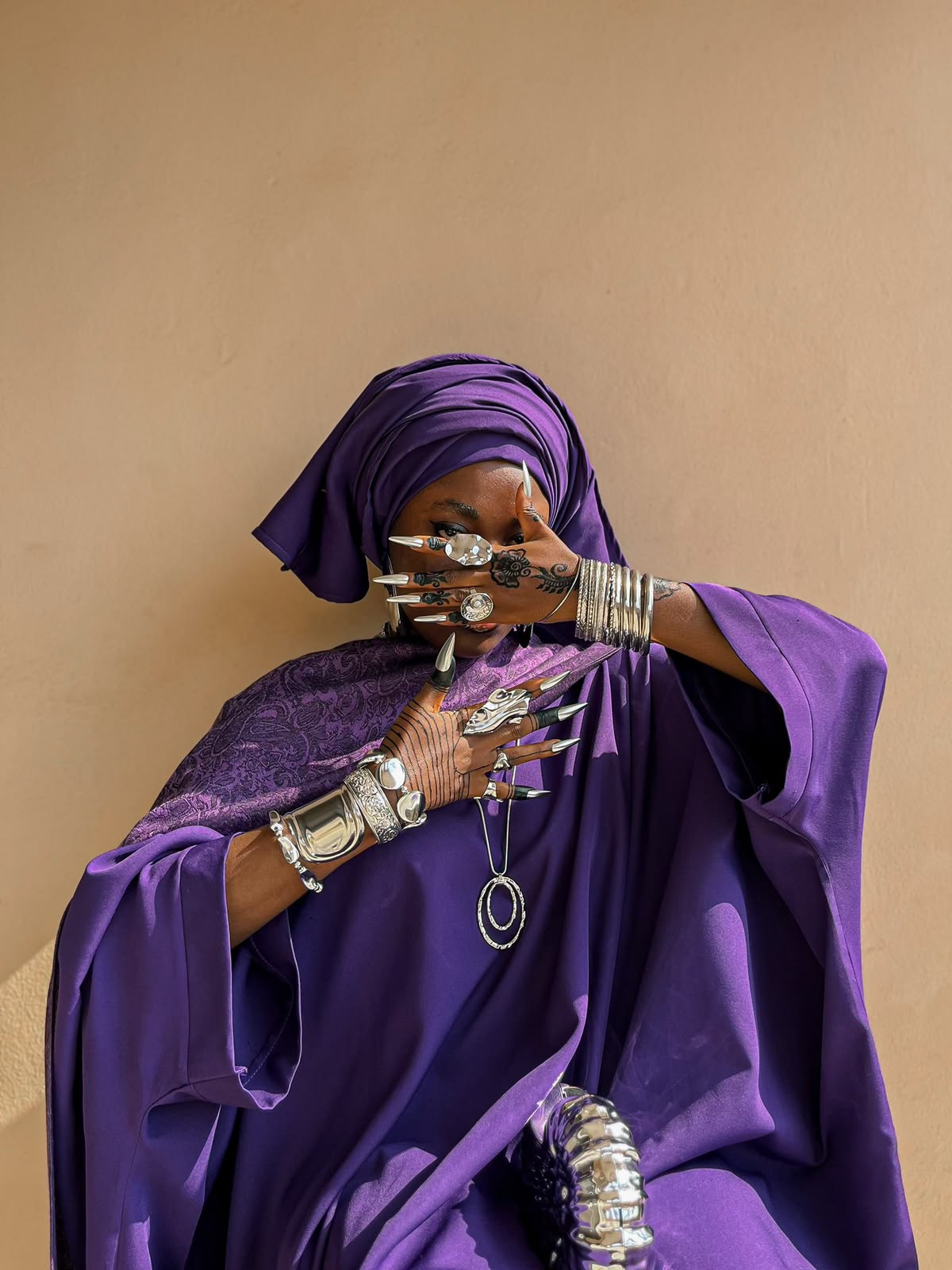
Khidaab is Somali henna: a dark paste applied to the hands and feet before weddings, naming ceremonies, and Eid celebrations, left to dry until it stains the skin a deep auburn that lasts for weeks. That is the simple description. What the description misses is the room. Khidaab has never been only about the person being decorated. It is about the women gathered around her, the waiting, the conversation that fills the hours while the paste dries, and the collective decision-making about pattern placement that carries the knowledge of what belongs where. That room, and what happens inside it, is what travels with Somali women across the diaspora into Minneapolis, London, Toronto, and Stockholm.
Identity in Somali beauty culture is something you do together. That is the thesis of this piece, and the khidaab gathering is where it is most visibly demonstrated. As Omiren Styles has documented in its analysis of African hair traditions as cultural memory, the practices that survive diaspora most durably are those embedded in social ritual rather than individual practice. Khidaab survives because it requires other people.
Explore how Somali khidaab traditions continue in diaspora celebrations, where henna remains a ritual of beauty, memory, and communal joy.
What Khidaab Is
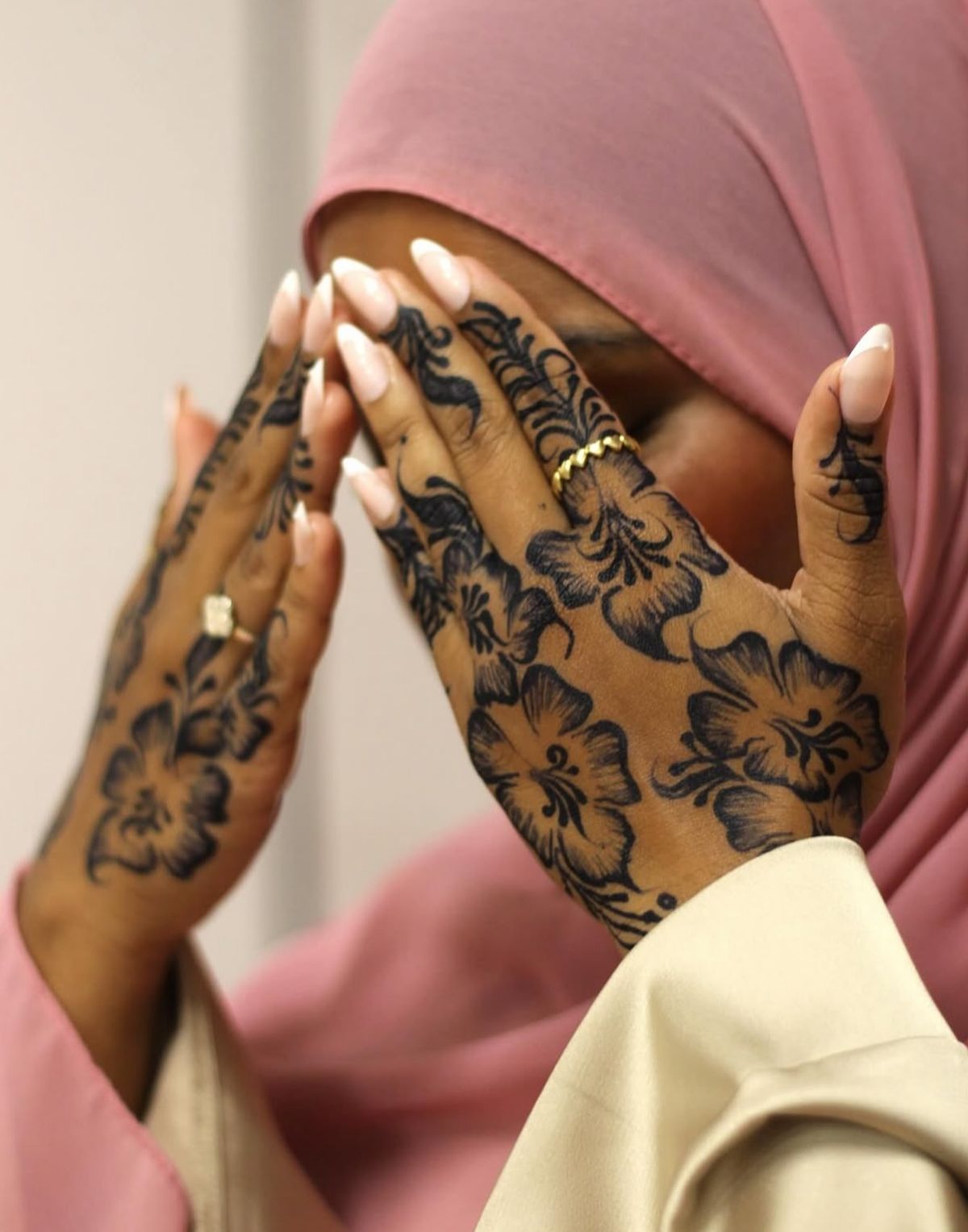
Somali henna traditions draw from a broader East African and Horn of Africa practice in which natural henna paste is applied to the skin in geometric and floral patterns. Somali khidaab tends toward bold, dense coverage on the palms and soles, with patterns that vary by region, family, and the occasion being marked. The word khidaab itself refers to a dye or colouring in Somali, and its application is part of a wider set of adornment practices that includes eye kohl and perfumed oils that together make up the formal beauty language of Somali women’s ceremonial dress. As Omiren Styles has documented in its analysis of Habesha hairstyling traditions in Ethiopian and Eritrean communities, the beauty traditions of the Horn of Africa carry social meaning that is legible within the communities that practise them and that the mainstream beauty press has consistently underestimated.
The darkness of the final stain is read within Somali culture as an indicator of the quality of the application: the longer the paste is left on and the better it is sealed during drying, the deeper and longer-lasting the colour. Experienced khidaab practitioners know how to read a result and have developed techniques across generations for maximising stain intensity. That knowledge is transmitted in the gathering, not in a classroom.
How It Travels in Diaspora
Somali diaspora communities in North America and Europe have maintained khidaab as a functional practice rather than a heritage performance. In cities with large Somali populations, shops sell henna paste alongside the cones and oils needed for application. Professional khidaab artists operate by appointment and word of mouth within Somali community networks. The practice is not performed for external audiences or documented for mainstream beauty media. It continues because the occasions that require it- Somali weddings, Eid celebrations, naming ceremonies for newborns- have continued in the diaspora with the same structure and the same social expectations as they carried in Somalia. As Omiren Styles has documented in its analysis of diaspora fashion diplomacy in Britain, the cultural practices that persist most durably in the diaspora are those tied to a community’s social calendar rather than to any individual’s personal decision to maintain them.
The adaptation that has occurred is material and technical rather than cultural. Diaspora practitioners use commercial henna paste alongside traditionally prepared mixtures. They apply it to occasions that sometimes combine Somali ceremonial practice with civil registry requirements or venue logistics that would not exist in Somalia. The patterns adapt to the preferences of younger women who have grown up in the diaspora and bring different aesthetic references into the conversation. What does not adapt is the social structure of the application: it remains a communal act.
The Wedding Gathering as the Emotional Anchor
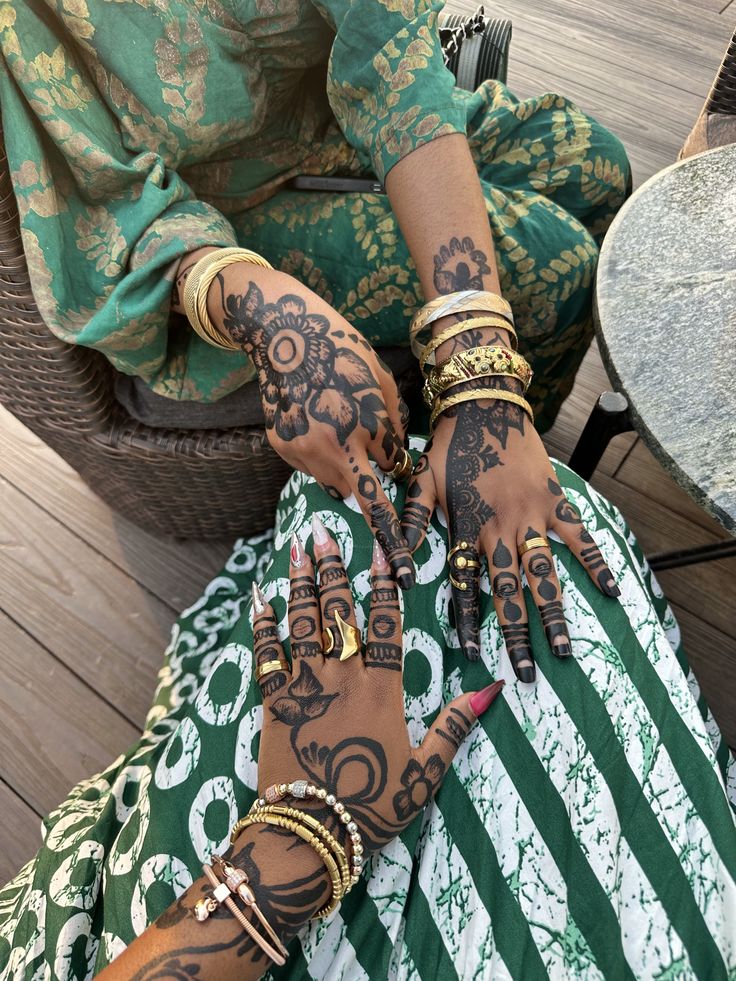
The night before a Somali wedding is when khidaab shows its full cultural weight. Women gather, usually at the bride’s family home or a hired space, for an evening that combines the practical work of application with music, food, and the specific kind of conversation that only happens when a community of women assembles to mark a threshold moment. The bride sits at the centre of the room. Skilled practitioners work on her hands and feet while the gathering moves around her. The paste is applied, and then the waiting begins.
Henna creates stillness before the ceremony. That phrase carries the specific quality of the wedding night gathering: the hours during which the paste must sit undisturbed create a pause in the bride’s preparation that is social by design. She cannot move freely, cannot perform practical tasks, and is held in place by the drying application while the women around her talk, sing, and recall previous occasions at which they have all been in the same room together. The gathering is the ceremony as much as the henna is. As Omiren Styles has documented in its analysis of Setswana wedding dress as a ceremonial system, the most culturally specific dress and adornment traditions in African communities are those whose significance is carried by the ceremony of preparation rather than by the finished object alone. The khidaab gathering is exactly that: it is the preparation, and the preparation is the point.
For younger women in the diaspora who were born outside Somalia, the wedding gathering is also the space where the knowledge transfers. They watch the application, learn which patterns belong to which occasions, and absorb the social meaning of khidaab through participation before they can ever articulate it. The tactile ritual of the gathering is the curriculum. Identity is learned through the hands, not the classroom.
What Khidaab Expresses Socially
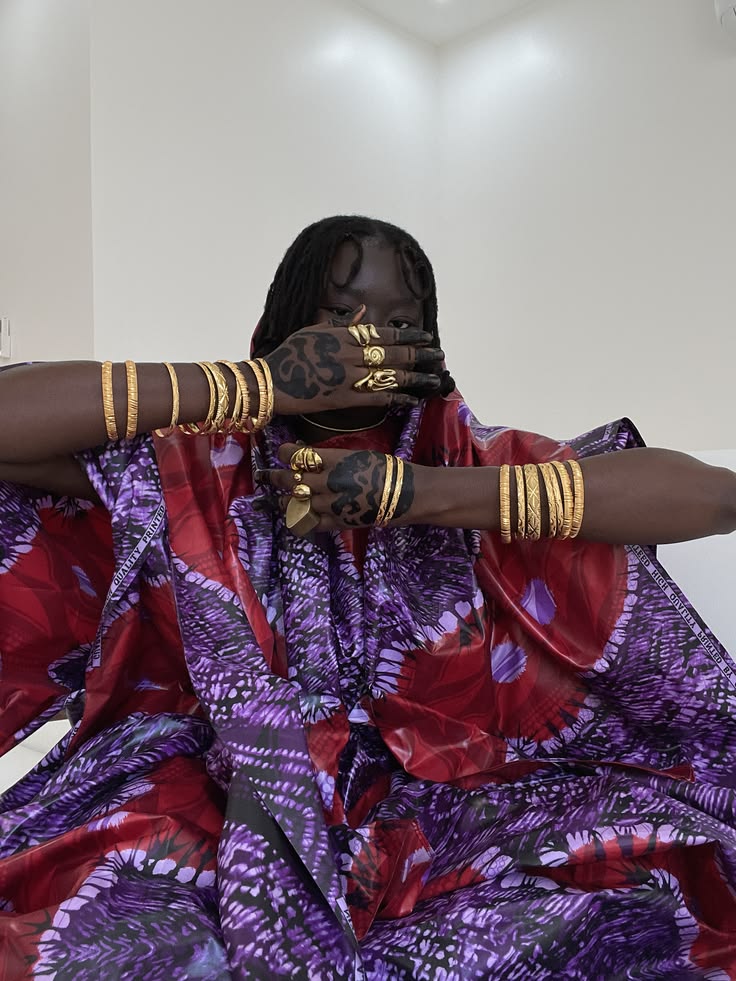
Khidaab marks transition. The occasions on which it is applied are consistently threshold moments: marriage, the arrival of a new child, the religious celebration of Eid. The decorated hands and feet are a visible signal to everyone who encounters the wearer in the days that follow the application that something has changed or is being marked. In Somali social culture, the deep stain carries the celebration with it as the woman moves through her daily life, making the private ceremony public in a way that requires no announcement. As Omiren Styles has documented in its analysis of African dress as a communicative system, the most effective cultural communication is that which travels with the body and does not require a translator.
The adaptability of khidaab within diaspora contexts comes from exactly this quality. The practice does not require a specific landscape, language, or institution to function. It requires a skilled practitioner, the materials, and the community willing to gather—all three travel. The result is a portable cultural language that marks Somali women’s major life transitions in London precisely the way it does in Mogadishu, not because the community has preserved a frozen archive, but because the occasions that require it continue to happen. The women who know how to perform it are present.
The Omiren Argument
Somali khidaab is a diaspora beauty tradition that has never needed external validation to remain alive. It persists because it is embedded in the social structure of Somali women’s communal life at moments of ceremony and transition, and that social structure travels. The mainstream beauty press that has recently discovered African and African diaspora beauty traditions as editorial content arrives, as it usually does, after decades of practice that continued without its attention. As Omiren Styles has argued, African beauty and dress traditions have always been producing cultural work of the highest sophistication. The work does not wait for coverage to become real.
What makes khidaab worth documenting at this moment is not novelty but specificity. It is a tradition whose social function, the gathering of women around a person being decorated at a threshold moment in her life, is precisely the kind of communal practice that globalisation and diaspora experience are often assumed to erode. In Somali communities across the diaspora, it has not eroded. It has adapted its materials, incorporated new aesthetic inputs from younger women, and maintained its social structure intact. As Omiren Styles has documented in its analysis of Habesha hairstyling traditions as cultural communication, the beauty traditions of the Horn of Africa carry a design intelligence and social specificity that the mainstream beauty press has consistently filed under ethnography rather than beauty. Somali khidaab is one of those traditions. It does not need to be framed as resilience or survival. It is simply a living practice, done correctly, in the right company.
The room around the person being decorated is where the tradition lives. The henna stains the skin and fades over weeks. The room reassembles at the next occasion.
ALSO READ
- Habesha Hairstyling Traditions and What They Signal in Ethiopian and Eritrean Communities
- Ritual Before Routine: African Hair Traditions Shaping Modern Beauty
- Mauritanian Beauty Rituals: What Bakhoor, Attar, and the Mabkhara Actually Mean
- African Makeup Artists Rewriting the Global Beauty Conversation One Editorial Look at a Time
Frequently Asked Questions
What is Somali khidaab?
Khidaab is the Somali word for henna, referring to the practice of applying natural henna paste to the hands and feet before weddings, naming ceremonies, Eid celebrations, and other significant occasions. The paste stains the skin a deep auburn that lasts for several weeks. Somali khidaab tends toward bold, dense coverage of the palms and soles with geometric and floral patterns that vary by family tradition, region of origin, and the specific occasion being marked. As Omiren Styles has documented in its analysis of Habesha beauty traditions, the beauty traditions of the Horn of Africa carry social meaning that is legible within the communities that practise them and frequently underestimated by outside observers.
How has khidaab been maintained in Somali diaspora communities?
Somali diaspora communities in North America and Europe have maintained khidaab as a functional practice tied to the community’s social calendar. Shops in cities with large Somali populations sell henna paste and application materials. Professional khidaab artists operate by appointment and word of mouth within community networks. The practice continues because the occasions that require it- Somali weddings, Eid celebrations, naming ceremonies- have continued in the diaspora with the same social expectations they carried in Somalia. As Omiren Styles has documented in its analysis of diaspora fashion diplomacy in Britain, the cultural practices that persist most durably in the diaspora are those embedded in community social ritual rather than individual personal choice.
What is the social significance of the khidaab gathering before a Somali wedding?
The night before a Somali wedding typically involves a gathering of women at the bride’s family home or a hired space, where khidaab is applied over several hours. The gathering combines the practical work of application with music, food, and conversation. The hours during which the paste must sit undisturbed create a stillness that is social by design: the bride is held in place while the women around her talk and recall previous occasions at which the community has gathered together. For younger women born in the diaspora, the gathering is also where knowledge transfers: the social meaning of khidaab and the patterns that belong to specific occasions are absorbed through participation before they can be articulated.
How does khidaab communicate social meaning to the wider community?
Khidaab marks threshold moments: marriage, the arrival of a new child, religious celebration. The deep stain on the hands and feet is a visible signal in the days following the application that something significant has occurred or is being celebrated. The decorated hands communicate the occasion as the wearer moves through her daily life, making the private ceremony publicly legible without requiring announcement. As Omiren Styles has documented in its analysis of clothing and cultural identity, the most effective cultural communication is that which travels with the body and requires no external explanation.
Why does khidaab matter for understanding Somali diaspora identity?
Khidaab demonstrates that Somali cultural identity is transmitted through shared physical practice rather than preserved as a static archive. The tradition has adapted its materials and incorporated new aesthetic inputs from younger generations while maintaining its social structure intact: the communal gathering, the applied knowledge of pattern placement, and the marking of threshold moments have all continued in diaspora. As Omiren Styles has argued, African beauty and dress traditions have always been producing sophisticated cultural work without external validation. Somali khidaab is one of those traditions: a living practice, done correctly, in the right company.