Juanita Garcia did not go looking for a design language. She inherited one. Growing up with her grandmother in Boyaca, the high-plateau department in the Colombian Andes east of Bogota, she watched crochet being made at the table, in the evening, between conversations, as a natural extension of domestic life. The tablecloths, the doilies, the small pieces of worked cotton that appear in Boyaca households as ordinary objects rather than heritage artefacts: these were her earliest material education. When she founded Priah, she was not drawing on a tradition. She was continuing one.
Juanita Garcia’s brand Priah began with her grandmother’s tablecloths and the crochet tradition of Boyaca. Inside how inherited craft knowledge becomes a commercial fashion argument.
Boyaca and the Crochet Tradition
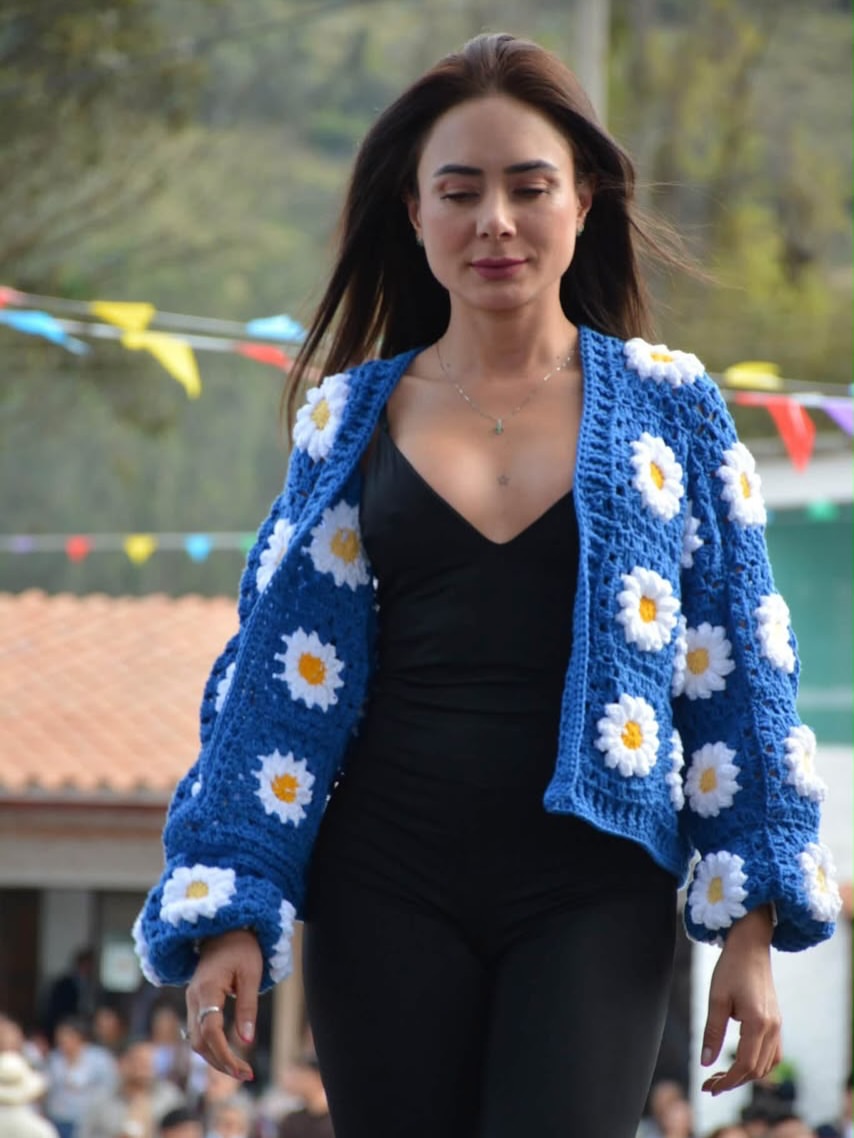
Boyaca is one of Colombia’s most significant craft departments, with a documented tradition of textile production that includes cotton weaving, embroidery, and crochet across several municipalities. The crochet tradition, in particular, has been maintained primarily by women working in domestic and small-workshop settings, producing both functional household items and decorative pieces within a craft vocabulary transmitted generationally rather than institutionally. Unlike the Wayuu mochila bag or the Sombrero Vueltiao, Boyaca crochet has not received formal national cultural recognition, which means it has also not received the institutional protection that would limit its reproduction by industrial manufacturers. As Omiren Styles has documented in its analysis of Colombian traditional fashion, the craft traditions that fall outside Colombia’s formal recognition infrastructure are both the most vulnerable and the least commercially developed, a gap that creates both risk and opportunity for designers who choose to work within them.
The technical vocabulary of Boyaca crochet is specific. The stitches produce an open, geometric textile with structural integrity without added weight, making it well-suited to garments in Colombia’s variable Andean climate. The cotton thread traditionally used is locally sourced, and the colour palette is historically restrained: natural whites and creams, with colour introduced through dyeing rather than thread selection. Contemporary makers have expanded the palette, but the textile’s structural logic remains consistent with the tradition Garcia inherited.
The Brand and What It Does
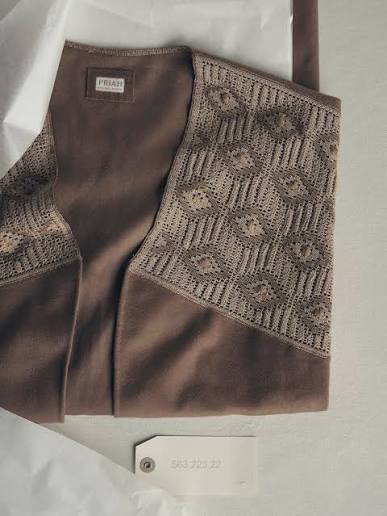
Priah operates from Bogotá with a production model that commissions directly from Boyacá crochet makers rather than internalising production within the brand’s own studio. This is a deliberate structural decision rather than a cost optimisation. Garcia has described the arrangement as the mechanism by which the brand remains connected to the tradition it draws from, with Boyacá makers receiving commissions at rates that reflect the skill and time required for handmade crochet rather than the lower rates implied by piece-rate industrial production. The model is consistent with the designer-artisan relationship that Omiren Styles has documented across African craft contexts, where the commercial relationship between a designer and their source community is the mechanism by which craft knowledge is sustained or lost.
The garments Priah produces are contemporary in silhouette and well-positioned for the Colombian premium market, as well as for international buyers who have discovered the brand through editorial coverage and social media. The crochet textile is used in dresses, tops, and accessories whose design language is recognisably descended from the Boyaca household tradition, while being entirely distinct in its application from the decorative domestic objects Garcia grew up with. The translation is the work: taking a technique learned at a grandmother’s table and producing something that can be worn in Bogota, in Medellin, and in the international markets that Priah is beginning to reach.
The Grandmother’s Tablecloth as Design Brief
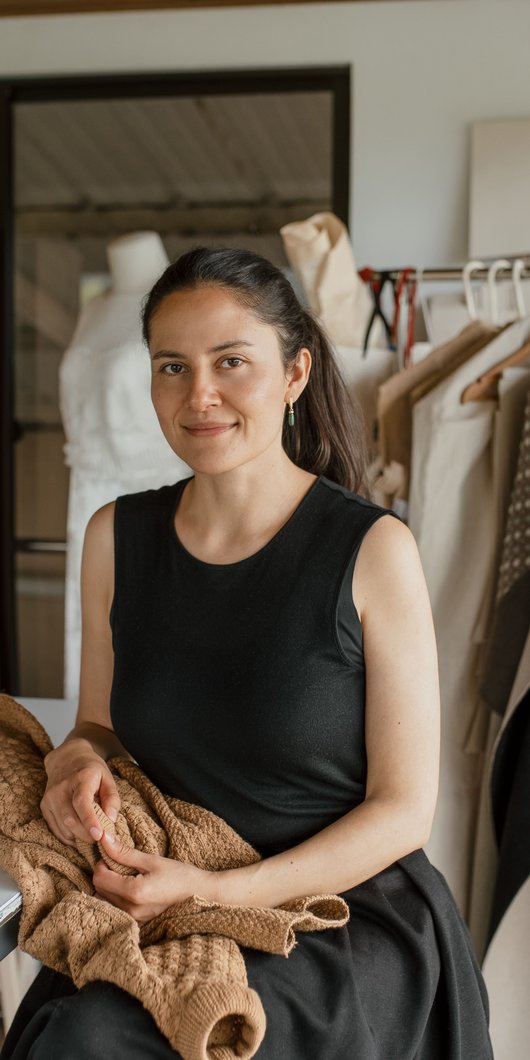
The specific source of Garcia’s design education is worth dwelling on rather than passing over as a biographical detail. The tablecloth is not a fashion object. It is a household object whose formal logic- the geometry of the stitch, the structural openness of the textile, the repetition of pattern across a flat surface- has to be entirely rethought when it is applied to a garment that moves with a body. What Garcia did in founding Priah is not simply to apply a grandmother’s technique to fashion. She translated it: keeping the structural intelligence of the crochet tradition while working out what it means when the textile has to drape, stretch, flatter, and survive a season in a fashion market that will judge it against every other handmade garment competing for the same buyer.
That translation process is more technically demanding than it appears from the finished garment. Crochet is a single-thread construction technique whose structural integrity depends on the interlocking of each stitch with the adjacent stitches. A break anywhere in the construction affects the whole. Designing garments in crochet requires understanding not only how the textile looks but how it behaves: under tension, in movement, across different body types. Garcia learned the technique in a domestic context whose demands, a tablecloth that lies flat and does not move, are almost opposite to the demands of a garment. The fact that Priah’s pieces read as coherent fashion objects rather than domestic textiles applied to clothing is evidence of a genuine design intelligence at work, not simply the mechanical application of an inherited skill. As Omiren Styles has documented in its analysis of global craft and style traditions, the most meaningful clothing is often created through processes that prioritise skill, patience, and cultural memory working together rather than any one of those elements alone.
The Market Argument
Priah occupies a specific position in the Colombian fashion market: premium handmade craft with a documented artisan relationship, positioned above mass-market crochet and below the luxury price tier, aimed at a consumer who is buying the story as much as the garment. That consumer exists in Colombia and is growing in international markets, where the combination of handmade construction, Andean heritage, and a designer with a documented connection to the community represents a differentiated offering relative to the industrially produced alternatives that dominate the accessible fashion tier. As Omiren Styles has argued in its analysis of African jewellery brands and global market access, the structural conditions for taking a craft brand to international markets- consistent production quality, appropriate documentation of artisan relationships, and pricing that reflects the true cost of handmade construction- are demanding but achievable. Priah demonstrates them from a Colombian position.
The challenge Garcia faces is the same one facing every craft brand that commissions from a traditional producer community: scale. Boyaca crochet is made by hand, one stitch at a time, by makers with finite capacity, and their work cannot be accelerated without changing its nature. The brand’s growth is therefore constrained not by demand but by production capacity, and increasing production capacity means either bringing more Boyaca makers into the commission network or changing the production model in ways that would fundamentally alter the brand’s argument about what Priah is. Garcia has not indicated any intention to do the latter. The brand’s commitment to Boyaca production is its competitive advantage, not a constraint to be worked around.
The Omiren Argument
Priah is doing what the most durable craft brands do: it is building a commercial argument on a genuine knowledge inheritance rather than on an aesthetic reference to craft culture. Garcia did not look at Boyaca crochet from the outside and decide it was interesting. She learned it from the inside, at a domestic scale, before she understood it as a design resource. That inside knowledge is what makes Priah a different commercial proposition from a brand that commissions crochet just because it’s trending. The difference between inherited craft knowledge and acquired craft reference is not sentimental. It is structural: one produces garments whose design decisions emerge from an understanding of what the technique can and cannot do, and the other produces garments that look like crochet until the construction is examined closely. As Omiren Styles has documented in its analysis of second-generation designers and cultural inheritance, inheriting a craft tradition is not the same as being nostalgic about it. It is a discipline. Priah demonstrates what that discipline looks like when it is applied commercially.
Juanita Garcia started with her grandmother’s tablecloths. She is building something that the Colombian craft economy needs more of: a brand that treats inherited knowledge as a commercial foundation rather than a decorative reference.
ALSO READ
- Colombian Traditional Fashion: What the Mola, the Pollera, and Cartagena’s Dress Culture Actually Are
- The Rise of Afro-Brazilian Fashion Designers and Their African Roots
- From Handmade to High Fashion: Why Craft Feels Radical Again
- The Art of Dressing Well Across Cultures: What Global Style Actually Teaches Us
Frequently Asked Questions
What is Priah?
Priah is a Colombian fashion brand founded by Juanita Garcia, built on the crochet tradition of Boyaca, the high-plateau department in the Colombian Andes. The brand commissions handmade crochet garments from Boyaca makers using a production model that maintains direct connection to the artisan community and the craft tradition Garcia inherited from her grandmother. As Omiren Styles has documented, Boyaca’s craft traditions are among the most significant and least formally recognised in Colombia.
What is the Boyaca crochet tradition?
Boyaca is one of Colombia’s most significant craft departments, with a textile tradition that includes cotton weaving, embroidery, and crochet transmitted generationally through domestic and small-workshop settings. The crochet tradition has been maintained primarily by women producing household items and decorative pieces in a craft vocabulary that has not received formal national cultural recognition. The technique produces an open, geometric textile with structural integrity suited to Andean climate conditions, traditionally worked in natural cotton thread with a restrained colour palette.
How does Priah’s production model work?
Priah commissions directly from Boyaca crochet makers rather than internalising production within the brand’s own studio. Garcia has described this as the mechanism by which the brand maintains its connection to the tradition it draws from, with Boyaca makers receiving commissions at rates that reflect the skill and time required for handmade crochet. The model constrains the brand’s ability to scale quickly, since Boyaca crochet is made one stitch at a time by makers with finite capacity. Still, it also constitutes the brand’s primary commercial argument: a documented artisan relationship that industrially produced crochet cannot replicate.
What makes Priah different from other crochet fashion brands?
The knowledge inheritance. Garcia learned Boyaca crochet from her grandmother in a domestic context before she understood it as a design resource. That inside knowledge produces garments whose design decisions emerge from an understanding of what the technique can and cannot do structurally, how the textile behaves under tension, in movement, and across different body types. The difference between inherited craft knowledge and acquired craft reference is structural rather than sentimental: one produces garments whose construction decisions are grounded in the logic of the technique, and the other produces garments that reference crochet aesthetically.
Where is Priah available?
Priah operates from Bogota with national and international shipping. The brand’s garments are positioned in the Colombian premium market and are beginning to reach international buyers through editorial coverage and social media. Current stockist arrangements should be confirmed directly with the brand, as the distribution model continues to develop.