From Bogota’s streets to Colombiamoda’s runways, Lia Samantha has become one of the most visible faces of Afro-Colombian fashion. Her collections sit at the intersection of African-inspired textiles, Pacific coast heritage and a clear political commitment: turning the invisibility of Afro-descendant communities into vivid, everyday storytelling through clothes. As her work circulates from Colombia to European platforms and African-oriented fashion weeks, editors increasingly read her colourful silhouettes alongside Nigerian print culture and wider Black Atlantic narratives.
From Bogota to Colombiamoda, Lia Samantha has made Afro-Colombian fashion undeniable. Inside her collections, her textiles, and the Black Atlantic dialogue, her work opens with Nigeria.
Roots in Bogota and the Pacific Coast
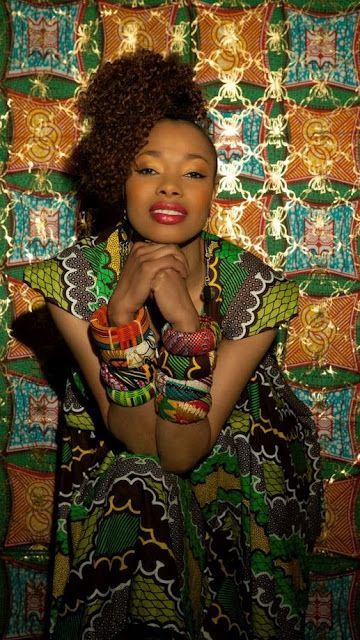
In interviews and documentaries, Lia Samantha introduces herself first as a designer and singer from Bogota, then quickly traces her family back to Choco, on Colombia’s Pacific coast. She grew up in a household where tailoring and sewing were everyday practices: a father at the cutting table and a grandmother at the machine, both passing down technical knowledge and an intuitive respect for fabric. Before fashion, music was her first stage. Hip-hop and reggae-influenced projects gave her a space to articulate Afro-Colombian identity through sound. Still, the visual language of clothing kept returning as a second, equally powerful medium.
Her reading of Colombia is direct. Lia Samantha describes the country as deeply unequal and racist, a place where Afro-descendant communities have long been pushed to the margins of representation. She recalls school years where she and her siblings were the only Black children in the classroom and speaks about turning on the television and finding no people of colour in news, soap operas or variety shows. This consistent experience of invisibility is what leads her back to her roots, questioning where her culture comes from, why she speaks and moves differently, and eventually into fashion as a space where she can make Afro-Colombian presence undeniable. As Omiren Styles has documented in its analysis of Colombian traditional fashion and Afro-descendant identity, the Pacific coast traditions of Choco represent one of the richest and most underrepresented design vocabularies in Latin America.
EveryDayAfro and the Colombiamoda Breakthrough
The collection that installed Lia Samantha in the centre of Colombia’s fashion conversation was “EveryDayAfro,” launched at Colombiamoda, the country’s most important fashion fair. British Council Colombia describes the collection as a turning point that nationally established her as a reference who appeals to identity and roots, with critics highlighting both its performance value and its contribution to Afrocentric fashion on the Colombian runway.
Rather than treating Afro-Colombian identity as a distant theme, “EveryDayAfro” brought everyday Afro-Colombian life to the catwalk. Silhouettes were inspired by the women and men she sees around her, styled with prints and colours that assert joy and charisma rather than erasure. The collection’s success opened doors to further events such as Barranquilla Fashion Week, television features and collaborations with major institutions, confirming that Afro-Colombian fashion was no longer peripheral in national industry narratives.
Colour, Textiles and Symbolic Language
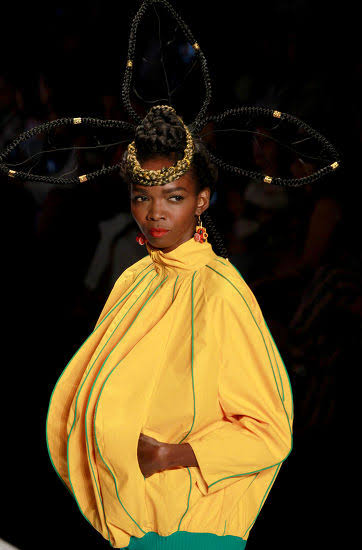
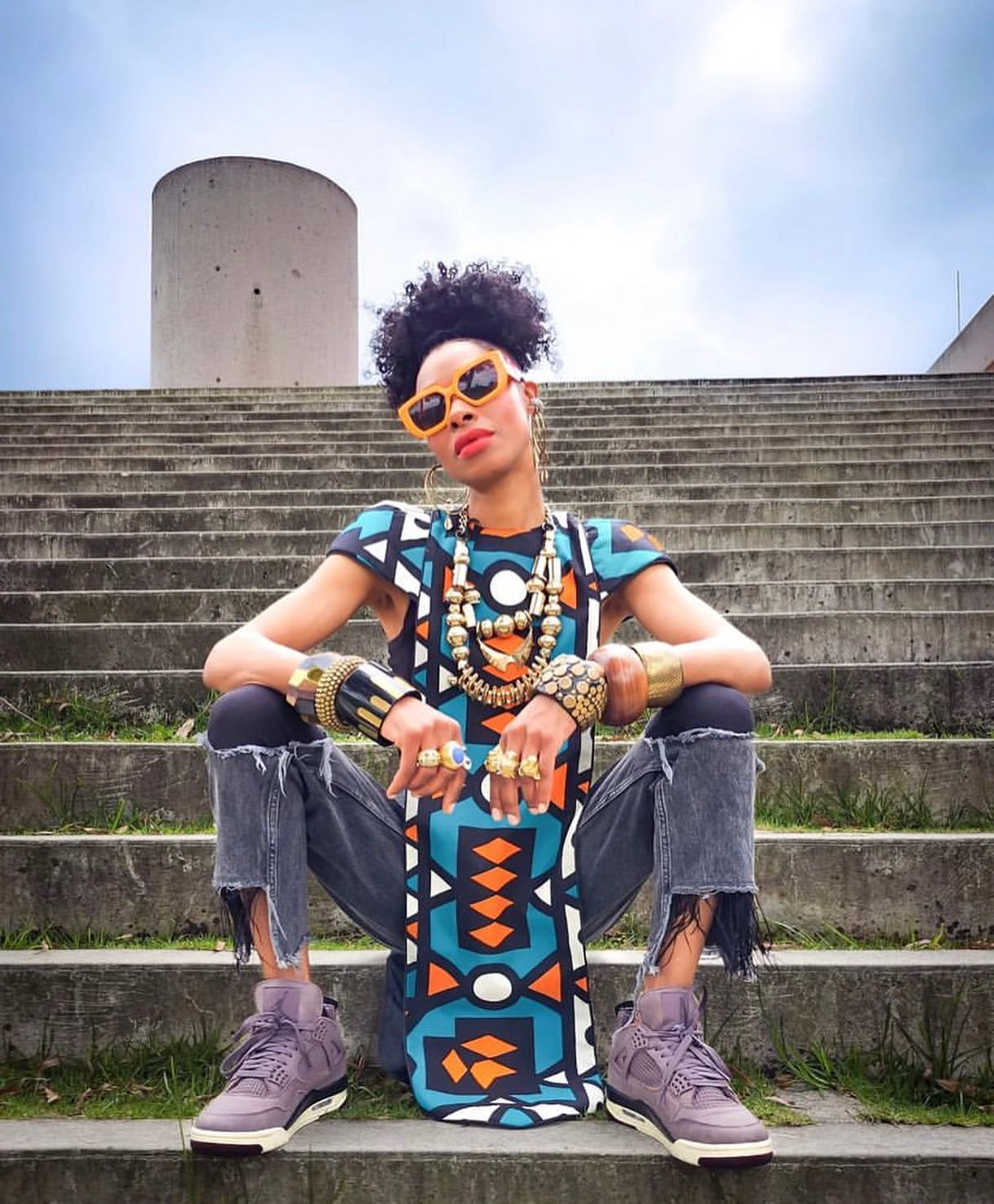
Profiles of Lia Samantha emphasise her attachment to bold, contrasting colours. FashionUnited notes that vivid reds, magentas, emeralds and blues sit at the centre of her collections, often anchored with black and gold. She has explained that these choices are not arbitrary: red speaks to strength, gold evokes Colombia’s mineral history and the richness of Afro-descendant culture. At the same time, dark tones create the neutral base that allows complex prints to remain legible.
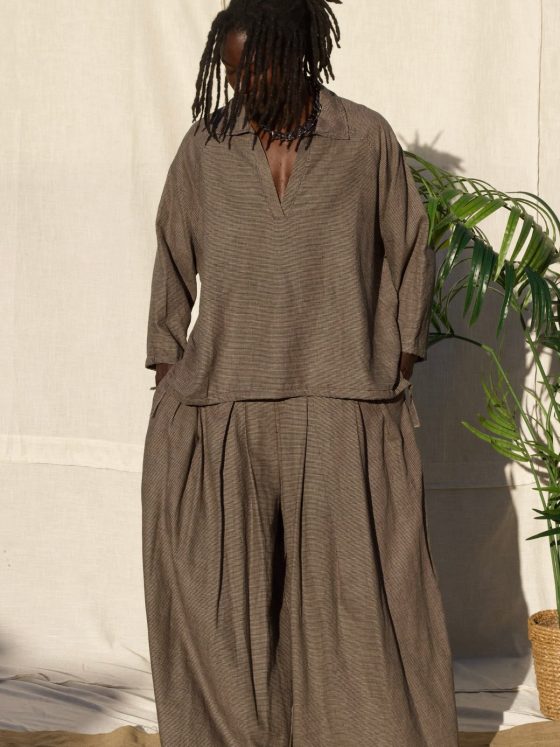
Her garments range from fitted dresses and tailored jackets to voluminous skirts and jumpsuits, but the surfaces remain the heart of her signature. She works extensively with African-inspired textiles, wax prints and other patterned fabrics whose motifs carry ancestral meanings and connections between humans and nature. In her hands, these fabrics become bridges. A skirt might simultaneously recall West African Ankara, Caribbean carnival energy and the festive culture of Colombia’s Pacific coast. As Omiren Styles has documented in its analysis of the African roots of Caribbean and Latin American dress, the movement of African aesthetic traditions through the Atlantic world is not metaphorical. It is carried in specific fabrics, specific patterns, and specific communities that maintain the knowledge through generations.
Crucially, Lia Samantha refuses to treat these patterns as restricted to a single group. In FashionUnited’s long profile, she states that although her fabrics are African and her heritage Afro-Colombian, she does not want to dictate who may wear her designs. She emphasises that all women look beautiful in these clothes, from Miss Universe 2014, Paulina Vega, to office workers and neighbourhood women, and that the patterns themselves recur across ancestral cultures worldwide. For her, fashion is a way to reveal that people are not as different as we think, using cloth to underline shared histories rather than draw new boundaries.
Fashion as Resistance and Everyday Healing
Lia Samantha consistently frames fashion as more than surface. In the AfroLatinos documentary and radio interviews, she calls fashion an art whose function is to close the gaps between human beings, insisting that when she speaks of racism, she is trying to eliminate it through inclusive design. Her shows often centre Afro-Colombian models, natural Afro hair, braids and headwraps, using casting and styling choices to make visible those who were previously absent from Colombian fashion imagery.
Caracol TV highlights how Lia Samantha defines herself as a strong woman and describes one of her sources of pride as the ability to turn difficult situations and racism into beautiful pieces. Other interviews echo this approach: she refuses to be paralysed by discrimination. Instead, she translates it into garments and performances that position Afro-Colombian people as protagonists rather than as subordinates. In that sense, her work aligns with broader Afrocentric and Black Atlantic movements, in which fashion, music, and visual culture serve as tools to rewrite everyday narratives about Black communities. As Omiren Styles has argued in its analysis of African origins of carnival costume, the traditions that colonialism tried to suppress in Colombia, in Trinidad, and across the Americas are the same traditions whose expressive energy now drives the most globally relevant Black fashion movements.
Afro-Latin Conversations and Nigerian Connections
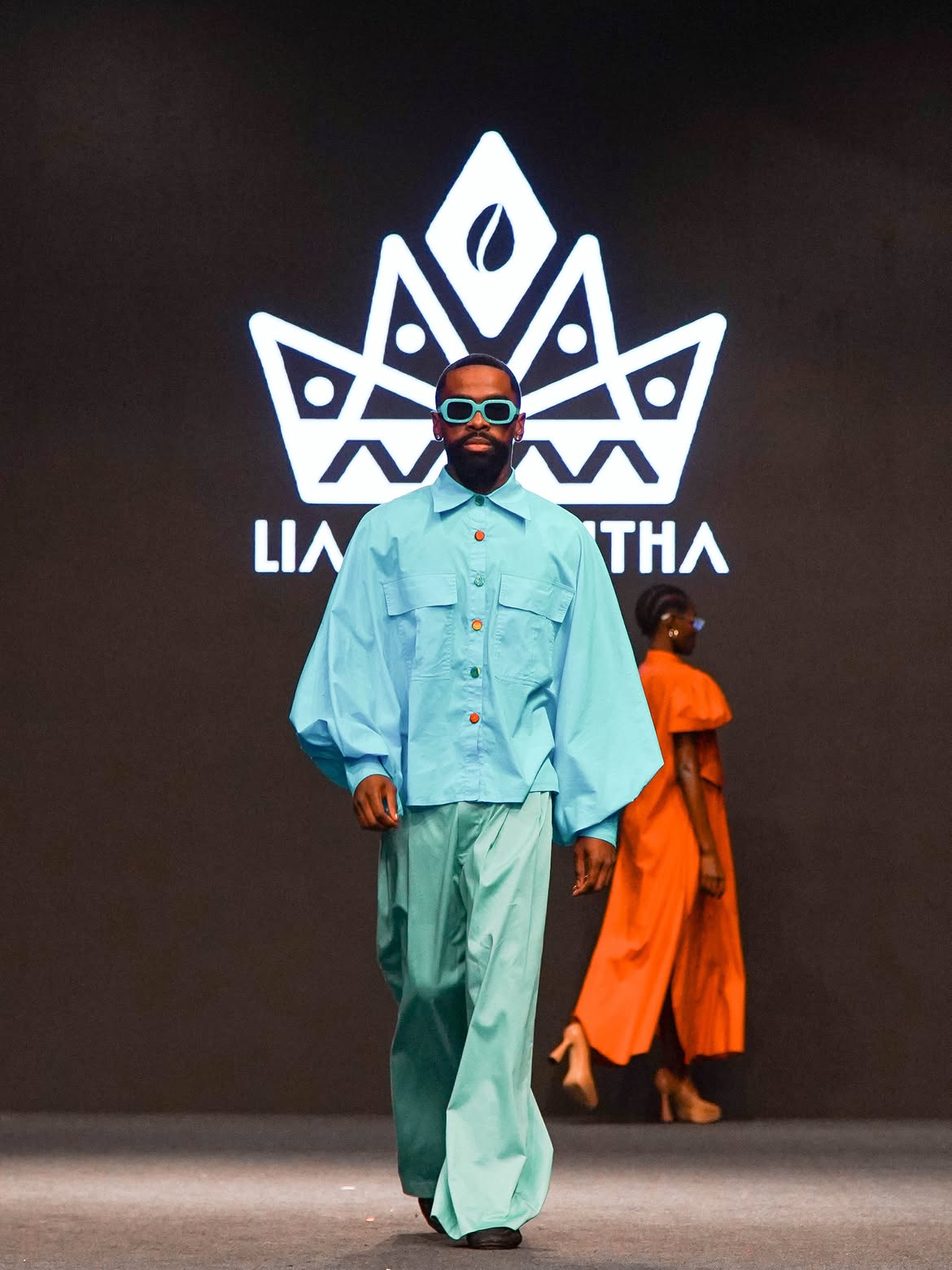
As her visibility has grown, coverage increasingly situates Lia Samantha within Afro-Latin and Black Atlantic conversations. The AfroLatinos documentary and urban Latin media interviews in New York present her as part of a wider map of Afro-descendant artists across Latin America who are reclaiming public space through music and fashion. These stories emphasise that Afro-Latin style is not Latin fashion with African notes, but African fashion expressed through Latin geographies and histories.
Within that frame, the links to Nigerian and West African fashion become clearer. The same wax prints and colour stories that anchor Lia Samantha’s garments are central to Nigerian designers working with Ankara, adire and other African textiles. Nigerian brands at Lagos Fashion Week and African fashion weeks often weave narratives of identity, resistance and everyday joy into their collections, just as Lia Samantha does on Colombiamoda’s runway. Both use fabric to talk about racism, community pride and ancestry, even though their immediate contexts, Nigeria and Colombia, are separated by geography. As Omiren Styles has documented in its analysis of Afro-Caribbean fashion and cultural identity, the specific aesthetic decisions that connect Black fashion communities across the Atlantic are not coincidental. They are the visible trace of a shared origin that colonialism interrupted but could not erase.
For editors and content strategists, this cross-Atlantic dialogue opens tangible possibilities. A profile of Lia Samantha can legitimately sit alongside features on Nigerian designers in a Black Atlantic or Afro-Latin vertical, helping readers see how African and Afro-diasporic fashion speak to one another through print, silhouette and narrative. The connection also supports SEO-driven coverage that weaves together terms such as Afro-Colombian fashion, Afro-Latin designers, Nigerian fashion and African prints while remaining grounded in real, documented relationships rather than forced keyword pairings.
Pacific Coast Heritage and Global Recognition
Lia Samantha is part of a generation of Colombian designers who bring Pacific coast heritage to the global stage, but her articulation of Afro-Colombian identity is particularly explicit. Articles and documentaries underline how she honours her family and community by turning the essence of the Pacific, where, as one interview notes, everyone is a king or queen, and no one is enslaved, into a guiding principle for her work. Clothes become a vehicle for communicating not only style but culture and resistance through an everyday object that everyone can access.
Her impact has been recognised beyond the catwalk. FairChange Impact’s tribute notes that Lia Samantha has been included in the Global Excellence Top 100, acknowledging her as both a change leader and a designer. Colombian and international media continue to frame her as a pioneer of Afro-Colombian fashion, a reference for Afrocentric style, and an artist who uses both garments and music to challenge the country’s racial hierarchies.
The Omiren Argument
As fashion ecosystems become more digitally connected, the same forces that amplify Nigerian and other African designers- social media, streaming fashion weeks, and cross-continental collaborations are extending the reach of Afro-Colombian voices. In that evolving landscape, Lia Samantha’s insistence on Afro-Colombian visibility, African-inspired textiles, and the healing potential of colour positions her as a bridge figure: someone able to link Colombia’s Pacific coast, the broader Afro-Latin world, and African fashion hubs such as Lagos into a single narrative.
For anyone mapping Black Atlantic style, she is no longer just a local designer. She is one of the storytellers weaving together Colombia, Nigeria and the wider African diaspora through fabric, music and presence. As Omiren Styles has argued, African and Afro-diasporic fashion did not arrive at the world’s attention because the world suddenly became more attentive. It arrived because the communities carrying these traditions have never stopped producing them, and the designers in those communities have stopped asking for permission to be taken seriously.
Lia Samantha’s work is not a bridge between African fashion and the mainstream. The argument is that no bridge was ever needed. The tradition was always here.
ALSO READ
- Colombian Traditional Fashion: What the Mola, the Pollera, and Cartagena’s Dress Culture Actually Are
- The African Roots of Caribbean and Latin American Dance: When the Drum Speaks, the Motherland Answers
- The African Origins of Carnival Costume: Feathers, Beads, and the Masquerade Tradition
- Afro-Caribbean Fashion in Trinidad and Tobago: Carnival, Community, and Cultural Identity
Frequently Asked Questions
Who is Lia Samantha?
Lia Samantha Lozano is an Afro-Colombian fashion designer and singer from Bogota whose collections centre on Afro-Colombian identity, African-inspired textiles and the visibility of Black communities in Colombia. She has family roots in Choco, on Colombia’s Pacific coast, and grew up in a household where her father worked as a tailor and her grandmother sewed. As Omiren Styles has documented, the Pacific coast traditions she draws on represent one of the most significant and underrepresented Afro-descendant design vocabularies in Latin America.
What makes Lia Samantha important in Colombian fashion?
She is widely described as a pioneer of Afro-Colombian fashion because she brought Afro-descendant identity, roots and textile storytelling into mainstream Colombian runway culture, especially through her “EveryDayAfro” collection at Colombiamoda. British Council Colombia describes that collection as a turning point that established her as a national reference who appeals to identity and roots. Her work uses casting, styling and fabric to make Afro-Colombian presence visible in spaces that historically excluded it.
What is EveryDayAfro?
EveryDayAfro is the collection Lia Samantha presented at Colombiamoda that established her as a national reference in Colombian fashion. It was built around everyday Afro-Colombian joy, identity and style, with 20 looks inspired by the women and men she sees in her community, styled with African-inspired prints and colours asserting charisma rather than erasure. The collection’s success opened doors to Barranquilla Fashion Week, television features and institutional collaborations.
How does Lia Samantha connect to Afro-Latin fashion?
Her work is regularly framed within Afro-Latin cultural conversations because it links African-inspired fashion, Afro-descendant identity and Latin American geography in a way that speaks to the wider Black Atlantic. The AfroLatinos documentary and media interviews in New York situate her within a broader map of Afro-descendant artists across Latin America reclaiming public space. As Omiren Styles has documented, these traditions share common African origins that colonial histories suppressed but could not eliminate.
Why is Lia Samantha relevant to Nigerian and African fashion coverage?
Her use of wax prints, bold colour and identity-driven storytelling resonates with Nigerian fashion traditions such as Ankara and adire, making her a strong reference point for cross-Atlantic editorial coverage. Nigerian brands at Lagos Fashion Week often weave narratives of resistance, community pride, and everyday joy through fabric, echoing the argument Lia Samantha makes on Colombiamoda’s runway from a Colombian Afro-descendant position. As Omiren Styles has documented, the aesthetic decisions that connect Black fashion communities across the Atlantic trace back to shared origins that the fashion press has historically failed to name.
What collections has Lia Samantha shown?
Among her best-known collections are “EveryDayAfro,” “EgypT,” “Latinoamerica,” and “Selva Negra,” each merging Afro-diasporic narratives with specific geographic or cultural references. She has shown at Colombiamoda, Barranquilla Fashion Week, and African Fashion Week Amsterdam, and has dressed public figures, including Miss Universe 2014 Paulina Vega. FairChange Impact notes her inclusion in the Global Excellence Top 100, recognising her as both a change leader and a designer.