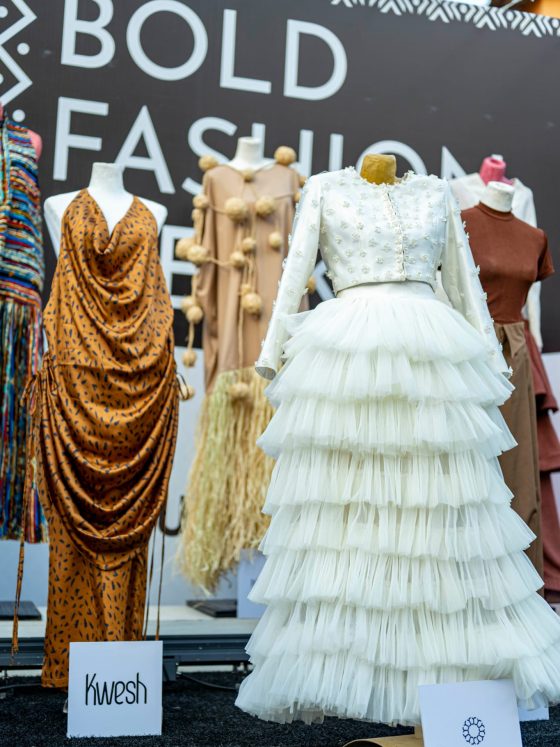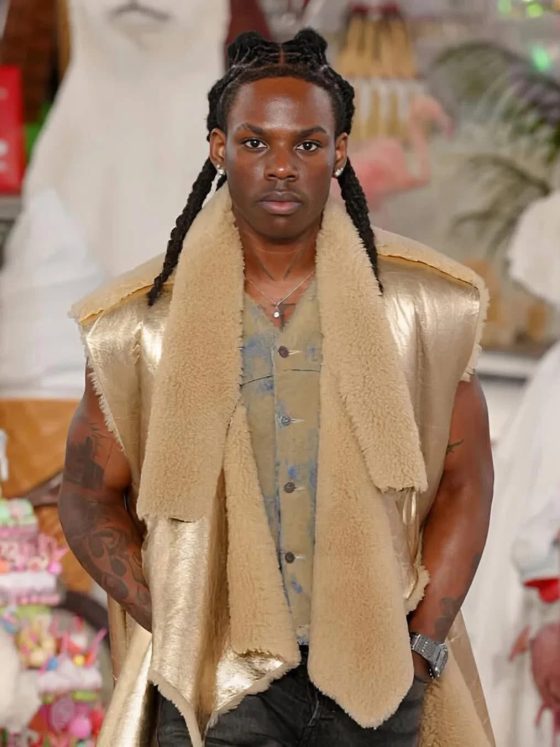
In October 2025, the African Fashion Foundation officially launched the second cohort of its African Fashion Futures Incubator. Fifteen designers from across Africa, including labels from Kenya, Ghana, Rwanda, Benin, and beyond, were selected for a programme delivering six months of financial support, advisory services, marketing infrastructure, and business development training. The programme culminates in international showcases: ASOHOM and The Industry Retreat in October 2025, LA Fashion Week and Ivory Coast in December, and London Fashion Week in February 2026, in partnership with Medusa Fashion House. It is funded through the Impact Fund for African Creatives, supported by Annan Capital Partners, and counts the Digital Fashion Academy and the UN Global Compact among its institutional partners.
The coverage of the programme’s launch was positive, appreciative, and almost entirely uncritical. The AFF called it an initiative designed to accelerate the growth of Africa’s creative economy. Roberta Annan, the AFF founder, described it as shaping resilient enterprises that can drive long-term value. The Digital Fashion Academy’s Enrico Fantaguzzi described the partnership as empowering young entrepreneurs to connect with global best practices. The UN Global Compact’s Tolu Kweku Lacroix described African fashion as a vehicle for sustainability and impact. All of this is language drawn from the programme’s own press release, and most outlets published it without additional interrogation.
Omiren Styles is asking the question the press release does not answer: what happens to these 15 designers after the London Fashion Week showcase ends? How many convert the visibility into wholesale orders? How many return the following year with measurably stronger businesses? How many are still operating at an international level two years after the incubator ends? These are not hostile questions. They are the only questions that determine whether the programme is actually doing what it says it is doing.
The AFF Futures Incubator sends 15 designers to London Fashion Week. The press celebrates. Nobody is asking what happens commercially after the showcase ends.
Omiren Argument:
The incubator model is well-intentioned. Whether it is producing durable commercial outcomes for African designers, rather than a single high-visibility moment, is a question the industry press is not asking. Visibility is not the same as viability. A London Fashion Week showcase is not a business result. It is a starting position. The AFF deserves scrutiny precisely because it is doing serious work in an important space, and serious work deserves serious accountability.
What the Programme Actually Offers
The AFF Futures Incubator is, structurally, a more comprehensive programme than most designer support initiatives operating in the African fashion space. The first cohort, launched in 2022 with 14 designers and Seedstars as the implementing partner, covered business models, market positioning, comparative advantage, and sustainability. The second cohort, AFFI-II’25, adds digital and e-commerce education through the Digital Fashion Academy, an explicit acknowledgement that the first cohort’s gaps included the digital infrastructure required by contemporary fashion commerce.
The grant funding component matters. African designers face severe capital constraints at the early stage: production costs are high due to import dependency on materials and trims, infrastructure costs in markets like Lagos are substantial, and the working capital required to fulfil a single international wholesale order can exceed what a small brand has available. Grant funding that covers even some of those costs is genuinely useful. The mentorship component matters too: access to industry experts and the peer learning that comes from working alongside 14 other designers at a comparable stage is an infrastructure that most African designers do not have access to independently.
The programme’s choice to culminate in international showcases is where the analysis becomes more complicated. Showcasing at London Fashion Week, LA Fashion Week, and Ivory Coast Fashion Week generates press coverage and industry visibility. It does not, automatically, generate the wholesale relationships, repeat orders, and commercial infrastructure that constitute a sustainable business. As Africa Reimagined noted in its December 2025 review of the year in African fashion, the horrendous cost of showcasing during fashion weeks and the very little return on investment designers receive is a conversation the industry has been reluctant to have. AFFI-II’25 is sending 15 designers to multiple international fashion weeks. The question is whether it is also building the infrastructure that would make those showcases commercially productive rather than commercially costly.
The Accountability Question the Programme Has Not Answered
The AFF publishes programme launches. It publishes cohort announcements. It publishes quotes from institutional partners. What it does not publish, in any documentation available through its communications, is outcome data: how many designers from the first cohort secured wholesale relationships after the programme, what the average revenue increase was in the 12 months following participation, how many are still operating internationally, and how many returned for a second international showcase cycle without programme support.
This is not unique to the AFF. The absence of published outcome data is a systemic failure across almost all African fashion support programmes. Institutions that fund and deliver these programmes measure inputs, not outputs. They count cohort size, mentorship hours, showcase placements, and press coverage. They rarely count the number of wholesale orders generated, revenue growth attributable to programme participation, or the longer-term commercial trajectories of alumni. The result is that the programmes that receive the most institutional support are the ones that communicate visibility most effectively, not necessarily the ones that produce the most durable commercial outcomes.
The first AFF cohort graduated in 2023. Two years on, Omiren Styles cannot identify, from publicly available information, which of those 14 designers secured international wholesale relationships, which showed independently at international fashion weeks, or which grew revenue substantially as a direct result of programme participation. Some may have. The point is that nobody is publishing the data, and nobody in the African fashion press has asked for it.
A programme that sends designers to London Fashion Week without tracking what happens to those designers commercially after the showcase is measuring its own ambition, not its impact. The AFF is doing more than most. It deserves to be held to the standard its ambition implies.
ALSO READ
- What the Diesel x Rema Partnership Actually Did for African Fashion. And What It Didn’t.
- The Red Carpet Is Not a Brand Strategy. African Designers Need to Stop Treating It Like One.
- Thebe Magugu Has a Brand Strategy. Most African Designers Do Not. Here Is the Difference.
- Why No Serious Investor Has an African Fashion Portfolio: The Cost of Institutional Blindness
What the Fashion Week Showcase Actually Does and Does Not Do
The Africa Reimagined newsletter, which has tracked the African designer presence at international fashion weeks more closely than almost any other source, reported in December 2025 that an increasing number of African designers are participating in international showcases, while noting the very limited return on investment that participation typically generates. This is not a problem unique to AFF programme participants. It is a structural reality of how international fashion weeks function for emerging designers without established wholesale relationships and buyer networks. A runway presentation at London Fashion Week costs significantly more than it directly generates in immediate commercial terms. Its value, if any, is in the press relationships, buyer introductions, and brand positioning it enables, none of which are automatic and all of which require follow-up infrastructure that most emerging African designers do not have.
The question for AFF, specifically, is whether the programme builds the follow-up infrastructure. Does it provide designers with a list of buyers who attended their showcase and a follow-up strategy? Does it offer post-programme support for converting press coverage into wholesale conversations? Does it track whether the designers who showcase through the programme can secure the buyer meetings, stockist relationships, and repeat orders that would make the visibility commercially meaningful? The programme’s public communications do not answer these questions.
There is also the question of sequencing. The Omiren Styles analysis of red-carpet visibility and brand strategy has consistently argued that infrastructure needs to come before the visibility moment, not after. A designer who showcases at London Fashion Week without a functioning e-commerce site, a wholesale-ready line sheet, or the production capacity to fulfil orders is not in a position to convert whatever opportunity the showcase creates. If the AFF’s six-month programme is not building all of those things before putting designers on a London runway, the showcase may be generating press for the programme rather than commercial outcomes for the designers.
What a Genuinely Accountable Incubator Would Look Like
None of this is an argument against the AFF or against the incubator model. It is an argument for measuring the right things. A programme that genuinely commits to producing durable commercial outcomes would measure and publish, at minimum, the following: the number of wholesale orders secured by programme alumni in the 12 months following the programme; the average revenue change for alumni businesses in the year after participation compared to the year before; the number of alumni who independently secured international showcase opportunities without programme support in the two years following graduation; and the number of alumni businesses still operating at an international level three years after the programme.
It would also sequence the showcase differently. A programme confident that its alumni are commercially ready for London Fashion Week would be placing them in front of buyers at The Folklore Connect, facilitating introductions to the 23 enterprise retail partners in that network, and ensuring that the e-commerce infrastructure documented in the mobile money piece in this series is in place before a designer steps on a runway. The showcase should be the culmination of commercial readiness, not a substitute for it.
The AFF has the institutional relationships, the funding infrastructure through IFFAC and Annan Capital Partners, and the advisory network to do this. The question is whether the programme’s design, currently weighted toward showcase visibility, is being re-evaluated in light of the first cohort’s actual outcomes. Roberta Annan has described the programme as shaping resilient enterprises capable of driving long-term value. Omiren Styles would like to see the data that demonstrates it. The same accountability argument applies to every incubator, fund, and support programme operating in the African fashion space. For the structural argument explaining why African fashion brands struggle to scale even with institutional support, see “Why Most African Fashion Brands Have a Pricing Problem They Cannot See” and “Why No Serious Investor Has an African Fashion Portfolio.”
There is also an uncomfortable question this piece has not fully explored: whether the incubator model, in which African designers are prepared for international showcase visibility rather than domestic commercial viability, reflects a bias in how the institutions funding these programmes define success. A programme that produces designers who show at London Fashion Week is easier to communicate to European funders than one that produces designers with strong wholesale businesses serving African retail buyers. That funder-visibility bias deserves its own analysis, and Omiren will return to it directly.
FREQUENTLY ASKED QUESTIONS
What is the African Fashion Foundation’s Futures Incubator?
The African Fashion Futures Incubator (AFFI) is a programme run by the African Fashion Foundation (AFF), founded by Roberta Annan, that selects cohorts of African fashion designers for six months of financial support, mentorship, business training, and advisory services. The second cohort, AFFI-II’25, launched in October 2025 with 15 designers from Kenya, Ghana, Rwanda, Benin, and other African markets. The programme culminates in international showcases including London Fashion Week and LA Fashion Week. It is delivered through the Impact Fund for African Creatives, supported by Annan Capital Partners.
Who funds the programme, and what support do designers receive?
The programme is funded through the Impact Fund for African Creatives (IFFAC), supported by Annan Capital Partners. Designers receive financial support, advisory services, marketing and logistical assistance, and access to mentors and industry experts. The second cohort added digital and e-commerce education through the Digital Fashion Academy, addressing gaps identified in the first cohort’s programme. Institutional partners include the Digital Fashion Academy and the UN Global Compact.
What is Omiren’s critique of the programme?
Omiren’s critique is not of the programme’s intentions, which are genuine and well-resourced. It is due to the absence of published outcome data and the programme’s weighting toward showcase visibility over commercial infrastructure. The AFF does not publish data on how many alumni from the first cohort secured wholesale relationships, grew revenue, or are still operating internationally after programme completion. Without that data, it is not possible to evaluate whether the programme produces durable commercial outcomes or primarily generates a single high-visibility moment.
What is the problem with sending African designers to London Fashion Week?
International fashion week showcases are expensive and yield very little direct return on investment for most emerging designers, as noted by Africa Reimagined in December 2025. Their value lies in press relationships, buyer introductions, and brand positioning, none of which are automatic and all of which require follow-up infrastructure. If a designer does not have a wholesale-ready line sheet, functioning e-commerce, and the production capacity to fulfil orders, a London Fashion Week showcase generates press coverage without the commercial infrastructure to convert it. The sequencing question matters: commercial readiness should precede the showcase, not follow from it.
What outcome data should a responsible incubator publish?
At minimum: the number of wholesale orders secured by alumni in the 12 months following the programme; average revenue change for alumni businesses in the year after participation versus the year before; the number of alumni who independently secured international showcase opportunities without programme support in the two years after graduation; and the number of alumni businesses still operating internationally three years after the programme. These metrics separate a programme’s visibility from its impact.
Is this critique specific to the AFF, or does it apply more broadly?
More broadly. The absence of published outcome data is a systemic failure across almost all African fashion support programmes. Institutions typically measure inputs, not outputs: cohort size, mentorship hours, showcase placements, and press coverage. They rarely measure wholesale orders generated, revenue growth, or the longer-term commercial trajectories of alumni. The programmes that receive the most institutional support are the ones that communicate visibility most effectively, not necessarily the ones producing the most durable commercial outcomes. The AFF is held to a higher standard here precisely because it is doing more than most.
Omiren Styles covers the business of African fashion with precision and without apology. Subscribe for weekly retail intelligence, brand strategy analysis, and the industry reporting the African fashion press is not doing. African fashion and culture are not emerging. They are foundational.