Three cultural practices sit at the centre of Afro-Brazilian life, and all three were at various points made illegal by the Brazilian state. Capoeira was banned after the abolition of slavery in 1888, and its practitioners were criminalised for over forty years. Candomblé terreiros were raided between 1905 and 1913, their sacred objects confiscated, their dress prohibited from public spaces. Samba and the African-derived rhythms that would become the foundation of Brazilian Carnival were suppressed, marginalised, and then co-opted, stripped of their Afro-Brazilian identity and presented as a national culture that their creators were sometimes not permitted to join. In each case, the dress associated with these practices was part of what the suppression targeted and part of what the communities defended. This article documents the dress that survived, what it means, and why the three traditions it belongs to are among the most important fashion stories in the Americas.
The connection between cultural performance and dress in Afro-Brazilian life is not incidental. The abadá worn by a capoeirista carries the same etymological root as the agbada of Yoruba prestige menswear, both derived from the West African garment tradition that ran through the Atlantic trade. The fantasia worn by an Ilê Aiyê member at Salvador Carnival is a political statement in fabric, made in direct response to a government ban on African costumes that attempted to strip Black Brazilians of their own celebration. The white sheet adapted by the Filhos de Gandhy dock workers is an act of creative resourcefulness that turned economic necessity into one of the most recognisable and culturally loaded Carnival dress traditions in Brazil. Each of these garments carries memories that the communities wearing them have refused to let go.
The abadá, the Ilê Aiyê fantasia, the Filhos de Gandhy white sheet: Afro-Brazilian cultural arts carry living memory in their dress. This article documents how.
The Abadá: A Yoruba Name for a Banned Practice
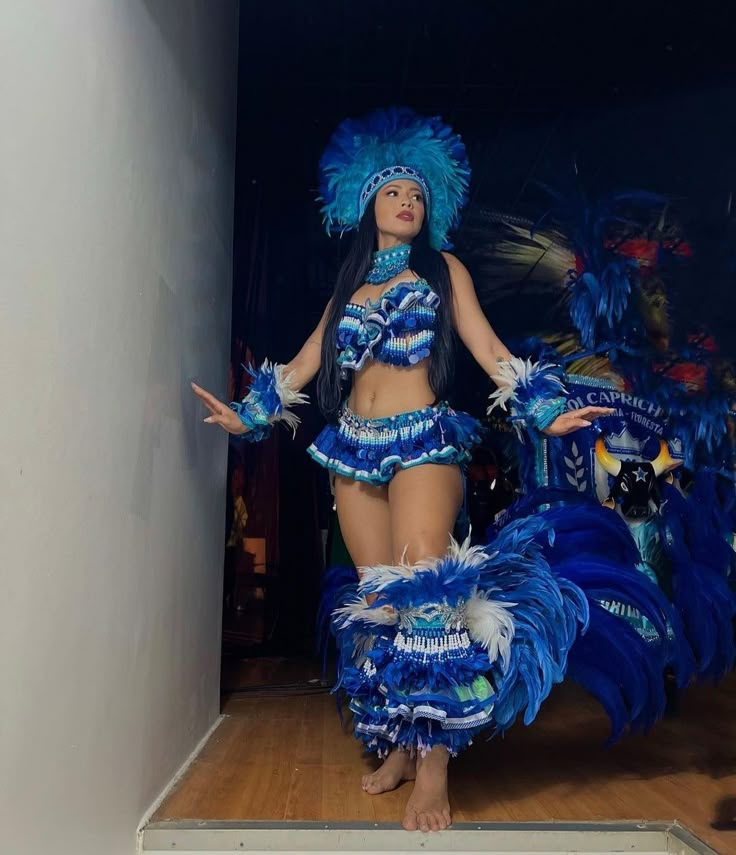
The word ‘abadá’ comes from the Yoruba language and is etymologically connected to the agbada, the wide-sleeved West African prestige over-robe. In the capoeira context, abadá refers to the loose white trousers worn by practitioners, along with the corda, the cord worn around the waist that signals rank through a colour system of eight levels: yellow, orange, red, blue, green, purple, brown, and black. The name of the garment traces directly to the West African textile tradition. The uniform itself is a twentieth-century invention designed by Mestre Bimba as a deliberate strategy of social legitimation.
Mestre Bimba, born Manuel dos Reis Machado in Salvador in 1899, opened capoeira’s first official school in Bahia in 1932, when the practice was still effectively criminalised. His codification of the art, which he called Luta Regional Baiana, came with a specific dress decision: students must wear clean white uniforms and present themselves as disciplined, respectable practitioners, creating distance from the perception of capoeira as a criminal pursuit. The clean white abadá was a political garment before it was a sports uniform. Mestre Bimba presented capoeira to President Getúlio Vargas in 1953, and Vargas declared it the only truly national sport. The legitimation that followed was built on decades of Mestre Bimba’s strategic respectability performance, of which the white uniform was always a central element.
“The clean white abadá was a political garment before it was a sports uniform. Mestre Bimba understood that what you wear determines what you are allowed to be.”
Mestre Pastinha and What Angola Preserved
The clean white uniform and the ranked corda system belong to the Capoeira Regional tradition that Mestre Bimba developed. But capoeira has two primary lineages, and the other one, Capoeira Angola, preserved something that Regional’s modernisation compromised. Mestre Pastinha, born Vicente Ferreira Pastinha in Salvador in 1889, dedicated his life to the ancestral forms of capoeira, resisting the codification that he believed stripped the practice of its spiritual and cultural depth. Capoeira Angola practitioners typically wear black and yellow, the colours that Mestre Pastinha adopted and that connect to the African cosmological associations of those colours in the communities that developed the art.
The distinction between the two dress traditions reflects a deeper argument about what capoeira is. Regional’s white uniform positions it as a sport, with rank and progression marked through the corda. Angola’s black and yellow positions it as a cultural inheritance, with ancestral continuity marked through the preservation of specific movements, songs, and community practices that predate Mestre Bimba’s codification. The dress is not decorative in either tradition. It is a statement about what the practice prioritises, and practitioners who choose one tradition over the other are making that statement every time they put on their abadá.
Ilê Aiyê and the Gate-Crashed Carnival
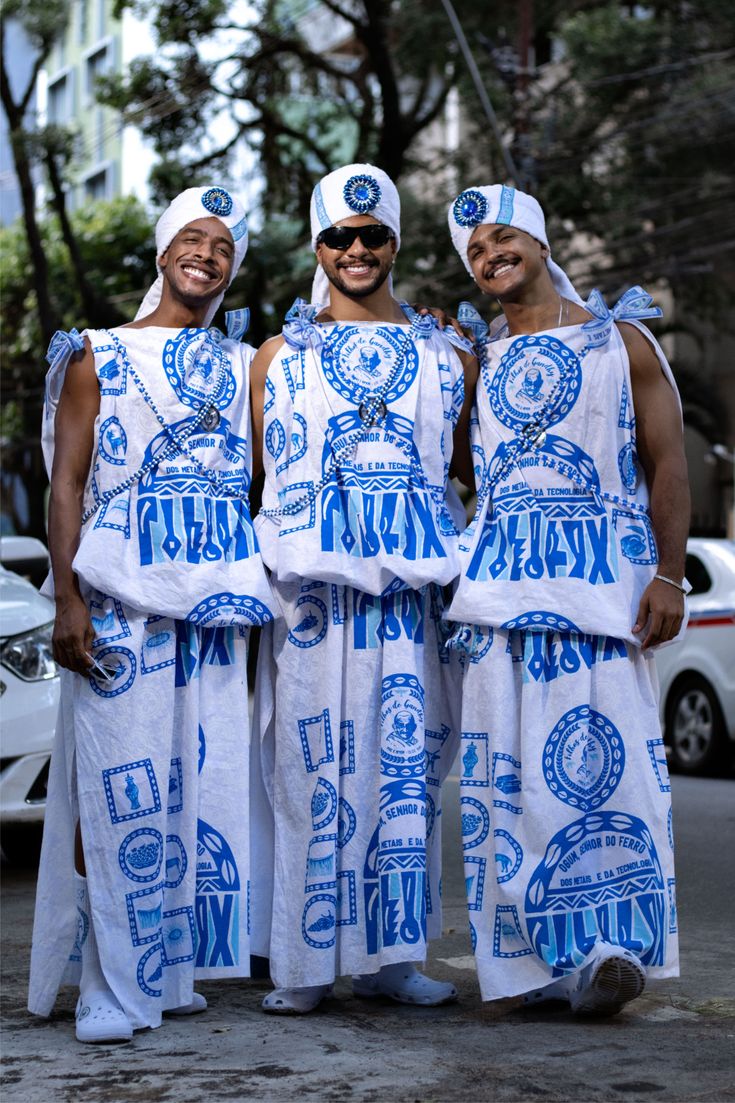
On 1 November 1974, a group from the Curuzu neighbourhood of Liberdade, the Salvador district with the highest concentration of Afro-Brazilian residents, founded Ilê Aiyê, a Yoruba phrase meaning ‘House of Life’. Their first act was to gate-crash Salvador’s Carnival parade, from which Black Brazilians had historically been excluded or marginalised in favour of white-controlled organisations. They arrived in African costumes with drum rhythms drawn from the African tradition. The reaction of the Bahian government was to ban African costumes and drumming from Carnival, framing the ban as a public safety measure. The academic analysis in the Springer Nature volume on Ilê Aiyê’s aesthetics documents the ban’s real logic directly: it was a pretext for discrimination and censorship by the white elites who controlled state governance.
The significance of the dress Ilê Aiyê wore at that first Carnival, and has been refined in its annual fantasia since, is that it was the specific object the government tried to ban. African costumes were not prohibited by accident. They were prohibited because the government understood that a Black carnival organisation marching in African dress was a political statement about who owned Brazilian cultural life and whose aesthetic traditions deserved to be present in Brazil’s most nationally visible celebration. Ilê Aiyê continued to march, continued to wear African-derived costumes, and continued to refuse the exclusion. The fantasia, the costume specific to each year’s Afro-Bloco theme, became their annual statement that the ban had failed.
Also Read:
- Meiling: The Trinidad Designer Who Built a Minimalist Language From Caribbean Sensibility
- Edvin Thompson of Theophilio: How Jamaican Dancehall Built a New York Fashion Week Collection
Olodum, Malê Debalê, and the Fantasia as Annual Argument
The Afro-Bloco fever that Ilê Aiyê ignited spread rapidly. On 25 April 1979, Olodum was founded in the centre of Salvador, the organisation that Michael Jackson would later make internationally visible through his music video for They Don’t Care About Us, filmed in Salvador’s Pelôurinho with Olodum’s drum section. In the same year, Malê Debalê was founded in Ita-puã to pay homage to the Hausã and Sudanese African Muslims who led the Malê revolt of 1835, the largest slave rebellion in Brazilian history. Ara Ketu and Muzenza followed in 1980. Each organisation developed its own visual identity, its own drum sound, and its own annual fantasia tradition.
The fantasia is the costume produced by each Afro-Bloco for its annual Carnival participation. Each year’s fantasia is built around the organisation’s chosen theme for that Carnival, which is typically drawn from African history, Afro-Brazilian cultural heritage, or political commentary on the condition of Black Brazilians. Fantasia is not simply a costume. It is a year’s research and creative work translated into wearable form, worn by thousands of marchers in Salvador’s streets on a day that the government once tried to prevent Black Brazilians from attending. The academic research at the University of Maryland documented by Ilê Aiyê scholars notes directly that before Ilê Aiyê’s founding, Black men and women in Salvador would not wear colourful dresses, would not wear Afro hairstyles, and Black women would not use lipstick, all because of long-standing racist stigmatisation. Fantasia is the argument that changed those conditions.
“Before 1974, Black women in El Salvador would not wear colourful dresses because of racist stigmatisation. Ilê Aiyê’s fantasia is the argument that changed that. The dress is the evidence.”
Filhos de Gandhy: When a White Sheet Becomes Heritage
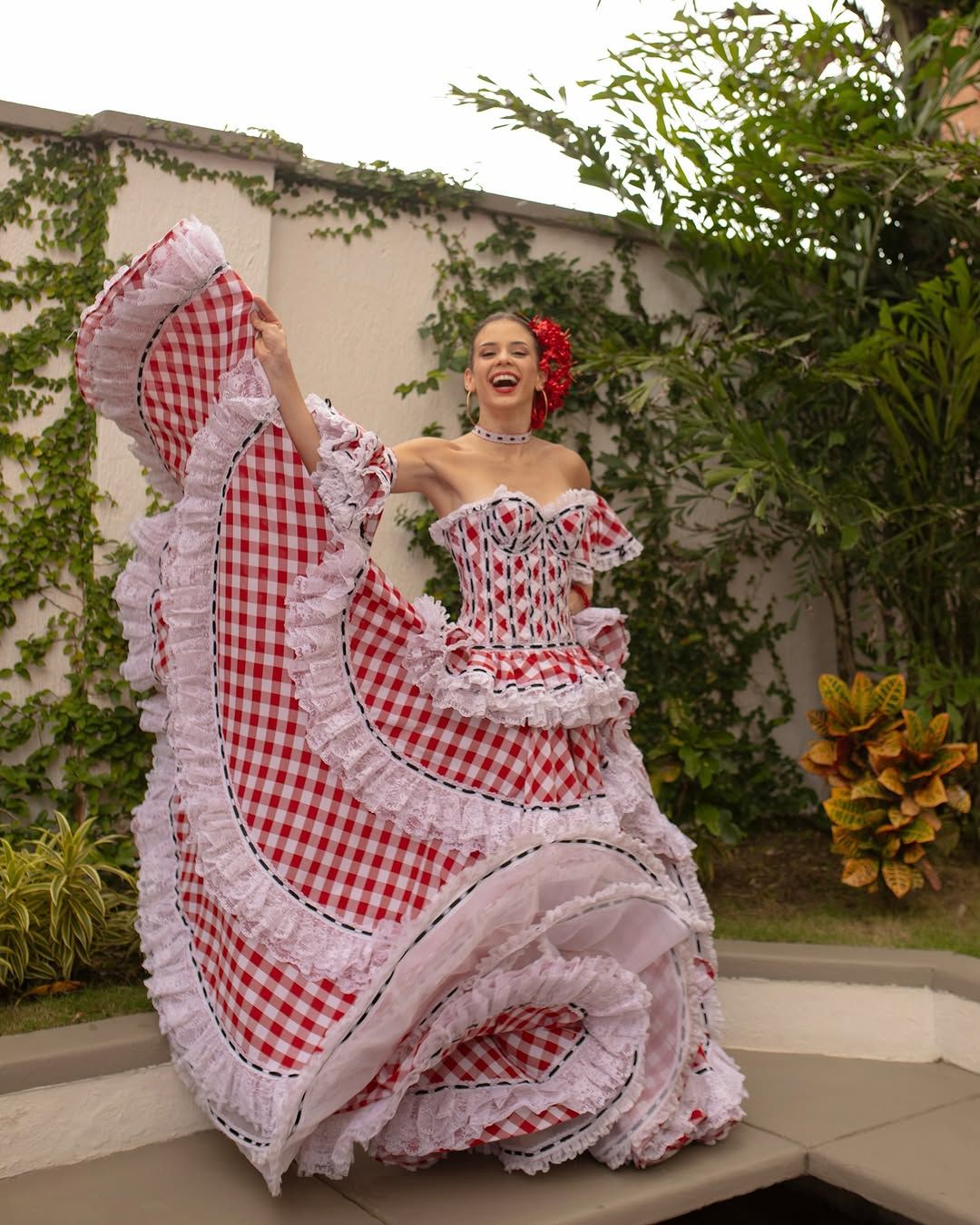
Founded in 1949 by a group of dock workers in Salvador, Filhos de Gandhy, meaning Sons of Gandhi, was inspired by Mahatma Gandhi’s independence movement in India. The organisation was established by workers who could not afford traditional Carnival costumes and adapted what they had: simple white sheets and towels. That act of creative resourcefulness produced one of the most recognisable Carnival dress traditions in Brazil. The Filhos de Gandhy costume, white sheet and turban with blue and white beaded jewellery, has been worn annually ever since. It is one of the largest Carnival organisations in El Salvador, with thousands of members.
The white of the Filhos de Gandhy costume carries the same cosmological weight as the white of the Candomblé terreiro and the lumbalú funeral dress: the colour of the spirit world, of purity, of the threshold between the living and the ancestral. Whether or not this cosmological reading was explicit in the 1949 dock workers’ adaptation of available materials, it is present in the tradition as it has been maintained and transmitted. A costume born from economic necessity has accumulated cultural meaning through the decades of practice and community investment that surround it. That is how living memory works in dress: it accumulates. Each year’s wear adds to what the garment carries.
OMIREN ARGUMENT
The fashion press that covers Brazilian Carnival covers the Rio samba school fantasias. It covers the sequins, the feathers, the elaborate headdresses. It covers the production values. It does not cover what the Ilê Aiyê fantasia is arguing or why Olodum’s drum section filmed in Pelôurinho carries a specific political weight that the sambadrome sequence does not. It does not cover why the Filhos de Gandhy white sheet is one of the most culturally loaded garments in Brazilian Carnival, or why Mestre Bimba’s decision to dress his capoeira students in clean white uniforms was a political strategy rather than a sports convention. The dress of Afro-Brazilian cultural arts carries living memory: memory of the bans, of the suppressions, of the gate-crashing, of the dock workers adapting what they had into something that would last seventy-five years.
That memory is in the fabric, in the colour decisions, in the choice of which tradition to follow when there are two lineages and only one of them kept the ancestral forms intact. Fashion editorial that covers Brazilian Carnival as a spectacle without covering it as a political history is covering the surface and calling it the story. It is not the story. The story is about what the communities wore when the government told them not to, and what they have been wearing ever since.
Frequently Asked Questions
- What is the abadá in capoeira and what does it mean?
The abadá is the traditional uniform of capoeira practitioners, consisting of loose white trousers and a cord worn around the waist. The name derives from the Yoruba word for the agbada, the West African prestige over-robe, reflecting the African cultural roots of the practice. The white colour and the clean, neat presentation of the abadá were introduced by Mestre Bimba in the 1930s as a deliberate strategy to legitimise capoeira in a period when it was criminalised and its practitioners socially ostracised. The corda system communicates rank through eight colours: yellow, orange, red, blue, green, purple, brown, and black, with transitional cords between levels.
- What is the difference between Capoeira Regional and Capoeira Angola in terms of dress?
Capoeira Regional, developed by Mestre Bimba from 1932, uses white abadá trousers and a coloured corda rank system. This uniform was designed to position capoeira as a respectable sport and was part of the strategy that brought it to national legitimacy. Capoeira Angola, preserved by Mestre Pastinha, typically uses black and yellow, the colours Mestre Pastinha adopted and that connect to African cosmological traditions. The dress distinction reflects a deeper difference: Regional positions capoeira as sport with progressive rank; Angola positions it as cultural inheritance with ancestral continuity, and practitioners’ choice between the two traditions is also a choice about what the practice fundamentally is.
- What is Ilê Aiyê, and why was its first Carnival appearance significant?
Ilê Aiyê, a Yoruba phrase meaning House of Life, is the oldest Afro-Bloco in Salvador, Brazil, founded on 1 November 1974 in the Curuzu neighbourhood of Liberdade. At their first public Carnival appearance, they gate-crashed the Salvador Carnival parade wearing African costumes and playing African-derived drum rhythms, from which Black Brazilians had historically been excluded. The Bahian government responded by banning African costumes and drumming from Carnival, framing the ban as a public safety measure. Ilê Aiyê continued to march and has produced annual African-themed fantasia costumes ever since, making the dress itself the central argument of its political project.
- What is fantasia in Afro-Bloco culture?
The fantasia is the costume produced by each Afro-Bloco for its annual Carnival participation. Each year’s fantasia is built around the organisation’s chosen theme, typically drawn from African history, Afro-Brazilian cultural heritage, or political commentary on the condition of Black Brazilians in Brazil. The fantasia represents a year’s research and creative work translated into wearable form. For Ilê Aiyê, whose first Carnival appearance was met with a government ban on African costumes, the annual fantasia is the direct continuation of the argument that the ban failed to stop. Other major Afro-Blocos, including Olodum, Malê Debalê, Ara Ketu, and Cortejo Afro, each produce their own annual fantasia traditions.
- Who are the Filhos de Gandhy, and how did their costume originate?
The Filhos de Gandhy, meaning Sons of Gandhi, is a Carnival organisation founded in 1949 by dock workers in Salvador who were inspired by Mahatma Gandhi’s independence movement. Unable to afford traditional Carnival costumes, they adapted simple white sheets and towels into their parade dress. That act of creative resourcefulness produced one of the most recognisable Carnival costume traditions in Brazil: the white sheet and turban with blue and white beaded jewellery that the organisation has worn every year since. The white of the costume carries the same cosmological weight as white in the Candomblé and Palenque traditions, associating it with the spirit world and ancestral presence.