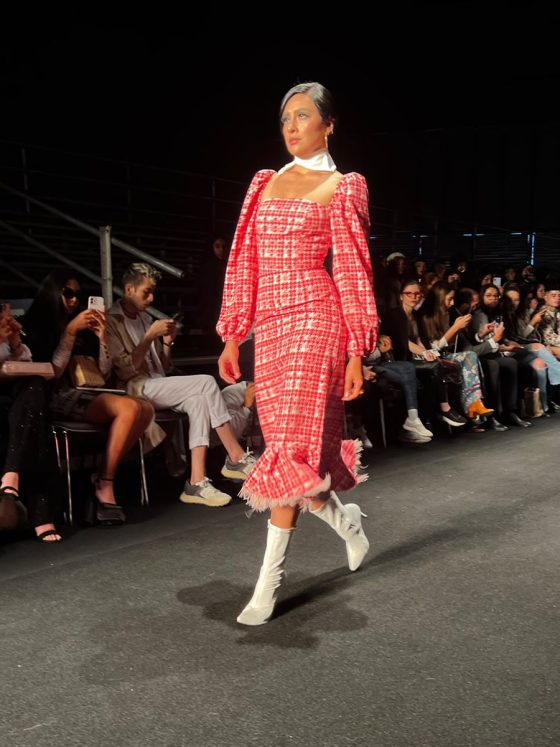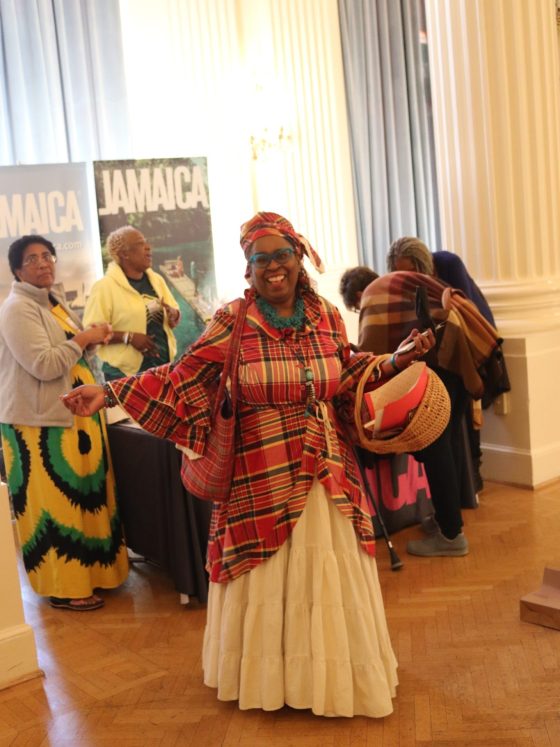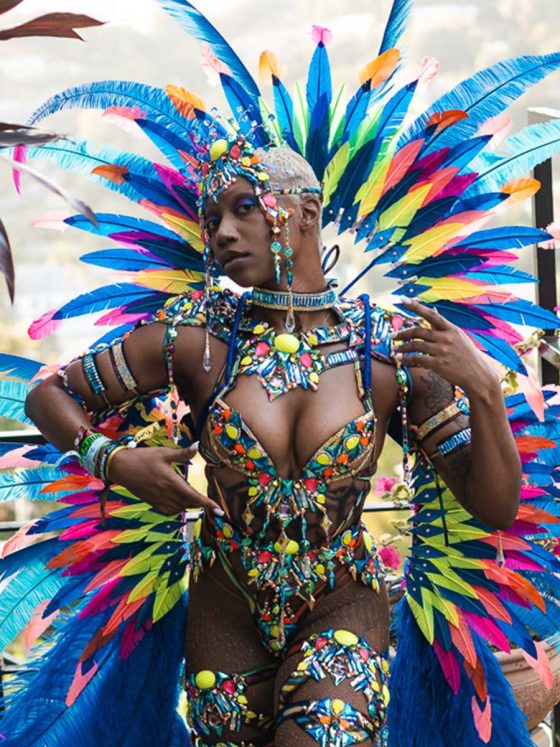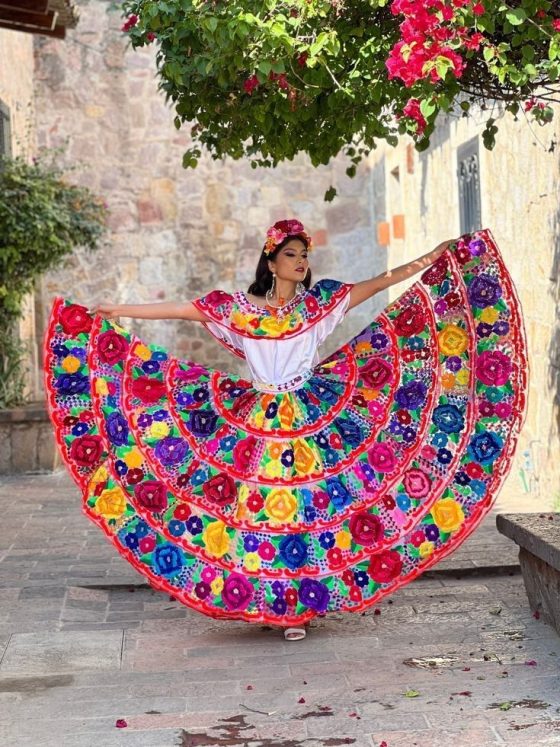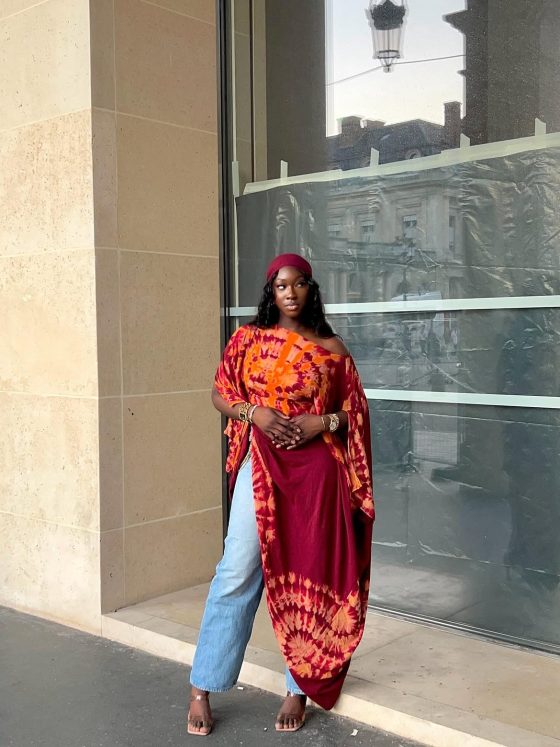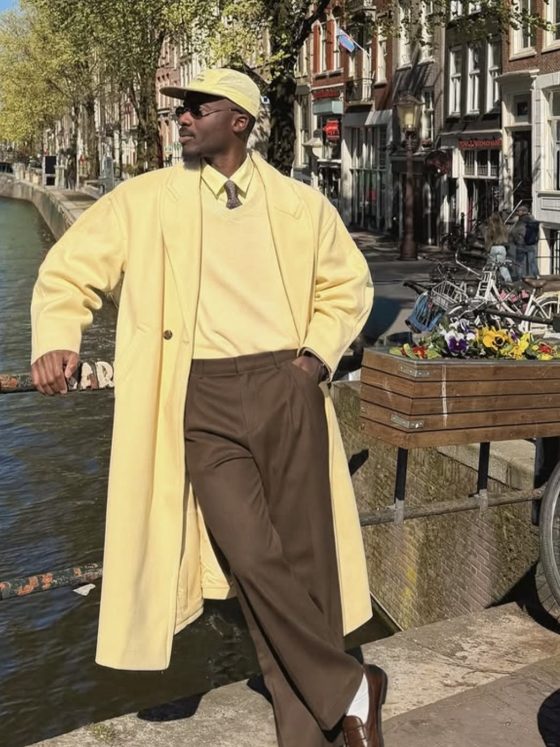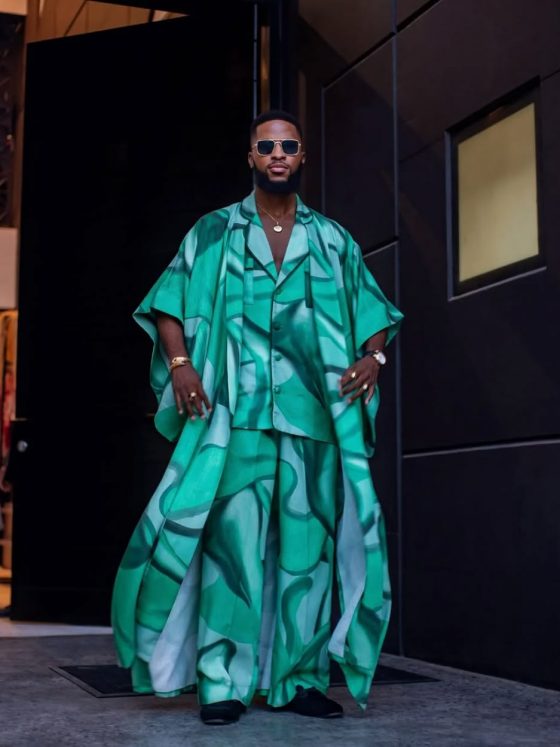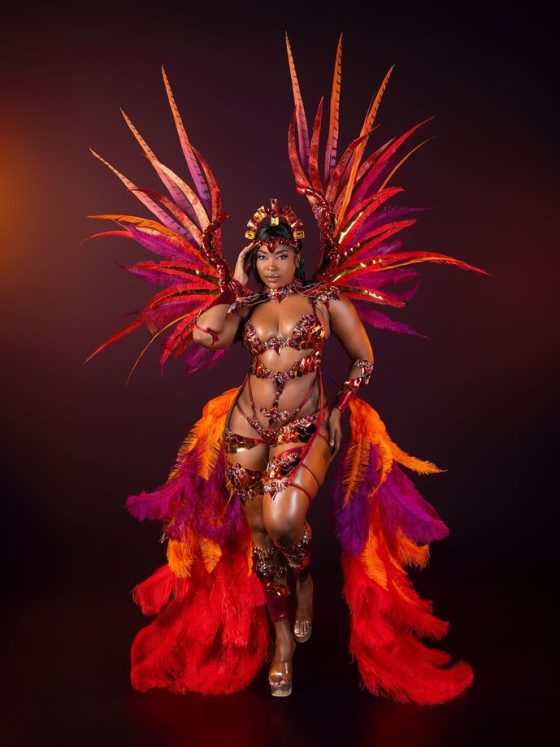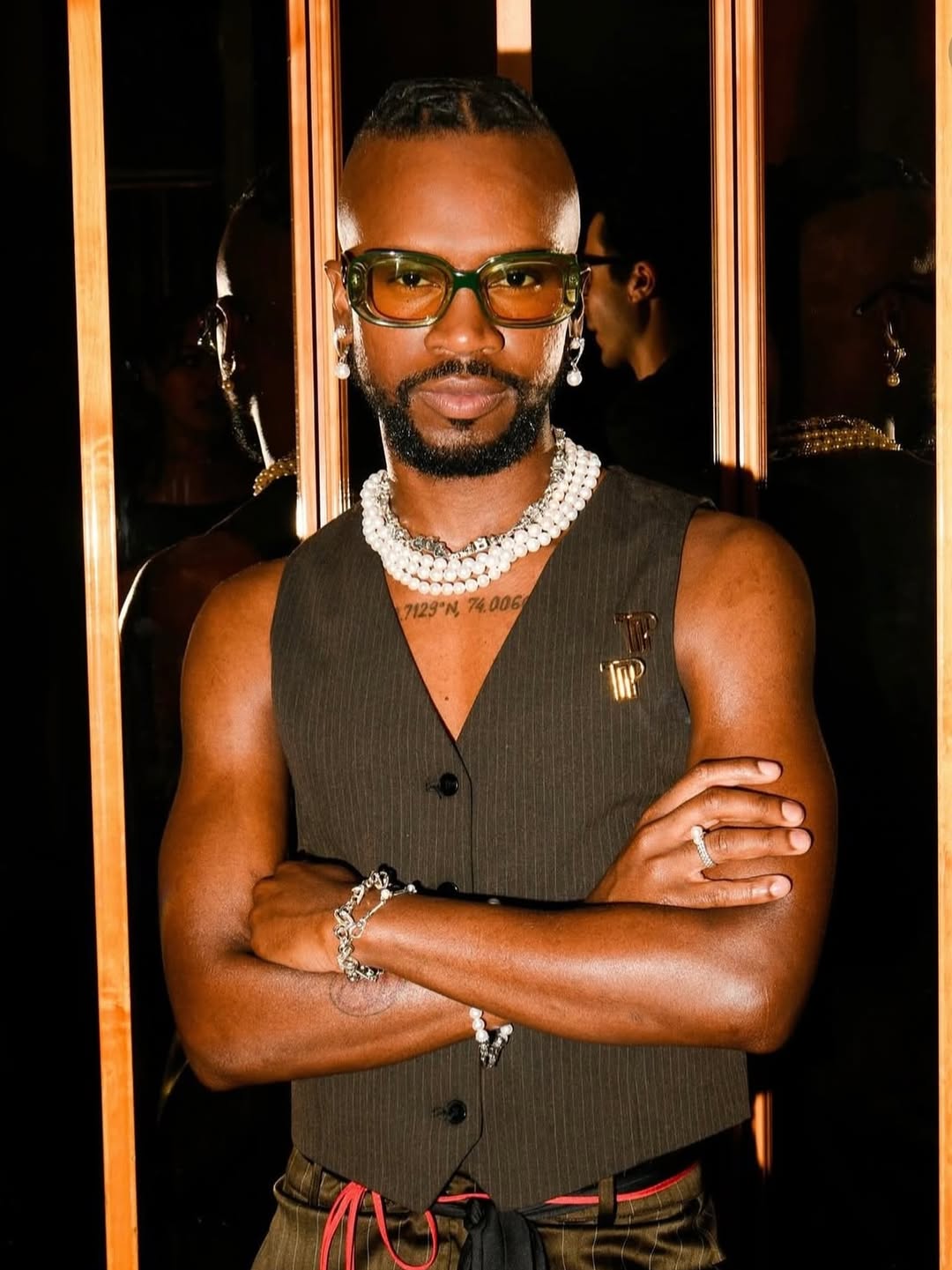
Edvin Thompson has one rule that runs through everything Theophilio has ever put on a runway: Jamaica comes first. Not as a mood board reference. Not as a print pulled from a culture he grew up in and then left behind when fashion called. As the actual design logic. The colour vocabulary, the silhouette construction, the fabric choices, the casting, the music pulsing through the show space, and the buttons etched with the faces of famous Jamaicans – the green, black, and mustard yellow – he calls the ‘Rasta Pantone’ and places in every single collection without exception. Jamaica is not the inspiration. Jamaica is the method.
Thompson founded Theophilio in 2016, launched it onto the New York Fashion Week calendar in earnest in 2021, and won the CFDA Award for American Emerging. He is making a case. This article documents what that case is, where it comes from, and why the global fashion industry has been slower to engage with it than the work deserves.
Edvin Thompson does not reference Jamaican dancehall. He builds from it. Theophilio is the clearest argument on any NYFW runway that Caribbean street aesthetics are not an inspiration. They are the foundation.
Kingston to New Jersey to Brooklyn: The Formation
Edvin Thompson was born and raised in Kingston, Jamaica. He moved to New Jersey in 2002 at the age of 9 with his mother, siblings, and grandmother. The family relocated to Atlanta for four years, where Thompson completed high school. He moved to New York in 2014 after an online class with the Academy of Art University in San Francisco convinced him he needed to be in the city to learn fashion properly. He has been in Brooklyn ever since. That sequence, Kingston to New Jersey to Atlanta to Brooklyn, is the literal geography of Theophilio. Every stop shows up in the work.
He named the brand after his grandfather. Theophilio, meaning to be loved by God, was the name of a man Thompson never adequately described as simply a relative. The name was a statement of inheritance, of the family line that connects a Brooklyn-based fashion label to a Kingston upbringing. He has consistently said that he has always wanted to celebrate Jamaica’s past, present, and future through his clothes, and that Jamaica is everywhere, making it easy to draw inspiration from across the cultural diaspora. The brand was not designed to look Jamaican. It was designed to be Jamaican, which is a different and more demanding ambition entirely.
What Dancehall Actually Gives the Collections
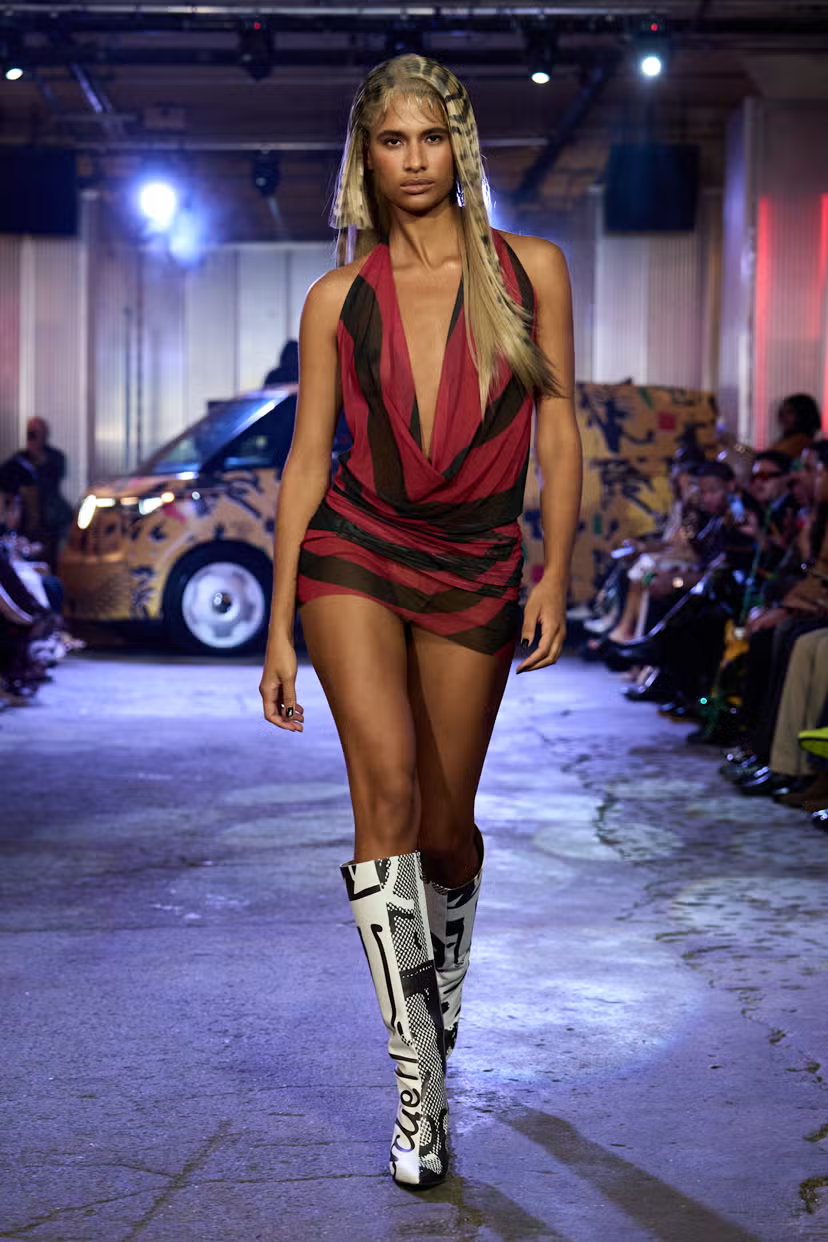
Dancehall is frequently misunderstood by those who encounter it primarily through fashion references. It is not simply a music genre. It is a complete aesthetic system, born in Kingston’s working-class communities in the late 1970s and early 1980s as a response to the more rootsy, spiritual register of reggae. Dancehall is immediate, urban, body-forward, and chromatic. Its fashion tradition, developed in Kingston’s dancehall sessions and sound system parties, is one of the most inventive street style ecosystems ever produced: custom-made garments, rhinestone embellishment, extreme silhouettes, colour combinations that most fashion systems would consider too much, worn by people who understood that too much was the whole point.
Thompson translates that system onto the NYFW runway with precision. The mesh fabrics that appear consistently across Theophilio collections are a direct reference to the mesh tank tops worn at Jamaican Carnival and dancehall events. The sequined and rhinestone-heavy pieces are not glam, but borrowed from American red-carpet culture. They are dancehall’s own visual logic, elevated in construction but unchanged in intention. The flared silhouettes, the sculpted proportions, the pieces that challenge and expand traditional ideas of masculinity and femininity in their cut, these come from dancehall’s tradition of dressing as a declaration, of wearing your confidence before you open your mouth. The runway is not where Thompson discovered these references. It is where he presents them to people who may be encountering them for the first time.
The Collections as Autobiography
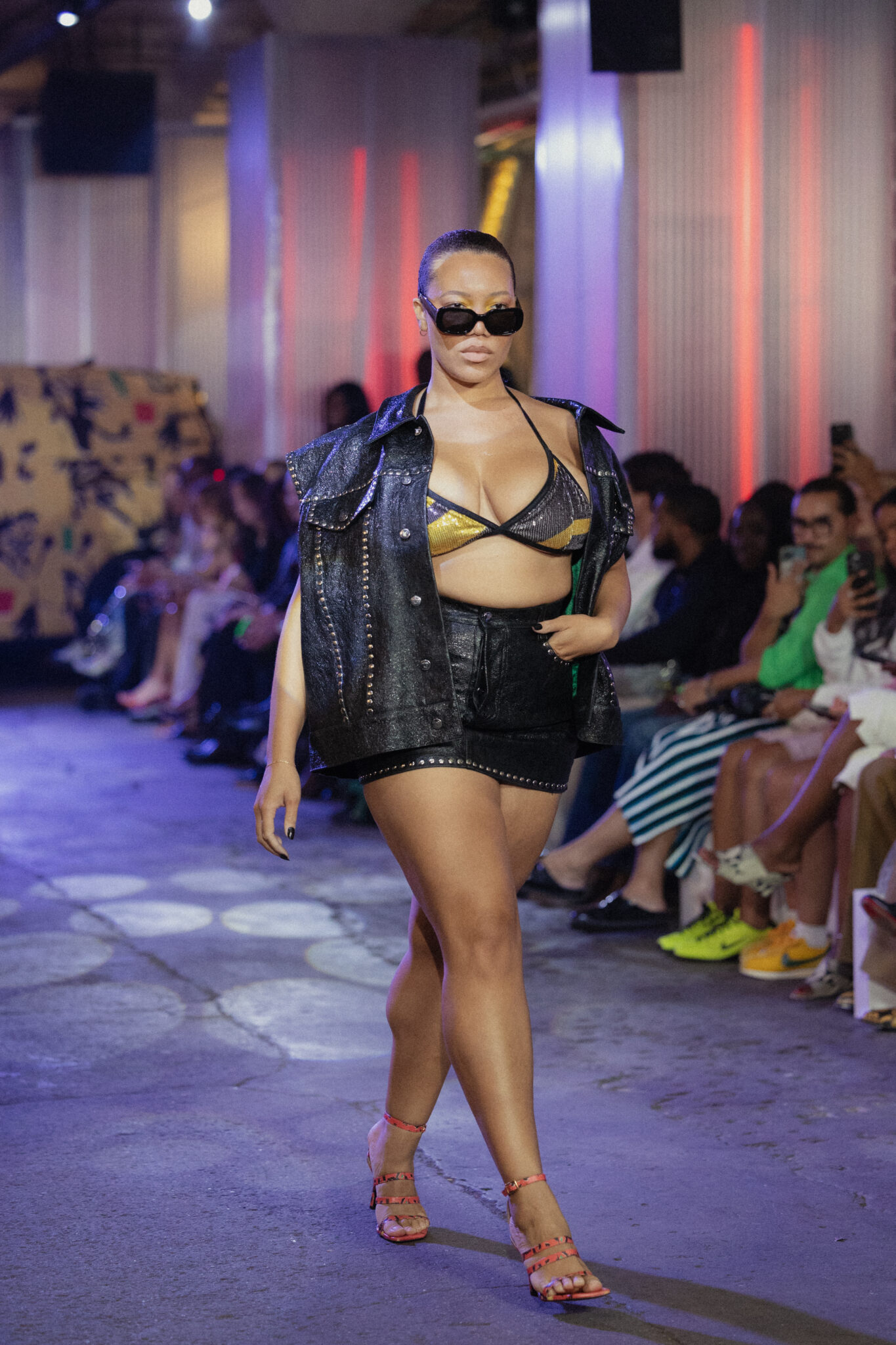
Every Theophilio collection is, in Thompson’s own description, a wearable autobiography. That is not a marketing phrase. The SS22 collection drew directly from Air Jamaica, the national carrier that was the first airline Thompson flew on when he left the island as a child. The show brought the airline’s livery, colour palette, and specific emotional significance to a kid leaving home for the first time, into an NYFW context. It was simultaneously fashion and personal history, a collection that only one person on earth could have made in exactly that form.
The SS23 collection, titled Homecoming, was built around Thompson’s return trip to Kingston with his team to shoot the editorial that preceded the show. Buttons on the suits were etched with the faces of famous Jamaicans. The Rasta Pantone ran through every piece. The collection was a love letter to Jamaica and a celebration of the urban American cities Thompson had lived in since emigrating, held in deliberate tension with each other rather than resolved in favour of one or the other. The SS25 collection, titled Shaunie, a deeply personal narrative in Thompson’s own words, reflected his decade of experience in New York while drawing on Jamaican heritage and urban style. Each collection adds a chapter. Taken together, they form something close to a memoir in fabric.
READ ALSO:
- Meiling: The Trinidad Designer Who Built a Minimalist Language From Caribbean Sensibility
- Crop Over Fashion: Barbados Built Its Own Aesthetic System, and It Has Nothing to Do With Trinidad
The CFDA Award and the Financial Reality Behind It
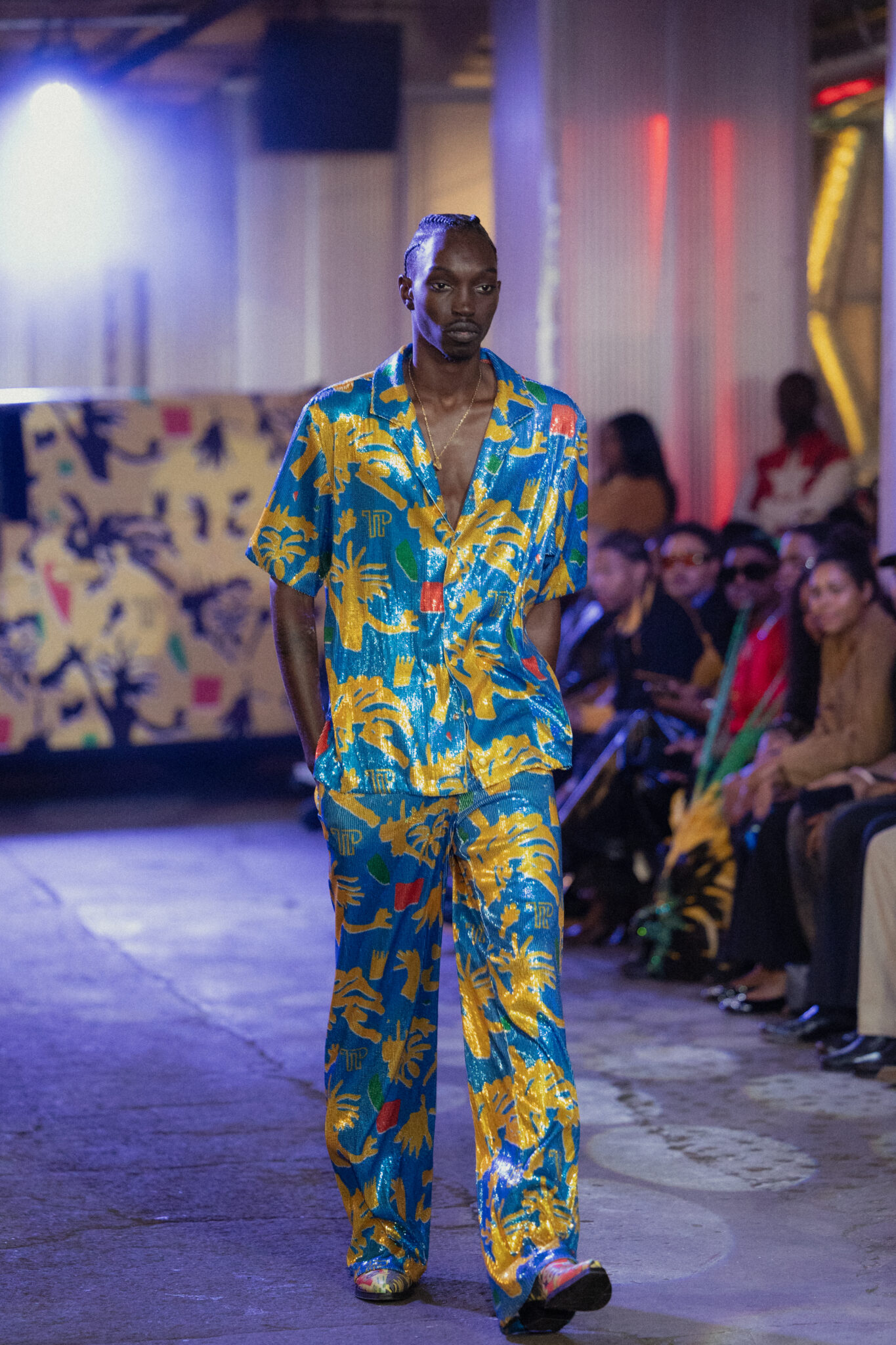
Thompson won the CFDA Award for American Emerging Designer of the Year in 2021, the year of Theophilio’s significant runway debut. The recognition was deserved, and the attention it brought was real. What Thompson has spoken about with equal directness is what the award did not solve. He develops his collections entirely in New York, which he has described as very expensive. He started the brand without capital, funding his earliest projects from money saved from previous jobs. He has said that he was only recently able to break even for the first time, describing it as a significant milestone for an independent designer at his stage.
The tension between critical recognition and financial sustainability is not incidental to the Theophilio story. It is central to the argument the brand is making. Thompson has maintained his agency, his aesthetic integrity, and his Jamaican cultural anchor without compromise. What he has not received is the financial infrastructure that designers of equivalent critical standing at European fashion houses receive as a matter of institutional support. “Maintaining your agency and integrity while getting real financial support is no easy feat”, he has said. But I’m not afraid. The Caribbean capacity for doing more with less, for building something real from constrained materials, shows up not just in the clothes but in how the label itself has been built.
SS26 and What the Label Is Becoming
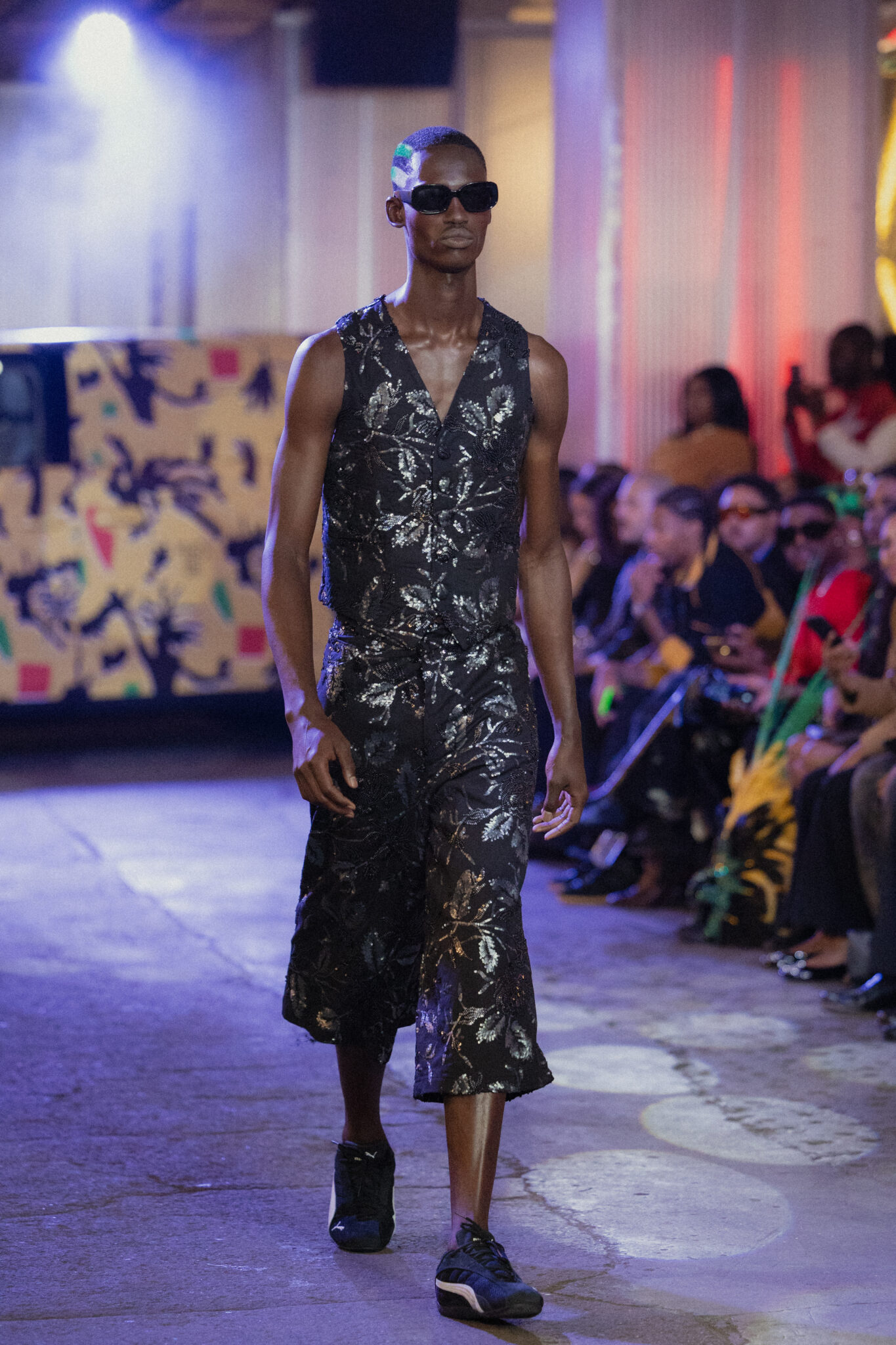
For SS26 at New York Fashion Week, Theophilio collaborated with AI design platform Raspberry AI in what was described as one of the first times a designer had fully integrated AI into every stage of the design pipeline at NYFW, from concept visualisation to final presentation. The collaboration reduced the design-to-runway timeline by an estimated 40 per cent, cut the need for physical prototypes by 60 per cent, and allowed the team to explore three times as many design variations as traditional workflows permit. For a small independent label where every budget decision matters, that efficiency is not a gimmick. It is infrastructure.
The SS26 collection maintained the Theophilio visual identity: the dancehall-rooted colour vocabulary, the sequined glamour, the silhouettes that reference Caribbean street style without softening them for an assumed mainstream audience. The Warby Parker x Theophilio eyewear collaboration, released through Black Fashion Fair and named with references to island culture, including Lemon Slice, Shade, Sorrel, and Soursop, extended the brand’s cultural language into a new product category. The label Thompson built from savings and conviction is expanding without abandoning the argument it started with. That discipline is as much a part of the Theophilio story as any single collection.
The Omiren Argument
The global fashion industry has a comfortable way of engaging with designers like Edvin Thompson: it calls them emerging, celebrates their cultural specificity as a distinctive point of difference, and moves on to the next story without examining what the work is actually arguing. Theophilio is not arguing that Jamaican culture is interesting. It is argued that Jamaican dancehall aesthetics constitute a complete design system that belongs on the world’s most watched runway on its own terms, not as a reference point for someone else’s collection and not as a niche cultural offering for audiences already predisposed to Caribbean culture.
The Rasta Pantone in every collection is not a signature. They are arguments, made in fabric and silhouette, that a working-class Caribbean street aesthetic has the same claim to runway space as any European couture tradition. Thompson has been making that argument consistently since 2021. The question is not whether the argument is being made. It is whether the industry is listening with the seriousness the work requires.
Frequently Asked Questions
- Who is Edvin Thompson, and what is Theophilio?
Edvin Thompson is a Jamaican-American fashion designer born and raised in Kingston, Jamaica, who moved to the United States at age 9 in 2002. He founded Theophilio in 2016 and launched the brand onto the New York Fashion Week calendar in earnest in 2021. Theophilio is a Brooklyn-based contemporary fashion label built on the intersection of Jamaican dancehall aesthetics and New York urban culture. The name Theophilio, meaning to be loved by God, was Thompson’s grandfather’s name. Thompson describes the brand as a wearable autobiography, with every collection drawing directly on his lived experience of migration, identity, and cultural pride.
- What is the Rasta Pantone and why does it appear in every Theophilio collection?
The Rasta Pantone is Thompson’s term for the green, black, and mustard yellow colour combination of the Jamaican flag, which he incorporates into every Theophilio collection without exception. It is not used as a decorative accent or a seasonal reference. It is a consistent, deliberate statement of cultural origin that functions as the label’s visual signature and its clearest ongoing assertion that Jamaica is the design foundation rather than an occasional inspiration. Thompson has stated explicitly that he has always wanted to celebrate Jamaica’s past, present, and future through his clothes, and the Rasta Pantone is the most consistent formal expression of that commitment.
- How did Edvin Thompson win the CFDA Award in 2021?
Edvin Thompson received the CFDA Award for American Emerging Designer of the Year in 2021, in the same year Theophilio made its significant New York Fashion Week runway debut. The award recognised his fusion of Caribbean cultural references with contemporary fashion construction, his consistent commitment to his Jamaican heritage as a design foundation, and the distinctiveness of his aesthetic voice within the American fashion landscape. Thompson started Theophilio without capital, funding his earliest projects from personal savings, and the CFDA recognition brought significant attention to a label that had been building largely independently of institutional fashion support.
- How does Theophilio approach sustainability?
Sustainability is embedded in Theophilio’s production practice through the use of sustainably sourced and upcycled materials. The Smiley Future Positive Creators Fund has recognised the brand for its responsible design approach, and Thompson has described sustainability as a core element of the label’s identity rather than a marketing commitment. The SS25 collection, shown at Los Angeles Fashion Week, featured thoughtfully sourced sustainable materials, including lightweight breathable fabrics alongside sequined pieces. For SS26, Thompson’s collaboration with Raspberry AI reduced the need for physical prototypes by 60 per cent, significantly reducing material waste for a small independent label working within real budget constraints.
- What was Theophilio’s SS26 collection about?
For SS26 at New York Fashion Week, Theophilio collaborated with AI design platform Raspberry AI in one of the first full integrations of AI into every stage of a NYFW design pipeline, from concept visualisation to final runway presentation. The collaboration cut the design-to-runway timeline by an estimated 40 per cent, reduced physical prototype requirements by 60 per cent, and allowed the team to explore three times as many design variations as traditional workflows. The collection maintained Theophilio’s established visual identity, including the dancehall-rooted colour vocabulary and sequined construction. The Warby Parker x Theophilio eyewear collaboration, released through Black Fashion Fair with colourways named Lemon Slice, Shade, Sorrel, and Soursop, also launched around this period.