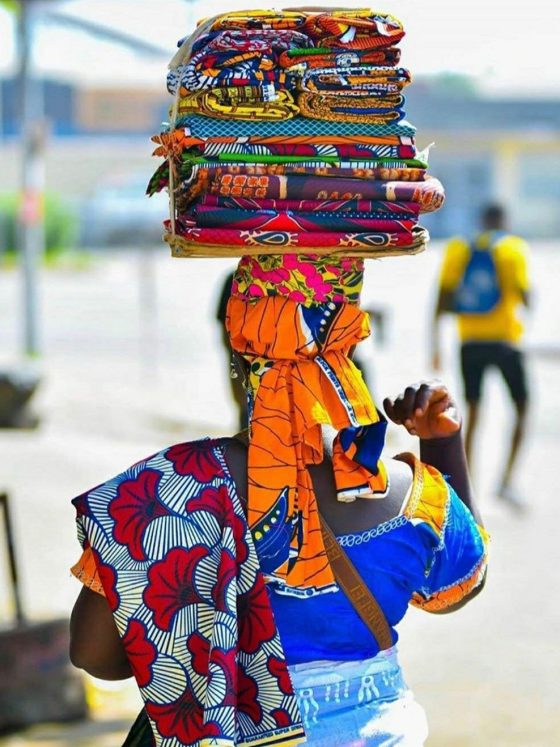
Peru’s textile heritage is among the most celebrated in the world. The Paracas burial mantles, the Andean weaving traditions of Cusco, the alpaca and vicuña cloth of the highland communities: these have been extensively documented, exhibited, and commercially developed. What has not been documented with equivalent depth is the textile and dress culture of Peru’s Afro-descendant coastal communities, concentrated in the provinces of Chincha, Cañete, Ica, Nazca, and Lima, whose cloth and craft traditions represent a distinct thread in Peru’s cultural fabric rooted in African heritage and shaped by three centuries of coastal community life. Afro-Peruvian textile traditions are not highland traditions adapted for the coast. They are coastal traditions in their own right, built from cotton rather than wool, from performance dress rather than ceremonial weaving, from community identity rather than Andean cosmological symbolism, and they deserve documentation on their own terms.
Peru’s Afro-descendant population, estimated at over three million people, lives primarily along the central and southern coast. The heartland of Afro-Peruvian cultural life is Chincha, in the Ica region, considered the cradle of Afro-Peruvian culture and the capital of its musical and dance traditions. El Carmen, a district of Chincha, is the community most closely associated with the concentrated transmission of Afro-Peruvian performance traditions, including the cajón drum, the festejo dance, and the specific dress vocabulary associated with those practices. The Verano Negro, the Black Summer Festival held each February in Chincha, is the most significant annual occasion for Afro-Peruvian cultural expression, drawing communities from across the coast for a week of music, dance, cuisine, and the parade dress that makes the festival’s visual culture one of the most striking in South America.
Afro-Peruvian coastal communities in Chincha, Caño, and El Carmen built dress traditions rooted in performance, cotton craft, and cultural identity. This article documents the full record.
Cotton, Coast, and the Plantation Heritage
The African people brought to Peru during the transatlantic slave trade arrived primarily through Callao, Lima’s port, from the sixteenth century onward. Unlike Brazil, where the largest concentration was in the sugar-producing northeast, Peru’s enslaved African population was concentrated primarily on the cotton and sugar plantations of the coastal valleys and in Lima’s urban households. This coastal and agricultural context shaped the material culture that developed: cotton, grown on the same plantations where enslaved people worked, became the primary fabric of Afro-Peruvian dress. Cotton cultivation and processing were among the skills that, according to historical records, the colonial administration initially valued: enslaved Africans were recognised as skilled artisans and agricultural workers before the plantation system hardened into its most brutal form.
The cotton traditions of the coastal communities carry this history. The specific lightness of cotton cloth suited to the coastal desert climate, the dyeing techniques developed from available plant materials, and the construction of garments for the specific physical demands of the cajón-driven dances that Afro-Peruvian communities built as their primary cultural expression: these reflect an adaptation of African textile knowledge to Peruvian coastal conditions that has been ongoing since the first enslaved communities were established in the valleys of Chincha and Cañete. Peru did not officially apologise for the hardships of slavery until 2009, nearly a century and a half after abolition in 1854. The textile and dress culture that developed under and after slavery was built without state acknowledgement. It did not wait for that acknowledgement to build.
Festejo Dress: Performance as Cultural Statement
The festejo is the foundational dance of Afro-Peruvian culture, originating in the coastal communities of Cañete and Chincha in the late nineteenth and early twentieth centuries. Characterised by a strong rhythmic focus, the cajón and Creole guitar drive rapid hip movements and footwork. They are associated with communal joy and the specific physicality of Bantu-influenced dance traditions. The dress worn for festejo is not incidental to the performance. It is part of the performance, and its evolution across the twentieth century reflects the broader trajectory of Afro-Peruvian cultural politics.
In 1971, the Black Art Festival of Cañete introduced a festejo competition and elected a Miss Festejo, the first formal occasion on which the performance dress was publicly adjudicated. Between 1975 and 1977, as documented in the festejo tradition’s historical record, a new style of festejo for women was popularised by some musicians as the valentina style, in which performers dress in colourful skirts and bras, a construction that foregrounds movement and the body’s engagement with the rhythm in ways that a more covered dress cannot. This style of performance dress, vivid in colour and physically expressive, is now the internationally recognised visual vocabulary of festejo.
It is not an accident. It is a deliberate aesthetic development by communities who understood that how you dress for the dance is part of what the dance says.
The Alcatraz: When Dress Is the Game
The alcatraz is one of Afro-Peruvian dance culture’s most distinctive performance traditions and one of the few in the world in which the dress itself is the central element of the game. In Alcatraz, a dancer tucks a paper tail or fringe into their waistband and performs while a partner attempts to set it alight with a candle held in their hand or between their teeth. The dancer’s skill is in the hip movements that keep the flame away from the paper. The dress for Alcatraz must therefore allow maximum hip mobility while carrying the specific paper element whose preservation or destruction is the point of the dance. This is not a performance dress that happens to have a practical requirement. The practical requirement is the performance.
Victoria Santa Cruz, born in Lima in 1922 and widely known as the mother of Afro-Peruvian dance and theatre, revived dances, including the alcatra,z, in her landmark performances of the 1960s and 1970s, notably at the 1968 Mexico City Olympics. Her approach was explicitly Afrocentric: she sought the ancestral memory of African forms in the dance traditions that had survived the colonial period, and she brought that approach to how the dances were presented and how their dress was understood. Santa Cruz co-founded the Cumanaá theatre company with her brother Nicomedes in 1958 and later founded Teatro y Danzas Negras del Perú in 1966. Her poem Me Gritaron Negra, written in 1978, documents her journey from racial shame to cultural pride and, as her biographers note, resonates globally. The dress she put on stage was part of the same reclamation.
El Carmen and the Ballumbrosio Legacy
El Carmen, a district of Chincha approximately 200 kilometres south of Lima, is the community most associated with the living transmission of Afro-Peruvian cultural practice. The Ballumbrosio family, whose patriarch, Amador Ballumbrosio, was a master cajón player, dancer, and cultural guardian, has maintained the performance traditions of El Carmen across generations, welcoming visitors who travel specifically to the house where the family continues to dance and play for those who come. Amador Ballumbrosio has since passed, but the family’s practice continues, documented by community members, researchers, and cultural visitors who have made El Carmen a primary reference point for anyone seeking to understand Afro-Peruvian cultural continuity in its most unmediated form.
The dress of El Carmen’s performance traditions reflects the community’s specific cultural position. The atajo de negritos, a Christmas dance performed in El Carmen that honours the Christ child, is danced in straw hats and specific rhythmic costuming that distinguishes it from the festejo or the alcatraz. Each performance tradition carried in El Carmen has its own dress code, and the community that maintains them has maintained those codes alongside the dances themselves. The Hacienda San José, a Cultural Heritage Site of Peru located fifteen kilometres from Chincha’s centre, stands as physical documentation of the plantation economy within which these communities were formed. The dress traditions that emerged from those communities are the most important cultural inheritance they produced in response to the conditions imposed on them.
Susana Baca and the Global Visibility Problem
Susana Baca, born in Chorrillos, Lima, in 1944, is the most internationally visible living figure of Afro-Peruvian cultural practice. Her Grammy-winning music, which blends Afro-Peruvian rhythms with jazz, has brought Afro-Peruvian culture to international audiences who would not otherwise have encountered it. As Peru’s Minister of Culture from 2011 to 2012, she championed Afro-Peruvian rights and the formal recognition of Afro-Peruvian cultural heritage within the national cultural framework. Her visual presentation in performance contexts, rooted in the coastal dress aesthetic and the colour vocabulary of the festejo tradition, carries that aesthetic into international concert halls.
The global visibility that Baca’s work provides for Afro-Peruvian culture is substantial and genuine. It is also limited in the specific way that visibility through a single artistic figure is always limited: it is personal rather than structural, and it positions Afro-Peruvian culture as a musical tradition with a visual dimension rather than as a complete textile and dress culture with its own history, its own craft traditions, and its own system of meaning that exists independently of any single performer. The fashion industry, which has occasionally referenced Afro-Peruvian visual culture, has done so through performance dress rather than the craft traditions that underlie it. The coastal textile knowledge, the cotton dyeing techniques, the construction conventions of the communities in Chincha and El Carmen: these remain almost entirely undocumented in fashion editorial.
Also Read:
- Afro-Cuban Designers Influencing Fashion Culture Within and Beyond the Island
- Colombian Designers Bringing Pacific Coast Heritage to the Global Stage
What the National Afro-Peruvian Museum Has, and Fashion Press Does Not
The National Afro-Peruvian Museum in Lima, established to document and preserve the cultural heritage of Peru’s Afro-descendant communities, holds collections that document the dress, crafts, and material culture of the coastal communities throughout their history, from the colonial period to the present. The museum represents Peru’s institutional acknowledgement, however belated, that Afro-Peruvian cultural heritage deserves formal documentation and preservation. The 2009 government apology for the hardships of slavery that Afro-Peruvian communities endured was another step in this institutional recognition, arriving nearly 155 years after abolition in 1854.
The fashion press that covers Peru covers Andean weaving. It covers Cusco’s highland traditions and the alpaca textile economy. It covers the colonial-influenced folkloric costumes of the Marinera Limeña. What it does not cover is the dress culture of Chincha, Cañete, and El Carmen. The National Afro-Peruvian Museum has collections that contain exactly what the fashion press has never sought. The research has been done, in part, by Peruvian cultural institutions and scholars. The editorial coverage that would make that research accessible to a global fashion audience has not been produced. That is the gap this article addresses.
OMIREN ARGUMENT
The standard account of Peruvian textile heritage positions the Andean weaving traditions as primary: Paracas, Nasca, Inca, the highland communities of Cusco, the alpaca and vicuña economy. These are genuine achievements of extraordinary depth and deserve the documentation they have received. The problem is not that they are covered. The problem is that Afro-Peruvian coastal textile and dress culture is not covered alongside them, as if Peru’s textile heritage stopped at the mountain’s edge. The communities of Chincha, Cañete, and El Carmen built dress traditions from cotton, from performance, from the specific cultural knowledge of the African communities brought to the coastal valleys by the slave trade, and from three centuries of adaptation, survival, and creative development under conditions of sustained racial erasure.
Those traditions are no less sophisticated than the highland weaving traditions because they are not woven on backstrap looms. They are different traditions, from different materials, for different purposes, carrying different cultural meanings, and they deserve the same quality of editorial attention that any serious fashion platform would apply to any dress culture of equivalent age, depth, and cultural complexity. The Verano Negro festival in Chincha happens every February. The Ballumbrosio family in El Carmen receives visitors every year. The National Afro-Peruvian Museum in Lima is open. The documentation has been there to find. The fashion industry has simply not been looking in the right direction.
Frequently Asked Questions
- What are the Afro-Peruvian textile traditions of the coastal communities?
Afro-Peruvian coastal textile traditions refer to the cloth, craft, and dress culture developed by Peru’s Afro-descendant communities, concentrated primarily in the provinces of Chincha, Cañete, Ica, Nazca, and Lima. Unlike the highland Andean weaving traditions made from alpaca and vicuña wool, Afro-Peruvian coastal textile culture is built primarily from cotton, reflecting the coastal climate and the plantation economy in which enslaved Africans worked from the sixteenth century onwards. The dress traditions are closely connected to performance culture: the festejo, alcatraz, and atajo de negritos dances each have specific dress codes that have been passed down alongside the dances across generations, most concentrated in the communities of Chincha and El Carmen.
- What is the Verano Negro festival, and how does dress feature in it?
The Verano Negro, or Black Summer Festival, is held each February in Chincha, the province considered the cradle of Afro-Peruvian culture. It is the most significant annual occasion for Afro-Peruvian cultural expression, drawing communities from across the coastal provinces for a week of music, dance, traditional cuisine, and parades. The festival includes festejo competitions in which performance dress is adjudicated, with the colourful skirts and vivid costuming of the festejo tradition on full display. The festival pays tribute to Nicomedes Santa Cruz, the poet and musicologist who was central to the mid-twentieth-century revival of Afro-Peruvian cultural practice.
- What is the festejo, and what do performers wear?
The festejo is the foundational dance of Afro-Peruvian culture, originating in the late nineteenth and early twentieth centuries in the coastal communities of Cañete and Chincha. It is characterised by a strong rhythm, with the cajón and Creole guitar driving rapid hip movements and footwork rooted in a Bantu-influenced dance tradition. The standard performance dress for women, developed and popularised from the 1970s in what some musicians call the valentina style, consists of colourful skirts and bras that allow maximum hip movement while providing vivid visual impact. This dress is a deliberate aesthetic development by performers who understood that how you dress for the dance is part of what the dance communicates.
- Who are Victoria and Nicomedes Santa Cruz, and what is their significance?
Victoria Santa Cruz (1922–2014) and Nicomedes Santa Cruz (1925–1992) were siblings who together drove the mid-twentieth-century revival of Afro-Peruvian cultural practice. Victoria, known as the mother of Afro-Peruvian dance and theatre, co-founded the Cumanaá theatre company in 1958 and later founded Teatro y Danzas Negras del Perú in 1966. She revived dances such as the alcatraz and zamacueca in performances, including at the 1968 Mexico City Olympics, seeking what she described as the ancestral memory of African forms. Her poem Me Gritaron Negra (1978) documents her journey from racial shame to cultural pride. Nicomedes was a singer, poet, musicologist, and guitarist who founded the Academia Folklorica in Lima in 1949 and became the leading ethnomusicologist of Afro-Peruvian music.
- What is the Alcatraz dance, and how does it involve dress?
The Alcatraz is an Afro-Peruvian dance in which the performer tucks a paper tail or fringe into their waistband and dances while a partner attempts to set it alight with a candle. The dancer’s skill lies in hip movements that keep the flame from the paper. The dress for the Alcatraz must allow maximum hip mobility while carrying the paper element, making the practical requirement inseparable from the performance itself. The alcatraz was revived for international audiences by Victoria Santa Cruz in her 1960s and 1970s performances, including at the 1968 Mexico City Olympics, as part of her broader reclamation of Afro-Peruvian cultural heritage.