Liberian traditional clothing is frequently discussed as though it were a single national style. It is not. The country’s dress culture is a negotiation between at least five concurrent systems, each built from a distinct ethnic and geographic inheritance, each maintaining its own social logic, and each shaped by historical forces that did not produce a single unified result. The Vai embroidered kaftan and the Kpelle ceremonial wrapper speak different visual languages. The structured Victorian tailoring that Americo-Liberian settlers introduced to Monrovia’s political class in the nineteenth century operated alongside, not over, the indigenous traditions it arrived among. Country cloth, the handwoven textile that formed the backbone of pre-colonial Liberian dress culture, was a regional economic system before it was a fashion heritage. The sixteen ethnic groups of Liberia have been wearing, trading, adapting, and transmitting dress cultures across the Mano River region for centuries. What outsiders call traditional Liberian clothing is the surface of all of that simultaneously.
This complexity is not an obstacle to understanding Liberian traditional fashion. It is the understanding. Clothing in Liberia has always been a social language. It communicates political identity, spiritual status, age, ancestry, family belonging, and the specific occasion for which a person has dressed. It does this in at least five different dialects, depending on which community’s dress grammar is in use. Korto Momolu, born in Monrovia in 1975, fled Liberia during the First Civil War in 1990, studied at the L’Académies des Couturiers Design Institute in Ottawa and later Parsons School of Design, and built an internationally recognised design practice rooted in Liberian textile heritage without detaching it from the cultural logic that gave that heritage its depth. Her Sankofa collection, which drew on African fabrics with seventy-five to eighty per cent of material sourced in Liberia, was exhibited at the Smithsonian National Museum of African Art. She dressed President Ellen Johnson Sirleaf and Miss Universe Leila Lopes in the same body of work that earned her Fan Favourite and first runner-up on Project Runway Season 5. That trajectory, from Monrovia to the Smithsonian, is not a story about a single designer leaving a peripheral fashion culture for the international mainstream. It is a story about a designer carrying a sophisticated dress culture to audiences that did not yet have the vocabulary to receive it.
Liberia has sixteen ethnic groups and at least five distinct dress traditions. What the world calls Liberian traditional clothing is a negotiation between all of them. Here is that story.
Traditional Clothing in Liberia: What Ethnic Structure Actually Produced
Liberia has sixteen recognised ethnic groups. The Kpelle are the largest, concentrated in the north-central region around Gbarnga. The Bassa, Grebo, Gio, Mano, Kru, Lorma, Krahn, Gbandi, Gola, Mende, Sapo, Belle, and Vai communities, along with the Mandingo and the Americo-Liberian settler community, each developed dress traditions specific to their social structures, geographies, trade networks, and ritual lives. Understanding traditional clothing in Liberia requires abandoning the idea that a national costume exists and engaging instead with the regional systems that predate the republic by centuries. The current republic was founded in 1847 by formerly enslaved African Americans repatriated from the United States. The dress cultures that existed in the territory that Liberia now governs were already complex, already engaged in trade with one another, and already functioning as complete social communication systems before any of the institutional structures of the modern state arrived.
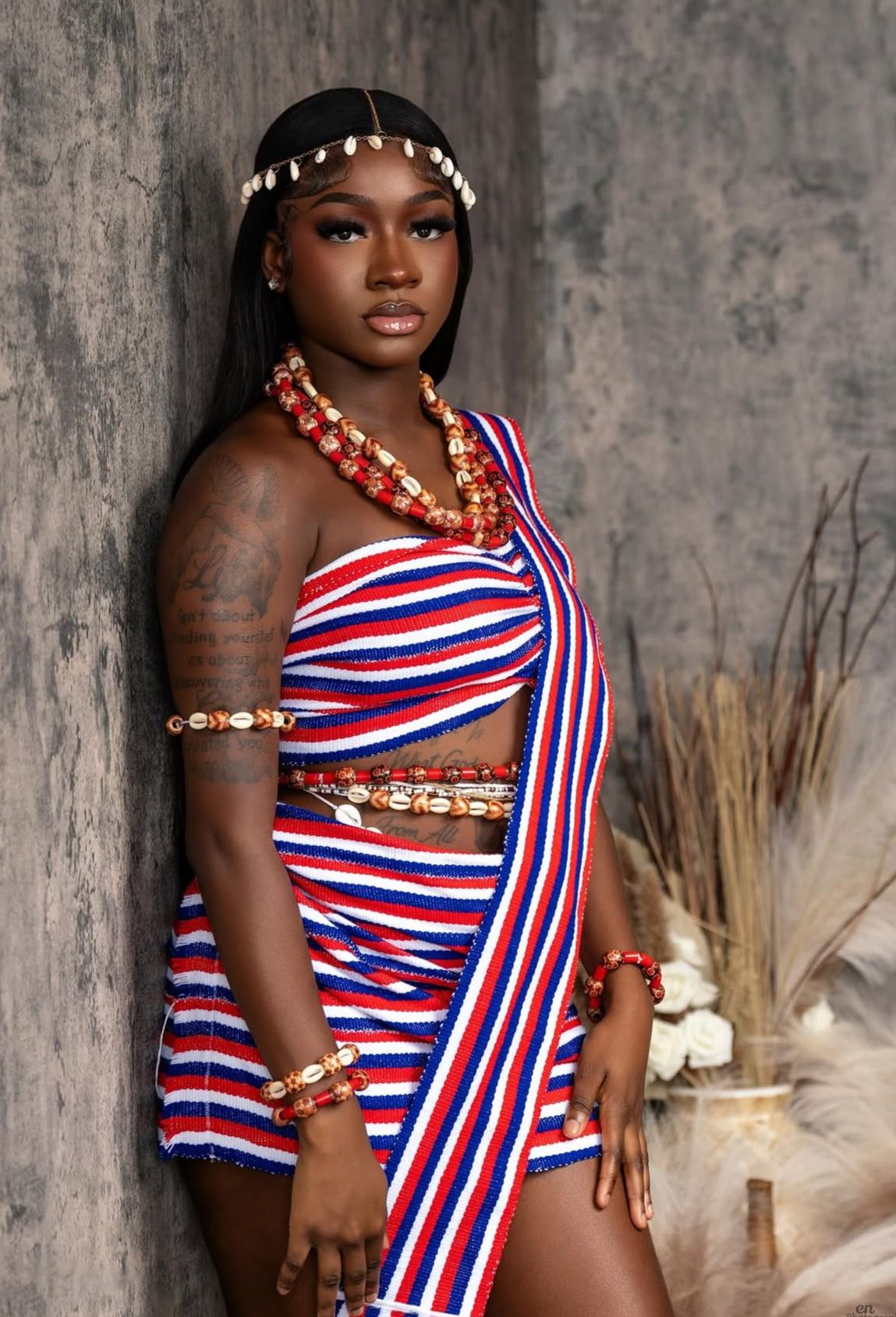
Kpelle ceremonial dress is anchored in wrapper traditions. At weddings, funerals, and festivals, women wear wrapped-cloth garments fastened at the waist or chest, accompanied by head ties and layered jewellery whose specific configurations communicate social belonging and dignity. The coordination of fabrics among family members during significant ceremonies is a structured social act rather than an aesthetic preference. It makes kinship visible to everyone present, establishing the boundaries of the family unit entering the ceremony and signalling the collective weight the occasion carries.
Vai dress tradition reflects the community’s history as a node of Islamic scholarship and trans-regional trade in north-western Liberia and Sierra Leone. The Vai are one of the few West African peoples to have independently developed a syllabic script, the Vai script, invented around 1830. Their men’s ceremonial attire, long flowing gowns, embroidered kaftans, loose trousers, and structured caps, communicates education, religious leadership, and social prestige within a community whose self-understanding is shaped by centuries of engagement with Islamic scholarship and the economic authority that trade literacy produced. These garments are not fashion choices. They are credentials worn in public.
Grebo and Kru communities in south-eastern Liberia developed layered adornment systems in which beaded accessories, body markings, wrapped textiles, and hairstyles functioned together as a complete visual language tied to social transition, age, and spiritual status. The body and the clothing were not separate systems. Movement, ornamentation, and ritual context all contributed to how identity was communicated. A garment worn in the wrong context, without the appropriate accompanying adornment and body practice, would convey an incomplete message. The dress was only legible in full context.
Country Cloth and the Textile Economy That Predates the Fashion Industry
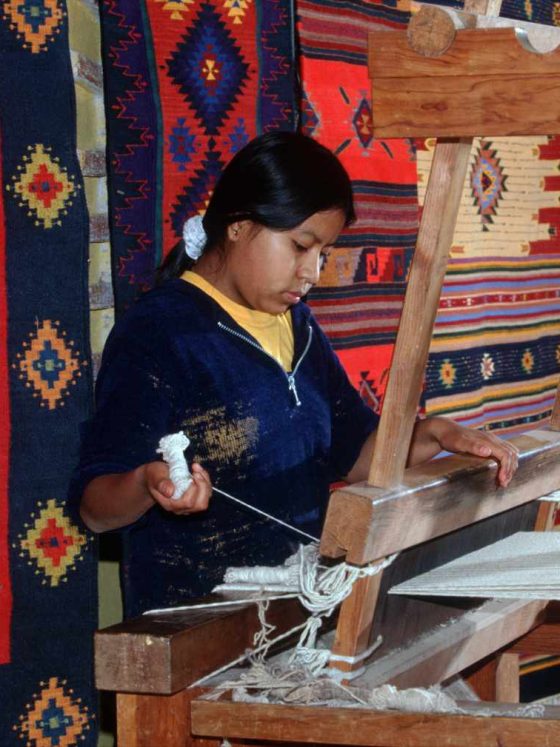
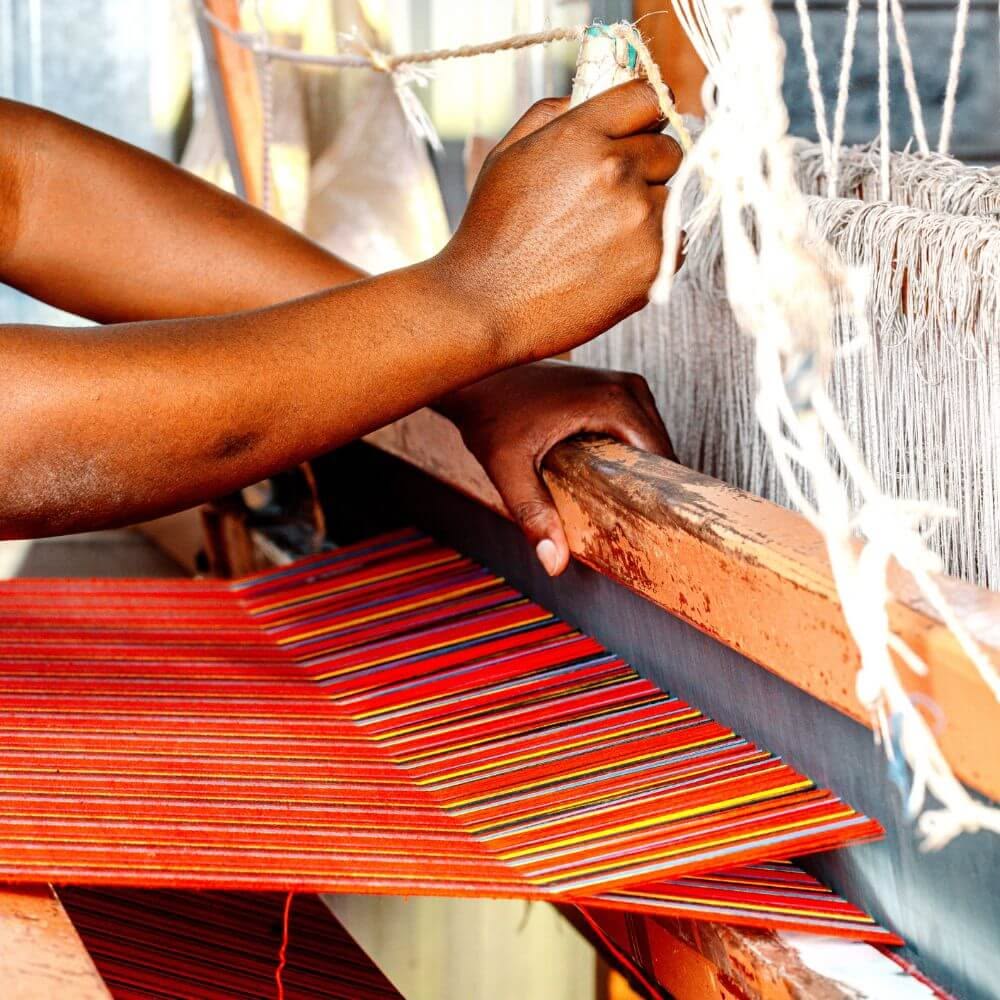
Country cloth is Liberia’s most significant pre-colonial textile tradition. Yet its significance has been consistently underestimated in fashion documentation, which treats it as craft heritage rather than economic infrastructure. As documented in scholarship on West African textile economies, Liberian communities developed local textile economies through weaving, dyeing, tailoring, and regional trade long before European-manufactured imports reached West African markets at scale. Country cloth was produced on handlooms by male weavers working in narrow strips, which were then stitched together into larger garments. The labour was structured and gendered: men wove, while women were responsible for spinning, dye preparation, cloth finishing, and significant participation in the textile trade. The garment that emerged from this system carried economic value, social meaning, and ceremonial significance simultaneously.
The trade routes that carried country cloth connected Liberia to Guinea, Côte d’Ivoire, and Sierra Leone along networks that preceded colonial mapping and continued across national borders that those maps imposed. Indigo dyes, tailoring techniques, decorative practices, and specific fabric types moved across the Mano River region through merchant networks that were regionally scoped, operationally independent, and economically significant enough to sustain generations of specialist craftspeople. Country cloth did not circulate because it was beautiful. It circulated because it was valuable — as social currency, as ceremonial necessity, and as a marker of the family wealth and status required to wear it at the right occasions.
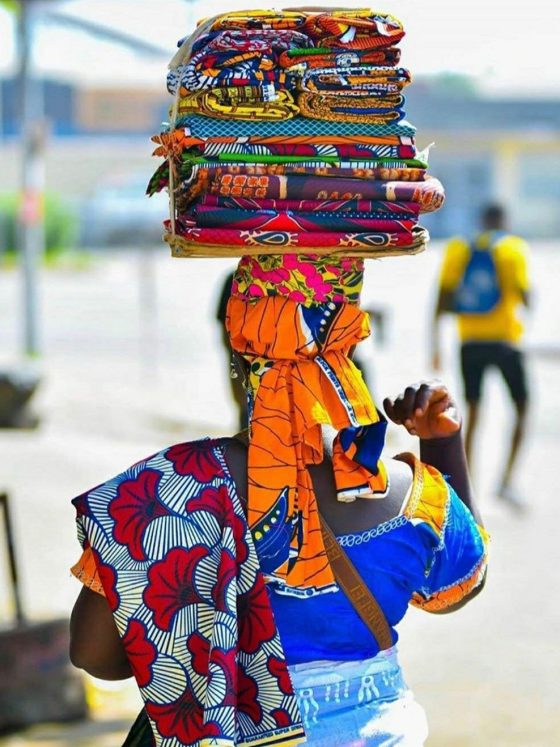
The arrival of European-manufactured wax prints altered this landscape materially without replacing it culturally. Wax prints are not intrinsically African. They originated in Dutch industrial production, drawing on Indonesian batik techniques, before West African consumers reinterpreted them into powerful regional fashion systems. Liberian families, traders, and tailors integrated imported textiles into pre-existing cultural meaning systems. The significance of any given fabric was not determined by its origin but by how Liberians used it socially. A family that coordinated a wax print at a funeral was not performing a colonial fashion practice. They were performing a Liberian social protocol that happened to use imported material. The protocol was theirs. The material was incidental.
Clothing in Liberia has never been a single national aesthetic. It has been a negotiation between sixteen ethnic groups, a settler community, trade networks that crossed the Mano River long before any border did, and a fashion culture that adapted without losing its social function.
Americo-Liberian Tailoring and the Politics of Settler Dress
The nineteenth-century arrival of Americo-Liberian settlers fundamentally altered the visual landscape of Monrovia’s political class without eliminating the indigenous dress traditions that preceded it. The settlers, formerly enslaved African Americans and free Black people from the United States repatriated to the West African coast from 1820 onwards, brought Victorian-inspired tailoring customs with them. Formal suits, structured dresses, tailored jackets, lace fabrics, gloves, and hats became the markers of upper-class respectability, education, and political leadership in Monrovia’s Americo-Liberian social hierarchy. As historical documentation of Liberia’s settler society confirms, this tailoring tradition was positioned by the settler elite as evidence of civilisation in the terms the nineteenth century defined it, which meant in European terms. The political hierarchy that accompanied it, in which Americo-Liberians dominated the country’s government for over a century, made the suit a marker of access to power that indigenous communities understood and engaged with on their own terms.
The significant fact in Liberian fashion history is not that Victorian tailoring arrived. It is that it did not obliterate what it arrived among. Indigenous clothing customs persisted alongside settler formal wear and imported fabrics. They eventually merged into multi-layered cultural expressions that continue to shape Liberian ceremonial clothing. A Kpelle woman at a state occasion may wear a tailored blouse with a traditional wrapper. A Vai elder may appear in an embroidered ceremonial kaftan at an event whose formal protocol reflects settler-era conventions. These combinations are not confusing between traditions. They are evidence of a dress culture that has been negotiating among its constituent systems for almost two centuries and producing something specific from that negotiation.
Ceremonial Dress and the Social Structures It Maintains
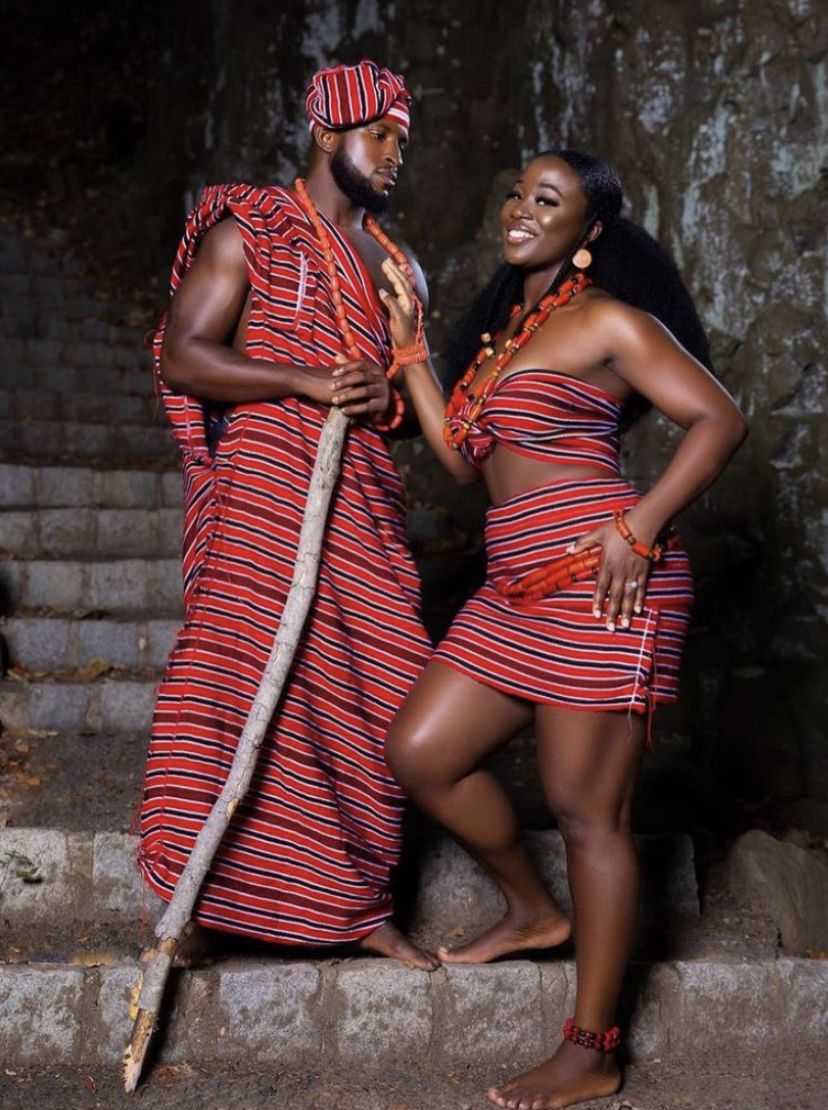
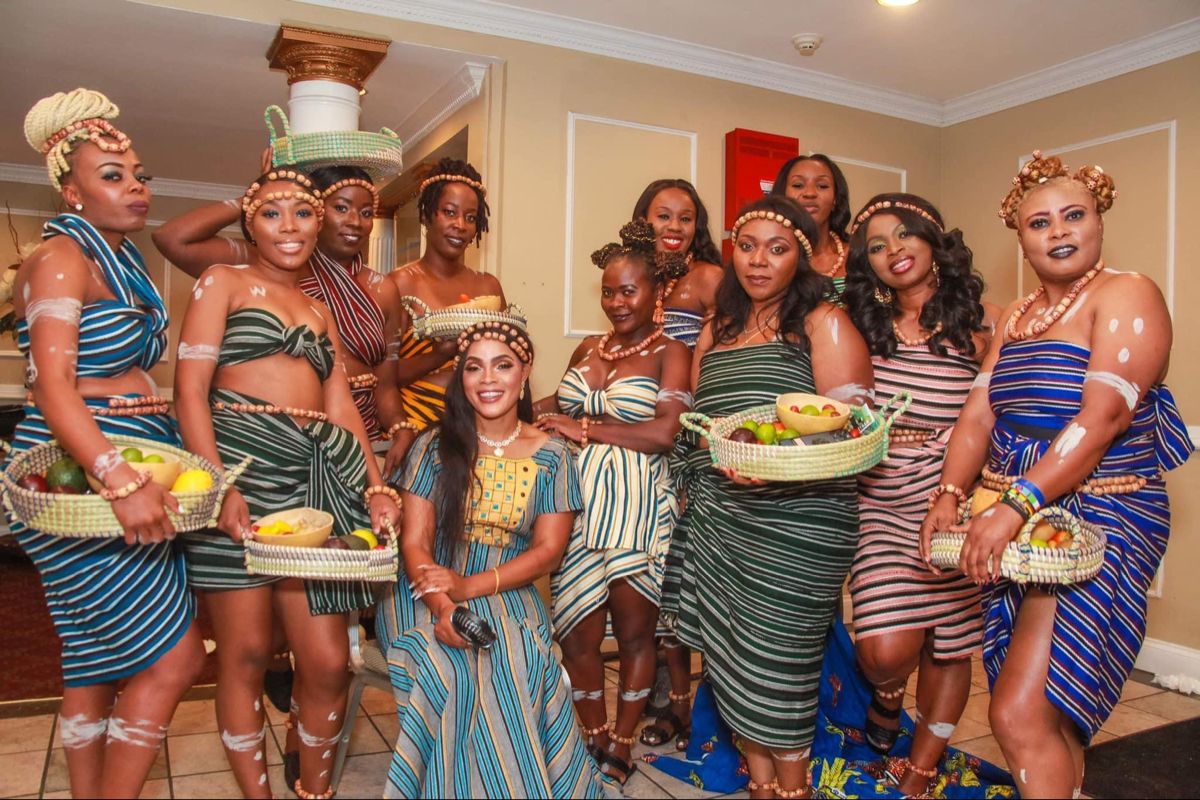
Traditional clothing in Liberia is most culturally visible and most structurally significant during ceremonies. Weddings, funerals, initiation ceremonies, religious gatherings, and political festivals all use dress as structured social language rather than personal expression. The garment at a ceremony is not what you feel like wearing. It is what your relationship to the occasion and to the family hosting it requires you to wear. Marriage ceremonies demonstrate this precisely: families coordinate fabrics among extended family members, making the kinship connections between the joining households visible to everyone present. The clothing constitutes a public record of who stands with whom and in what capacity. As Omiren Styles documented in the Sande Society article, the Sande Society operates across Sierra Leone and into parts of Liberia, and its ceremonial dress traditions, in which the sowei helmet mask and raffia costume represent the only African masquerade where women wear wooden masks, are part of the same regional dress culture that Liberian ceremonies draw from.
The Poro and Sande societies shaped ceremonial dress codes governing initiation, adulthood, authority, and social discipline across various parts of Liberia. Masks, garments, body adornment, and performance functioned within broader frameworks of cultural governance and education rather than as aesthetic performance. What was worn at a Poro ceremony communicated the wearer’s position within the society’s structure and the specific ritual phase in progress. The dress was not incidental to the governance function. It was the governance function’s most publicly visible expression.
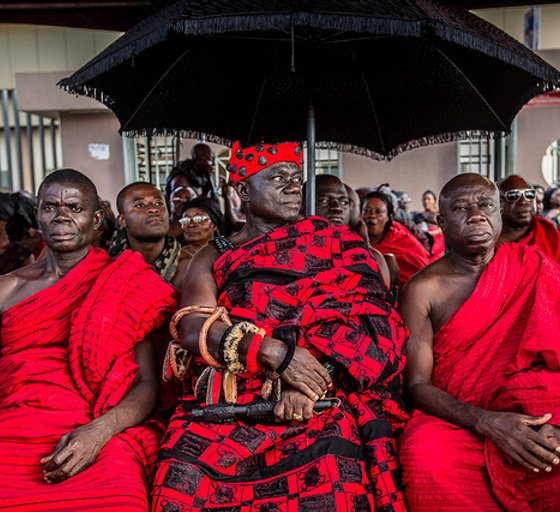
Funeral dress in Liberia varies by community, religion, family structure, and local custom. Still, across all variations, the principle holds that what is worn communicates the wearer’s relationship to the deceased and to the grief being expressed. Some communities use white to signal spiritual transition. Others use black-and-white ensembles to express group unity and mourning. The specific fabric chosen for the family’s coordinated attire at a funeral is not chosen for its appearance. It is chosen for what it reveals to the assembled community about who these people are to one another and to the person they are marking.
Also Read
- Sande Society Initiation Dress: How Sierra Leone’s Most Powerful Women’s Institution Uses Fashion as a Rite of Passage
- The Significance of White in African Mourning: Why the Continent’s Grief Dress Is Not What the West Assumes
- ShaSha Designs: Cameroon’s Royal Fabric and Its Loudest Argument
- The Silence Around African Luxury: Why the Continent’s Most Expensive Fashion Is Rarely Discussed
Korto Momolu and Bombchel Factory: What Contemporary Liberian Fashion Is Building
Korto Momolu was born in Monrovia on 2 February 1975. Her family fled the First Liberian Civil War in 1990 and settled in Canada as refugees. She studied at the L’Académies des Couturiers Design Institute in Ottawa and later at Parsons School of Design. After finishing as Fan Favourite and first runner-up on Project Runway Season 5 in 2008, she returned to Liberian textile heritage as the foundation of her practice rather than as a reference point for something else. Her Sankofa collection was presented at the Sankofa Fashion Show in Liberia and exhibited at the Smithsonian National Museum of African Art, making it one of the most formally recognised bodies of Liberian-rooted fashion work in the international institutional record. She has dressed President Ellen Johnson Sirleaf, Miss Universe Leila Lopes, Vanessa Williams, and Whitney Houston. She showed at New York Fashion Week SS2025. Her work, consistently described as the bridge between Liberian textile heritage and global contemporary fashion, is distinguished by her ability to maintain that bridge without flattening what lies on either side.
Bombchel Factory represents a different model of building within the Liberian fashion economy. An ethical manufacturing hub based in Liberia, it works to connect local garment production to global fashion supply chains on terms that keep economic value in the country. The factory operates as both a production facility and a training institution, building the skilled workforce that any sustained fashion industry requires. Its model argues that Liberian fashion’s future does not lie in exporting its cultural heritage to international markets alone, but in building the production infrastructure that allows the fashion industry to be located in Liberia rather than extracted from it.
The Omiren Argument
The dominant misconception about traditional clothing in Liberia is that it constitutes a single national style. It does not. Liberian dress culture is the product of sixteen ethnic groups operating concurrent dress systems, each with its own complete visual vocabulary, each shaped by geography, religion, trade, ceremony, and social structure, and none of which can stand in for the others. The Americo-Liberian settler community added a Victorian tailoring tradition that sits in the same cultural space as the Kpelle wrapper, the Vai kaftan, and the Grebo layered adornment system. Country cloth established a pre-colonial textile economy that the arrival of imported wax prints materially altered, without displacing it culturally. The Sande and Poro societies governed ceremonial dress across communities in ways that the state has never fully replaced. These systems coexist in contemporary Liberian ceremonial life because they perform social functions that modern casualwear cannot.
Omiren Styles documents traditional clothing in Liberia as a multi-system negotiation rather than a single heritage, as the evidence supports. The continuity in Liberian fashion is not found in visual purity or in the preservation of unchanged forms. It is found in the maintenance of social function across changing material conditions. Liberians integrated wax prints into Kpelle ceremonial protocols because the protocol was theirs to adapt. They combined Victorian tailoring with indigenous wrapper traditions because it conveyed something the pure forms could not. Korto Momolu built a Smithsonian-exhibited body of work from Liberian textiles because the heritage she was working with had the depth to sustain that level of creative engagement. The depth was always there. The documentation was not.
Frequently Asked Questions
1. What is traditional clothing in Liberia?
Traditional clothing in Liberia is not a single national costume. It is a system of concurrent dress traditions produced by sixteen ethnic groups across the country’s five geographic regions. Key traditions include the Kpelle wrapper and headtie system worn at ceremonies, the V; i embroidered kaftan and kaftan-variant dress codes associated with Islamic scholarship and trade, the G;ebo and Kru layered adornment systems combining textiles, beadwork, and body marking, and t;e Victorian-influenced tailoring introduced by the Americo-Liberian settler community in the nineteenth century. Country cloth, a handwoven textile produced on narrow-strip handlooms and stitched into larger garments, was the backbone of pre-colonial Liberian dress culture and remains present in ceremonial life today.
2. What is country cloth in Liberia?
Country cloth is a locally produced handwoven textile that formed the foundation of Liberian dress culture before the arrival of European-manufactured imports. Traditionally woven by men on narrow-strip handlooms and stitched together into larger garments, it was produced within structured labour systems in which women were responsible for spinning, dyeing, cloth finishing, and trade. Country cloth circulated through regional trade networks connecting Liberia to Guinea, Côte d’Ivoire, and Sierra Leone, and carried social meaning beyond its material function: the weight, weave, and context of a country cloth garment communicated the family status, wealth, and ceremonial standing of the wearer.
3. Which ethnic groups shape traditional clothing in Liberia?
Liberia has sixteen recognised ethnic groups, each of which has developed distinct dress traditions. The most influential in terms of documented dress culture include the Kpelle, the largest group, whose ceremonial wrapper traditions remain central to family celebrations and funerals; the Vai, whose Islamic-influenced embroidered kaftans and formal caps communicate education and religious authority; the Grebo and Kru of south-eastern Liberia, whose layered adornment systems combine textiles, beadwork, and body marking; and the Americo-Liberian settler community, whose Victorian tailoring traditions shaped the formal dress codes of Monrovia’s political class from the nineteenth century onwards.
4. Is Ankara traditional in Liberia?
Ankara, also known as wax print, is widely worn in Liberia but is not indigenous to the country or the continent. It originated in Dutch industrial production based on Indonesian batik techniques before West African consumers adopted and reinterpreted it into regional fashion systems. In Liberia, wax prints have been incorporated into existing cultural meaning systems by families, tailors, and traders who use them in ceremonial contexts that predate the fabric’s arrival. The significance of wax print fabric in a Liberian ceremony derives not from its origin but from how Liberians use it socially. The protocol and the occasion are Liberian. The material’s origins are not.
5. Who is Korto Momolu, and what is her connection to Liberian fashion?
Korto Momolu was born in Monrovia, Liberia, on 2 February 1975. Her family fled the First Liberian Civil War in 1990 and settled in Canada as refugees. She studied at the L’Académies des Couturiers Design Institute in Ottawa and later at Parsons School of Design before rising to international recognition as Fan Favourite and first runner-up on Project Runway Season 5 in 2008. Her Sankofa collection, built with seventy-five to eighty per cent of fabric sourced in Liberia, was exhibited at the Smithsonian National Museum of African Art. She has dressed President Ellen Johnson Sirleaf, Miss Universe Leila Lopes, Vanessa Williams, and Whitney Houston, and shown at New York Fashion Week SS2025. Her practice is the most internationally visible example of Liberian textile heritage sustained as a primary creative foundation rather than a cultural reference.
Explore More
Read the full Fashion > Africa section at omirenstyles.com/category/fashion/africa/ for Omiren Styles’ documentation of the textile traditions, dress cultures, and fashion systems that African communities have been building and maintaining across the continent for centuries, documented with the specificity and cultural depth they deserve.