Core Identity
Record type: Material and production tradition [Researched]
Material name: Kente cloth (also: kente, Kente)
Tradition holder: Ashanti people of Ghana (primary); Ewe people of the Volta Region (also significant producers)
Primary production geography: Ghana
Key production locations: Bonwire, Ashanti Region (Ashanti kente, primary traditional centre); Agotime-Kpetoe, Agotime-Kpetoe District, Volta Region (Ewe kente, also significant)
Specific community documented: Ziope, Agotime-Kpetoe District, Volta Region: 22 kilometres east of Ho [Researched]
Production type: Handwoven textile; strip-loom weaving
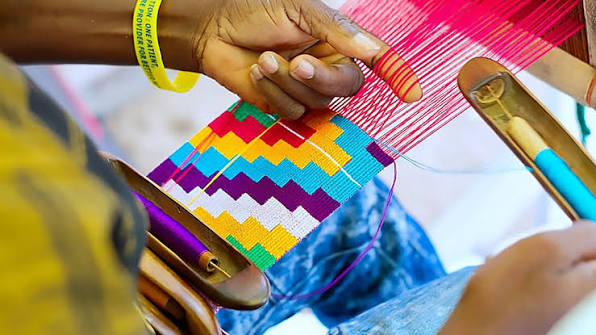
Technique: Strip-loom (narrow-loom) weaving; double-weave method for interlocking patterns
Production origin: Developed by the Ashanti people of Ghana in the 17th century; Ewe weaving traditions are distinct and contemporaneous
Record last reviewed: September 2026
The Omiren Index reference record for kente weaving in Ghana: production geography, techniques, cultural significance, GI protection status, and relevance to the fashion supply chain. A living document.
Fashion and Production Role
What Kente Is
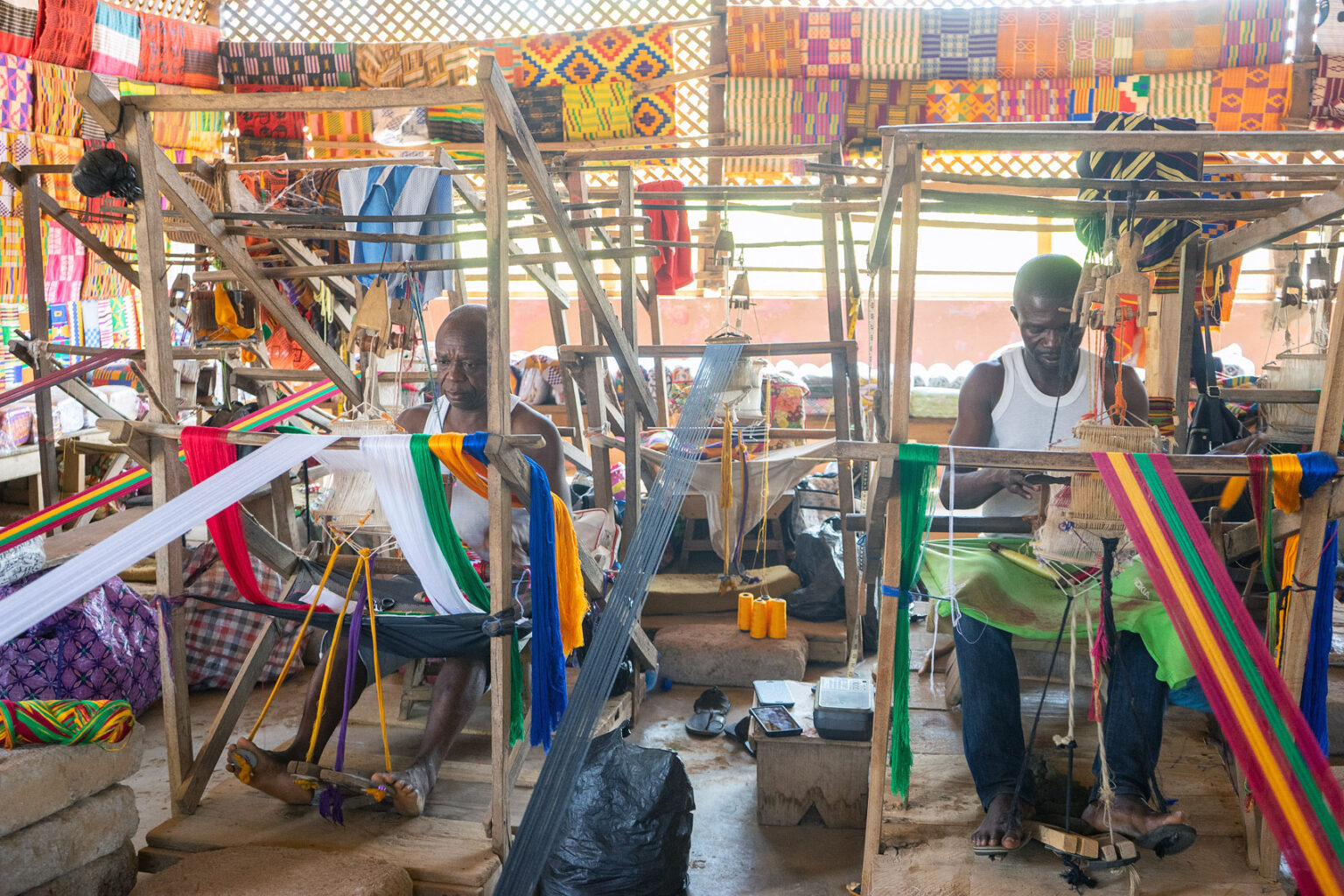
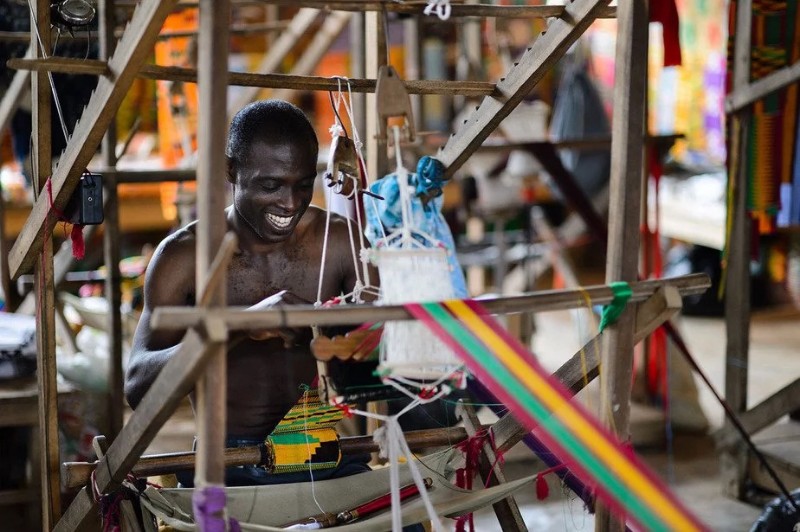
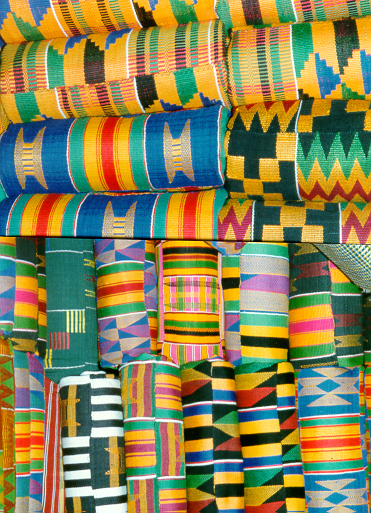
As documented in African textile and fashion reference sources, kente cloth is a woven textile produced on strip looms, in which narrow strips of cloth, approximately 4 inches wide, are woven separately and then sewn edge to edge to form a wider cloth. The double-weave technique used in the most intricate kente creates interlocking patterns across strips. Each colour combination and pattern sequence carries specific cultural meanings. Gold is associated with wealth and royalty. Green is associated with growth and renewal. Red is associated with political strength. Blue with harmony. The weave density and pattern complexity of a piece communicate social position, occasion and identity within Ghanaian cultural contexts.
Traditionally reserved for Ashanti royalty, kente has evolved over centuries of cultural and commercial change into everyday, ceremonial, and fashion contexts both within Ghana and internationally. The cultural meanings embedded in the original system have not been entirely transferred into international fashion usage, where kente is more often read as a visual language of African cultural identity than as a specific semiotic system.
Production Process
Each piece of kente is woven on a traditional strip loom, a portable wooden structure that the weaver manages with both hands and feet simultaneously. The production of a single piece of kente cloth, which requires weaving multiple narrow strips that are then assembled into a wider cloth, can take weeks or months, depending on the pattern’s complexity and the piece’s length. Single-panel sections of complex kente can take significantly longer than simpler work.
The materials traditionally used are cotton and silk, with modern production also incorporating Lurex thread for lustrous visual effects. The yarn is dyed before weaving. The pattern is determined by the weaver’s management of warp and weft threads, a skill developed over years of practice whose complexity increases with the intricacy of the design.
Current Fashion Relevance
Kente has entered the global fashion supply chain through multiple routes. Direct sourcing from Ghanaian weavers by fashion brands and designers with established producer relationships. Sourcing through fabric markets and traders within Ghana. Purchase through diaspora markets and specialist retailers internationally. And reproduction through industrial printing processes that produce ‘kente-inspired’ or ‘kente-print’ fabric without handweaving.
As documented in analysis of Afrocentric design influence on contemporary fashion, kente has moved beyond the palace into global fashion while still holding its cultural weight. Today it is worn from everyday wear to high fashion, with its bold colours and intricate woven patterns globally recognised as carrying cultural significance that extends beyond their visual surface.
Fashion brands and designers documented as working with kente or kente-sourced materials include Bazara’Pagne (Togo/Paris, confirmed as sourcing kente from Ghana through documented production partnerships) and the broader category of West African designers working with traditional textiles. Kenneth Ize’s practice with aso-oke in Nigeria provides a comparable model of direct producer collaboration whose structure could be applied to kente sourcing relationships.
Legal Protection Status
Geographical Indication
In August 2025, kente was registered as Ghana’s first Geographical Indication (GI). The GI was formally launched by the Registrar-General’s Department and its partners in Accra. The designation followed the inscription of kente weaving in Ghana on UNESCO’s Representative List of the Intangible Cultural Heritage of Humanity in December 2024.
A Geographical Indication is a legal designation that requires products bearing the protected name to have a specific geographic origin with verifiable qualities or characteristics tied to that origin. For kente, this means that products using the name ‘kente’ must originate from the designated production regions in Ghana and meet the process criteria covered byset out inhe GI addresses a longstanding concern documented by industry participants: that labour-intensive, handwoven kente designs were being copied and reproduced commercially on other fabrics, in Ghana and internationally, without adequate benefits reaching the original artisans. The legal protection creates the framework for distinguishing handwoven kente from its industrial reproductions.
Godson Sena Adjavor, a textile consultant and engineer specialising in reviving dormant factories, noted at the time of the GI launch that institutions such as the Registrar-General’s Department must ensure that GI protection creates economic value for weavers, not only legal recognition. This reflects the gap between legal protection and commercial infrastructure, which the Omiren Index methodology consistently identifies as the critical transition for heritage textile protection
UNESCO Intangible Cultural Heritage
The UNESCO inscription of kente weaving in Ghana on its Representative List of the Intangible Cultural Heritage of Humanity in December 2024 established kente weaving as an internationally recognised practice of cultural significance requiring active safeguarding. The UNESCO inscription does not carry legal force in commercial contexts but provides international institutional recognition that complements the GI’s legal protection.
Implications for Fashion Brands
Following the GI registration, products commercially described as ‘kente’ must meet the geographic origin and process criteria the designation covers. Products that reference kente aesthetically but do not meet these criteria should not use the kente name, though the GI’s enforceability in international markets will depend on the institutional infrastructure built around it.
Brands sourcing ‘kente-inspired’ industrial fabric should understand that this product does not carry the legal protection or the cultural authority of GI-registered kente, and should avoid using language in commercial communications that implies it does.
Evidence and Documentation
Evidence Summary by Claim
Kente is a handwoven strip-loom textile: Researched [Multiple independent sources; Inside Fashion Design June 2026; Guardian Nigeria May 2026]
Primary traditional production centres are Bonwire (Ashanti) and Agotime-Kpetoe (Volta Region): Researched [Multiple independent sources confirmed]
Production originated with Ashanti people in the 17th century: Researched [Multiple independent sources confirmed]
Pattern colours carry specific cultural meanings: Researched [Multiple independent sources confirmed]
UNESCO ICH inscription December 2024: Documented [allAfrica August 2026; Fibre2Fashion July 2026]
Ghana GI registration August 2025, Ghana’s first GI: Documented [allAfrica August 2026; formally launched RGD Accra]
GI purpose: curbs counterfeiting, strengthens artisan livelihoods, links authenticity to origin: Documented [allAfrica August 2026; Fibre2Fashion July 2026]
Each piece takes weeks or months to complete: Researched [Inside Fashion Design June 2026; multiple sources]
Bazara’Pagne sources kente from Ghana: Documented [Session research; United Fashion for Peace 2015]
Emmanuel Kofi Atsisey: weaver, Ziope, 21 years’ practice: Documented [allAfrica August 2026 field report]
Godson Sena Adjavor: textile consultant, GI institutions must create economic value for weavers: Documented [allAfrica August 2026]
Dr Courage Besah-Adanu: Head of GI, Ghana Industrial Property Office: Documented [allAfrica August 2026]
Naomi Panin: Kente trader, Rawlings Park, Accra: Documented [allAfrica August 2026]
Not currently verifiable from available sources: Current number of registered kente weavers; specific GI process criteria and pattern coverage; GI enforcement mechanism and international reach; breakdown of kente export volumes by destination market; direct wage data for kente weavers at time of this record.
System Context
Position in the Fashion Supply Chain
Kente occupies a specific and unusual position in the global fashion supply chain: it is a luxury material by any objective measure (weeks or months of skilled labour per piece; a non-replicable handwoven process; a specific geographic and cultural origin) that is not universally priced or treated as such in international fashion markets.
The GI registration begins to address this mismatch by creating a legal distinction between handwoven kente and industrial reproductions. Before the GI, market price signals could not distinguish between a piece that took months to produce in Bonwire and a machine-printed facsimile. The GI creates the legal basis for that distinction to have commercial weight.
As Omiren Styles has established in its analysis of why material intelligence matters to African fashion, material intelligence is the knowledge system that converts a fabric from a visual reference into a production decision, a cultural relationship, an economic commitment, and a sustainability position simultaneously. Kente, post-GI, is a material for which the formal preconditions of material intelligence are in place: legal protection, institutional recognition and a named geographic and cultural origin. The commercial infrastructure needed to enable that material intelligence to generate proportionate economic returns for Ghanaian weavers is the next investment required.
Connections to Related Index Entries
Nana Benz and the wax-print trade in West Africa provides a historical model of how West African women built commercial authority over textile distribution, relevant to understanding how kente producers might build commercial infrastructure around the GI.
The heritage textiles scaling question documents the structural tension between the authentic expansion of handwoven production and industrial substitution, and is directly applicable to kente’s situation post-GI.
The cultural credit and licensing framework documents the commercial tools available to knowledge-holding communities and fashion brands seeking to build equitable sourcing relationships.
Open Questions for Future Research
- What is the specific scope of the GI? Which pattern types, production methods and geographic sub-regions does it cover?
- What institutional infrastructure is being built around the GI to verify compliance, support market access and distribute economic benefit to weavers?
- What is the current wage structure for kente weavers in Bonwire and Agotime-Kpetoe, and how does it compare to the international retail price of authenticated kente products?
- Which international fashion brands have established documented sourcing relationships with Ghanaian kente weavers, and what are the terms of those relationships?
- What is the status of kente’s representation in the EU Digital Product Passport framework, and how will origin claims for kente be verified under future traceability requirements?
- How does the Ewe kente tradition of Agotime-Kpetoe relate to the Ashanti kente tradition of Bonwire within the GI framework?
Editorial Governance
Record type: Omiren Index material and production tradition reference entry
Evidence framework: Omiren Index Production and Manufacturing Methodology Version 1.0
Conflict-of-interest disclosure: Rex Clarke Global Ventures has no commercial relationship with any party whose activities are documented in this record at the date of publication
Corrections route: Contact Omiren Styles editorial team; corrections assessed on evidence and published transparently
Review cycle: Every 6 months; earlier if significant new evidence, policy change or GI development
Entry version: 1.0
Change log: Version 1.0 – initial entry, September 2026
RELATED RECORDS AND EDITORIAL READING
- The Omiren Index: Production and Manufacturing Methodology
- Can Heritage Textiles Scale Without Losing Their Meaning?
- A Fabric Is Never Just a Fabric: Why Material Intelligence Matters to African Fashion’s Future
- Who Owns the Pattern? Why Cultural Credit Still Rarely Becomes Licensing Revenue
- Nana Benz of Lomé: How Togolese Women Traders Built West Africa’s Wax-Print Empire
EXPLORE THE OMIREN INDEX
Browse The Omiren Record at Omiren Styles for independently curated reference records on fashion people, brands, places, materials, institutions and systems across Africa, the Caribbean, Latin America and their diasporas. Discover travel and heritage intelligence across Ghana and West Africa at Rex Clarke Adventures.