Menu
  • AFRICA
    • African Fashion
    • African Designers
    • Textiles & Craft
    • Heritage Clothing
    • Made in Africa
    • Regional Style
  • DIASPORA
    • Diaspora Voices
    • Diaspora Connects
    • UK Scene
    • US Scene
    • Caribbean Diaspora
    • Afro-Latino Identity
    • Migration & Identity
  • CULTURE
    • Style & Identity
    • Ceremony & Ritual
    • Art & Music
    • Cultural Inspirations
    • Black Culture
    • Heritage Stories
  • FASHION
    • Trends
    • Street Style
    • Runway
    • Sustainable Fashion
    • Tailoring
    • Luxury Fashion
  • INDUSTRY
    • Editorial Intelligence
    • Market Trends
    • Brand Strategy
    • Retail & Commerce
    • Partnerships
    • Reports
    • Insights
    • Omiren Style Index
  • BEAUTY
    • Skincare
    • Makeup
    • Hair & Hairstyle
    • Fragrance
    • Beauty Traditions
    • Natural Beauty
  • MEN
    • Men’s Style
    • Grooming Traditions
    • Traditional & Heritage
    • The Modern African Man
    • Menswear Designers
  • WOMEN
    • Women’s Style
    • Evening Glam
    • Workwear & Professional
    • Streetwear for Women
    • Accessories & Bags
    • Bridal
  • NEWS
    • Cover Stories
    • Fashion Weeks
    • Opinion & Commentary
    • Style Icons
    • Rising Stars
  • DIRECTORY
    • Designers
    • Brands
    • Boutiques
    • Stylists
    • Models
    • Photographers
    • Creative Teams
    • Events
    • Production
    • Materials & Suppliers
Omiren Magazine Partner With Us Advertise Style Index
Subscribe
OMIREN STYLES OMIREN STYLES

Fashion · Culture · Identity

OMIREN STYLES OMIREN STYLES OMIREN STYLES OMIREN STYLES
  • AFRICA
    • African Fashion
    • African Designers
    • Textiles & Craft
    • Heritage Clothing
    • Made in Africa
    • Regional Style
  • DIASPORA
    • Diaspora Voices
    • Diaspora Connects
    • UK Scene
    • US Scene
    • Caribbean Diaspora
    • Afro-Latino Identity
    • Migration & Identity
  • CULTURE
    • Style & Identity
    • Ceremony & Ritual
    • Art & Music
    • Cultural Inspirations
    • Black Culture
    • Heritage Stories
  • FASHION
    • Trends
    • Street Style
    • Runway
    • Sustainable Fashion
    • Tailoring
    • Luxury Fashion
  • INDUSTRY
    • Editorial Intelligence
    • Market Trends
    • Brand Strategy
    • Retail & Commerce
    • Partnerships
    • Reports
    • Insights
    • Omiren Style Index
  • BEAUTY
    • Skincare
    • Makeup
    • Hair & Hairstyle
    • Fragrance
    • Beauty Traditions
    • Natural Beauty
  • MEN
    • Men’s Style
    • Grooming Traditions
    • Traditional & Heritage
    • The Modern African Man
    • Menswear Designers
  • WOMEN
    • Women’s Style
    • Evening Glam
    • Workwear & Professional
    • Streetwear for Women
    • Accessories & Bags
    • Bridal
  • NEWS
    • Cover Stories
    • Fashion Weeks
    • Opinion & Commentary
    • Style Icons
    • Rising Stars
  • DIRECTORY
    • Designers
    • Brands
    • Boutiques
    • Stylists
    • Models
    • Photographers
    • Creative Teams
    • Events
    • Production
    • Materials & Suppliers
Uncategorized

The Global Visionaries Leading the Future of Fashion AI in 2026

  • Faith Olabode
  • December 25, 2025
The Global Visionaries Leading the Future of Fashion AI in 2026
Total
0
Shares
0
0
0

If you had told me five years ago that I’d be attending fashion week next to a hacker rather than a traditional tailor, I wouldn’t have believed you. But, standing here in late 2025, looking ahead to 2026, the mood has transformed. The most intriguing “designers” right now aren’t just drawing on pads; they’re creating masterpieces with prompt engineering. 

We are witnessing a significant movement in which global visionaries and diaspora leaders are reclaiming our fashion narrative through artificial intelligence. This is not about machines replacing humans; instead, technology is finally being used to scale the “made-to-order” soul that the fashion industry nearly lost.

Discover the top innovators leading the Fashion AI revolution in 2026. From virtual pattern-making to AI-driven heritage preservation, see how global visionaries are redefining the digital runway.

Saving Our Soul with Digital Heritage

One thing I’ve noticed on my travels this year is a fear that technology would “erase” traditions. In 2026, the opposite is true. I’ve seen innovators use AI to do great things, such as digitising our heritage.

Consider the intricacies of a handwoven Aso-Oke or Kente strip. I’ve seen teams use high-definition AI scanning to convert these textures into digital “skins” for the metaverse. This means that our youngsters will recognise our patterns in their favourite video games with 100% accuracy.

  • The Smart Pattern: Years ago, designers like Anifa Mvuemba of Hanifa showed that virtual displays work, but in 2026, businesses will go further. They’re using AI to map out beadwork that used to take months, enabling local craftspeople to collaborate with multinational brands like Off-White while retaining their distinct style.
  • IP Protection: I’m witnessing AI systems for the first time that can monitor the internet to detect unauthorised use of conventional patterns. Technology serves as a digital guardian for our culture.

The End of “Guessing” Your Size
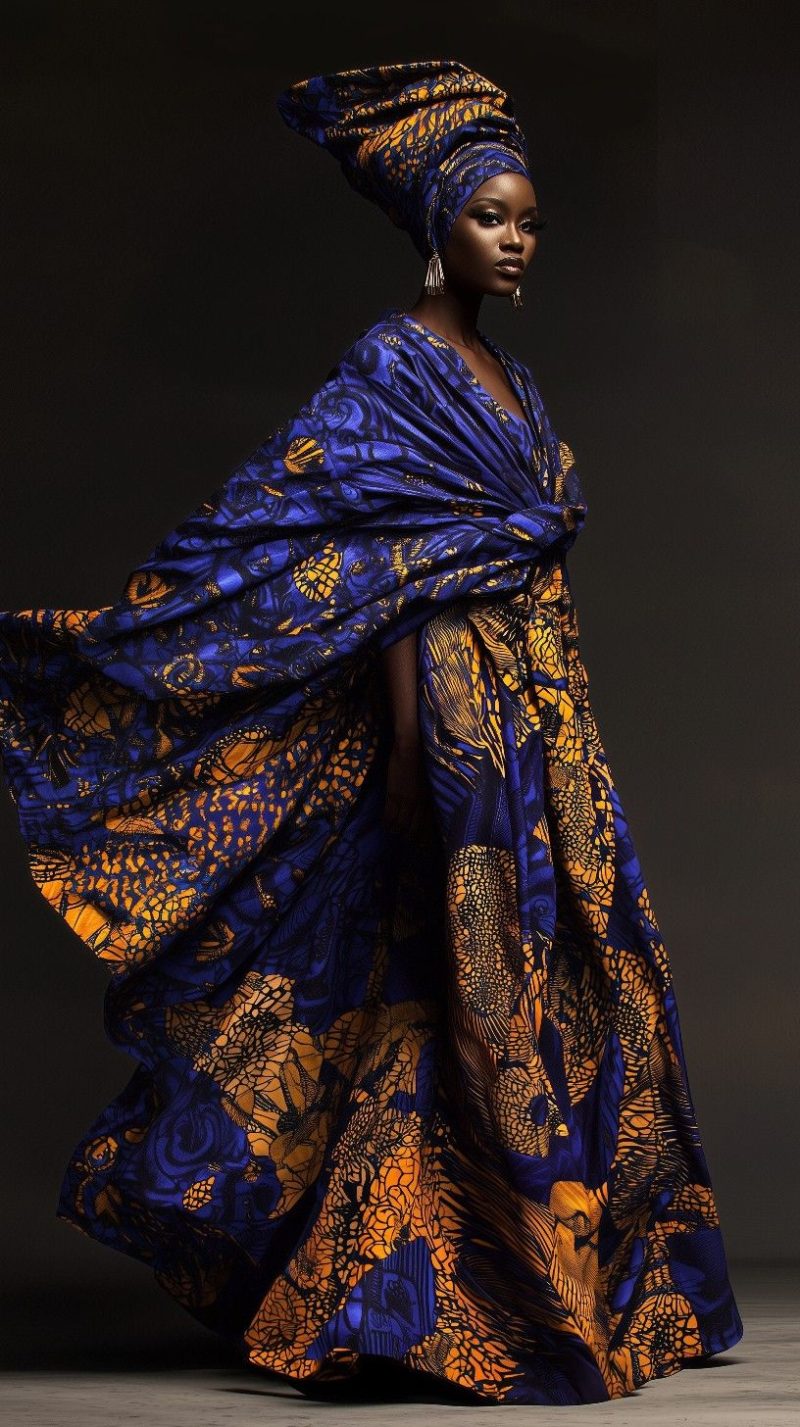
A high-tech view of traditional African fabric being digitised by AI for heritage preservation in 2026.

We’ve all been there: you order a premium piece online, then it arrives and fits like a sack. According to what I’m seeing in the 2026 collections, those days are over. The focus is currently on ethical AI.

  • The 99% Fit: I just tested out a new AI-powered virtual fitting room. You don’t just see a model; you see yourself as a very realistic 3D avatar. It’s inclusive, accurate, and helps reduce the tremendous return waste that plagues small businesses.
  • Made-to-Order Scalability: Eme Bassey, who is passionate about how Africa has always produced fashion responsibly (one item at a time). By 2026, AI will finally make this paradigm “scalable.” It automates the tedious tasks, such as grading and cutting, allowing the tailor to focus on creativity.
  • Real Diversity in Data: The most significant change I’ve noticed is that AI is finally learning to recognise us. Innovators are creating datasets that detect all skin tones and body types, ensuring that “luxury” does not simply mean “European.”

ALSO READ:

  • The Next Generation of Fashion Innovators: What Will Shape 2026
  • African Fashion Tech Startups Redefining Luxury Authenticity

The New Creative Partner

A hyper-realistic AI virtual fitting room showing an inclusive digital shopping experience for 2026

Walking around the design studios recently, the “Creative Director” appears different. AI has emerged as the ultimate co-designer.

  • Generative Moodboards: I’ve seen designers employ artificial intelligence to combine seemingly implausible concepts, such as an 18th-century Victorian edifice and 2026 Nigerian street style. The AI creates a thousand versions in seconds, and the designer chooses the one with “the spark.”
  • Phygital Experiences: We’re seeing more “phygital” collaborations, in which you purchase a physical garment and receive a digital equivalent for your online presence. Platforms like The Fabricant are setting a new standard for luxury.
  • Eco-Innovation: The best aspect of 2026 is that we are not overproducing. AI informs brands on how much fabric to purchase based on real-time data, not simply “vibes.” It’s the most intelligent method to help the earth while looking great.

Conclusion

The 2026 fashion season feels like a homecoming for those of us who appreciate both technology and tradition. We are progressing beyond the “gimmick” stage of AI and into a time when technology supports the creator. Whether they’re maintaining a centuries-old weave or ensuring a suit fits a body on another continent, these global visionaries demonstrate that the digital revolution has a pulse. My takeaway? Do not fear the algorithm; instead, learn to dance with it.

Fashion tech is no longer a niche; it is the new standard. To learn more about my experience with the global visionaries leading the Fashion AI revolution in 2026, visit Omiren Styles.

Frequently Asked Questions (FAQs)

1. Is AI fashion only for “big” brands?

Absolutely not. In 2026, small designers are leveraging AI to emulate the strategies of big companies. They use it for pattern drafting and virtual shoots, saving thousands of dollars on physical samples and models.

2. Does this mean tailors will lose their jobs?

Actually, it’s the opposite. AI is handling repetitive technical tasks (such as measuring and basic cutting), which gives tailors more time to do the high-value, hand-finished work that makes a garment a “luxury.”

3. How can I shop “modestly” in the digital world?

Most 2026 virtual fitting rooms now have “modesty filters” that allow you to see how a piece looks with different layers or headwraps, making it easier than ever to shop according to your values.


Total
0
Shares
Share 0
Tweet 0
Pin it 0
Related Topics
  • African Fashion
  • AI in Fashion
  • Fashion Technology Innovation
  • Future Fashion Systems
Faith Olabode

faitholabode91@gmail.com

You May Also Like
African Footwear and Leather Goods Labels Building International Wholesale Accounts in 2026
View Post
  • Brand Strategy

Six African Footwear and Leather Goods Labels Building International Wholesale Accounts in 2026

  • Faith Olabode
  • July 17, 2026
Dedan Kimathi's Mau Mau-Era Dress and Kenya's Visual Memory of Anti-Colonial Resistance
View Post
  • Diaspora Connects

Dedan Kimathi’s Mau Mau-Era Dress and Kenya’s Visual Memory of Anti-Colonial Resistance

  • Philip Sifon
  • July 17, 2026
Afro-Mexican Veracruz Dress Traditions: The Jarocha Costume, Yanga, and What Distinguishes It From the Costa Chica Region
View Post
  • Caribbean Diaspora

Afro-Mexican Veracruz Dress Traditions: The Jarocha Costume, Yanga, and What Distinguishes It From the Costa Chica Region

  • Fathia Olasupo
  • July 17, 2026
Libyan Amazigh and Tuareg Ceremonial Dress in the Nafusa Mountains: What Is Actually Documented
View Post
  • Heritage Clothing

Libyan Amazigh and Tuareg Ceremonial Dress in the Nafusa Mountains: What Is Actually Documented

  • Ayomidoyin Olufemi
  • July 17, 2026
What It Actually Costs to Open a Concept Store in Accra Versus Lagos
View Post
  • Retail & Commerce

What It Actually Costs to Open a Concept Store in Accra Versus Lagos

  • Adams Moses
  • July 17, 2026
African Craft Economy: How Designers Are Rebuilding What Governments Abandoned
View Post
  • INDUSTRY

African Craft Economy: How Designers Are Rebuilding What Governments Abandoned

  • Rex Clarke
  • July 17, 2026
Eritrean Men's Traditional Dress: Kidan Habesha, Gabi, and Why the Habesha Label Misrepresents It
View Post
  • Heritage Clothing

Eritrean Men’s Traditional Dress: Kidan Habesha, Gabi, and Why the Habesha Label Misrepresents It

  • Philip Sifon
  • July 16, 2026
Mauritanian Beauty Rituals: What Bakhoor, Attar, and the Mabkhara Actually Mean
View Post
  • BEAUTY

Mauritanian Beauty Rituals: What Bakhoor, Attar, and the Mabkhara Actually Mean

  • Ayomidoyin Olufemi
  • July 16, 2026

Leave a Reply Cancel reply

Your email address will not be published. Required fields are marked *

The Omiren Argument

African fashion and culture are not emerging. They are foundational. We document, interpret, and argue for the full cultural weight of African and diaspora dress. With precision. Without apology.

Omiren Styles Fashion · Culture · Identity

All 54 African Nations
Caribbean · Afro-Latin America
The Global Diaspora

Platform

  • About Omiren Styles
  • Our Vision
  • Our Mission
  • Editorial Pillars
  • Editorial Policy
  • The Omiren Collective
  • Campus Style Initiative
  • Sustainable Style
  • Social Impact & Advocacy
  • Investor Relations

Contribute

  • Write for Omiren Styles
  • Submit Creative Work
  • Join the Omiren Collective
  • Campus Initiative
Contact
contact@omirenstyles.com
Our Reach

Africa — All 54 Nations
Caribbean
Afro-Latin America
Global Diaspora

African fashion intelligence, in your inbox.

Editorial features, designer profiles, cultural commentary. No noise.

© 2026 Omiren Styles — Rex Clarke Global Ventures Limited. All rights reserved.
  • Privacy Policy
  • Editorial Policy
  • Terms of Use
  • Accessibility
Africa · Caribbean · Diaspora
The Omiren Argument

African fashion and culture are not emerging. They are foundational. We document, interpret, and argue for the full cultural weight of African and diaspora dress. With precision. Without apology.

Omiren Styles Fashion · Culture · Identity
  • About Omiren Styles
  • Our Vision
  • Our Mission
  • Editorial Pillars
  • Editorial Policy
  • The Omiren Collective
  • Campus Style Initiative
  • Sustainable Style
  • Social Impact & Advocacy
  • Investor Relations
  • Write for Omiren Styles
  • Submit Creative Work
  • Join the Omiren Collective
  • Campus Initiative
Contact contact@omirenstyles.com

All 54 African Nations · Caribbean
Afro-Latin America · Global Diaspora

African fashion intelligence, in your inbox.

Editorial features, designer profiles, cultural commentary. No noise.

© 2026 Omiren Styles
Rex Clarke Global Ventures Limited.
All rights reserved.

  • Privacy Policy
  • Editorial Policy
  • Terms of Use
  • Accessibility
Africa · Caribbean · Diaspora

Input your search keywords and press Enter.