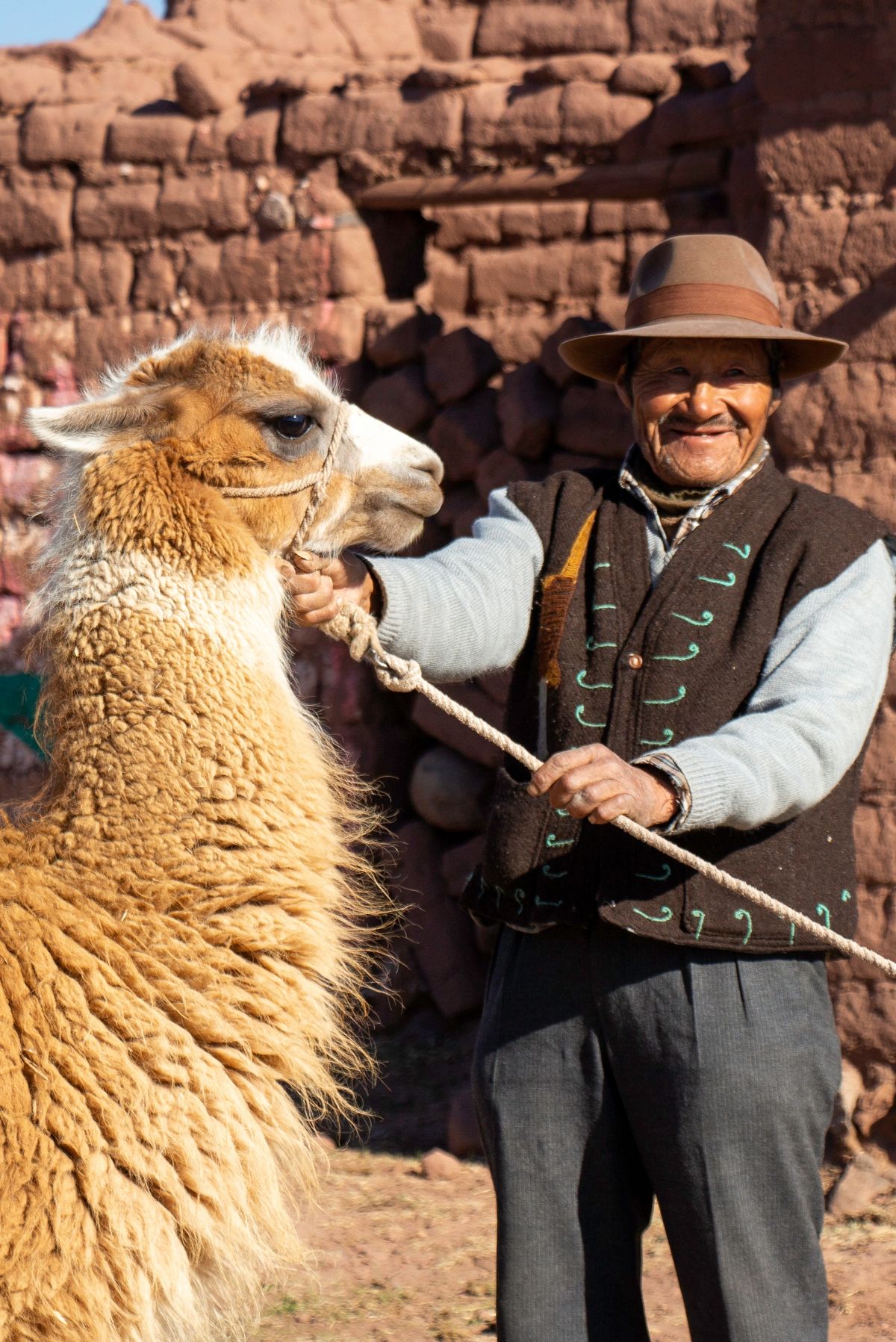
The Andes plateau, stretching across Peru’s Puno, Huancavelica, Arequipa, Cusco and Apurímac regions, is home to more than five million alpacas. According to Peru’s Ministry of Agrarian Development (MIDAGRI), this represents approximately 80% of the world’s total alpaca population. The fibre those animals produce is described on a significant proportion of luxury fashion labels as ‘alpaca’, ‘baby alpaca’, ‘royal alpaca’ and ‘Peruvian alpaca’. Each description carries a specific implied claim about quality. What most buyers do not know at the point of sourcing is which of those claims is verifiable, how, and by whom.
This guide is not a celebration of Alpaca’s qualities. Those are well documented elsewhere. It is a practical account of the verification question: what a fashion buyer can actually confirm about the fibre before it leaves Peru, what certifications are available and what they do and do not cover, where the verification chain typically breaks down, and what due diligence a buyer should complete before making a sourcing claim their brand is responsible for.
The only internationally comparable data point for alpaca fibre quality across different markets and supply chains is the micron count. Grade names – baby alpaca, royal alpaca, superfine – are not standardised across international markets, and their definition varies by source. Micron count is the number that travels.
Peru produces 80% of the world’s alpaca fibre. But what can a fashion buyer actually verify? This guide documents which certifications exist, what they cover, where the verification chain breaks down, and what questions to ask before the fibre enters your supply chain.
The Grade Names and What They Actually Mean
Before a buyer can verify anything, they need to know what they are verifying. The grading vocabulary for alpaca fibre is not standardised internationally, so a label reading ‘baby alpaca’ in a Peruvian tourist market, a brand’s e-commerce listing, and an INCALPACA export certification may all use the same term for different things.
The most reliable way to understand what the grades mean is through micron measurement, which is the diameter of the individual fibre in micrometres. The finer the micron count, the softer the fibre and the higher the grade. The following ranges reflect the most consistently cited industry standards:
- Royal alpaca: under 19-20 microns. The rarest and finest grade, typically from selective breeding programmes. Used primarily in luxury accessories rather than volume garments.
- Baby alpaca: approximately 19 to 22.5 microns, depending on the source standard. Despite the name, this is not fibre from young animals. It refers to fibre fineness, typically from the blanket area of the animal or from first shearings, when the fibre is at its finest.
- Superfine alpaca: approximately 22-25 microns. Still considered premium; appropriate for next-to-skin garments.
- Adult alpaca (huacaya): typically 25-32 microns. Warmer, more durable, used for outerwear and home textiles.
The critical buyer implication: ‘baby alpaca’ on a label is not a protected designation in most markets. No legal requirement exists for a garment labelled ‘baby alpaca’ to contain fibre that meets any specific micron threshold unless the brand has independently verified the content through testing or certification. In Peruvian tourist markets, experienced buyers report that a significant proportion of goods labelled ‘baby alpaca’ do not meet the grade on physical inspection. The solution is not to distrust Peruvian alpaca; it is to request documentation.
What Certifications Exist and What They Cover
The Responsible Alpaca Standard (RAS)
The Responsible Alpaca Standard (RAS), administered by Textile Exchange, is the most comprehensive internationally recognised certification available for alpaca fibre. It is voluntary, and its key structural feature is that every site in the supply chain, from the alpaca farm to the final business-to-business transaction, must be certified annually by an independent third-party certification body. The standard is not a self-declaration. It requires an annual independent audit at every link.
What RAS covers at the farm level: animal welfare criteria, including conditions under which alpacas are raised, nutrition, and humane shearing practices; land management criteria, including preventing overgrazing and biodiversity considerations; and social welfare criteria, including worker rights, ethical working conditions, and community interactions. What RAS covers in the processing chain: chain-of-custody requirements, tracking certified fibre from the farm through each subsequent processing stage.
What RAS does not cover: RAS certification is required up to the final business-to-business transaction. Retailers selling directly to consumers are not required to be certified under the standard. This means that a garment certified to RAS at the mill stage may be sold by a brand that has not itself undergone RAS certification. Buyers should check whether their organisation and any intermediaries between the mill and the end consumer are within the certified chain.
The standard is also voluntary. The proportion of Peru’s total alpaca production that is currently covered by RAS certification is not publicly quantified at industry level, which means that a buyer sourcing from a mill that is not RAS certified is sourcing from a supply chain that has not been independently verified to any single international standard for animal welfare and chain of custody. The absence of RAS certification does not mean a supply chain is unethical; it means it has not been independently verified to this specific standard.
Transition note: Textile Exchange has been moving RAS into its broader Materials Matter Standard framework. The Materials Matter Standard criteria were released on 12 December 2025, effective from 31 December 2026, and mandatory from 31 December 2027 for all Tier 4 organisations. Buyers sourcing from RAS-certified mills should ask whether those mills are preparing for the transition to the Materials Matter Standard and confirm that their certification will remain valid through the transition period.
The Alpaca del Peru Mark
The Alpaca del Peru mark is a government-backed origin brand managed by PromPeru, Peru’s export and tourism promotion commission. It signals that the fibre was sourced and processed in Peru. The mark signals geographic origin, not quality certification or a welfare standard. A garment carrying the Alpaca del Peru mark confirms Peruvian origin; it does not independently verify micron count, animal welfare conditions, community payment rates or processing standards.
For buyers whose primary concern is geographic authenticity, the Alpaca del Peru mark is relevant documentation. For buyers whose sourcing claim includes quality, welfare, or community dimensions, the mark alone is not sufficient evidence and should be accompanied by additional verification.
Nativa Certification
Nativa is a certification specific to Peruvian natural fibres, designed to guarantee sustainability and quality at the source. Peruvian mills and exporters use it to demonstrate sustainable production practices. Buyers should request the specific scope of a Nativa certification from the supplying mill, as certification programmes can cover different dimensions of sustainability and the scope relevant to the buyer’s claim needs to be confirmed against the claim being made.
GOTS and Other Downstream Certifications
GOTS (Global Organic Textile Standard) applies to organic fibres and covers the entire chain from raw materials through to finished textiles, including dyeing and finishing processes. GOTS certification for alpaca requires the fibre to meet organic production standards at the farm level and for every downstream processing stage to maintain certification. It addresses chemical use, processing conditions and social criteria throughout. For buyers making an organic claim about alpaca, GOTS is the most rigorous available standard. Still, it requires certification at every stage, and its organic requirements for alpaca relate to land management and chemical use rather than fibre quality in the micron-count sense.
What Buyers Can Independently Verify
Beyond certification frameworks, buyers have several independently accessible verification mechanisms:
Micron Testing
Micron count can be independently verified through laboratory testing of fibre samples at any stage of the supply chain: raw fibre, yarn or finished garment. Third-party laboratories can test fibre diameter and confirm whether a sample meets the claimed grade. For buyers making a ‘baby alpaca’ or ‘royal alpaca’ claim in their product labelling, commissioning independent micron testing on production samples before shipment is the most direct available verification of the quality claim.
The test confirms fibre fineness at the point of testing. It does not verify origin, animal welfare conditions, community payment rates or processing conditions. It is one piece of the verification picture, not the complete picture.
Mill Documentation
Reputable Peruvian mills, particularly in Arequipa, which is the primary hub for high-grade alpaca processing, routinely provide buyers with documentation at the proforma stage: fibre origin certificates, micron count records, dye-lot documentation, and, where applicable, certification records from RAS, GOT, S, or other applicable standards. A buyer who does not request this documentation at the sourcing stage has no independent verification of any claim about the fibre beyond the supplier’s self-description.
The specific documents a buyer should request before committing to a production order: the micron count specification on the technical pack; the fibre origin documentation confirming the fibre’s source region within Peru; the mill’s current certification records with their validity dates; and, where a community sourcing claim is to be made, specific documentation of the community relationship including the payment structure and any direct-sourcing agreement with named cooperatives or herding communities.
The International Alpaca Association (AIA)
The International Alpaca Association (AIA), based in Peru, maintains records for the alpaca industry including export statistics, quality standards and breed records. Mills can provide AIA documentation as part of their origin and quality certification. AIA documentation provides industry-level verification of Peruvian origin and supports the documentation chain, but it does not replace independent micron testing or welfare certification.
Where the Verification Chain Breaks Down
The most significant gap in the current Peruvian alpaca verification landscape is the disconnect between farm-level welfare claims and community-level economic claims.
RAS verifies animal welfare and land management at the farm level, as well as social welfare criteria on farms. What it does not verify is the economic relationship between the buyer, the mill and the herding communities that supply the fibre: specifically, whether the price paid by the mill to the herding families reflects the cost of compliant production and a fair return on the labour and knowledge those communities provide. According to MIDAGRI data, in the 2023 to 2024 campaign, 48 alpaca farming organisations sold 300 tonnes of alpaca fibre, generating over 10 million Peruvian soles in revenue. That figure documents the volume and the aggregate revenue. It does not show whether that revenue is distributed fairly within and among the farming organisations.
As Omiren Styles has established in its analysis of material traceability and what brands need to know before they claim provenance, a provenance claim is worth making when it can be proved at the level of the claim. A buyer who says ‘our alpaca supports Andean communities’ is making an economic claim that requires community-level evidence that neither micron testing nor RAS certification provides. The community economic claim requires documentation of the specific sourcing relationship: the named cooperative or community, the price paid per kilogram of fibre, and a comparison of that price to the cost of compliant production in that community context.
The second gap is the tourist-market mislabelling problem, which matters for buyers sourcing from markets rather than directly from mills. Experienced buyers with direct knowledge of the Peruvian alpaca market have publicly documented that a significant proportion of goods in tourist retail carrying ‘baby alpaca’ labels do not meet the micron standard for that grade. This is a retail-level problem rather than an industry-wide supply chain problem, but it affects buyers who source from intermediaries rather than directly from certified mills. Direct mill sourcing with documented micron verification substantially reduces this risk.
The third gap is the blend claim. A garment labelled ‘alpaca blend’ without specification of the blend ratio and the content of the non-alpaca fibre carries no verifiable quality claim. The word ‘blend’ without documentation tells the buyer and the customer nothing about the proportion of alpaca in the garment, the grade of alpaca, or the composition of the remaining fibre. Buyers making any specific alpaca content claim should request the fibre composition certificate from the mill and commission independent testing where the claim is load-bearing in their marketing.
The Regulatory Direction
For buyers sourcing for EU markets, the regulatory context is tightening. The EU Ecodesign for Sustainable Products Regulation (ESPR) is driving increased requirements for traceability and supply chain transparency across textile categories. The EU’s Digital Product Passport requirements, phased in from 2026 onwards, will require product-level information, including material content and supply chain provenance, to be available in a standardised digital format.
As Omiren Styles has established, in its analysis of what brands need before they say ‘sustainable’, ‘local’ or ‘community-made’, evidence for sustainability claims may include certification, transaction certificates, supplier declarations, traceability datasets, chemical test reports and lifecycle data. The appropriate type of evidence depends on the specific claim being made. For an alpaca provenance claim, the evidence requirements will differ depending on whether the claim concerns geographic origin, fibre quality, animal welfare, community economic benefit, or environmental practices. Each dimension requires its own evidence, and a buyer who supports a brand-level claim about Peruvian alpacas with only one type of evidence leaves the claim only partially substantiated at best.
The Practical Buyer Checklist
Before making any sourcing claim about Peruvian alpaca, a buyer should be able to answer the following:
On quality:
- Is the grade claim (baby alpaca, royal alpaca, superfine) supported by a micron count specification on the technical pack?
- Has independent micron testing been commissioned on production samples, or is the buyer relying solely on the supplier’s self-declaration?
- Is the fibre content (100% alpaca or a blend) documented in a fibre composition certificate that lists all components and their proportions?
On origin:
- Does the supplier hold the Alpaca del Peru mark or equivalent origin documentation confirming Peruvian sourcing and processing?
- Can the mill provide fibre-origin documentation for the specific region of Peru where the fibre was produced?
- Is the mill itself in Peru, or is the buyer purchasing from an intermediary who may have sourced the fibre from elsewhere?
On welfare and certification:
- Is the supplying mill RAS-certified, and is the buyer’s own organisation within the RAS chain of custody when making a welfare claim?
- Is the mill’s RAS certification current (annual renewal required), and will it remain valid through the transition to the Materials Matter Standard (effective 31 December 2026)?
- If the buyer is making a GOTS claim, is every stage of the supply chain – from farm through to finished garment – GOTS certified?
On community:
- If the brand will make a ‘community-made’ or ‘supports Andean communities’ claim, is there a documented direct sourcing relationship with named cooperatives or herding communities?
- Is the price paid to the herding community or cooperative documented, and does it reflect the cost of compliant production in that specific community context?
- Has the community whose story is being used in marketing agreed to that use, and do they benefit commercially from it?
The Omiren Argument
Peruvian alpaca is one of the most traceable luxury fibres available in international fashion supply chains – when the buyer does the work of tracing it. The certifications exist. The testing methodologies exist. The mill-level documentation infrastructure in Arequipa is more developed than in many comparable luxury fibre industries. The verification is available. What is not automatic is the buyer’s decision to request it.
The gap between ‘Peruvian alpaca’ as a label and ‘Peruvian alpaca’ as a verified supply chain claim is the same gap that exists throughout this series: the gap between the word and the evidence, and between the brand’s commercial interest in the claim and the community’s interest in the conditions under which the claim is true. The herding communities of the Andes plateau have maintained the alpaca populations whose fibre makes the claims possible. The verification work – the micron testing, the RAS audit, the direct sourcing documentation – is the commercial mechanism through which those communities’ contribution is made visible rather than treated as a background condition whose economic value accrues elsewhere.
As Omiren Styles has established in its analysis of what makes a fashion manufacturer verified, verification in fashion supply chains requires independent audits, documented standards, and a review cycle that keeps the evidence current. A buyer who verifies their Peruvian alpaca claim at the level of the claim they are making is doing no more than required. They are doing what the claim requires.
As Omiren Styles has argued throughout this series, the Global South made fashion and never got credit. The Andean communities who raise, shear, and sort the fibre that enters international luxury supply chains as ‘Peruvian alpaca’ sit at the start of a value chain whose commercial returns are concentrated largely at the brand end rather than at the source. The verification work described in this article is not limited to compliance due diligence. It is the mechanism through which the specific communities at the source of the claim are made visible in the supply chain record – and through which the buyer’s commercial claim about their product is either true or only partly true.
ALSO READ
- Material Traceability in Fashion: What Brands Need to Know Before They Claim Provenance
- What Brands Need Before They Say ‘Sustainable,’ ‘Local’ or ‘Community-Made’
- What Makes a Fashion Manufacturer ‘Verified’? A Practical Framework for Emerging Brands
- The ‘Ethical’ Label Is Not a Business Model
- The Global South Made Fashion. It Just Never Got Credit.
Frequently Asked Questions
What is the Responsible Alpaca Standard, and what does it verify?
The Responsible Alpaca Standard (RAS), administered by Textile Exchange, is an international voluntary standard that requires annual independent third-party certification at every stage of the supply chain, from the alpaca farm to the final business-to-business transaction. At the farm level, it verifies animal welfare, land management, and social welfare criteria. The processing chain requires chain-of-custody documentation. Retailers selling directly to consumers are not required to be certified under RAS. The standard is transitioning to the Materials Matter Standard framework, effective 31 December 2026 and mandatory from 31 December 2027.
What does ‘baby alpaca’ actually mean on a fashion label?
‘Baby alpaca’ refers to a fibre fineness grade defined by micron diameter, not the animal’s age. The term refers to fibre measuring approximately 19 to 22.5 microns, depending on the source standard. Despite the name, baby alpaca typically refers to the blanket fleece or first shearing of adult alpacas, when the fibre is at its finest, not exclusively to young animals. The grade name is not internationally standardised or legally protected in most markets. A label reading ‘baby alpaca’ without a documented micron count or independent test result is an unverified marketing claim. The only internationally comparable data point for alpaca fibre quality across markets is the micron count, and buyers making a grade-specific claim should request micron documentation from their supplier and commission independent testing where the claim is commercially significant.
What is the Alpaca del Peru mark?
The Alpaca del Peru mark is a government-backed origin brand managed by PromPeru, Peru’s export and tourism promotion commission. It confirms that the fibre was sourced and processed in Peru. It is a geographic origin signal, not a quality, welfare or community certification. A product carrying the Alpaca del Peru mark has confirmed Peruvian origin. It does not confirm fibre micron count, animal welfare conditions, community payment rates, or processing standards. For buyers making claims beyond geographic origin, combine the mark with additional certification and documentation.
How do I verify the micron count of alpaca fibre I am sourcing?
Micron count can be verified through independent laboratory testing of fibre samples at any stage of the supply chain: raw fibre, yarn or finished garment. Third-party laboratories with textile testing accreditation can measure fibre diameter and confirm whether a sample meets the claimed grade. Buyers should request the micron count specification on the technical pack from the supplier before committing to a production order. They should commission independent testing on production samples for any grade-specific claim that will appear in their product labelling or marketing. Test results are specific to the sample tested, not the entire production run, so document the testing protocol and sample size.
What documentation should I request from a Peruvian alpaca supplier before placing a production order?
Before placing a production order with a Peruvian alpaca supplier, request the following: the micron count specification on the technical pack; fibre origin documentation confirming the source region within Peru; the supplier’s current certification records (RAS, Alpaca del Peru, GOTS, Nativa, or others) with validity dates and the name of the certifying body; the fibre composition certificate naming all fibre components and their proportions; and, for any community sourcing claim, specific documentation of the direct sourcing relationship, including the names of cooperatives or communities involved and the price paid per kilogram of fibre. If any of these documents are missing at the proforma stage, request them before committing to production, not after.
EXPLORE MORE
Read the full Industry and Material Intelligence and Sourcing sections at Omiren Styles for ongoing analysis of material traceability, certification frameworks and the verification work that converts sourcing claims into defensible supply chain standards. Discover travel and heritage intelligence across Africa, the Caribbean and Latin America at Rex Clarke Adventures.