Blush is supposed to be the easiest step in makeup—quick swipe, instant glow, done. But for deep skin, it rarely plays out that simply.
The issue with blush isn’t the application; it’s visibility. Sometimes shades that look promising in the pan disappear the moment they hit the skin.
Other times, they turn chalky, sit awkwardly on the face, or look like they were never meant to be there at all. Somewhere between formulation and expectation, the natural flush gets lost.
And that is really the point, because finding a blush that shows on deep skin isn’t just about picking a pretty colour. It is about understanding why some formulas show up effortlessly while others quietly fade into the background.
In this article, you’ll find out the best blush that shows on deep skin, the shades, formulas and application that work.
Finding the right blush that shows on deep skin can be a hassle. So, we’ve compiled them in this guide.
Why Some Blushes Don’t Show on Deep Skin
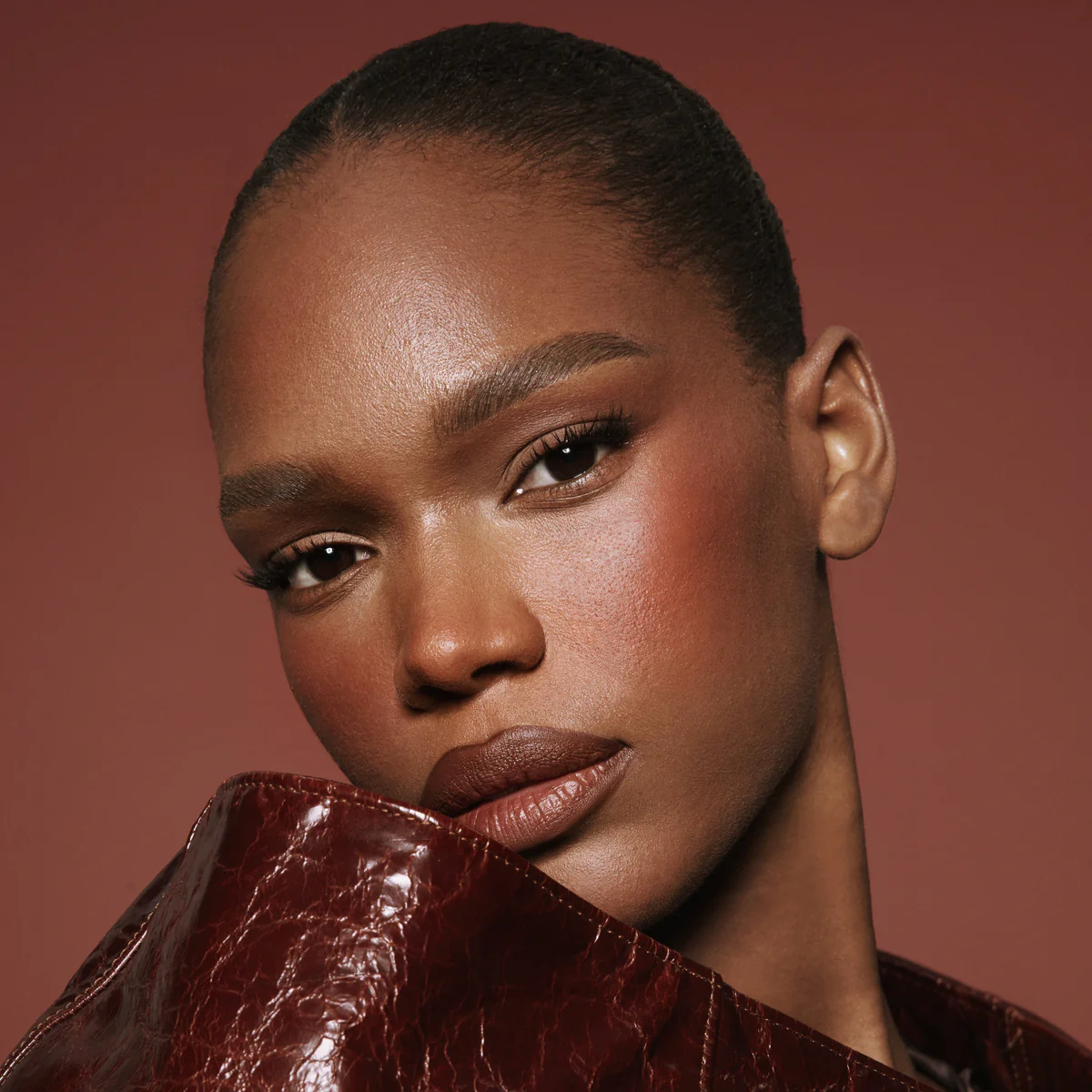
When a blush doesn’t show up on deep skin, it is usually not about application technique. Here are the main reasons:
1. Low Pigment Concentration
Many blushes are designed to look soft and subtle, especially on lighter skin. On deep skin, that same softness often translates to invisibility. If the pigment load is too light, the colour simply disappears once it blends in.
2. Too Much White or Filler Base
Some formulas use a chalky or white-heavy base to create soft, pastel shades. On deep skin, this can create an ashy or grey cast instead of a healthy flush, making the blush look unnatural or dusty.
3. Undertone Mismatch
A shade can be beautiful in the pan but still not work on deep skin if the undertone is wrong. Very light pinks or washed-out peaches often fail to complement the natural warmth and depth of melanin-rich skin.
4. Sheer or Watered-Down Formulas: Some blushes are intentionally sheer for buildability, but they rely on layering to show up. On deep skin, they may never reach sufficient intensity before they start to look patchy or uneven.
5. Poor Formulation Balance for Deeper Tones: Many products are still developed and tested primarily on lighter skin tones. This means they aren’t always calibrated for how colour reads on deeper complexions, which affects payoff, vibrancy, and blend.
Best Blush Shades That Show Up on Deep Skin
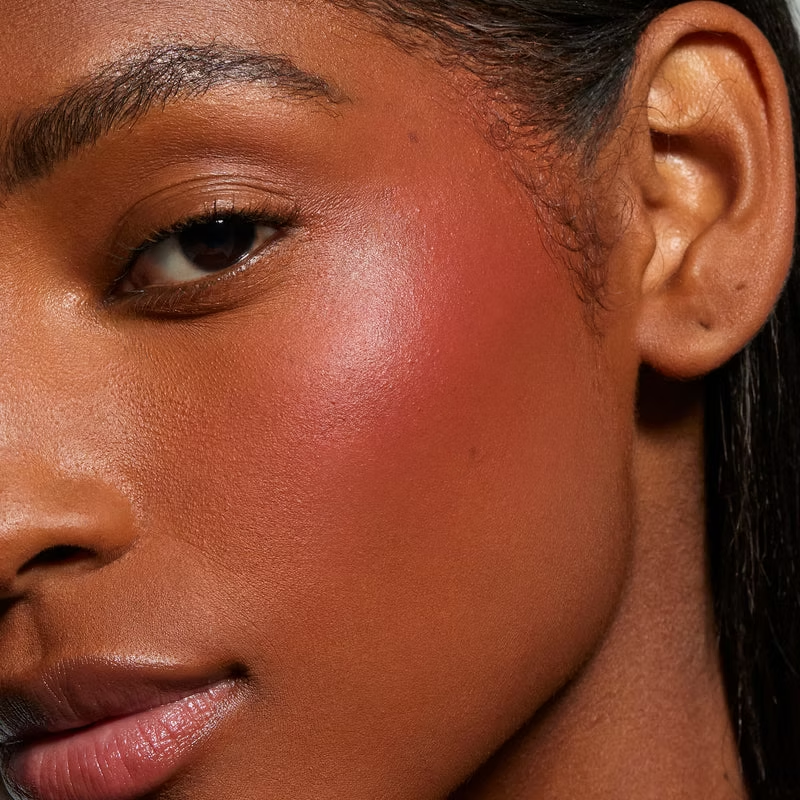
The truth is, deep skin doesn’t struggle with blush. It just needs shades that are rich enough to hold their own. Some of these shades include:
-
Berry and Plum Tones
Plum and berry tones are among the most reliable options for deeper skin tones. Think blackberry, wine, cranberry, and deep plum.
They sit naturally on the skin and create a rich flush that looks like it belongs there. These tones are especially flattering because they mimic the natural depth already present in deeper complexions.
-
Terracotta and Burnt Orange
Terracotta and burnt orange are tones that bring warmth without looking harsh. They blend into the skin like a soft sun-kissed glow and are perfect for everyday wear.
On deep skin tones, they add dimension rather than just colour, making the face look more sculpted and alive.
-
Brick Red and Deep Coral
This is where a blush that shows on deep skin really proves its value. Brick reds and deep corals are vibrant enough to stand out yet natural enough to look like a real flush.
-
Bold Pinks and Magentas
Light pinks often disappear on deeper skin tones, but stronger pinks like fuchsia, raspberry, and magenta show up beautifully.
They add instant brightness to the face and can be worn subtly or built up for a more dramatic look.
Best Blush Formulas for Deep Skin
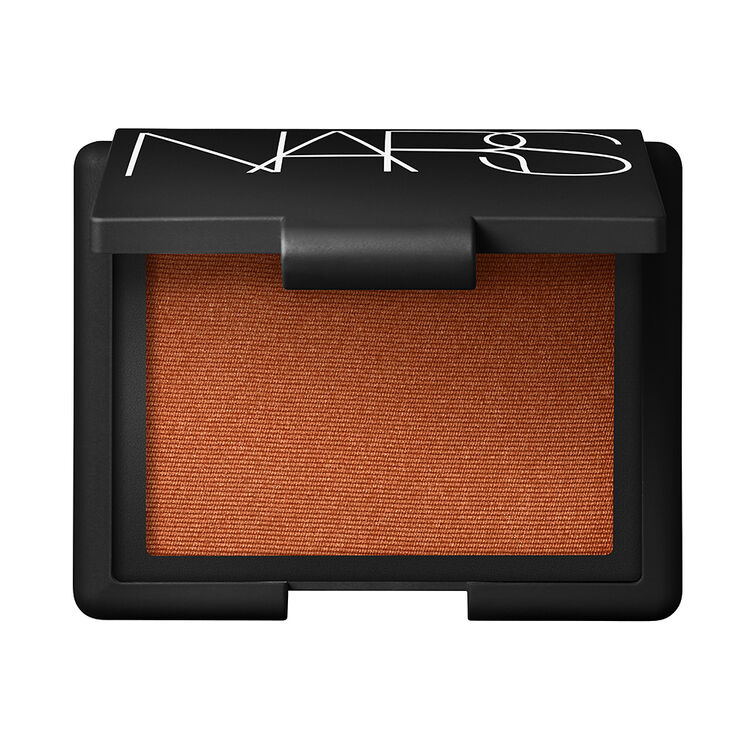
When it comes to blush, shade matters, but formula is where a lot of people either get a seamless glow or complete disappointment.
This is because a colour can be perfect, but if the formula is weak, it will still struggle to show up on deep skin.
Here are the formulas that tend to work best:
-
Cream Blush
Cream blush is one of the most dependable options for deeper skin tones. It melts into the skin instead of sitting on top of it, which helps the colour look more natural and skin-like.
It also builds easily, so you can start soft and intensify without it turning patchy. On deep skin, this makes a huge difference because it helps the pigment integrate rather than fade.
-
Liquid Blush
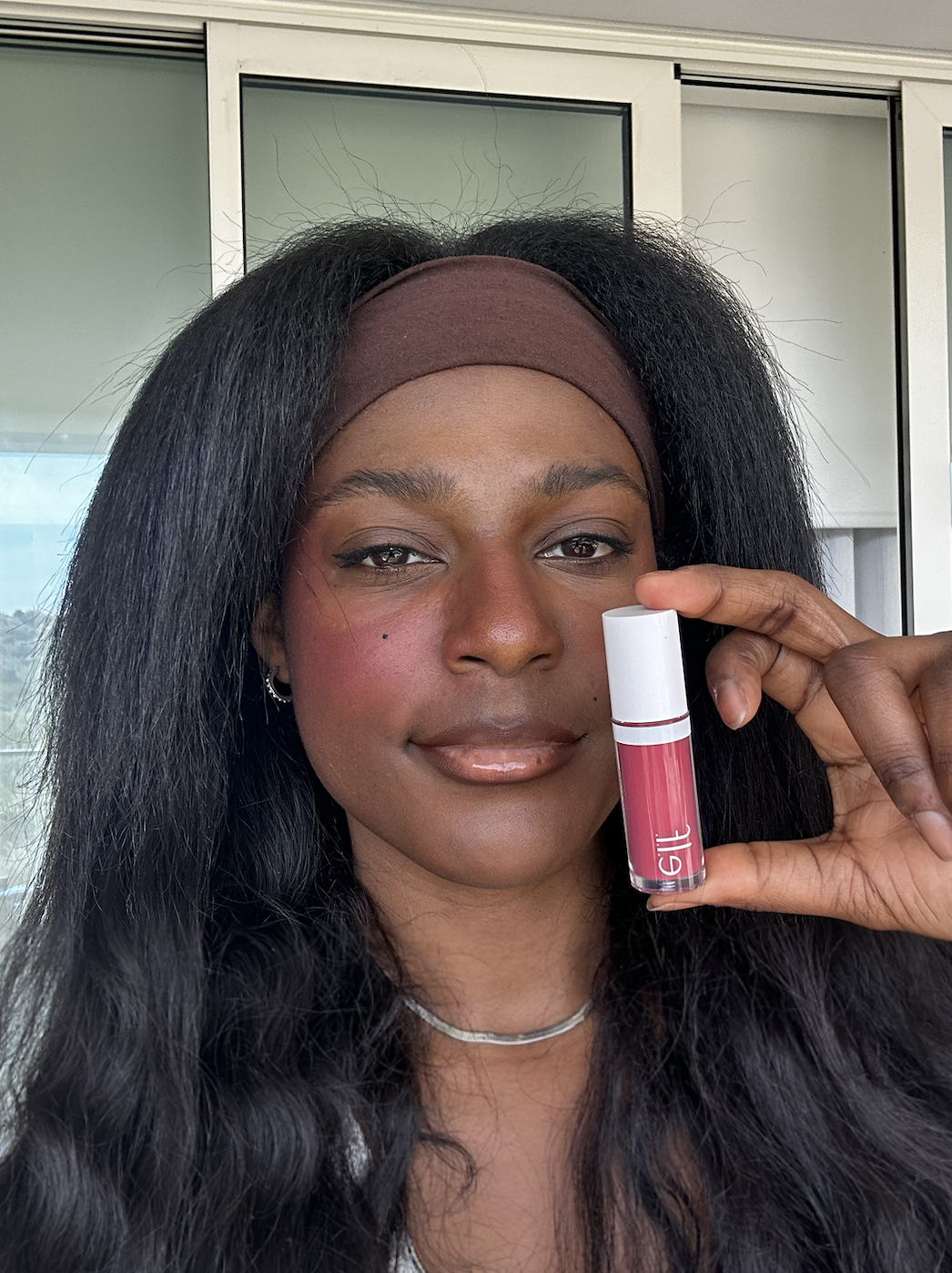
Liquid formulas usually have a stronger pigment payoff, which is why they are great for a blush that shows on deep skin.
A small amount can go a long way, and the colour tends to look very fresh and vibrant once blended. The key is working quickly, since they can set fast, but the finish is often more luminous and longer-lasting than that of many powders.
-
Highly Pigmented Powder Blush
Powder blush works well when the formula is properly saturated with pigment. On deep skin, the problem is not powder itself but chalky or low-colour formulas.
A good powder blush should look rich in the pan and still look rich after blending. When it is well-made, it gives a smooth, polished finish and is especially useful for setting cream or liquid blush underneath.
-
Hybrid or Gel-cream Formulas
These sit between cream and liquid and are becoming more popular because they combine blendability with strong colour payoff.
They tend to feel lightweight on the skin but still deliver enough pigment to stay visible throughout the day.
Also Read:
- Contouring and Highlighting on Dark Skin Without the Ashy Result That Every Tutorial Gets Wrong
- Bold Lip Colours for Deep Skin: The Shades That Actually Flatter and the Application Steps That Make Them Last
- The Kohl Legacy: How Africa Invented Eye Makeup Three Thousand Years Before It Was a Trend
- Building a Beauty Empire: The House of Tara Story
Application Techniques That Make Blush Show Up Better
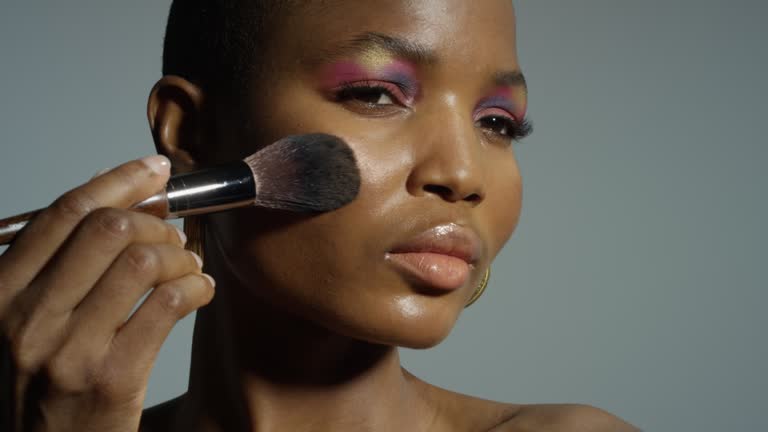
Even when you are using the right shade and formula, technique determines whether you get a visible flush or a product that disappears.
This is especially important when working with a blush that shows on deep skin, because placement and blending directly affect payoff.
Step 1: Prep Your Base Properly
Start with well-moisturised skin and an even foundation layer.
If your skin is too dry or overly powdered, blush can cling in patches or fade quickly. Also, a smooth base helps the colour blend in naturally rather than sit on top.
Step 2: Choose Your Application Tool
Match your tool to your formula before you start. Use your fingers for cream and liquid blush to help melt the product into the skin.
A dense brush for powder blush to build stronger pigment payoff and a damp sponge to soften edges without removing too much colour.
Step 3: Start With a Small Amount of Product
Try not to go in heavy. Instead, pick up a light layer first. This gives you more control and prevents harsh or uneven patches.
Step 4: Place Blush Slightly Higher On the Cheeks
Apply blush above the apples of your cheeks, then start blending upward. This creates lift and helps the colour stay visible on deeper skin tones rather than getting lost in the centre of the face.
Step 5: Blend Upward and Outward
Diffuse the product toward your temples instead of dragging it downward or too close to your nose.
Upward and outward blending keeps the blush lifted, natural, and more visible on deep skin tones.
Step 6: Build in Layers If Needed
If you want more intensity, add blush gradually. It is always easier to build colour than to remove excess.
Step 7: Set and Enhance (Optional but Effective)
For longer wear, apply a cream or liquid blush first, then lightly set it with a matching powder blush.
This adds dimension, improves staying power, and makes the colour more noticeable throughout the day.
Pro Makeup Artist Tips for Deep Skin
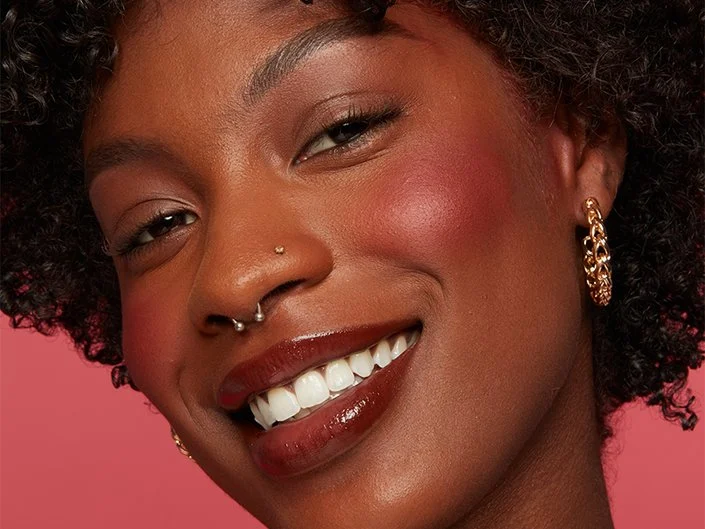
When it comes to deeper skin tones, makeup artists agree that:
- Pigment matters more than appearance in the pan when choosing a blush that shows up on deep skin, because many shades look lighter or softer in packaging than they actually perform on deeper complexions
- Going a few shades deeper than your skin tone often gives better visibility. This is because richer tones are less likely to disappear once blended.
- Undertone matching is more important than trends. Warm undertones work best with terracotta, coral, and brick shades, while cool undertones suit berry, plum, and wine tones.
- Cream and liquid formulas tend to perform better on deeper skin tones. This is because they melt into the complexion, creating a more natural, seamless flush.
- Building colour in thin layers gives more control and prevents patchiness.
- Natural light is the most reliable way to check blush payoff, since artificial lighting can distort how visible or balanced the colour really is.
Final Thoughts
Applying blush isn’t supposed to be this complicated, but on deep skin it often is. This isn’t because it can’t work, but because many formulas were never designed to render properly in the first place.
However, if you can understand what to look for, everything becomes easier. At that point, finding a blush that shows on deep skin stops being a struggle.
Instead, it becomes a simple matter of choosing products that actually do what they are supposed to do.
Frequently Asked Questions
-
What Is the 2 Finger Rule for Blush?
The 2-finger rule for blush means placing two fingers beside your nose to mark where your blush should not go. You apply blush outside that area to keep it lifted and avoid placing it too close to the centre of your face.
-
Which Blush Suits Which Skin Tone?
Fair skin suits soft pinks and light peaches. Medium skin suits rose, mauve, and warm peach. Deep skin suits berry, plum, brick red, and deep coral shades.
-
How To Tell Which Blush Shade To Use?
Choose blush based on your undertone and natural flush. Warm undertones suit peach and coral, cool undertones suit pink and berry, and neutral undertones suit most shades.
-
Which Blush Formula Is Best?
Cream gives the most natural glow, liquid gives the most skin-like finish, and powder gives the most lasting power