About 70% of women with deep skin tones say they still struggle to find their correct foundation shade. So they end up mixing different products just to get something close.
This isn’t a new problem, and it isn’t a subtle one either. Even after years of talk about inclusivity in beauty, foundation ranges are still not balanced.
Lighter shades usually have more options and more undertones, while deeper shades often have fewer choices. This is where foundation matching for deep skin tones becomes a bigger issue.
It’s not just about finding a shade that looks close, but about having enough depth and undertone options so the match actually works in real life.
Explore why foundation matching for deep skin tones remains a challenge, from limited shade ranges to undertone neglect in the beauty industry.
Where Inclusion Breaks Down in Beauty Formulation
Foundation matching for deep skin tones starts to break down at the formulation stage, where shade ranges are actually built.
Most brands develop foundation shades using a limited set of base pigments and then adjust them across a spectrum. In practice, this spectrum isn’t always built evenly.
Lighter and medium shades are developed with more steps between them and more undertone variation. On the other hand, deeper shades are often created by simply darkening existing formulas.
This reduces the amount of real variation at the deeper end. Eventually, what’s available are just multiple deep shades that can sit close in depth but still miss key undertones, or lean too heavily in one direction.
So, the issue isn’t just the number of shades available, but how those shades are constructed.
How Inclusive Shade Ranges Still Fall Short
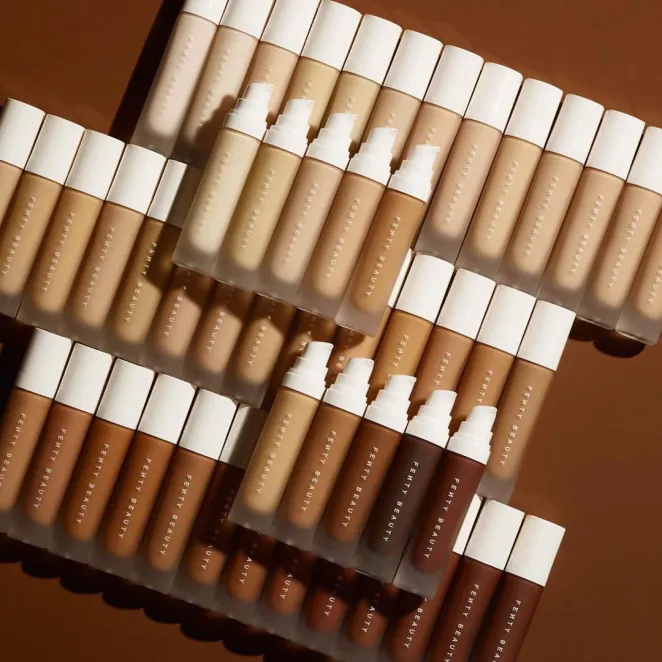
In today’s beauty industry, 40 shades has become the standard benchmark for an “inclusive” foundation range.
This shift started with Fenty Beauty, which launched in 2017 with 40 foundation shades and forced the entire industry to expand its offerings. However, even with this shift, shade count alone hasn’t guaranteed better accuracy for deeper skin tones.
Many modern launches now advertise 30 to 40+ shades, but most of the variation still falls within the light-to-medium range. At the deeper end, shades are often fewer and less distinct, which limits how precise matches can be in real use.
The controversy around Youthforia makes this clear. The brand expanded its foundation range after criticism. But its darkest shade was widely criticised by creators for being unusable on real deep skin tones and for lacking proper undertones.
This issue clearly proves that expansion doesn’t automatically equal functionality. This is why foundation matching for deep skin tones continues to fall short even in “inclusive” launches.
Also Read:
- Blush That Shows on Deep Skin: The Formulas, Shades, and Application Techniques That Work
- Contouring and Highlighting on Dark Skin Without the Ashy Result That Every Tutorial Gets Wrong
- Bold Lip Colours for Deep Skin: The Shades That Actually Flatter and the Application Steps That Make Them Last
- The Kohl Legacy: How Africa Invented Eye Makeup Three Thousand
Why the Shade Range Problem Still Persists in Beauty
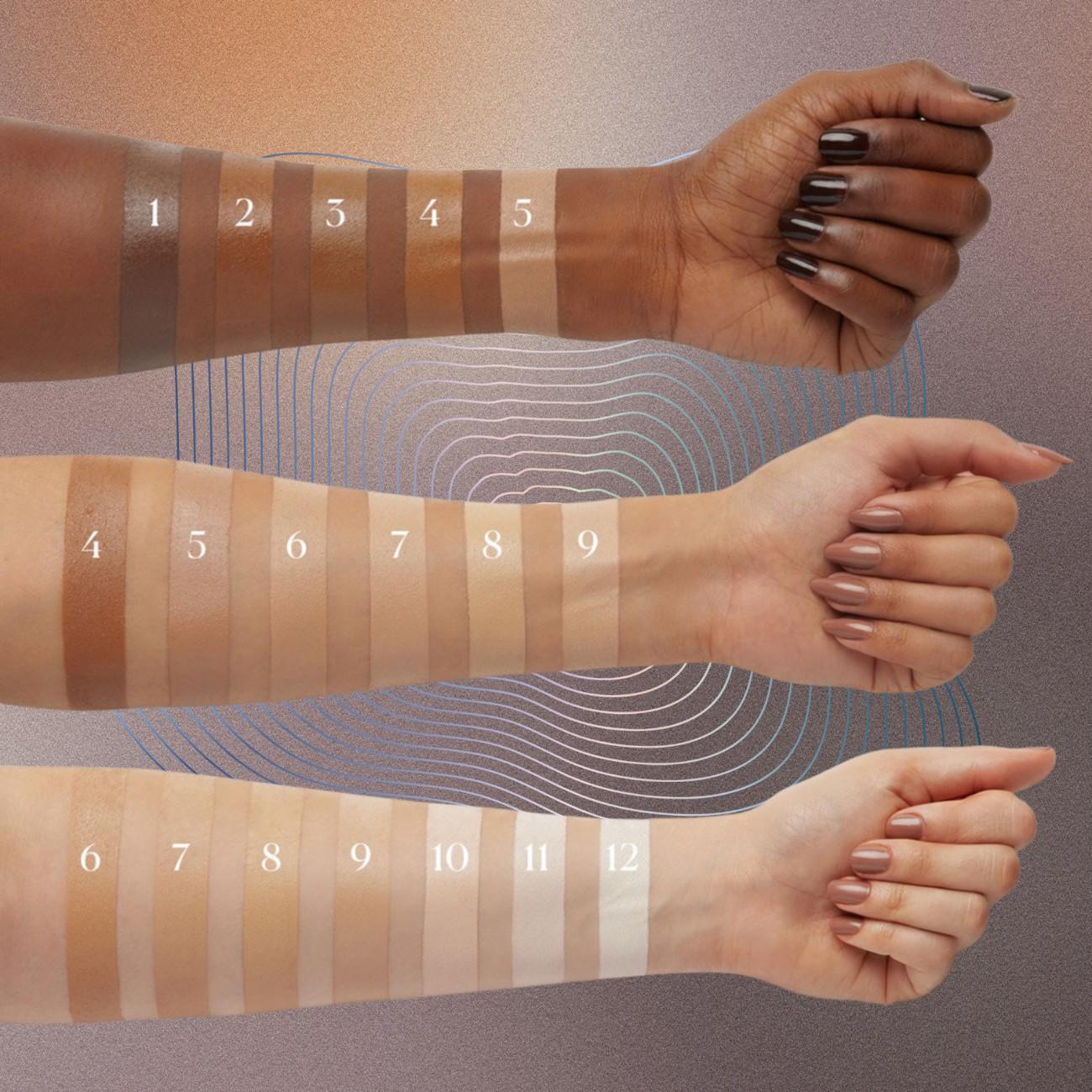
Despite these repeated failures, the same pattern continues across new launches. Here are reasons why this problem persists:
Inclusivity Is Treated As A Response, Not A Design Standard
In many cases, shade range expansion happens after public criticism rather than as part of the original product plan.
When backlash or online conversations highlight gaps, brands adjust existing ranges instead of rebuilding how shades are developed from the start. This leads to quick fixes rather than structural change.
Shade Count Has Become A Marketing Signal Instead Of A Performance Measure
Since the industry shift triggered by wider shade offerings like Fenty Beauty, the number of shades in a range is often used as proof of inclusivity.
However, reporting across beauty launches shows that having 30 or 40-plus shades does not guarantee even distribution or accuracy.
The focus is often on how large the range looks, not how well it performs across all skin depths.
Deeper Shade Development Is Still Not Given Equal Formulation Priority
Even in expanded ranges, deeper shades are often developed later in the process rather than alongside lighter tones.
This affects how much refinement goes into undertones, depth variation, and testing.
As a result, deeper shades may exist in the lineup but are not always as precise or as individually developed as lighter and medium shades.
Speed-To-Market Often Outweighs Refinement In Product Development
Modern beauty launches are driven by fast product cycles and constant releases.
In this system, brands prioritise getting a full range to market quickly rather than slowing down to perfect each shade group.
This can lead to ranges that look complete at launch but still lack balance when tested in real use.
Omiren Argument
Foundation matching for deep skin tones isn’t an inclusivity problem anymore. It is a standard problem.
The industry already knows what the gap looks like, and the conversation has been ongoing for years. Yet deep skin tones are still treated as the last adjustment in the development process rather than a core design priority.
This is where the real issue sits, not in awareness, but in hierarchy. As long as deeper shades are still built as extensions of existing ranges rather than equal starting points in formulation, “inclusive” will remain a label, not a guarantee.
What This Reveals About The Beauty Industry
Foundation matching for deep skin tones isn’t a struggle because the conversation around inclusivity doesn’t exist.
The conversation is loud, the products are visible, and the marketing is present. So, the issue is that visibility hasn’t fully translated into consistent shade construction and delivery.
Even as brands expand their ranges, the structure of how those shades are developed has not kept pace. What this ultimately shows is a gap between intention and execution.
Until that gap is closed, foundation matching for deep skin tones will remain a challenge that expansion alone cannot solve.
Frequently Asked Questions
1. Why Is My Skin Not Absorbing Foundation?
This usually happens due to dry, dehydrated skin, excess skincare (like heavy oils or silicone-based primers), or not exfoliating regularly.
2. Which Foundation Has the Largest Shade Range?
Brands like Fenty Beauty, MAC, and NARS are known for wide shade ranges, with Fenty Beauty leading with 40+ shades designed for diverse undertones.
3. Should Your Foundation Be Lighter or Darker Than Your Skin Tone?
Your foundation should match your skin tone as closely as possible. Going lighter can look ashy, while darker shades can look unnatural or muddy.
4. How To Find Your True Match Foundation Shade?
Identify your undertone (warm, cool, neutral), then test shades along your jawline in natural light. The right shade disappears into your skin without leaving a visible line.