The global eyeliner market was valued at over $2.5 billion in 2023, according to Statista’s global cosmetics market data. Every major cosmetics brand operating in that market sells a product built on a knowledge system developed in the Nile Valley over five thousand years ago. None of them says so on the packaging. Africa invented eye makeup by formulating and applying kohl in predynastic Egypt around 4000 BCE, and the knowledge spread across the ancient world via trade routes connecting the continent to the Middle East, Asia, and eventually Europe. What the cosmetics industry now sells as eyeliner is not a modern innovation. It is an African system of eye definition, protection, and identity with a documented history older than most of the world’s written records. The question this article asks is not whether Africa invented eye makeup. The evidence settled that long ago. The question is why the industry that profits from that invention has never found it necessary to say so.
Africa invented eye makeup over five thousand years ago with kohl, a compound made from galena, botanicals, and oils used across the Nile Valley. The global cosmetics industry built a billion-dollar category on this knowledge. Here is the history it never credits.
The Archaeological Evidence That Africa Invented Eye Makeup
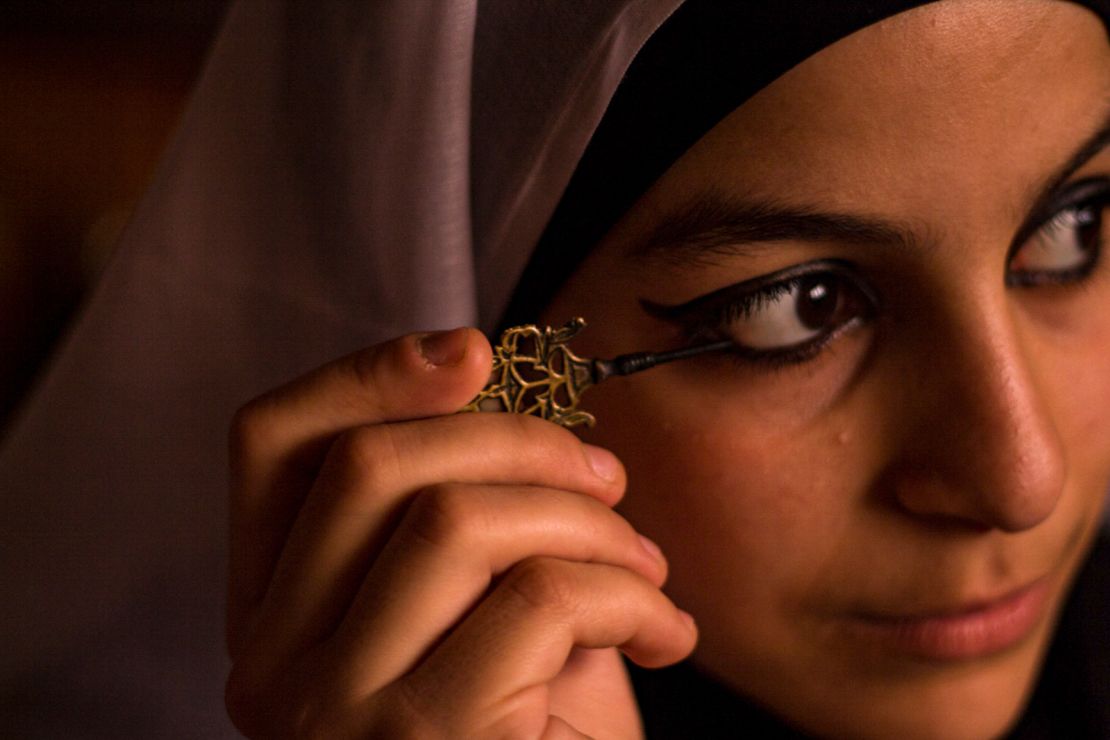
The history of eye makeup begins in ancient Northeast Africa, where the earliest documented evidence of kohl use dates to approximately 4000 BCE in predynastic Egypt. As recorded in the Metropolitan Museum of Art’s ancient Egyptian collection, kohl containers, grinding palettes, and applicator tools appear consistently across burial sites and domestic contexts from this period, establishing eye makeup not as an occasional or ritual practice but as part of structured daily life.
The evidence does not stop at Egypt. Archaeological records from Nubia, in present-day Sudan, document kohl containers and applicators at burial sites dated between 2300 BCE and 1500 BCE. This is critical: it establishes that the kohl system was not a single-civilisation practice but a shared knowledge system operating across connected African civilisations along the Nile Valley. The Nubian Museum in Aswan holds material evidence of this continuity, and UNESCO’s recognition of the Nubian archaeological zones reflects the depth of the cultural record that supports it.
By the Early Dynastic and Old Kingdom periods in Egypt, kohl had moved from individual practice to social infrastructure. It appears in texts, artistic representations, and the material culture of individuals across social classes. The fact that it was used by men, women, and children simultaneously confirms that Africa invented eye makeup as a functional and cultural system rather than a gendered beauty ritual. Its use was universal because its functions were universal: protection, identity, and the symbolic definition of the eye as a site of meaning.
Kohl Composition: How Africa Invented Eye Makeup Through Botanical and Mineral Science
Kohl was not a single ingredient applied to the eye. It was a compound formulation that demonstrates precisely why Africa invented eye makeup as a knowledge system rather than a cosmetic accident. The primary pigment was galena, a lead sulphide mineral ground into fine powder to create the characteristic dark line. Some formulations used malachite, a copper carbonate mineral that produced a green tone, used in earlier predynastic periods before galena became predominant. As documented in research published by the Louvre Museum on ancient Egyptian cosmetics, analysis of kohl containers from Egyptian collections confirms that these mineral choices were deliberate and consistent rather than experimental.
Additional ingredients in various kohl formulations included antimony, soot, burnt almonds, copper compounds, plant extracts, oils, and frankincense. Each served a specific purpose: improving texture, extending wear, supporting eye health in desert conditions, or providing the antimicrobial properties that modern analysis has confirmed in some traditional formulations. This is not primitive cosmetic experimentation. It is a systematic formulation, developed over generations, tested against the specific environmental demands of the Northeast African climate and refined into a product of functional precision.
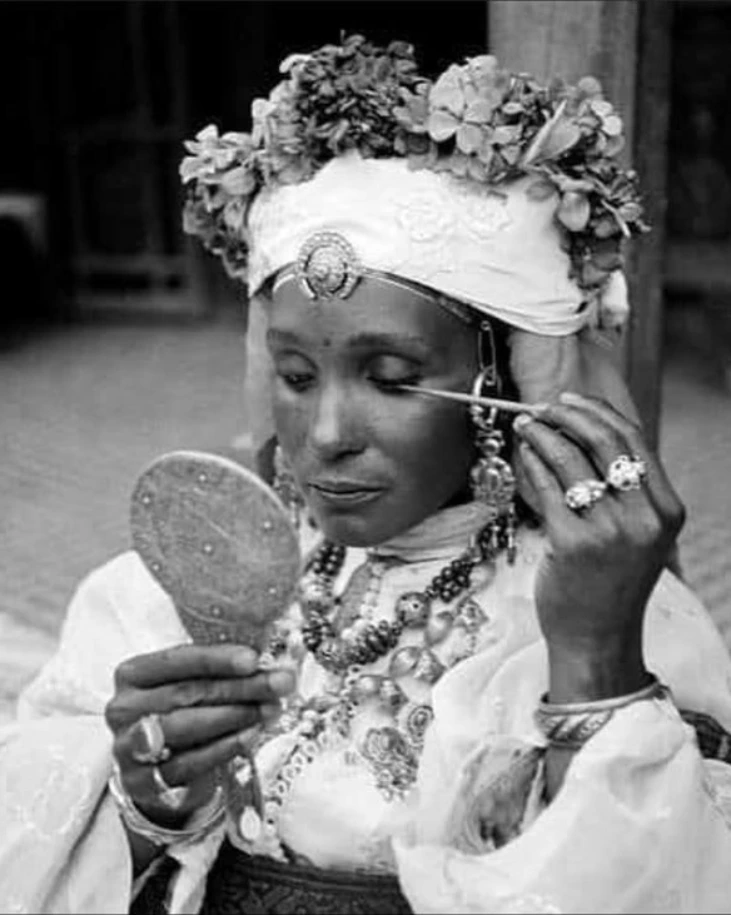
The storage and application systems are equally significant. Kohl was kept in containers carved from stone, ivory, alabaster, and metal. Applicator sticks made from wood, bone, or ivory enabled controlled, fine-line application around the eye. The precision these tools enabled is evident in ancient Egyptian portraiture, where the defined eye is among the most consistent and technically demanding aesthetic elements. The African skincare and beauty traditions that preceded the global beauty industry share this characteristic: functional precision developed through generational knowledge, not laboratory science.
The Eye as Power, Identity, and Protection in Ancient African Thought

In ancient African societies across the Nile Valley, the eye was not a neutral facial feature. It was understood as a site of power, consciousness, and spiritual protection. This is the cosmological context within which Africa invented eye makeup: not as decoration but as the deliberate shaping of the eye’s presence and meaning. When kohl was applied, it did not merely outline the eye. It defined the relationship between the person wearing it and the world observing them.
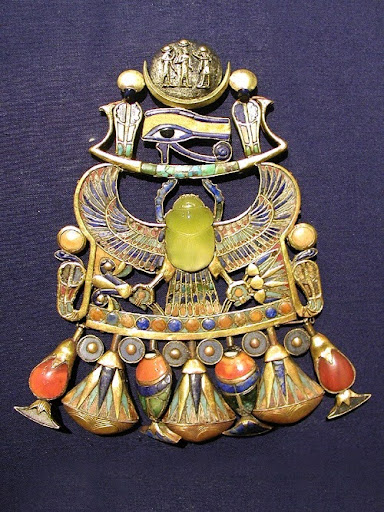
The Eye of Horus, one of the most widely recognised symbols in human visual history, is the clearest expression of this belief system. The symbol, which directly references the kohl-defined eye of ancient Egyptian iconography, represented protection, royal power, and good health across millennia of Nile Valley civilisation. As documented in the British Museum’s collection of ancient Egyptian symbolic art, the Eye of Horus appears on amulets, burial objects, and architectural decoration across thousands of years, consistently linking the defined eye to concepts of safety, sovereignty, and spiritual awareness.
The universal use of kohl across gender and age in ancient African societies reinforces this reading. It was not a beauty product available to those who could afford ornamentation. It was a shared visual practice through which entire communities expressed identity, marked occasions, and communicated membership in a cultural system. When Omiren writes about how African dress and adornment encode cosmological meaning, the kohl tradition is one of the foundational examples: beauty practised not for appearance alone but as a form of cultural and spiritual knowledge expressed on the body.
Also Read:
- The Art of Seen: Makeup, Identity, and Authentic Power
- From Ritual to Runway: How African Tribal Makeup Shapes Haute Beauty
- Why African Skincare Has Always Been Ahead of the West
How Kohl Spread Globally and Why the Origin Was Erased
Kohl did not remain confined to the Nile Valley. It moved along the trans-Saharan and Red Sea trade routes that connected Northeast Africa to the Arabian Peninsula, Persia, South Asia, and eventually the Mediterranean world. The trans-Saharan trade network was one of the most extensive commercial systems of the ancient and mediaeval world, carrying not only goods but also knowledge, practice, and material culture across vast distances. Kohl travelled within this network as both a commodity and a practice.
As it spread, the practice was adapted to different materials, climates, and cultural contexts. In South Asia, surma developed as a kohl variant with its own formulation traditions. In the Arab world, ‘kohl’ became both the practice and the word, and the English word ‘kohl’ derives directly from it. In Persia, in parts of sub-Saharan Africa reached by different trade routes, and eventually in Mediterranean Europe, variations of the kohl practice appeared with local names and local materials but with the same foundational logic: to define the eye with a dark mineral compound for both functional and cultural purposes.
What changed as Kohl spread was not the practice but the attribution. As the knowledge moved further from its origin, the Nile Valley source became less legible in the accounts of those who received and adapted it. By the time European cosmetics houses began producing eye definition products in the nineteenth and twentieth centuries, the African origin of the practice had been entirely removed from the commercial narrative. What had been an African knowledge system transmitted through millennia of trade became, in the language of the modern beauty industry, simply an ancient technique with exotic historical associations. As Omiren has argued in its examination of what happens when African beauty knowledge is extracted without credit, this is not a historical accident. It is the structure of how African global commercial industries have processed intellectual and cultural contributions.
Kohl in the Modern Beauty Industry: The Five-Thousand-Year African Legacy the Industry Never Credits
The global cosmetics industry is currently valued at over $500 billion annually, according to data tracked by Statista’s global beauty market report. The eyeliner category alone generates billions in annual revenue across mass-market, mid-market, and luxury segments. Every major cosmetics corporation operating in this space sells a product whose foundational logic, materials, and application principles were established in ancient Northeast Africa. L’Oréal, Maybelline, MAC, NARS, Dior Beauty: none of their eyeliner brand narratives acknowledge their African origins. The omission is not ignorance. The history is available, documented, and academically established. The omission is a commercial choice.
Contemporary African beauty brands operating in the cosmetics space are beginning to reclaim this history as commercial authority rather than an academic footnote. Brands including Epara Skincare and 54 Thrones are building brand identities rooted explicitly in the depth and sophistication of African beauty knowledge, positioning that knowledge not as heritage inspiration but as the original intellectual property on which global beauty was built. This is the commercial frontier that the Kohl legacy opens: not nostalgia for ancient practice, but the insistence that African beauty knowledge is foundational, current, and commercially authoritative.
Africa invented eye makeup, and the global cosmetics industry spent five thousand years profiting from that invention without saying so. This is not a grievance about the distant past. It is a description of an active commercial relationship. Every eyeliner sold in a Boots Pharmacy in London, Sephora in New York, or a beauty market in Lagos is a product built on African formulation knowledge, applied through African applicator technology, and shaped by an African philosophy of eye definition that originated in the Nile Valley before most of the world’s written languages existed. The value chain that runs from that knowledge to the $2.5 billion global eyeliner market passes through African communities exactly once: at the point of purchase, where African consumers pay for a product whose origin is their own inheritance, repackaged and sold back without credit.
The Kohl legacy is not a history lesson. It is a property claim. When we say Africa invented eye makeup, we are not merely correcting the historical record. We are identifying the intellectual and cultural source of one of the most commercially significant product categories in the global beauty industry, and we are asking what it means that this source has been systematically delinked from the products, profits, and brand narratives built upon it. The answer to that question determines not only how beauty history is told but also who holds authority over African beauty knowledge going forward and whether the next generation of African beauty brands will be positioned as newcomers to an established industry or as the rightful heirs of the system on which that industry was built.
Frequently Asked Questions
Did Africa really invent eye makeup, and what is the evidence?
Yes. Archaeological evidence from predynastic Egypt dates kohl use to approximately 4000 BCE, making it one of the oldest documented cosmetic practices in human history. Kohl containers, grinding palettes, and applicator tools have been recovered from burial and domestic sites across the Nile Valley, including Nubian sites in present-day Sudan, dated between 2300 BCE and 1500 BCE. The Metropolitan Museum of Art’s ancient Egyptian collection and the Louvre’s documentation of ancient Egyptian cosmetics both provide extensive primary evidence. The claim that Africa invented eye makeup is not contested in Egyptology or archaeological history. It is simply underreported in commercial beauty narratives.
What was kohl made from in ancient Africa?
Ancient African kohl was a compound formulation rather than a single ingredient. The primary pigment was galena, a lead sulphide mineral ground to fine powder. Earlier formulations used malachite, a copper carbonate that produced a green tone. Additional compounds included antimony, soot, burnt almonds, copper-based minerals, plant extracts, and oils. The precise composition varied by region and period, reflecting the generational refinement of formulation knowledge across different African communities. Some formulations have been shown in modern laboratory analyses to possess antimicrobial properties, confirming the system’s functional sophistication. The Louvre’s research on kohl jars provides detailed compositional analysis from museum collection specimens.
Does kohl actually protect the eyes, or is it just cosmetic?
Kohl served multiple documented functions beyond cosmetic definition. In desert environments, the dark pigment around the eye reduced solar glare, operating similarly to modern anti-glare eyeblack used by athletes. The formulation helped create a barrier against dust and wind-borne particles in the dry, arid conditions of Northeast Africa. Modern analysis of some traditional kohl formulations has identified antibacterial compounds that would have reduced the risk of eye infection. However, it is important to note that some traditional and contemporary kohl formulations contain high levels of lead, which carries genuine health risks. The World Health Organisation’s position on lead in cosmetics is relevant for anyone using traditional kohl products today.
How did kohl spread from Africa to the rest of the world?
Kohl spread from the Nile Valley through the trans-Saharan and Red Sea trade networks that connected Northeast Africa to the Arabian Peninsula, Persia, South Asia, and the Mediterranean world from the second millennium BCE onwards. The Arabic word ‘kohl’, from which the English word ‘kohl’ derives directly, is linguistic evidence of African-origin transmission through the Arab world. In South Asia, the practice developed as surma with its own formulation variants. As the knowledge moved further from its origin, the African source became progressively less visible in regional accounts. By the time European cosmetics houses began commercialising eye definition products in the modern era, the Nile Valley origin had been entirely removed from the commercial narrative. The Britannica account of trans-Saharan trade provides context for the trade networks through which this and other African knowledge systems travelled globally.