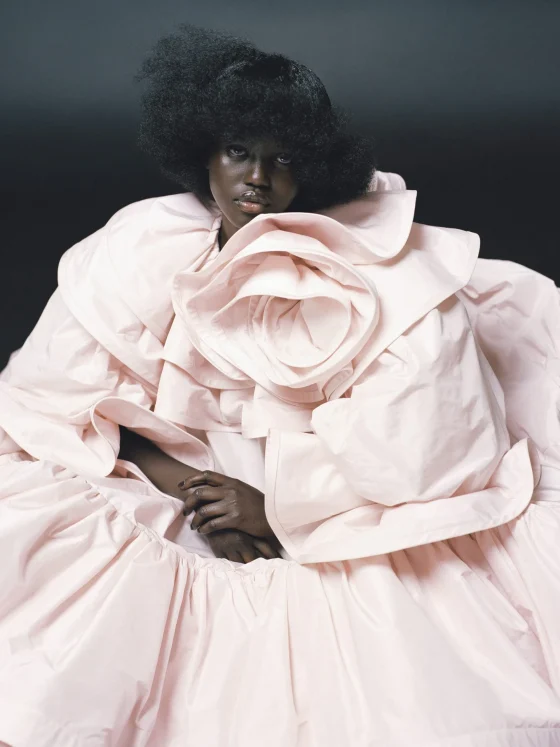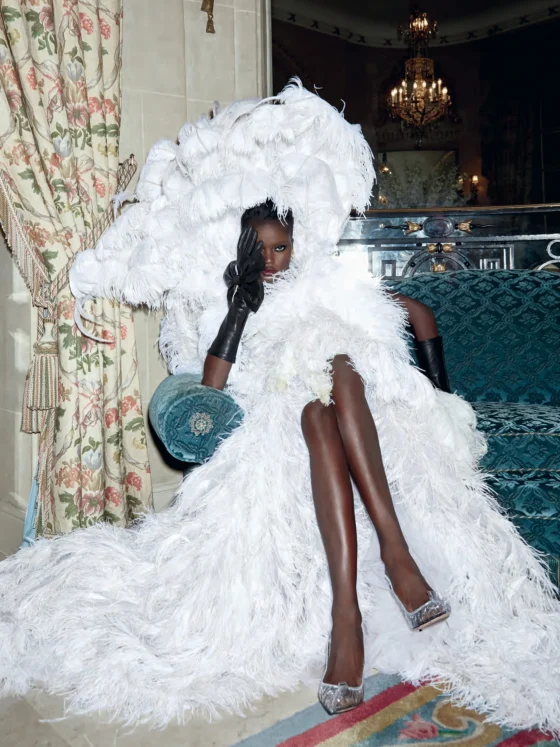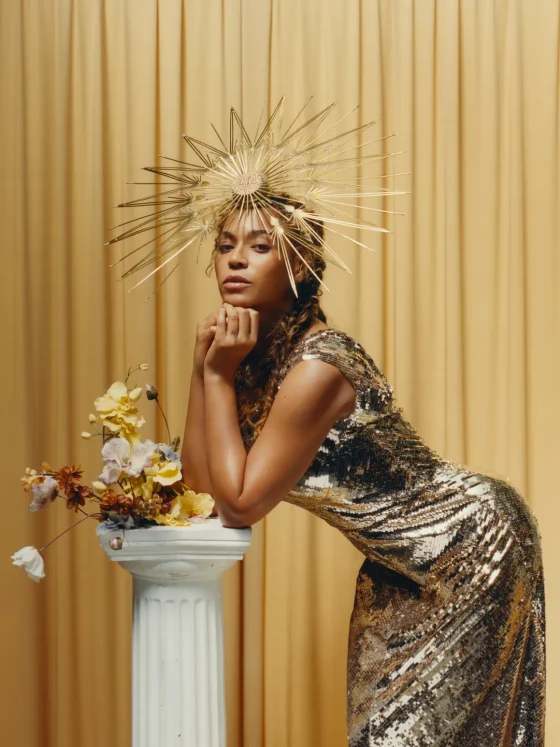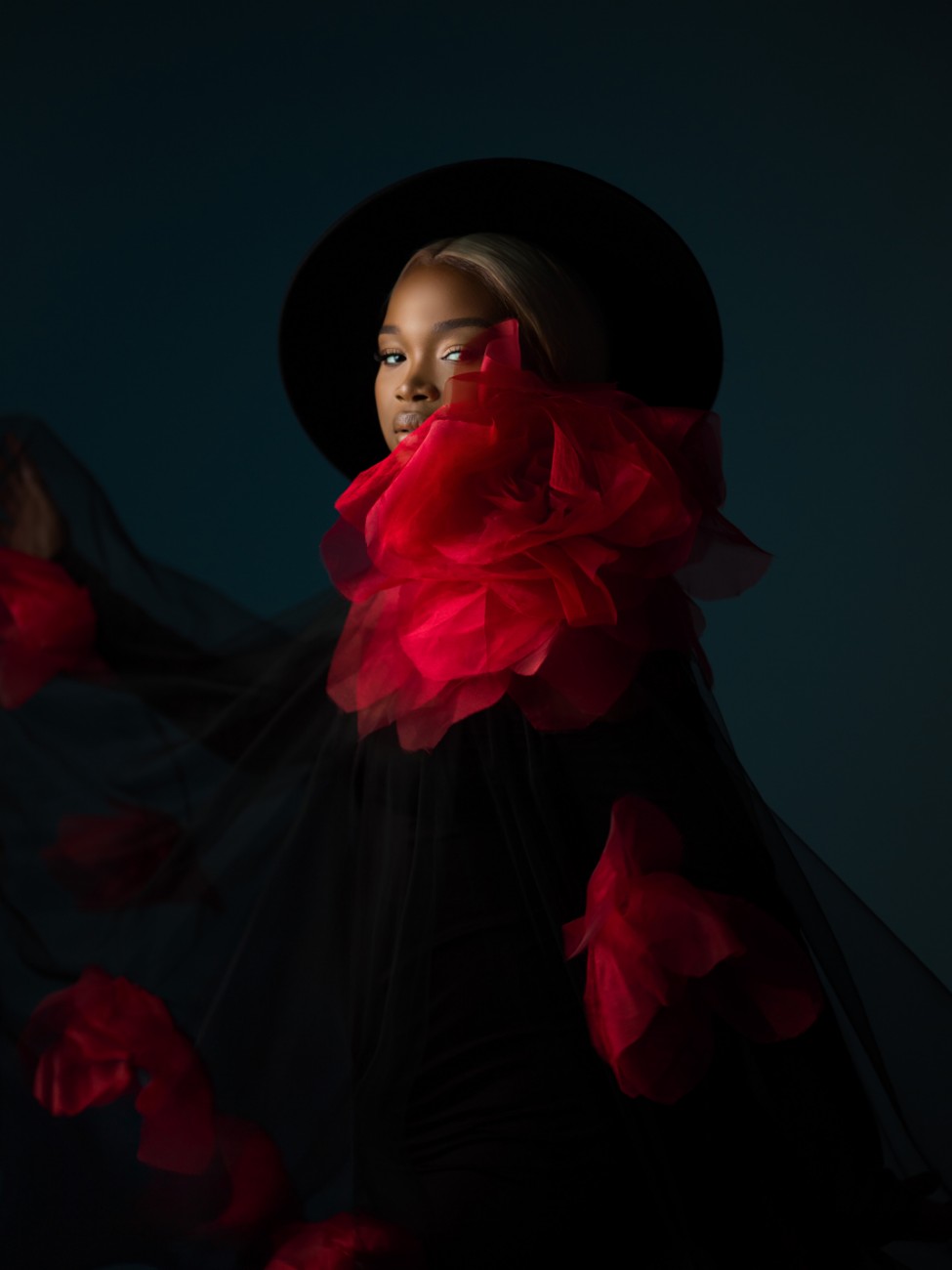
Anjeza Dyrmishi’s starting point for Petals & Wings was not simply an outfit or a decorative arrangement. It was a way of thinking about the portrait. Drawing on her background in fine arts and painting, she wanted to make photographs that approached the expressive qualities she associates with painted images: considered light, emotionally suggestive colour and a composition in which texture carries meaning.
“Rather than approaching the series as a conventional fashion shoot, I wanted to create portraits that feel like paintings: expressive, sculptural, and timeless,” Dyrmishi writes in her project statement.
Her ambition establishes the central relationship within Petals & Wings. Fashion supplies an opportunity to construct a character through styling, while portraiture asks that the person within that construction remain present. Flowers and feathers become materials through which she explores that relationship, with femininity, individuality and strength as the project’s stated concerns.
The question is not whether decoration can make a photograph beautiful. It is how a carefully constructed image can accommodate the personality of the person being photographed. Dyrmishi’s account of the project repeatedly returns to that balance: the arrangement matters, but so do expression, movement and the individual character of each portrait.
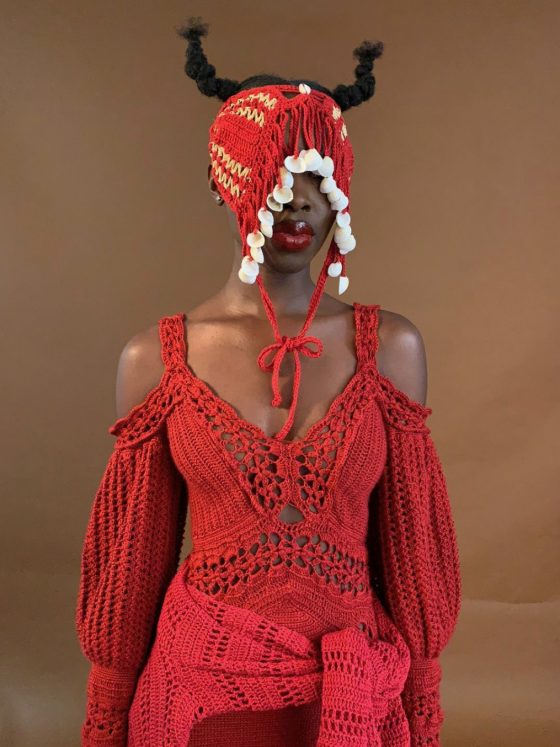
Anjeza Dyrmishi explores femininity through flowers, feathers and light in Petals & Wings, a fashion editorial shaped by her background in painting.
Painting as a Way of Thinking About Photography
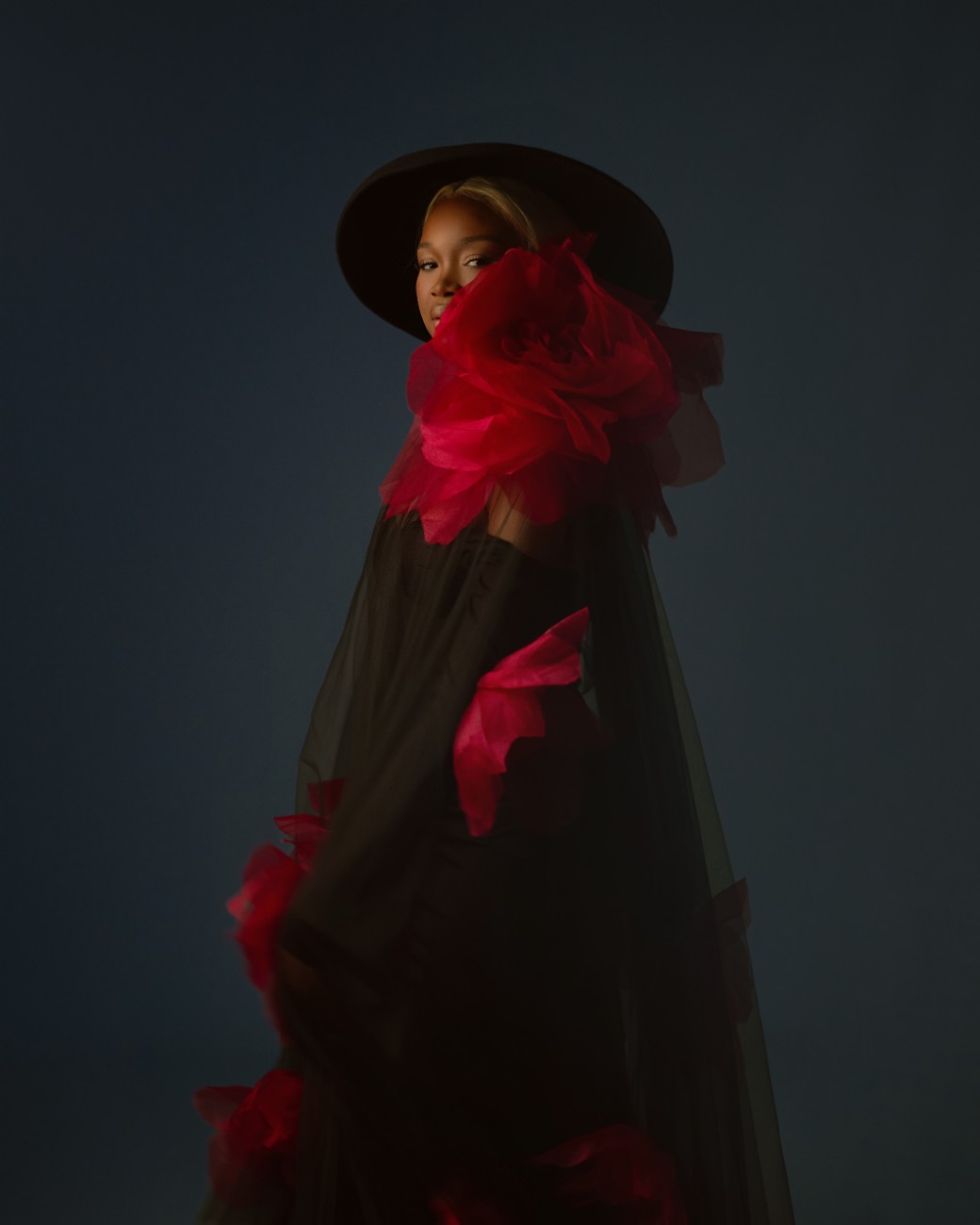
For Dyrmishi, painting is more than a reference to the appearance she hoped to achieve. It informs the decisions she describes making before and during the session.
“My background in fine arts and painting continues to influence how I see photography,” she explains. “I am drawn to the way light shapes a face, how colours create emotion, and how textures can transform a simple portrait into something more imaginative.”
That statement identifies three working elements: light, colour and texture. Each has a role in her conception of the image. Light shapes the face; colour establishes an emotional register; texture introduces another level of visual expression.
Her description also clarifies what she means by a painterly approach. The aspiration is not merely to make a photograph resemble another medium. It is to consider how the components of a portrait can work together, with the styling understood in relation to the face, the materials and the lighting.
“Timeless” remains an intention rather than a quality an artist can declare. More useful to understanding this project is Dyrmishi’s emphasis on construction: the photograph as a deliberately composed encounter between a person and an imagined visual world.
Flowers and Feathers as Working Materials
Flowers and feathers give the project its title and its main material vocabulary. Dyrmishi describes selecting them for their movement, delicate structures and visual contrast, then pairing them with dramatic lighting to create depth and presence.
Those are specific formal concerns. They suggest that the materials were chosen not only for what they might symbolise, but also for how they could behave within a photograph.
It would therefore be too restrictive to assign each element a fixed meaning: flowers as femininity, feathers as freedom, and delicacy as vulnerability. Dyrmishi’s statement does not offer that kind of symbolic code. Instead, she describes a process concerned with the relationships between materials, the model and the composition.
The distinction matters for how the project is discussed. An article that treats the flowers as a ready-made explanation of womanhood would reduce the work to a familiar association. Dyrmishi’s stated interest is more particular: she wants delicate structures and dramatic lighting to coexist with personality and strength.
Within that intention lies the project’s most useful tension. Delicacy does not have to cancel presence. Nor does strength have to be expressed by removing softness from the image.
Building a Connected Series Without Repeating the Same Portrait
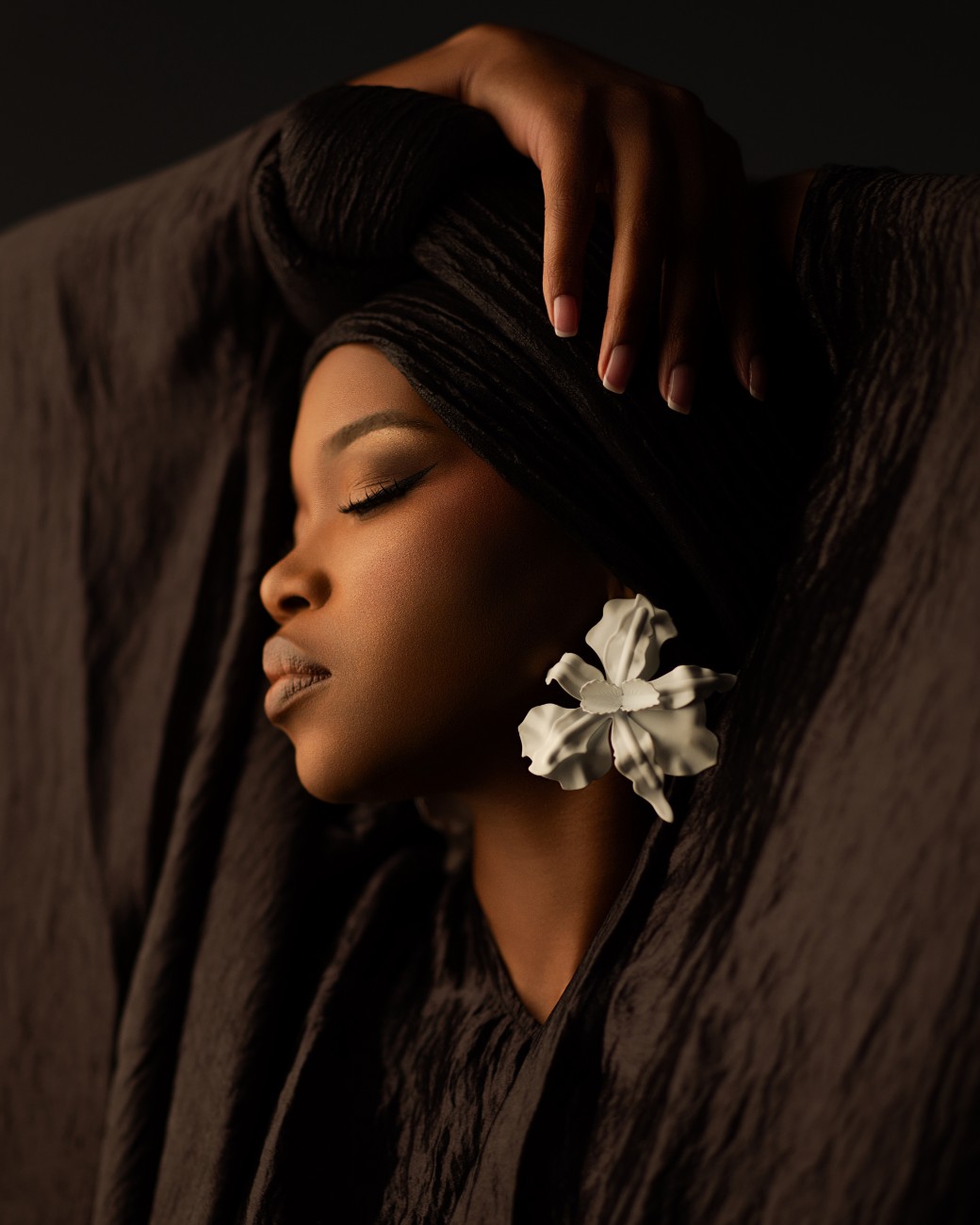
Dyrmishi took responsibility for photography, concept, art direction and styling. Her account describes a process in which those roles informed one another rather than operating as separate stages.
“I developed the concept, art direction, and styling, considering how each look would work with the model, the materials, and the lighting,” she writes.
This makes the model part of the planning, not a figure introduced after the visual decisions have been settled. Her description of the work builds the relationship between the person and the materials.
During the session, she concentrated on expression and subtle movement alongside the overall composition. Her aim was not uniformity.
“My goal was not to make every image identical, but to give each portrait its own character while keeping the story visually connected.”
That distinction is important in her project statement. A connected series need not depend on repeating one expression or one arrangement. Dyrmishi describes seeking continuity without erasing difference: a shared visual language that still allows each portrait to have an individual identity.
It also brings the discussion back to portraiture. The materials may establish the world of the series, but the changes in expression and movement are part of how she intends to keep that world inhabited.
China Leak’s Contribution to the Portraits
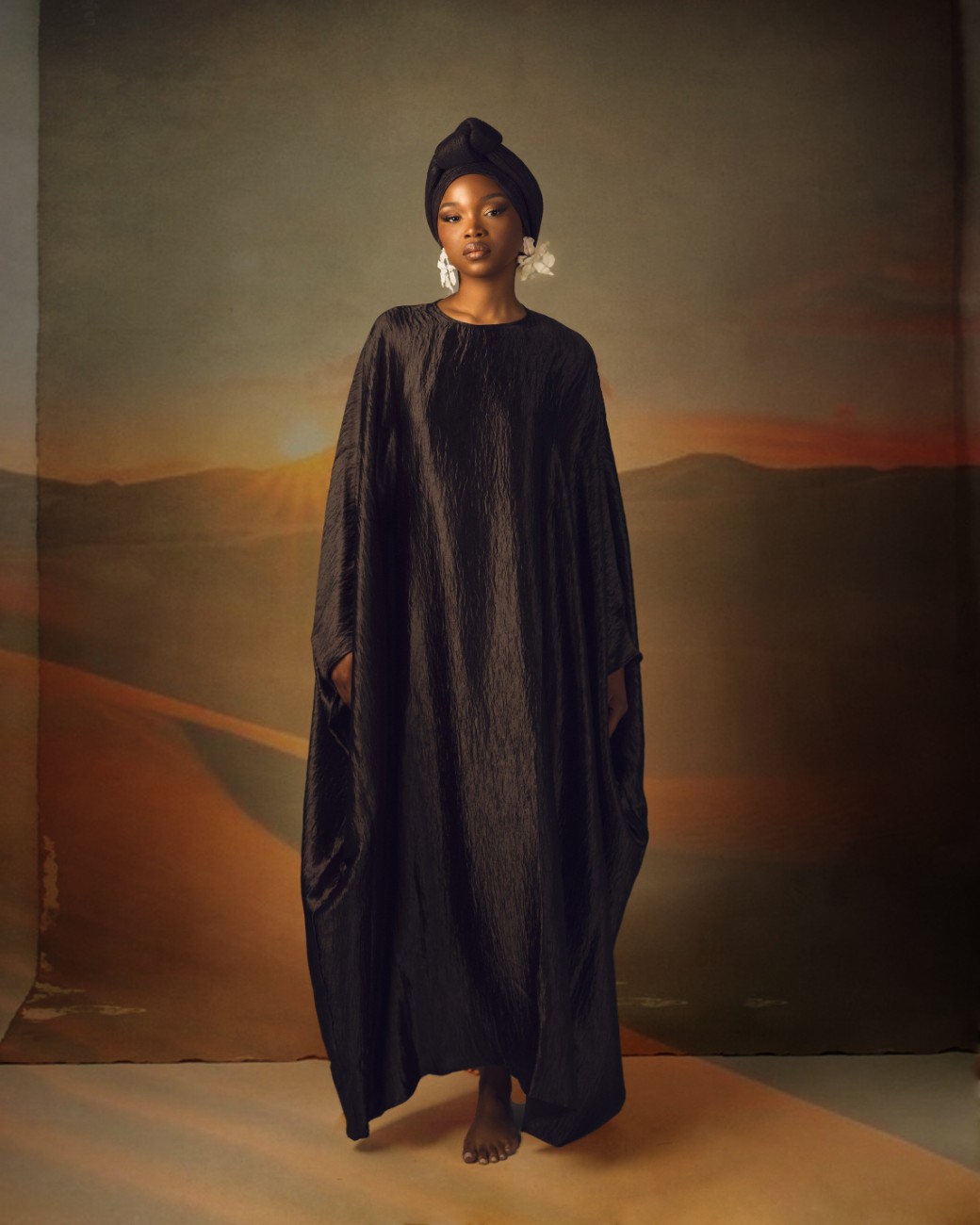
Dyrmishi credits model China Leak with bringing confidence, presence and sensitivity to the photographs. She specifically identifies Leak’s expressions and the way she carried each look as contributions that helped realise the concept.
That acknowledgement gives the model a role beyond presenting the styling. In the photographer’s account, Leak participates through interpretation: how she holds herself, responds to a look and gives an expression its particular character.
It would be inappropriate to infer Leak’s own understanding of femininity or her experience of the session without hearing from her directly. The supplied statement gives Dyrmishi’s perspective on their collaboration, not a shared account in which everyone’s intentions can be assumed.
It does establish that the photographer regarded the model’s contribution as consequential. Although Dyrmishi held several creative responsibilities, she does not describe the finished portraits as the product of art direction alone.
That distinction supports a more precise discussion of individuality. Within the project’s stated aims, individuality is not only a theme attached to the photographs. It is also something Dyrmishi sought through the person’s performance within them.
Hair, Makeup and a Second View of the Process
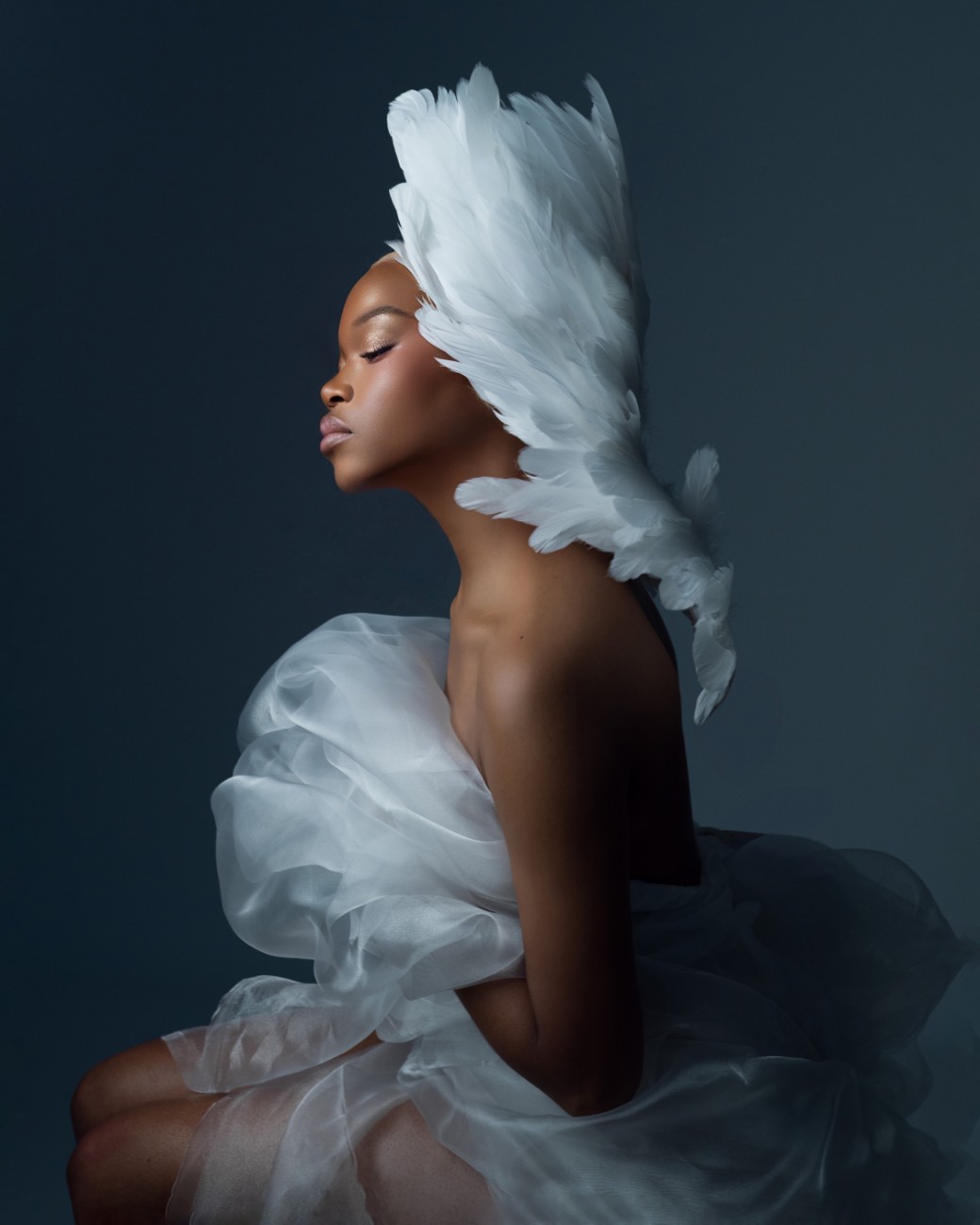
Hair and makeup artist Latisha Chancey contributed to the visual development of Petals & Wings. Dyrmishi describes Chancey’s work as complementing the styling and supporting the atmosphere she wanted to create.
The statement does not specify the products, techniques or individual decisions involved. Those details should not be invented. Nevertheless, the credit identifies hair and makeup as part of the project’s coordinated visual approach, alongside the materials, lighting and styling.
Endrit Bardhi documented the project through behind-the-scenes video, adding another view of the creative process.
His role should remain distinct from the photography credit. The video records the making of the project; Dyrmishi is credited with the still photography and its creative direction. Preserving that distinction allows each contribution to be recognised accurately without collapsing a collaborative production into a vague list of participants.
A Personal Project After Two Decades in Photography
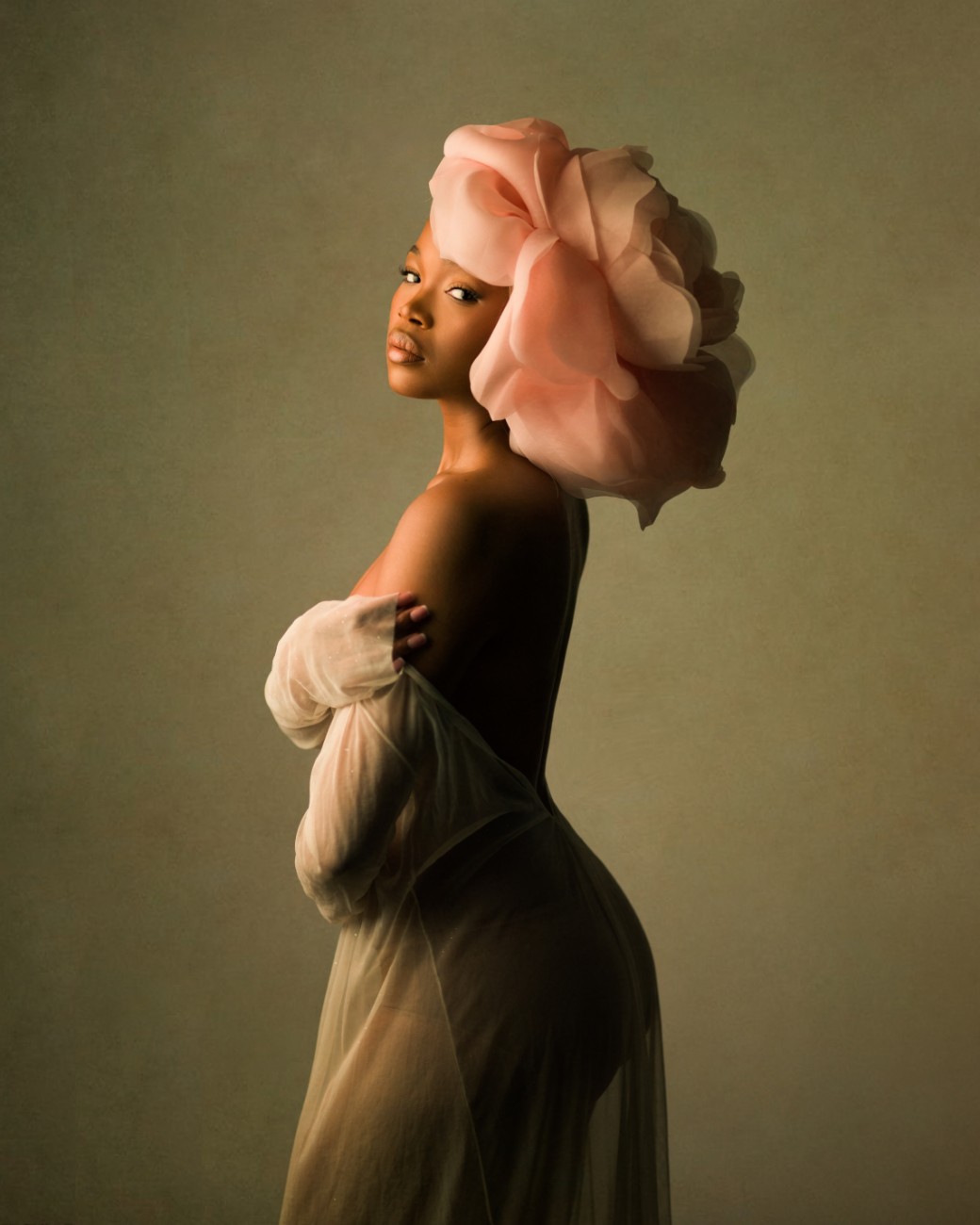
Dyrmishi places Petals & Wings within a career she says spans more than two decades. She says what continues to motivate her is the opportunity to create images that reflect a personal artistic vision.
The project brings together the interests she names as central to that vision: painting, portraiture and editorial fashion.
Her stated hope for the audience is equally revealing. She wants viewers to notice not only the styling and details, but also “the personality, beauty, and strength within each portrait.”
This is the clearest expression of the project’s priorities. The styling is meant to attract attention without becoming the sole subject. The materials establish a visual proposition, but Dyrmishi wants that proposition to lead back to the person.
Her account does not present fashion as separate from portraiture. It presents the constructed look as one means through which a portrait might become more expressive.
The Omiren Argument
The most productive way to understand Petals & Wings is through the relationship between adornment and individuality.
Dyrmishi’s statement suggests that flowers, feathers, and carefully considered light can articulate femininity without requiring every portrait to express the same character. Her emphasis on Leak’s presence and on variation between images is therefore as important as her choice of materials.
The editorial distinction is between describing that intention and declaring it achieved. An artist’s statement explains the ambition; close engagement with the photographs must establish how fully the work carries it.
What the supplied account offers is a clear basis for that engagement. It asks the viewer to consider not just how a portrait has been arranged, but who remains visible within the arrangement. The project’s most consequential ambition is not to make a person disappear into an aesthetic. It is to let an imagined visual world and an individual presence occupy the same frame.
Also Read:
- The Global South Made Fashion. It Just Never Got Credit. examines who is recognised for creative work.
- African Makeup Artists Rewriting the Global Beauty Conversation One Editorial Look at a Time covers the artists shaping editorial looks.
- Trevor Stuurman: The Visionary Creative Director Shaping Modern African Style follows a photographer who also directs.
- How to Build a Model Portfolio for African Fashion Casting Directors looks at the model’s side of the image.
Frequently Asked Questions
What is Petals & Wings?
Petals & Wings is a fine art fashion editorial by photographer Anjeza Dyrmishi. According to her project statement, it explores femininity, individuality and strength through flowers, feathers and light. Dyrmishi wanted the portraits to feel expressive, sculptural and timeless, closer to paintings than to a conventional fashion shoot.
Who created Petals & Wings?
Dyrmishi is credited with photography, concept, art direction and styling. The collaborators are model China Leak, hair and makeup artist Latisha Chancey, and filmmaker Endrit Bardhi, who documented the process through behind-the-scenes video. Dyrmishi credits Leak’s confidence, presence and sensitivity with helping bring the concept to life.
How did painting influence the project?
Dyrmishi says her background in fine arts and painting informs how she sees photography. She is drawn to the way light shapes a face, how colours create emotion and how textures can transform a simple portrait. She wanted portraits that feel like paintings, with considered light, emotionally suggestive colour and meaningful texture.
Why did Dyrmishi choose flowers and feathers?
She describes choosing them for their movement, delicate structures and visual contrast, then pairing them with dramatic lighting to create depth and presence. Her statement does not assign a single fixed symbolic meaning to either material, so they work as visual materials rather than a code for femininity or freedom.
Full Editorial Credits
Photography, Concept, Art Direction & Styling: Anjeza Dyrmishi | @anjezadyrmishi
Model: China Leak | @chxnalee
Hair & Makeup: Latisha Chancey | @makeupbylatisha
Behind-the-Scenes Video: Endrit Bardhi | @endritbardhifilms
Project enquiries: info@anjezadyrmishi.com
Photographer’s Instagram: @anjezadyrmishi