Windsor Castle, July 16, 1892. A seventy-six-year-old woman named Martha Ann Erskine Ricks walks into the presence of Queen Victoria, carrying a white satin quilt, nine feet square, appliqued with more than 300 green leaves, red coffee berries, and a tree-of-life trunk running the full length of the cloth. She has been working on this quilt for more than twenty-five years. She was born into slavery in Tennessee. She came to Liberia at thirteen when her father purchased the family’s freedom. She has farmed coffee and cocoa in Clay-Ashland, ten miles east of Monrovia. And she has stitched, in the evenings after the farm work was done, toward this moment. The London Daily Graphic prints a sketch of the meeting on its front page. Newspapers in Africa, Europe, North America, and Asia cover the story. Martha Ricks returns to Monrovia to a crowd at the wharf and schoolchildren singing a song of welcome.
The quilt is now lost. It was last recorded at the World’s Columbian Exposition in Chicago in 1893. But what it set in motion has not been lost. Liberian quilting is today the continent’s only textile tradition that crossed the Atlantic in a specific, documented direction: from the Black American experience of slavery, freedom, and exile into West African soil, where it took root, transformed, and became something distinctly Liberian. This article is the record of how that happened, what Liberian quilting means, and why a quilt given at Windsor Castle in 1892 still governs the logic of Liberian diplomatic gift-giving in the twenty-first century.
Liberian quilting did not begin in Africa. It crossed the Atlantic with freed Black Americans in 1820 and became the nation’s most powerful diplomatic textile.
The Ship That Brought Quilting to Africa
On February 6, 1820, the ship Elizabeth sailed from New York carrying 86 Black American emigrants and three agents of the American Colonisation Society to the West African coast. These were freed Black men, women, and children, some born free and others recently emancipated, who were being encouraged, incentivised, and in some cases pressured to leave the United States and build a new life in Africa. The American Colonisation Society, founded in 1816 by a coalition of slaveholders, abolitionists, and politicians who agreed on little except that free Black people should not remain in the United States, had purchased land on the West African coast and named it Liberia, from the Latin word for freedom. The capital, Monrovia, was named after President James Monroe.
Between 1820 and the American Civil War, approximately 15,000 African Americans settled in Liberia. They brought with them everything they knew: their faith, their music, their methods of building, their recipes, their needlework. Sewing and quilting had been central skills in the lives of enslaved Black women in the American South. They were also survival skills, the means by which women made bedding, clothing, and household goods. On the ships and in the new settlements, these skills did not disappear. They continued. By 1847, when Liberia declared its independence as the first Black republic in Africa, quilting was already an established practice in the Americo-Liberian community. By 1857, women were entering their quilts in Liberia’s National Fair competitions in Monrovia. The government formally supported needlecraft as a marker of civilised life in the new republic.
Martha Ann Ricks, born in 1817 in Tennessee, arrived in Clay-Ashland, Liberia, in 1830 at age 13. Within a year, she had lost most of her family to disease. She survived, married, farmed, and became an accomplished needlewoman. Her silk cotton socks were individually named in the official report of Liberia’s Second National Fair in 1858, the only woman mentioned by name in the multi-page document. She was already, decades before the journey to Windsor Castle, one of the most recognised textile makers in the young republic.
The Coffee Tree Quilt: A Diplomatic Object
The coffee tree quilt that Martha Ricks presented to Queen Victoria on July 16, 1892, was not simply a handmade gift. It was a piece of Liberian diplomatic communication. According to peer-reviewed research published in MDPI’s Arts journal, Liberia in the late 19th century was working to establish its legitimacy as an independent republic amid accelerating European colonisation. The French were expanding in the Ivory Coast to the east and Guinea to the north. The British were consolidating in Sierra Leone to the west. Liberia needed to cement its international relationships and demonstrate its readiness to participate in Atlantic trade and diplomacy.
The coffee tree was the right image for that message. Coffee was Liberia’s primary cash crop and its leading export. Ricks grew coffee on her own farm. By choosing to applique a Liberian coffee tree in various stages of growth and bloom onto a white satin background, she was not making a decorative choice. She was producing a visual document of the Liberian economy and its potential. The quilt was nine feet square. It contained more than 300 green leaves and red berries. The tree of life trunk ran the full length of the cloth. Queen Victoria, who noted in her diary that Ricks had a kind face, accepted the quilt. The London Graphic covered the meeting on its front page. Liberian Ambassador Edward Wilmot Blyden, who had arranged the audience, understood what had been accomplished. Ricks returned to Monrovia with a naval escort and gifts from the Queen. The transaction had worked exactly as intended.
Ricks’s quilt also appeared the following year at the World’s Columbian Exposition in Chicago in 1893 and at the Cotton States Exhibition in Atlanta in 1895, where a second coffee tree quilt she made was displayed in the Liberian pavilion. Ricks died in 1901. Her portrait, taken by the royal photographers Elliott and Fry at Queen Victoria’s personal request, hangs today in the National Portrait Gallery in London. The original coffee tree quilt has not been found.
How Liberian Quilting Evolved on African Soil
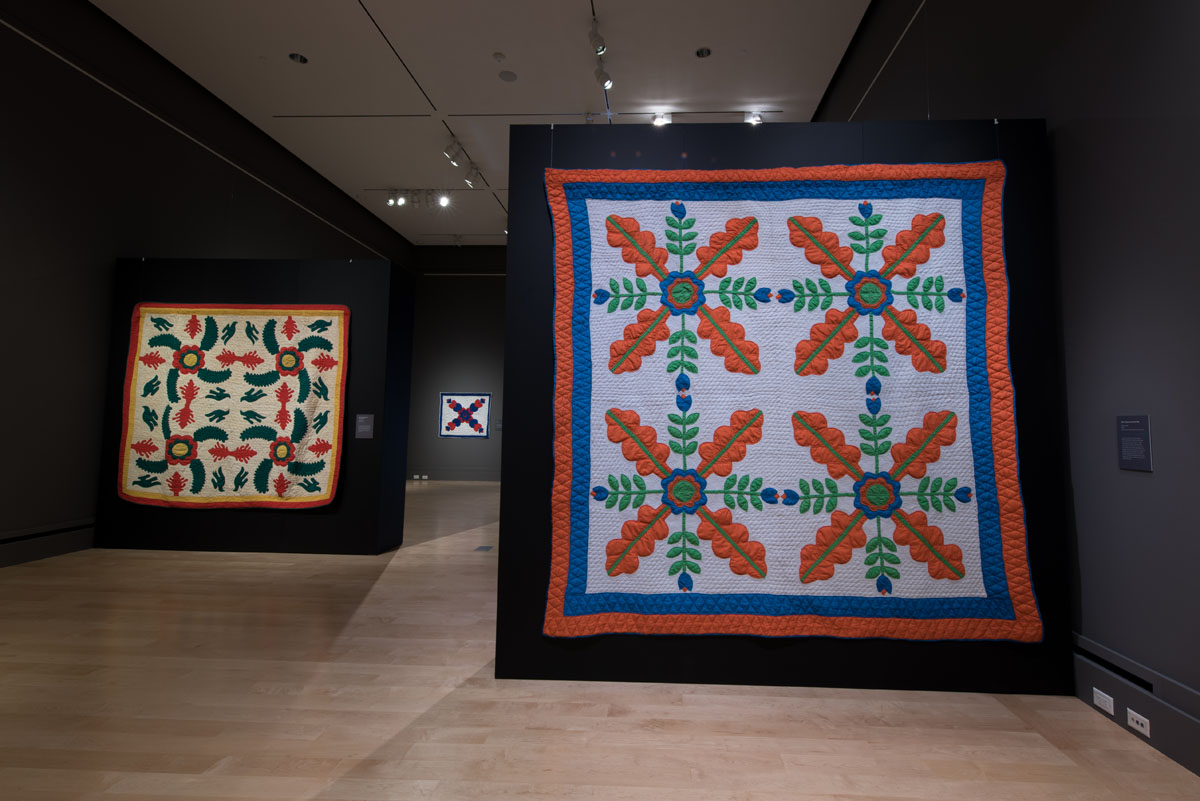
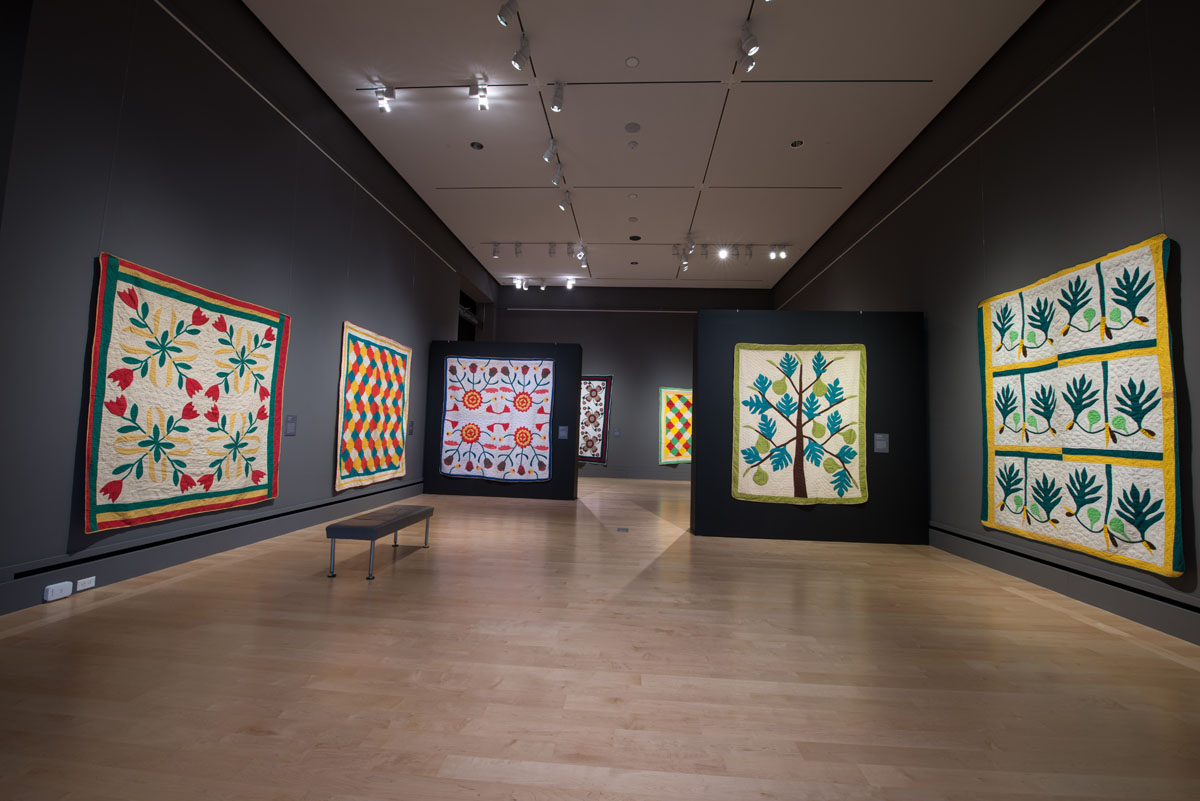
What the Americo-Liberian settlers brought was an American quilting tradition: patchwork, applique, and geometric patterns inherited from both European and African American quilting cultures. What Liberia did with it was to Africanise it. As documented in the International Quilt Museum at the University of Nebraska-Lincoln, which holds the John Singler Collection of Liberian quilts, the quilts from Liberia’s coastal Montserrado and Sinoe counties show a clear development of imagery drawn from local flora and fauna. Breadfruit trees, cassava leaves, local birds, and the Liberian star appear alongside patterns borrowed from traditional American quilt designs.
The quilts also developed a distinctly Liberian function: they became gifts. Not decorative gifts, but relational ones. Quilts were given at weddings, births, and graduations. They were given to dignitaries. They were given to mark political relationships and to open diplomatic conversations. This gift function was already present in the American quilting tradition, but in Liberia it became institutionalised. Women’s quilting associations formed specifically to produce quilts for national and international presentation. By the early twentieth century, the practice had become an established expectation: important visitors to Liberia received handmade quilts. The quilt was Liberia’s calling card.
The Liberian Civil War, which spanned from 1980 to 2003, damaged the quilting tradition in certain communities. Linguist John Singler, who began collecting Liberian quilts during his time as a teacher in Sinoe County in 1969, documents in his collection that quilting there did not survive the war. Quilters were displaced, communities were broken apart, and the transmission of skills across generations was interrupted. In Monrovia and communities near the capital, the tradition continued, though under difficult circumstances. The civil war is part of the record of Liberian quilting, not a footnote to it.
The Diplomatic Quilt in the Twenty-First Century
In 2005, Ellen Johnson Sirleaf became Africa’s first elected female head of state, taking office as Liberia’s 24th President. She revived the practice of presenting handmade Liberian quilts as official diplomatic gifts. The National Museum of American Diplomacy, operated by the United States Department of State, holds a handmade Liberian quilt in its permanent collection, gifted by President Sirleaf to Secretary of State Hillary Clinton around 2009. A separate quilt was gifted to Secretary of State Condoleezza Rice during her 2006 visit to Liberia for Sirleaf’s inauguration. The ShareAmerica diplomatic gift resource notes that the quilt given on that occasion was an homage to the American role in Liberia’s founding and a tribute to the shared quilt-making traditions of both nations.
President Sirleaf gave a quilt to Harvard President Drew Faust at Harvard’s 2011 Commencement, where Sirleaf delivered the address. The quilt, made by ten women from the Liberian community of Arthington, featured the Harvard shield and was decorated with small seashells. Faust was so taken with it that she had the quilt displayed behind the president’s chair during the ceremony. President Sirleaf also presented a quilt to Chinese President Xi Jinping during a November 2015 state visit to China. That quilt, inlaid with shells, carried references to the collaboration between Liberia and China during the 2014 Ebola crisis. She gifted one to Congresswoman Eddie Bernice Johnson in 2017. She met with twenty-three female quilters from communities in and around Monrovia at her Foreign Ministry office to express her personal support. As the AllAfrica coverage of that meeting records, she praised the associations of Liberian women who produced quilts for national and international use and urged them to work together.
No other African head of state uses a handmade textile tradition in this way. The Liberian diplomatic quilt is unique on the continent because of its origin. It comes from a tradition that crossed the Atlantic carrying the full weight of Black American history, landed on West African soil, and became something new: Liberian, national, female, and powerful.
Also Read:
- Country Cloth: How Liberian Men Have Worn Power Since Before the Republic
- African Print as Modern Armour: Identity, Belonging, and Cultural Authority
- How Diaspora Cuisine Became a Tool of Cultural Diplomacy
- Akwete, Kuba Cloth, Barkcloth, and Kete: The Sacred Textiles the World Is Finally Discovering
What Liberian Quilting Patterns Communicate
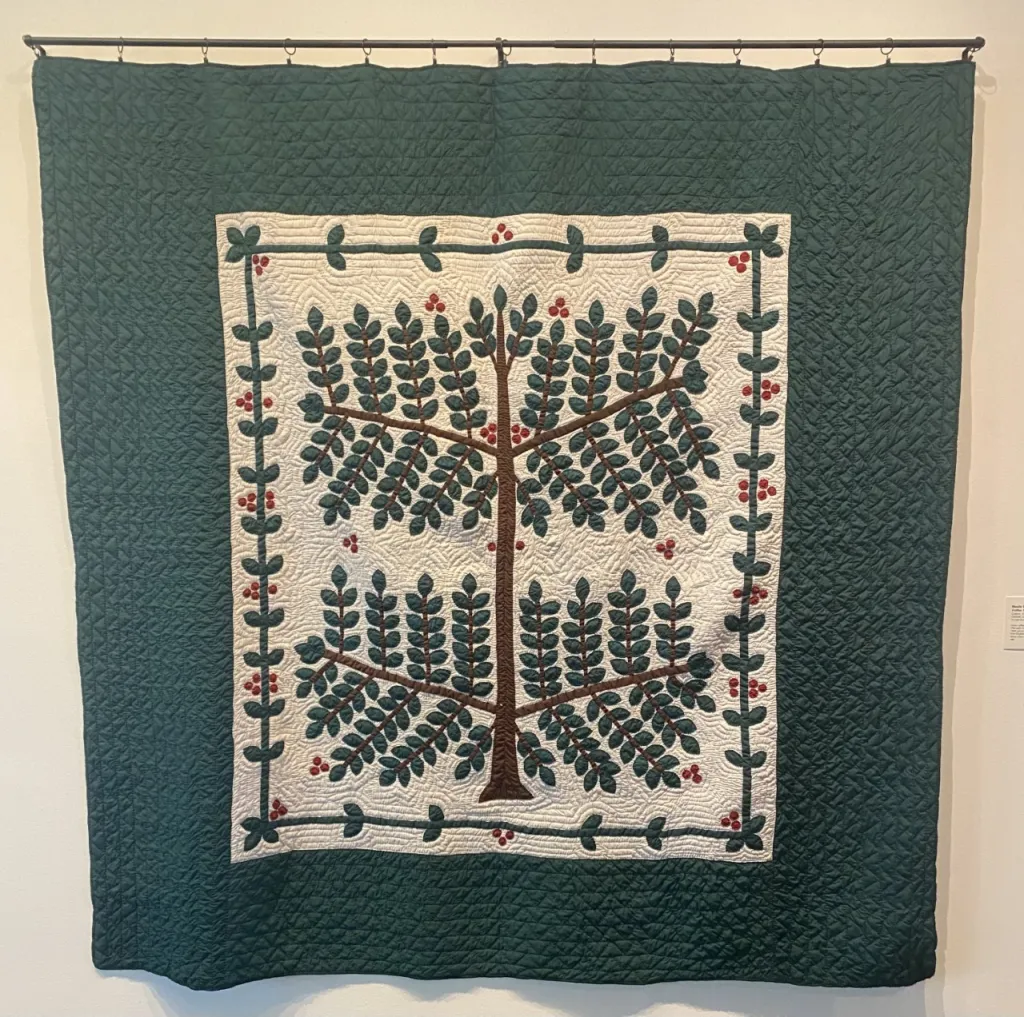
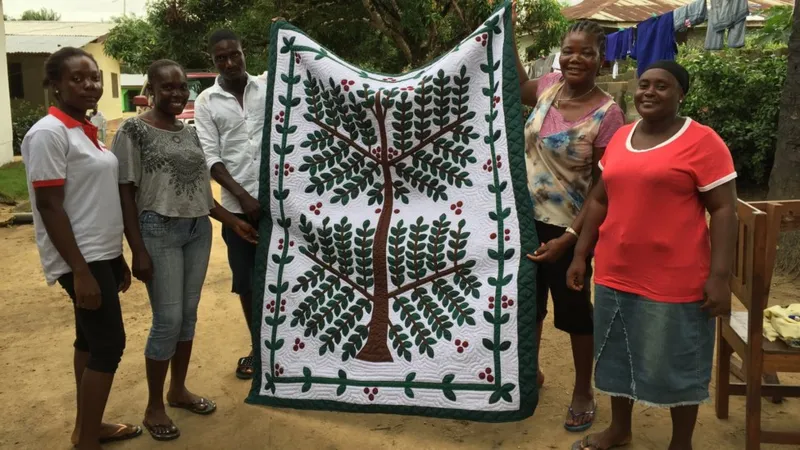
Liberian quilts are not abstract. Their patterns carry specific content. The coffee tree, which Martha Ricks chose in 1892, remains one of the most recognisable Liberian quilt motifs. In 2017, a quilting collective in Caldwell, Liberia, recreated the coffee tree quilt pattern to mark the 125th anniversary of Ricks’s visit to Queen Victoria. Breadfruit trees, cassava leaves, and other plants that define Liberian agricultural life appear across the tradition. National symbols, the Liberian flag, the Liberian star, and maps of the country appear in quilts made for diplomatic occasions. Adinkra symbols from Ghana appear in some contemporary Monrovia-area quilts, including the Bi Nka Bi quilt made by Maude Davis to mark Ellen Johnson Sirleaf’s inauguration: the symbol, which means no one should bite the other, was chosen for its meaning of peace and harmony.
The choice of motif is never incidental. Liberian quilters understand their quilts as communicative objects. The choice of what goes into a diplomatic quilt, and what it says about Liberia, its economy, its aspirations, its relationship with the recipient, is a deliberate editorial act. Martha Ricks understood this in 1892. The quilters of the Arthington community who chose to embroider the Harvard shield for President Faust understood it in 2011. The women who inlaid shells into the quilt for President Xi Jinping in 2015 understood it. The quilt is not a decoration. It is a letter.
The Omiren Argument
The Americo-Liberian quilting tradition is the only fashion or textile tradition in Africa that inverts the standard direction of cultural transfer. Every other conversation about African textiles and the Atlantic world follows the same trajectory: African cloth, African pattern, African technique moves outward, gets appropriated, gets reframed, gets sold back to Africa as trend or influence. Liberian quilting moved in the opposite direction. The skill crossed from Black America to West Africa in 1820, carried by people who were not returning to a homeland but arriving in a new country, bringing with them all they knew from an old one. What they built with those skills was not imitation. It was a transformation. By 1857, Liberian women were competing in national textile fairs with their quilts. By 1892, one of them was representing the republic at Windsor Castle. By the twenty-first century, the quilt had become a formal instrument of Liberian state diplomacy, presented to secretaries of state, university presidents, and heads of government on four continents. No other African textile tradition has achieved this specific function. The Liberian quilt is not a craft. It is a statecraft.
Omiren Styles makes this argument to avoid romanticising the circumstances that brought quilting to Liberia. The American Colonisation Society was not a benevolent institution. The 15,000 Black Americans who settled in Liberia between 1820 and the Civil War were doing so within a political framework designed, in large part, to remove free Black people from the United States. The mortality rate among early settlers was devastating: of the 4,571 emigrants who arrived between 1820 and 1843, only 1,819 were alive in 1843, as the historical record documents. Martha Ricks lost most of her family within a year of arriving. These facts are the ground from which Liberian quilting grew. Omiren Styles argues that, from those conditions, Liberian women built something that functions at the highest levels of global diplomacy. That is not a small thing. It is one of the most remarkable textile stories on the continent, and it has not been told with the seriousness it deserves.
Martha Ricks did not bring a gift to Windsor Castle. She brought a country. Every stitch in that coffee tree quilt was Liberian evidence.
Frequently Asked Questions
1. What is Americo-Liberian quilting, and how did it begin?
Americo-Liberian quilting is a textile tradition brought to West Africa by freed Black Americans who emigrated to Liberia beginning in 1820 under the auspices of the American Colonisation Society. The settlers brought quilting skills from the American South, where sewing and patchwork were central practices in enslaved and free Black communities. In Liberia, they continued quilting, competing in national fairs by 1857 and developing a tradition that merged American patchwork techniques with Liberian imagery and materials.
2. Who was Martha Ann Ricks, and why does she matter to Liberian quilting?
Martha Ann Erskine Ricks, born into slavery in Tennessee in 1817 and freed by her father, emigrated to Liberia at age 13 in 1830. She became one of Liberia’s most accomplished needlewomen, winning recognition at the Second National Fair in 1858. Over more than 25 years, she stitched a white satin quilt appliqued with a Liberian coffee tree, which she personally presented to Queen Victoria at Windsor Castle on July 16, 1892. The meeting was front-page news across four continents. Her portrait, taken at the Queen’s request, is held in the National Portrait Gallery in London. Quilt historian Kyra E. Hicks has documented her life, including the biography Martha Ann’s Quilt for Queen Victoria, published in 2012. The original coffee tree quilt has not been found.
3. How do Liberian quilts function as diplomatic gifts?
Liberian quilts have functioned as formal diplomatic gifts since Martha Ricks presented her coffee tree quilt to Queen Victoria in 1892. In the 21st century, President Ellen Johnson Sirleaf revived and institutionalised this practice, presenting handmade Liberian quilts to Secretary of State Hillary Clinton, Secretary of State Condoleezza Rice, Harvard President Drew Faust, Chinese President Xi Jinping, and US Congresswoman Eddie Bernice Johnson, among others. A Liberian quilt presented to Secretary Clinton is held in the permanent collection of the National Museum of American Diplomacy in Washington, D.C. Each quilt carries motifs and symbols chosen specifically to communicate something about Liberia’s relationship with the recipient.
4. What patterns and motifs appear in Liberian quilts?
Liberian quilt patterns draw from both the American patchwork tradition and local Liberian imagery. Coffee trees, breadfruit trees, cassava leaves, the Liberian star, the national flag, and maps of the country are common motifs in diplomatic and ceremonial quilts. Contemporary Monrovia-area quilts have also incorporated symbols from other African traditions, including Ghanaian adinkra symbols. The choice of motif in a diplomatic quilt is deliberate: it communicates something specific about Liberia, its economy, its values, or its relationship with the recipient.
5. Did the Liberian Civil War affect the quilting tradition?
Yes. The civil war, which ran in phases from approximately 1980 to 2003, damaged quilting traditions in specific communities. Quilters in Sinoe County on the southern coast were particularly affected. Displacement disrupted the transmission of skills across generations, and according to linguist and quilt collector John Singler, who documented the Sinoe tradition from 1969 onwards, Sinoe County quilting did not survive the war. In Monrovia and the greater capital region, the tradition continued under difficult conditions and has recovered in the post-war period, supported in part by the active endorsement of President Ellen Johnson Sirleaf.