The fashion industry runs on a myth. The myth is meritocracy: that the best work finds its audience, that creative rigour translates to commercial momentum, that a brand built with intention will, in time, build scale.
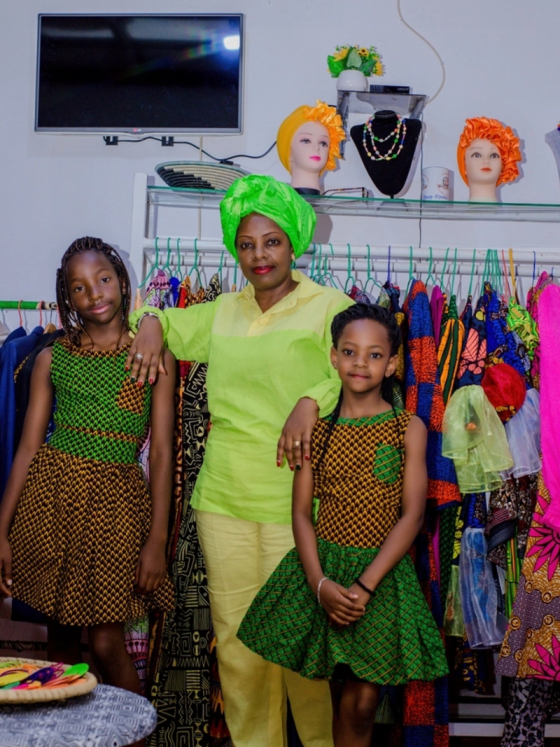
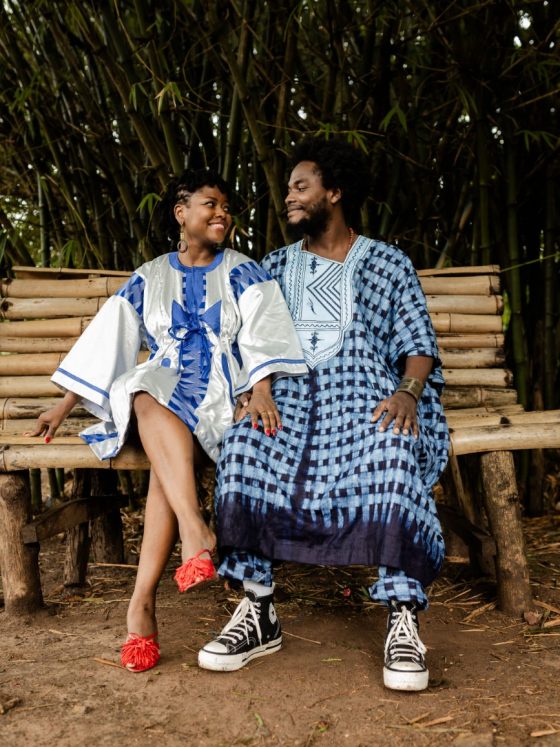
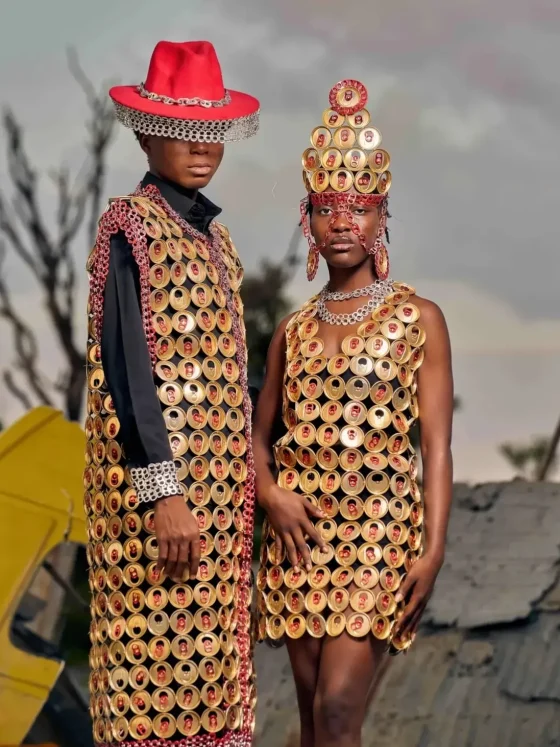
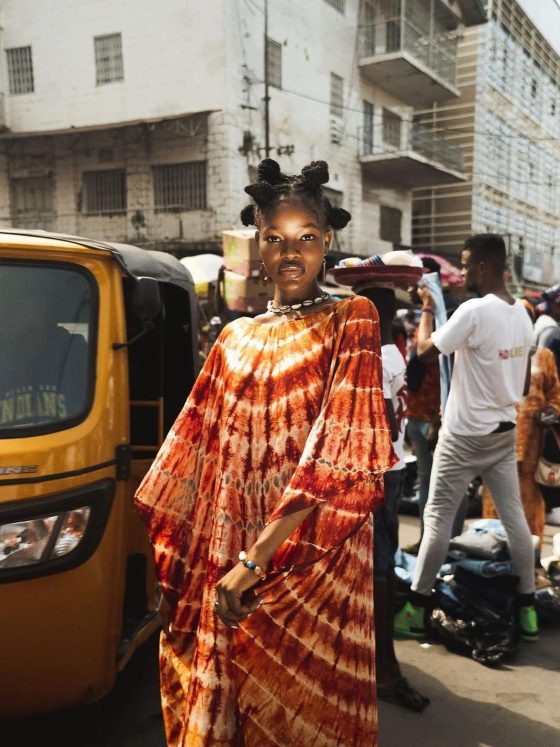
Walk through any market in Accra. Scroll through the studios coming out of Port of Spain, Nairobi, or New Orleans. The work is there. The craft is there. The cultural specificity that the industry claims to be searching for is abundantly, demonstrably there.
The scale is not.
This is not a story about talent deficits or underdeveloped markets. Designers across Africa, the Caribbean, and Black diasporic communities have been producing work that is thoughtful, technically rigorous, and commercially coherent within their immediate contexts for decades. The problem is not the quality of what is being made. The problem is the quality of the infrastructure surrounding who gets to grow.
The fashion system does not expand organically in all directions. It expands along existing lines of access. Capital, press, retail relationships, and institutional networks cluster in the same cities, flow toward the same kinds of founders, and replicate the same hierarchies that have always determined whose work gets resourced and whose work gets admired from a distance.
That distance is not accidental. It is structural. And until the industry is willing to examine it honestly, the conversation about global fashion will remain exactly what it has always been: wide in its references, narrow in its rewards.
Good design does not guarantee growth in fashion. Here is what actually determines which brands scale and which ones stay small.
Scaling Is a System, Not a Moment

Growth in fashion is often misunderstood as a single breakthrough, an international feature, a celebrity endorsement, or a runway debut.
In practice, scaling is not a moment. It is a system.
For a brand to expand, it requires consistent production, reliable distribution, access to capital, and sustained visibility. These elements must function together over time. If one breaks down, growth slows or stops entirely.
This is where many brands encounter difficulty. Not because they lack direction, but because the system required to support expansion is either fragile or unavailable.
Production Limits Growth Before Demand Does
One of the most immediate barriers to scaling is production.
Many independent brands operate with small teams, limited machinery, and manual processes. While this often allows for high levels of craftsmanship, it also limits output.
As demand increases, meeting it becomes a challenge. Delays occur. Quality control becomes harder to maintain. Growth begins to strain the very structure that made the brand successful in the first place.
This is not unique to one region, but it is more pronounced in markets where industrial manufacturing systems are less accessible or inconsistent.
The result is a tension between maintaining quality and increasing volume.
Distribution Determines Who Gets Seen
Even when production is stable, distribution presents another challenge.
Global fashion operates through networks, retail partnerships, online platforms, and international shipping systems. These networks determine where a brand can be accessed and by whom.
Many African and diaspora brands operate outside these established systems. They rely on direct sales, local stockists, or social media-driven commerce. While these channels can sustain a brand, they often limit its global reach.
Without strong distribution, visibility becomes inconsistent. A brand may be known within a specific community, yet remain largely invisible beyond it.
This creates a gap between influence and access.
Visibility Is Expensive and Unevenly Distributed
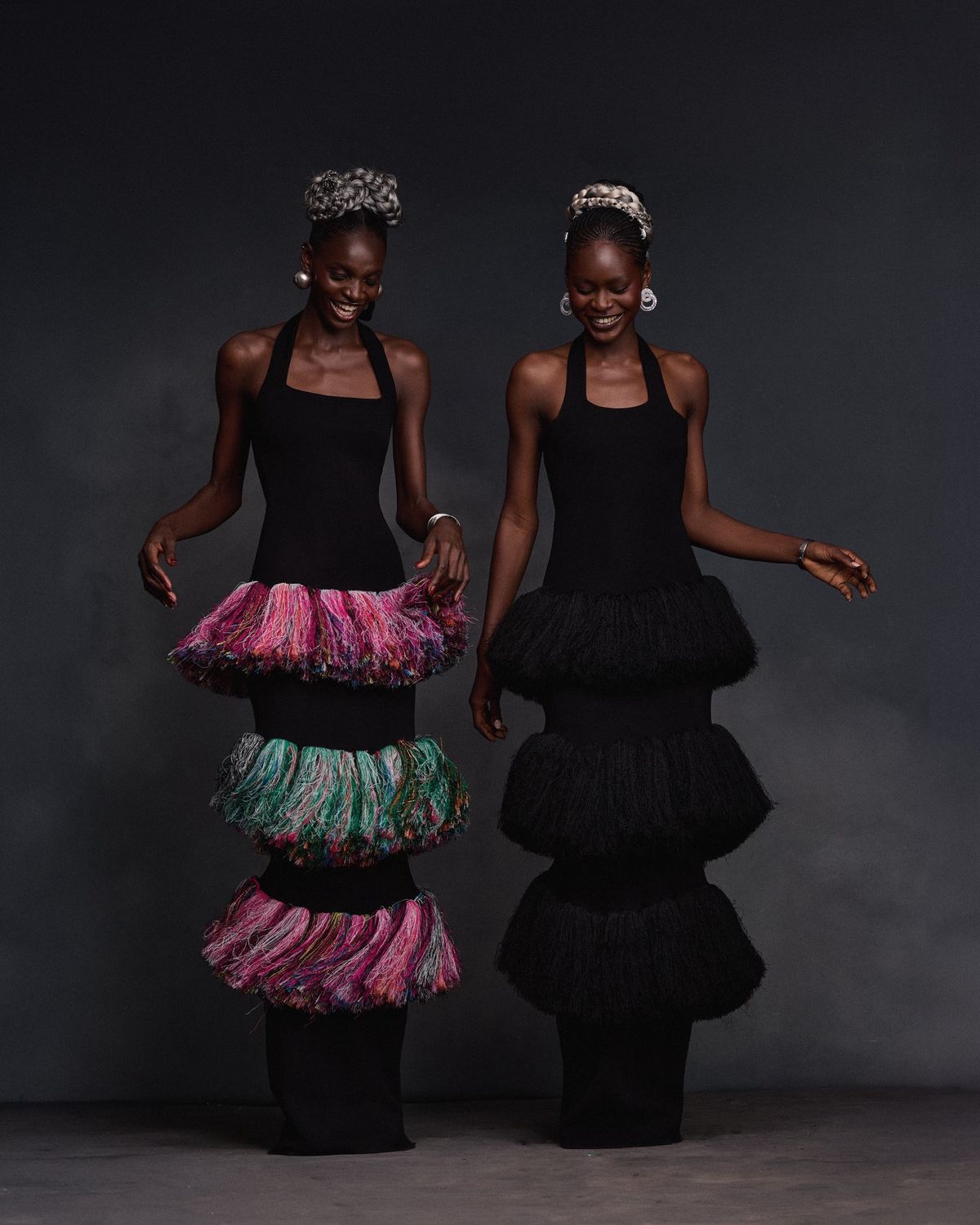
Being seen in fashion is not accidental. It is built through sustained investment in media, public relations, and strategic placement.
Fashion weeks, showroom presentations, editorial features, and celebrity collaborations all contribute to visibility. However, these opportunities often require significant financial resources and industry connections.
Designers like Thebe Magugu have successfully navigated these systems, gaining international recognition while maintaining a strong cultural foundation. Similarly, Kenneth Ize has built global visibility through strategic positioning and partnerships.
However, these examples are not the norm. For many brands, the cost of visibility is a barrier rather than an opportunity.
This reveals a key reality: talent does not guarantee access to platforms.
Funding Shapes the Direction of Growth
Capital plays a central role in determining whether a brand can scale.
Investment allows for expansion in production, hiring, marketing, and distribution. Without it, growth must happen slowly, often limited by immediate revenue.
In many African markets, access to fashion-specific investment remains limited. Designers often rely on personal funds or small-scale support, which restricts how quickly they can grow.
At the same time, external funding can come with expectations that influence creative direction. Brands may feel pressure to adjust their identity to appeal to broader or more commercially familiar markets.
This creates a balance between financial sustainability and cultural integrity.
Growth Is Not Always the Goal
It is also important to question the assumption that every brand is meant to scale.
Some designers intentionally maintain smaller operations. This allows for greater control over production, closer relationships with clients, and a stronger connection to craft.
In these cases, staying small is not a limitation. It is a decision.
However, the industry rarely presents this as a valid model. Success is often measured through expansion, more stores, larger production, and wider distribution.
This narrow definition overlooks other forms of success that exist outside traditional growth models.
What the System Prioritises and What It Ignores
The challenges faced by smaller brands reveal how the fashion industry prioritises certain structures over others.
It rewards scalability, consistency, and global visibility. It often overlooks systems built on craftsmanship, local relevance, and slower production cycles.
This does not mean one model is inherently better. It means that the system is designed to recognise specific types of growth while sidelining others.
Understanding this helps reframe the conversation. When a brand does not scale, it is not always a failure. It may be operating within a system that was not built to support its structure.
Also Read:
- Dressed to Lead: How Heads of State Use Fashion as an Instrument of Soft Power
- How to Develop a Signature Style That Has Nothing to Do With Trends
The Omiren Argument
Fashion has always told a particular story about itself. The story goes that talent rises, that originality finds its audience, and that brands which deserve to grow eventually do. It is a story the industry repeats often enough that it has begun to sound like fact.
It is not a fact. It is a structural convenience.
The fashion system, as it currently operates, does not distribute opportunity according to creative merit. It distributes opportunity according to proximity. Proximity to capital, to institutional networks, to press infrastructure, to the retail relationships that convert visibility into revenue. Designers who begin inside those proximities have access to the scaffolding that scaling requires. Designers who begin outside them are expected to build that scaffolding themselves, using the same resources they already use to build the work.
For brands operating across African markets, the Caribbean, and Black diasporic communities, this structural reality is not an occasional obstacle. It is the operating environment. Funding mechanisms that exist in London or New York do not have reliable equivalents in Nairobi or Port of Spain. The distribution infrastructure that American brands take as given requires active construction elsewhere. Press coverage that confers legitimacy in global fashion conversations remains concentrated in a small number of cities, none of which are on the continent.
This is not a talent gap. Africa has produced designers of significant technical and conceptual sophistication. The Caribbean has contributed visual languages that the industry has repeatedly borrowed, usually without attribution. The problem is not what these designers are making. The problem is that the system evaluating and distributing fashion was not built with their participation in mind and has not been meaningfully restructured since.
Scaling in fashion is therefore not a creative achievement. It is an infrastructural one. The brands that grow are not simply the ones doing better work. They are the ones with better access to the systems that enable growth.
Omiren’s argument is direct: until the fashion industry confronts the structural conditions that determine which brands scale and which ones do not, conversations about diversity and discovery remain cosmetic. The work is not the problem. The architecture is.
Scaling Is Not Just About the Brand

The question of why some fashion brands never scale cannot be answered by looking at the brand alone. It requires examining the surrounding systems.
Production, distribution, visibility, and funding all shape what growth looks like and who can achieve it.
Until these systems become more accessible and more inclusive, many strong brands will continue to operate at a smaller scale, not because they lack potential, but because the conditions required for expansion are unevenly distributed.
This does not diminish their value. If anything, it highlights the need to rethink how success is defined within fashion.
Because not every brand that remains small is limited. Some are simply operating on terms that the system has not yet learned how to recognise.
FAQs
- Why do some fashion brands fail to scale globally?
Many brands face challenges with production capacity, distribution networks, funding, and access to global visibility platforms.
- Is scaling necessary for fashion brand success?
No. Some brands choose to remain small to maintain quality, control, and a closer connection to their craft.
- What are the biggest challenges for African fashion brands?
Common challenges include limited access to funding, inconsistent production systems, and reduced global media visibility.
- How does distribution affect fashion brand growth?
Distribution determines where and how a brand is accessed, directly impacting its visibility and ability to expand.
- Can a fashion brand succeed without global recognition?
Yes. Many brands thrive within local or niche markets, building strong influence without global scale.