
Across the Amhara highland regions of Gondar, Gojjam, Shewa, and Bete Amhara, jewellery is a central craft and cultural art form. In Amhara culture, the pieces made by local artisans reflect faith, family roots, social standing, and skilled handiwork. Goldsmiths and silversmiths shape bright twenty-one-carat gold, cast heavy silver, string colourful beads, stitch cowrie shells onto braided leather, and make ornaments from silver or cotton thread to pin straight into braided hair. Rather than remaining locked away in glass cases, traditional and modern Amhara jewellery is still made and appreciated both in Ethiopia and by families living abroad.
Explore traditional Amhara jewellery, from gold and silver chokers, telsum cases, and tegera coin pendants to tirura, weleba hair pieces, and albo anklets.
Gold, Silver, and Traditional Materials
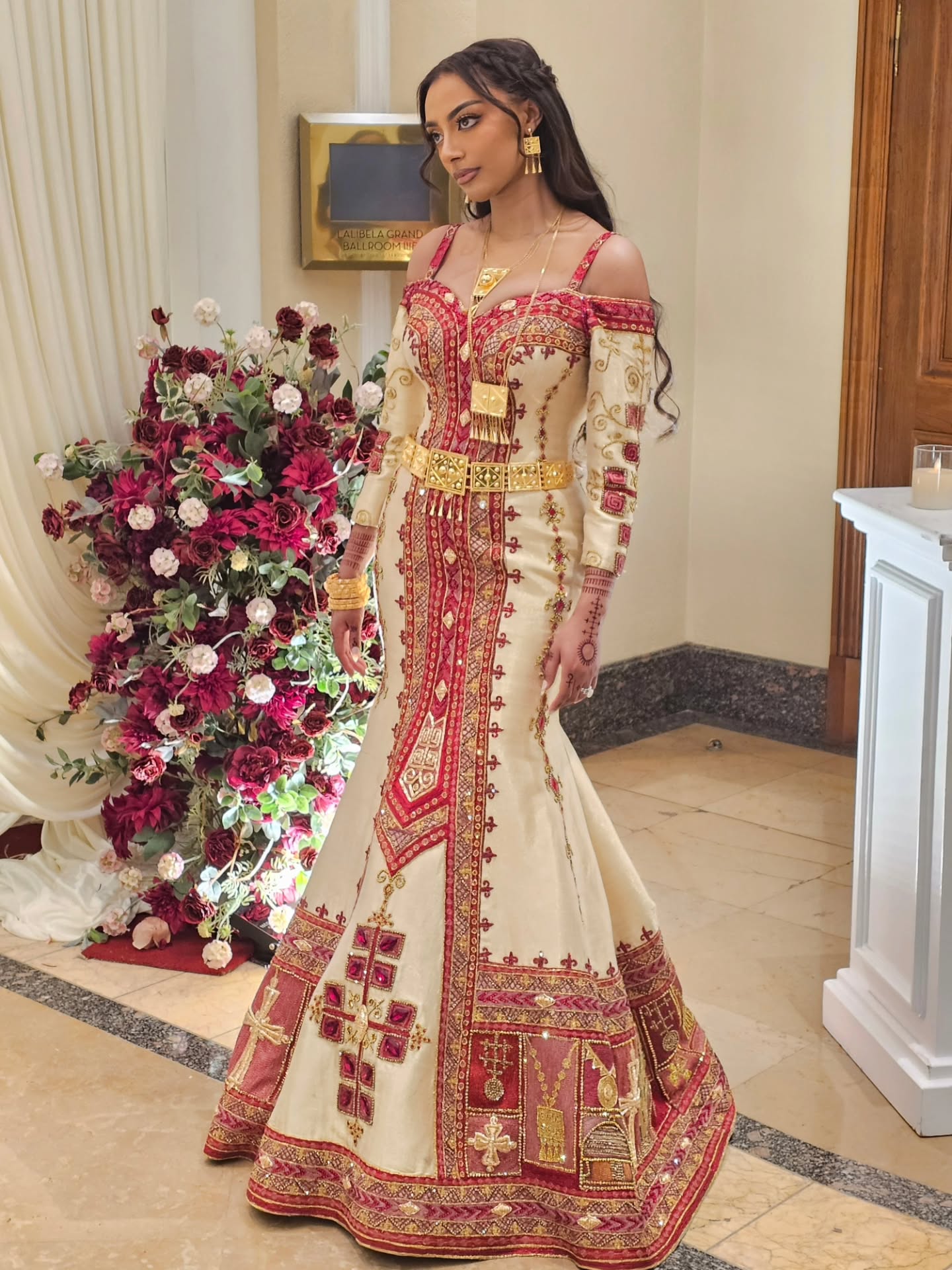
In the Amhara highlands, metal choice has long reflected social class and family wealth. Gold was the standard for the upper class, crafted for royalty, noble families, wealthy landowners, and high-ranking officials to show rank and standing. Silver was the standard for everyone else, crafted for everyday farmers, townspeople, and working families across the highlands. The British Museum’s record of a nineteenth-century Ethiopian amulet necklace notes that gold or gilded silver could be worn only with the Emperor’s permission, and that much of the silver came from melting down imported Maria Theresa thalers. Alongside gold and silver, traditional Amhara jewellery also makes rich use of copper, brass, bronze, iron, carved wood, tanned leather, glass beads, precious stones, and shells.
Using hand tools, goldsmiths and silversmiths use wax casting, tiny metal beads, and twisted wire to build lace-like patterns by hand. Twenty-one-carat and twenty-four-carat yellow gold, alongside gold-plated options for everyday budgets, showcases a warm metallic shine, while heavy. At the same time, silver is prized for its soft lustre and the gentle clinking sound it makes when several pieces move together. Against the crisp white of handwoven shemma cotton cloth, the warm glow of gold or the cool gleam of silver stands out clearly and defines the classic Amhara aesthetic. As Omiren Styles has documented in its account of how cotton farms cultivate Gondar Amhara fashion, shemma is the handwoven cotton base of the Habesha kemis, so the jewellery and the cloth have always been read together.
Crosses, Prayer Boxes, and Protective Amulets
Faith and personal protection sit at the centre of Amhara jewellery, with meaningful pieces designed to rest right against the skin.
The cross, or meskel, is the most common piece of highland Christian jewellery. Most crosses hang on a simple woven silk or cotton neck cord called a mateb. These crosses come in hundreds of different shapes. Styles from Gondar, Lalibela, and Gojjam are well known for their open lattice patterns, three-pointed ends, and small bird shapes that stand for the Holy Spirit. The Brooklyn Museum holds an Amhara silver neck cross in the Gondarine form, with small finial crosses extending from each of its three main arms. The Smithsonian’s National Museum of African Art notes that people often melted down the Maria Theresa thaler and transformed it into silver pendant crosses.
Another deeply rooted tradition is the kitab and its metal case, known as a telsum (ጠልሰም). From Amharic and Ge’ez literary traditions, the kitab is the protective scroll itself: handwritten prayers or scripture verses inscribed on small strips of parchment by Orthodox debteras or Muslim clerics and rolled or folded tightly. To protect and house the kitab, silversmiths and goldsmiths craft the telsum, a decorative cylindrical or rectangular metal case, or flat geometric pendant, often engraved with fine patterns or fitted with small suspension loops so it can hang securely from a cord.
Building on this tradition is the ashen kitab (አሸንክታብ), a grand amuletic necklace composed of multiple silver or gold telsum cases strung together along a dark silk or cotton cord. Often pairing rectangular, triangular, semicircular, and rounded filigree boxes in balanced symmetrical rows, an ashen kitab drapes across the chest and combines fine metal granulation with protective symbolism. The Cleveland Museum of Art holds a silver ashän ketab necklace with tälsäm pendants, composed of numerous box-shaped amulet pendants meant to ward off the evil eye or other dangers.
Alongside it is the sanqa diri (also spelt sanka deri), another large statement necklace built from hinged, rectangular gold or silver prayer-box pendants linked together on braided chains or heavy cord. Often finished with smooth metal bars and small dangling charms, a sanqa diri rests across the collarbone, bringing together protective traditions with bold, balanced metalwork.
Gold and Silver Chokers
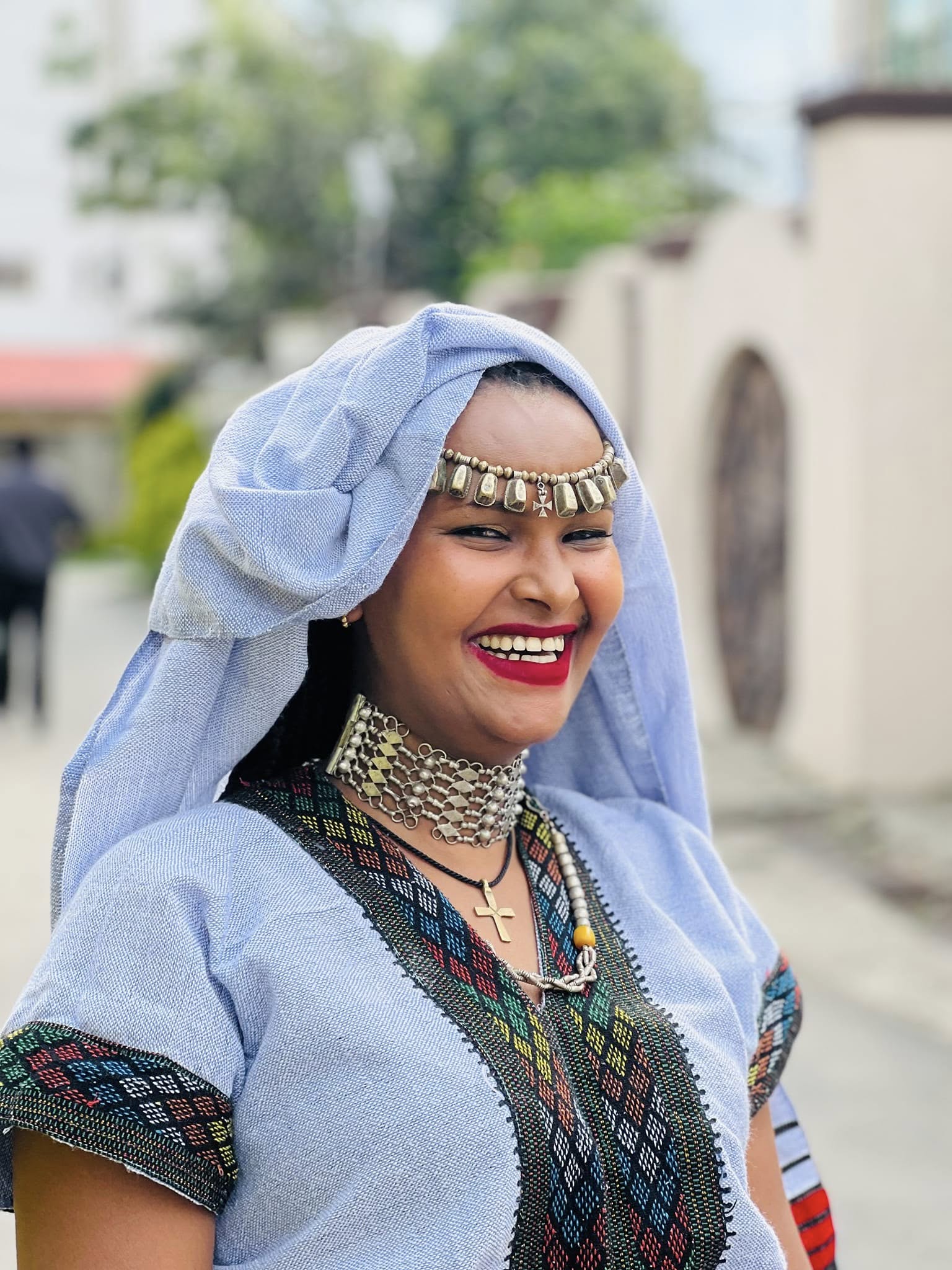
The choker is a distinct piece of Amhara jewellery made from gold or silver and designed to sit tightly around the neck. Positioned high and snug against the throat, it frames the face and collarbone with a clean metallic structure.
Forged in solid gold for upper-class pieces or in silver for wider use, these chokers are built from linked filigree plaques, raised floral rosettes, smooth engraved bands, or overlapping coin-style discs. The metal bands hug the neck closely and catch the light with every movement, standing out cleanly either as a single neckline piece or paired above longer chains and pendants. Neck pieces of this kind have a long history in Ethiopian silverwork: the Smithsonian describes an Ethiopian silver neck ring probably made from Maria Theresa thalers, coins that were the standard trade currency from the eighteenth to the twentieth century and were particularly prized in Ethiopia.
Gubagub, Coins, and Layered Sets
Below the choker line, Amhara jewellery includes coin necklaces, longer strands, and heavy chest pieces that vary in length, weight, and colour across different regions.
One of the most recognisable traditional designs is the gubagub (also spelt gobagub or gubgub), a circular, sunburst- or shield-shaped metal motif crafted in gold or silver. Featuring a raised central dome or boss surrounded by radiating patterns, filigree, or scalloped edges, the gubagub is made as both a prominent round pendant hung from a chain or rope cord and a coordinated jewellery set pairing a central pendant necklace with matching round earrings, a ring, and a headpiece.
A classic silver coin pendant or necklace is the tegera (ጠገራ, also called tegera birr, Menelik santim, or Martresa coin pendant). Made by piercing or attaching suspension loops to heavy silver coins, such as Emperor Menelik II coins or Maria Theresa thalers, and hanging them singly on a cord or stringing them in rows onto leather straps, chains, or beaded strands, these coin pieces rest across the chest as a bold mark of family wealth and highland heritage. The British Museum also holds a 1780 Maria Theresa thaler catalogued as used to make silver jewellery, the same coin that appears whole on a tegera.
Another beloved traditional rope necklace is the shrib diri. Made by combining colourful twisted cotton threads (kir), metal chains (diri), and decorative metal rings (dinble), the shrib diri drapes down the chest in a soft, rope-like strand. Often paired with traditional cotton attire, it blends bright textile colour with metallic shine in a single flowing necklace.
Beadwork, known simply as doka, forms another major category of Amhara jewellery. Made from bright glass, natural red carnelian, amber, coral-coloured stones, silver beads, and natural seeds, doka necklaces bring rich flashes of red, yellow, blue, and green to plain white cotton dresses. Multi-strand bead necklaces are valued both for their warm colours and because certain stones are believed to carry good luck and strength. Within the doka tradition, especially in Bete Amhara, distinctive regional bead-and-silver styles such as diba (ድባ) and haruf (ሃሩፍ) combine colourful glass beads with flat silver plaques, coin charms, and small bells into ornate V-shaped chest pieces.
Equally rooted in highland tradition is tefir zagol, a braided or plaited leather strap (tefir) decorated with smooth white cowrie shells (zagol). Artisans stitch or lace the smooth white shells onto narrow strips of tanned leather to create necklaces, bracelets, waist belts, and decorative trims on women’s and children’s leather garments, associated with good fortune, fertility, and protection against the evil eye.
Children’s Adornments: Marda and Zagol
In Amhara tradition, children’s jewellery goes beyond decoration to offer protection and mark cultural identity. Families commonly place marda (ማርዳ) and zagol (ዛጎል) on young wearers from an early age. Marda consists of colourful glass beads, small silver pieces, and metal charms strung onto sturdy thread or leather cords to be worn around the neck, wrists, or ankles. Alongside these beaded strands, parents often use zagol, prized for their smooth white finish and natural durability.
While zagol can be strung into necklaces and bracelets, it is also widely used as a traditional hair ornament, braided directly into children’s hair or tied to the ends of plaits. Whether worn around the body or woven into hairstyles, both marda and zagol serve as protective amulets believed to guard children from the evil eye.
Headpieces and Hair Ornaments: Weleba, Tirura, Sindid, and Mido

In Amhara culture, braiding hair is an art in itself, and hair jewellery is crafted to fit directly into traditional braids (shuruba) and wrapped headscarves (shash).
One of the most distinctive hair ornaments is the weleba (ወለባ), a decorative piece pinned directly onto the hair. Made from gold, silver, or coloured cotton thread, the weleba is secured into braided styles at the crown or side of the head. The metal weleba is crafted from finely worked gold or silver panels with delicate wire patterns, raised domes, and small dangling chains that catch the light, while the thread weleba is made from tightly wrapped and woven coloured threads that bring bright patterns into the hair.
A classic forehead ornament that sits across the upper brow is the tirura (ጥሩራ). Particularly popular in Gondar and surrounding areas, a tirura features three cross-shaped gold or silver pendants strung onto a dark woven cotton or silk cord that ties at the back of the head. The three crosses sit evenly spaced across the forehead, framing the face.
Decorative hairpins and metal combs called mido also tuck into the sides or back of pinned-up braids. These combs are often topped with tiny metal beads, flower patterns, or small hanging bells. Updated versions of these head ornaments include thin gold forehead chains with a single drop pendant resting gently above the eyebrows.
A colourful beaded headpiece is the sindid (ስንድድ), closely linked with Ashendye and Shadey traditions. Woven from colourful glass beads, frequently arranged in tri-colour geometric patterns with a central triangular motif and short beaded fringes, a sindid band sits neatly across the forehead and hairline.
Earrings and Earspoons
Earrings, called gutcha or dinble, frame the face and range from small studs to long, detailed drops. Traditional Amhara earrings often mirror the shapes seen on crosses and prayer boxes, including crescent moons, clusters of tiny metal balls, hollow bells, and teardrop shapes made from fine wire. Many classic styles have small chains or metal tassels that hang lightly along the jaw. Alongside matched lobe earrings, a distinctive piece is the sequar (ሽቋር / ስቋር), a small gold or silver ring or stud, often accented with fine filigree or a tiny red or green stone, crafted specifically to sit at the top cartilage of the ear on one side only.
A clever and practical piece of Amhara metalwork is the earspoon, or mekoreria (መኮርኮሪያ). Crafted in gold for the upper class and silver for everyday use, these thin, hand-carved tools often hang from a neck cord right next to a cross or amulet. They feature a tiny spoon at one end for cleaning the ears and a decorative cross, bird, or geometric handle at the other, showing how highland smiths turned everyday grooming tools into small works of art.
Bangles, Rings, and Belts
Jewellery in the Amhara tradition also covers the wrists, hands, and waist so the whole ensemble feels balanced from head to toe.
Wide hinged cuffs and solid bangles, known as ambar (አምባር) or dikot (ድኮት), are crafted to sit singly or stacked in pairs on the wrists. Decorated with stamped lines, twisted wire edges, and raised central bumps, these heavy cuffs contrast strikingly with the light, sheer fabric of a draped netela shawl.
Rings (ቀለበት) range from thin engraved gold and silver bands to large statement rings set with coloured glass, red carnelian stones, or rounded metal domes. Wide rings covered in tiny metal beads and raised flower shapes adorn several fingers.
At the waist, garments are cinched with a heavy metal waist belt. Built from linked gold or silver plates, hinged filigree panels, and thick chains, a metal belt gathers the loose folds of a shemma dress, shapes the waist, and adds a graceful sway. Omiren Styles’ study of the Gojjam Amhara fetel dress describes the same ensemble logic in cloth, with the kemis, the matching netela and a structured waist belt called the meqenet worn together.
Anklets: The Albo
At the very bottom of the outfit sits one of the most loved pieces of Amhara jewellery: the anklet, known as the albo (አልቦ). Shaped from thick hollow or solid metal and carved with zigzags, dots, and straight lines, albo anklets are made in pairs to sit just above the ankle bone, peeking out from beneath the embroidered hem of a long dress.
Many traditional albo anklets have tiny loose metal pellets or hollow balls sealed inside them so they make a soft, rhythmic ringing sound with every step. Crafted for women and young girls in villages and cities alike, the albo turns simple movement into gentle music.
Amhara Jewellery Today
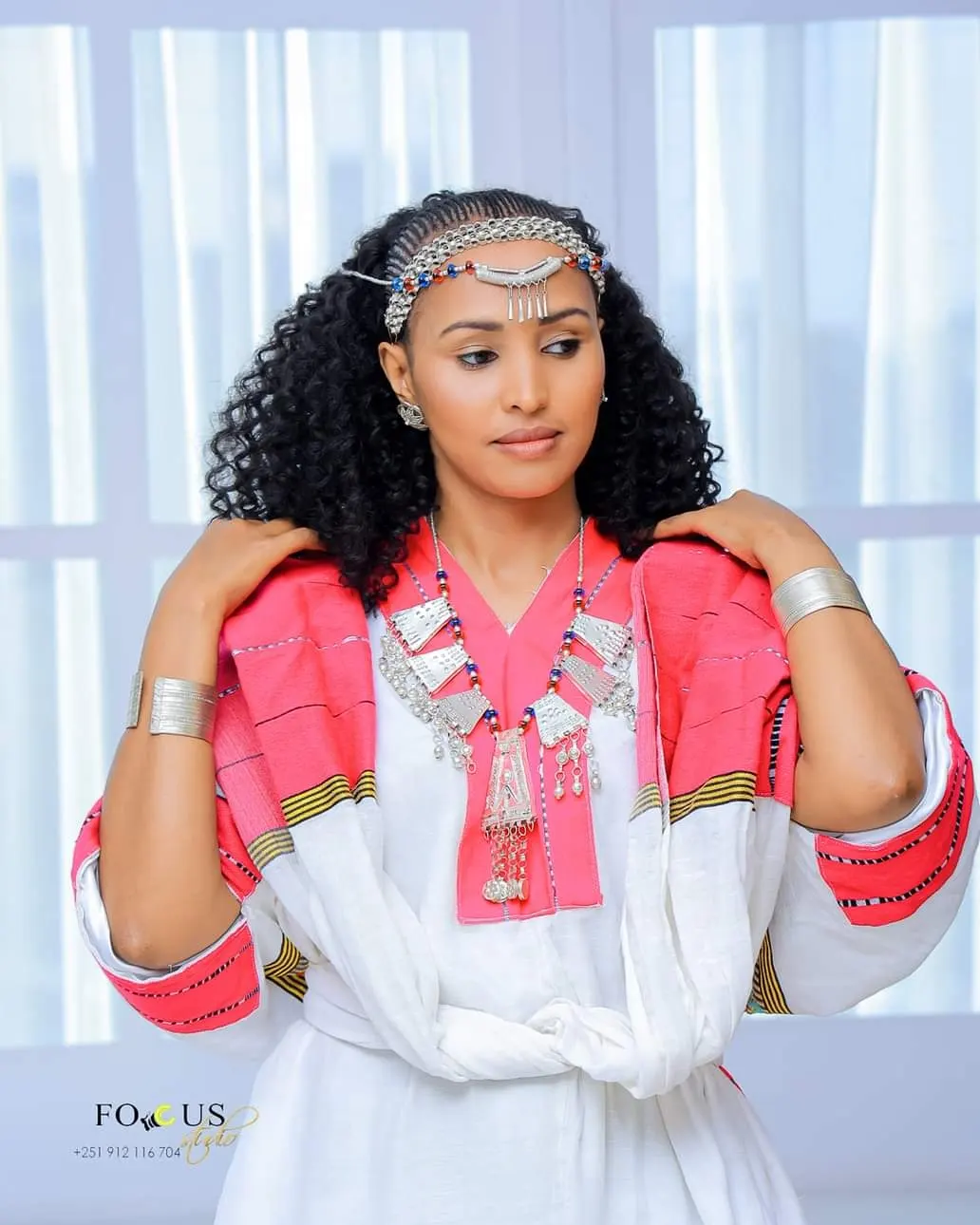
Today, Amhara jewellery continues to thrive in Addis Ababa and across the Amhara region, as well as in cities worldwide. Modern makers adapt old shapes for contemporary styles, creating simple Ge’ez script name necklaces, sleek gold chokers, and thin Lalibela crosses alongside classic silver amber cuffs, tirura headbands, silver-and-thread weleba hair ornaments, tegera coin pendants, and albo anklets. Whether an old silver piece passed down from a grandmother or a newly crafted twenty-one-carat gold set, Amhara jewellery endures because every chain, shell, bead, and carved line connects people to home, family, and heritage.
That continuity matters within a wider market. UNESCO’s 2023 report on the fashion sector in Africa put the market value of clothing and footwear in sub-Saharan Africa at US$31 billion in 2020, and adornment is part of how that $31 billion African fashion market is lived and worn. In the capital, Omiren Styles has observed in its report on Addis Ababa street style that garments such as the Habesha kemis and the netela are not confined to ceremonial use. Amhara jewellery moves with them, from church and wedding to everyday dress.
The Omiren Argument
Amhara jewellery is not a museum category. It is a working system of meaning in which metal, bead, shell, and thread record faith, protection, family wealth, and regional identity, and it is still being made, inherited, and worn. The telsum, the tegera, the weleba and the albo each answer a specific question about who the wearer is and what she carries with her.
That living authority deserves to be documented on its own terms. Some of the historic Ethiopian amulet cases and jewellery held in London’s museums were taken from Emperor Tewodros II’s fortress at Maqdala during the British expedition of 1867 to 1868. The goldsmiths and silversmiths of Gondar, Gojjam, Shewa and Bete Amhara, and the families who keep these pieces in use, are the primary record of the craft. Coverage should begin with them.
ALSO READ
- Fikirte Addis and the Handwoven Cloth That Carries African Memory.
- Sustainable Ethiopian Fashion: Handwoven Heritage Meets Global Responsibility.
- Jimma Oromo Women’s Dress: A Civilisation in Leather and Beads.
- Ethiopian Jazz and the Ambassadorial Dress of the Haile Selassie Court: A Visual History.
Frequently Asked Questions
What is a ‘telsum’ in Amhara jewellery?
A telsum (ጠልሰም) is a decorative metal case, usually in silver or gold, made to house a kitab: a strip of parchment carrying handwritten prayers or scripture, prepared by an Orthodox debtera or a Muslim cleric. The case may be cylindrical, rectangular or a flat geometric pendant. Several telsum cases strung together form the ashen kitab, a large protective necklace worn across the chest.
What is a tegera necklace?
A tegera (ጠገራ) is a coin pendant or necklace made by attaching suspension loops to heavy silver coins, such as Emperor Menelik II coins or Maria Theresa thalers. The coins hang singly on a cord or in rows on leather straps, chains or beaded strands. Worn across the chest, the tegera marks family wealth and highland heritage, and Amhara jewellers still make it today.
Why was gold or silver chosen for Amhara jewellery?
In the Amhara highlands, metal choice has long reflected social class. Gold was made for royalty, noble families, wealthy landowners and senior officials, while silver served farmers, townspeople and working families. Museum records add that gold or gilded silver could only be worn with the Emperor’s permission, and that much Ethiopian silver came from melted Maria Theresa thalers.
What are the albo and the weleba?
The albo (አልቦ) is a pair of thick metal anklets carved with zigzags, dots and lines, often containing loose pellets that ring softly with every step. The weleba (ወለባ) is a hair ornament pinned into braided styles at the crown or side of the head, made from either finely worked gold or silver panels or tightly wrapped coloured thread.