Menu
  • CULTURE
    • Style & Identity
    • Ceremony & Ritual
    • Art & Music
    • Cultural Inspirations
    • Black Culture
    • Heritage Stories
  • DIASPORA
    • Diaspora Voices
    • Diaspora Connects
    • UK Scene
    • US Scene
    • Caribbean Diaspora
    • Afro-Latino Identity
    • Migration & Identity
  • FASHION
    • Trends
    • Street Style
    • Runway
    • Sustainable Fashion
    • Tailoring
    • Luxury Fashion
    • Designers & Brands
  • BEAUTY
    • Skincare
    • Makeup
    • Hair & Hairstyle
    • Fragrance
    • Beauty Traditions
    • Natural Beauty
  • Style
    • Women’s Style
    • Evening Glam
    • Workwear & Professional
    • Streetwear for Women
    • Accessories & Bags
    • Bridal
    • Men’s Style
    • Grooming Traditions
    • Traditional & Heritage
    • The Modern African Man
    • Menswear Designers
  • INDUSTRY
    • Editorial Intelligence
    • Market Trends
    • Brand Strategy
    • Retail & Commerce
    • Partnerships
    • Reports
    • Omiren Style Index
    • Insights
    • Founders Profile
  • NEWS
    • Cover Stories
    • Fashion Weeks
    • Opinion & Commentary
    • Style Icons
    • Rising Stars
    • Press Release
Omiren Magazine Partner With Us Advertise Style Index
Subscribe
OMIREN STYLES OMIREN STYLES

Fashion · Culture · Identity

OMIREN STYLES OMIREN STYLES OMIREN STYLES OMIREN STYLES
  • CULTURE
    • Style & Identity
    • Ceremony & Ritual
    • Art & Music
    • Cultural Inspirations
    • Black Culture
    • Heritage Stories
  • DIASPORA
    • Diaspora Voices
    • Diaspora Connects
    • UK Scene
    • US Scene
    • Caribbean Diaspora
    • Afro-Latino Identity
    • Migration & Identity
  • FASHION
    • Trends
    • Street Style
    • Runway
    • Sustainable Fashion
    • Tailoring
    • Luxury Fashion
    • Designers & Brands
  • BEAUTY
    • Skincare
    • Makeup
    • Hair & Hairstyle
    • Fragrance
    • Beauty Traditions
    • Natural Beauty
  • Style
    • Women’s Style
    • Evening Glam
    • Workwear & Professional
    • Streetwear for Women
    • Accessories & Bags
    • Bridal
    • Men’s Style
    • Grooming Traditions
    • Traditional & Heritage
    • The Modern African Man
    • Menswear Designers
  • INDUSTRY
    • Editorial Intelligence
    • Market Trends
    • Brand Strategy
    • Retail & Commerce
    • Partnerships
    • Reports
    • Omiren Style Index
    • Insights
    • Founders Profile
  • NEWS
    • Cover Stories
    • Fashion Weeks
    • Opinion & Commentary
    • Style Icons
    • Rising Stars
    • Press Release
  • Sustainable Fashion

Cariuma’s OCA Low Canvas, From Cotton Upper to Cork Insole

  • Rex Clarke
  • November 19, 2026
Cariuma’s OCA Low Canvas, From Cotton Upper to Cork Insole
Photo: Cariuma.
Total
0
Shares
0
0
0

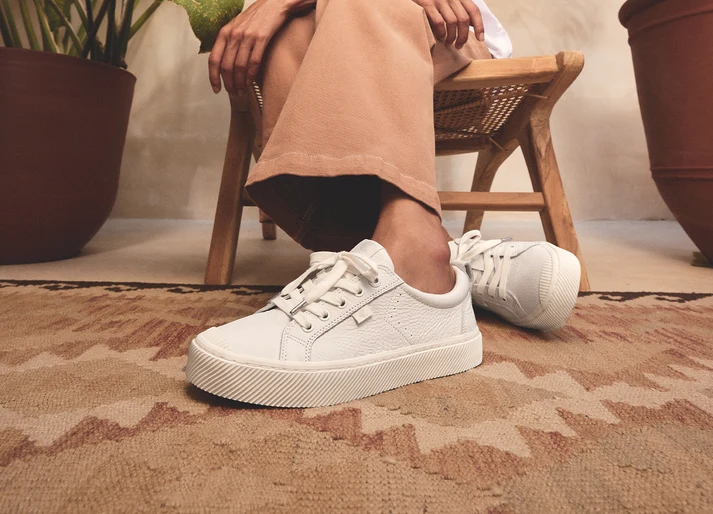
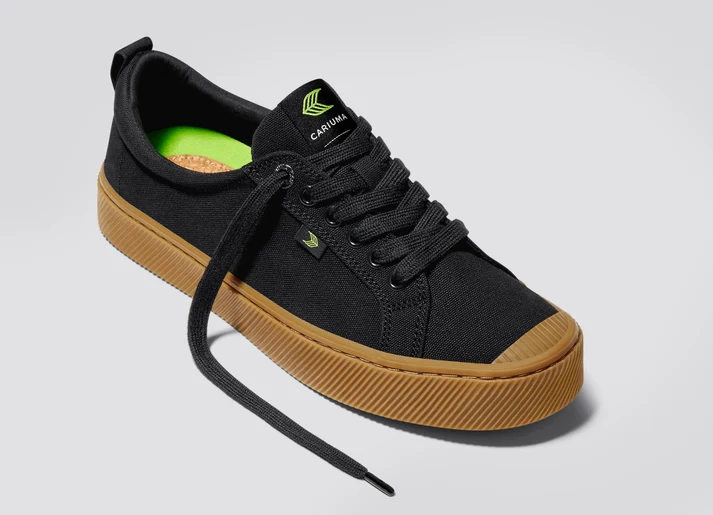
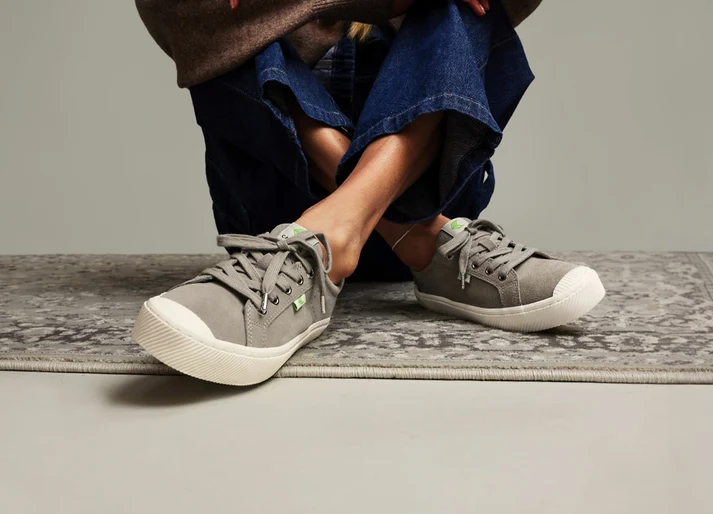
Cariuma’s OCA Low Canvas has cork underfoot. From the outside, the shoe is a low-top lace-up with a canvas upper. Inside, cork forms part of the insole. A photograph shows the shoe’s outline and the fabric’s surface. It won’t tell you what you’re standing on. That’s a better starting point than calling the sneaker sustainable. The cork belongs to a particular part of the shoe, just as the organic cotton belongs to the canvas upper. Once you know where those materials sit, you can ask a more useful question: what did Cariuma change without having to change the shape of the shoe?

A closer look at Cariuma’s OCA Low Canvas, from its organic cotton upper to its cork insole, and what those details reveal about sustainability.

A familiar shape, with room to change the materials
A familiar shape, with room to change the materials
All Photos: Cariuma.

David Python and Fernando Porto launched Cariuma in 2018 after working in the footwear industry. The founders shared an interest in skateboarding, and Cariuma went on to build a presence in skate footwear. The canvas OCA Low offers a quieter way into the label’s design than a collaboration or a competition shoe. Its proportions are familiar enough that the differences worth discussing are in the components. That familiarity is part of the design. A low collar and a lace-up front tell you what kind of shoe you’re looking at, but they say little about what it’s made from. Cariuma also offered the OCA Low in suede and leather. Put the model names side by side, and the key word is Canvas: it identifies a version of the shoe, not just a colour variation.

Begin with the upper.

The upper covers the top and sides of the foot. Published descriptions identify organic cotton canvas on the version discussed here. “Canvas” tells us what kind of fabric we’re looking at; “organic cotton” identifies the fibre described in the listing. It’s useful to keep both terms. Together they tell us more about the shoe than either “cotton sneaker” or “organic sneaker” on its own. Compare that with a suede OCA Low. You can recognise both as low-top lace-ups, but the broadest visible surface is made from a different material. That’s a design comparison we can make without claiming one version feels better, lasts longer, or has a smaller footprint. The silhouette gives the two shoes something in common; the upper gives us a reason to distinguish them.

Look inside, then check the sole.
Look inside, then check the sole.
Photos: Cariuma,

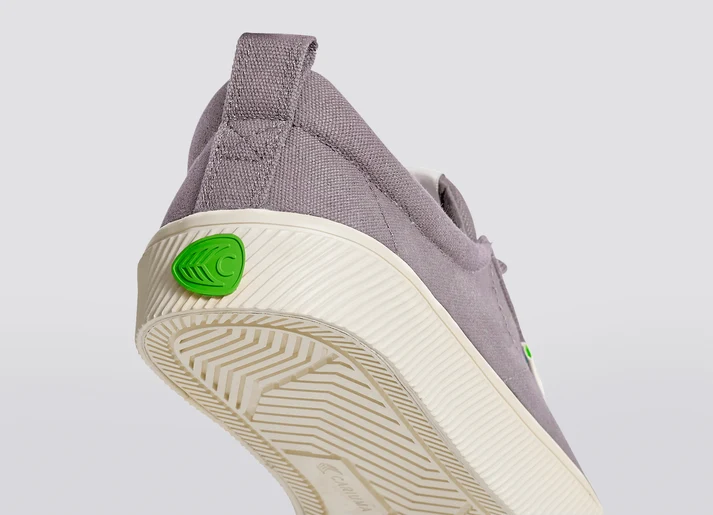
The insole is the layer the foot rests on. Descriptions mention the canvas OCA, Low-density cork, and cushioning made with castor oil, also called mamona oil. Cork is therefore part of the insole’s construction, not a description of the entire component. The published descriptions don’t give us enough to say how much of the insole is plant-derived. What they do give us is a location: unlike the cotton, which forms the shoe’s visible surface, these materials are used inside it. The sole is where the public descriptions get less clear. One published review describes a rubber outsole on the OCA Low Canvas, while a Selfridges listing for an OCA Low organic-canvas trainer describes a sugarcane sole. The two accounts don’t give us enough to tell whether they’re describing different versions, using different terms for parts of the sole, or simply disagreeing. They shouldn’t be combined into a single specification.

That discrepancy is worth keeping in the story. If you want to compare two pairs, start with the product code or the specification for the exact colourway. The name on the box gets you to the model family; it doesn’t settle what’s underfoot.

A company milestone is not a product measurement.
A company milestone is not a product measurement.
Photo: Cariuma.

In 2021, WWD reported that Cariuma earned B Corp certification. That’s a dated milestone for the company. It doesn’t establish its present certification status, and it doesn’t certify this particular sneaker or tell us how its footprint compares with another canvas low-top. A comparison would need to tell us which shoes were assessed and what counted: producing the materials, making the shoes, how long they stay in use and what happens when they wear out. The reporting here gives us details of construction, not that comparison. We can describe which materials Cariuma used in particular parts of the shoe without treating their presence as a verdict on the whole pair.

The Omiren Argument

A company milestone is not a product measurement.
Photo: Cariuma.

The clearest comparison is inside Cariuma’s own range. An OCA Low can keep its name and change its upper. Seen from across the room, the canvas and suede versions might register as variations on the same shoe. For a materials story, though, the difference between those surfaces is the first thing we need to get right.

That’s why the full name matters. The silhouette tells us we’re looking at an OCA Low. The word Canvas tells us which version to investigate. And the insole reminds us that even a good look at the shoe won’t tell us everything about its construction. Before comparing one sneaker with another, make sure you know which shoe you’re talking about.

Also Read:

  • The Artisanal Frame: Sustainable Eyewear for the Omiren Woman 
  • Banana-Fibre Couture: How Uganda Is Rewriting Fashion From the Ground Up 
  • Black Designers Leading Sustainability in Luxury Fashion 
  • Street Fashion in Niamey: Youth Trends and Modern Influence 

Frequently Asked Questions

What is the Cariuma OCA Low Canvas made from?

Published descriptions identify an organic cotton canvas upper and an insole that includes cork and castor-oil-based cushioning. Descriptions differ on the sole, so check the specifications for the exact pair rather than applying one listing to the entire model.

Do all OCA Low versions use the same materials?

No. Cariuma offered canvas, suede and leather versions of the OCA Low. They share a model name and a low-top shape, but they don’t all use the same upper material. The word Canvas in the full name identifies a version of the shoe, not just a colour variation, so the name should be read in full.

Was the OCA Low Canvas itself B Corp certified?

No. The 2021 certification applied to Cariuma as a company. It was not a product certification or a comparative assessment of the OCA Low Canvas. It is a dated milestone that does not establish the company’s current certification status or show how the shoe’s footprint compares with another canvas low-top.

Who founded Cariuma?

David Python and Fernando Porto launched Cariuma in 2018 after working in the footwear industry. The founders shared an interest in skateboarding, and the Brazilian-founded brand went on to build a presence in skate footwear. The canvas OCA Low offers a quieter entry point than a collaboration or competition shoe.

Post Views: 119
Total
0
Shares
Share 0
Tweet 0
Pin it 0
Related Topics
  • Canvas Sneakers
  • Cariuma
  • Footwear Materials
  • OCA Low Canvas
Avatar photo
Rex Clarke

rexclarke@omirenstyles.com

You May Also Like
Maurício Duarte’s Tramas: Basketry and Runway Design
View Post
  • Sustainable Fashion

Maurício Duarte’s Tramas: Basketry and Runway Design

  • Adams Moses
  • November 19, 2026
Pantys Period Underwear: Absorbent Design and Reuse
View Post
  • Sustainable Fashion

Pantys Period Underwear: Absorbent Design and Reuse

  • Peace Vera
  • November 19, 2026
Natural Cotton Colour: Paraíba Cotton and Brazilian Tailoring
View Post
  • Sustainable Fashion

Natural Cotton Colour: Paraíba Cotton and Brazilian Tailoring

  • Peace Vera
  • November 19, 2026
Thrift Without Doubling Up: Know What You Own Before the Next Bale
View Post
  • Sustainable Fashion

Thrift Without Doubling Up: Know What You Own Before the Next Bale

  • Sevan Safarian
  • November 18, 2026
The Repair Test: When Is a Damaged Garment Worth Saving?
View Post
  • Sustainable Fashion

The Repair Test: When Is a Damaged Garment Worth Saving?

  • Rex Clarke
  • November 10, 2026
Repair, Alter, Remake: Patch and Stitch’s Approach to Existing Clothes
View Post
  • Sustainable Fashion

Repair, Alter, Remake: Patch and Stitch’s Approach to Existing Clothes

  • Peace Vera
  • October 9, 2026
Why Embellished Occasionwear Needs a Care Decision, Not a Universal Cleaning Tip
View Post
  • Sustainable Fashion

Why Embellished Occasionwear Needs a Care Decision, Not a Universal Cleaning Tip

  • Peace Vera
  • October 8, 2026
The Sustainability Metrics That Cannot See a Tailor
View Post
  • Sustainable Fashion

The Sustainability Metrics That Cannot See a Tailor

  • Peace Vera
  • September 10, 2026
The Omiren Argument

African fashion and culture are not emerging. They are foundational. We document, interpret, and argue for the full cultural weight of African and diaspora dress. With precision. Without apology.

Omiren Styles Fashion · Culture · Identity

All 54 African Nations
Caribbean · Afro-Latin America
The Global Diaspora

Platform

  • About Omiren Styles
  • Our Vision
  • Our Mission
  • Editorial Pillars
  • Editorial Policy
  • The Omiren Collective
  • Campus Style Initiative
  • Sustainable Style
  • Social Impact & Advocacy
  • Investor Relations

Contribute

  • Write for Omiren Styles
  • Submit Creative Work
  • Join the Omiren Collective
  • Campus Initiative
Contact
contact@omirenstyles.com
Our Reach

Africa — All 54 Nations
Caribbean
Afro-Latin America
Global Diaspora

African fashion intelligence, in your inbox.

Editorial features, designer profiles, cultural commentary. No noise.

© 2026 Omiren Styles — Rex Clarke Global Ventures Limited. All rights reserved.
  • Privacy Policy
  • Editorial Policy
  • Terms of Use
  • Accessibility
Africa · Caribbean · Diaspora
The Omiren Argument

African fashion and culture are not emerging. They are foundational. We document, interpret, and argue for the full cultural weight of African and diaspora dress. With precision. Without apology.

Omiren Styles Fashion · Culture · Identity
  • About Omiren Styles
  • Our Vision
  • Our Mission
  • Editorial Pillars
  • Editorial Policy
  • The Omiren Collective
  • Campus Style Initiative
  • Sustainable Style
  • Social Impact & Advocacy
  • Investor Relations
  • Write for Omiren Styles
  • Submit Creative Work
  • Join the Omiren Collective
  • Campus Initiative
Contact contact@omirenstyles.com

All 54 African Nations · Caribbean
Afro-Latin America · Global Diaspora

African fashion intelligence, in your inbox.

Editorial features, designer profiles, cultural commentary. No noise.

© 2026 Omiren Styles
Rex Clarke Global Ventures Limited.
All rights reserved.

  • Privacy Policy
  • Editorial Policy
  • Terms of Use
  • Accessibility
Africa · Caribbean · Diaspora

Input your search keywords and press Enter.

Newsletter Subscribe

The Omiren Style Index

The reference directory for African, Caribbean and Afro-Latin fashion. New entries, taxonomy updates and intelligence signals — once a month. No noise.

.newsletter-form{
max-width:500px;
margin:auto;
text-align:center;
padding:30px;
}

.newsletter-form h3{
margin-bottom:10px;
font-size:28px;
}

.newsletter-form p{
margin-bottom:20px;
color:#666;
}

.newsletter-form input{
width:100%;
padding:14px 18px;
border:1px solid #ddd;
margin-bottom:15px;
border-radius:4px;
}

.newsletter-form button{
width:100%;
padding:14px;
background:#000;
color:#fff;
border:none;
cursor:pointer;
text-transform:uppercase;
letter-spacing:1px;
}