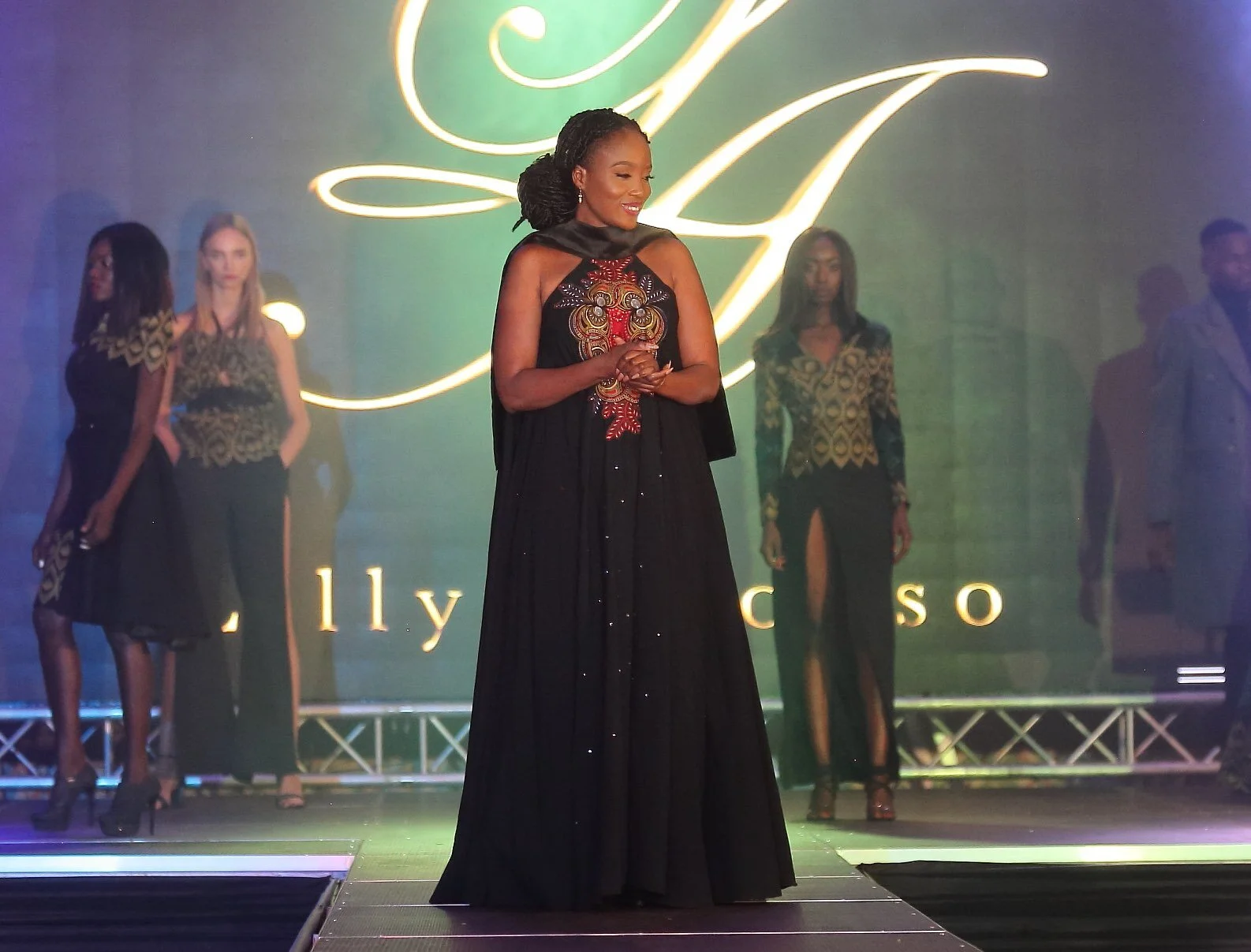
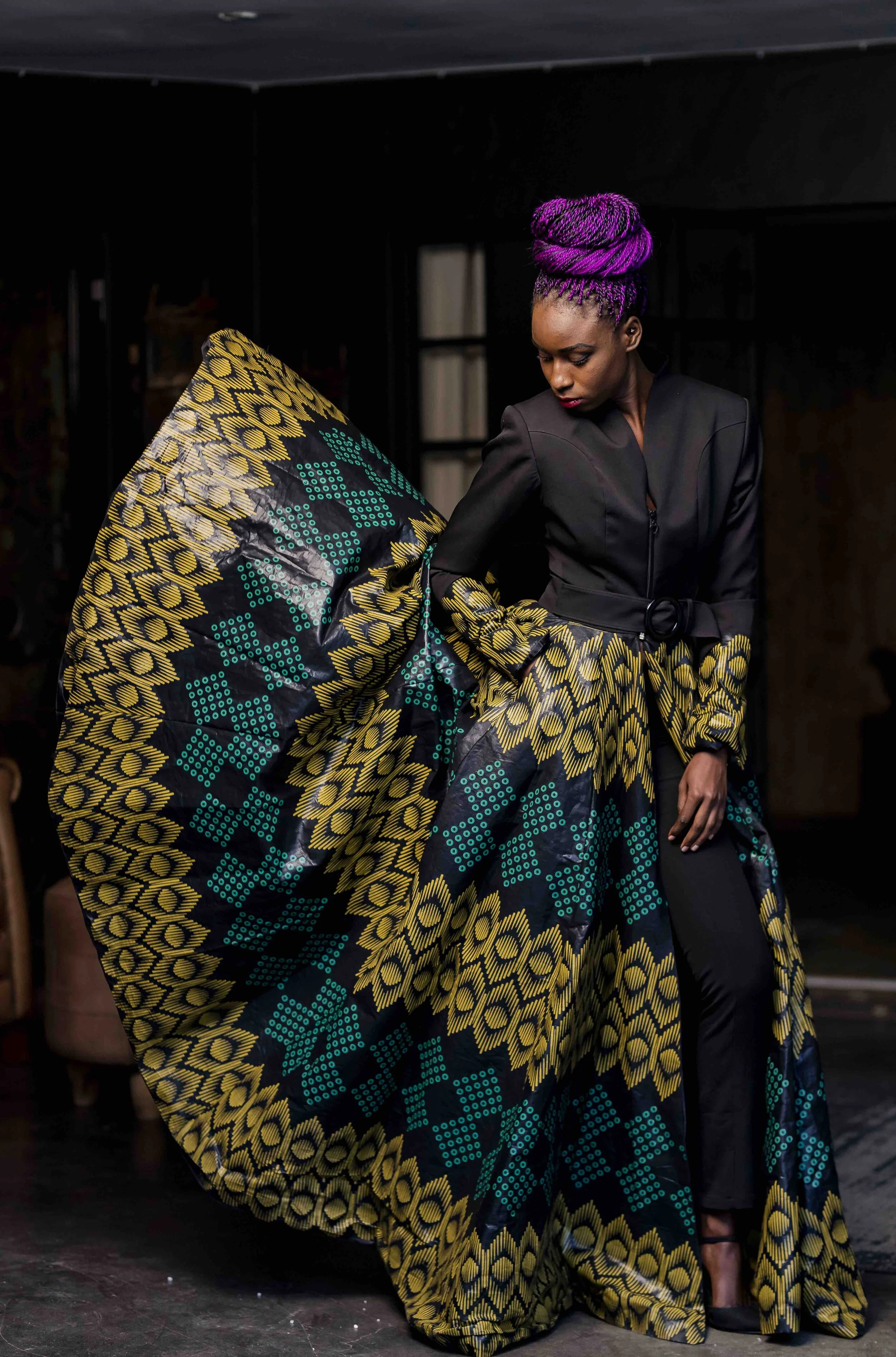
Lilly Alfonso’s stated ambition for Anazi is not simply to make a long dress. It is to translate the commanding height she associates with Gule wa Makanja into clothing. Her official introduction identifies an “elongated silhouette”, layered elements and an Anazimbiri detail positioned close to the heart. Together, these establish the terms through which she wants the design understood: presence, movement, and a connection to heritage. The distinction between a source and its interpretation is central to her account. “Anazi is not a costume,” Alfonso writes. “It is an interpretation.” That is a useful starting point because it emphasises transformation rather than literal reproduction. The design is presented as a contemporary response to a cultural reference, not as an equivalent of the performance it draws from.
Nation Online’s 18 January 2026 report identifies Anazi as a dress influenced by makanja and places it within Alfonso’s wider Malawi Fashion Identity initiative. The report provides a public context for the named garment; Alfonso’s statement offers a more specific explanation of its intended form. Keeping those roles distinct prevents the wider identity project from overwhelming the individual design.
Lilly Alfonso connects Anazi with Gule wa Makanja, using elongation, layers and a detail near the heart to explain her approach to cultural interpretation.
Height as the Starting Point

Alfonso describes the Gule figure as rising above a crowd and commanding attention through presence rather than noise. She then connects that quality directly to Anazi’s elongated silhouette. In her explanation, height is therefore not incidental to the reference. It is the characteristic she selects and carries into the design proposal. That selection gives the account specificity. Instead of relying on an unspecified claim of cultural inspiration, Alfonso names a quality she wants the garment to communicate and identifies elongation as its intended vehicle. The published statement does not establish the precise cut or construction responsible for that effect, but it does make clear what the silhouette is being asked to do.
This is also where intention and assessment must remain separate. “Elongated” is the designer’s description, not a demonstrated result on every wearer. It tells us how Alfonso conceives the dress. It cannot, by itself, tell us whether the finished proportions sustain that impression, where the eye pauses or how presentation contributes to the effect.
Layers and the Idea of Movement
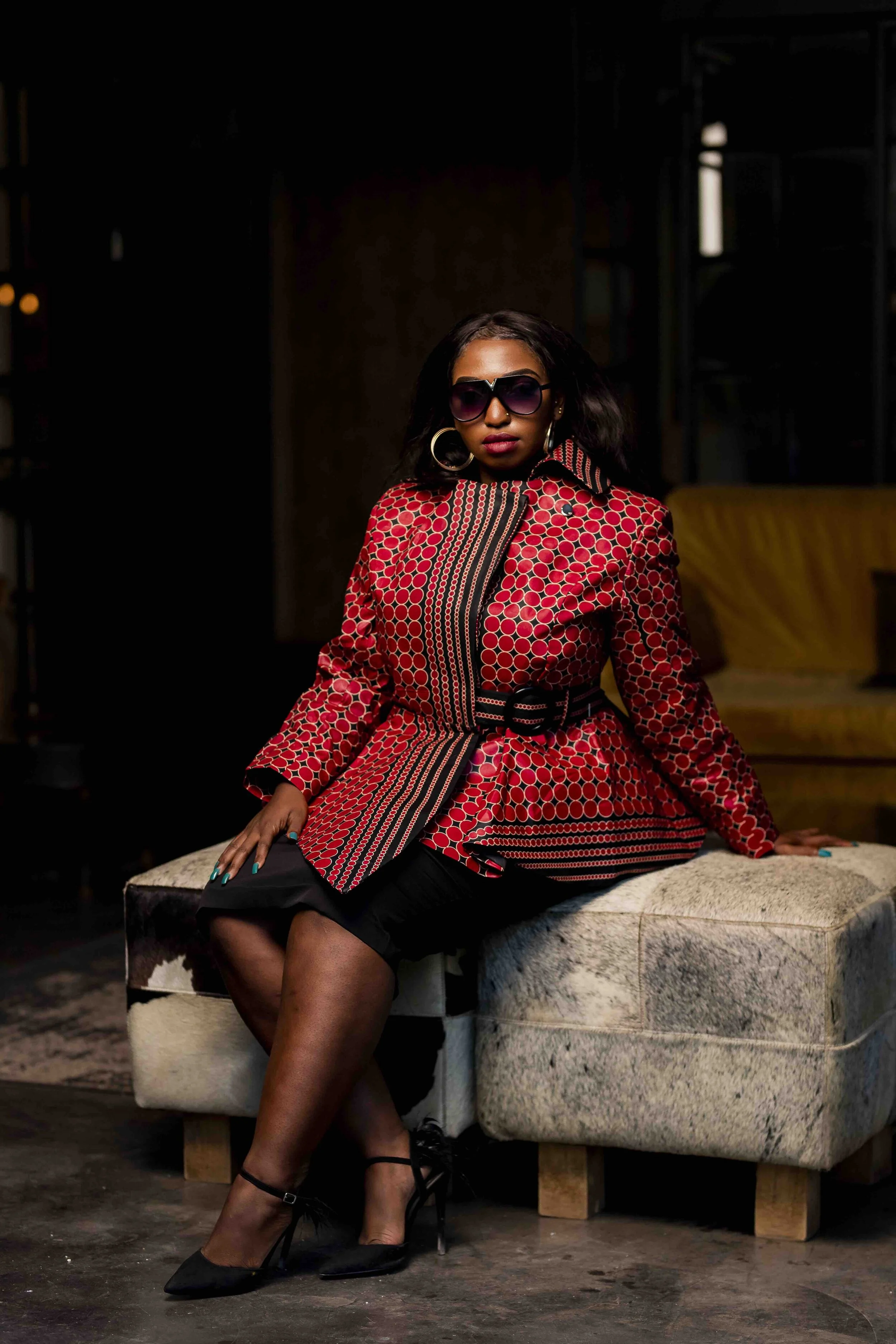
Alfonso takes more than height from the reference. Her introduction describes layered elements that echo movement, rhythm and what she calls the ceremonial grace of the performance. She presents these layers as part of a balance between motion and stillness. Those associations belong to her explanation of the design; they should not be mistaken for an independently established account of its construction. The distinction matters because “layered elements” is less specific than a garment description. It does not identify the number of layers, their materials, their attachment or their behaviour in motion. It does establish that Alfonso’s proposal extends beyond a tall outline. Her account asks for elongation and movement to be understood together.
That makes the layers a consequential part of the design’s eventual assessment. They are not merely supporting decoration in the written explanation: Alfonso gives them an explicit relationship to her source. Whether the finished dress makes that relationship legible is a question for direct examination, rather than something the statement can settle in advance.
The Detail Near the Heart

Alfonso introduces Anazimbiri as a detail positioned close to the heart and describes it as an anchor to heritage, identity and ancestry. Unlike the overall silhouette, this part of her account depends on a particular bodily location. The designer supplies its symbolic meaning by placing it within her explanation of how tradition and contemporary clothing meet. The name requires care. Nation Online separately identifies Anazimbiri as a top, while the official Anazi introduction uses it for a detail within the dress. The available texts do not explain the exact relationship between those uses. They do not justify describing a particular shape, fastening, panel or attached garment.
For that reason, the detail’s significance can currently be stated more securely than its form: Alfonso assigns it a heritage-bearing role and identifies its intended placement. That is meaningful information about her design thinking, but not enough to reconstruct the feature for a reader.
Interpretation, Not a National Uniform
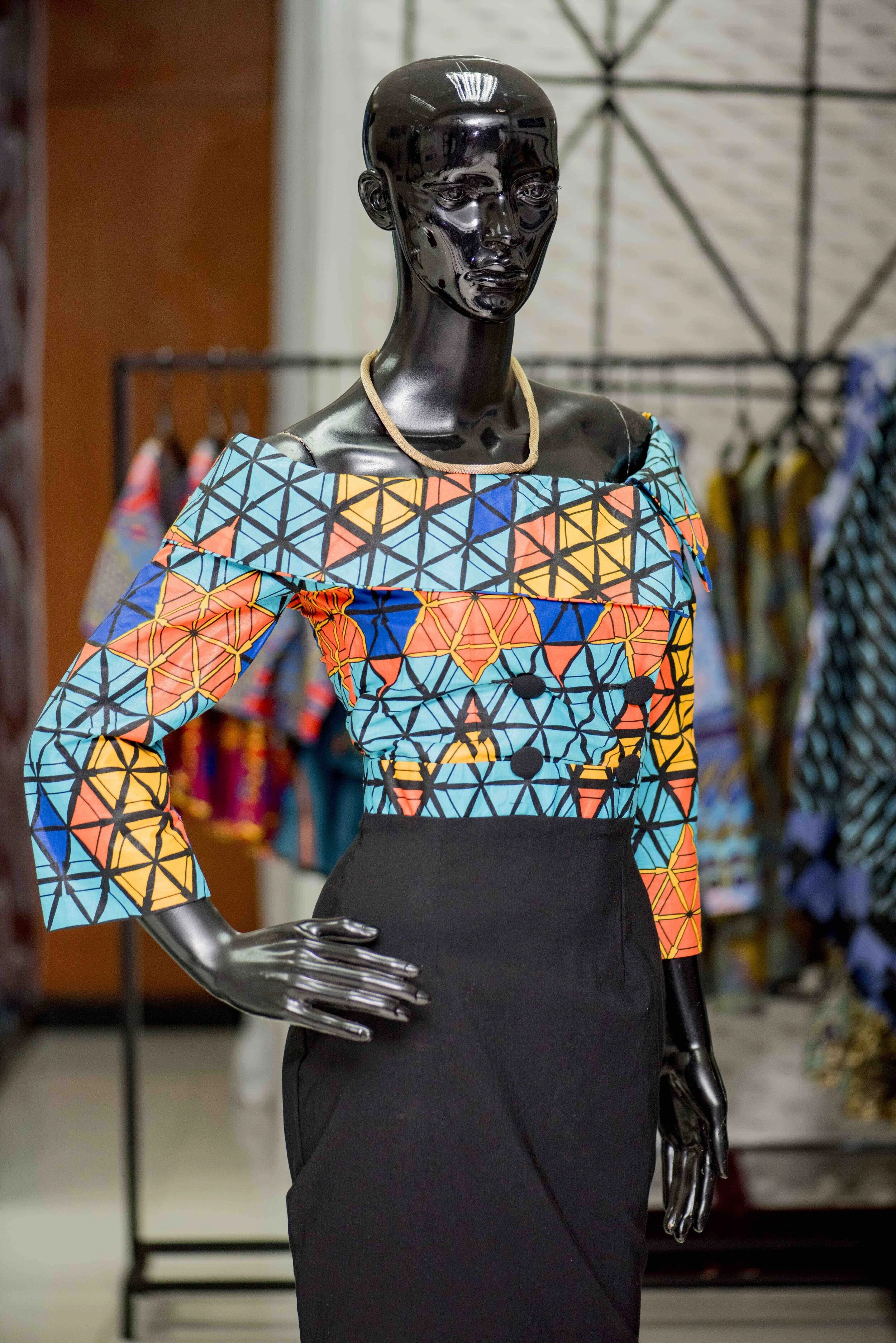
Anazi sits within a broader argument Alfonso is making about fashion identity. In Nation Online’s interview, she encourages designers to draw on Malawian stories, names and culture rather than depending on styles borrowed from elsewhere. Anazi, Anazimbiri and Aphiri appear as examples within that initiative. Her position should remain attributed. It is a designer’s intervention in a conversation about identity, not proof that a country previously lacked its own styles. Anazi does not need that sweeping proposition to be worth discussing. Its more specific contribution is Alfonso’s attempt to connect a named garment with a named reference and an articulated set of design intentions.
Her insistence on interpretation is consequently more useful than a claim of national representation. It allows Anazi to be approached as one designer’s proposal: a particular selection of height, movement and symbolism. It does not require the dress to stand for every Malawian wearer or to contain the full meaning of its cultural source.
What the Published Account Establishes
The strength of Alfonso’s introduction is its specificity of intention. It identifies the source, selects height as a defining quality, links layers to movement, and assigns meaning to a detail near the heart. These are identifiable propositions rather than a general declaration that the design celebrates heritage. Its limit is equally clear. The statement explains why Alfonso wants these elements to matter; it does not demonstrate how they work together in the finished garment. Presence, power and confidence remain expressive ambitions, not proven effects. Anazi’s published account is therefore most useful as a precise introduction to the designer’s thinking. It provides questions that can be taken to the dress itself: where elongation is produced, how the layers behave and whether the focal detail contributes to the whole. It should inform that examination, not replace it.
The Omiren Argument
The principle is proportion, but the available evidence establishes a proportional intention rather than a verified result.
Alfonso gives height a specific role in Anazi’s design story and connects it with movement and heritage. The critical distinction is to credit that articulated intention without converting it into an unearned verdict on the dress. A cultural reference can explain where a design begins. The garment must ultimately show what the designer has made of it.
Also Read:
- What Ceremony Teaches Us About Dressing: The Sacred Origins of Our Most Everyday Choices
- Ndau Men’s Ceremonial Dress: The Muchongoyo Ensemble and the Question of Living Tradition
- Trinidadian Carnival Masquerade Is a Fashion System; It Is Time the World Called It That
- Malawian Chitenje Bridal Styling: The Wedding Tradition Behind the Fabric
Frequently Asked Questions
What is Anazi?
Anazi is a dress by Lilly Alphonso. Nation Online identifies it as influenced by makanja, while Alfonso’s official introduction describes its intended elongation, layered elements and heritage-related detail. The sources do not provide a construction record or an independent visual assessment of the finished dress.
What does Alfonso identify as its inspiration?
Her official statement names Gule wa Makanja and emphasises the towering figure’s presence. She connects that quality to Anazi’s elongated silhouette, describing height as a way to command attention through presence rather than noise. Layered elements echoing movement and rhythm are drawn from the same reference.
What is the Anazimbiri detail?
Alfonso describes it as a detail close to the heart that anchors the design to heritage. The published introduction does not provide enough information to identify its physical form or establish its relationship to the separately named Anazimbiri top, which Nation Online describes as a top.
Is Anazi a costume or a national uniform?
Alfonso writes that “Anazi is not a costume. It is an interpretation.” Her position remains a designer’s attributed view: it does not require the dress to stand for every Malawian wearer or to contain the full meaning of its source. Nation Online places Anazi within her Malawi Fashion Identity initiative.