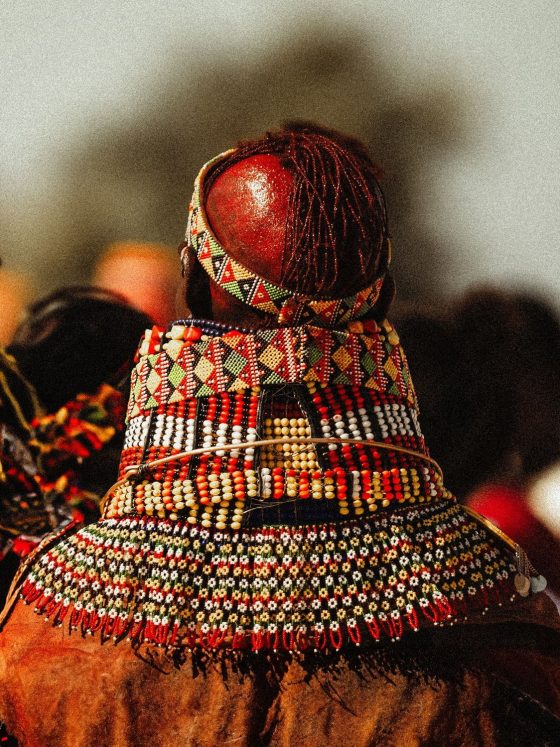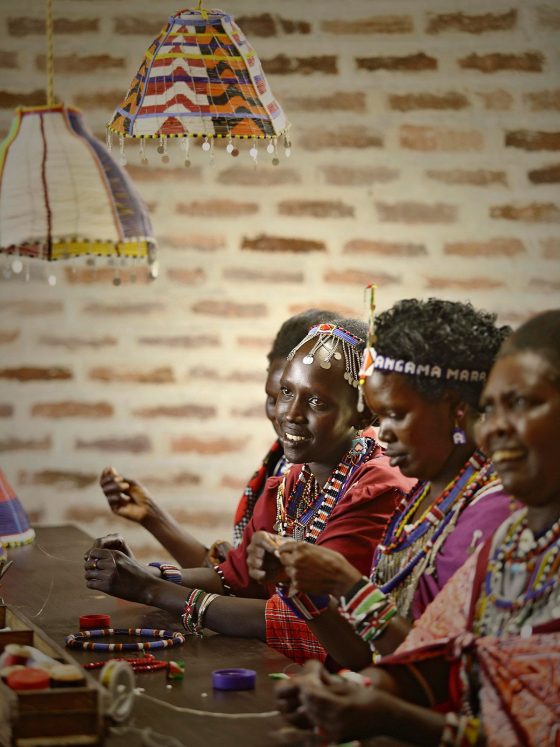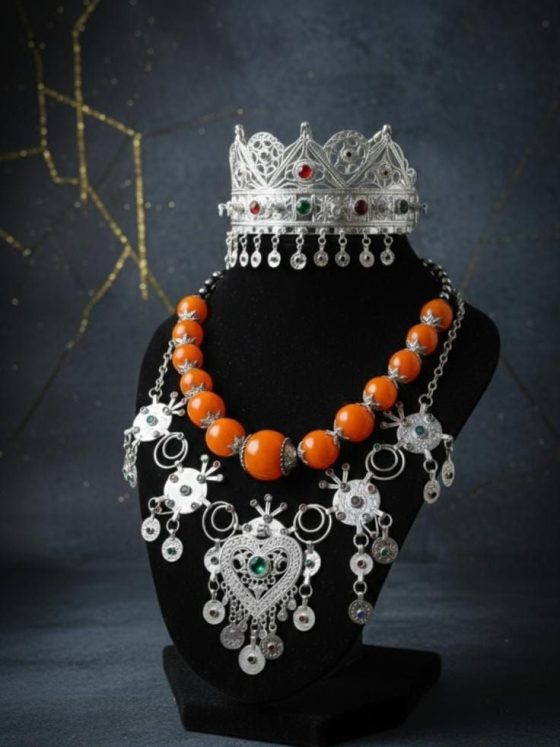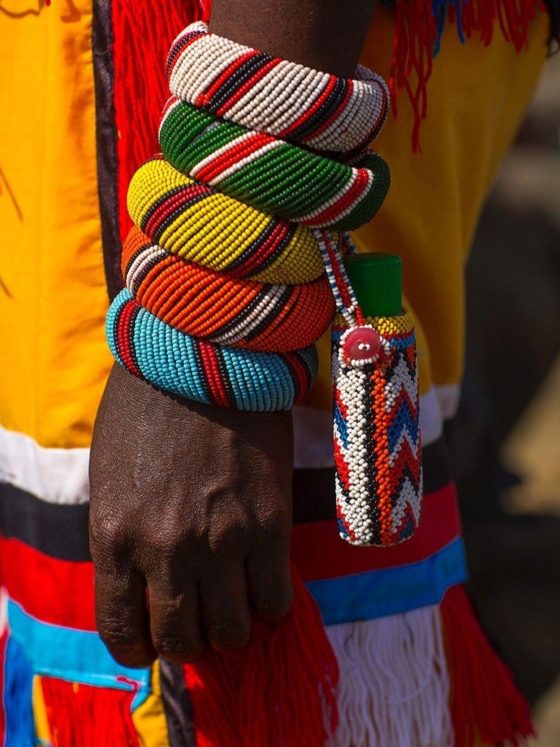
A bead shaped like a cowrie shell is not necessarily a shell. One example in the British Museum is hollow gold, cast using the lost-wax technique. Made in the Asante region of present-day Ghana before 1874, it translates the form of a cowrie into another material. Its catalogue identifies it as sedee and records a suspension hole at one end. This distinction changes how we understand the object. It is not simply a natural shell threaded for wearing, nor a generic gold ornament. Its material, form and documented use belong together.
The same attention changes how we read other beaded objects. A South African necklace assembled from imported European glass beads has a different material history from a Yoruba ceremonial necklace. Neither can be adequately explained by the phrase “African beads”. Three documented examples offer a more precise approach: distinguish the material’s origin from the object’s place of making, examine its construction, and connect interpretations to the particular evidence.
Explore three documented examples of African beadwork and jewellery, tracing differences in material origins, making, and cultural use.
A South African Necklace: Imported Glass, Local Composition
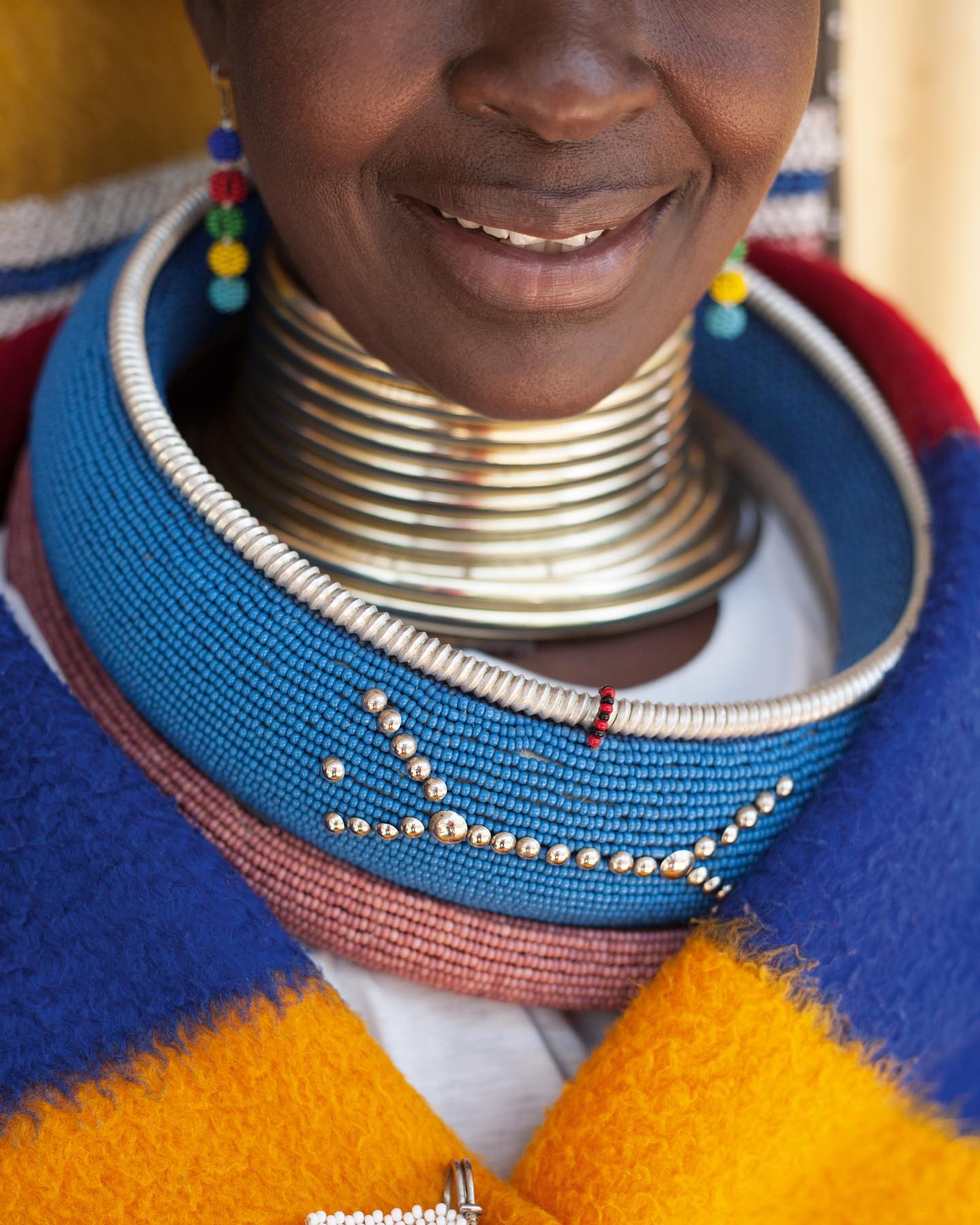
A necklace in the Victoria and Albert Museum’s collection, dated to approximately 1850–1900, consists of a beaded string and a pendant panel with a chevron design. Its accession record lists red, black, white, yellow and pink beads. The museum attributes it to Xhosa- or Zulu-speaking makers in South Africa, without further resolving that attribution. The collection record identifies the beads as European imports. Its wider account explains that small glass beads became available in large quantities during the late 19th century, supplied through European manufacturing centres including Venice, Bohemia and the Netherlands.
That history does not make the finished necklace a European design. The origin of a component and the authorship of an assembled object are different questions. The necklace’s composition depends on selecting and arranging beads into a wearable form. The museum places such work within artistic expressions of cultural and regional affiliation among Xhosa- and Zulu-speaking communities. Here, “origin” needs more than one answer: where the beads were manufactured, where the necklace was made, and which practices it was worn in.
Colour Needs Context
The V&A describes beadwork as a way to communicate affiliation, age, wealth, and status. It also connects panels of this kind with courtship, noting their common description as “love letters”. Those observations are not a universal colour dictionary. The catalogue does not translate this necklace’s colour sequence into a specific personal message. Nor does its unresolved Xhosa-or-Zulu attribution support assigning it confidently to one community. A precise account can describe the colours, composition and the museum’s interpretation while keeping those limits intact. It does not need to invent a message to make the object interesting.
A Yoruba Ceremonial Necklace: Beads in Devotional Practice
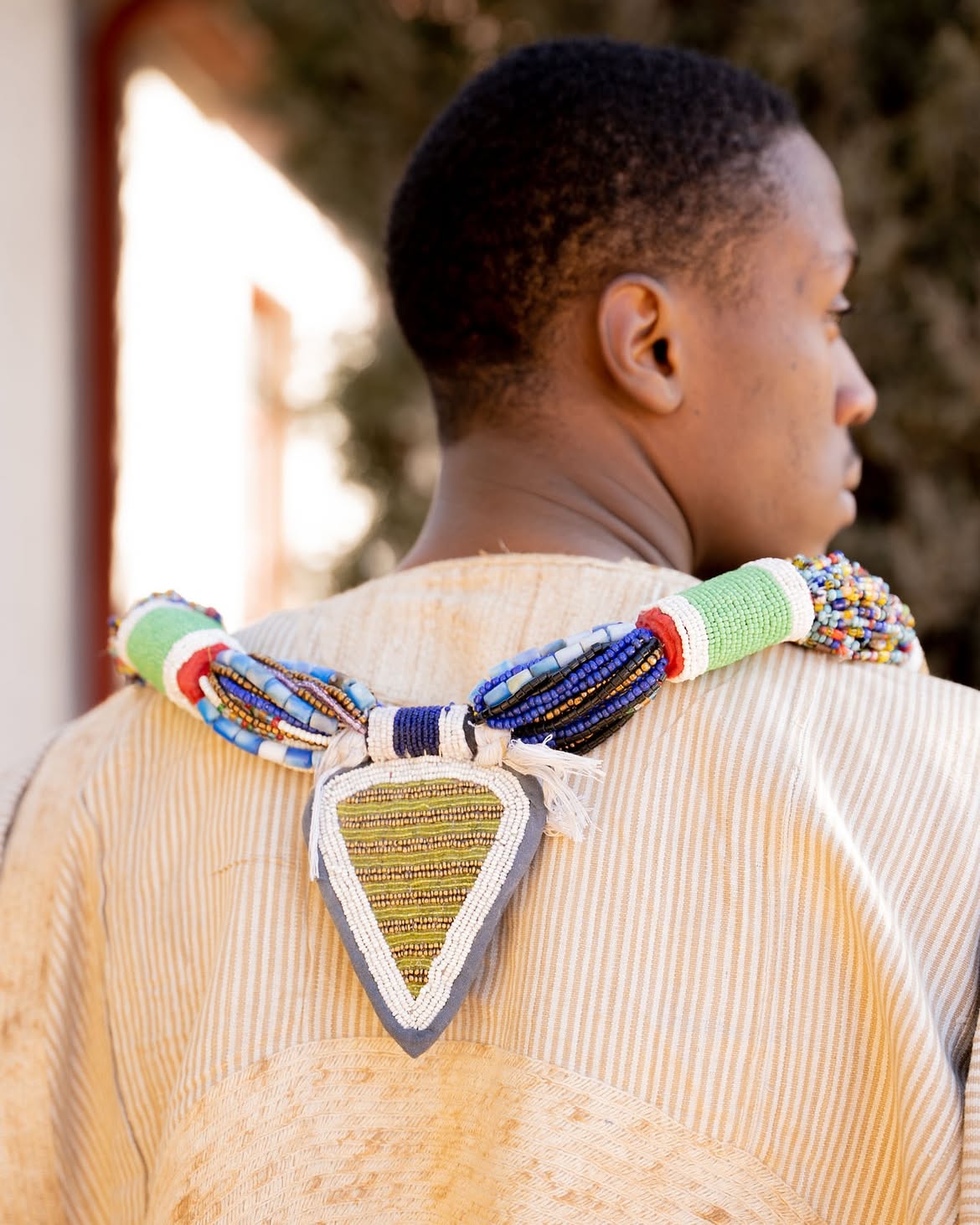
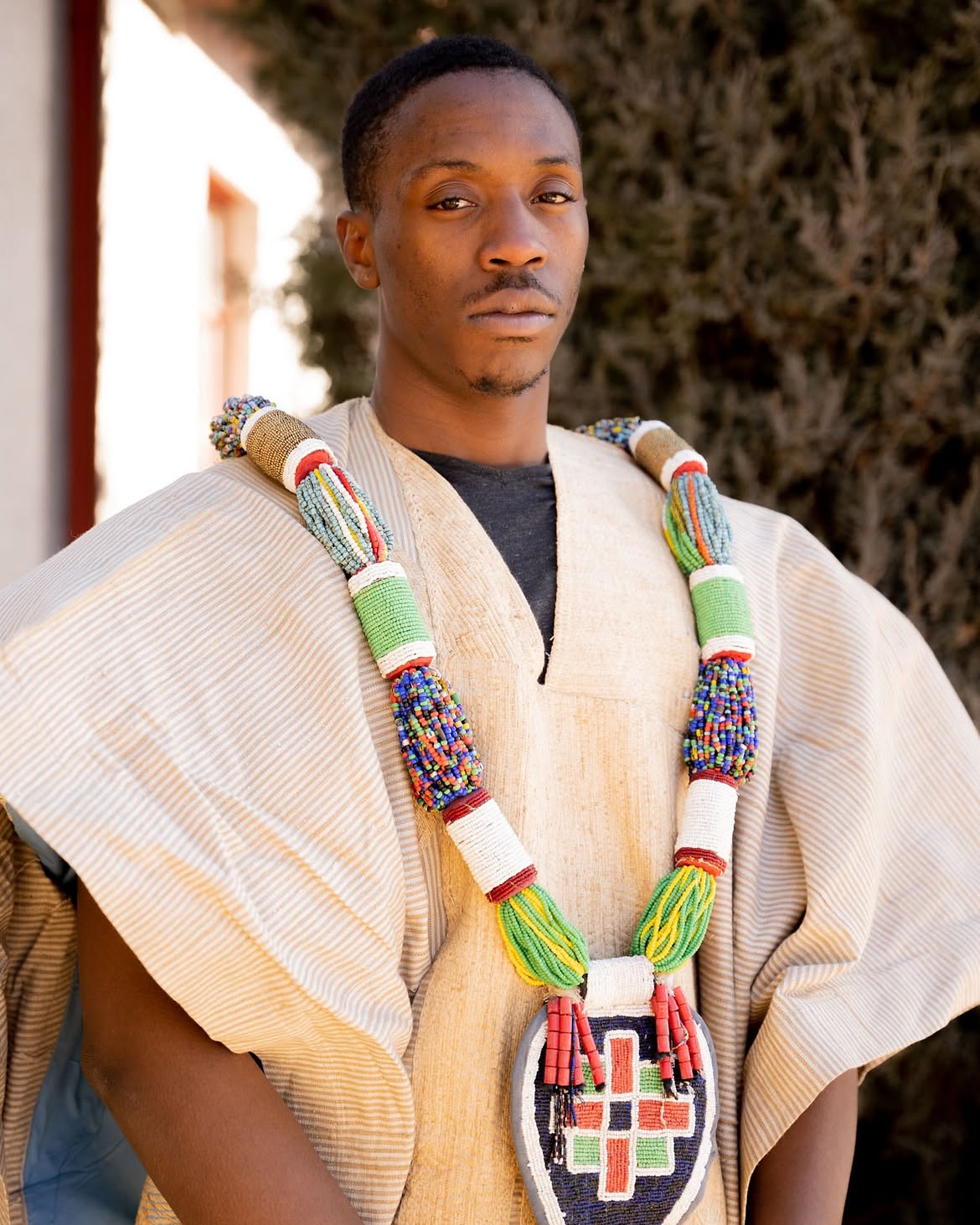
A different relationship between beads and use appears in a necklace at the Metropolitan Museum of Art. The museum identifies it as Òdìgbà Ifá, or idè Ifá, a diviner’s ceremonial necklace made by a Yoruba bead artist in south-western Nigeria in the late 19th or early 20th century. Its listed materials are beads and cotton. The Met’s account places the object within Yoruba devotional practices. It explains that bead artists select colour schemes for objects commissioned by priests and high-ranking officials in relation to particular òrìṣà, or deities. “Necklace” identifies a wearable form but does not fully explain its role. This is a ceremonial object, not simply an accessory that happens to use an elaborate arrangement of beads.
Trade Is Part of the History, Not the Whole History
The Met’s interpretation also complicates the assumption that glass beads in African objects must always have originated in Europe. It records glass-bead production at Ilé-Ifẹ̀ as early as the 11th century. It also describes the use of locally sourced stones, materials obtained through maritime trade and, by the 19th century, European-manufactured glass beads that expanded the available colour palette. These statements concern a wider material history. They do not identify the manufacturing source of every bead in this particular necklace. That distinction is important. Evidence of European glass-bead trade should not erase earlier African production. Equally, evidence of local production should not assign an unverified origin to an individual object.
The more useful account lets production, exchange, and artistic selection coexist.
An Asante Gold Bead: A Shell Form in Another Material
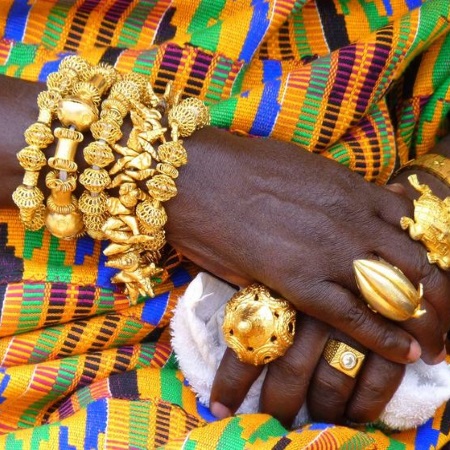
The British Museum’s cowrie-shaped gold bead introduces another construction method. Its record describes a hollow lost-wax casting, with transverse lines decorating the shell form and a circular suspension hole at one end. The object was made in the Asante region before 1874. Unlike the South African necklace’s imported glass components, this example is itself a cast metal bead. Calling both objects “beaded jewellery” may be appropriate at a broad level, but it does not explain their different materials or making. The museum links cast gold cowries in Akan communities to high-status wearers, including the Asantehene, chiefs, and royal family members. It records their use in anklets, bracelets, necklaces and sandal ornaments as expressions of access to wealth.
Those are documented uses of this type of ornament, not proof of the exact ensemble in which this particular bead was worn. The bead demonstrates why shape alone is insufficient. “Cowrie” directs attention to its shell-like form; “gold” identifies a material distinction central to its documented status associations.
Four Questions to Ask of a Beaded Object
Together, these examples suggest a practical way to read jewellery more closely:
| Question | What it helps distinguish |
| What is it made from? | Glass, gold and other materials should not disappear beneath “beads”. |
| Where were the components produced? | A bead’s manufacturing origin may differ from the object’s place of making. |
| How was the object constructed? | Assembling glass beads and casting a gold bead involve different processes. |
| What use does the evidence establish? | Personal adornment, ceremonial practice and status display should not be treated as interchangeable. |
A fifth question concerns attribution: who made it, and how securely is that identification recorded? In these examples, museum records preserve different levels of knowledge. One leaves a choice between Xhosa- and Zulu-speaking makers unresolved; another identifies a Yoruba bead artist without supplying a personal name. Those distinctions should remain visible.
The Omiren Argument
The phrase “African beads” can begin a conversation, but it should not finish one. Our argument is for specificity: name the material, distinguish component production from object-making, and connect cultural interpretations to documented examples. This approach does not diminish shared histories or exchange. It makes them more legible. An imported glass bead can become part of locally composed work; a gold casting can take the form of a shell; a necklace can belong to devotional practice rather than everyday fashion. The objects become more, not less, compelling when their differences remain intact.
Also Read:
- Maasai Beadwork: Meaning, Symbolism, and the Language of Identity shows how glass beads were absorbed into an existing symbolic system.
- The Dipo Ceremony and What Krobo Beadwork Communicates About Womanhood in Ghana follows Ghanaian glass beads from production to ceremony.
- Gold, Coral, and Cowrie: The Power Codes of African Ornament reads three ornament materials as signs of authority.
- Turkana Beadwork Is a Social Archive. Kalenjin Beadwork Needs More Than a Generic Label. argues against one community’s meanings standing for a whole region.
Frequently Asked Questions
Were all glass beads used in African beadwork imported?
No. The Met records glass-bead production at Ilé-Ifẹ̀ as early as the 11th century. Its account also discusses the later use of European-manufactured glass beads. The origin of an individual bead still requires object-specific evidence, because the Met’s statements concern a wider material history, not the source of every bead in one necklace.
Does an imported bead make the finished jewellery foreign-made?
Not necessarily. Component manufacture and the making of the finished object are separate questions. The V&A’s South African necklace is recorded as locally assembled work using European glass beads, and the museum places it within artistic expressions of cultural and regional affiliation among Xhosa- and Zulu-speaking communities.
Do bead colours have the same meaning across Africa?
No. The sources examined here do not support a continent-wide colour code. Their interpretations relate to particular communities, objects and uses, and the V&A catalogue does not translate the colour sequence of its necklace into a specific personal message. Colour needs the context of the object that carries it.
Can a bead be made from gold?
Yes. The Asante example discussed here is a hollow, lost-wax-cast gold bead shaped like a cowrie shell, made in the Asante region before 1874. The British Museum links cast gold cowries in Akan communities to high-status wearers, including the Asantehene, chiefs, and royal family members.