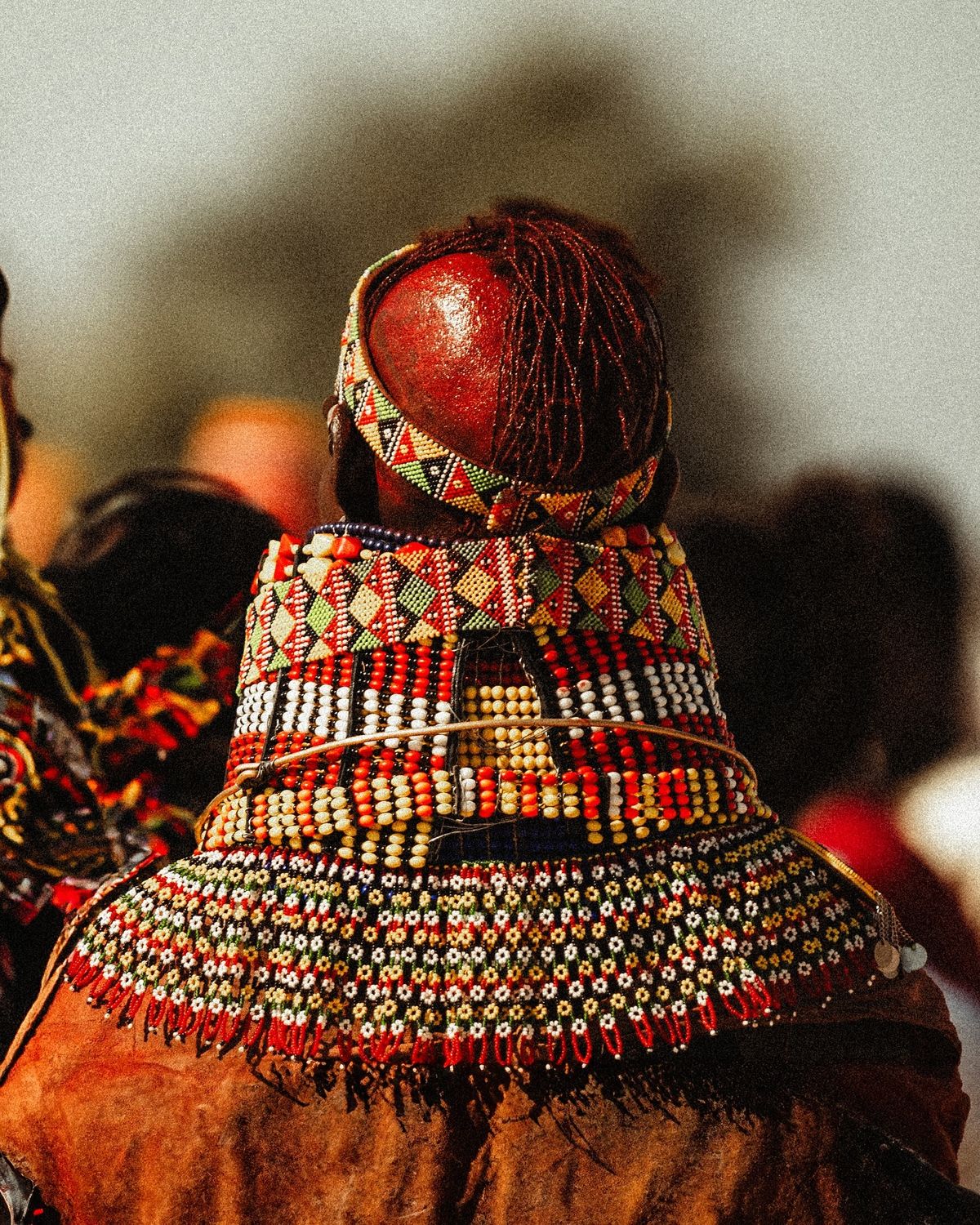
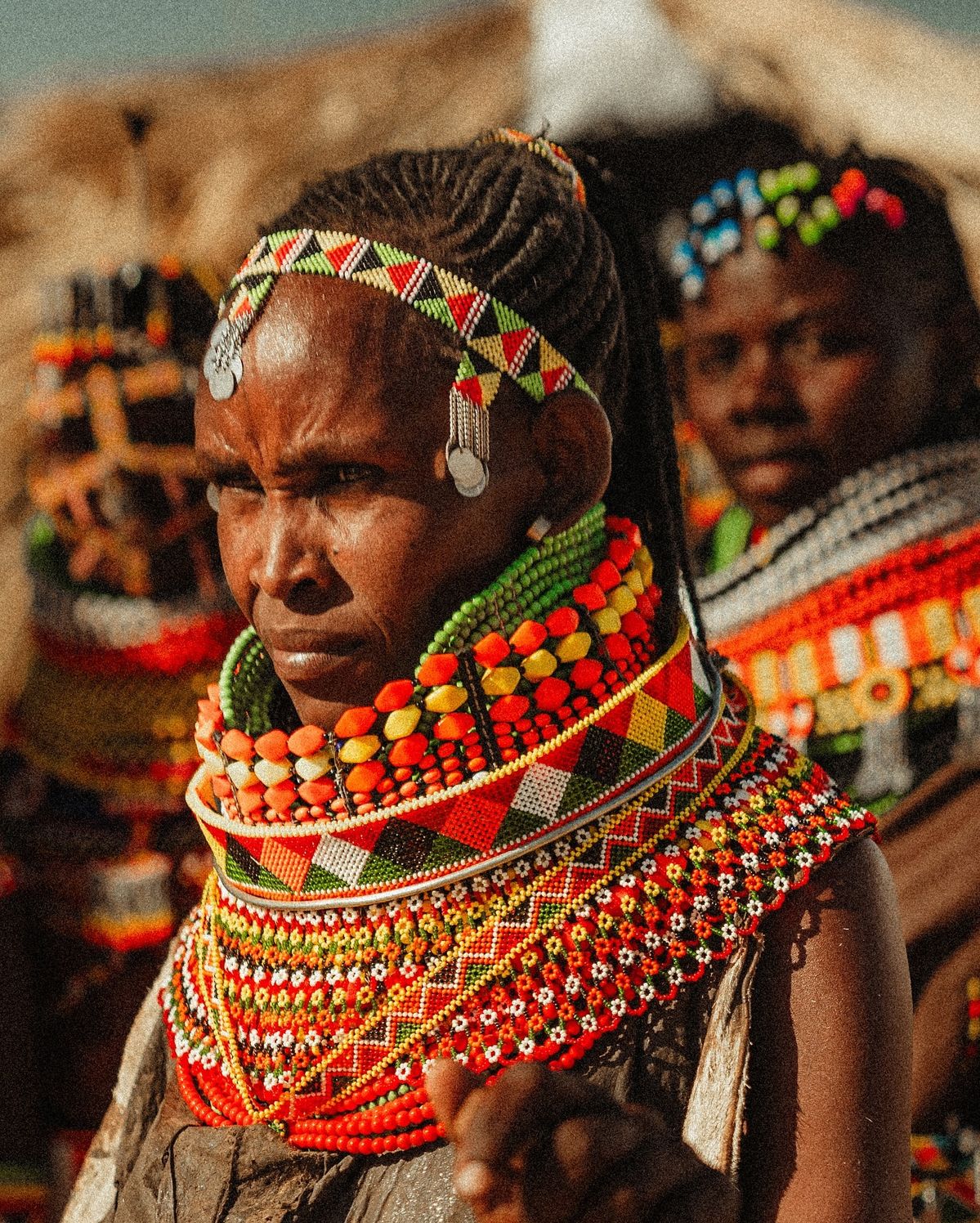
A Turkana woman’s necklaces can weigh up to ten kilograms. They are never removed except in illness or at the death of a close relative. The men of her family actively increase the number and weight of necklaces she wears. She does not wear them because they are decorative in the Western sense of the word “accessory”. She wears them because they are social information, continuously displayed and updated, and readable by everyone in her community who knows how to read them. They communicate her age, her marital status, her husband’s investment in her social presentation, her family’s wealth, and her position in the community: not as an abstract system of symbols but as a lived, daily, embodied record.
The African beauty market is part of the continent’s 31-billion-dollar fashion and beauty economy. Turkana beadwork is not a style choice. As the Ethical Fashion Initiative’s January 2026 documentation of Kenyan beadwork confirms, among the Turkana, intricate beaded collars and headdresses are used to indicate social status, age group, and marital status. In some communities, women wear specific colour sequences to signify whether they are married, single, or widowed. This is not the same as Maasai beadwork, Kalenjin beadwork, or any other Kenyan beadwork tradition. It is specifically Turkana: produced, worn, and read within the social world of the Turkana people of north-western Kenya.
A Turkana necklace weighing 10 kilograms is not decoration. It is a social record. Kalenjin beadwork requires more specific community research before becoming fashion content.
The Necklace That Never Comes Off
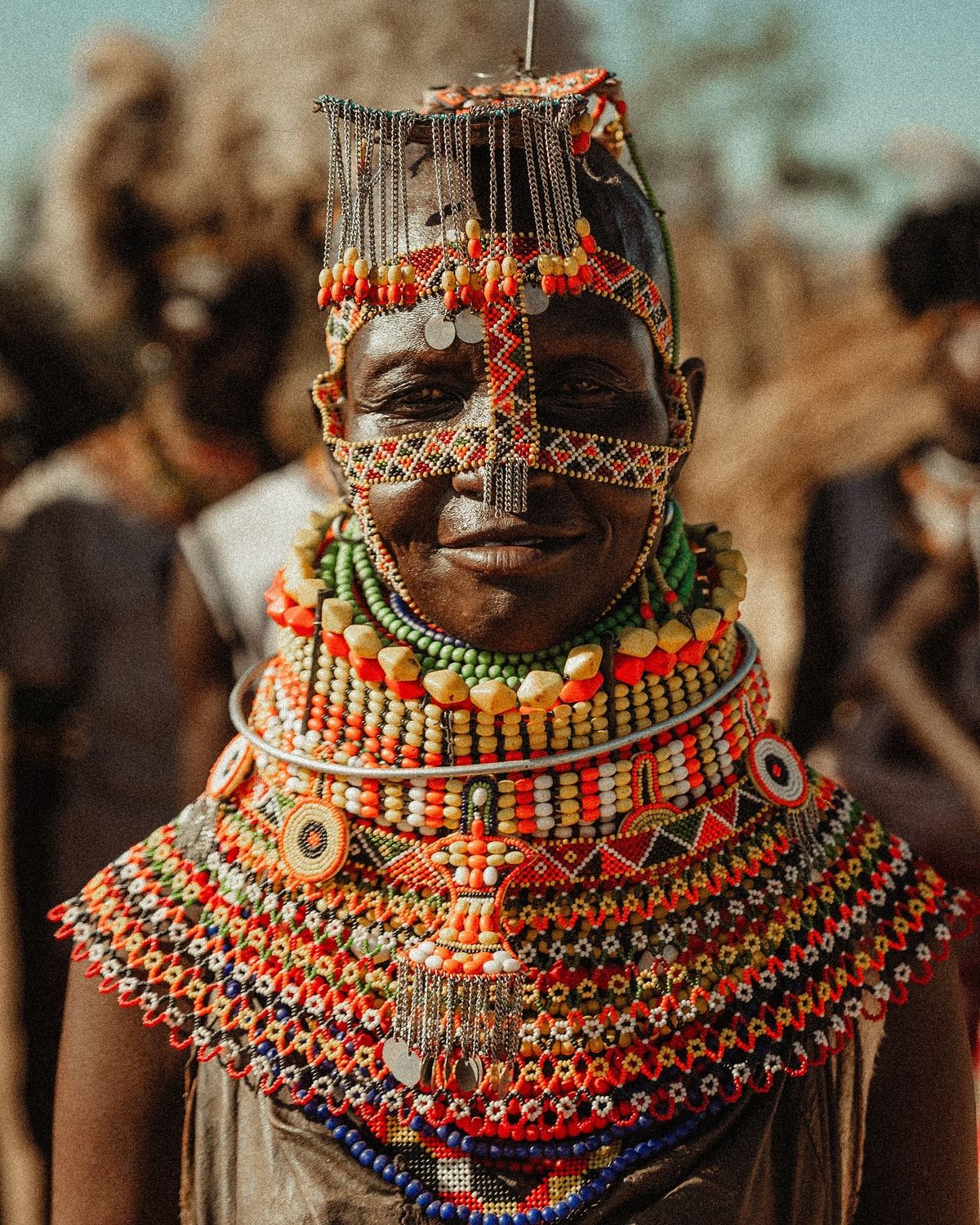
The most important structural fact about Turkana women’s beadwork is its permanence. As Exploring Africa’s documentation of Turkana clothing and jewellery confirms, Turkana women’s necklaces are never removed except in cases of illness or the bereavement of a relative. The necklaces can weigh up to ten kilograms. Men make every effort to increase the number of necklaces their wives wear. This last fact is socially significant: the weight and quantity of a woman’s beadwork is not her individual aesthetic decision. It is a family investment. The husband’s social standing is partly expressed through how well-adorned his wife is in public. The necklace is not her accessory. It is a collaborative social record maintained between her and her family.
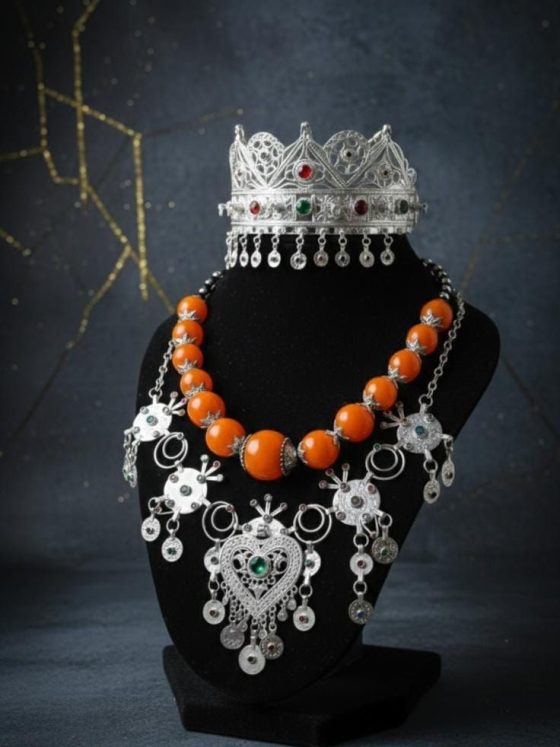
The flat metal necklace worn by married Turkana women functions as the equivalent of a wedding ring in Western dress culture, but it works entirely differently. In Western practice, a wedding ring is a small, standardised object worn on the hand whose primary function is symbolic identification. The Turkana metal necklace is worn around the neck, is flat and visible from a distance, and coexists with multiple layers of beaded necklaces rather than standing alone as a singular marker. It identifies a woman as married within a visual system that already provides extensive social information through the layered beadwork surrounding it.
A Turkana woman’s necklaces can weigh up to ten kilograms. They are never removed except in illness or at the death of a close relative. This is not jewellery in the Western sense of a decorative personal choice. It is a social record worn on the body, maintained across a lifetime, and read by everyone in the community who knows the vocabulary.
The Composition: What the Body Communicates
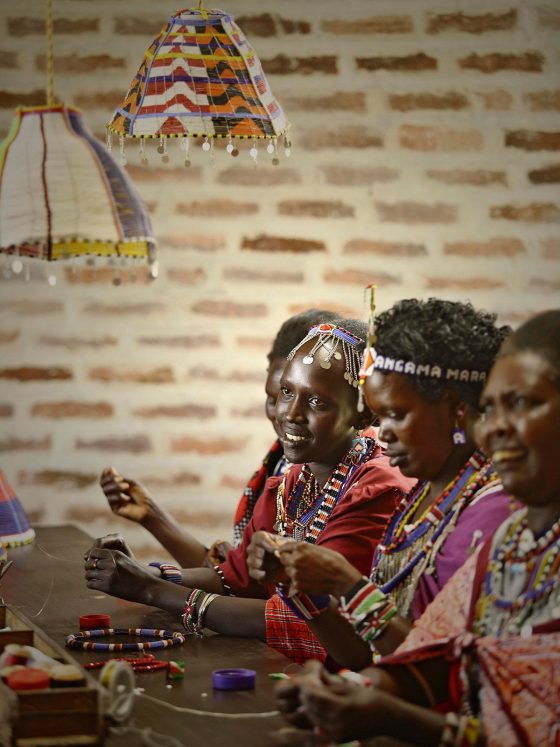
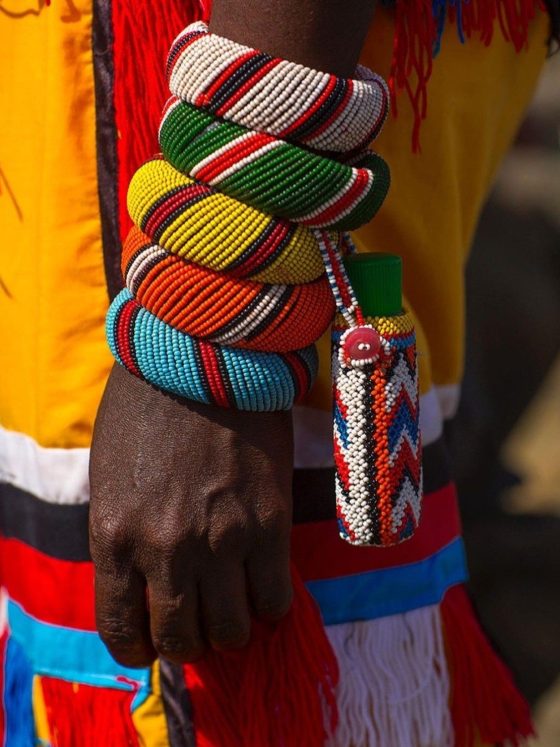
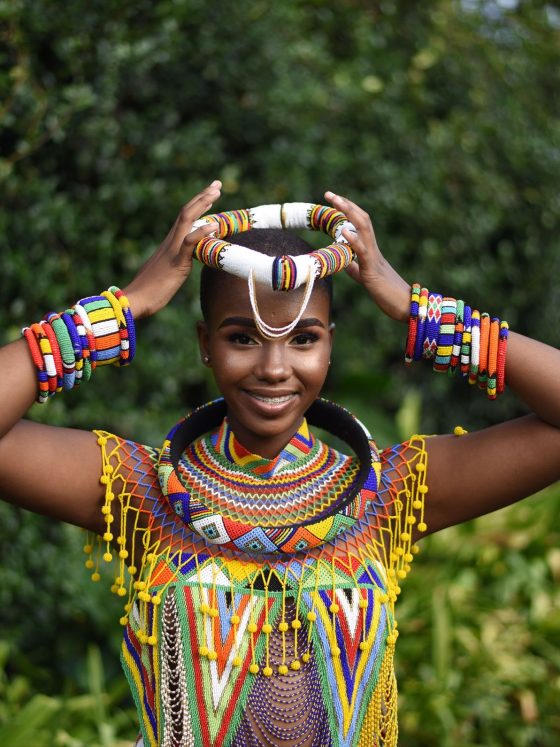
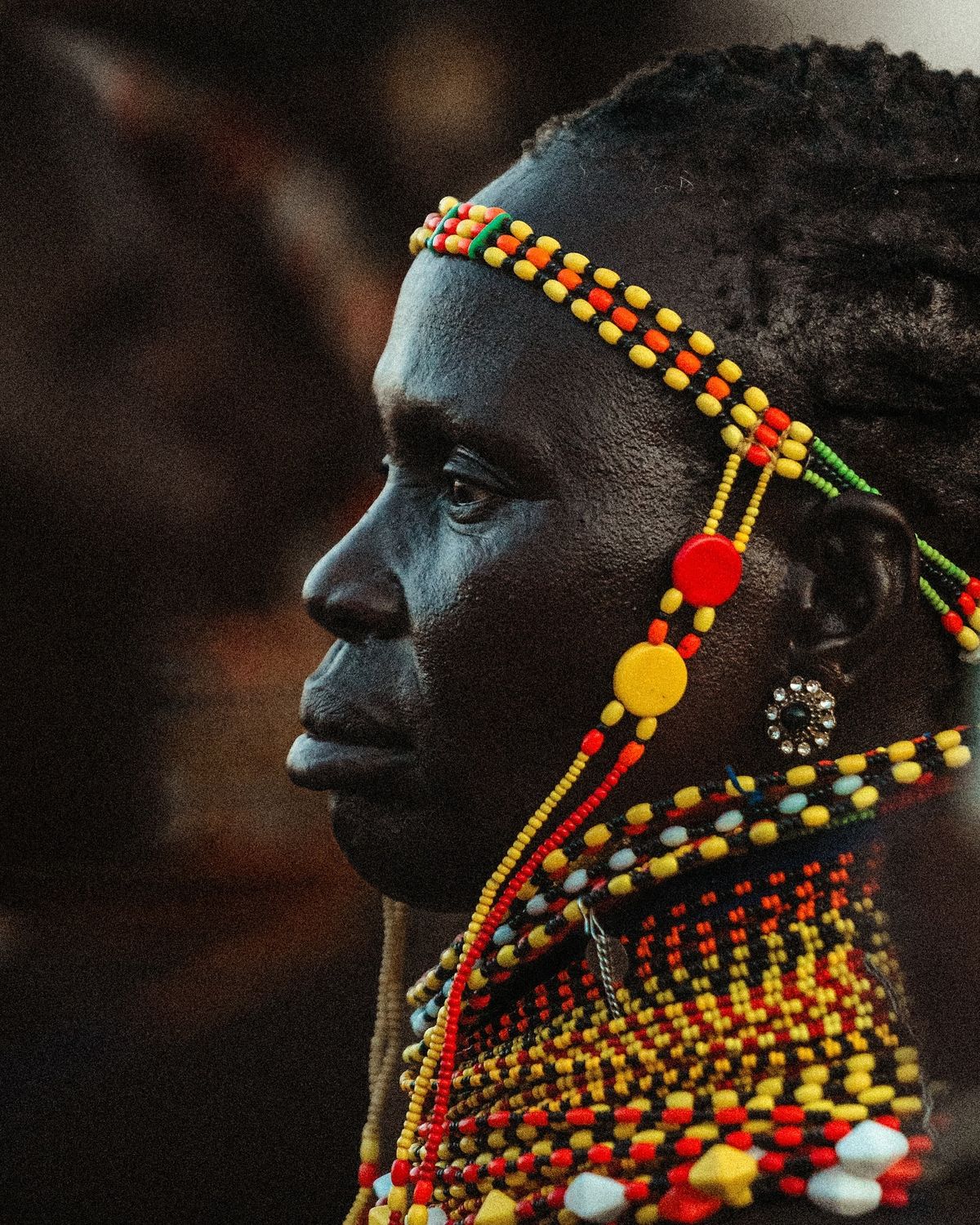
Turkana women’s adornment is a full-body composition rather than a collection of individual pieces. The hair is shaved on the sides while the central strip is retained, braided, and decorated with beads and feathers, held in place with animal fat and wood ash. The necklaces frame the chin, throat, shoulder, and upper chest. The flat metal marriage ring sits around the neck. Beaded bangles on the wrists, described as containing over 500 beads each in spherical layers, add further colour, weight, and social information at the hands. Older women may wear labret piercings in the lower lip. The entire ensemble is a reading surface.
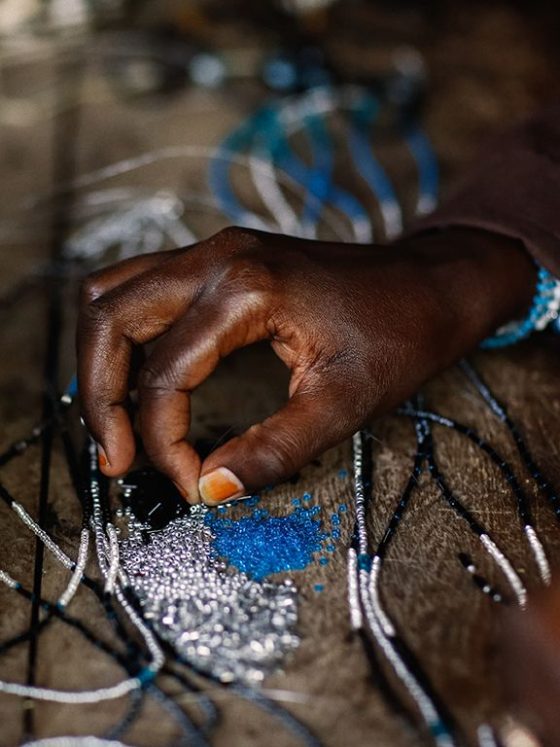
The historical depth of the material vocabulary is significant. As the Google Arts & Culture and National Museums of Kenya documentation of Kenyan ornaments confirms, ostrich eggshell beads are among the oldest known artificial beads, with findings dating back to approximately 70,000 BC during the African Middle Stone Age. Turkana tribeswomen make ostrich eggshell beads by chipping the tough shell into rough shapes using stones or their teeth. In northwest Kenya, Turkana pastoralists buried their dead with thousands of beads, demonstrating that beadwork held significance for the community’s relationship with death and ancestors. The contemporary necklace made of coloured glass or plastic beads is one moment in a material tradition with a seventy-thousand-year history.
The wedding collar carries specific structural meaning. Multiple beaded strands hang from it, and these represent the amount of bride price paid for the bride, which in most cases takes the form of cattle. The collar is therefore not only a marker of marital status. It is a visible record of the specific transaction of the marriage, expressed in a form that the community can read and that the woman carries on her body for life. The clay necklaces made from locally sourced clay, shaped into cubic or rounded pieces and finished with clear lacquer, represent another material specific to the Turkana landscape: the arid, distinctive geography of north-western Kenya expressed as adornment.
The Commercial Reality: When the Archive Enters the Market
Turkana beadwork has entered commercial markets: tourism, export, contemporary Kenyan craft retail, and collaborative production programmes. This creates a specific set of risks that the article needs to name, because the social archive and the commercial product are not the same thing and should not be described as such.
The Ushanga Initiative, Kenya’s programme for community-based beadwork development, has documented work with beadmakers across seven counties, including Turkana, reaching 5,000 women with entrepreneurship skills and supporting around 60 cooperative societies. As SHIKHAZURI’s documentation of African beaded jewellery symbolism in Kenya confirms, beadwork has traditionally been an activity for women and was originally not undertaken for commercial purposes. During the colonial period, beads were offered as currency or as a discount on traded goods. The transition from cultural object to commercial product is therefore not new, but the contemporary commercial scale is.
The risk the commercial market creates is not that Turkana women are selling their beadwork. It is that the social archive’s specific meaning is separated from the object when it is sold as generic ethnic jewellery. A necklace sold in a Nairobi craft market or a London boutique under the label “tribal necklace” or “African beadwork” is not the same object as a necklace that is part of a specific woman’s social record, worn continuously, maintained by her family, and readable by her community. The object may be materially identical. The meaning has been removed. Ethical commercial engagement requires acknowledging which of these the buyer is purchasing and making that distinction visible.
Kalenjin Beadwork: The Documentation Gap
The Kalenjin are not one cultural group. The category includes the Nandi, Kipsigis, Keiyo, Tugen, Marakwet, Pokot, Sabaot, and Terik, among other related communities distributed across Kenya’s Rift Valley. Dress, ceremony, language, and ornament vary among them. A single account of Kalenjin beadwork that treats all these communities as a single tradition is not an account of Kalenjin beadwork. It is an account of whatever fragments of Kalenjin dress culture were documented in the sources available to the writer.
The public documentation for Kalenjin beadwork is significantly thinner than the documentation for Turkana, Maasai, or Samburu adornment. This is not evidence that Kalenjin communities lack beadwork traditions. It is evidence that those traditions have not been as thoroughly documented in English-language, internationally accessible sources. The responsible editorial response to this gap is not to fill it with speculation, borrowed Maasai meanings, or generalised descriptions of African beadwork. It is to acknowledge that the documentation is insufficient and to name the communities more specifically when discussing what is known.
What can be responsibly documented about Kalenjin beadwork is that it exists, that it appears in ceremonial contexts including initiation, elderhood, and public events, and that it includes ear ornaments, bead jewellery, and decorated leather garments in documented Kalenjin ceremonial settings. The Pokot, whose territory overlaps with both Kalenjin and Turkana areas, have documented beadwork traditions, including specific ceremonial dress for women, visually described in the National Museums of Kenya record. But the Pokot dress is the Pokot dress: it is not the same as the Nandi dress, Kipsigis dress, or Tugen dress, even if all of these fall under the Kalenjin umbrella in contemporary categorisation.
The Maasai Shortcut Problem
The most common editorial error in Kenyan beadwork writing is to use Maasai beadwork as the template for all Kenyan beadwork. Maasai beadwork is extensively documented, globally recognised, and heavily photographed. That visibility makes it tempting to apply Maasai colour codes, social meanings, and design vocabulary to Turkana, Kalenjin, Samburu, Rendille, and Pokot beadwork as though they share a single system.
They do not. As Omiren Styles’ documentation of the eight editorial shortcuts in African textile reporting confirms, using one community’s textile or dress vocabulary as a shorthand for all communities in a region is one of the most persistent failures in African cultural reporting. Red beads in Maasai adornment may carry specific Maasai meanings about age, bravery, or ceremony. Red beads in Turkana adornment may carry different meanings, or the same colour may carry different weight depending on the arrangement, the occasion, and the wearer’s social position. No article should transplant Maasai colour symbolism onto Turkana or Kalenjin beadwork without specific evidence that the meaning applies.
The Omiren Argument
Turkana beadwork is a social archive. The African beauty market is part of a 31-billion-dollar continental economy. A Turkana woman’s necklaces weigh up to ten kilograms, are never removed except in illness or bereavement, and are maintained as a family investment by the men of her household as well as her own practice. The flat metal necklace identifies her as married. The wedding collar’s beaded strands record the bride price paid in cattle. The ostrich eggshell beads connect her to a material tradition documented back 70,000 years. The clay beads connect her to the specific landscape of north-western Kenya. The social reading system embedded in this full-body composition, in hair and beads and metal and ochre and posture, is a community knowledge system that outsiders cannot decode from a photograph. It requires the community that built it to read it correctly. Kalenjin beadwork exists, has its own ceremonial and social functions across multiple internally distinct communities, and cannot be responsibly collapsed into one generic label without more specific community-level documentation. The work of treating Turkana and Kalenjin beadwork with the seriousness they deserve begins with two commitments: name the specific community, not the regional category; and acknowledge what the available documentation does and does not support before turning a social archive into fashion content.
Also Read:
- The Dinka Alual Was Never a Bead-Count Code: What Women’s Corsets Could and Could Not Signal
- The Iria Wardrobe Is a Social Record: How Kalabari Dress Makes Womanhood Visible
- West African Dress as a Living Record: What Oral History Reveals About Cloth
- Who Should Define Cultural Authority in Fashion? Start With the Makers
Frequently Asked Questions
What does Turkana beadwork mean?
Turkana beadwork communicates social information including age, marital status, family association, and wealth. Beaded collars and headdresses indicate social status, age group, and marital status. Specific colour sequences can signify whether a woman is married, single, or widowed. A flat metal necklace worn around the neck functions as a marriage marker equivalent in function to a wedding ring. The wedding collar has beaded strands representing the bride price paid in cattle. Necklaces are never removed except in illness or at the death of a close relative, and men in a woman’s family actively increase the number and weight of necklaces she wears as a social investment.
How heavy are Turkana beaded necklaces?
Turkana women’s beaded necklaces can weigh up to ten kilograms. They are worn continuously, never removed except in cases of illness or bereavement of a close relative. Dog dung has traditionally been used as a lubricant to prevent necklaces from chafing the neck. Animal fat is also used to protect the skin from the heat and friction of the beadwork. Beaded bangles on the wrists typically contain over 500 beads each, in spherical layers. The weight and quantity of a woman’s beadwork are as much a social investment maintained by her family as a personal aesthetic choice.
What is the metal ring Turkana women wear?
Turkana married women wear a flat metal necklace around their necks that serves as the equivalent of a wedding ring, a visible marker of marital status. It is worn around the neck rather than on a finger, is flat and visible at a distance, and coexists with the woman’s layered beaded necklaces rather than standing as a solitary symbol. The metal ring should not be equated with Western wedding-ring practices: it functions within the broader Turkana adornment system, which includes multiple layers of beaded necklaces, bangles, hair decorations, and other body adornments that together constitute a social record readable by the community.
What is the difference between Turkana and Kalenjin beadwork?
Turkana beadwork is extensively documented as a social language that communicates age, marital status, family wealth, and community position through specific arrangements of beads, metal, clay, and ostrich eggshell. Kalenjin beadwork is less thoroughly documented in accessible public sources. It cannot be responsibly described as a single, uniform tradition because the Kalenjin comprise multiple distinct communities, including the Nandi, Kipsigis, Keiyo, Tugen, Marakwet, Pokot, Sabaot, and Terik, each with its own ceremonial dress practices. Treating these as one category produces inaccurate generalisation. The responsible approach is to name specific communities when discussing Kalenjin dress and to acknowledge when documentation is insufficient to make strong claims.
How does Turkana beadwork indicate social status?
Turkana beadwork indicates social status through the quantity, quality, and arrangement of adornment rather than through a simple universal code. The quantity of beadwork reflects the cash resources available to the wearer’s family and the investment the husband and family have made in her public presentation. The quality reflects the beading techniques employed. The specific arrangements, including the flat metal marriage necklace, the wedding collar with its strands representing the bride price, and the colour sequences of other necklaces, communicate marital status, family association, and life stage to community members who can read the full composition. Beadwork also appeared in burial contexts, with Turkana pastoralists documented as burying the dead with thousands of beads.
Explore More
Read the full Culture > Heritage & Identity section for Omiren Styles’ documentation of East African beadwork traditions, the social systems encoded in African women’s adornment, and the editorial standards that prevent community-specific knowledge from being collapsed into generic African cultural categories.
Discover travel and heritage intelligence across Kenya, Turkana County, and the East African Rift Valley at Rex Clarke Adventures.