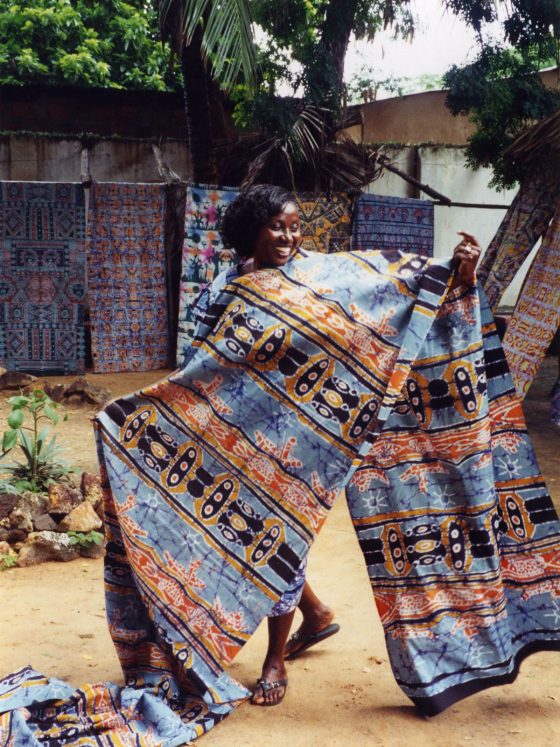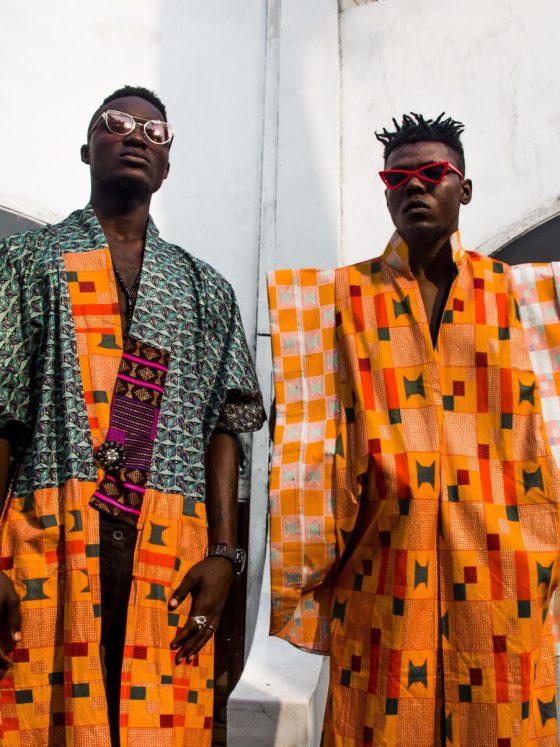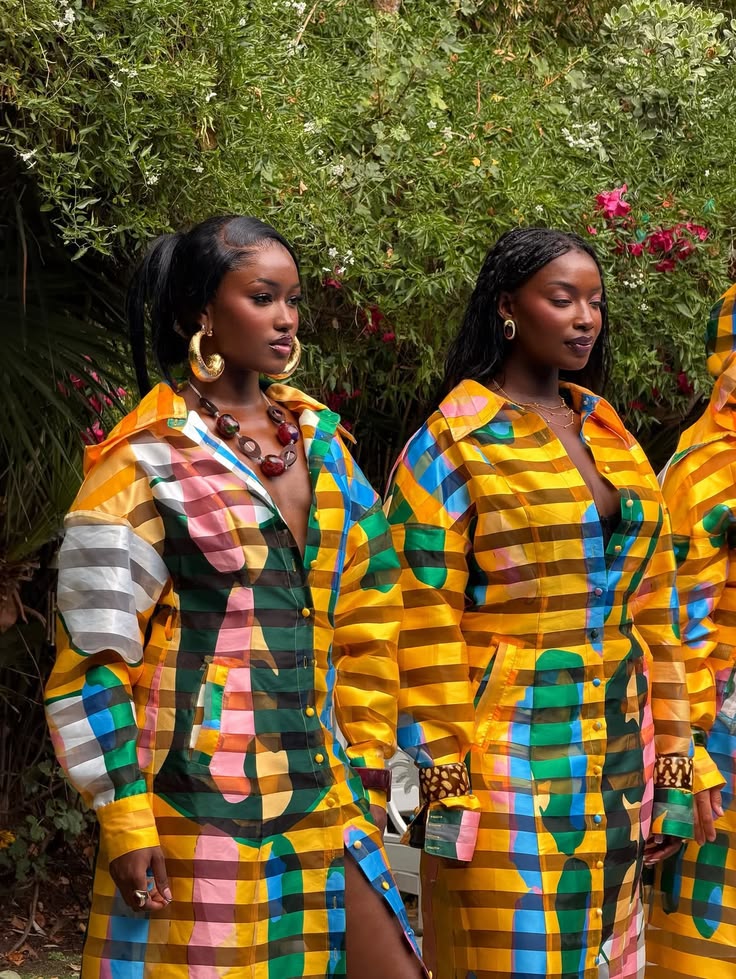
When a fashion brand tells you its fabric was ‘hand-woven in Oaxaca by indigenous artisans using traditional techniques’, that claim carries a specific weight. It sounds specific. It probably sounds verified. What it actually proves depends almost entirely on what evidence sits behind it – and most of the time, when you try to find out what that evidence is, the answer is not immediately available.
Textile provenance claims are everywhere right now. Sustainability reports, product pages, line sheets, social media. The regulatory environment is moving toward requiring more of them. From 27 September 2026, EU rules under the Green Claims Directive restrict unsupported generic green claims and uncertified sustainability labels on products sold in EU markets. Textile brands need evidence for consumer-facing messages. Suppliers need traceability and certification records. The demand for provenance documentation is growing. So is the gap between what that documentation contains and what readers assume it proves.
This article is a practical guide to reading a textile provenance claim: what it can prove, what it cannot, and what questions to ask before deciding how much weight to give it.
Textile provenance claims are increasingly required and increasingly complex. This guide explains what a provenance claim actually proves, what it cannot prove, and how to read one without being misled by what it does not say.
What a Provenance Claim Is and What It Is Not

A textile provenance claim states where a fabric came from and how it was made. It might name the country of origin, the region, the technique, the artisan or artisan community, the fibre source, or some combination of all of these. It is not, by itself, evidence. It is a statement that evidence exists and that the evidence supports the claim. The difference between a claim and its evidence is the difference between a brand saying its cotton is from Gujarat and a brand producing a traceability record showing its cotton was grown in Gujarat, ginned in Gujarat, and tracked to the spinning mill before arriving in the final fabric.
That distinction matters because the fashion industry has been extremely good at making claims and far less consistent about providing the evidence behind them. The claim costs almost nothing to write. Evidence costs time, money, and supply chain access to generate. The consumer reading the product page or the buyer reading the line sheet typically sees only the claim.
What Provenance Can Actually Prove
Let’s start with what provenance documentation can establish when it exists and is verified.
Geographic origin: where the raw material was grown or harvested and where the cloth was woven or processed. This is the most verifiable category of provenance claim because you can check it against physical location data, supplier records, and, in some cases, forensic testing. A cotton garment whose provenance claim is supported by a chain-of-custody document from a named farm through a named gin to a named mill has a verifiable geographic story. A garment whose label says ‘made in India’ and whose product description says ‘crafted by artisans in Rajasthan’ without any supplier documentation has an asserted geographic story.
Technique and process: that the fabric was woven on a specific type of loom, dyed using a specific method, or produced using a specific traditional technique. This is verifiable when the production process has been witnessed, photographed, certified or independently audited. It is not verifiable from the brand’s own description of the technique alone. A brand that says its fabric uses an Adiré resist-dyeing process can be right, but the statement does not verify itself. Independent certification or a direct supplier relationship with documented production visits verifies the technique claim better than a product description that names it.
Fibre composition: what the fabric is made of and in what proportions. This is verifiable through physical testing. Laboratory fibre analysis of a fabric sample establishes composition more reliably than any documentation, because physical testing does not depend on documentation being accurate. A brand that tests fibre composition on production samples has a stronger provenance claim than one that relies only on the supplier’s declaration.
What Provenance Cannot Prove Without Additional Evidence?
This is where the reading needs to be more careful.
A provenance claim cannot prove sustainability without specific sustainability evidence. ‘Sustainably sourced’ on a product page is a claim, not a proof. It means something only when accompanied by specific evidence: a certification from a recognised standard (Global Organic Textile Standard, Fairtrade, Rainforest Alliance), a self-assessment with disclosed methodology, or an independent audit. From 27 September 2026, the EU’s Green Claims Directive specifically restricts this kind of generic sustainability claim on products sold in EU markets. A label saying ‘sustainable’ or ‘eco-friendly’ without substantiation is no longer legally compliant in that market.
A provenance claim cannot prove that documentation is accurate without independent verification. Oritain’s Market Insights Programme, which buys and analyses around 1,000 garments per year, found that 90 per cent of brands analysed in their 2025 review had at least one result consistent with prohibited cotton – despite most of those brands having traceability systems in place. The proportion had grown from 64 per cent of brands in 2024 to 90 per cent in 2025. Self-reporting and certificates can be false, creating what the industry has started calling a ‘garbage in, garbage out’ problem. If the data entered into the traceability system is inaccurate, the system faithfully records and reports that inaccuracy. Documentation alone is no longer sufficient in complex, multi-tier supply chains where raw material origin is under regulatory scrutiny.
A provenance claim cannot prove ethical production without separate evidence of labour and payment. A fabric can be accurately described as hand-woven in a specific village using a specific traditional technique by a named artisan. In contrast, that artisan was paid below a living wage, worked excessive hours, or had no control over how their name and image were used in the brand’s marketing. These are separate questions from the provenance question, and provenance documentation does not answer them. Geographic and technical accuracy does not imply economic or ethical fairness.
A provenance claim cannot prove that the batch you received matches the claim. A brand might have sourced its fabric from a specific community for its first production run and honestly claimed provenance on that basis. When demand grew and the supply from that community could not meet it, a substitution might have occurred – not necessarily dishonest, but not the same fabric the original claim described. Without per-batch traceability that follows the specific production run through the supply chain, the provenance claim on the product is the original claim, not a claim verified against the specific goods in that shipment.
The Evidence Gap in Practice
The fashion industry has been very good at producing provenance claims. It has been considerably less consistent about producing the evidence behind them. The claim costs almost nothing. The evidence is where the work is.
In 2026, most heritage textile brands are somewhere on a spectrum between ‘provenance story built from supplier relationships and site visits’ and ‘provenance story built from supplier declarations without independent verification’. Both can produce an accurate claim. Only one can produce a verifiable claim.
The technologies that move provenance toward verifiability exist and are being developed. DNA fibre markers, applied at the source and tested at the point of manufacture, create a physical chain of evidence that connects a specific batch of raw material to a specific garment. Blockchain-based chain-of-custody platforms record material movement through the supply chain in a tamper-evident log. Satellite crop identification, combined with supply-chain records, can in principle link a field-level observation to a spinning mill and, in turn, to a finished fabric. The European Space Agency’s CottonConscience project, whose feasibility study was completed in September 2026, explored exactly this combination of earth observation and supply-chain records for cotton origin verification.
What all of these technologies confirm, and what the simpler documentation-based systems have learned the hard way, is that the strength of a provenance claim is only as strong as the weakest link in the evidence chain. A blockchain record that is accurate from the spinning mill to the retail shelf does not verify what happened at the farm before it entered the system. A DNA marker applied at ginning does not verify that the fibre was grown where the supplier said it was grown. Provenance analysis must follow the evidence all the way back, not stop at the most recent and most legible record.
How to Read a Textile Provenance Claim
When you encounter a textile provenance claim, whether on a product page, a sustainability report or a line sheet, these are the questions that move you from the claim to the evidence.
What is the source of this claim? Is it the brand’s own statement, a supplier’s declaration, an independent audit, a recognised certification, or a physical test result? The hierarchy runs from least reliable to most reliable: brand statement, supplier declaration, audit, certification, and physical testing. A claim at the bottom of that hierarchy is worth significantly less than one at the top.
Which supply chain tier does the claim cover? A claim that traces the garment’s assembly to a named factory in a named country is a Tier 1 claim. The fabric the factory used came from somewhere else (Tier 2). The yarn the fabric was woven from came from somewhere else again (Tier 3). The raw fibre came from a farm or a field further up the chain (Tier 4). Heritage textile claims are often made at the craft or weaving level, which is typically Tier 2 or Tier 3. Where did the claim originate, and how far back in the supply chain does its evidence actually reach?
Does the claim cover the specific batch you are looking at? A general provenance claim about a brand’s sourcing practice is not the same as a per-product or per-batch claim about the specific item you are buying, reviewing or writing about. Ask whether the provenance documentation is attached to the specific production run or whether it describes the brand’s general approach.
What does the claim not say? A claim that accurately states a fabric was hand-woven in a specific region says nothing about the price paid to the weaver, the weaver’s working conditions, the sustainability of the dyeing process used, or whether the specific batch received matches the original sourcing arrangement. These are the questions the claim’s silence on should prompt you to ask directly.
What the Regulatory Direction Means for All of This
The EU Green Claims Directive, which came into effect on 27 September 2026, restricts generic, unsubstantiated sustainability claims in the EU market. This does not affect factual provenance claims (a fabric woven in a specific place, using a specific technique), but it does affect sustainability framing layered on top of them. A brand that describes its Adiré fabric as ‘sustainably produced’ needs evidence that production met a defined standard. The same brand describing its fabric as ‘hand-resist-dyed using the Adiré technique in Abeokuta’ is making a factual claim that the directive does not restrict, but that remains the brand’s responsibility to substantiate.
The EU Digital Product Passport, whose textile delegated act is planned for Q3–Q4 2027, will extend the formal provenance documentation requirement to include structured, machine-readable data attached to each textile product. When it arrives, the DPP will not eliminate the evidence gap – the quality of the data in the passport depends on the quality of the evidence behind it. But it will create a standardised format for provenance data that makes the claim and its evidence legible across supply chains in a way that current product descriptions do not.
ALSO READ
- Can Textile Provenance Protect the People Who Make the Cloth?
- A Fabric Provenance Claim, Field by Field: What a Buyer Should Ask to See
- A QR Code Is Not a Digital Product Passport: What a Fashion Passport Must Actually Do
- The Global South Made Fashion. It Just Never Got Credit.
The Omiren Argument
A provenance claim is a starting point, not a destination. It tells you what the brand believes about its fabric’s origin, technique and composition. It tells you what story the brand has built about the people and places in its supply chain. What it does not tell you, on its own, is whether that story is accurate, verified and complete.
Reading provenance claims carefully, asking what evidence sits behind the claim, and noting what the claim does not address are not acts of cynicism. They are the commercial and journalistic habits that distinguish a verified sourcing decision from one based on a well-written product description. The most specific claim is not always the one with the most evidence. The claim worth relying on is the one independently verified.
African textile traditions, as Omiren Styles has documented, carry knowledge systems that the fashion industry values commercially. The provenance documentation that connects brands to those traditions is worth building well, verifying thoroughly and reading critically. The weaver whose technique is named in the product description deserves an accurate claim about her work. The buyer whose sourcing decision is informed by that claim deserves to know how strong the evidence behind it is. Good provenance documentation serves both. Weak provenance documentation serves neither.