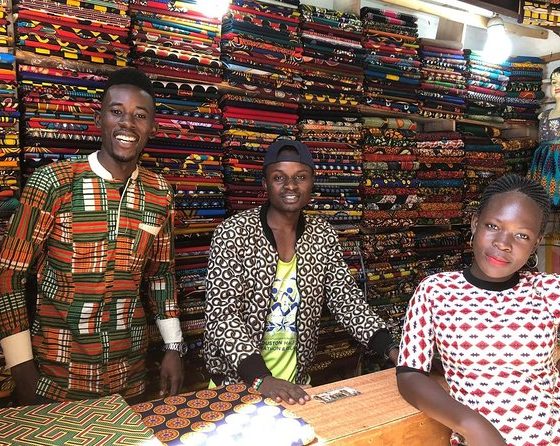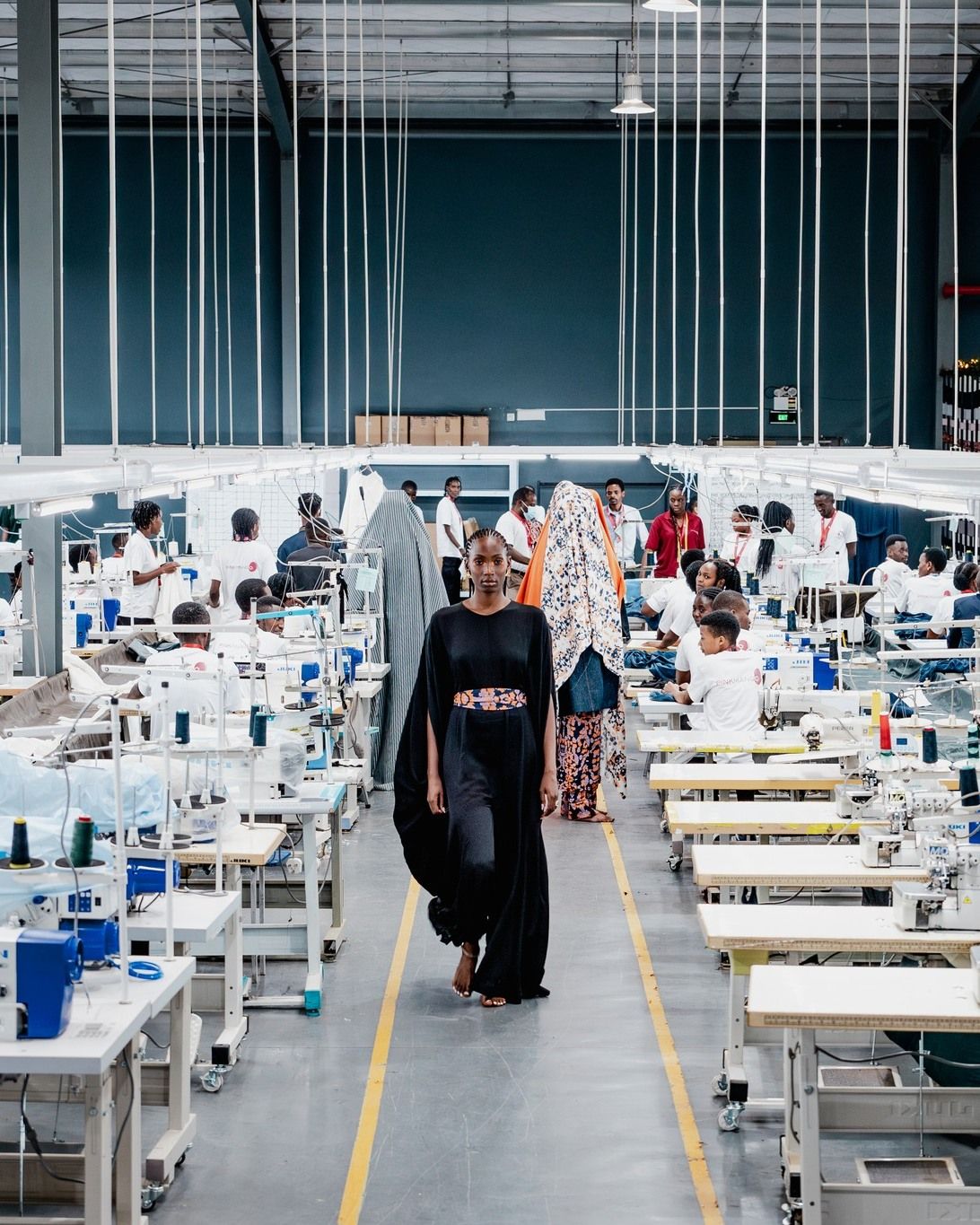
Africa has the talent. The design problem was solved a long time ago.
Anifa Mvuemba of Hanifa is at major international retailers. Andrea Iyamah is at major international retailers. Diarra Bousso of Diarrablu, Kahindo Mateene of Kahindo, and Busayo Olupona of Busayo are all carried by significant retail platforms. African fashion weeks have demonstrated, repeatedly and with growing sophistication, that the creative and craft output of African designers competes at an international standard. The argument that African fashion lacks the talent to scale internationally was always wrong. It is now visibly wrong.
The argument that it lacks the infrastructure to scale, however, is documented and specific.
As Fashionista reported in January 2026, despite the international visibility and retailer relationships that successful African designers have built, considerable logistical challenges continue to hinder business expansion. The most notable are tariffs, legal regulations and cross-border shipping costs. For many African fashion brands, the shipping fee for an international order exceeds the production cost of the garment. That single fact explains more about why African fashion has not scaled internationally at the rate its creative output warrants than any analysis of design, trend or aesthetic.
Africa’s fashion potential is not an aspiration. It is a documented asset. The continent produces cotton for the world. It has a young, skilled and growing manufacturing workforce. It has the design talent that international buyers are increasingly sourcing and stocking. What it lacks is the integrated infrastructure that would allow all three of those assets to function as a single commercial system. The market stall and the export order are not far apart in creative terms. In infrastructure terms, they are separated by power reliability, access to capital, logistics costs, fabric supply, and trade policy certainty.
This article identifies the specific infrastructure components that limit scale, the evidence of how serious each constraint is, and the conditions under which an African fashion manufacturer could move from a local market stall to a reliable international export operation without solving an entire continent’s infrastructure deficit.
Scaling fashion manufacturing in Africa is not a talent problem. It is an infrastructure problem. The specific components blocking scale are identifiable and addressable. This is what solving them actually requires.
The Fabric Supply Problem
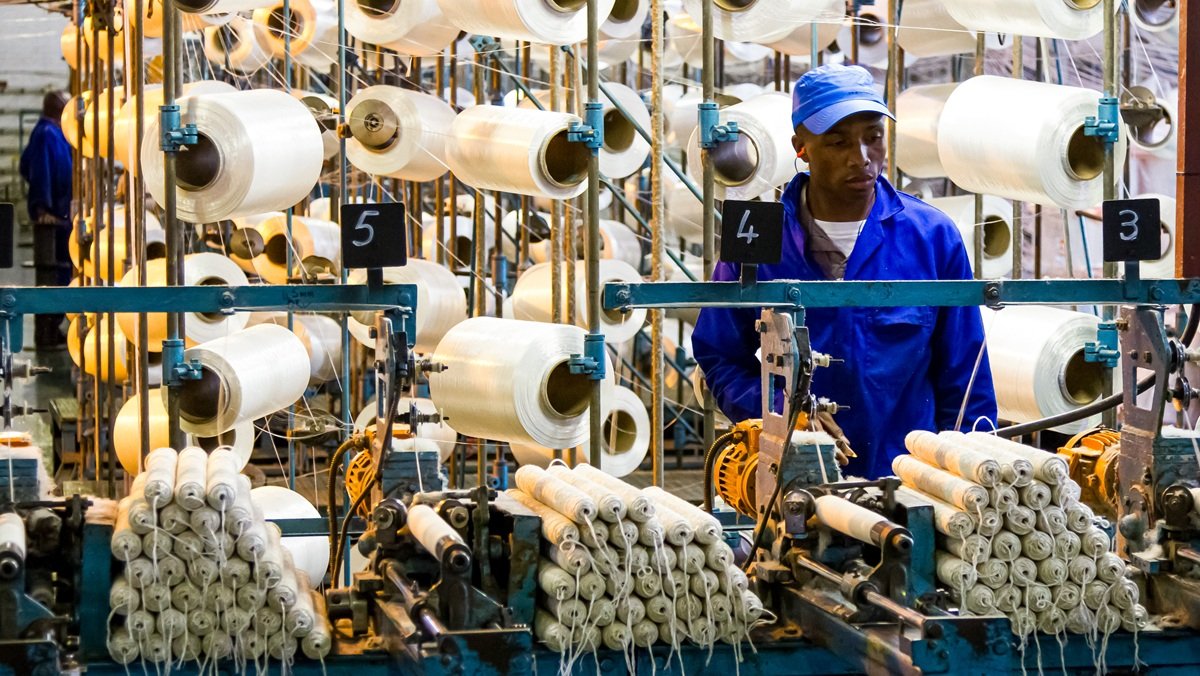
As the Botho Group has documented in its analysis of value chain gaps limiting fashion scalability in Africa, Africa produces roughly 6% of the world’s cotton, yet local apparel producers source more than 90% of their yarn and fabric from outside the continent. This reliance on imports, combined with the infrastructural barriers that compound import costs, drives up production costs and limits the scaling of African fashion. The cotton leaves Africa. The yarn and fabric that come back cost significantly more than the raw material that left. The designer who wants to scale is buying fabric at an imported price in a local currency that has often been weakened against the dollar by the same raw material dependency that created the import reliance in the first place.
The practical consequence is captured in the account of a Lagos-based designer described by the Botho Group: forced to buy fabrics abroad, battling shipping delays, relying on an informal network of small tailors to keep up with production demands. The logical step of hiring a proper production team or using a factory is blocked by further infrastructure failures. Every attempted step toward scale introduces a new constraint rather than solving the previous one.
The fabric supply problem is both a supply chain problem and a value chain problem. It is a supply chain problem because the fabric that African designers need is not reliably available locally at the quality level, colour range, and production volume that export-scale manufacturing requires. It is a value chain problem because Africa is exporting raw material at commodity prices and reimporting the same material as finished fabric at prices that include every processing margin generated outside the continent. As documented throughout this series, the cotton supply chain extracts value at every stage that occurs outside Africa.
As Omiren Styles has established in its analysis of why Africa grows cotton but its designers buy back the value, raw cotton exported at approximately $0.80 per kilogram returns as finished fabric at $3 to $80 per kilogram, depending on the processing level. The designer who sources locally processed fabric where it exists or builds direct relationships with regional mills is not solving a fashion problem. They are addressing a continental industrial policy failure that was not their responsibility to create and is beyond their individual capacity to resolve.
The Power Problem
Power reliability is the manufacturing constraint that appears most consistently in every analysis of African fashion production at scale, and it is the one whose consequences are most immediate and visible in the cost structures of individual businesses.
Irregular power supply remains the overriding constraint in both urban and peri-urban industrial zones across Africa. Systematic interruptions and limited access to energy raise production costs and create supply chain unreliability. Even among Africa’s most industrially developed economies, Nigeria and South Africa, ageing grid infrastructure and fuel importation hold back manufacturing growth. For a fashion manufacturer operating sewing machines, irons, cutting equipment, and finishing tools, a power interruption is not an inconvenience. It is a production stoppage whose per-hour downtime cost is directly added to the price of every garment produced.
The response most African fashion manufacturers have adopted is to use a generator. The generator solves the power problem in the immediate sense: production continues. It solves it at a cost. A diesel generator running during hours when grid power is unavailable adds a fuel cost to every unit produced that a manufacturer in a stable power environment does not incur. That additional per-unit cost reduces the price competitiveness of the finished garment in international markets, where buyers compare the African manufacturer against Asian alternatives whose power costs are embedded in a reliable industrial electricity supply.
The power problem is therefore not just an operational inconvenience. It is a structural tax on African fashion manufacturing competitiveness that is invisible in the garment’s retail price but very visible in the margin the manufacturer can sustain. A brand asking why it cannot find a reliable African factory at competitive prices that meets international quality standards is partly asking why African manufacturers are paying for power twice: once through their electricity bills and once through their generators.
The Logistics and Shipping Problem
As Africa Fashion Tour documented in July 2026, 90% of Africa’s raw materials are still exported in their raw state without any local processing, and for the apparel industry, this produces a specific paradox: Africa produces some of the finest cotton, leather, raffia and plant-based fibres in the world, yet it frequently reimports them in the form of industrially printed fabrics or finished garments manufactured in Asia or Europe. For fashion brands, it is becoming crucial to plan for cross-border distribution and to rely on regional logistics networks capable of managing customs compliance and tracking packages in real time. Port, road and rail infrastructure is expanding, with major highway corridors such as the Lagos-Abidjan route and the development of world-class port terminals such as the Port of Tema in Ghana gradually helping to streamline trade. But the gap between gradual improvement and the infrastructure required for competitive international fashion exports remains wide.
Port congestion, inconsistent customs procedures and fragmented transport networks add time and cost to exports that fast-moving fashion markets cannot easily absorb. A fashion buyer placing an order for next-season delivery has a fixed calendar. A manufacturer whose export shipment is held at a congested port, delayed by inconsistent customs processing, or routed through a fragmented transport network that adds days and costs at each connection point misses the delivery window. In the fashion industry, a missed delivery window is a missed season. A missed season is a lost order relationship. The logistics problem is not just a cost problem. It is a reliability problem whose consequences for buyer confidence compound over seasons.
The individual shipment cost problem that Fashionista reported in January 2026 — that shipping fees for international orders often exceed the production cost of the garment — is the retail-scale expression of the same systemic problem. A designer sending ten units to a buyer in London or New York cannot access the freight consolidation, customs clearance efficiency, and port handling speed available to a manufacturer shipping a full container from Bangladesh or Vietnam. The infrastructure that makes export economical at volume has not been built to reliably serve small-volume fashion exports.
The Capital Problem
Access to capital is the constraint that connects every other infrastructure gap to the individual manufacturer’s capacity to address it.
A manufacturer that cannot access working capital cannot hold fabric stock to respond quickly to buyer orders. A manufacturer who cannot access investment capital cannot buy the machines that would increase production speed, improve quality consistency or reduce labour cost per unit. A manufacturer who cannot access export finance cannot bridge the gap between producing a shipment and receiving payment for it, a gap that can last 60 or 90 days under standard international terms. A manufacturer that cannot access any of these forms of capital is operating at a scale limited by the cash available from the previous order, meaning they cannot grow even when buyer demand would support it.
As Omiren Styles has established in its analysis of what capital can fix and what it cannot in African fashion manufacturing, the barriers to growth in African fashion are structural rather than creative, and capital alone cannot resolve structural barriers whose roots are in infrastructure, policy and supply chain rather than in business capacity. But the absence of capital makes every structural barrier worse. A manufacturer with access to working capital can buy fabric in advance rather than reactively. A manufacturer that can access equipment financing can invest in machinery that makes quality control consistent rather than dependent on operator skill. A manufacturer that can access export finance can commit to buyer delivery timelines, building the confidence that sustains long-term commercial relationships.
The capital access problem in African fashion manufacturing is not only about the availability of financial products. It is about the cost of those products and the collateral requirements that make them inaccessible to most small and medium fashion manufacturers. Interest rates on commercial lending in most African markets are substantially higher than those available to comparable businesses in Asia or Europe, adding a cost of capital to every unit produced that is invisible in the garment but very visible in the margin. Collateral requirements that assume land or property ownership exclude the large majority of fashion manufacturers, who operate from leased premises without the fixed asset base that conventional lending requires.
The Trade Policy Problem

The expiry of the African Growth and Opportunity Act in September 2025, with a one-year extension through December 2026, crystallised a strategic reality that the African fashion manufacturing sector had been navigating for several years: preference-based market access cannot be treated as a stable foundation for long-term industrial planning. AGOA had enabled early manufacturing scale in East and Southern Africa by providing preferential access to the United States market. Its uncertain renewal reinforced the argument that competitiveness must be built on cost, quality, speed, and reliability rather than on trade preferences, because trade preferences can expire, change, or be withdrawn in ways that undermine the investment basis of entire manufacturing sectors.
The African Continental Free Trade Area represents the most significant structural response to the trade policy problem, but the gap between AfCFTA’s potential and its current implementation is still wide. The 2025 midterm review of AfCFTA implementation by the African Union found that countries with coordinated customs regimes and open rules-of-origin enforcement are better positioned to remain competitive under the agreement. The fashion manufacturer that wants to source fabric from a neighbouring country, process it in their own country, and export the finished garment to a third African market is theoretically enabled by the AfCFTA. In practice, the customs procedures, rules-of-origin requirements and logistics bottlenecks that govern real trade across African borders often make that three-country value chain more expensive and more complex than importing from Asia.
The policy problem is therefore not a lack of trade agreements. It is a lack of implementation coherence that translates the framework commitments of AfCFTA into the operational reality of a manufacturer’s daily import, processing and export experience. That gap between framework and operation is where most African fashion manufacturers are stuck: in principle enabled by trade policy, in practice constrained by its uneven implementation.
What Scale Has Actually Looked Like
The manufacturers and brands that have achieved scale in African fashion have done so by solving each infrastructure component individually, at the cost of the management attention, capital and time that systematic infrastructure provision would have freed for design and production.
Egypt and Morocco in North Africa have the most developed export-oriented fashion manufacturing sectors on the continent, based on decades of industrial policy investment in textile infrastructure, power supply, logistics capacity and training. Ethiopia made significant progress through the Hawassa Industrial Park, a purpose-built textile and garment manufacturing zone that provided shared power, logistics, water treatment, and worker-training infrastructure to manufacturers who could not have built these components individually. Ghana, Senegal and Rwanda are making progress through industrial park investments and export processing zones that apply a similar logic: shared infrastructure reduces the per-unit cost burden that each manufacturer would otherwise carry alone.
The lesson from each of these cases is the same: scaling in African fashion manufacturing has occurred when specific infrastructure gaps have been addressed at the infrastructure level, rather than requiring individual manufacturers to solve them with their own capital. The manufacturer who does not need to buy a generator because the industrial park provides reliable power, who does not need to navigate inconsistent customs because the park’s logistics operator manages customs on its behalf, and who can access fabric from a co-located mill rather than importing it from Asia, can compete on a cost and quality basis that the standalone manufacturer navigating each gap individually cannot reach.
As Omiren Styles has established in its analysis of African fashion weeks and the infrastructure they built faster than criticism, the fashion events that built the most durable commercial infrastructure are those that addressed the specific gaps in the commercial ecosystem rather than producing events whose commercial consequences were left to chance. The same principle applies to manufacturing infrastructure: the investment that produces scale is investment in the specific components that block scale, rather than investment in the visibility that is most easily photographed.
What a Scalable African Fashion Manufacturing System Would Require
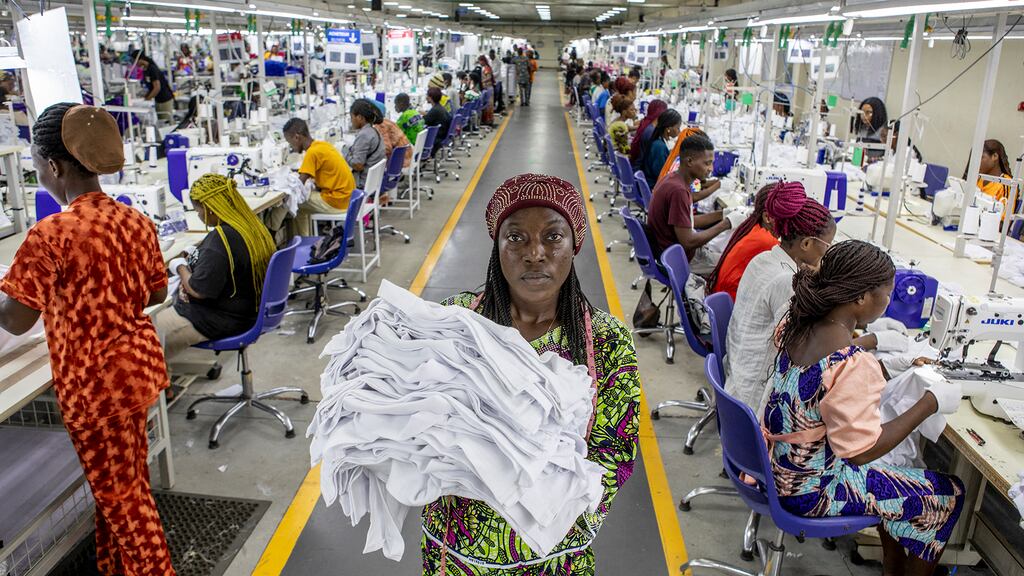
The specific infrastructure components that block scaling from a market stall to an export order are identifiable and addressable. They do not require a solution to every African infrastructure challenge simultaneously. They require targeted investment in the specific components that matter for fashion manufacturing.
Reliable power at a competitive cost is the first requirement. Industrial-scale fashion manufacturing requires a consistent electricity supply. Where grid power is unreliable, the alternatives are generator costs, renewable energy investment or shared industrial power infrastructure. The industrial park model demonstrates that shared power provision is commercially viable at the right scale. Renewable energy investment is increasingly cost-competitive in African markets, and solar-plus-battery solutions are now technically and financially available for mid-scale manufacturing operations, with costs falling year by year.
Fabric supply at competitive quality and cost is the second requirement. The most efficient path is a regional textile manufacturing capacity that can supply fabric from within Africa at costs that eliminate the import premium, shipping costs, and currency risk from the fabric procurement calculation. That capacity exists in parts of the continent, particularly in Egypt, Morocco, and parts of East and West Africa, but it is not yet developed at the scale, range, or accessibility to make it the default sourcing option for African fashion manufacturers across the continent.
Export logistics infrastructure is the third requirement. The specific logistical problems that make African fashion exports expensive and unreliable — port congestion, customs inconsistencies, and fragmented transport networks — are being addressed incrementally through infrastructure investment and AfCFTA implementation. The pace of improvement matters: a buyer who has been disappointed by a late delivery is not waiting for infrastructure to improve before switching to a more reliable supplier. The investment case for faster logistics infrastructure improvement is as much a fashion market opportunity as it is a general economic development case.
Capital access at viable cost is the fourth requirement. The specific instruments needed are working capital lines that allow manufacturers to hold fabric stock; equipment finance that enables investment in machinery with a payback period longer than the cash available from a single order cycle; and export finance that bridges the gap between shipment and payment. Development finance institutions, including the Africa Finance Corporation, Afreximbank, and national development banks, have the mandate and capital to provide these instruments at the scale that African fashion manufacturing requires. The missing element is usually not the capital source but the route from that source to the manufacturer, which requires both the financial product design that fits the manufacturer’s actual business model and the distribution infrastructure that makes the product accessible without a compliance burden that exceeds its value.
The Omiren Argument
Africa’s fashion manufacturing potential is not theoretical. The continent produces the cotton. It has the workforce. It has the design talent that international buyers are purchasing. It has the fashion weeks that build buyer relationships and brand authority, supporting international commercial ambition. What it lacks is the integrated infrastructure that would enable all those assets to function as a single, reliable export manufacturing system.
The distance from market stall to export order is not primarily a question of ambition or creativity. The ambition is present. The creativity has been demonstrated repeatedly. The distance is measured in power-hours lost to generator downtime, fabric costs inflated by import dependency, shipping fees that exceed production costs, capital inaccessible at viable rates and trade policy whose implementation lags behind its framework commitments.
Each of those distances has a specific, addressable solution. Shared industrial power infrastructure. Regional textile manufacturing capacity. Export logistics investment. Development finance at scale. Trade policy implementation that matches its stated ambitions. None of these solutions requires a single actor to solve all of them. Each requires actors with the mandate and the capital to address their specific component, to treat African fashion manufacturing as the industrial priority that its scale, its employment potential, and its position in the global supply chain renegotiation of the mid-2020s warrant.
As Omiren Styles has argued throughout this series, the Global South made fashion and never got credit. Africa’s version of that argument in the manufacturing context is specific: a continent that produces the raw material, holds the craft knowledge, has the design talent and is building the institutional framework to support international fashion competition is being priced out of its own supply chain by infrastructure gaps whose solutions are known and whose costs are affordable relative to the market opportunity they would unlock. The market stall and the export order are closer than the infrastructure gap makes them appear. Closing that gap is the specific investment case that African fashion manufacturing represents.
ALSO READ
- Africa Grows the Cotton. Its Designers Still Buy Back the Value.
- Capital Can Fix Manufacturing. It Cannot Fix the Credibility Gap African Designers Face.
- African Fashion Weeks Built Networks Faster Than Criticism
- Visibility Is Not Market Power: Why Global Attention Still Fails Independent African Fashion Brands
Frequently Asked Questions
What are the main barriers to scaling fashion manufacturing in Africa?
As documented across multiple industry analyses, the main barriers are fabric supply dependency, with African apparel producers sourcing more than 90% of yarn and fabric from outside the continent; unreliable power, with irregular electricity supply requiring generator use that adds a structural cost premium to every unit produced; logistics and shipping costs, with international shipping fees often exceeding production costs for African fashion brands; capital access at viable rates, with commercial lending costs substantially higher than those available to comparable manufacturers in Asia; and trade policy uncertainty, with the expiry of AGOA in September 2025 reinforcing that preference-based market access is not a stable foundation for long-term manufacturing investment. Each barrier is specific and addressable. None has been systematically addressed at continental scale.
Why does shipping from Africa often cost more than the garment itself?
As Fashionista reported in January 2026, for many African fashion brands, the shipping fee for an international order exceeds the garment’s production cost. This reflects several compounding factors. Small-volume shipments cannot access the freight consolidation, customs clearance efficiency and port handling terms available to manufacturers sending full container loads. Port congestion and inconsistent customs procedures add time and cost at the export end. Air freight, the only viable option for time-sensitive fashion deliveries from many African cities, is priced at rates that make small-volume fashion exports uneconomical. The result is that a garment whose production cost is competitive with Asian alternatives arrives at international buyers at a landed price that is not competitive, because the logistics cost between production and delivery is distributed across a small unit volume.
What is the AfCFTA and how does it affect African fashion manufacturing?
The African Continental Free Trade Area is a framework agreement among 54 African countries designed to reduce tariffs, harmonise customs procedures and build regional value chains. For fashion manufacturing, it creates the framework for a manufacturer to source fabric from a regional supplier, process it domestically, and export the finished garment to another African market without the tariffs and customs barriers that currently make intra-African trade more expensive than importing from Asia. In practice, the 2025 AfCFTA midterm review found that countries with coordinated customs regimes and open rules-of-origin enforcement are better positioned to remain competitive under the agreement, suggesting that the implementation gap between AfCFTA’s framework commitments and its operational reality remains significant. The fashion manufacturer needs the operational reality, not the framework commitment.
Which African countries have made the most progress in scaling up fashion manufacturing?
Egypt and Morocco in North Africa have the most developed export-oriented fashion manufacturing sectors on the continent, built on decades of investment in textile infrastructure, power supply, logistics capacity and training. Ethiopia made significant progress through the Hawassa Industrial Park, a purpose-built textile and garment manufacturing zone that collectively addressed shared infrastructure gaps. Ghana, Senegal, and Rwanda are making progress through investments in industrial parks and export processing zones. West Africa is rapidly transitioning from raw cotton exports to value-added fabric and apparel manufacturing, particularly in Benin and Togo. The common factor in each case is targeted infrastructure investment that addressed the specific gaps blocking manufacturing scale rather than general investment that left manufacturers to solve each gap individually.
What would a scalable African fashion export manufacturing system require?
A scalable African fashion export manufacturing system requires four specific infrastructure components addressed at the infrastructure level rather than by individual manufacturers. Reliable power at a competitive cost, either through grid improvements, shared industrial power provision, or renewable energy investment. Regional fabric supply at competitive quality and cost through the development of textile manufacturing capacity in Africa, removing the import premium from fabric procurement. Export logistics infrastructure that reduces port congestion, customs inconsistency and fragmented transport network costs that currently make African fashion export expensive and unreliable. And capital access at viable rates through working capital lines, equipment finance, and export finance instruments, provided by development finance institutions with the mandate and capital to reach fashion manufacturers at the required scale. Each component has known solutions. None requires a solution to every African infrastructure challenge simultaneously.
EXPLORE MORE
Read the full Industry and Distribution, Retail and Value Capture sections at Omiren Styles for ongoing analysis of African fashion manufacturing infrastructure, export development, and the specific investment conditions that would enable African designers to move from market stalls to international export orders. Discover travel and heritage intelligence across Africa at Rex Clarke Adventures.