
Before there is a garment, there is a question.
Can this be made? Will it suit me? How long will it take? Will it arrive before Saturday? These are the questions that land in the inbox of every independent Nigerian fashion brand, and they separate the brands that last from the ones that simply post. At STZ by Tunchi, those questions aren’t an afterthought. It is the product. The brand’s public face lives on Instagram at @stz_by_tunchi. Still, the real work happens in direct messages, WhatsApp exchanges, measurement conversations, and honest discussions about what a client’s budget, body, and occasion actually require. That is where fashion becomes a service. That is where STZ by Tunchi operates.
Nigeria’s occasionwear economy is one of the world’s most demanding fashion markets. Weddings, naming ceremonies, birthdays, graduations, religious celebrations, professional events, dinners, and major social gatherings all create a specific, non-negotiable deadline: the event will happen, with or without the garment. The client is not browsing. They have a date. They have a venue. They have a family watching. They have a photographer. They need a look that works for all of those things simultaneously — and they need it to arrive on time.
In a market where the event is always more important than the trend, the most valuable thing a fashion brand can offer is not the most dramatic silhouette. It is the certainty that the garment will be there, that it will fit and that the client will feel like herself when she wears it.
STZ by Tunchi understands this. The brand isn’t chasing editorial aesthetics or building collections for a buyer months away. It is building for the woman with a specific event in three weeks and a specific question that needs a specific answer. That clarity of purpose is not a limitation. It is a discipline. And in the Nigerian occasionwear market, it is exactly the discipline that separates a brand with a following from a brand with a business.
STZ by Tunchi is building a Nigerian fashion brand not through content alone but through the conversation that follows it. This introduces the brand and the approach behind it.
The Conversation Before the Commission
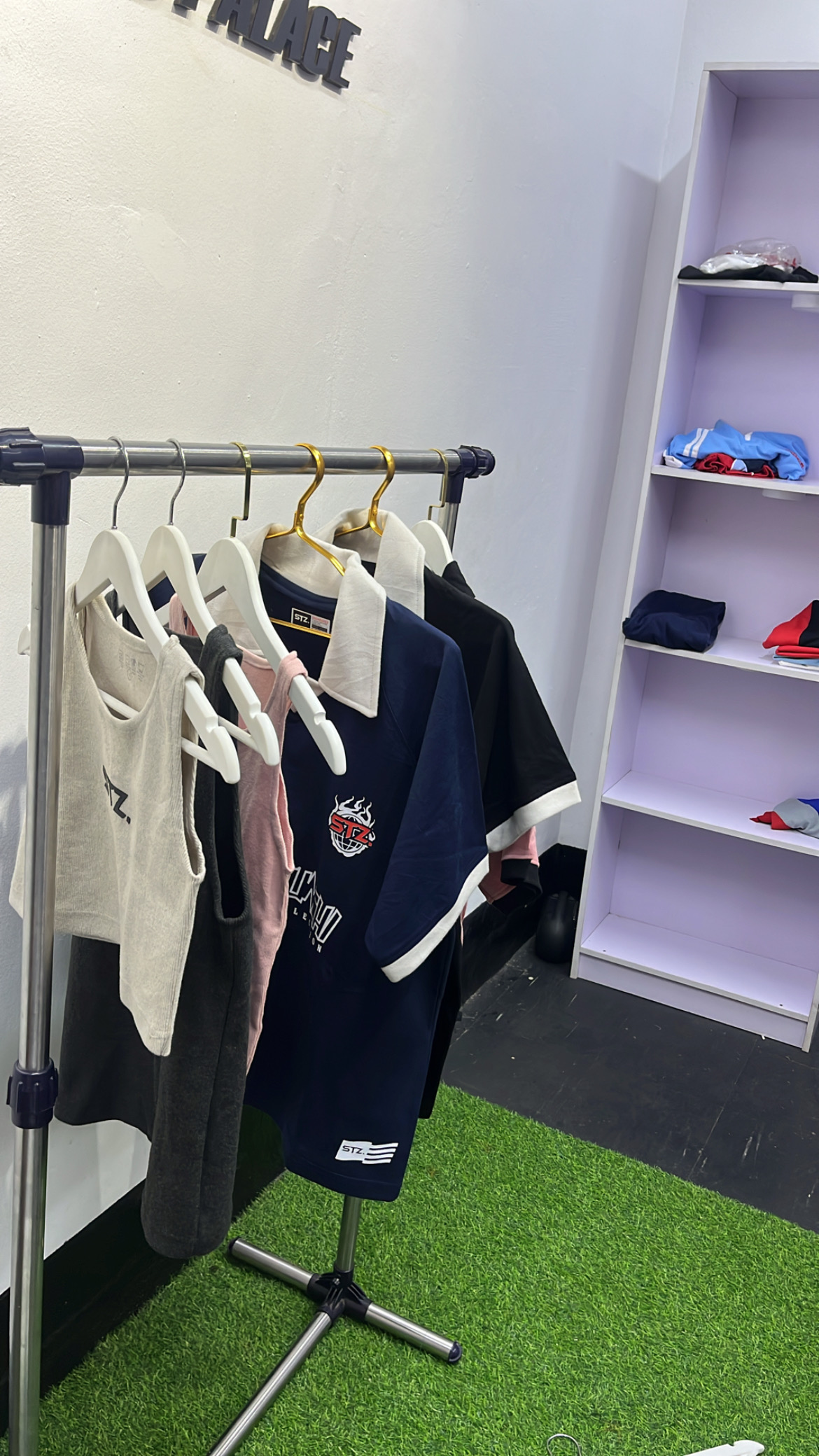
Most fashion brands are built to be discovered. STZ by Tunchi is built to be trusted.
Discovery and trust are different things. Discovery happens through a scroll, a share, or a tag at an event. Trust is built across an exchange: the client who asks whether the designer genuinely understands the brief, who wants to know whether the quote includes the fabric or just the labour, and who needs to confirm that an alteration is included in the price before she pays a deposit. Trust is built when those questions receive clear, honest, specific answers rather than vague assurances.
The direct-contact model that STZ by Tunchi operates is not simply a way of taking orders. It is the brand’s way of building the client relationship that Nigerian occasion wear requires. A woman commissioning a garment for her child’s naming ceremony is not making a retail purchase. She is placing her family’s most important moment in the hands of someone whose skill, judgement, and reliability she trusts. That relationship can’t be built through a caption. It has to be built through a conversation.
Omiren Styles has established, in its analysis of luxury beyond price in African fashion, that luxury in the made-to-order context is not about exclusivity or price alone. It is about reducing the client’s risk as the price increases. The client who can speak directly to the person making her garment, receive honest information about what is possible and what is not, and stay informed throughout the production process is experiencing a form of luxury that a more expensive brand with a slower communication system cannot offer. STZ by Tunchi’s direct-contact model positions it precisely in that space: personal, responsive and accountable.
What the Brand Actually Makes

STZ by Tunchi produces made-to-order occasionwear for women in Nigeria. The brand is event-led in the most practical sense: the garment begins with the occasion, and every decision about silhouette, fabric, embellishment and finish is made in relation to what the event requires.
This is a different starting point from most fashion design. A designer who begins with an aesthetic vision and builds garments around it asks the client to come to the collection. STZ by Tunchi’s approach inverts this: the client comes with her event, her body, her budget and her brief, and the brand builds the garment that serves all four. That requires a different kind of design intelligence. Not more or less than aesthetic vision, but different: the ability to listen, to translate, to ask the right questions and to know when a client’s reference image needs to be adapted rather than replicated.
The occasions the brand serves span the full range of Nigerian social life. Wedding guests who need distinction without competing with the host. Birthday celebrants who need confidence and a silhouette worth photographing. Women attending religious gatherings who need formality, modesty and a fabric that suits the setting. Professionals who need authority and polish without sacrificing personality. Diaspora clients who need a garment that can survive travel, temperature changes, and multiple social settings in a single trip. Each is a different brief, and the brand’s ability to meet each one defines its range.
The fabric and embellishment choices follow the same logic. Quality fabric that performs across a long event, travels without wrinkling, sits correctly in a photograph, and feels comfortable through a celebration lasting several hours: these are not secondary considerations. They are part of the brief. A garment that looks good in a flat lay and performs badly on a dance floor has solved the wrong problem.
Omiren Styles has documented, in its analysis of the economics of made-to-measure tailoring, that the made-to-order model is structurally more sustainable and more client-centred than any industrial alternative. Still, it places specific demands on the brand’s ability to manage time, capacity and expectation. Brands that grow within this model understand their production capacity well enough to protect it. Saying yes to every order is not growth. Understanding which orders you can serve to the required standard within the available time is.
Fit Is the Argument
The final proof of a made-to-order garment is not how it looks on a hanger or in a reference image. It is how it makes the client feel when she wears it.
Fit is where that proof is established, and fit is more complex than measurements. A client’s measurements are the starting point. What they do not capture is how she wants to move through the event: whether she prefers her waist defined or released, whether her arms need to be free for long hours of greeting, whether the hem has to clear the specific shoes she has already chosen, and whether the neckline needs to sit securely through movement and dance. A garment built from measurements alone may fit technically and feel wrong. A garment built from a conversation about the client’s body and the event she is attending has a better chance of making her feel exactly like herself.
That is why the fitting stage isn’t a formality in the STZ by Tunchi process. It is the moment the brand proves that it has listened. The client who arrives at a fitting and finds that the garment reflects the brief she gave, that the adjustments she requested have been incorporated and that the silhouette works for the body standing in it rather than for a generic reference, is experiencing the core of what makes a made-to-order fashion brand worth the investment. That experience, repeated across clients and occasions, is how the brand builds the reputation that no amount of social media content can manufacture.
Omiren Styles has established, in its analysis of the Lagos fashion market and its fastest-growing categories, that bespoke tailoring is one of the three fastest-growing categories in the Lagos market precisely because clients who have experienced well-executed made-to-order work understand the difference between a garment built for their body and occasion and one that happens to fit well enough. STZ by Tunchi operates in a growing category because clients have raised their expectations.
The Infrastructure Behind the Image

Social media has permanently changed the discovery phase of fashion. A look shared at a wedding, tagged in a caption or posted in a reel can reach thousands of potential clients within hours. For an independent Nigerian fashion brand, this is an extraordinary commercial opportunity. It is also a test.
The brand that receives twenty enquiries after a popular post needs to be able to answer all twenty clearly, distinguish between what it can deliver and what it cannot, give honest quotes, protect its production calendar and manage the expectations of clients who have seen a finished look and assume it can be delivered by their deadline. The brands that fail this test are not those that lack talent. They are those that have built their visibility faster than their service infrastructure.
STZ by Tunchi’s direct-contact model addresses this challenge at its root. By building the client relationship through conversation rather than through broadcast, the brand creates the conditions for honest expectation management. The client who speaks to the brand before placing a deposit understands what she is commissioning. The brand that has spoken to the client before taking the order understands what it has committed to. That alignment, established at the beginning of the process, is what makes the rest of the production chain function.
The production chain behind a single garment involves more people than the finished image suggests. A fabric supplier. A cutter and pattern maker. A tailor or machinist. A specialist in embellishment, beadwork or finishing. A fitter. A dispatch arrangement. Each link in that chain depends on the previous one running to schedule. The brand that manages all those relationships well and has clear timelines with its suppliers and clear commitments to its clients delivers a service that social media makes visible but cannot provide itself.
Omiren Styles has documented, in its analysis of what buyers need from an independent fashion label, that the quality that most consistently determines whether an independent label can sustain professional relationships is not the strength of its designs but the reliability of its delivery. The private client and the trade buyer ask the same underlying question: can this brand keep its word? STZ by Tunchi is building its reputation on the answer, one commission at a time.
Building for the Next Client, Not Just the Next Post

The most durable asset a Nigerian fashion brand can build is not a large following. It is a client who comes back.
A client who commissioned a garment for one event and felt the experience was worth what she paid, that the brand understood her brief, the garment fit her body, it arrived when promised, and she felt herself genuinely in it,will return for the next event. She will send her sister. She will share the images and name the brand when her friends ask. She will become the kind of evidence that no advertisement can purchase: a real person who experienced the work and chose to tell someone about it.
This is the commercial logic behind STZ by Tunchi’s approach. The conversation is not just a way to take an order. It begins a relationship whose value compounds across events. A client who has been dressed for a wedding, a birthday, and a professional occasion by the same brand has a relationship with that brand worth far more than the revenue from any one of those commissions. She is the brand’s most credible form of marketing, and her loyalty is built through the consistency of the service she has experienced.
That consistency requires discipline. It requires knowing when the calendar is full. It requires being honest when a deadline cannot be met rather than promising what cannot be delivered. It requires clear, direct communication that turns a client’s uncertainty into confidence. These are not soft qualities. They are the operational decisions that determine whether a fashion brand remains an independent label or becomes a lasting business.
Omiren Styles has established, in its analysis of visibility versus market power in African fashion, that attention and commercial durability are different things. The brands that convert attention into lasting businesses have built the systems to serve the clients that attention delivers. STZ by Tuchi is building those systems through every conversation it has with every client. That is how a Nigerian fashion brand becomes more than a feed. It becomes a name that people trust.
Contact STZ by Tuchi
STZ by Tunchi is based in Nigeria and takes commissions for weddings, celebrations, religious occasions, professional events and diaspora dressing. The brand operates through a direct-contact model. Enquiries are welcomed through the following channels:
Instagram: @stz_by_tuchi
WhatsApp / Telephone: +234 813 345 3979
Before placing an order, clients should confirm garment category, availability, pricing, deposit requirements, measurement process, lead time, delivery method and alteration policy directly with the brand.
ALSO READ:
- The Economics of Made-to-Measure: What Tailoring Businesses Need to Scale Without Losing Fit
- Lagos Fashion Market Report 2026: Retail, Price Points and Growth Categories
- How Buyers Assess an Independent Label: Range, Margin, Delivery, Fit and Retail Readiness
- Visibility Is Not Market Power: Why Global Attention Still Fails Independent African Fashion Brands
EXPLORE MORE
Read the full Industry and The Field sections at Omiren Styles for ongoing profiles of Nigerian fashion brands, occasionwear economics and the founders building independent labels in Africa’s fastest-growing fashion market. Discover travel and heritage intelligence across Nigeria and West Africa at Rex Clarke Adventures.