Menu
  • AFRICA
    • African Fashion
    • African Designers
    • Textiles & Craft
    • Heritage Clothing
    • Made in Africa
    • Regional Style
  • DIASPORA
    • Diaspora Voices
    • Diaspora Connects
    • UK Scene
    • US Scene
    • Caribbean Diaspora
    • Afro-Latino Identity
    • Migration & Identity
  • CULTURE
    • Style & Identity
    • Ceremony & Ritual
    • Art & Music
    • Cultural Inspirations
    • Black Culture
    • Heritage Stories
  • FASHION
    • Trends
    • Street Style
    • Runway
    • Sustainable Fashion
    • Tailoring
    • Luxury Fashion
  • INDUSTRY
    • Editorial Intelligence
    • Market Trends
    • Brand Strategy
    • Retail & Commerce
    • Partnerships
    • Reports
    • Insights
  • BEAUTY
    • Skincare
    • Makeup
    • Hair & Hairstyle
    • Fragrance
    • Beauty Traditions
    • Natural Beauty
  • MEN
    • Men’s Style
    • Grooming Traditions
    • Traditional & Heritage
    • The Modern African Man
    • Menswear Designers
  • WOMEN
    • Women’s Style
    • Evening Glam
    • Workwear & Professional
    • Streetwear for Women
    • Accessories & Bags
    • Bridal
  • NEWS
    • Cover Stories
    • Fashion Weeks
    • Opinion & Commentary
    • Style Icons
    • Rising Stars
  • DIRECTORY
    • Designers
    • Brands
    • Boutiques
    • Stylists
    • Models
    • Photographers
    • Creative Teams
    • Events
    • Production
    • Materials & Suppliers
Omiren Magazine Partner With Us Advertise Style Index
Subscribe
OMIREN STYLES OMIREN STYLES

Fashion · Culture · Identity

OMIREN STYLES OMIREN STYLES OMIREN STYLES OMIREN STYLES
  • AFRICA
    • African Fashion
    • African Designers
    • Textiles & Craft
    • Heritage Clothing
    • Made in Africa
    • Regional Style
  • DIASPORA
    • Diaspora Voices
    • Diaspora Connects
    • UK Scene
    • US Scene
    • Caribbean Diaspora
    • Afro-Latino Identity
    • Migration & Identity
  • CULTURE
    • Style & Identity
    • Ceremony & Ritual
    • Art & Music
    • Cultural Inspirations
    • Black Culture
    • Heritage Stories
  • FASHION
    • Trends
    • Street Style
    • Runway
    • Sustainable Fashion
    • Tailoring
    • Luxury Fashion
  • INDUSTRY
    • Editorial Intelligence
    • Market Trends
    • Brand Strategy
    • Retail & Commerce
    • Partnerships
    • Reports
    • Insights
  • BEAUTY
    • Skincare
    • Makeup
    • Hair & Hairstyle
    • Fragrance
    • Beauty Traditions
    • Natural Beauty
  • MEN
    • Men’s Style
    • Grooming Traditions
    • Traditional & Heritage
    • The Modern African Man
    • Menswear Designers
  • WOMEN
    • Women’s Style
    • Evening Glam
    • Workwear & Professional
    • Streetwear for Women
    • Accessories & Bags
    • Bridal
  • NEWS
    • Cover Stories
    • Fashion Weeks
    • Opinion & Commentary
    • Style Icons
    • Rising Stars
  • DIRECTORY
    • Designers
    • Brands
    • Boutiques
    • Stylists
    • Models
    • Photographers
    • Creative Teams
    • Events
    • Production
    • Materials & Suppliers
  • Style & Identity

Mozambican Women’s Capulana Wrap Styling for Modern Wardrobes

  • Philip Sifon
  • August 27, 2026
Mozambican Women's Capulana Wrap Styling for Modern Wardrobes
Total
0
Shares
0
0
0

A capulana can change its appearance without changing its form. Wrapped around the waist, draped over the shoulders or arranged as a head covering, the same rectangular cloth can create a very different silhouette depending on how it is worn.

That flexibility is particularly visible in women’s dress across Mozambique, where documented practices include both everyday and occasion-specific uses of capulana. The cloth is not limited to one prescribed arrangement, nor does it have to be cut and sewn to become part of a contemporary wardrobe.

For women interested in Mozambican capulana wrap styling, that makes the wrap itself worth looking at as a styling element. Its placement, proportion and relationship with other pieces can change the character of an outfit while keeping the cloth in its wrapped form.

Discover how Mozambican women wear the capulana, from traditional wrapping styles to contemporary ways of incorporating the cloth into modern wardrobes.

Capulana in Mozambican Women’s Dress
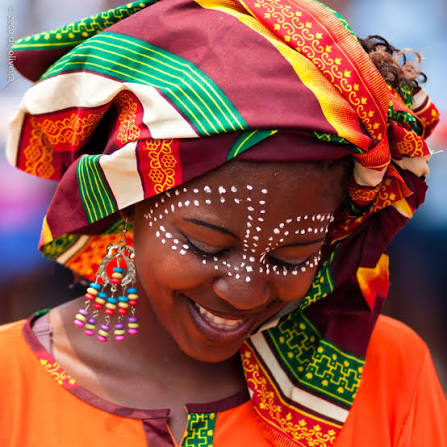
An image showing a lady wearing Mozambican capulana head wrap
African Fashion Design

Capulana forms part of women’s dress in different parts of Mozambique, with documented uses ranging from everyday clothing to dress for particular social occasions. 

In Katembe, south of Maputo, women have been documented wearing capulanas in daily life as well as for specific events, while research on Makhuwa communities in northern Mozambique describes the cloth within established forms of women’s dress.

The context can also influence whether women wear the cloth individually or as part of coordinated dress. 

For example, women and girls have worn matching capulanas for National Women’s Day in Katembe, giving the cloth a role in collective public dress.

These examples provide useful context for understanding Mozambican capulana without reducing it to a single national style. The way women arrange and combine the cloth can differ according to local practice and the setting, which is why the actual wearing arrangements are more revealing than treating the capulana as one fixed type of outfit.

Ways Mozambican Women Wrap and Wear Capulana
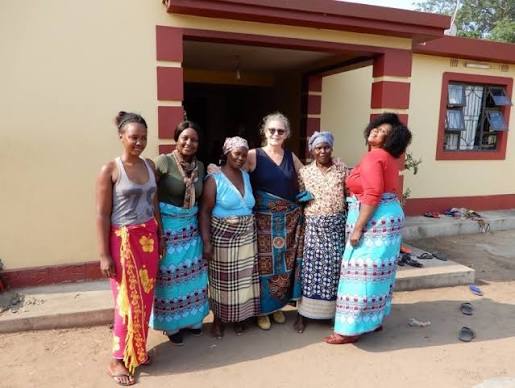
An image showing women wearing Mozambican Capulana Wrap around the waist

One documented arrangement is to tie the capulana around the waist as a lower-body wrapper. In Nampula, women also use the cloth as a head covering or across the shoulders, including a form known as the nsunki. The position of the fabric consequently changes how it functions within the outfit.

Southern Mozambican dress provides another example. The mukume ni vemba arrangement uses two pieces, with the larger mukume tied around the waist and the smaller vemba worn over the shoulders.

Rather than treating the capulana as a single layer, this arrangement uses separate pieces to create a more complete combination of lower- and upper-body coverings.

These documented practices show that capulana wrap styling is not one fixed technique.

But the cloth can be positioned in different areas of the body and combined with other pieces, producing distinct silhouettes while retaining the fundamental flexibility of the wrap.

Building a Modern Outfit Around a Capulana Wrap
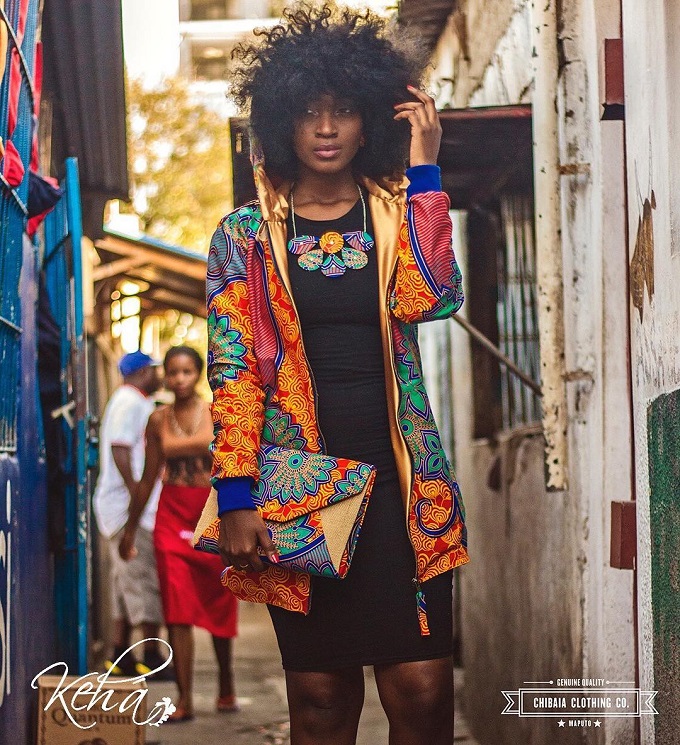
An image showing a lady wearing a jacket made from Mozambique Capulana Cloth

A capulana wrap can sit comfortably within a contemporary wardrobe without losing the visual character of the cloth. The easiest starting point is to let the wrap provide the print and colour, then use modern wardrobe staples to create the rest of the outfit.

Pair the wrap with a simpler base

When the capulana has a bold print, a plain top can create balance without competing for attention. A fitted T-shirt gives the wrap a relaxed feel, while a simple blouse can take the same combination towards a smarter daytime look.

Rather than trying to reproduce every colour in the print elsewhere, one quiet shade from the fabric is usually enough to connect the pieces.

Bring in contemporary tailoring

Tailored pieces can give a wrapped capulana a more defined silhouette. A button-down shirt, structured blouse or fitted jacket creates a contrast between clean lines and the movement of the cloth. 

This approach is particularly useful when the aim is to take a familiar wrap into a work-adjacent, lunch or other polished setting.

Work with layers and proportion

The length and volume of the wrap should also influence what goes underneath or over it. A fuller wrap benefits from a relatively streamlined top, while a more restrained arrangement leaves room for an additional layer.

Trousers can be incorporated as part of a contemporary outfit when the proportions work, particularly where the wrap is shorter or worn in a way that leaves the legs visible.

Let the capulana lead

Finally, accessories should support rather than overwhelm the cloth. Simple jewellery, an understated bag and uncomplicated footwear can keep attention on the print while making the outfit feel complete.

The same principle applies to additional patterns: when the capulana is already visually strong, simpler surrounding pieces generally create a more coherent result.

The goal is not to reproduce a single traditional outfit, but to work with the wrap’s colour, drape and proportion alongside pieces a woman already wears.

The Omiren Argument

The usual definition of a modern wardrobe places value on construction: a cloth becomes contemporary when it is cut into a new silhouette or incorporated into a recognisably modern garment. But the capulana wrap complicates that definition because its styling possibilities do not depend on construction alone.

Across the documented practices explored here, variation comes through placement, layering and the relationship between pieces of cloth. That means the wrapped form itself can produce different silhouettes without first being converted into a sewn garment.

The distinction is important. Contemporary styling does not have to mean replacing an established way of wearing capulana with something else. It can mean working more deliberately with the form that is already there, using proportion, drape and surrounding garments to determine how the wrap functions within a modern outfit.

For women’s wardrobes, that makes the capulana wrap more than an alternative to a sewn capulana garment. It is a styling form in its own right.

Also Read:

  • Mozambique Capulana Cloth: From Everyday Fabric to Modern Silhouettes
  • Top 5 Wax Print Styles for Baoulé Women in 2026
  • Soft Power Dressing: African Women Turning Wardrobes Into Strategy

Frequently Asked Questions

  • What is a Mozambican capulana wrap?

A Mozambican capulana wrap is a way of wearing a rectangular piece of capulana cloth by arranging or tying it around the body rather than cutting it into a sewn garment. Women in different parts of Mozambique use capulana in arrangements that can include waist wrapping, shoulder draping and head covering.

  • How do you wear a capulana as a wrap?

There is no single method. Documented Mozambican dress practices include tying the cloth around the waist, draping it over the shoulders and using it as a head covering. Some regional traditions also involve wearing more than one capulana at a time, with individual pieces serving different parts of the outfit.

  • Can you wear a capulana wrap with modern clothes?

Yes. For contemporary styling, a capulana wrap can be paired with wardrobe staples such as a plain top, blouse or tailored shirt. These combinations should be understood as modern styling approaches rather than presented as traditional Mozambican outfit formulas.

  • How can you style a patterned capulana without overwhelming an outfit?

Allow the capulana to provide most of the visual interest and keep the surrounding pieces relatively simple. A plain top, restrained accessories and uncomplicated footwear can create balance, while choosing a subtle colour from the print can help connect the outfit without excessive matching.

  • Is wearing a capulana wrap considered traditional or modern fashion?

It can be both, depending on the context. Wrapping capulana is an established part of women’s dress practices in Mozambique, while combining the wrapped cloth with contemporary wardrobe pieces is a modern styling approach. The two do not have to be treated as opposites: the traditional wrapped form can remain intact while the surrounding outfit changes.

Post Views: 149
Total
0
Shares
Share 0
Tweet 0
Pin it 0
Related Topics
  • African wraps
  • Capulana styling
  • Mozambican fashion
  • traditional dress
Avatar photo
Philip Sifon

philipsifon99@gmail.com

You May Also Like
Luanda's Suit Is Not a Colonial Leftover: How Angolan Men Made Tailoring Their Own
View Post
  • Style & Identity

Luanda’s Suit Is Not a Colonial Leftover: How Angolan Men Made Tailoring Their Own

  • Fathia Olasupo
  • August 28, 2026
São Toméan Dress Is Not Fusion: It Is a Creole Language of Layer, Labour and Memory
View Post
  • Style & Identity

São Toméan Dress Is Not Fusion: It Is a Creole Language of Layer, Labour and Memory

  • Faith Olabode
  • August 27, 2026
Candombe drummers in coordinated shirts, vests, scarves, and hats playing drums during Montevideo Llamada.
View Post
  • Style & Identity

The Llamada Is a Wardrobe of Memory: How Candombe Dress Makes Afro-Uruguay Visible

  • Faith Olabode
  • August 27, 2026
The Shiromani as National Dress: Comorian Wedding Attire and the Politics of Oceanic Identity
View Post
  • Style & Identity

The Shiromani as National Dress: Comorian Wedding Attire and the Politics of Oceanic Identity

  • Fathia Olasupo
  • August 24, 2026
Black Consciousness Made Dress Political: Steve Biko, the Afro Look and Apartheid South Africa
View Post
  • Style & Identity

Black Consciousness Made Dress Political: Steve Biko, the Afro Look and Apartheid South Africa

  • Faith Olabode
  • August 17, 2026
Queen Nzinga's Battle Dress: Royal Power and Angolan Resistance
View Post
  • Style & Identity

Queen Nzinga’s Battle Dress: Royal Power and Angolan Resistance

  • Philip Sifon
  • August 14, 2026
Dakar Is Building Its Own Luxury Fashion System
View Post
  • Style & Identity

Dakar Is Building Its Own Luxury Fashion System

  • Peace Vera
  • August 12, 2026
Marcus Garvey's UNIA Uniforms and the Politics of Black Power Dressing
View Post
  • Style & Identity

Marcus Garvey’s UNIA Uniforms and the Politics of Black Power Dressing

  • Philip Sifon
  • August 11, 2026
The Omiren Argument

African fashion and culture are not emerging. They are foundational. We document, interpret, and argue for the full cultural weight of African and diaspora dress. With precision. Without apology.

Omiren Styles Fashion · Culture · Identity

All 54 African Nations
Caribbean · Afro-Latin America
The Global Diaspora

Platform

  • About Omiren Styles
  • Our Vision
  • Our Mission
  • Editorial Pillars
  • Editorial Policy
  • The Omiren Collective
  • Campus Style Initiative
  • Sustainable Style
  • Social Impact & Advocacy
  • Investor Relations

Contribute

  • Write for Omiren Styles
  • Submit Creative Work
  • Join the Omiren Collective
  • Campus Initiative
Contact
contact@omirenstyles.com
Our Reach

Africa — All 54 Nations
Caribbean
Afro-Latin America
Global Diaspora

African fashion intelligence, in your inbox.

Editorial features, designer profiles, cultural commentary. No noise.

© 2026 Omiren Styles — Rex Clarke Global Ventures Limited. All rights reserved.
  • Privacy Policy
  • Editorial Policy
  • Terms of Use
  • Accessibility
Africa · Caribbean · Diaspora
The Omiren Argument

African fashion and culture are not emerging. They are foundational. We document, interpret, and argue for the full cultural weight of African and diaspora dress. With precision. Without apology.

Omiren Styles Fashion · Culture · Identity
  • About Omiren Styles
  • Our Vision
  • Our Mission
  • Editorial Pillars
  • Editorial Policy
  • The Omiren Collective
  • Campus Style Initiative
  • Sustainable Style
  • Social Impact & Advocacy
  • Investor Relations
  • Write for Omiren Styles
  • Submit Creative Work
  • Join the Omiren Collective
  • Campus Initiative
Contact contact@omirenstyles.com

All 54 African Nations · Caribbean
Afro-Latin America · Global Diaspora

African fashion intelligence, in your inbox.

Editorial features, designer profiles, cultural commentary. No noise.

© 2026 Omiren Styles
Rex Clarke Global Ventures Limited.
All rights reserved.

  • Privacy Policy
  • Editorial Policy
  • Terms of Use
  • Accessibility
Africa · Caribbean · Diaspora

Input your search keywords and press Enter.

Newsletter Subscribe

The Omiren Style Index

The reference directory for African, Caribbean and Afro-Latin fashion. New entries, taxonomy updates and intelligence signals — once a month. No noise.

.newsletter-form{
max-width:500px;
margin:auto;
text-align:center;
padding:30px;
}

.newsletter-form h3{
margin-bottom:10px;
font-size:28px;
}

.newsletter-form p{
margin-bottom:20px;
color:#666;
}

.newsletter-form input{
width:100%;
padding:14px 18px;
border:1px solid #ddd;
margin-bottom:15px;
border-radius:4px;
}

.newsletter-form button{
width:100%;
padding:14px;
background:#000;
color:#fff;
border:none;
cursor:pointer;
text-transform:uppercase;
letter-spacing:1px;
}