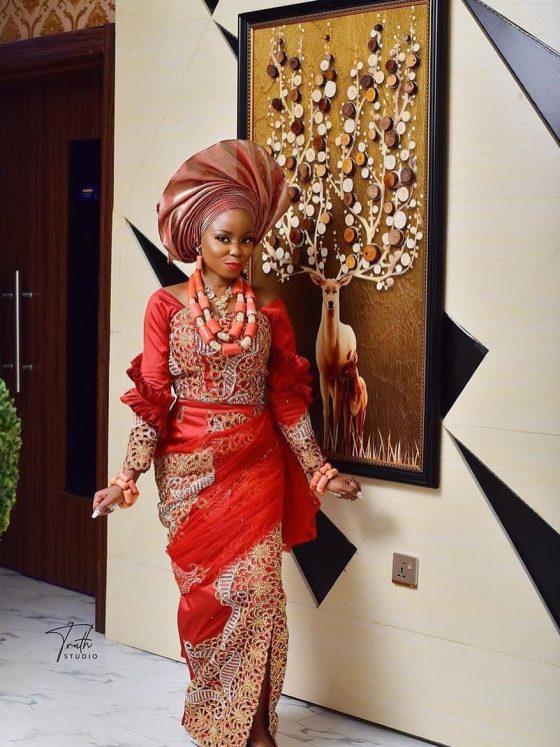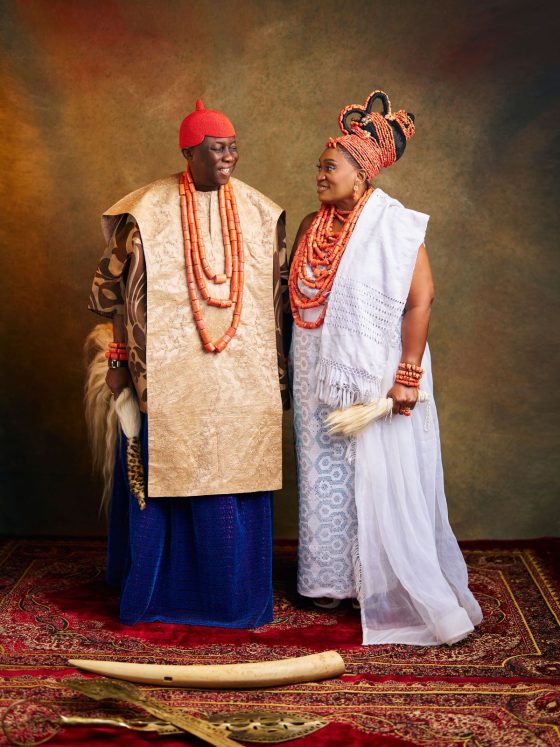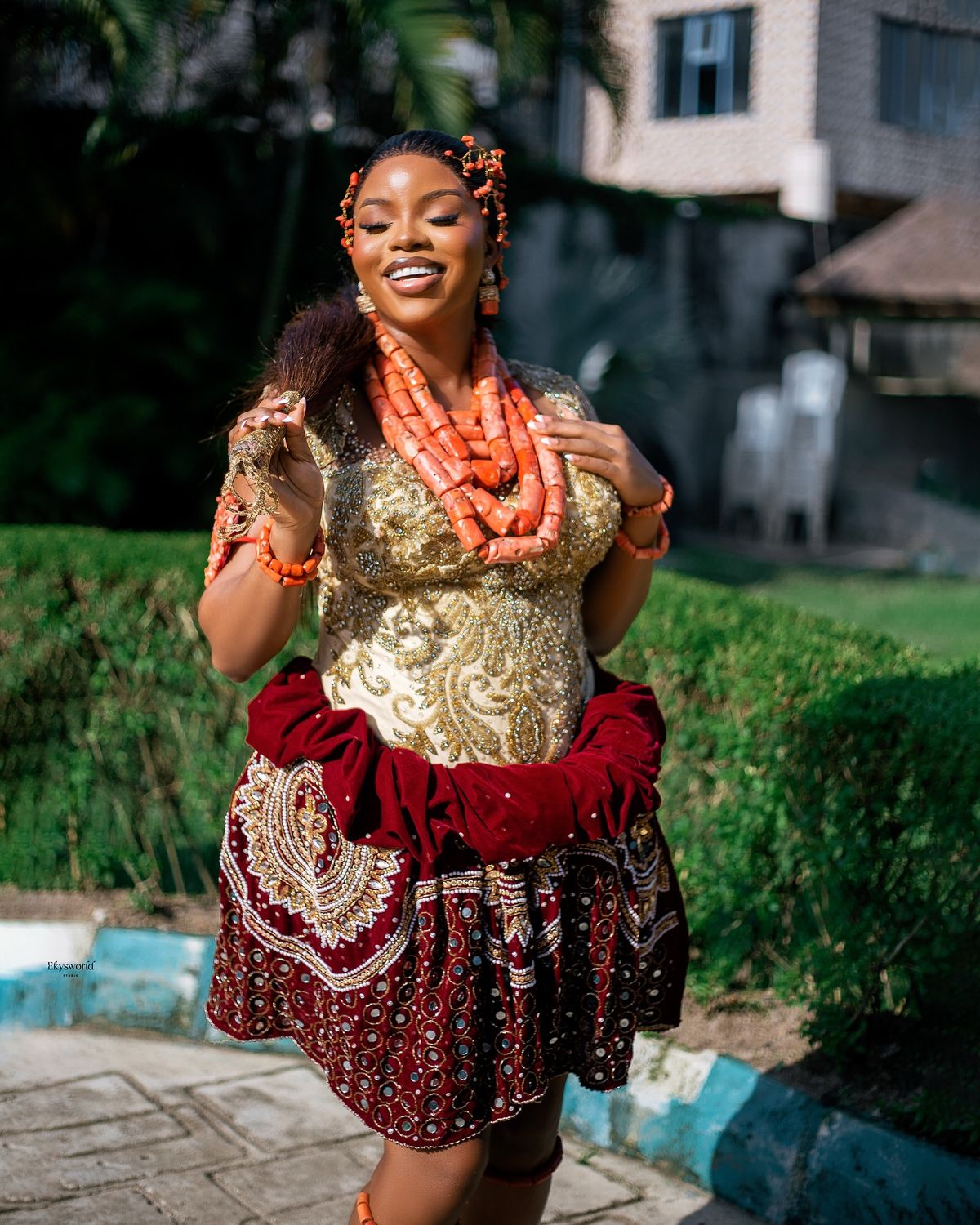
Among the Kalabari of the Niger Delta in Rivers State, Nigeria, a woman’s dress is not primarily a fashion choice. It is a document. What she wears at twelve, at twenty, at forty, and at the culminating ceremony of her iriabo emergence tells the community everything about where she is in the process of becoming a fully formed Kalabari woman: which knowledge she has acquired, which stages she has completed, which fabrics she has earned the right to wear, and which social positions she now occupies relative to her family, her lineage, and her community. The Iria tradition makes all of this visible through dress. The dressed body is the social record.
The African fashion and beauty market is worth $ 31 billion. Iria is the traditional ceremony that marks the stages of developing Kalabari womanhood within the female life course, practised by the Kalabari, Igbani, Okrika, and Opobo communities of the Niger Delta. As Daily Trust’s June 2025 documentation of the Iria tradition confirms, the Iria ceremony is celebrated in communities including Buguma, Kula, Sagbama, Billie, Kakrama, and Abonnema. It is not only a coming-of-age celebration. It is also used to celebrate women after childbirth before the dedication of the child, and it appears in burial ceremonies when the deceased is a parent of one of the maidens. The wardrobe that constitutes Iria is not a single outfit. It is a lifelong accumulation of dressed knowledge.
The Kalabari Iria wardrobe is not a ceremonial costume. Each garment documents a stage of life, a social position, and a relationship to community knowledge.
The Stages and Their Dress
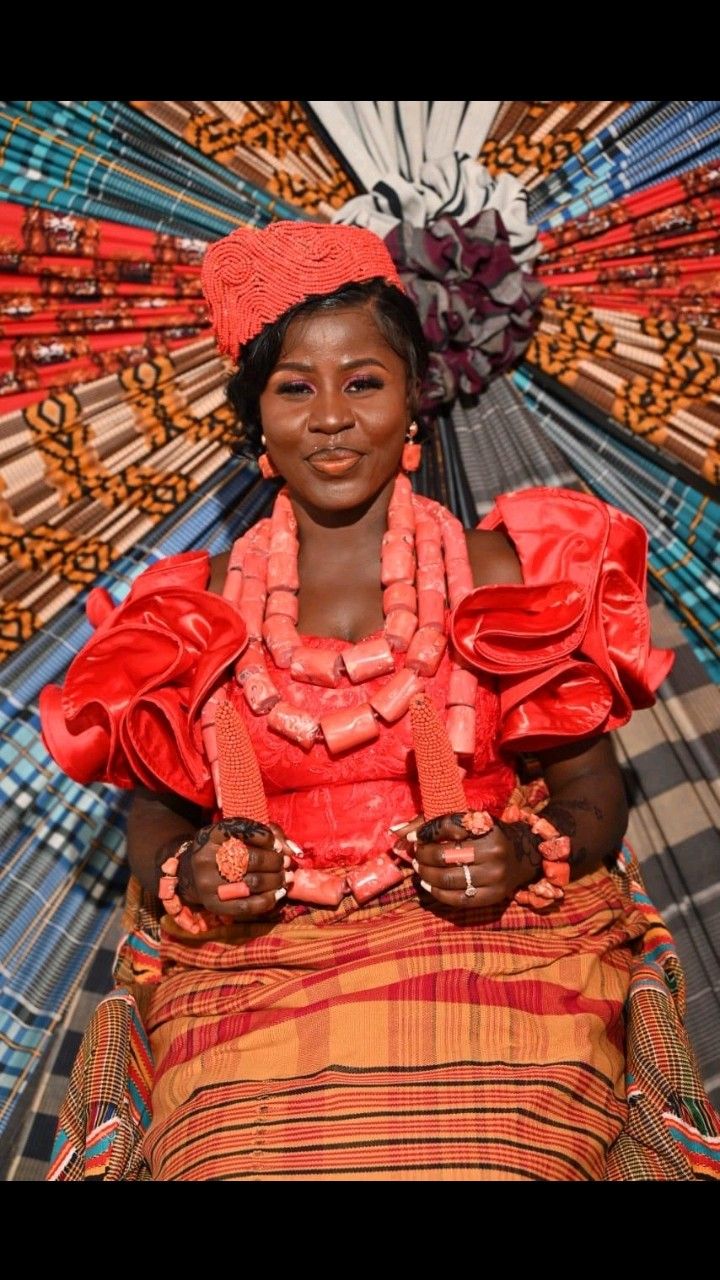
The Iria tradition is structured in stages that correspond to the different ages and social positions of women in the community. The earliest stage is designated for girls between approximately twelve and fifteen years old. In the Ibani communities of Bonny and Opobo, this stage is called Kala-Egerebite. The girl wears a single wrapper called suu on her chest and light beads as adornments. The simplicity of this first dress is the point: the girl at this stage is at the beginning of the curriculum of dressed knowledge. The single wrapper marks her entry into the Iria tradition without claiming the full visual vocabulary she has not yet earned.
The second stage, called Opu-Egerebite in the Ibani tradition, is for young women between approximately eighteen and twenty-one. The dress becomes more complex: an Ikaki wrapper is tied at the waist, with popo and damask fabrics and a matching blouse. Each additional fabric layer signifies additional knowledge, additional social position, and additional access to the textile vocabulary worn by fully formed Kalabari women. The accumulation is not decorative. It is documentary. Each wrapper says: “This stage has been completed; this knowledge has been acquired.”
In the Kalabari tradition, the culminating stage is the iriabo emergence, the ceremony in which the fully prepared woman appears to her community in the complete dressed expression of Kalabari womanhood. Before this emergence, she has spent time in the fattening room: a period of dietary preparation, cleansing, and instruction intended to make the body ready for its public presentation. The iriabo emergence is the community’s opportunity to see and assess the result of this preparation through the visual language of the dressed body.
Knowledge about dress materials and processes is cumulative in the Iria tradition. The girl who ties a single suu wrapper at twelve is not a smaller version of the woman who wears iriabo velvet at her full emergence. She is at a different stage of a lifelong education whose curriculum is the dressed body. Each garment worn is evidence of what has been learned.
The Iriabo Wardrobe: What Is Worn and Why
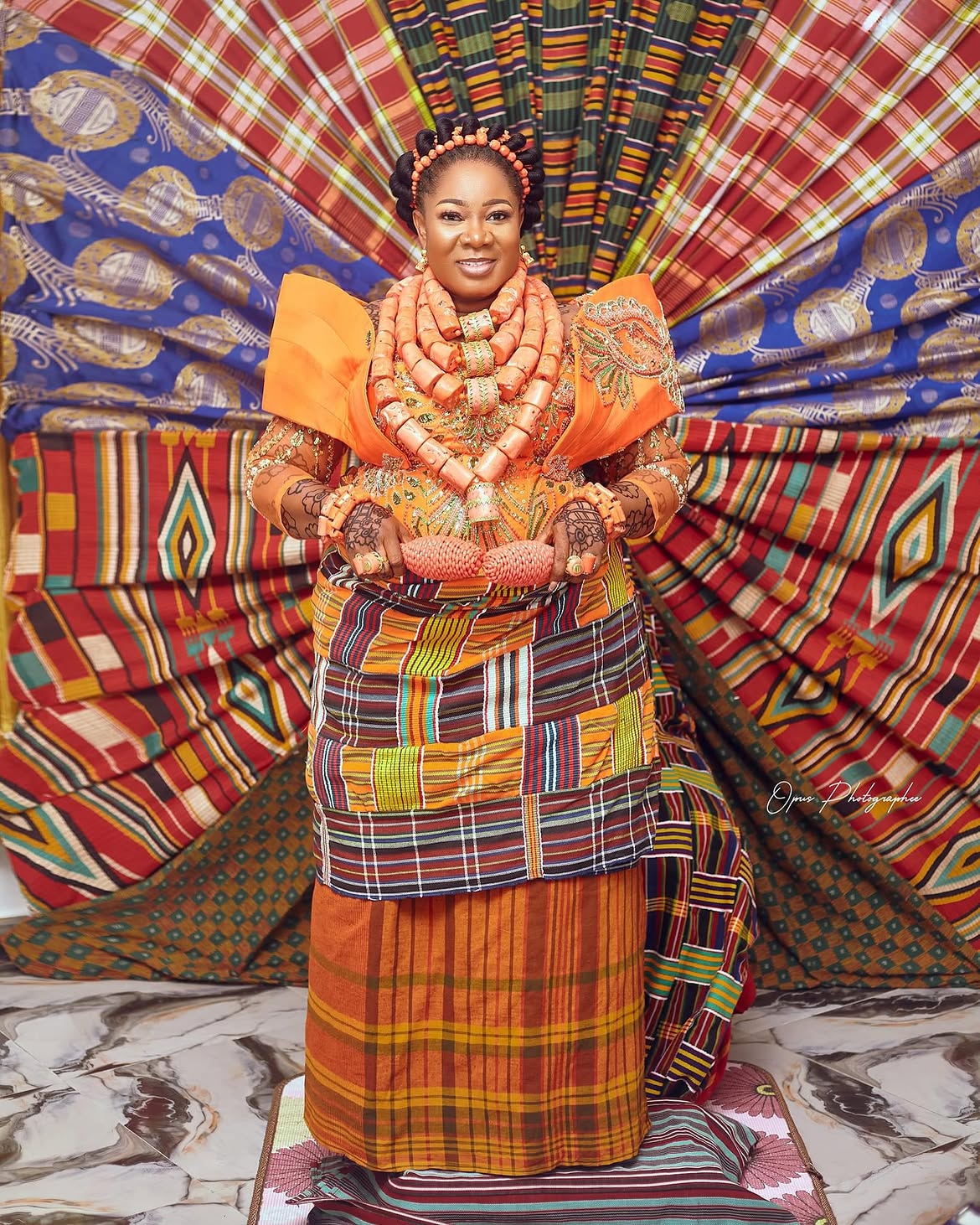
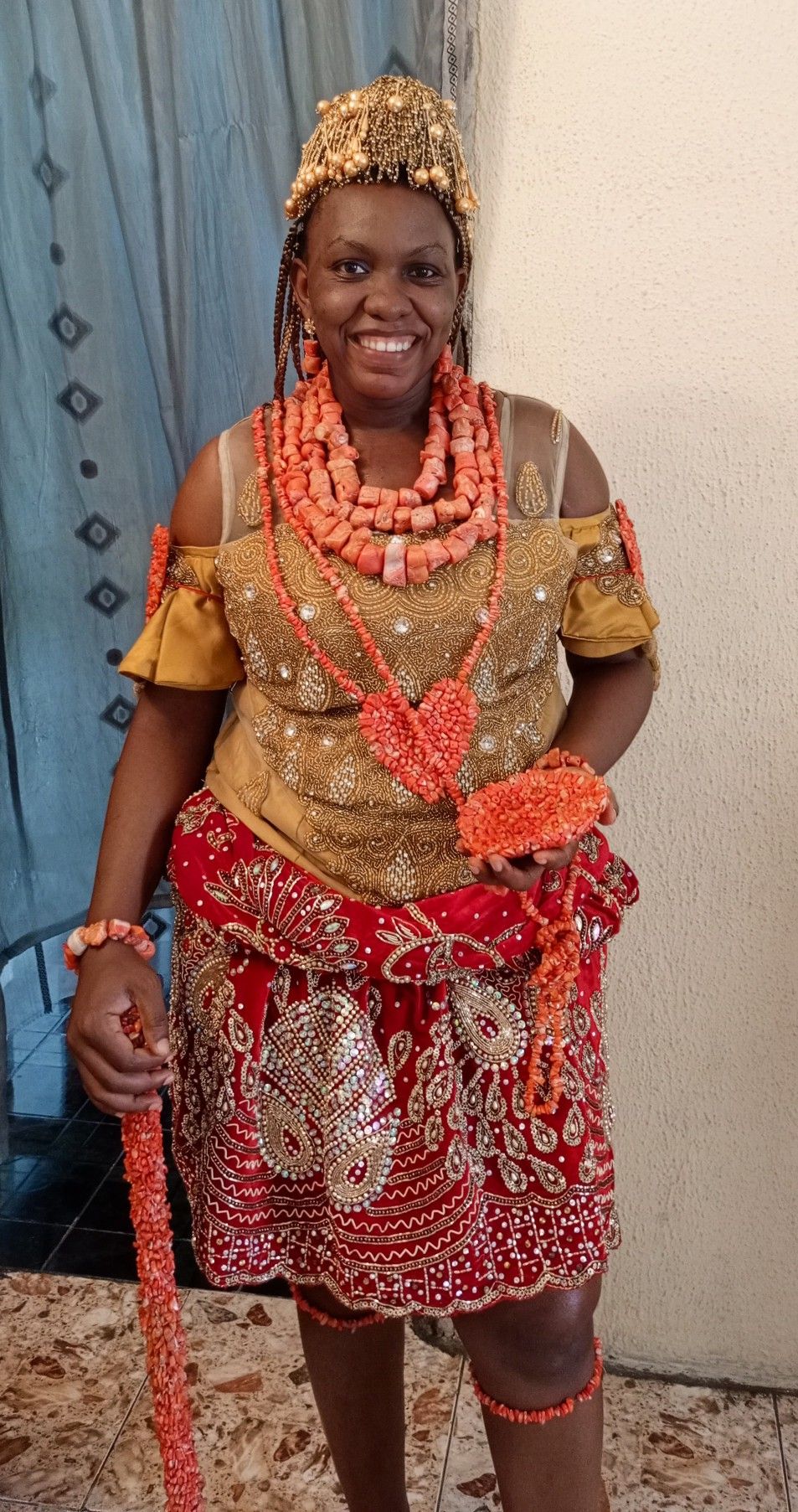
The iriabo wardrobe at the culminating stage of the Iria ceremony is among the most fully documented traditional dress ensembles in Niger Delta scholarship. As MG Kente’s January 2025 documentation of the iriabo emergence confirms, the maiden emerges adorned in beautiful wrappers including the prestigious Feni fabric, beads on her legs and ankles, a matching bowler hat, and a ceremonial walking stick. She carries a flat plate in her hand. The menopausal women of the community, the egbelereme, sing traditional songs while the maiden dances, showcasing her grace and the success of her preparation.
The individual elements of the iriabo wardrobe each carry specific significance. The velvet or silk wrapper is the female equivalent of the attigra, which is documented as the epitome of male dress for celebratory purposes. These are the prestige fabrics of the Kalabari world: materials that connect to the wealth of the Niger Delta trade economy, where imported textiles were among the most important goods in the regional trade network. The attigra velvet robe worn by Kalabari chiefs at installation and funerals is the male equivalent of the iriabo velvet: the same material register, the different gender application.
Coral beads appear on the neck, legs, and ankles of the iriabo. Coral is one of the most significant prestige materials in the Niger Delta and across southern Nigeria: its presence in an ensemble communicates status, family wealth, and cultural seriousness. The accumulation of coral beads on different parts of the body, neck and legs and ankles simultaneously, signals that the family’s investment in the iriabo’s presentation has been complete. The bowler hat is another element with specific significance: different hat forms signal different occasions, with the angara sun hat for joyful ceremonies and the kiliali sun hat draped over the head for burial and family-of-the-deceased contexts. The walking stick and the flat plate carried in the hand are ceremonial props that accompany the maiden’s emergence and are specific to the Iria performance context.
Pelete Bite: The Quintessential Kalabari Cloth
The textile most uniquely Kalabari in the Iria wardrobe is pelete bite: cut-thread cloth produced from imported Indian madras. As the Fashion History Timeline’s documentation of pelete bite confirms, pelete bite is made from Indian madras (injiri), a plaid or checked cotton textile handwoven in India and imported into the Niger Delta for perhaps more than two hundred years. The maker uses a needle to pick up an individual thread, then, with a penknife or razor blade, cuts it at both ends and pulls it out, repeating this over the whole cloth. The colour palette is limited: background colours of indigo, red, and burgundy, sometimes dark green, offset with white, yellow, and black. This art is practised solely by the Kalabari people, predominantly women, and the resulting cloth is considered quintessentially Kalabari.
The concept of cultural authentication that scholars have applied to pelete bite is directly relevant to how the Iria wardrobe works more broadly. The Indian madras cloth from which pelete bite is made was imported through the trade networks that the Kalabari controlled as middlemen in the Niger Delta’s precolonial and colonial economy. Kalabari traders transformed this imported material by cutting individual threads from it to create motifs that belong to no other community. The foreign cloth becomes Kalabari cloth through the specific, skilled, labour-intensive process of its transformation. What enters as an Indian export leaves as a Kalabari cultural object. The iriabo who wears pelete bite is wearing a cloth whose authority is entirely of the Niger Delta, regardless of where the raw material originated.
The Body as Document
The Kalabari Iria tradition works through both the body and the cloth. The preparation for the iriabo emergence involves fattening the body through diet, cleansing it with a wash, and colouring the arms, legs, and torso. Hair is shaved, plaited, and combed. Ears are pierced at specific stages. These bodily practices are not beauty treatments in the conventional sense. They are processes of preparation that transform the body into the surface on which the community will read the iriabo’s readiness. The body prepared correctly for Iria is the body that has been brought to the correct state for its presentation to the community: the physical condition that accompanies the dressed condition as a complete social statement.
This use of the body as a document of social preparation is consistent with other Nigerian dress traditions documented by Omiren Styles. As Omiren Styles’ documentation of Uli, the Igbo women’s ephemeral art of body and wall, confirms, the art of preparation is in marking the body for a specific occasion in a specific way that requires community knowledge to read correctly. The Uli mark and the Iria preparation both constitute the body as a statement addressed to the community. The statement can only be read by those who know the vocabulary.
The Trade Network That Made the Wardrobe Possible
The Kalabari Iria wardrobe is inseparable from the trade history that made its most prestigious materials available. The Niger Delta was one of West Africa’s most active precolonial trading regions: Kalabari traders controlled the middleman trade between interior producers and the European and Indian Ocean traders who arrived at the Delta’s rivers. Indian Madras cloth was one of the most important trade goods in this network, and the Kalabari’s 200-year relationship with injiri is a direct record of that commercial history. The velvet and silk of the iriabo ensemble are similarly products of the trade network whose management gave the Kalabari their precolonial wealth.
The war-canoe house system of government that organised Kalabari political and military authority also organised its trade. Each lineage chief commanded the vessels that transported his men for trading or for war. The imported textiles procured through trading became associated with prestige, and specific textiles were identified with specific lineage groups: the yellow plaid epe injiri was the signature of the Ombo lineage; the textile with an elephant image belonged to another. The iriabo wardrobe is therefore not only a record of a woman’s personal social maturation. It is also a record of her family’s position within the lineage and trade structure of Kalabari society.
The Omiren Argument
The Iria wardrobe is a social record because every element of it has been earned rather than chosen. The African fashion market is worth 31 billion dollars. The girl who appears at her Iria ceremony in a single suu wrapper has entered the curriculum. The woman who appears at her iriabo emergence in velvet or silk, with coral beads on her neck, legs, and ankles, wearing the angara sun hat, walking stick, and flat plate in her hand, has completed it. Between those two appearances is a lifetime of learning: the names of the fabrics, the stages of the ceremony, the knowledge of what each wrapper communicates, the skill of pelete bite if she makes it, and the social network within which all of this knowledge is transmitted from the egbelereme who sing at the emergence to the mothers who tie the first wrapper at twelve. The fashion press, encountering the iriabo for the first time and seeing an elaborate African costume, has misread the document. What the iriabo wears is not decoration for an occasion. It is the occasion’s entire argument about who she is, where she stands, what her family has invested, and what the community now recognises about her. The cloth knows everything. The question is who knows how to read it.
Also Read:
- Emmy Kasbit and the Quiet Power of Igbo Tailoring Traditions
- The Niger Delta Dress Tradition: What Ijaw, Urhobo, and Itsekiri People Have Always Known
- Top 5 Injiri Styles for Ijaw Women in 2026
Frequently Asked Questions
What is the Kalabari Iria ceremony?
Iria is the traditional ceremony that marks the stages of developing womanhood within the female life course, practised by the Kalabari, Igbani, Okrika, and Opobo communities of the Niger Delta in Rivers State, Nigeria. It is a rite of passage whose stages correspond to different ages and social positions, marked through specific dress practices at each stage. The culminating stage, the iriabo emergence, marks the woman’s full attainment of Kalabari womanhood through a public appearance in the complete Kalabari female dress ensemble. Iria ceremonies are held in communities including Buguma, Kula, Sagbama, Billie, Kakrama, and Abonnema, and are also used to mark post-childbirth celebrations and in burial ceremonies.
What is pelete bite fabric?
Pelete bite is a cut-thread cloth produced by Kalabari women from imported Indian madras cloth (injiri). The maker uses a needle to pick up individual threads and cuts them with a penknife or razor blade, pulling out each thread across the whole cloth to create geometric motifs. The colour palette is limited: indigo, red, and burgundy backgrounds offset with white, yellow, and black. The resulting cloth is understood as quintessentially Kalabari: a foreign textile transformed by Kalabari labour and knowledge into a specifically Kalabari cultural object. The process has been practised for more than 200 years and is documented in the Berg Encyclopedia of World Dress and Fashion: Africa and by FIT’s Fashion History Timeline.
What does the Kalabari iriabo wear?
The iriabo at the culminating stage of the Iria ceremony wears a complete ensemble that includes prestigious wrappers in velvet or silk, coral beads on the neck, legs, and ankles, a bowler hat (angara sun for joyful ceremonies), and carries a ceremonial walking stick and a flat plate. The body is prepared through dietary fattening, washing and cleansing, and colouring of the arms, legs, and torso. Hair is specifically arranged. Each element of the ensemble is a social document communicating the iriabo’s stage of life, her family’s wealth and standing, and the community’s recognition of her completion of the Iria tradition’s curriculum.
What is injiri cloth?
Injiri is the Kalabari name for Indian madras, a plaid or checked cotton textile handwoven in India and imported into the Niger Delta for more than 200 years. It is the base material from which pelete bite is made through the thread-cutting process. The Kalabari’s long relationship with injiri reflects the Niger Delta’s precolonial trading history, in which Kalabari traders operated as middlemen between interior producers and overseas trading partners. Specific injury patterns were associated with particular lineage groups within Kalabari society, making imported cloth a carrier of local social meaning through associations built over generations of trade.
Why do Kalabari women wear bowler hats?
Kalabari women wear different styles of beaded hats for different occasions: the angara sun hat is associated with joyful ceremonies, including weddings and the iriabo emergence; the kiliali sun, draped over the head, is associated with burial contexts and family-of-the-deceased roles. The bowler hat form, adopted by the Kalabari from European trading contacts in the precolonial period, was incorporated into the Kalabari dress vocabulary and transformed in the specific contexts of Kalabari ceremony. Like the Indian madras that became pelete bite, the bowler hat underwent cultural authentication: a foreign form absorbed into the Kalabari wardrobe and made specifically Kalabari through its ceremonial associations.
Explore More
Read the full Culture > Heritage & Identity section for Omiren Styles‘ documentation of Nigerian dress traditions, Niger Delta textile cultures, and the ceremonial wardrobe systems that make social position visible through cloth.
Discover travel and heritage intelligence across the Niger Delta and southern Nigeria at Rex Clarke Adventures.