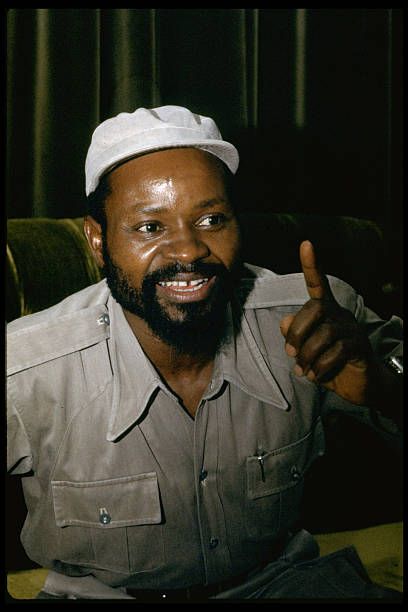
Samora Moises Machel was born on 29 September 1933 in Chilembene, Gaza Province, Mozambique, the son of a Shangana family whose history of resistance to Portuguese colonialism extended back generations. His grandparents and great-grandparents had fought against the Portuguese in the 19th century. His parents were forced to grow cotton for the Portuguese colonial economy rather than food for their own household, and were then displaced from their land in the 1950s in favour of Portuguese settlers. Machel trained as a nurse in Maputo, the colonial capital, and described his political radicalisation as coming not from reading Marx but from the experience of working in a hospital where he watched the colonial hierarchy function at the level of a patient’s body: which patients received which care. In that ward, by which doctor.
The African fashion and beauty market is worth $ 31 billion. Samora Machel’s dress is not a fashion story. But the battle fatigues he wore from his first guerrilla campaign in 1964 through his presidency from 1975 to his death in 1986 constitute one of the most sustained and most politically consequential dress statements made by any African leader in the 20th century. As South African History Online’s documentation of Machel’s leadership confirms, Machel spent most of his time in the field with his men, leading them in combat and sharing their dangers and hardships. The fatigues were not a political costume. They were working clothes. The political argument came later, when he kept wearing them.
Samora Machel wore battle fatigues both before and after independence. That decision was not incidental. Here is what his field dress carried and what it still carries.
The Liberation War: Dress in the Field
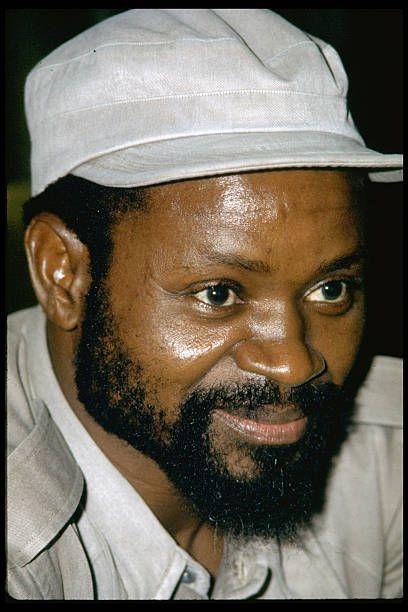
FRELIMO (the Mozambique Liberation Front) began its armed campaign against Portuguese colonial rule on 25 September 1964. Machel led the first guerrilla attack against Portuguese forces in northern Mozambique that year, returning from military training in Algeria to bring that preparation into the forests and villages of his own country. As Britannica’s documentation of Machel’s biography confirms, he rose quickly through FRELIMO’s leadership ranks. He became the movement’s leader in 1970 after the assassination of Eduardo Mondlane, who was killed by a mail bomb in February 1969. The liberation war lasted ten years, from 1964 to 1974, ending with a ceasefire in September 1974 following the Carnation Revolution in Portugal.
The dress of FRELIMO’s liberation war was that of a guerrilla army supplied by an international solidarity network. FRELIMO received military support from the Soviet Union and the People’s Republic of China, and its fighters wore a range of camouflage patterns including Soviet-bloc issue and locally tailored versions of East German and Czechoslovakian designs. Machel, photographed with his fighters in the liberated areas and in the exiled movement’s bases in Tanzania and Algeria, appears consistently in military field dress: fatigues, a military cap, and the visible markers of a man operating under the conditions his fighters do.
This shared dress was a deliberate political argument. The colonial administration required African subordination to be expressed through appearance: the domestic worker, the mine labourer, and the plantation worker all existed within systems that managed the presentation of the African body in specific ways. The Portuguese colonial hierarchy in Mozambique, like the British colonial hierarchy in South Africa that Steve Biko would later analyse, required African people to dress in ways that signified their subordinate roles. FRELIMO’s fighters in the field were dressing for a different role: as soldiers of a national liberation movement who had claimed the right to fight on their own terms.
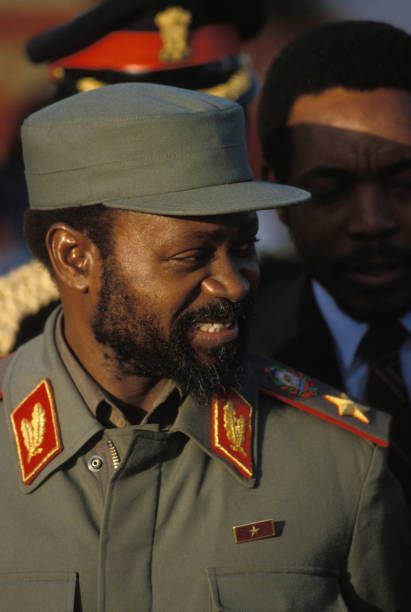
Machel’s most decisive dress statement was not made during the liberation war. It was made after it. He became Mozambique’s first president on 25 June 1975 and continued to wear battle fatigues. The suit that political protocol normally requires, the visual signal of transition from guerrilla to statesman, was not what Machel wore. He dressed for the country he was building, not for the country he had replaced.
The Most Decisive Statement: Fatigues After Independence
Mozambique became independent on 25 June 1975 under Samora Machel’s leadership. The political protocol of most new states at independence involves a visible shift in leadership dress: the liberation fighter becomes a head of state, and the head of state dresses accordingly. The suit, the formal shirt, and the civilian political uniform of the postcolonial leader are the visual signals of the transition from a guerrilla movement to a functioning state. As Robin Wright’s documentation of Machel’s leadership for the Alicia Patterson Foundation confirms, Machel was a man of action rather than words, who continued to wear his battle fatigues even after the war. He did not make the transition. He continued.
The decision to continue wearing fatigues as president was not due to a lack of political awareness. Machel was one of the most strategically intelligent political leaders of his generation: a man who understood the semiotics of national liberation precisely enough to build a movement that sustained itself through ten years of guerrilla warfare against a European colonial army. He knew what the suit meant. He chose not to wear it.
The fatigues worn as president made several arguments simultaneously. They maintained visual continuity between the liberation struggle and the independent state: the president was still the commander, still in the field, still engaged in a struggle that had changed form but had not ended. They refused the colonial aesthetic of legitimate authority that the suit represented: the European dress code for governance that a Portuguese administrator or a British district commissioner would have recognised as the sign of a leader. And they declared that the legitimacy of the independent Mozambican state came from the liberation struggle rather than from any continuity with the colonial institutions it had replaced.
The Image and Its Circulation
Machel’s image became ubiquitous in post-independence Mozambique. His photograph and the FRELIMO flag were present on every storefront window, every sidewalk billboard, and in twenty-foot posters at May Day celebrations. Schools, party meetings, and public rallies began with songs, slogans, and chants that saluted him. The specific image that circulated was almost invariably Machel in military dress. The fatigues were not incidental to the national iconography. They were central to it. As SciELO’s peer-reviewed analysis of FRELIMO photography and post-independence image construction confirms, editors at the government-run newspaper Noticias used images of President Machel specifically to show the urban elite that Mozambique had a state of its own, and a head of state. The image they used for this purpose was Machel in military fatigues, not Machel in civilian dress.
The photographic record further confirms the dress’s political function. The press photographer Ricardo Rangel, the most significant documentary photographer of colonial and post-colonial Mozambique, was photographed alongside Machel in military fatigues at the FRELIMO base in Nachingwea, Tanzania. That image became one of Rangel’s most recognisable, and hence most valuable, as he travelled Mozambique in the months before independence: FRELIMO fighters who encountered Rangel could not always read his journalist’s identification card, but they recognised the photograph of a man standing with their commander.
The Bronze Statue and the Permanent Dress
In Independence Square in Maputo, the bronze statue of Samora Machel depicts him in military dress. The sculptural decision is not incidental: the official Mozambican state determines that the image of Machel to be preserved permanently in the capital’s most significant public space is Machel as a military commander rather than Machel as a civil head of state. The bronze Machel wears battle fatigues. He is depicted mid-stride or in a commanding posture that communicates active leadership rather than ceremonial authority.
The statue’s dress is therefore not a memorial to the liberation war as a past event. It is a declaration that the liberation war and its values are the foundation of the independent state. The fatigue-wearing Machel in bronze is the permanent visual argument that Mozambique’s national identity begins with the liberation struggle and that its first president wore the clothes of that struggle without apology or modification when he governed the country that struggle produced.
Machel, Cabral and the Dress of African Liberation
Machel’s fatigue dress belongs to a wider tradition of African liberation leadership dress, including Amílcar Cabral’s knitted stocking cap in Guinea-Bissau. As Omiren Styles’ documentation of Cabral’s field dress and Guinea-Bissau’s liberation memory confirms, the consistent choice of field dress over colonial formal wear by African liberation leaders is a political argument about legitimacy: where it comes from, how it is expressed, and what it looks like when worn. Cabral chose the stocking cap in West African heat against the European suit’s authority. Machel chose battle fatigues against the civilian political dress of postcolonial protocol. Both decisions were made by men who understood exactly what they were refusing and why.
The parallel extends to how the dressed image circulates after the leader’s death. Cabral’s Cassaca Conference photograph has become the primary visual icon of Guinea-Bissau’s national identity more than fifty years after his assassination. Machel’s bronze statue in Independence Square performs the same function in Mozambique: a permanent, civic, state-endorsed image of a national founder in the dress of the liberation struggle rather than the dress of governance. Both images argue that the most legitimate form of African national leadership is the leadership that came from the field, not from any institution the colonial order recognised.
Machel’s Death and the Dispute That Remains
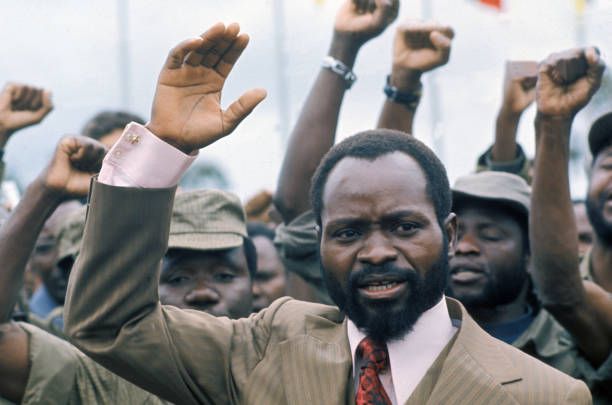
Samora Machel died on 19 October 1986 when his plane crashed at Mbuzini near the South African border while returning from a meeting in Lusaka. Thirty-four people died. Machel’s government had signed the 1984 Nkomati Accord with apartheid South Africa, a non-aggression pact whose conditions Mozambique accused South Africa of violating. The circumstances of the crash have remained disputed: a Soviet-led investigation concluded that pilot error caused the crash; South African and subsequent investigations have raised questions about whether navigational equipment was interfered with. No definitive answer has been established. The uncertainty of his death is part of the political memory of his legacy.
The dressed image of Machel in his fatigues carries the weight of that unresolved death. A national hero who died in circumstances that may or may not have involved the active intervention of the apartheid state that his movement had spent its existence opposing is a figure whose image cannot be separated from the political conditions in which it was created. The bronze statue in Independence Square does not resolve that history. It marks it.
The Omiren Argument
Samora Machel wore battle fatigues both before and after Mozambican independence. That decision made a single argument over twenty-two years of public life: that the liberation struggle was not a phase to be completed and then dressed differently, but a permanent condition of the project to build an independent Mozambican state. The African fashion and beauty market is worth $ 31 billion. The fatigues in which Machel led the first FRELIMO guerrilla attack in 1964, in which he received the Portuguese surrender of Mozambique in 1975, in which he governed the country until he died in 1986, and in which his bronze statue stands permanently in Independence Square in Maputo, are the most sustained single dress statement made by an African head of state in the post-independence period. They argue that governance is continuous with liberation rather than a replacement of it. They refuse the visual transition from fighter to administrator that the postcolonial protocol expected. They carry the same politics as Cabral’s stocking cap and Biko’s Afro: the decision to dress from the inside of the struggle rather than from the outside observer’s expectation of what legitimate authority looks like. Mozambique remembers Machel in his fatigues because Machel dressed as if Mozambique’s independence was not an arrival but a continuation. The bronze in Independence Square is not wearing a costume. It is wearing the most honest account of what Machel understood his job to be.
Also Read:
- When Dressing Becomes Declaration: Clothing as Cultural Identity
- Queen Nzinga’s Battle Dress: Royal Power and Angolan Resistance
- Black Consciousness Made Dress Political: Steve Biko, the Afro Look and Apartheid South Africa
- Mozambican Men’s Capulana Style: Shirts, Accessories and Everyday Dress
Frequently Asked Questions
What did Samora Machel wear?
Samora Machel wore military battle fatigues throughout the FRELIMO liberation war from 1964 to 1975 and continued to wear them after independence, when he became Mozambique’s first president. He did not make the conventional transition from guerrilla dress to civilian or ceremonial political dress that postcolonial protocol typically required. His image in military fatigues became the primary visual icon of post-independence Mozambique and is preserved in the bronze statue that stands in Independence Square in Maputo.
Why did Machel wear fatigues as president?
Machel’s continuation of battle fatigues as president made several political arguments: it maintained visual continuity between the liberation struggle and the independent state, presenting the president as still operating in the same mode as the liberation commander; it refused the colonial aesthetic of legitimate authority represented by the European civilian suit; and it declared that Mozambique’s national legitimacy came from the liberation struggle rather than from any continuity with colonial institutions. The decision was deliberate rather than incidental; Machel was one of the most strategically self-aware political leaders of his generation, fully aware of what the suit represented and choosing not to wear it.
How is Samora Machel remembered in Mozambique?
Samora Machel is remembered as Mozambique’s founding national hero and first president. His image was omnipresent in post-independence Mozambique on storefronts, billboards, and posters, and his name appears in schools, party meetings, and public culture. His bronze statue in Independence Square in Maputo depicts him in military dress. The Samora Machel Documentation Centre at the Eduardo Mondlane University in Maputo preserves films, photographs, speeches, and personal papers documenting his life. The circumstances of his death in the 1986 Mbuzini plane crash remain disputed and are part of his ongoing political significance.
What happened to Samora Machel?
Samora Machel died on 19 October 1986 in a plane crash at Mbuzini, near the South African border, while returning from a summit meeting in Lusaka, Zambia. Thirty-four people died. A Soviet-led investigation concluded pilot error caused the crash. However, the circumstances have been disputed: Mozambique had signed the 1984 Nkomati Accord with apartheid South Africa, which Mozambique subsequently accused South Africa of violating, and questions about whether navigational equipment was interfered with have never been definitively resolved. Machel was 52 years old at the time of his death.
What is FRELIMO’s history of the liberation war?
FRELIMO (Frente de Libertação de Moçambique, the Mozambique Liberation Front) began its armed campaign against Portuguese colonial rule on 25 September 1964 under the founding leadership of Eduardo Mondlane. Following Mondlane’s assassination by a mail bomb in February 1969, Samora Machel became FRELIMO’s commander and leader in 1970. The liberation war lasted ten years, ending with a ceasefire in September 1974 after the Carnation Revolution in Portugal. Mozambique became independent on 25 June 1975, with Machel as its first president. FRELIMO received military support from the Soviet Union and the People’s Republic of China during the liberation war.
Explore More
Read the full Culture > Heritage & Identity section for Omiren Styles’ documentation of African liberation leaders whose dress constituted the first paragraph of their political manifestos, and the cultures that continue to carry those dressed arguments.
Discover travel and heritage intelligence across Mozambique and southern Africa at Rex Clarke Adventures.